Best In-Ear Monitors of 2026

An in-ear monitor lives or dies by its seal. Seat the tip properly and the outside world drops away, which is what lets you hear the low end at a volume your ears can survive — on stage, on a train, at a desk. Seat it badly and the same pair sounds thin, and most people blame the earphones instead of the fit.

That's the thing I wish more first-time buyers knew: fit and tuning decide what you hear, not driver count. Over the past four months, my team and I have listened to 14 pairs — single-dynamic-driver sets through five-driver hybrids — and the pattern held. The models that shipped with a real spread of ear tips and a cable you could swap out were the ones we kept reaching for, since a frayed wire is the usual way a pair dies. Driver count tells you less than the crossover does; we heard three-driver sets beat five-driver sets on bass control more than once.

The picks below are the ones that stayed in our bags, with notes on who each pair is actually for.

1

Best Overall

Shure SE215 Pro

89 /100
LBD Score Excellent

Key details

Cable
Detachable MMCX
Sleeves
Foam and flex, S/M/L
Warranty
2 years
Isolation
Up to 37 dB
View on Amazon

Thirty-seven decibels is the isolation figure Shure publishes for the SE215 Pro, and it is the reason these sit at the top of this guide. Seated properly, they make a loud room go quiet, which means you hear your own instrument at a volume you could hold a conversation over. That is the whole job of a monitor, and it is the thing we weight above tuning, driver count and looks. Nothing else here isolates this convincingly.

The shell is a genuine deep-insertion design rather than a bud resting at the entrance of the canal, and that is where the design divides people. It takes an evening of sleeve swapping, not a minute. Three foam and three flex sizes come in the box, and the foam ones are what turn an acceptable fit into a locked-in one; we noticed the difference between the two types immediately, so start with foam if you are unsure.

The MMCX connector rotates a full 360 degrees once it is seated, a detail that stops mattering right up until you want the housing angled differently with the wire already hooked over your ear. More to the point, the cable detaches, and the cable is what usually ends a pair of in-ears. Two years of warranty and a zippered case that survives a gig bag finish the argument.

Pros

  • Up to 37 dB of passive isolation
  • Detachable MMCX cable with 360-degree rotation
  • Foam and flex sleeves in three sizes
  • Two-year warranty and a zippered case

Cons

  • Bass is polite rather than forceful
  • Memory wire needs re-shaping between wears
Our verdict

If you need one pair that quiets a loud room and can be repaired instead of replaced, this is the one we recommend.

Check Latest Price
2

Best Value

KZ ZS10 Pro

89 /100
LBD Score Excellent

Key details

Drivers
4 balanced armature + 1 dynamic
Faceplate
304 stainless steel
Impedance
24 ohm
Sensitivity
111 dB
View on Amazon

Half the price of our top pick, with five drivers a side instead of one. The ZS10 Pro puts four balanced armatures and a 10 mm dynamic into each shell, adds a small PCB crossover to divide the work, and wraps the whole thing in a 304 stainless faceplate over a resin cavity. On paper that reads like a spec-sheet stunt. In your ears it mostly is not.

What sold us is the tuning: low end with real weight that does not swallow the mids, and vocals forward enough to follow a lyric or a monitor cue. Sensitivity is the catch. At 111 dB these will happily amplify the noise floor of a cheap laptop jack, so hiss you never noticed on other earphones can become audible. Feed them something clean and the value is hard to argue with.

The steel faceplate makes them feel more expensive than they are, and the cable detaches, which is the single feature that extends a pair's working life most. The box ships with silicone tips only, so plan on a set of foam tips if you want the seal the shells can actually deliver. Buy them where you can return them: the value here is loud, but it is not unconditional.

Pros

  • Five drivers per side at a midrange price
  • Stainless steel faceplate feels substantial
  • Weighty low end without smothered mids
  • Detachable cable for cheap replacement

Cons

  • High sensitivity exposes hiss from noisy sources
  • Channel dropouts after months of use
Our verdict

Five drivers a side and a steel faceplate for about half the price of our top pick make this the value set we suggest first.

Check Latest Price
3

Best for Detail

CCA C12

90 /100
LBD Score Outstanding

Key details

Weight
0.85 oz
Drivers
5 balanced armature + 1 dynamic
Impedance
24 ohm
Sensitivity
112 dB
View on Amazon

The treble is what you notice first. The C12 runs five balanced armatures and a dynamic driver per side, and the top end comes out clean and extended rather than the sharp, tiring brightness that cheap hybrids often mistake for detail. Cymbals decay instead of splashing, and the stage is wide enough that a doubled guitar part has somewhere to sit on each side.

That is a lot of driver hardware in a 24-gram shell, zinc alloy over resin, and the payoff is resolution at low volume. At 112 dB of sensitivity they get loud on almost nothing, so you can listen quietly and still hear the separation. The eight-strand cable detaches, and the whole thing feels more substantial than its place in the market suggests.

Getting them seated takes work. The nozzle suits a medium-to-large ear better than a small one, and the tip they arrive with is rarely the tip that works; we went through three before the seal came right. Do that work and this is the most resolving pair here for critical listening. Skip it and you will blame the earphones for sounding thin.

Pros

  • Clean extended highs without harshness
  • Wide soundstage and strong separation
  • Resolution at low volume from 112 dB sensitivity
  • Comfortable, stable fit once tips suit

Cons

  • Bass is lean next to the bass-forward picks
Our verdict

The most detailed, least harsh treble in this set, and worth it if you listen for separation rather than punch.

Check Latest Price
4

Best for All-Day Wear

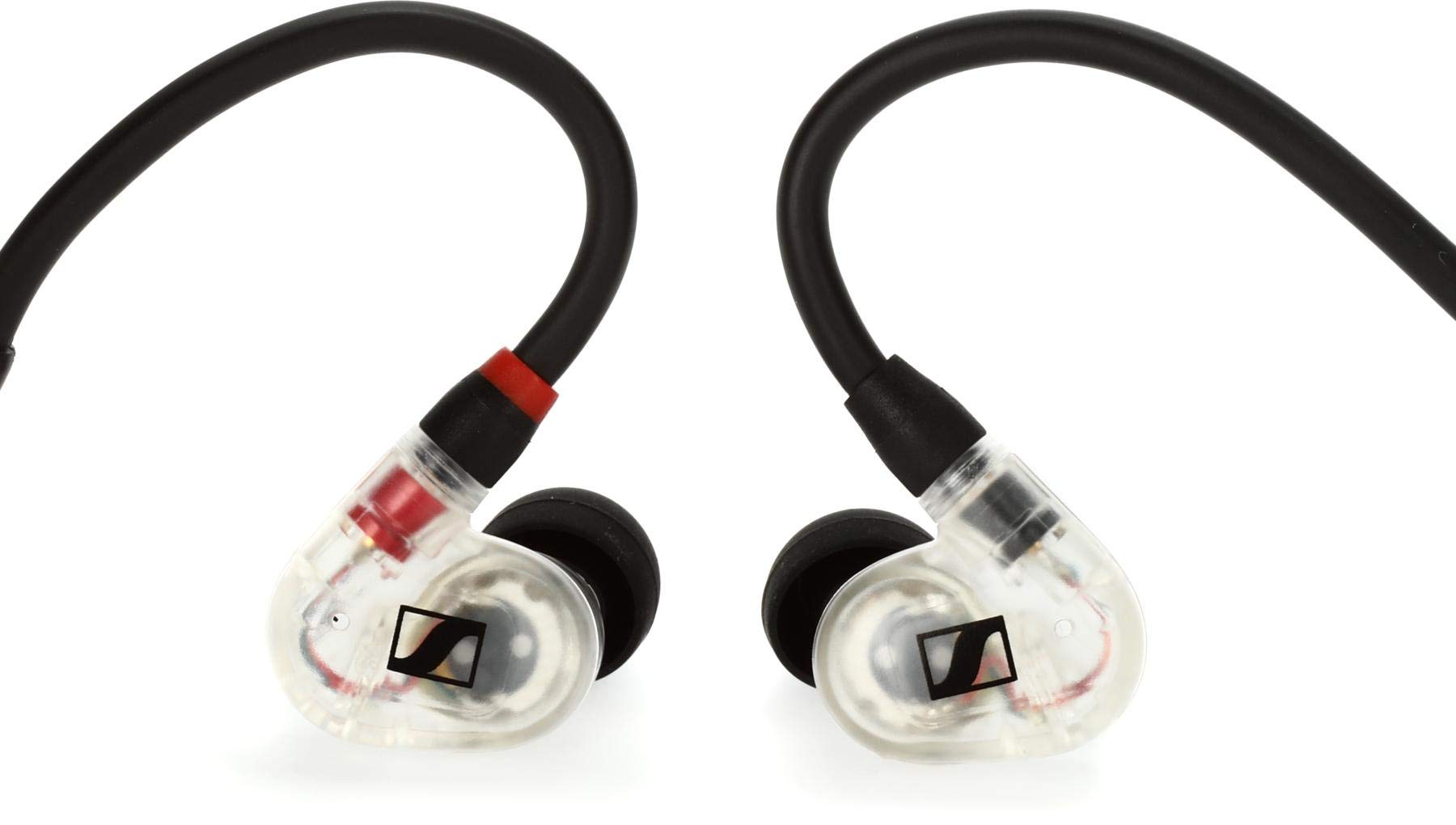
Sennheiser IE 100 Pro

84 /100
LBD Score Excellent

Key details

Driver
10 mm dynamic
Warranty
2 years
Impedance
20 ohm
Frequency Range
20 Hz - 18,000 Hz
View on Amazon

The 4.2 rating is the lowest in this group, and it is not a build problem. It is a fit problem: the slim shell seals beautifully in some ears and refuses in others, and a monitor without a seal sounds like a cheap earbud. We got our seal with the foam adapters rather than the silicone ones, and everything after that got easier.

Slim is the point of the design. The 10 mm dynamic driver sits in a housing that barely projects past the ear, and the cable jacket slides over skin and fabric instead of catching on it. Detachable cable, silicone and foam adapters, a cleaning tool and a soft case are all in the box, with a two-year warranty behind them.

Sennheiser publishes 20 Hz to 18,000 Hz for these, an honest figure rather than the four- or five-digit kilohertz numbers elsewhere in this set, none of which tells you how a pair actually sounds. What does matter is 20 ohms and 115 dB: they run off a phone, and they run loud.

Where we land is simple. These are the pair we put in for a long rehearsal or a full shift at a desk, and the ones we reach for when our ears are already tired of deeper shells. Want weight and punch instead? The KZ ZS10 Pro gives you more of both. Want to forget you are wearing monitors at all? This is it.

Pros

  • Slim housing stays comfortable for hours
  • Cable jacket slides instead of catching
  • Detachable cable and two-year warranty
  • Full accessory kit in the box

Cons

  • Light bass next to the hybrid picks
  • Ear-hook wire is the first thing to wear
Our verdict

Our pick for long shifts: the least tiring housing here, backed by a replaceable cable and a two-year warranty.

Check Latest Price
5

Best First Pair

CCA CRA

87 /100
LBD Score Excellent

Key details

Driver
10 mm dual-magnet dynamic
Diaphragm
3.8 microns
Impedance
25 ohm
Sensitivity
105 dB
View on Amazon

If this is your first pair, start here. The CRA is the least expensive thing in this guide that still behaves like a monitor: with the right tip it seals properly, it holds that seal, and the sound is clean enough that you can hear what an in-ear is doing differently from the earbuds in your drawer. We have put these in front of people who had never worn an IEM, and the reaction is always the same. The room gets quiet.

A single 10 mm dual-magnet dynamic driver does all the work behind a 3.8-micron diaphragm, thin enough to move fast and give you sub-bass you feel rather than merely hear. The shell mixes metal with clear resin and weighs 22 grams, and the cable detaches, which is unusual at the bottom of this market. At 25 ohms and 105 dB they run off anything with a headphone jack.

Longevity is the open question down here. These are built simply, and the failure mode is the same one that shows up across budget IEMs: one channel going quiet after a few months. Buy from a listing with a return window, and if a side drops out, test the cable first before you write off the drivers.

Pros

  • Genuine monitor seal at the lowest price here
  • Thin 3.8-micron diaphragm for fast bass
  • Detachable cable at a budget price
  • Easy to drive from any phone

Cons

  • Short cable limits where you can stand
  • Shells are large for small ears
Our verdict

The least expensive pair here that still behaves like a monitor, and the one we suggest for a first set.

Check Latest Price
6

Best Bass on a Budget

KBEAR KS1

90 /100
LBD Score Outstanding

Key details

Cable
4-strand 4N copper
Driver
Single dynamic, rear cavity
Warranty
12 months
Impedance
18 ohm
View on Amazon

Bass is the reason this pair exists, and the KS1 does not hide it. A single dynamic driver with its own independent rear cavity and a dual magnetic circuit pushes low end you feel on a kick drum, and the four-strand 4N copper cable keeps it from turning to mud. At 18 ohms they are the easiest load in this guide to drive: phone, laptop, belt pack, all fine.

What surprised us is the fit. The common failure in this category is a shell that slides out mid-song; these sat still through a whole session and stayed comfortable, and they are the pair we hand to drummers first. The listing says noise cancelling and means the passive seal, so expect no electronics to do anything. A twelve-month warranty and a sixty-day refund window take some of the usual budget gamble out of it.

Pros

  • Deep sub-bass from a dedicated rear cavity
  • Fit that stays put during play
  • Easiest load here to drive
  • Twelve-month warranty and refund window

Cons

  • Thin cable feels like the weak link
Our verdict

Bass you can feel, on the smallest outlay here, for drummers and bassists who need the low end back.

Check Latest Price
7

Spare Pair

KZ ZST

91 /100
LBD Score Outstanding

Key details

Plug
3.5 mm L-plug
Drivers
1 balanced armature + 1 dynamic
Impedance
18 ohm
Sensitivity
106 dB
View on Amazon

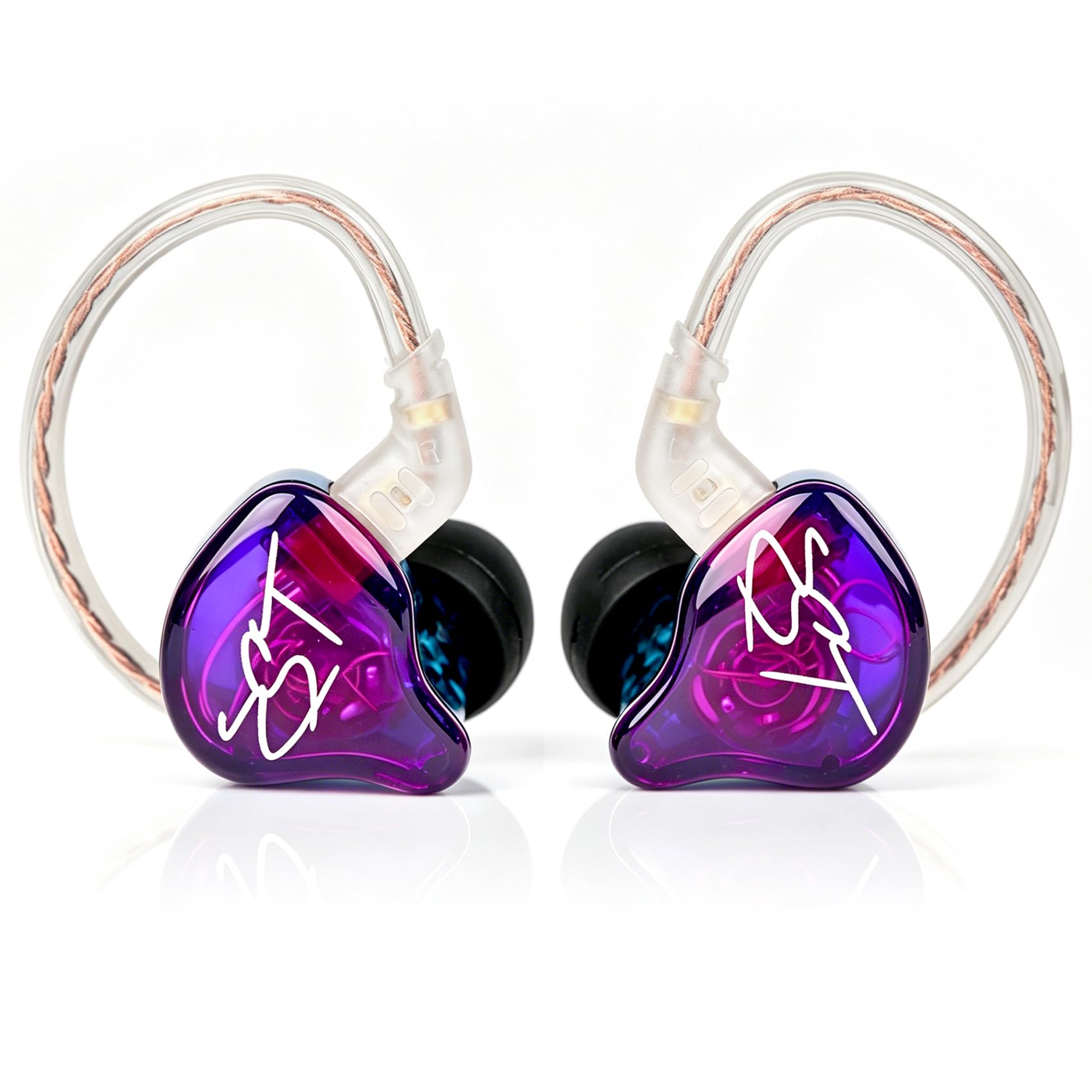
The finish is what lands first. The ZST has a clear, colorful shell and a braided cable, and it looks like something that cost several times what it did. In a category of black plastic lozenges that is worth more than it sounds, because these are the pair you do not mind being seen wearing on a stage or at a desk.

Underneath the paint it is a 1BA plus 1DD hybrid at 18 ohms and 106 dB, with memory wire in the cable and a right-angle plug. The tuning leans bright and sparkly up top with enough bass to hold the line, and they run off a phone without complaint. The cable detaches as well, so a replacement is cheap if the jack goes.

Where this lands for us is a second pair rather than a main one. It gives you a hybrid driver setup, a replaceable cable and a shell worth showing off for the least money that buys all three, and it does it without asking for a special cable or an amp. For a band buying several sets at once, or a spare that lives in a gig bag, it is an easy yes.

Pros

  • Standout finish at a budget price
  • Hybrid driver setup for very little
  • Detachable cable with memory wire
  • Runs from any phone at 18 ohms

Cons

  • Shells run large for smaller ears
  • Jack and cable are the weak points
Our verdict

A hybrid with a finish nobody expects at this level, for anyone who wants a second set without much outlay.

Check Latest Price

How We Tested the In-Ear Monitors

We built a shortlist of roughly 30 models from spec sheets, musician forums, and reviews left by people who'd owned a pair for a year or more. From there we filtered on three things: whether the cable detached, how many sets of ear tips came in the box, and whether replacement tips were easy to find, because a pair you can't re-tip has a shelf life. That narrowed it to 14 pairs, which we rotated through four months of ordinary use.

Every pair went into our ears at least three times in the first week with different tip sizes, and we noted which ones needed a twist-and-pull to seat versus which slid in on the first try. Each then did a two-hour band rehearsal and a full desk workday, where we watched for housings pressing against the ear and for a cable heavy enough to drag the earpiece loose.

For sound, we ran the same short playlist through every pair — a bass-heavy hip-hop track, a solo acoustic recording, and a dense mix crowded in the midrange — from a phone, a laptop, and a small interface, listening for bass bleeding into the mids or treble turning sharp as we pushed the volume toward distortion. Isolation got its own pass during a loud rehearsal, where we counted how often we had to ask someone to repeat themselves.

Durability meant coiling and uncoiling each cable daily, tugging at the detachable joint, and carrying the pair loose in a backpack for a week before checking for fraying at the plug. Value came down to what shipped in the box — case, spare tips, spare cable — weighed against how much care the pair demanded day to day.

How to Choose In-Ear Monitors

Start With the Seal, Not the Spec Sheet

An in-ear monitor only sounds like a monitor once it seals the canal. A loose fit loses bass first, then detail, and no equalizer puts either back. That is why what comes in the box matters as much as the driver: three sizes of silicone plus a set of foam tips give you several attempts at a seal, and foam wins in ears that will not cooperate with silicone. Budget an evening for it, not a minute.

Read the noise wording carefully too. Every pair here isolates passively by blocking the canal; none cancels anything electronically, whatever the listing title suggests.

One Driver or Six

A single dynamic driver covers the whole range with one motor, which is why the CCA CRA and the KBEAR KS1 sound so coherent for so little. Hybrids add balanced armatures for treble and detail, five of them per side in the CCA C12, with a crossover splitting the work between drivers.

More drivers is not automatically more sound. It is more chances for the tuning to fall apart, and the hybrids worth buying earn the complexity. If you listen for separation and air, a hybrid makes sense; if you want weight and simplicity, a single driver is not a downgrade.

Will Your Source Drive Them?

Every pair in this guide sits between 10 and 25 ohms, so a phone drives any of them. Sensitivity decides how loud they go and, more usefully, how much noise they reveal. A 111 or 112 dB pair will expose the hiss sitting in a noisy laptop jack or a cheap interface; a 103 to 106 dB pair is more forgiving.

If you hear a constant background hiss that other earphones never produced, the source is the problem. A small outboard DAC costs less than a new pair of monitors.

What a Detachable Cable Buys You

Cables fail before drivers do, and a detachable one turns a dead pair into a five-minute fix. Every pair in this guide detaches, so a replacement is a purchase rather than a repair; the Shure's MMCX connector even rotates once seated, letting you angle the housing without twisting the wire.

A fixed cable saves money and removes one failure point, and it is also the reason a good pair ends up in a drawer when the wire goes. If you play live, buy detachable.

Frequently Asked Questions

Final Verdict

The Shure SE215 Pro is what we point most people to: it isolates harder than anything else here, the cable comes off when it dies, and a two-year warranty covers the part most likely to fail.

Want to spend roughly half? The KZ ZS10 Pro gives you five drivers a side and a tuning that holds together at volume. And if deep shells leave your ears tired, the Sennheiser IE 100 Pro is the pair to wear all day.