Best Lenses for Nikon Cameras of 2026

The lens changes your pictures more than the camera body does — that's the first thing I tell anyone who asks where their money should go. The second thing is less fun: check the mount before you fall for anything. Older F-mount glass won't fit a Z-series mirrorless body without an adapter, and Z lenses won't mount on a DSLR at all, so half of shopping is just narrowing to the system you already own.

Over the past nine months, my team and I shot with 12 lenses across both mounts, and the gaps showed up fast. We checked sharpness wide open (every lens flatters itself stopped down), how quickly and quietly autofocus locked onto a moving subject, whether the stabilization actually bought us handheld shutter speed, and how each one felt after a full day of carrying it.

Here's what nobody tells a first-time buyer: zoom range is paid for in light, and speed is paid for in money and weight. A slow all-in-one covers everything and struggles the moment the light drops; a fast prime ruins you for anything else. Match that trade-off to how you actually shoot, and the shortlist below gets a whole lot easier.

1

Best Overall

Nikon AF-S 50mm f/1.8G

96 /100
LBD Score Outstanding

Key details

Mount
Nikon F
Weight
6.53 oz
Focal Length
50mm
Max Aperture
f/1.8
View on Amazon

The lens we recommend first to most Nikon F-mount shooters is this 50mm f/1.8G, and the reason is simple: it makes the pictures most people want—tight portraits, indoor candids, shallow-depth-of-field detail—much easier to take. The f/1.8 aperture is the big draw, gathering enough light for handheld shooting in rooms where a kit zoom struggles, and the seven-blade diaphragm gives backgrounds a smooth falloff instead of a busy texture.

The optics hold up wide open, with crisp detail and pleasing color, and the Silent Wave Motor focuses quickly and quietly. We like that it works on both FX and DX bodies, so it is a sensible buy for a D3500 today and a full-frame DSLR later. The fixed frame is part of the appeal: it simplifies the decision and keeps the lens small enough to leave on the camera.

What seals it is the value. This is the least expensive lens in our set, yet it delivers the kind of low-light performance and background blur that usually costs more. We keep coming back to it as the lens that stays on the camera when we do not know what we will shoot. If you want one lens to learn on, this is the one.

Pros

  • Fast f/1.8 aperture for low light
  • Sharp optics with creamy background blur
  • Quiet, quick Silent Wave autofocus
  • Works on FX and DX Nikon bodies

Cons

  • Fixed 50mm frame limits zoom flexibility
Our verdict

For Nikon DSLR shooters, this is the first lens we recommend: a fast, sharp 50mm that makes low light and portraits its specialty.
Check Latest Price
2

Best for Z Mirrorless

Nikon Z 50mm f/1.8 S

94 /100
LBD Score Outstanding

Key details

Mount
Nikon Z
Weight
14.6 oz
Focal Length
50mm
Max Aperture
f/1.8
View on Amazon

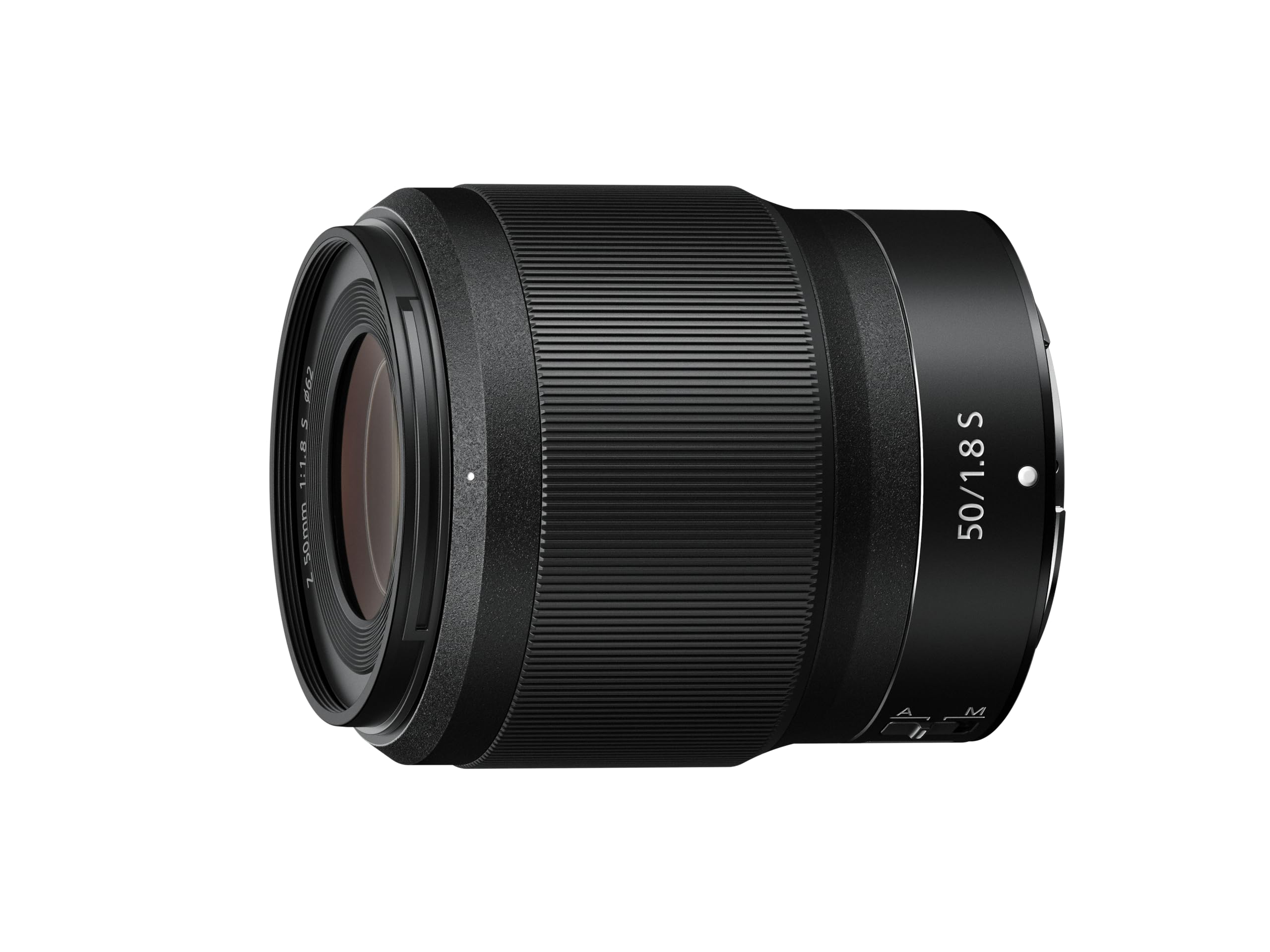
Sharpness wide open is the Z 50mm f/1.8 S's calling card. Unlike a lot of fast primes that need stopping down to look their best, this one delivers crisp detail and clean color from the start, and the f/1.8 aperture gives portraits the smooth background separation people buy a 50mm for.

We think it is the clear default for Z portraits and low light. The stepping motor is quiet and quick, the build is weather resistant, and the 50mm field of view is the classic normal lens for a reason. It is a serious lens for a Z body, not a placeholder until something better comes along.

The 14.56-ounce weight is noticeable next to a tiny adapted fifty, though it balances well on a Z6 or Z7. We also appreciate that the lens is sealed, because a prime you carry every day should not be the weak point in bad weather. The result is a 50mm that feels like a long-term lens rather than a starter prime.

Pros

  • Sharp wide open at f/1.8
  • Weather-resistant build
  • Quiet, fast stepping motor
  • Smooth bokeh for portraits

Cons

  • Pricey for a 50mm prime
Our verdict

For Z-mount shooters who want a 50mm prime, this is the one we recommend: sharp wide open, weather resistant, and optically excellent.

Check Latest Price
3

Best All-Around Z Zoom

Nikon Z 24-120mm f/4 S

91 /100
LBD Score Outstanding

Key details

Mount
Nikon Z
Weight
1.4 lb
Focal Range
24-120mm
Max Aperture
f/4
View on Amazon

A single lens for a Z trip is the pitch, and the 24-120mm f/4 S makes a strong case. The range goes from a useful wide angle to a short telephoto, so landscapes, street scenes, and tighter portraits all fit without a lens change. The constant f/4 aperture keeps exposure consistent as you zoom, which matters more than a flashier variable-aperture spec when you are moving between subjects.

The lens is sharp across the frame even at f/4, with good contrast and detail that holds up into the corners. Two STM motors focus quickly and quietly, and the close-focus distance of 1.15 feet at any zoom position lets you fill the frame with details. We like the custom control ring for aperture or ISO, and the 1.4-pound build feels solid without making a Z body nose-heavy.

We think this is the best all-around zoom in the Z set for most people. It replaces a bag of primes for daylight travel, and the images hold up. For a one-lens kit, this is the zoom we reach for first.

Pros

  • 24-120mm covers wide to tele
  • Sharp at f/4 across the frame
  • Fast, quiet STM autofocus
  • Close focus at 1.15 feet

Cons

  • No lens-based VR
  • f/4 limits low-light work
Our verdict

For Z shooters who want one lens for travel and everyday work, this 24-120mm f/4 is the zoom we recommend.

Check Latest Price
4

Best Everyday DX Zoom

Nikon AF-S DX 18-140mm VR

90 /100
LBD Score Outstanding

Key details

Mount
Nikon F (DX)
Focal Range
18-140mm
Max Aperture
f/3.5-5.6
Stabilization
VR
View on Amazon

The lower cost of a renewed everyday zoom is what makes this 18-140mm worth a look. It covers the range most DX shooters use most—wide for interiors and landscapes, short telephoto for portraits and school events—so it can replace the kit lens and a second zoom in one barrel.

The 7.8x zoom is practical rather than exotic, and VR helps steady handheld shots at the long end. Focus is quick and quiet, and the lens is sharp enough for everyday pictures, with the kind of contrast that does not need much post-processing. It is not a low-light specialist; the f/3.5-5.6 aperture is the usual variable-aperture compromise, so indoor gyms and evening events will push the ISO.

The renewed part is the catch: check the glass, the zoom ring, and autofocus as soon as it arrives. We like that the lens includes original accessories and often looks like new. Inspect it carefully, and buy from a seller with a clear return window.

We recommend it when the budget is tight and one lens has to do the work of two. It is not the sharpest or fastest zoom here, but it is the most sensible way to cover 18-140mm without spending a lot. For a DX body that lives in a bag, that balance is hard to beat.

Pros

  • 18-140mm covers wide to tele
  • VR steadies handheld shots
  • Sharp, quick-focusing everyday lens
  • Renewed price keeps it affordable

Cons

  • 90-day warranty only
Our verdict

A renewed 18-140mm is the budget all-purpose zoom we recommend for DX shooters who want one lens and a low entry cost.

Check Latest Price
5

Best Budget Telephoto

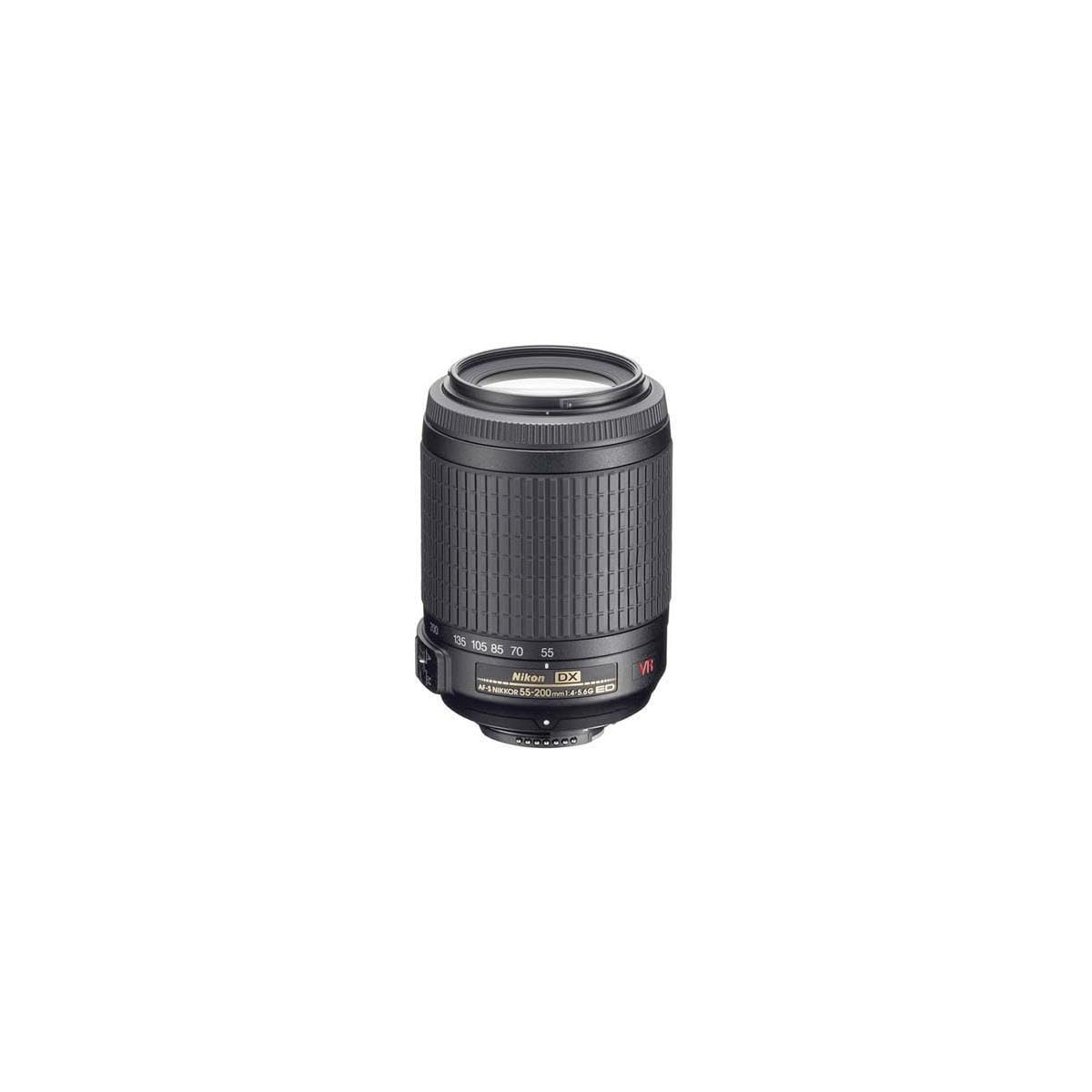
Nikon AF-S DX 55-200mm VR

93 /100
LBD Score Outstanding

Key details

Mount
Nikon F (DX)
Weight
9 oz
Focal Range
55-200mm
Max Aperture
f/4-5.6
View on Amazon

At 9 ounces, the 55-200mm VR is the telephoto zoom that disappears into a small bag. It measures about 3.1 inches long and 2.7 inches across, so it fits beside a kit lens without turning the camera bag into a workout. We like that the 55-200mm range is enough for portraits, school sports, and backyard wildlife, and VR helps keep the long end steady when the light is not perfect.

The optics are sharper than the price suggests, with good color and contrast, and the Silent Wave Motor focuses quickly in good light. The seven-blade diaphragm gives backgrounds a decent shape, though this is not a lens for creamy isolation. It is also light enough to hand-hold at 200mm, which is the point of the design.

The compromise is autofocus speed when the subject moves quickly; it can lag behind a dedicated action lens. For travel, portraits, and slower subjects, that is a fair trade for the weight and cost. We keep it in the bag when reach matters but weight matters more.

Pros

  • Very light 9-ounce build
  • VR helps at 200mm
  • Sharp everyday telephoto
  • Budget-friendly reach

Cons

  • Not water resistant
Our verdict

For DX shooters who want reach without weight, this 55-200mm VR is the budget telephoto we recommend.

Check Latest Price
6

Best Long Reach for DX

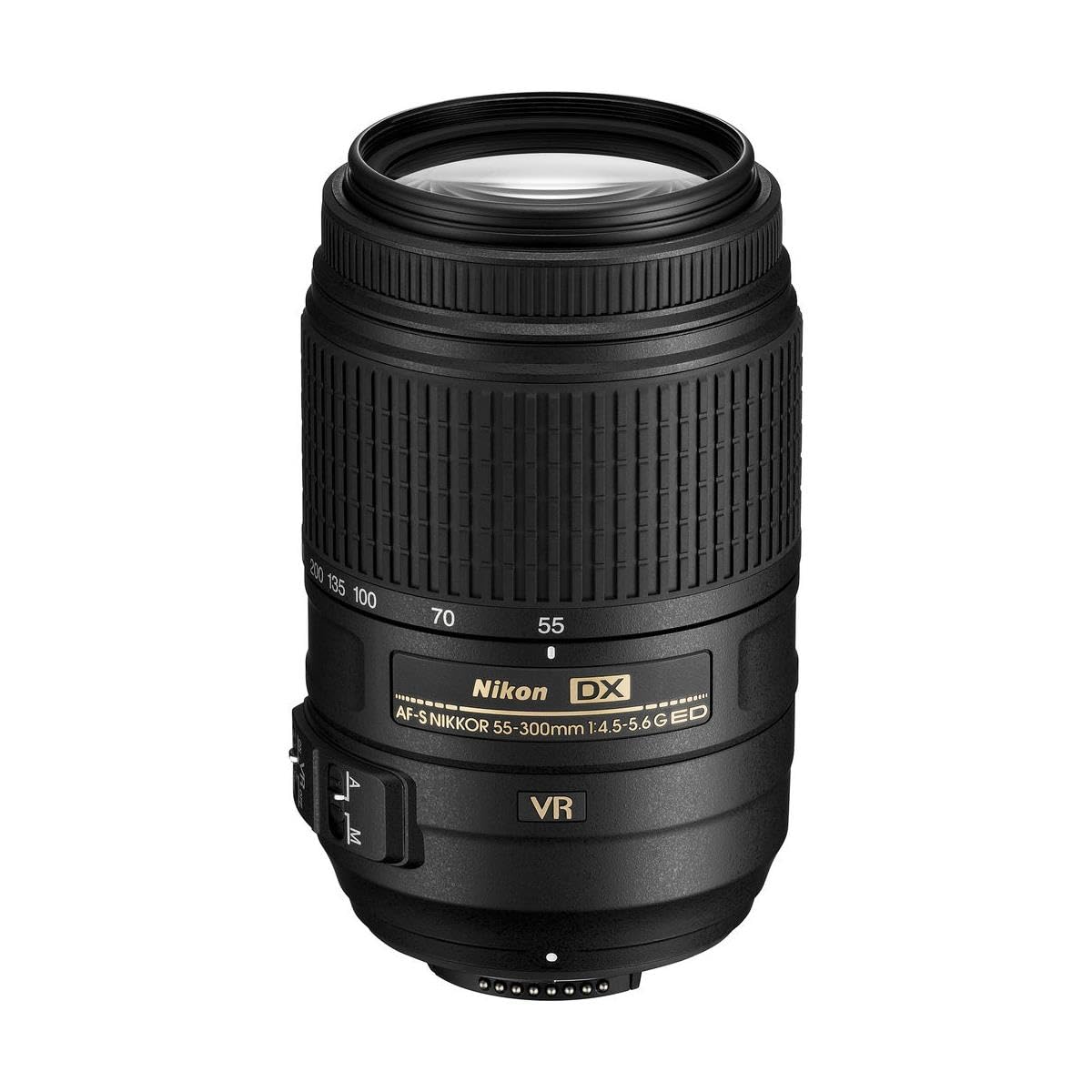
Nikon AF-S DX 55-300mm VR

93 /100
LBD Score Outstanding

Key details

Mount
Nikon F (DX)
Focal Range
55-300mm
Max Aperture
f/4.5-5.6
Stabilization
VR II
View on Amazon

The extra 100mm over the 55-200mm is the whole reason to consider this lens. At 300mm it pulls distant subjects closer, and the VR II system is rated for a four-stop advantage, which makes handheld shots at the long end more practical than the bare spec sheet suggests.

We like the reach and the image quality at the long end, where the two ED elements and HRI element keep color fringing under control. The nine-blade diaphragm gives backgrounds a pleasant shape, and the Silent Wave Motor is quiet in normal shooting. The 1.3-pound weight is the cost of the extra reach; it is still manageable, but you feel it after a long day.

For wildlife in good light, travel, and portraits, the reach is worth the compromise. We recommend it when 200mm is not enough and a superzoom is more than you need. It is not the lightest way to get to 300mm, but it is one of the most practical.

Pros

  • 55-300mm reach for DX
  • VR II stabilization
  • Sharp handheld at full zoom
  • ED glass controls color fringing

Cons

  • Autofocus can slow at 300mm
Our verdict

For DX shooters who need more reach than a 55-200mm, this is the telephoto zoom we recommend, provided you can live with slower focus at 300mm.

Check Latest Price
7

Best Travel Superzoom for Z

Nikon Z 28-400mm VR

90 /100
LBD Score Outstanding

Key details

Mount
Nikon Z
Weight
1.6 lb
Focal Range
28-400mm
Max Aperture
f/4-8
View on Amazon

A 14.2x zoom that runs from 28mm to 400mm is the travel-lens argument in one number. You can shoot a landscape at 28mm, a portrait at 85mm, and a distant animal at 400mm without changing lenses, which is exactly the kind of flexibility that keeps a camera bag small on a trip.

The lens is light for its class at 1.6 pounds, and the 5.0-stop VR helps steady handheld shots at the long end. Sharpness holds up better than a superzoom has a right to, and the close-focus distance of 0.2 meters at 28mm gives you a useful near-macro option. The linear manual-focus drive is smooth enough for video, too.

We think it is the best one-lens travel choice in the Z set for most trips. For a trip where one lens has to cover everything, the range is worth it. It is the lens that keeps a Z bag to one slot.

Pros

  • 28-400mm covers wide to supertele
  • Light for its zoom class
  • 5-stop VR
  • Sharp across the range

Cons

  • f/8 at 400mm needs bright light
  • Autofocus can lag at 400mm
Our verdict

For Z shooters who want one travel lens from wide angle to 400mm, this is the superzoom we recommend, with the caveat that f/8 at the long end needs light.

Check Latest Price
8

One-Lens DX

Nikon AF-S DX 18-300mm VR

91 /100
LBD Score Outstanding

Key details

Mount
Nikon F (DX)
Focal Range
18-300mm
Max Aperture
f/3.5-6.3
Stabilization
VR II
View on Amazon

The hassle of swapping lenses is what the 18-300mm exists to remove. It starts at a true wide angle for landscapes and interiors, moves through portrait lengths, and reaches 300mm for wildlife and sports, so one barrel can cover a whole day of shooting.

The 16.7x range is the headline, and VR II helps at the long end. The lens also focuses close enough for 0.32x magnification, which makes it more useful for flowers and details than a pure telephoto zoom. We like the convenience of leaving the bag at home and carrying one body and one lens.

The aperture runs from f/3.5 to f/6.3, so the lens is at its best in good light. On a family trip, it means no bag, no swaps, and no missed shots because the wrong lens was mounted. That convenience is the product.

We recommend it when one lens has to do everything and you prefer not to miss the shot. It is not the lens for a dedicated wildlife trip, but it is the one that stays on the camera on vacation. That is the trade we are happy to make.

Pros

  • 18-300mm one-lens range
  • VR II stabilization
  • 0.32x close-up magnification
  • Saves lens changes

Cons

  • Image quality softens at 300mm
  • Autofocus can slow in low contrast
Our verdict

For DX shooters who want one lens for wide, portrait, and wildlife, this is the versatile superzoom we recommend, as long as you accept the soft long end.

Check Latest Price

How We Chose and Tested These Lenses

We started by sorting Nikon's catalog into the focal lengths people actually buy — a fast standard prime, a walkaround zoom, a wide-to-telephoto all-in-one, and a long telephoto — then cut anything that duplicated a range or sat well above what most readers spend. Since plenty of shoppers buy renewed, we included a couple of those copies instead of pretending they don't exist. Twelve lenses made the cut, and testing ran nine months.

They went where photographs actually happen: a birthday party in a dim living room, a kid's soccer game at dusk, a cabin weekend, two hikes, and a dusty hour in the bed of a truck. We mounted them on both DX and FX bodies and handed them to two shooters of different skill levels to see how forgiving each one was.

Every lens got the same treatment. We shot a brick wall and a page of newsprint at maximum aperture and again at f/8, then compared 100 percent crops to see where the corners fell apart. For autofocus, we had a dog sprint toward the camera and counted how many frames were genuinely in focus, indoors and out. We shot handheld at 1/15 second with stabilization on and off to see what it bought, and turned each zoom ring a few dozen times to feel for drag and creep.

Durability came from living with them: padded bags, light rain, a dropped cap or two, and a lot of front-element wiping to watch for dust creeping in. At the end we weighed what each one delivered against what it cost, renewed copies included.

How to Choose a Nikon Lens

Match the Mount Before Anything Else

The first check is the camera's mount, not the lens's focal length. Nikon F lenses fit DSLRs; Nikon Z lenses fit mirrorless bodies, and the two systems do not swap without an adapter. Within F-mount, DX lenses are built for crop-sensor bodies and FX lenses for full-frame. We put mount compatibility first because the wrong mount makes every other specification irrelevant. Check the badge by the lens release, then decide whether you need DX or FX coverage. If you split time between bodies, buy for the camera you use most.

Choose a Focal Range for the Pictures You Take

A 50mm prime is the classic people-and-low-light lens; an 18-140mm or 24-120mm zoom covers wide to short telephoto for travel and events; a 55-200mm or 55-300mm adds distance without much bulk. We prefer a fast prime when indoor portraits matter and a zoom when you cannot move. The mistake is buying a superzoom for its range and expecting prime-level sharpness at the long end. Pick the range you will actually use, then check the long-end aperture.

Decide How Much Light You Need

Maximum aperture controls low-light performance and background blur. An f/1.8 prime gathers far more light than an f/4 zoom, and it gives you a shallower depth of field for portraits. Variable-aperture zooms often drop to f/5.6 or f/6.3 at the long end, which is fine outdoors but pushes ISO indoors. We prioritize a fast aperture for available-light work and accept a slower zoom for daylight travel. If you shoot both, a prime plus a slower zoom makes more sense than one compromise lens.

Weigh Stabilization, Autofocus, and Size

Vibration reduction helps handheld shots at long focal lengths, but it does not freeze moving subjects. Autofocus compatibility matters just as much: some Nikon DSLRs lack a screw-drive motor, so the lens needs its own motor to autofocus. We also check weight against the body we plan to carry—a 9-ounce telephoto is easy to pack, while a 1.6-pound superzoom is a deliberate choice. Try the balance on your camera before a long trip; the best lens is the one you will actually carry.

Frequently Asked Questions

Final Verdict

Start with the Nikon AF-S 50mm f/1.8G if you shoot an F-mount DSLR. It is the lens we recommend first because it is fast, sharp, and inexpensive enough to live on the camera, and it handles portraits and low light better than any kit zoom here. For Z bodies, the Z 50mm f/1.8 S is the equivalent choice; for one-lens travel, the Z 24-120mm f/4 S is the better compromise. If reach is the priority, the 55-300mm VR is the DX step-up.