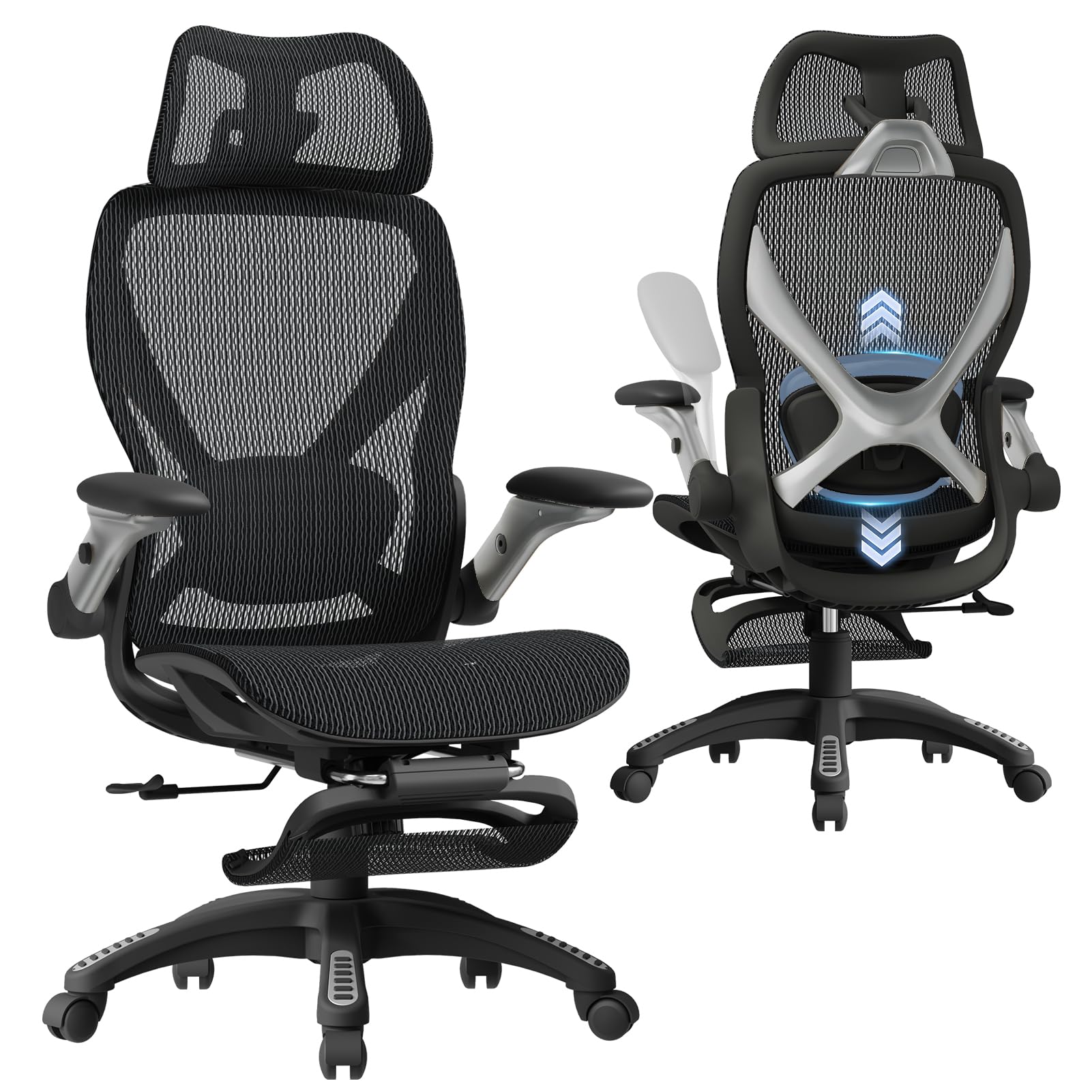
Best Mesh Gaming Chairs of 2026

Race-style gaming chairs photograph beautifully and then punish you around hour three, when the faux leather starts sticking to your back. Mesh is the fix — it's why I swapped my own bucket seat for a mesh chair and never went back. But mesh alone doesn't make a chair good: cheap ones wobble at the gas lift, the arms won't clear a desk, and the lumbar support turns out to be a plastic lump screwed into the backrest.

What you actually want is a chair that stays quiet through a nine-hour workday and a long evening session, then rolls out of the way when you're done. My team and I spent seven months with 12 mesh gaming chairs, and the differences came down to details the listings bury: how far the flip-up arms really flip, whether the headrest stays where you put it, whether the footrest sags.

One thing I've learned the hard way: mesh tension matters more than mesh thickness, and chairs built for big and tall users usually sit on a sturdier base to begin with. The picks below are the ones that held up.

1

Best Overall

ELABEST X100

91 /100
LBD Score Outstanding

Key details

Mesh
Dual-Stripe AirMesh
Recline
3-stage with footrest
Armrests
5D flip-up
Weight Capacity
300 lb
View on Amazon

The X100's 5D flip-up arms are the detail that sold us on it for a desk that has to switch between work and play. The arms adjust in five directions and flip up when you want to pull the chair under the desk or use a keyboard tray. That sounds small until you have spent a session with armrests that fight your elbows. The 3D headrest and 3D lumbar support follow the same logic: they adjust enough to find a useful position rather than a decorative one.

We spent most of our time with the lumbar support dialed in rather than the recline, because the mesh back and seat are what make the X100 comfortable for long sessions. The dual-stripe mesh has a light, breathable feel, and the seat has enough give for a full workday. The 3D lumbar panel adjusts in depth, height, and angle, which is more useful than a fixed cushion you either fit or you don't. The headrest stays where you put it when you lean back.

The footrest is what makes it a gaming chair rather than just an office chair. It extends to 18 inches and pairs with a three-stage recline, so you can go from upright typing to a reclined controller session without rearranging the room. At 43 pounds, the X100 is stable when you move it, but it is not the chair you carry between rooms. The 300-pound rating matches the GABRYLLY, and the base and silent casters feel appropriate for the price.

The main trade-off is seat depth. At 18 inches, the X100 suits average-height users; if you are taller, the GABRYLLY's 20-inch seat gives you more thigh support. That is a fit question rather than a defect, and it is the one reason we point taller shoppers to the GY01. For everyone else, the X100 is the more complete package.

Pros

  • 5D flip-up arms clear a keyboard tray
  • 3D lumbar and headrest adjust for long sits
  • Mesh back and seat stay breathable
  • Footrest and three-stage recline

Cons

  • Costs more than our runner-up
Our verdict

The X100 is the mesh chair we recommend for long gaming and work sessions, with 5D flip-up arms, 3D lumbar support, and a footrest that adapt to both upright and reclined use.

Check Latest Price
2

Best for Taller Users

GABRYLLY GY01

91 /100
LBD Score Outstanding

Key details

Mesh
High-density mesh
Recline
135° with footrest
Armrests
Flip-up, 2D adjustable
Weight Capacity
300 lb
View on Amazon

The GY01's 20-inch seat depth and 23.6-inch maximum seat height are the numbers that matter if you are taller than average. That extra depth gives your thighs more support than the X100's 18-inch seat, and the higher range lets you sit with your feet flat without feeling like your knees are up around your ears. The 3D headrest and flip-up arms are useful too, but the fit is the reason this chair earns a place next to our top pick.

We like the mesh back and seat for the same reason we like the X100: air moves, and the chair does not turn into a heat trap during a long session. The 3D headrest adjusts to support your neck, and the flip-up arms let you get the chair closer to a desk. The footrest extends to 18.1 inches and pairs with a 135-degree recline, so the GY01 can shift from upright work to a lounging position. The 300-pound rating and BIFMA certification are reassuring, and assembly is straightforward.

The GY01 is not as adjustable as the X100. Its arms move in fewer directions, and the lumbar support is a fixed panel rather than the X100's 3D adjustable piece. That matters if you switch between keyboard and controller, because the X100's arms are easier to fine-tune. The deeper seat is also a trade-off: shorter users may find the 20-inch depth pushes them forward, so check the fit before you commit.

For taller gamers who want a mesh chair with a footrest, the GY01 is the better fit. For everyone else, the X100's extra armrest adjustment makes it the safer default.

Pros

  • 20-inch seat depth suits taller users
  • 3D headrest and flip-up arms
  • Footrest and 135-degree recline
  • 300-pound rating and BIFMA-certified build

Cons

  • Gas lift can sink or stick
Our verdict

The GY01 is the better mesh chair for taller users, with a deeper seat and higher height range, and its footrest makes reclined sessions easy.

Check Latest Price

What Seven Months in 12 Mesh Chairs Taught Us

We started by gathering every mesh gaming chair a real shopper might land on — big-box listings, brand-direct pages, the models that keep coming up in forum threads — then cut anything with fixed arms, a weight rating under 300 pounds, or a seat pan too shallow for long sittings. That left 12 chairs. Two testers of very different builds rotated through all of them for seven months, long enough for the new-chair honeymoon to wear off and for the squeaks to show up.

Each chair lived where yours would: at a desk through full workdays, pulled back for evening sessions, and in one small apartment where it had to tuck under a 28-inch desk with the arms flipped up. We assembled all 12 alone with only the included tools, timing each build and noting whether the bolt holes lined up without a fight. Stability got checked both ways, locked upright and fully reclined, on carpet and hardwood, with a hard push at the top of the backrest to see how much the base gave.

Comfort was judged in four-hour stretches; we tracked where the pressure landed, whether the seat edge cut into the thighs, and whether the mesh still felt cool at hour three. Every headrest, lumbar pad, and armrest went through its full range, then got checked a week later to see if it had drifted. Footrests earned their own trial during evening sessions — legs up for a movie versus legs up mid-match. Value came last: what each chair still felt like after months of daily use, against what it cost.

How to Choose a Mesh Gaming Chair

Look for mesh where it counts

Mesh backs are common; mesh seats are the feature that separates a chair you can sit in for hours from one that traps heat under your thighs. The X100 and the GY01 both use mesh in the back and seat, which is the configuration we look for in a warm room or a long session. A mesh back with a foam seat can still get clammy, so check the seat material before you buy. The trade-off is less cushioning than a thick foam seat, so pay attention to the seat edge if you are near the top of the weight rating.

Fit the seat and lumbar to your body

Lumbar support only helps when it lands in the right spot. The X100's 3D lumbar adjusts in depth, height, and angle; the GY01 uses a fixed lumbar panel and puts the adjustment into its 3D headrest. Seat depth is the other half of fit: the X100 lists 18 inches, the GY01 20 inches. A deeper seat gives taller users more thigh support, but it can push shorter users forward. Sit with your back against the backrest and check for two or three fingers of space behind your knee.

Match the arms and recline to your setup

We like flip-up arms for a shared desk. They let you push the chair under the desk and get the arms out of the way for a keyboard tray. The X100's 5D arms move in more directions than the GY01's 2D arms, which matters if you switch between a keyboard and a controller. Recline is the other half: both chairs have a footrest, but the X100's three-stage mechanism is easier to set for upright work versus lounging. If you mostly sit upright, spend the money on lumbar and arms before recline.

Check the base, gas lift, and weight rating

A mesh chair still has to hold you up. Both picks are rated to 300 pounds and use a five-star base with swivel casters. The gas lift is the part that wears first, so check for height drift and stay within the stated weight rating. If you have deep carpet, plan on a chair mat or swap the casters; small wheels can dig in and make the chair feel unstable. A higher weight rating is not a substitute for a solid base, so look at both.

Frequently Asked Questions

Final Verdict

The ELABEST X100 is the mesh gaming chair we recommend for most people. Its 5D flip-up arms, 3D lumbar support, and three-stage recline with footrest handle both upright work and reclined gaming, and the mesh back and seat keep air moving. If you need a deeper seat and a higher height range, the GABRYLLY GY01 is the better fit.