Best On-Ear Headphones of 2026

On-ear headphones solve a problem that over-ears create: they fold down small, sit lighter on your head, and don't turn your ears into a sauna by the second stop on the train. The catch is the clamp — the pair that feels fine for ten minutes can be unpleasant by hour three, and comfort in this category shows up late, not early.

My team and I spent six months wearing 12 pairs through commutes, desk days, and long walks, and the differences that decided things were rarely the ones printed on the box: how the headband settled, whether the pads turned sticky, whether the tuning held up once traffic got loud. On-ears also never cancel noise the way a good over-ear does, so I weighed battery life, call clarity, and multipoint connections just as heavily as noise cancelling.

Below are the pairs worth owning, from inexpensive second-pair options to ones that can replace what you're already using. Each got a full workday on my head before it earned an opinion.

1

Best Overall

Beats Solo 4

93 /100
LBD Score Outstanding

Key details

Battery Life
Up to 50 hours
Connectivity
Wireless Bluetooth; Apple and Android
Charging Time
2.15 hours
Spatial Audio
Personalized with head tracking
View on Amazon

Fifty hours is the number that makes the Solo 4 easy to recommend, but the battery is only half the case. Beats pairs that runtime with personalized spatial audio and dynamic head tracking, so movies and games have a sense of place that ordinary stereo on-ears here do not. The sound is punchy and balanced, and Apple/Android compatibility means the choice does not lock you into one phone ecosystem. At this price, we expect the whole package, and the Solo 4 largely delivers it.

A full charge is rated at 2.15 hours, and 50 hours of playback means you can go a workweek without hunting for a cable. The ear cups adjust and angle to keep a stable fit, and the soft pads keep pressure reasonable for short sessions. It is the pair we reach for when we want one headphone to cover a commute, a laptop, and a flight without babysitting a charger.

The Solo 4 is built for someone who wants a clean, cable-free setup. The spatial audio is the feature that keeps it from feeling like a plain battery upgrade, and the Beats app gives you a little control over the sound. If you want a single on-ear that feels current without chasing every new codec, this is the one we hand over first.

Pros

  • Up to 50 hours of playback
  • Personalized spatial audio with head tracking
  • Apple and Android compatibility
  • Secure adjustable on-ear fit

Cons

  • No active noise cancellation
  • Clamp can tire ears in long sessions
Our verdict

The Solo 4 is our default wireless on-ear for big sound and week-long battery, provided you can live with on-ear clamp.

Check Latest Price
2

Best Value Wireless

Sony WH-CH520

89 /100
LBD Score Excellent

Key details

Battery Life
Up to 50 hours
Connectivity
Bluetooth 5; multipoint
Charging Time
3 hours
Earcup Design
Swivel earcups
View on Amazon

A 50-hour battery and two-device pairing are the headline, but the swivel earcups are what make the WH-CH520 easy to live with. Sony keeps the frame light, adds a built-in mic for calls, and puts EQ controls in its app. The earcups turn flat against the headband, so the headphone slips into a bag more easily than the fixed-cup designs here.

We think this is the value wireless pick because it covers the everyday jobs without asking you to pay for premium materials. Multipoint switching between a laptop and phone is the feature we use most, and the 50-hour rating means charging is a weekend chore rather than a daily one. Calls are clear enough for meetings, and the app EQ lets you soften the treble if the default sound feels bright.

Comfort is decent rather than universal. The light build keeps pressure low, and the swivel cups make storage easy. The plastic frame is the part we treat gently, but for a first wireless on-ear the basics are right.

Pros

  • Up to 50 hours of battery
  • Multipoint pairing for two devices
  • Built-in mic for calls
  • Swivel earcups pack flatter

Cons

  • No carrying case in the box
Our verdict

The WH-CH520 is our value wireless pick for long battery and two-device switching, with a light fit that suits everyday listening.

Check Latest Price
3

Best Battery Life

Marshall Major V

93 /100
LBD Score Outstanding

Key details

Weight
7.84 oz
Charging
Wireless charging
Battery Life
100+ hours
Connectivity
Bluetooth 5.3; detachable 3.5mm cable
View on Amazon

One hundred hours of playback is the kind of number that changes how you pack for a trip, and the Major V backs it up with a foldable body and a detachable cable. The square cups and black finish look like a piece of Marshall gear before you ever put them on. Wireless charging is a nice touch, and the M-button can be set to Spotify Tap or the EQ.

In use, the foldable design and 3.5mm cable are the practical bits we appreciate. You can pack the Major V flat, and if the battery runs out, a cable turns it into a passive headphone. Sound is warm and bass-forward, which suits rock and podcasts; it is not the most neutral tuning in this set.

Where the Major V earns its place is battery and style. The 100-hour runtime means we charge it almost as an afterthought, and the detachable cable gives it a second life when the battery is empty. It is the on-ear we take when the trip is long and the look matters. That makes it a travel-first pick rather than the all-rounder.

Pros

  • 100+ hours of playtime
  • Foldable with detachable audio cable
  • Wireless charging
  • Distinctive Marshall design

Cons

  • No active noise cancellation
  • Can lose Bluetooth connection after firmware updates
Our verdict

The Major V is the travel on-ear for anyone who wants 100-hour battery and Marshall style, not active noise cancellation.

Check Latest Price
4

Best Noise-Cancelling Value

JBL Tune 670NC

88 /100
LBD Score Excellent

Key details

Weight
6.14 oz
Battery Life
Up to 70 hours
Connectivity
Bluetooth 5.3; multipoint
Noise Control
Adaptive noise cancelling
View on Amazon

Active noise cancellation usually pushes an on-ear into premium territory; the Tune 670NC is the exception we keep coming back to. JBL fits adaptive ANC, Bluetooth 5.3 with LE Audio, multipoint pairing, and up to 70 hours of battery into a 174-gram frame that folds at the hinges. That is a lot of useful technology for the money, and it is why this one sits near the top of the value conversation.

The ANC is the main event. It does its best work on the steady low-frequency noise of a bus, train, or air conditioner; voices and higher clatter still get through, which is normal for on-ear headphones. The 70-hour rating is generous, and a 2-hour charge gets you back out. The earcups fold rather than just swivel, so the JBL takes up less room in a bag than the Sony WH-CH520.

At 174 grams it is light enough to forget on a short walk, and the button controls are easy to find without looking. The sound is bass-forward but clear, with enough detail for podcasts and playlists. The foldable body and 70-hour battery are the two features that make it easy to live with.

Pros

  • Adaptive active noise cancellation
  • Up to 70 hours of battery
  • Multipoint and foldable design
  • Light 174-gram build

Cons

  • On-ear fit can press on larger ears
  • Microphone struggles in noisy places
Our verdict

The Tune 670NC is the value noise-cancelling on-ear we recommend, provided the on-ear fit suits your ears.

Check Latest Price
5

Best Budget Wired

Sony MDR-ZX110

91 /100
LBD Score Outstanding

Key details

Weight
4.76 oz
Cable Length
3.94 ft
Connectivity
Wired 3.5mm
Frequency Response
12 Hz to 22 kHz
View on Amazon

A spare-pair price is not the point, though it helps; the MDR-ZX110 earns a place because it does the simple things well. Sony's wired on-ear is light, uncomplicated, and ready for a laptop or phone with a 3.5mm jack. The swiveling earcups fold flat for storage, and the 3.94-foot cord is long enough for a desk without turning into a trip hazard.

Sound is the surprise. The 12 Hz to 22 kHz range and 24-ohm impedance make it easy to drive from a phone or laptop, and the closed-back cups give it more bass than the price suggests. It is not a detailed audiophile listen, but it is clear and comfortable for podcasts, videos, and everyday music.

The cushioned pads are soft enough for long stretches, and the swivel design makes the Sony easy to pack. The L-shaped plug is a small but useful detail because it puts less strain on the jack when the cable is pulled. The wide frequency range also means it does not sound thin on spoken word.

For us, the MDR-ZX110 is the cheap wired pair that earns its place by doing the basics without fuss. It is the one to buy if you want a backup for a laptop, a child's homework station, or a travel kit that does not depend on charging. The sound and comfort are better than the price implies, and that is the whole argument.

Pros

  • Very low price for wired sound
  • Swiveling earcups fold flat
  • Comfortable cushioned pads
  • Wide 12 Hz to 22 kHz range

Cons

  • No microphone for calls
  • Plastic frame is not built for rough handling
Our verdict

The MDR-ZX110 is the cheap wired on-ear we keep as a desk or travel spare, with sound and comfort that beat its budget price.

Check Latest Price
6

Lightweight Budget

JBL Tune 530BT

83 /100
LBD Score Excellent

Key details

Weight
5.44 oz
Driver Size
33 mm
Battery Life
Up to 76 hours
Connectivity
Bluetooth 6; multipoint
View on Amazon

At 5.44 ounces, the Tune 530BT is the lightest-feeling wireless pair in this group. JBL uses 33mm drivers and a simple plastic frame, and the result is a headphone you can wear for a long stretch without feeling a strong clamp.

Battery is the other reason it stands out. JBL rates it at up to 76 hours, which is longer than the Beats Solo 4 and Sony WH-CH520, and Bluetooth 6 with multipoint means it can stay paired to a laptop and phone at the same time. A five-minute speed charge is there for the morning you forget to plug it in, and the JBL app adds EQ presets if the default bass is too much.

What you give up is a wired fallback. The Tune 530BT has no headphone jack, so a dead battery means silence until it charges, and there is no charger in the box. We still think it is the budget wireless pick for light wear and long battery, especially if you mostly listen in quieter places.

Pros

  • Up to 76 hours of battery
  • Bluetooth 6 with multipoint
  • Light 5.44-ounce build
  • 33mm drivers with app EQ

Cons

  • No active noise cancellation
Our verdict

The Tune 530BT is the budget wireless on-ear for listeners who want a light clamp and long battery above all.

Check Latest Price
7

Open-Back Wired

Moondrop Old Fashioned

89 /100
LBD Score Excellent

Key details

Cable
0.78mm 2-pin detachable
Design
Open-back; modular earcups
Driver Size
40 mm
Connectivity
Wired 3.5mm
View on Amazon

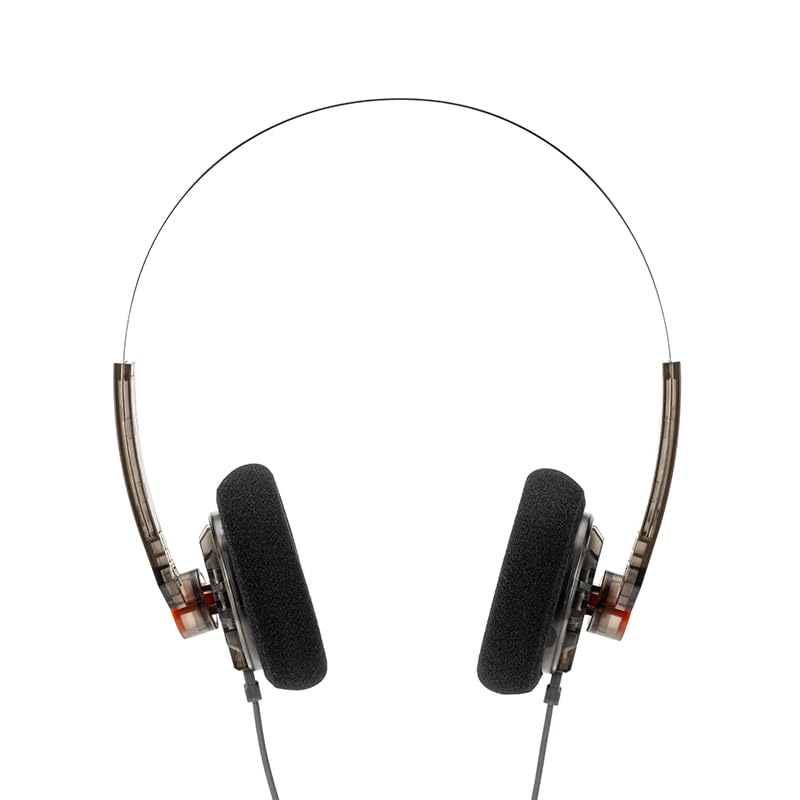
Two-pin detachable cables and swappable earcups are features you usually find on more expensive wired headphones, and the Old Fashioned brings them to a retro on-ear. Moondrop uses a 0.78mm two-pin cable, and the earcups and headband are designed to come apart, so worn parts can be swapped instead of turning the whole headphone into landfill. The silver look is a bonus, not the reason to buy it.

The 40mm open-back driver gives it a wide, airy presentation with decent imaging. It is not a bass-first headphone; if your playlist leans on hip-hop or electronic music, the Koss KPH40 will feel punchier. The Old Fashioned is better suited to acoustic, jazz, and spoken-word listening where separation and a sense of space matter more than thump.

Comfort is light and easy. The telescopic headband and multi-axis swivel hinges let the cups settle on the ears without much pressure, and the detachable cable means you can swap in a longer or shorter cord. The modular build is the feature we appreciate most; it makes the headphone feel like a project you can maintain rather than a sealed product.

For us, the Old Fashioned is the open-back wired on-ear for tinkerers and quiet-room listeners. It rewards a decent source, and the two-pin cable means a worn cord is not the end of the road. It is not the all-rounder in this group, but it is the one we enjoy for a specific kind of listening.

Pros

  • Modular detachable build
  • 0.78mm two-pin replaceable cable
  • Open-back 40mm driver
  • Light retro fit

Cons

  • Open-back design leaks sound both ways
  • Wired only, with no microphone
Our verdict

The Old Fashioned is the wired open-back on-ear for tinkerers who value repairability, a light fit, and a retro look.

Check Latest Price

How We Chose and Tested the Best On-Ear Headphones

We started by pulling together the on-ear models that keep resurfacing in reviews and spec sheets — cheap beaters and pairs priced like real headphones both — then cut anything that couldn't survive a week of ordinary use: no folding hinges, no option to plug in a cable. That left 12 pairs, which we've now worn for six months.

Every pair went through the same routine. I wore each one for a full eight-hour workday, noting when the clamp started to bite and whether the pads left my ears hot — those notes, not my first impressions, decided the comfort rankings. I listened to the same few tracks on each (one bass-heavy, one acoustic, one crowded mix) and paid attention to whether detail survived a noisy bus. Durability got checked the unglamorous way: tossing each pair uncased into a tote with keys and a water bottle, flexing the hinges, tugging cables on the wired models, wiping the pads to see what smeared.

We timed battery claims ourselves, charging to full and logging hours until each pair died, plus quick-charge runs to see what twenty minutes actually bought. For connectivity we paired to a phone and a laptop and swapped between them mid-song, counting dropouts on a busy street. Noise cancelling was judged against a box fan and a loud café rather than a lab, calls were tested from a windy sidewalk, and fit got a second opinion from a colleague with a wider head than mine. At the end we asked the blunt question: would I pay the asking price for this instead of the pair one tier up?

How to Choose On-Ear Headphones

Fit and Clamp Come First

On-ear headphones sit against the ear rather than around it, so clamp is the first thing to judge. A light pair such as the Sony WH-CH520 is easier to wear for casual listening, while a firmer fit keeps the JBL Tune 670NC stable on a walk. If you wear glasses or listen for hours, favor soft pads and a lighter headband, and take breaks rather than fighting pressure. The best spec sheet in the world does not help if you want to take the headphones off after twenty minutes.

Wired, Wireless, and Multipoint

Wireless is the convenient default, but the details matter more than the label. Multipoint lets a headphone stay paired to a laptop and phone at once, which is the feature we use most on the Sony WH-CH520 and JBL Tune 530BT. A detachable cable is the insurance policy: the Marshall Major V can keep playing when the battery is empty, and the Moondrop Old Fashioned lets you replace a worn cord. If you never want to think about charging, a wired model such as the Sony MDR-ZX110 is still the simplest answer.

What Noise Cancellation Can Do

Active noise cancellation is most useful against steady low-frequency sound: engine drone, air conditioning, the rumble of a train. It is less effective against nearby voices and sudden clatter, and an on-ear seal cannot block as much as an over-ear cup. If you commute and want the quietest on-ear here, the JBL Tune 670NC is the obvious place to start. If you need to hear traffic or a coworker, an open-back wired pair such as the Moondrop Old Fashioned is the more honest choice.

Battery Life and Charging Habits

For most people, 50 hours is already a week of listening between charges; the Beats Solo 4 and Sony WH-CH520 sit in that range. The Marshall Major V pushes past 100 hours, which matters more for travel than for a desk. Check what comes in the box: a five-minute speed charge is useful on the JBL Tune 530BT, but a missing charger or cable changes the routine. Wireless charging on the Major V is convenient if you already own a pad, not a reason to buy one.

Build, Repairability, and Storage

Folding hinges and swivel cups make a headphone easier to live with, but they are also stress points. A detachable cable is the most useful longevity feature here: the Moondrop Old Fashioned lets you replace the cord instead of retiring the headphone. Replaceable pads help too, especially on foam designs. If you tend to toss a headphone loose into a bag, choose a model with a case or at least a firm folding mechanism rather than the lightest plastic frame.

Frequently Asked Questions

Final Verdict

After comparing the group, the Beats Solo 4 is the on-ear we recommend first for most people. It has the best mix in this group of sound, 50-hour battery, and Apple/Android flexibility, and it is the one we are happiest to hand someone who wants a single wireless pair. If active noise cancellation is the priority, the JBL Tune 670NC is the better buy; if you want a lighter value wireless pair with strong battery and multipoint, the Sony WH-CH520 is the alternative.