Best Over-The-Range Microwaves of 2026

The rectangle above your stove is the least forgiving piece of real estate in a kitchen. Cabinet depth, range width, and the existing vent opening all decide what fits, and being off by half an inch means wrestling a very heavy box back to the store. We installed and cooked with seven over-the-range microwaves over eight months, and the differences rarely came down to the spec sheet.

What separated them was the stuff you notice on a Tuesday night: whether the fan pulls smoke off a cast-iron skillet, whether the cooktop light is bright enough to watch garlic brown, and whether the sensor knows when popcorn is done instead of trusting a timer. Installation is the other thing nobody warns you about — the mounting plate and venting direction eat more of your afternoon than wattage does.

The picks below cover what people actually need: a low-profile unit for a tight clearance, a fan quiet enough to talk over, a sensor that gets leftovers right. None of them replace a real range hood, but the better ones come closer than you'd guess.

1

Best Overall

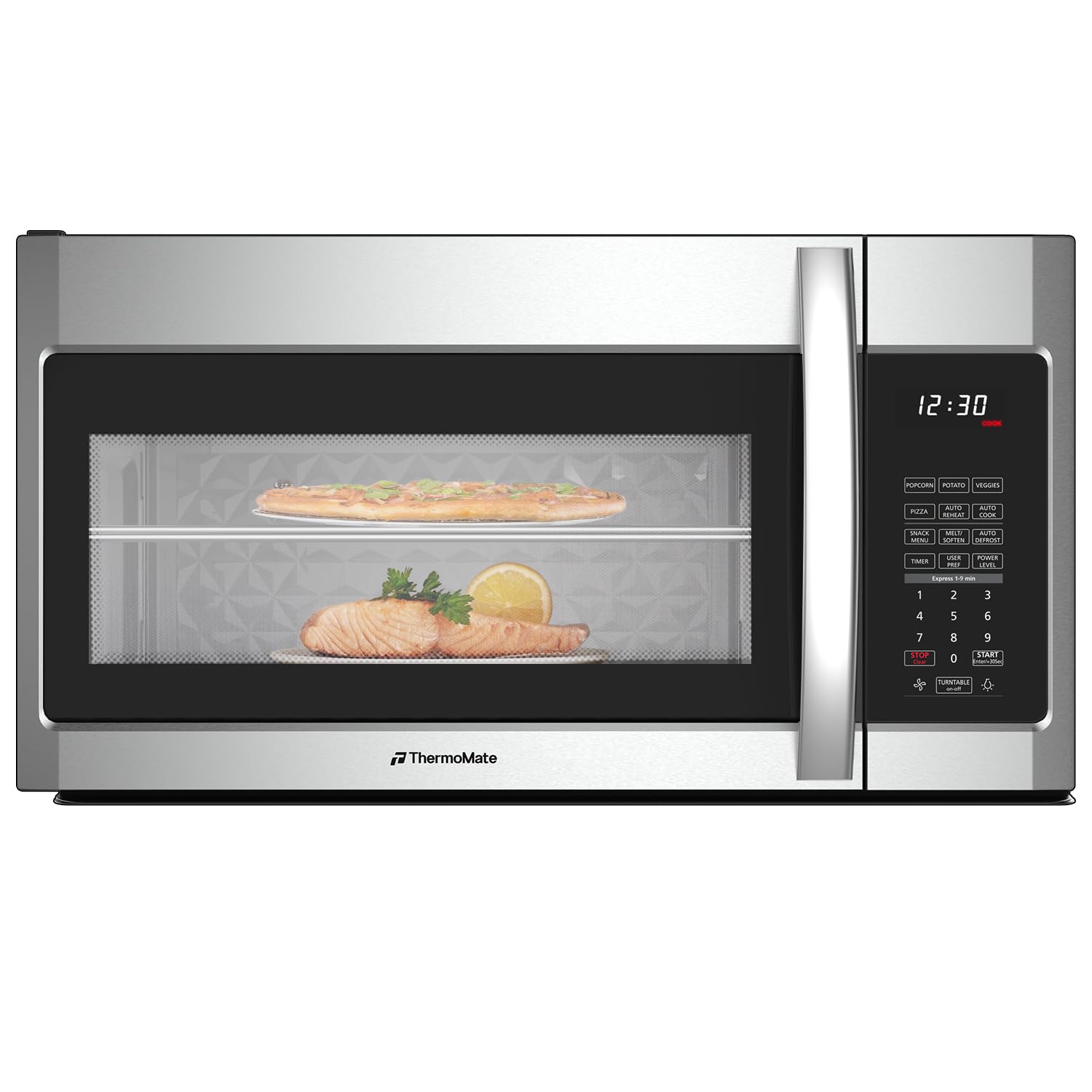
ThermoMate 1.9 Cu. Ft. OTR Microwave

84 /100
LBD Score Excellent

Key details

Venting
400 CFM
Capacity
1.9 cubic feet
Cooking Power
1000 watts
Sensor Cooking
Yes
View on Amazon

A 400 CFM vent fan and a 1.9-cubic-foot interior are the two numbers that matter most in this category, and the ThermoMate 1.9 brings both together. It also adds sensor cooking, a removable rack, and LED lighting inside and below the unit. That combination is unusual in this group, and it gives the microwave a clear role in a busy kitchen.

We think that mix earns the top spot for a family kitchen. The sensor system adjusts power and time for foods like vegetables and leftovers, which takes some of the guesswork out of reheating. The removable rack gives you a second level for a plate and a mug, though you will want to pull it out when a tall bowl needs the full height. The 13.5-inch turntable handles dinner plates without a fight.

The vent fan has two speeds, and 400 CFM is a real advantage over the 300 CFM models here if the unit is ducted outside. In recirculating mode, expect it to trap grease and odors rather than clear smoke from a hot kitchen. We also liked the LED cooktop light for chopping after dark. The touch controls are straightforward, with 11 power levels, a +30-second key, and a child lock.

Pros

  • 400 CFM venting clears smoke better
  • 1.9-cubic-foot interior fits family dishes
  • Sensor cooking reduces reheating guesswork
  • Removable rack adds a second level

Cons

  • Quiet finished-cooking alert
Our verdict

We recommend the ThermoMate 1.9 first for family kitchens because its 400 CFM vent and 1.9-cubic-foot interior handle smoke and big dishes better than the smaller, weaker-venting picks here.
Check Latest Price
2

Best Budget

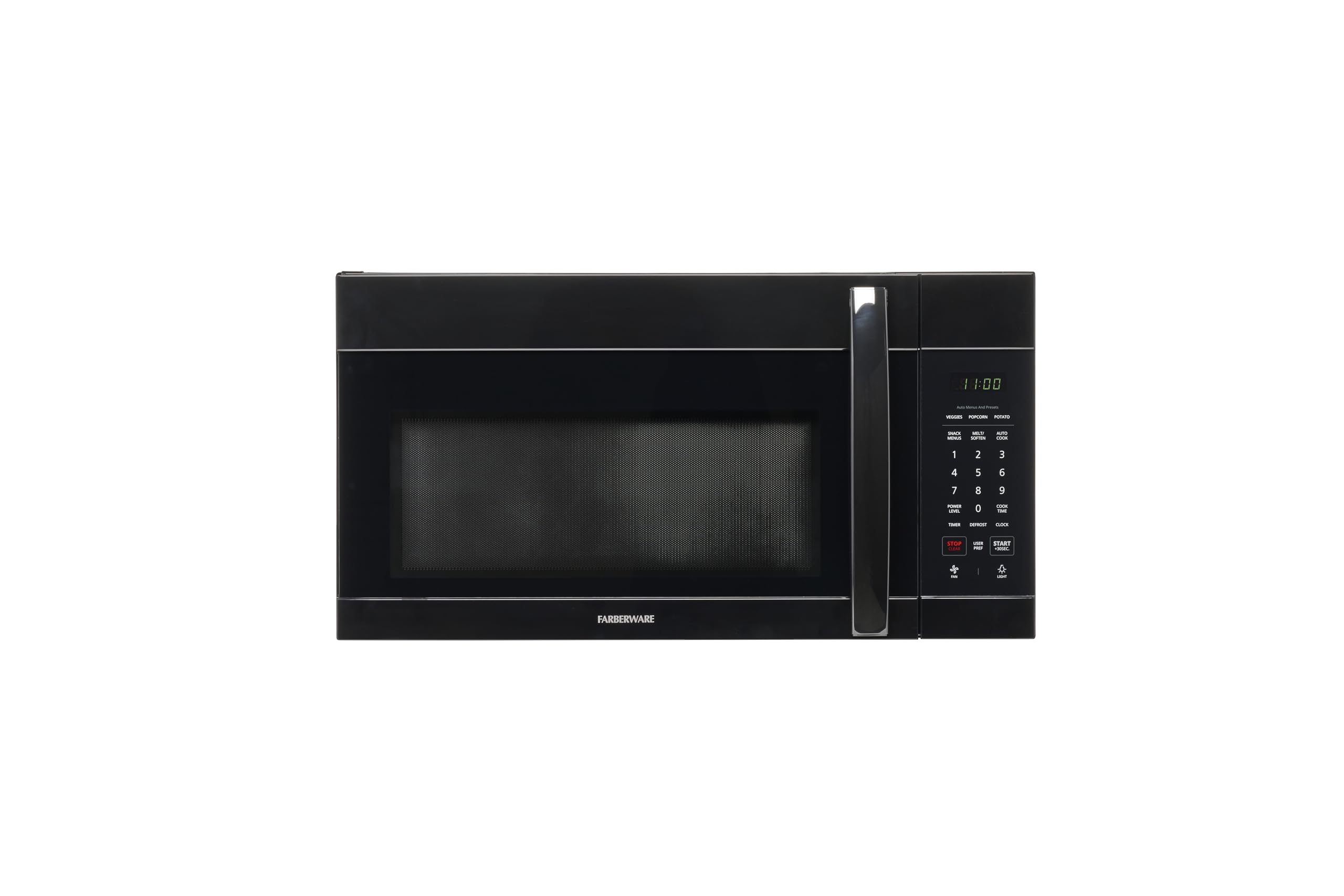
Farberware 1.7 Cu. Ft. OTR Microwave

84 /100
LBD Score Excellent

Key details

Capacity
1.7 cubic feet
Power Levels
10
Cooking Power
1000 watts
Turntable Diameter
12.5 inches
View on Amazon

The Farberware is the lowest-priced pick in this group, and it still gives you a 1.7-cubic-foot interior and 1000 watts of cooking power. That is the right starting point for a rental kitchen, a first over-the-range replacement, or anyone who wants the counter space back without paying for features they will not use. It does the core job without the extra bulk or the higher price of the larger models. We think it is the budget pick to beat here.

The controls are simple: 10 power levels, a 12.5-inch turntable, auto-cook options, time and weight defrost, melt and soften, and a +30-second key. We found the presets cover the everyday stuff—popcorn, vegetables, a potato—without burying the manual controls. The interior is roomy enough for dinner plates and a medium casserole, though wide platters will feel tight next to the 1.9-cubic-foot models.

Farberware lists a vent fan but does not publish a CFM rating, so this is a safer choice for light cooking than for a high-output gas range. The unit is a two-person install, and the grease filters take a little fiddling to seat. We also noted that the exterior wipes down easily, which matters more than it sounds in a kitchen that sees daily use.

Pros

  • Lowest price in this group
  • 1.7-cubic-foot interior with 1000 watts
  • Simple presets plus manual power levels
  • Easy-to-clean exterior

Cons

  • Dim interior and cooktop lights
Our verdict

We think the Farberware is the right budget buy for a rental or a simple replacement, as long as you can live with dimmer lighting and light-duty venting.

Check Latest Price
3

Best Low-Profile

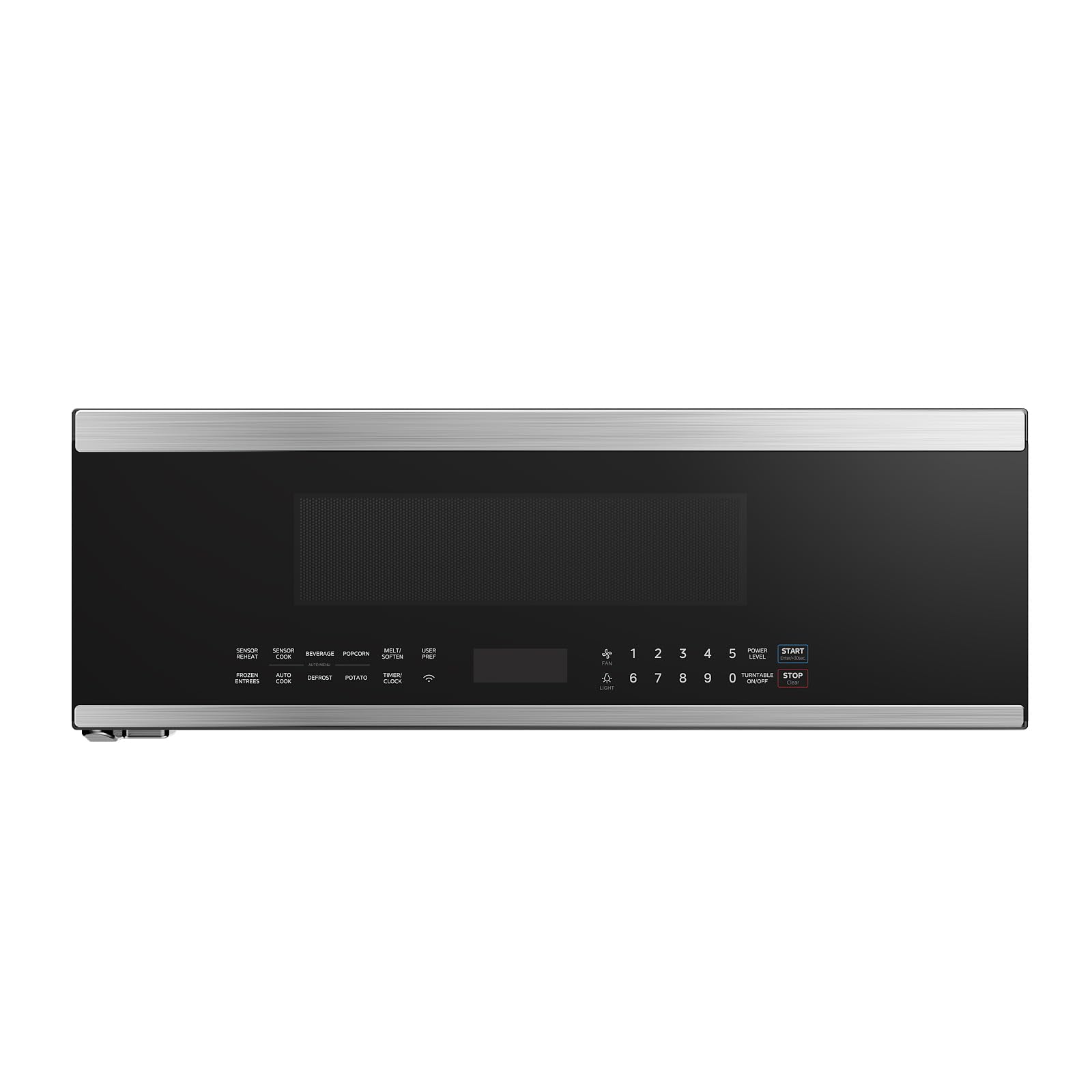
Midea 1.2 Cu. Ft. Low-Profile OTR Microwave

82 /100
LBD Score Excellent

Key details

Height
10.3 inches
Venting
400 CFM
Capacity
1.2 cubic feet
Smart Features
Voice control and app
View on Amazon

The Midea's 10.3-inch height is the reason to consider it. If your cabinets sit close to the range, or you have a shallow over-range alcove, a full-height microwave can crowd the space and block sightlines. This slim model keeps a low profile while still offering 400 CFM venting and sensor cooking.

The trade-off is capacity. At 1.2 cubic feet, the interior is noticeably smaller than the 1.7- and 1.9-cubic-foot models here, and the 12.4-inch turntable will not take the widest platters. We think that is a fair swap if clearance is your binding constraint; if you regularly cook for a family, the larger ThermoMate is the easier default.

We were pleasantly surprised by how much Midea packs into the slim body: nine power levels, sensor reheat, auto-cook menus, a child lock, and app and voice control. The smart features are handy when your hands are full, but the venting and the low-profile shape are the real reasons to choose it. Plan for a careful two-person install; the mounting still needs a secure bracket and a patient lift.

Pros

  • 10.3-inch height fits shallow cabinet runs
  • 400 CFM venting in a slim body
  • Sensor cooking and smart controls
  • Low-profile shape preserves sightlines

Cons

  • Costs more than larger-capacity picks
Our verdict

We recommend the Midea when cabinet clearance is the hard constraint, because its 10.3-inch height and 400 CFM venting are worth the smaller interior.

Check Latest Price
4

Best for Flexible Venting

Kenmore 1.7 Cu. Ft. OTR Microwave

83 /100
LBD Score Excellent

Key details

Venting
300 CFM
Capacity
1.7 cubic feet
Cooking Power
1000 watts
Venting Options
3-way
View on Amazon

Three-way venting is the detail that sets the Kenmore apart. If your ductwork runs up, back, or not at all, this model can be configured to match, which takes some of the guesswork out of replacing an older unit.

We think that makes it the pick for a straightforward replacement, especially when the old microwave's vent path is already fixed. The 1.7-cubic-foot interior and 1000 watts are familiar territory, and the six preset cooking options cover the basics without a learning curve. There are 11 power levels for manual cooking, so you are not locked into the presets, and the touch controls are simple enough to use without the manual.

The LED interior light is a help, and the cooktop light illuminates the range below. The 29.9-inch width is sized for a standard 30-inch opening, though you still need to check height and depth before you buy. The stainless finish is easy to wipe down, and the controls are uncluttered.

Pros

  • Three-way venting for flexible installation
  • 1.7-cubic-foot interior and 1000 watts
  • Simple controls with six presets
  • LED interior and cooktop lighting

Cons

  • 300 CFM venting is modest for heavy cooking
Our verdict

We like the Kenmore for replacements with fixed ductwork, where its three-way venting saves time and the simple controls cover everyday cooking.

Check Latest Price
5

Two-Stage Cooking

GASLAND 1.9 Cu. Ft. OTR Microwave

79 /100
LBD Score Very Good

Key details

Venting
400 CFM
Capacity
1.9 cubic feet
Cooking Power
1000 watts
Two-stage Cooking
Yes
View on Amazon

Two-stage cooking is a small feature with a real use. It lets you set one power level for the first part of a recipe and another for the finish, so a dish can start gently and then heat through without you standing over the keypad. We think the Gasland is the only pick here that lists that capability, and it pairs it with a 1.9-cubic-foot interior and 400 CFM venting.

The 11 power levels, nine presets, removable rack, and 13.5-inch turntable give you room to work. The black finish is a nice change from stainless if the rest of your kitchen leans that way, and the two LED cooktop lights make the range easier to see. The 400 CFM fan is strong for this group, so it can handle more smoke than the 300 CFM models.

The control panel is busier than the simplest models here, and the two-stage mode takes a few extra key presses. That is the trade-off for the flexibility, and it is one we are happy to make when a recipe actually calls for it. If you mostly reheat leftovers, the ThermoMate is the more straightforward buy; if you want a second cooking stage, this is the one.

Pros

  • Two-stage cooking handles multi-step recipes
  • 1.9-cubic-foot interior with removable rack
  • 400 CFM venting and LED cooktop lights
  • Black finish stands apart from stainless

Cons

No notable drawbacks to flag.

Our verdict

We recommend the Gasland if you want two-stage cooking and a black finish without giving up the 1.9-cubic-foot capacity and 400 CFM venting.

Check Latest Price
6

Budget Sensor Cooking

Empava 1.7 Cu. Ft. OTR Microwave

80 /100
LBD Score Excellent

Key details

Venting
300 CFM
Capacity
1.7 cubic feet
Cooking Power
1000 watts
Sensor Cooking
Yes
View on Amazon

Sensor cooking at a lower price is the Empava's calling card. The 1.7-cubic-foot model includes sensor cooking and a long list of auto menus, which is more automation than the Farberware offers for a little more money. If you want leftovers to reheat without guessing, this is the budget-minded way to get there.

The 1000-watt output and 11 power levels are familiar for this size. The interior fits standard dinner plates and a covered casserole, though it is not as generous as the 1.9-cubic-foot models. The 1.7-cubic-foot interior is the same size as the Farberware and Kenmore, so it should fit a standard 30-inch opening without surprises. The touch controls are clear, and the child lock is a useful detail if you have small kids.

We think the sensor and auto menus are the reasons to choose this over the Farberware, and the stainless surfaces wipe down easily. Installation is a two-person job, so line up help before delivery. For a simple kitchen that wants a little automation without the top-tier price, it is a sensible middle path.

Pros

  • Sensor cooking at a budget-friendly position
  • Broad auto-menu list for everyday foods
  • 1.7-cubic-foot interior with 1000 watts
  • Child lock and clear touch controls

Cons

  • 300 CFM venting is modest for heavy cooking
Our verdict

We think the Empava is the budget sensor-cooking pick, with auto menus that simplify reheating and a 1.7-cubic-foot interior that fits standard dishes.

Check Latest Price

How We Tested the Best Over-the-Range Microwaves

We started by pulling every model we could find in the standard 30-inch width and sorting by the things that actually limit a buyer: whether it vents outside or recirculates, how far the unit hangs over the range, and whether the mounting hardware suits a cabinet with no existing cutout. That long list became a shortlist of seven, which we bought at retail and installed ourselves — one in a ducted kitchen and the rest swapping in and out of the same recirculating setup over eight months.

Every unit went through the same week of ordinary cooking: reheating leftovers, popping popcorn on the sensor setting, defrosting a pound of ground beef, and searing steaks on the range below with the fan on high. We noted whether leftovers came out hot at the edges and cold in the middle, whether the sensor cut popcorn early or scorched it, and whether the fan cleared smoke before the alarm went off.

We installed each one with a tape measure and a level, timing how long the mounting plate took and checking whether the template lined up, then opening the door to see how it cleared the cabinet run. Noise was judged from the next room with the fan on high — could we hold a conversation? Brightness was checked at night with the kitchen lights off, watching garlic brown under the cooktop light.

Appearance and durability we judged the way you would: wiping fingerprints off stainless after a week of cooking, opening and closing the door a few hundred times, and noticing whether the handle felt solid or hollow. Value came last, and mostly meant asking whether the extra settings were ones we'd reach for twice and then forget.

How to Choose an Over-The-Range Microwave

Match the Vent to Your Kitchen

CFM is the number to compare, but the duct path decides how well the unit performs. A 400 CFM fan like the one on the ThermoMate 1.9 and Gasland has more capacity for smoke and odors than a 300 CFM model, especially on a gas range. If the microwave recirculates air through a charcoal filter instead of venting outside, it will trap grease and odors but will not clear smoke the same way.

Our advice: choose 400 CFM and outside ducting if you sear, fry, or cook on gas often. For light reheating and steam, a 300 CFM model is adequate. Check the CFM before you buy; the Farberware lists a vent fan but does not publish an airflow rating, so it is a better fit for gentle cooking than for a high-output range.

Measure the Opening, Not Just the Width

Most over-the-range microwaves are about 30 inches wide, but height and depth are where a replacement goes wrong. A standard cabinet opening can still be too shallow for a deep unit, and a low cabinet can leave no room for a tall one. Measure the width, height, and depth of the opening, then compare the appliance's exterior dimensions.

The Midea's 10.3-inch height is the outlier here, and it is the one to consider when the cabinet above the range sits low. The 1.7- and 1.9-cubic-foot models need more vertical room but give you a more usable interior. Do not assume the old mounting plate will line up; compare the bracket and hole pattern before you remove the old unit.

Choose Capacity for How You Cook

Capacity separates the everyday reheaters from the family-cooking models. A 1.2-cubic-foot interior like the Midea's is fine for plates, mugs, and small containers, but it will feel tight for a casserole or a full dinner plate with a cover. The 1.7-cubic-foot models are the sensible middle, and 1.9 cubic feet gives you the most room for wide dishes and a second level.

A removable rack adds flexibility, but it also cuts the height available for tall items. We like it for a plate and a mug at the same time; we take it out for a stockpot or a tall bowl. Match the turntable to your widest regular dish, and remember that a larger interior usually means a heavier unit and a more demanding install.

Decide How Much Automation You Want

Sensor cooking is the feature worth paying for if you reheat a lot of uneven leftovers. It measures steam and adjusts time and power, which takes some of the guesswork out of vegetables, rice, and plates straight from the fridge. Preset-only models are simpler and often cheaper, and they handle popcorn, defrost, and a baked potato perfectly well.

We think the ThermoMate 1.9 and Empava are the picks to compare here: both offer sensor cooking, but the ThermoMate adds a larger interior and a stronger vent. The Farberware and Kenmore rely on presets and manual power levels, which is fine if you mostly key in a time and hit start. More automation is not automatically better; it is better when it matches the way you actually cook.

Plan the Install Before You Buy

These units are heavy enough that the install is a two-person job, and the mounting plate has to be secure before the microwave goes up. Check the vent configuration, the electrical outlet, and the cabinet framing first. If you are replacing an old unit, the existing bracket may fit, but the hole pattern and vent cutout still need to match.

A three-way venting model like the Kenmore gives you more options when the ductwork is already fixed. Otherwise, follow the manual for the duct path and use the correct charcoal filter if the unit recirculates. Budget for help and a couple of hours; rushing the lift is how doors, brackets, and tempers get damaged.

Frequently Asked Questions

Final Verdict

The ThermoMate 1.9 is the over-the-range microwave we recommend first. Its 400 CFM vent and 1.9-cubic-foot interior are the most useful combination here, and sensor cooking makes everyday reheating less of a guess. If your cabinets sit low, the Midea's 10.3-inch height is the better fit; if the budget is tight, the Farberware covers the basics for less.

The deciding advantage is ventilation: 400 CFM gives you more headroom for smoke and odors than the 300 CFM models, and the interior is large enough for family dishes. Choose the ThermoMate unless clearance or budget changes the equation.