Best PA Speakers of 2026

A PA speaker has to do two jobs that pull against each other: get loud enough to fill a room, and stay light enough that you'll actually carry it there. Push one and the other suffers, which is why the category is full of boxes that sound impressive in a store and miserable by the third load-in. Get the balance right and a single speaker covers a backyard party, a band rehearsal, a wedding toast, and a market stall.

My team and I have spent the past eight months testing 10 powered PA speakers the way people actually use them — hauling them in and out of cars, pairing phones over Bluetooth mid-set, running them for hours at a stretch. The ones that held up had honest power, sturdy cabinets, and controls you can work in the dark.

One thing I'd tell any first-time buyer: wattage numbers on the box aren't comparable between brands, and a bigger number doesn't guarantee a louder room. What separates these models is coverage, whether the cabinet tilts back as a floor monitor, and whether battery life and wireless control hold up when there's no soundcheck. The picks below are the ones that did.

1

Best Overall

Bose S1 Pro+

91 /100
LBD Score Outstanding

Key details

Output
150 watts
Weight
14.4 lb
Battery
Up to 11 hours
Channels
3
View on Amazon

The number that gave us pause is 150 watts, which looks thin beside the 1,300- and 2,000-watt cabinets on this list. Then you pick it up. At 14.4 pounds with a proper handle, the S1 Pro+ goes from trunk to stand in one trip and runs on battery or wall power, which no other pick here does both of. For solo singers, celebrants, fitness instructors and anyone presenting to a room, that is the whole argument, and it is why this is the one we hand most people.

The four positions do more work than they sound like they would. Upright for a small room, tilted back on the floor as a monitor, on its side, or up on a 35 mm stand, with auto EQ adjusting the sound for each. We used the tilt-back angle most, because it aims the sound at a seated audience instead of over their heads. The three-channel mixer splits into two mic or instrument inputs and a dedicated playback channel, and the optional wireless transmitters stow inside the cabinet.

What you give up is headroom. In a loud room with a band, the S1 Pro+ runs out before the room does, and that is the EON715's job. It is also the most expensive per watt here, which is the trade: you are paying for the battery, the weight and the mounting options rather than for output.

Between gigs it doubles as a genuinely good Bluetooth speaker for a kitchen or a patio, which is more than the bigger cabinets here can claim. That flexibility, not raw volume, is what you are buying.

Pros

  • Runs on battery or wall power
  • Four positions including a monitor tilt
  • Three-channel mixer with two mic/instrument inputs
  • 14.4 pounds with a real carry handle

Cons

  • Bluetooth pairing can take a few attempts
  • Battery runtime shrinks at high volume
Our verdict

The one we recommend to most people buying a PA: battery or wall power, four positions, 14.4 pounds, and a genuine three-channel mixer.

Check Latest Price
2

Best for Bands and Big Rooms

JBL EON715

89 /100
LBD Score Excellent

Key details

Output
1,300 watts
Weight
46.5 lb
Woofer
15 inches
Channels
3
View on Amazon

Where the S1 Pro+ runs out — a loud room, a band, a DJ set with bass — the EON715 takes over. A 15-inch woofer and 1,300 watts give it low end a 10-inch cabinet can only hint at, and the JBL waveguide spreads that sound wide enough that the front row and the back wall get a similar version of the mix.

What we appreciated most is how little you have to bring with you. A three-channel digital mixer with a backlit LCD handles two mics or instruments plus playback, Bluetooth 5.0 lets you walk the room while the playlist runs, and setup is a power cable and a stand. Among the full-size cabinets here, this is the one that feels built for the job rather than assembled to hit a price.

The cost is weight and a cord. At 46.5 pounds it is a two-hand lift onto a stand, and it needs an outlet at every venue. If your gigs are solo acoustic sets or classrooms, the Bose is easier on your back; if you are amplifying a band or a dance floor, this is the cabinet to carry.

Pros

  • 1,300 watts and a 15-inch woofer for real low end
  • Three-channel digital mixer with backlit LCD
  • Bluetooth 5.0 streaming plus JBL Pro Connect app

Cons

  • AC power only, with no battery option
Our verdict

For bands, DJs and rooms that need real volume, this is the cabinet we point to: 1,300 watts, a 15-inch woofer and a mixer built in.

Check Latest Price
3

Best Value All-Rounder

ALTO TS410

87 /100
LBD Score Excellent

Key details

Output
2,000 watts
Weight
32 lb
Woofer
10 inches
Channels
3
View on Amazon

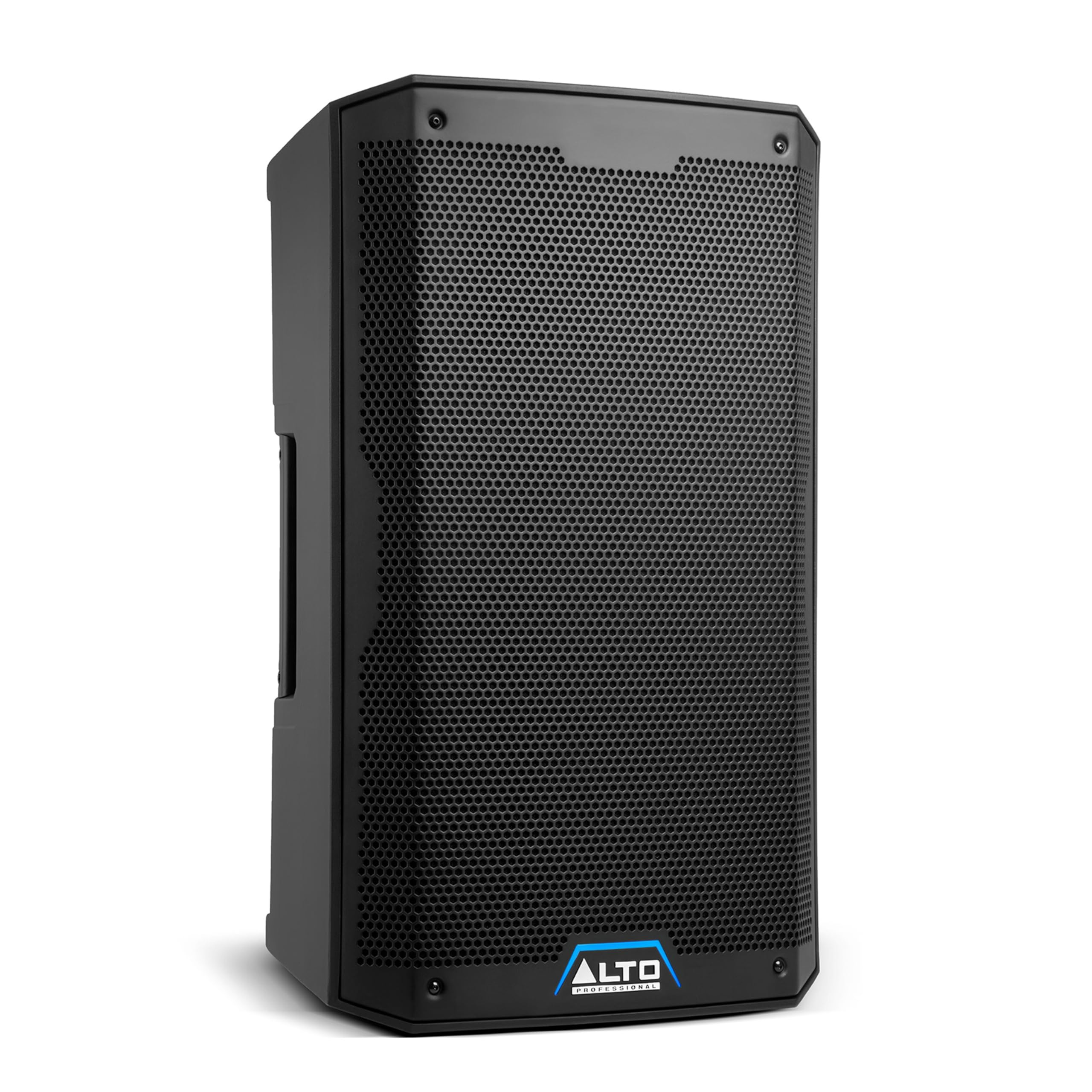
The feature that separates the TS410 from cheaper cabinets is not printed on the front — it is in the app. Speaker-use modes, subwoofer size selection, a custom EQ and a notch for killing feedback all live on your phone, and true wireless stereo pairing means two of these make a stereo system without a cable between them.

The hardware is serious for the money: 2,000 watts of bi-amplified power, a 10-inch low-frequency driver and a 1.4-inch compression driver, and a three-channel mixer with dual XLR and quarter-inch combo inputs, mic/line switches and an XLR link output. It sits on a 36 mm pole, flies from M10 points or works as a wedge, and at 14.5 kg it is a one-person lift, which is not true of the 15-inch cabinets here.

We rate it the best midrange all-rounder in this group. It covers a small club or a coffee-house set without strain, and the built-in mixer means a duo can plug in without a separate board. Deep bass is the limit — a 10-inch driver can only move so much air, so a subwoofer or a bigger cabinet is the right move if you are playing recorded music for a dance floor.

Pros

  • 2,000 watts with 10-inch and 1.4-inch drivers
  • App control with speaker modes and custom EQ
  • Pole, wedge and flown mounting options
  • 14.5 kg is light enough for one person

Cons

  • Deep bass needs a subwoofer
  • Most of the tuning lives in the app
Our verdict

The best power per dollar in this group: 2,000 watts, a three-channel mixer and app-shaped sound in a cabinet one person can lift.

Check Latest Price
4

Best for Singer-Songwriters

Bose L1 Pro8

88 /100
LBD Score Excellent

Key details

Array
Eight 2-inch drivers
Channels
3
Subwoofer
7 x 13 inches
View on Amazon

Setup is the first thing you notice. The column stacks onto the power stand in two connections, the carry bags come with it, and one person can move the whole system from a vehicle to a stage in a single trip — which is the point of a line array built for coffee shops and small rooms.

What we noticed next is what the shape does for coverage. Eight articulated 2-inch neodymium drivers in a C-shaped array sit above a racetrack subwoofer, and because that sub is a 7 x 13-inch driver rather than a round cone, the base stays small enough to carry. The sound falls away gently with distance instead of hitting the front rows and dying at the back, and vocals sit forward without shouting, which is exactly what a solo set needs.

It runs on AC only, and the premium is real: you are paying for the form factor and the coverage pattern rather than for more volume than a 15-inch cabinet. Play loud rooms with a band and this is the wrong tool; play listening rooms alone and it is hard to beat.

Pros

  • Line array coverage that carries to the back
  • Assembles in two connections, bags included
  • Racetrack subwoofer in a compact base
  • Three-channel mixer with wireless app control

Cons

  • AC power only, with no battery option
Our verdict

For solo singer-songwriters in small rooms: a line array that assembles in seconds and puts the same sound in the front row and the back.

Check Latest Price
5

Best Battery Value

Mackie Thump GO

88 /100
LBD Score Excellent

Key details

Output
200 watts
Weight
17.6 lb
Woofer
8 inches
Battery
Up to 12 hours
View on Amazon

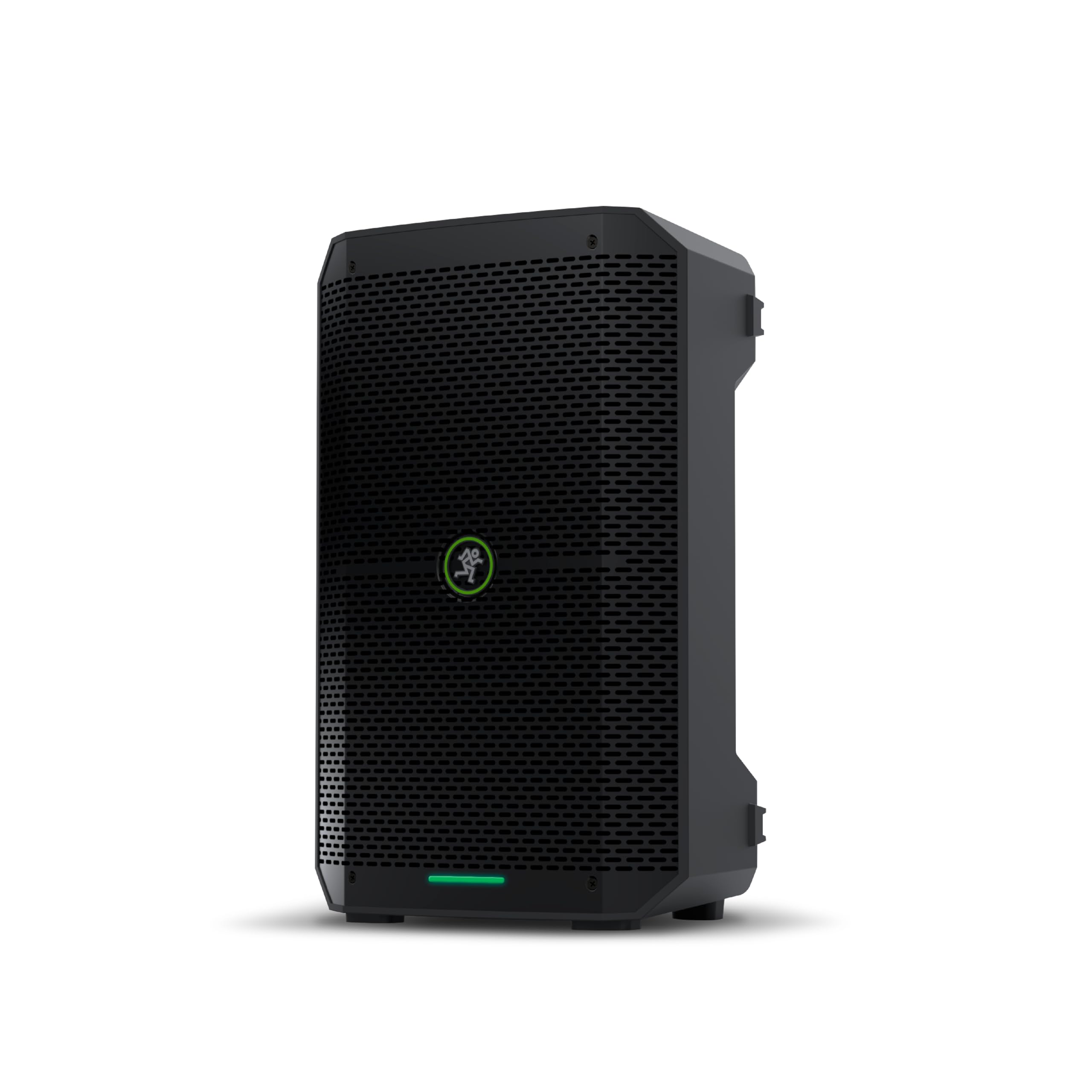
Everything that makes a battery PA useful — no outlet, a real mixer, Bluetooth — costs noticeably less here than on the Bose, and Mackie has not stripped out the parts that matter. The battery lifts out, so a spare keeps a long day going instead of ending it, and a tri-color indicator tells you where you stand before a set.

The rest is sensible: an 8-inch woofer and 1-inch compression driver driven by 200 watts of Class-D, a two-channel digital mixer with an XLR mix output, Music Ducking that pulls the music down when you talk into a mic, app control and 17.6 pounds. We were surprised by how little the cabinet gives away in a small room — it is a solo act's speaker, but a loud one.

Two hundred watts and an 8-inch driver do set a ceiling. Point this at a dance floor and you will hear the limit before the audience complains. Stay inside solo, duo and acoustic work and the Thump GO does most of what the S1 Pro+ does for a lot less money.

Pros

  • Removable battery with 12-hour runtime
  • Music Ducking keeps mic and music balanced
  • 17.6 pounds with app control
  • Considerably less expensive than the Bose

Cons

  • 200 watts limits it to solo and duo work
Our verdict

The battery PA we recommend when the Bose is more than you want to spend: 12 hours of run time, a removable battery and 17.6 pounds.

Check Latest Price
6

Best Budget Cabinet

ALTO TX408

91 /100
LBD Score Outstanding

Key details

Output
350 watts
Weight
13 lb
Woofer
8 inches
Bluetooth Range
75 feet
View on Amazon

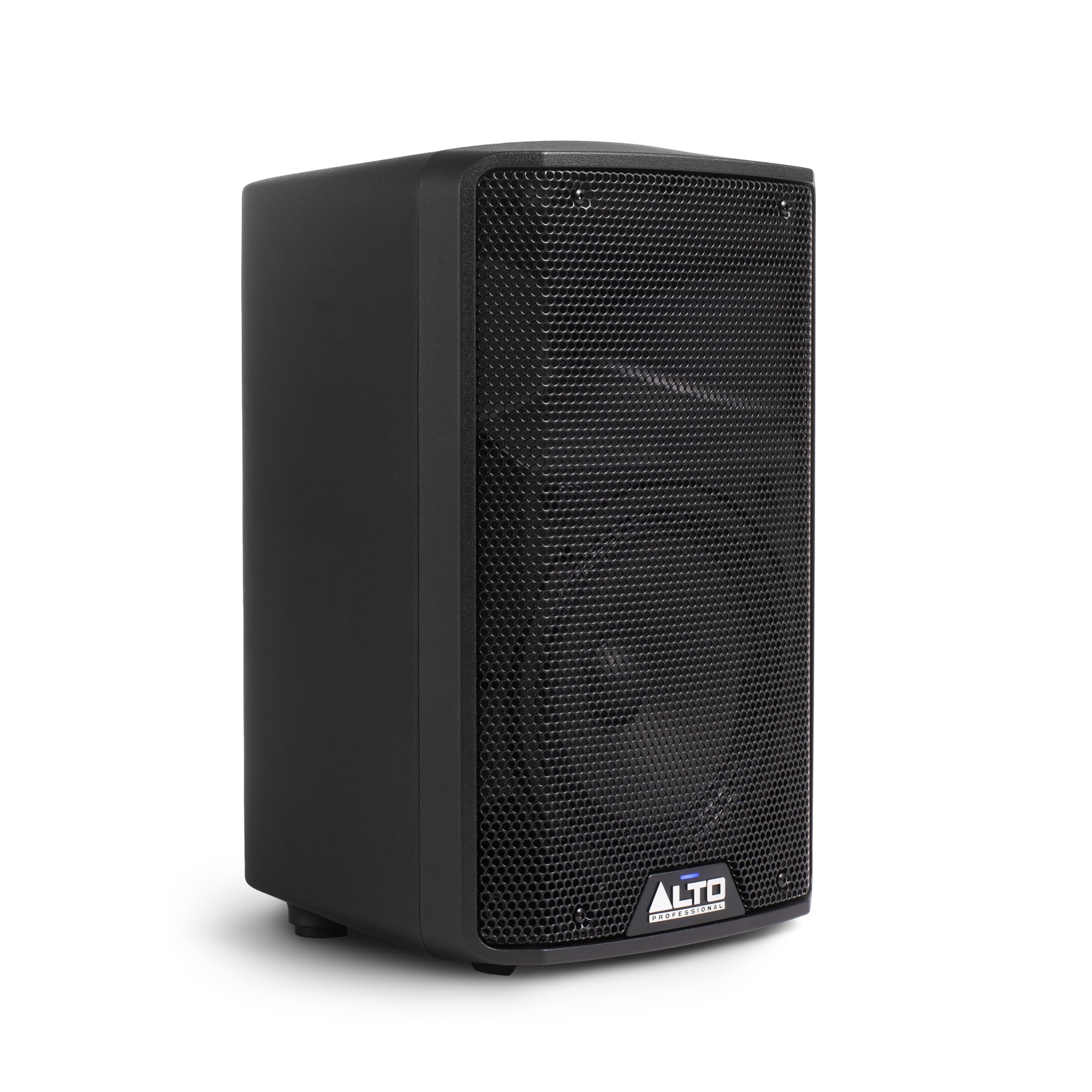
Small rooms are where the TX408 makes sense: an exercise class under a pavilion, a rehearsal, a keyboard rig, a coffee-shop set where a 15-inch cabinet is absurd. At 5.9 kg it is light enough to carry in one hand with a bag over the other shoulder, and the molded handle makes that an easy habit rather than a chore.

The spec sheet is stronger than the money suggests. 350 watts of bi-amplified power, an 8-inch woofer and a 1-inch tweeter, a two-channel mixer with mic, line and Bluetooth inputs, true wireless stereo pairing so two cabinets make a stereo pair without a cable, plus a 36 mm pole socket, a wedge monitor angle and a contour EQ for music playback.

We keep coming back to it for the price-to-weight ratio: it is the least expensive way into a real PA cabinet with a mixer here, and the one we hand to someone who needs to be heard in a room of thirty. The 8-inch driver is the limit. Outdoors, or with a bass-heavy playlist, it runs out of low end long before it runs out of volume, and no amount of EQ fixes that.

Pros

  • 350 watts in a 5.9 kg cabinet
  • Bluetooth with true wireless stereo pairing
  • Doubles as a wedge monitor
  • Two-channel mixer with mic and line inputs

Cons

  • Low end runs out outdoors
  • Not a band PA on its own
Our verdict

The budget pick: 350 watts, Bluetooth stereo pairing and a wedge-shaped cabinet that weighs 5.9 kg, made for classes, rehearsals and small rooms.

Check Latest Price
7

Small Events

PRORECK Dance 12

90 /100
LBD Score Outstanding

Key details

Cable
30 ft speakon
Woofer
12 inches
Channels
3
Peak Power
1,000 watts
View on Amazon

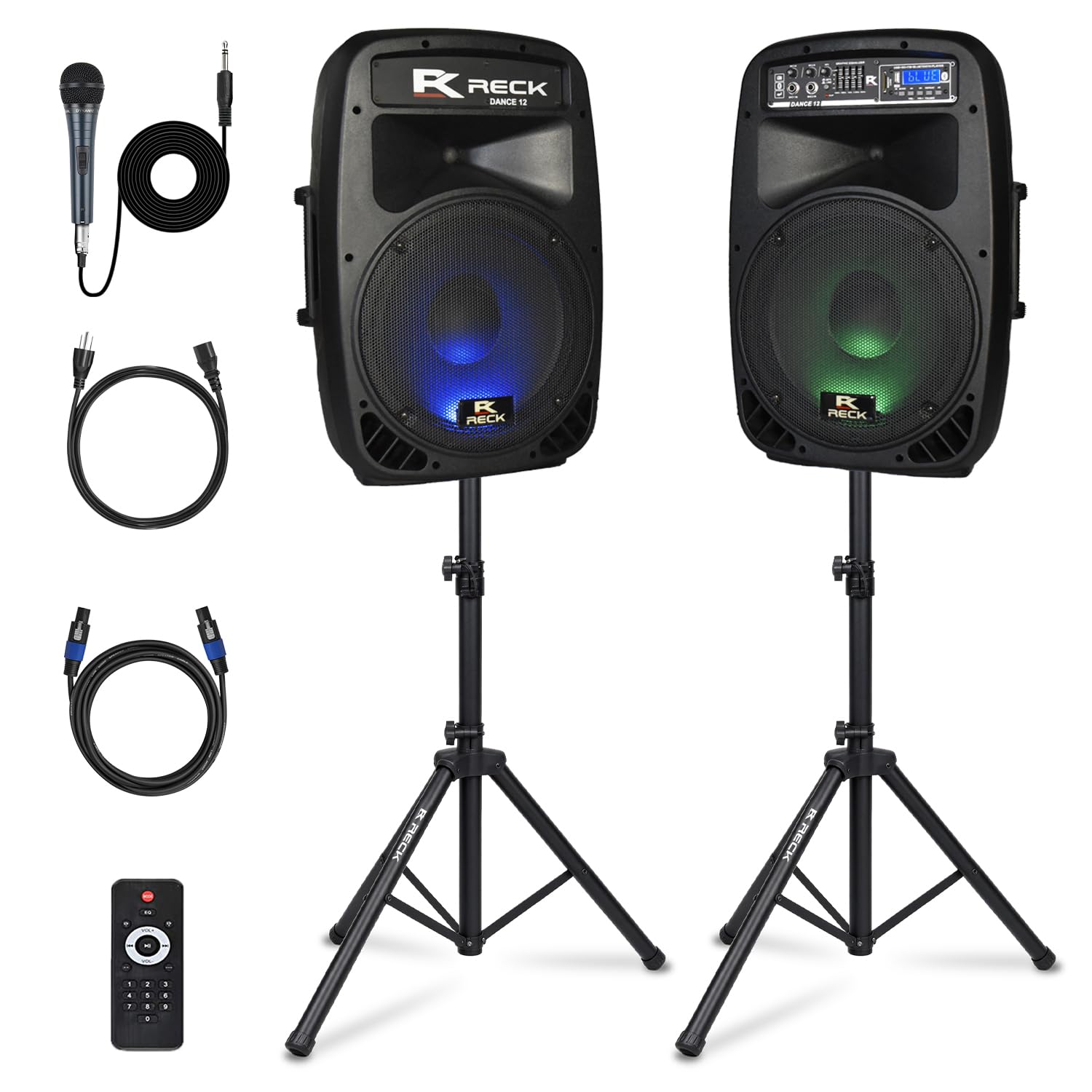
One purchase gets you a powered 12-inch cabinet, a passive partner for it, a remote and a 30-foot speakon cable to connect the two. That is the appeal for a small wedding, a hall meeting or a backyard party: two speakers and the cable that links them, without working out what else you need.

The numbers are decent for the money: a 12-inch woofer and a 1.35-inch titanium compression driver, 150 watts RMS with a 1,000-watt peak rating, three channels, Bluetooth plus USB and SD playback, an FM tuner, a digital LCD and a 35 mm pole mount. The rear panel is laid out for quick setup rather than deep tweaking, which is the right call on a system like this.

In use it behaves like the party system it is: happy with a phone over Bluetooth or a mic over a quarter-inch jack, and simple enough to hand off to someone who has never run a PA. The passive partner takes everything it needs over that single speakon run, so there is one cable to trip over instead of two.

Our verdict is that it is the most speaker per dollar here: the right first system if you are outfitting a hall rather than chasing fidelity. Power the whole thing up the day it arrives, though — on a budget system the amplifier and connectors are where a problem shows up first, and it is far easier to sort out before the event than during it.

Pros

  • Two speakers and a 30-foot speakon cable included
  • 12-inch woofer and titanium compression driver
  • Bluetooth, USB, SD card and FM playback

Cons

  • No XLR connections anywhere
  • Peak rating is far above its 150-watt RMS output
Our verdict

A powered cabinet, a passive partner, a remote and a 30-foot speakon cable in one purchase — the fastest route to a two-speaker setup.

Check Latest Price
8

Personal Monitoring

Behringer B205D

89 /100
LBD Score Excellent

Key details

Driver
5.25 inches
Output
150 watts
Weight
7.05 lb
Channels
3
View on Amazon

A 5.25-inch driver tells you what the B205D is before you plug it in: a full-range speaker for close work, not a cabinet for filling a hall. What it lacks in size it makes up for at the input panel.

Three channels, a three-band EQ, two mic preamps with phantom power for condenser mics and an instrument-ready input — that is a real mixer in a box that weighs 7.05 pounds and fits in a backpack. For a solo performer running a vocal mic and a guitar, or a keyboard player who needs to hear themselves, the connections alone justify the price.

In a practice room, a small church, a dance class or on the floor as a wedge for a louder band, it does something the bigger cabinets cannot: it goes exactly where you need it and points at you. Amplifying an acoustic act in a room of forty is realistic. A rock band is not.

Here is the honest framing: it is the best personal monitor in this group and the weakest choice as a main PA. If your gig is a full band in a loud room, put the money toward the EON715 or the TS410 instead. And set it on a stand with a heavy base — a speaker this light on a lightweight stand is a tipping risk.

Pros

  • Phantom power on two mic channels
  • 7.05 pounds and backpack-sized
  • Three-band EQ and instrument-ready input

Cons

  • Not enough output to carry a band
  • Small driver limits low end
Our verdict

Buy it as a personal monitor or a tiny-room PA, not as a band's main speaker: 7.05 pounds, phantom power and three channels for very little money.

Check Latest Price

What Eight Months of Load-Ins Taught Us

We started by pulling every powered PA speaker a normal person might realistically buy, then narrowed the field by driver size, cabinet weight, whether it ran on battery or AC, and how many channels its built-in mixer offered. That left 10, which we bought at retail and lived with for eight months. Each one went to at least three jobs: a garage band rehearsal, an outdoor birthday party, and a rented hall with hard floors and high ceilings.

Outdoors, we ran each speaker hard for four straight hours and listened for whether the cabinet turned harsh as it warmed up, whether vocals stayed clear over a crowd, and whether the low end reached past the front row. Indoors, we played them at conversation volume to catch background hiss, then at dance-floor volume to see if they held steady on a stand or crept across the floor. We also tilted every cabinet back into monitor position, since that's how most people end up using one.

Portability got its own set of chores. We weighed each speaker, carried it up a flight of stairs by its handle, and timed how long one person needed to get it out of a car and playing. Battery models were drained with music at real party level until they quit, and we noted where the gauge landed before that happened. We paired phones over Bluetooth from across a room with people between the phone and the speaker, and adjusted settings through the app controls mid-song.

Cabinets collected a season of bumps, scuffs, and one accidental tumble out of a hatchback, which told us more about durability than any spec sheet. Finally, we weighed what each speaker could do against what it cost — a compact box that handles a solo gig is better value than a bigger one that needs two people to move it.

How to Choose a Pa Speaker

Read Past the Wattage

The biggest number on the box is the least useful one. Peak ratings are marketing figures; RMS tells you what the amplifier actually delivers, and a 12-inch woofer moves more air than a 10-inch whatever the badge says. A 2,000-watt peak cabinet with a 10-inch driver and a 1,300-watt cabinet with a 15-inch driver are not on the same scale, so compare like with like. For speech and acoustic music in a room of fifty, an 8- or 10-inch cabinet is plenty; for a band or a dance floor, look at 12s and 15s and expect to add a subwoofer for real low end.

Decide Whether Battery Is Worth Paying For

Battery power costs output and money, and it buys placement. If you play farmers markets, outdoor ceremonies, fitness classes or anywhere without an outlet within reach, it decides the purchase — the Bose S1 Pro+ and the Mackie Thump GO are the two picks here built around it, and the Mackie's battery lifts out so a charged spare extends a long day. If every gig has a wall socket, put the difference into watts instead. Rated runtime assumes moderate volume, so plan for less when you are pushing the speaker hard.

Count the Inputs Before the Features

A PA exists to amplify a microphone, so look for a real mic preamp with its own level control rather than a Bluetooth box with a quarter-inch jack bolted on. XLR is what you want for microphones and for linking cabinets; quarter-inch is fine for instruments and short runs. Two mic or instrument channels plus a playback channel covers most solo and duo work, and phantom power matters if you use a condenser mic — the Behringer B205D has it, while the PRORECK Dance 12 has no XLR connection at all.

Weigh the Load-In, Not Just the Speaker

Fourteen pounds and forty-six pounds are different products in practice. If you load in alone every week, weight and handle design matter more than another 200 watts — 14.4 pounds goes onto a stand with one hand, while 46.5 pounds is a two-person lift and a decision about stairs. Count the accessories too: cabinet-only picks leave you buying a stand, a cable and a microphone, which is exactly where a complete system earns its keep.

Positioning Decides How It Sounds

A cabinet on the floor aimed at someone's knees sounds muddy; the same cabinet on a pole at head height sounds clean. Pole sockets here run 35 and 36 mm, so a standard stand fits, and several picks also tilt back as a wedge for monitoring or hang from rigging points. If even coverage matters more than raw output, a line array like the Bose L1 Pro8 carries sound to the back rows without blasting the front ones.

Frequently Asked Questions

Final Verdict

For most people, the Bose S1 Pro+ is the PA to buy. It runs on battery or wall power, weighs 14.4 pounds, and covers a solo gig, a presentation and a patio party without a second trip to the car.

If you are amplifying a band or a dance floor, the JBL EON715's 15-inch woofer and 1,300 watts are worth the 46.5 pounds and the power cord. If the budget is tight and the rooms are small, the ALTO TX408 does most of that job for a fraction of the money.