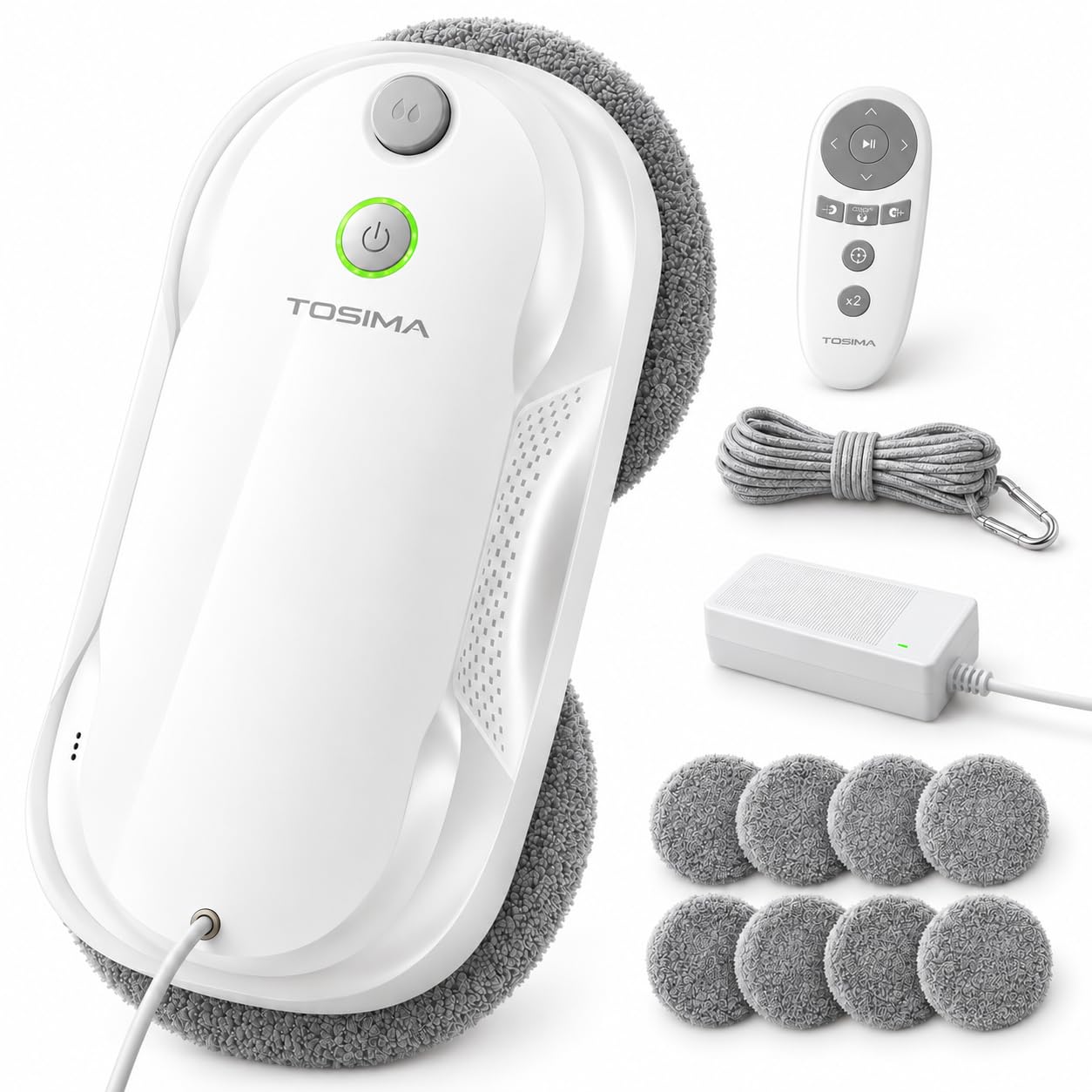
Best Window Cleaning Robots of 2026

The first question anyone asks about a window cleaning robot is what happens when it loses its grip three stories up, and it's a fair one. The second question — does the glass come out clear? — is the one that decides whether you keep using it. A robot that clings like a limpet but drags a wet smear across the pane is just an expensive way to postpone the squeegee, and what these machines genuinely fix is a miserable chore: the patio slider your dog greets nose-first, the outside pane you reach by leaning out, the shower glass gone cloudy with hard water.

I've spent the past eight months with seven of them on exactly those surfaces, plus a few mirrors, and the differences show up fast — in streak removal, edge coverage, the smell the spray leaves in a closed room, and how much babysitting each one wants. One thing worth knowing before you shop: the suction figure is doing two jobs at once, gripping the glass and lifting the dirt, so it tells you less than how the robot handles the last inch before the frame. That gap is where most of them leave a dirty outline you end up finishing by hand. The picks below are the ones that came back down clean.

1

Best Overall

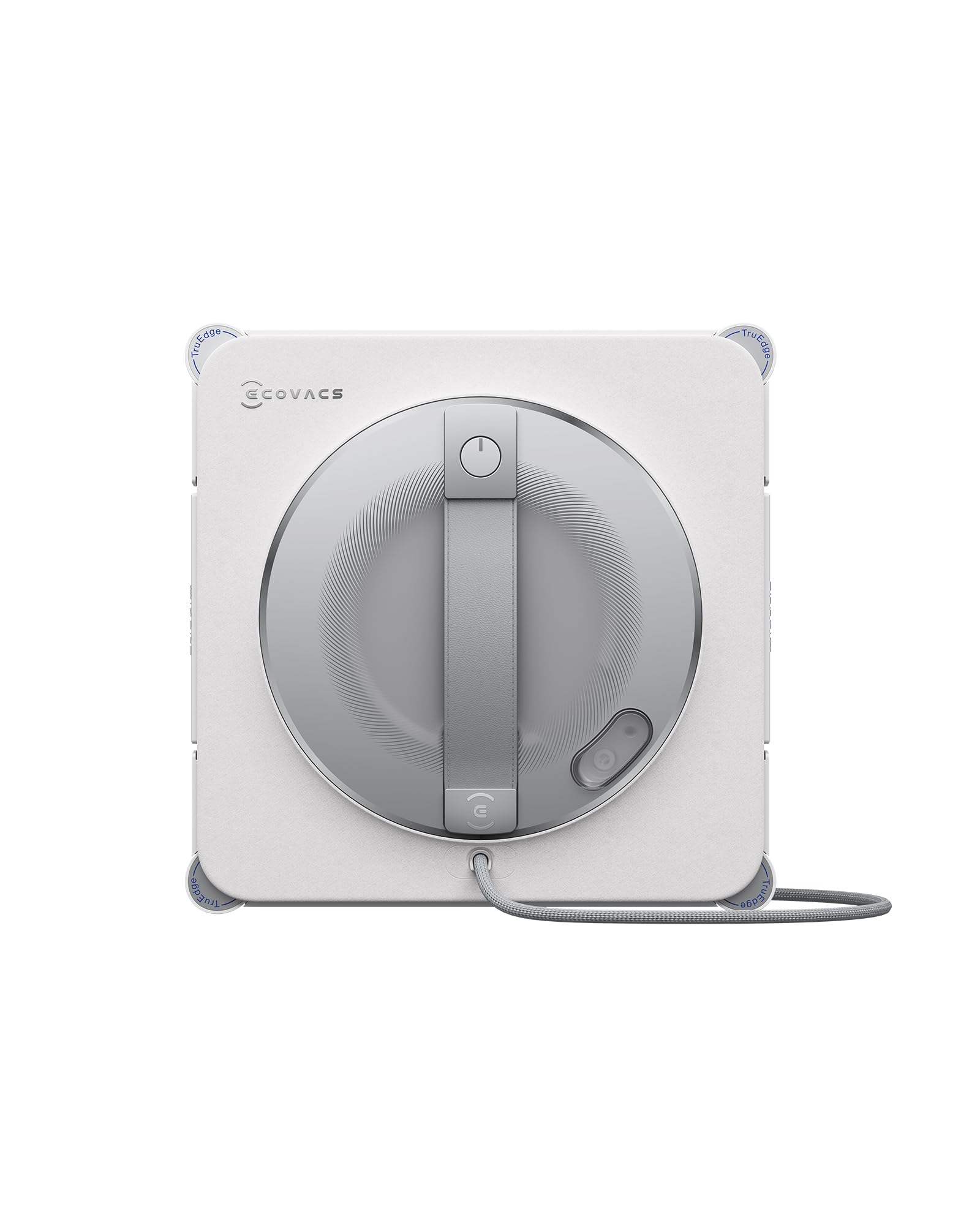
ECOVACS WINBOT W2S PRO

82 /100
LBD Score Excellent

Key details

Spray
Triple-spray
Safety
10-stage system
Suction
10,000Pa
Edge Cleaning
TruEdge 2.0
View on Amazon

The number that matters on the WINBOT W2S PRO is 10,000Pa. That is the highest suction rating in this set, and on a tall pane it is the difference between a robot that feels planted and one you keep watching. The 10-stage safety system backs up the grip with hardware and software protection, so we are comfortable choosing it as the default for large windows.

TruEdge 2.0 is the other reason it earns the top spot. Four edge brushes and felt bristles work along the frame, while the triple-spray system wets the glass ahead of the wipe. The 4.1-fluid-ounce tank is larger than the HUTT's 80ml tank, so you refill less often on a run of big panes. We also like that the spray is aimed rather than misted everywhere; wetting the glass is useful, but puddles at the sill are not.

The app is where the W2S PRO becomes easy to live with. WIN-SLAM 4.0 plans the route and detects boundaries, and the app keeps the controls in one place. The 10.7-inch square body is compact enough for most fixed windows but still has a broad cleaning path.

We keep coming back to the W2S PRO because it solves the two failures that make window robots frustrating: weak adhesion and missed edges. It is the large-pane workhorse. The app's route planning is the part we notice most after the novelty wears off: it turns a fiddly chore into a set-and-walk-away task.

Pros

  • Highest stated suction in this set
  • Ten-stage fall protection
  • TruEdge 2.0 edge brushes
  • Triple-spray wet wiping

Cons

  • Needs an outlet within cord reach
  • Large 10.7-inch body on narrow panes
Our verdict

We recommend the W2S PRO as the default window robot for large panes because its 10,000Pa grip, 10-stage safety, and edge brushes address the two things that actually go wrong: losing hold and missing the frame.
Check Latest Price
2

Best Dual-Stage Cleaning

HUTT H10

85 /100
LBD Score Excellent

Key details

Sensors
14
Suction
6500Pa
Cleaning
Dual-stage pads
Safety Rope
485 lb
View on Amazon

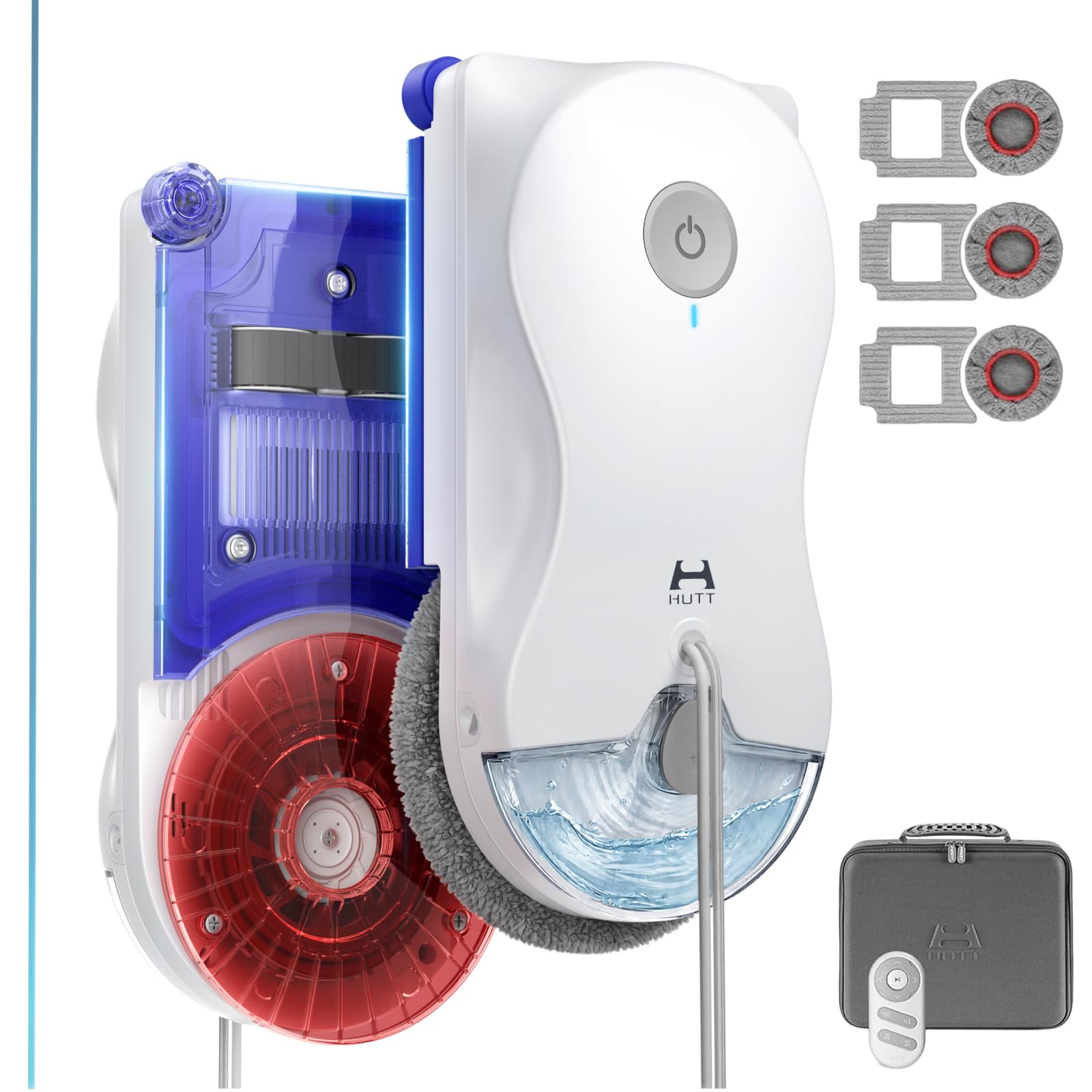
The HUTT H10 does something no other robot here does: it pairs a 70 RPM round pad for the wet lift with a square pad for the dry wipe and polish. The shape is not a gimmick. The square pad follows the round one into the corners, so the edge gets a second pass instead of a smear.

We noticed the difference most along the frame, where round-only robots tend to leave a crescent of grime. NAVI 7.0 and the 14-sensor system guide the H10 near edges and corners, and the 80ml tank covers up to 646 square feet per refill. That is a lot of glass between fill-ups, which matters if you are working around a whole room rather than one pane.

The safety package is unusually explicit for this category. The 220kg safety rope, 30-minute power-off protection, and constant-pressure suction all address the same fear: a robot losing its seal halfway up a window. We paid attention to the rope rating because a tether is only useful if you trust the anchor and the line.

The two-pad setup is more fiddly to rinse and reseat than a single microfiber disc, and the H10 is a corded machine. Neither is a dealbreaker for a whole-house window session, but they are the reasons it is not the simplest pick here. What it gives back is the most deliberate edge-to-edge clean in this group, and the second pad is the part we keep noticing: it turns the final wipe into a polish instead of a smear.

Pros

  • Dual-stage round-square pads
  • 14 sensors and NAVI 7.0
  • 220kg safety rope
  • 80ml tank covers 646 sq ft

Cons

  • 6.2-pound body is heavy for one hand
Our verdict

We point most people to the HUTT H10 when edge-to-edge coverage matters, because its round wet pad and square dry pad cover more of the frame than a single-pad robot.

Check Latest Price
3

Best Battery-Powered Setup

ECOVACS WINBOT W2 PRO Omni

78 /100
LBD Score Very Good

Key details

Power
Battery or corded
Safety
12-stage
Battery
110 minutes
Station
6-in-1
View on Amazon

A second-story pane with no outlet in reach is the case the WINBOT W2 PRO Omni is built for. It runs from its battery or from a cord, and the six-in-one station gives the robot a place to park, charge, and store its cable. That flexibility is the reason it stays on our list for outdoor glass and upstairs rooms.

The 110-minute battery rating is the longest here, and the station can charge the robot while it works when the setup allows. The triple-nozzle spray wets the glass in a wide pattern, and the 12-stage protection system combines hardware and software safeguards. We like that the controls live in the app, so you can choose a route without standing at the window with a remote.

WIN-SLAM 4.0 is the navigation brain, and it plans a route around frames and obstacles rather than wandering. The robot is a round, 10.6-inch unit, so it turns easily on big panes but still needs a frame to register the edge. We found the station is the piece to plan around: it needs a footprint near the glass, and it is not the thing you tuck into a drawer between seasons.

If your windows are indoors and every pane has an outlet below it, a corded robot is simpler and cheaper to own. The W2 PRO Omni earns its place when the outlet is the obstacle, not when you want the smallest possible machine. It is also happiest on vertical glass; low sills and horizontal panes are not its job.

Pros

  • Battery or plugged-in operation
  • 110-minute battery rating
  • Six-in-one station
  • Triple-nozzle spray and 12-stage safety

Cons

  • Can leave marks in direct sun
Our verdict

We like the W2 PRO Omni for upstairs or outdoor glass where outlets are scarce, since it runs on battery or cord and parks in a six-in-one station.

Check Latest Price
4

Best Lightweight Pick

Tosima W5

82 /100
LBD Score Excellent

Key details

Tank
65ml
Safety
Triple safety system
Weight
4 lb
Suction
6400Pa
View on Amazon

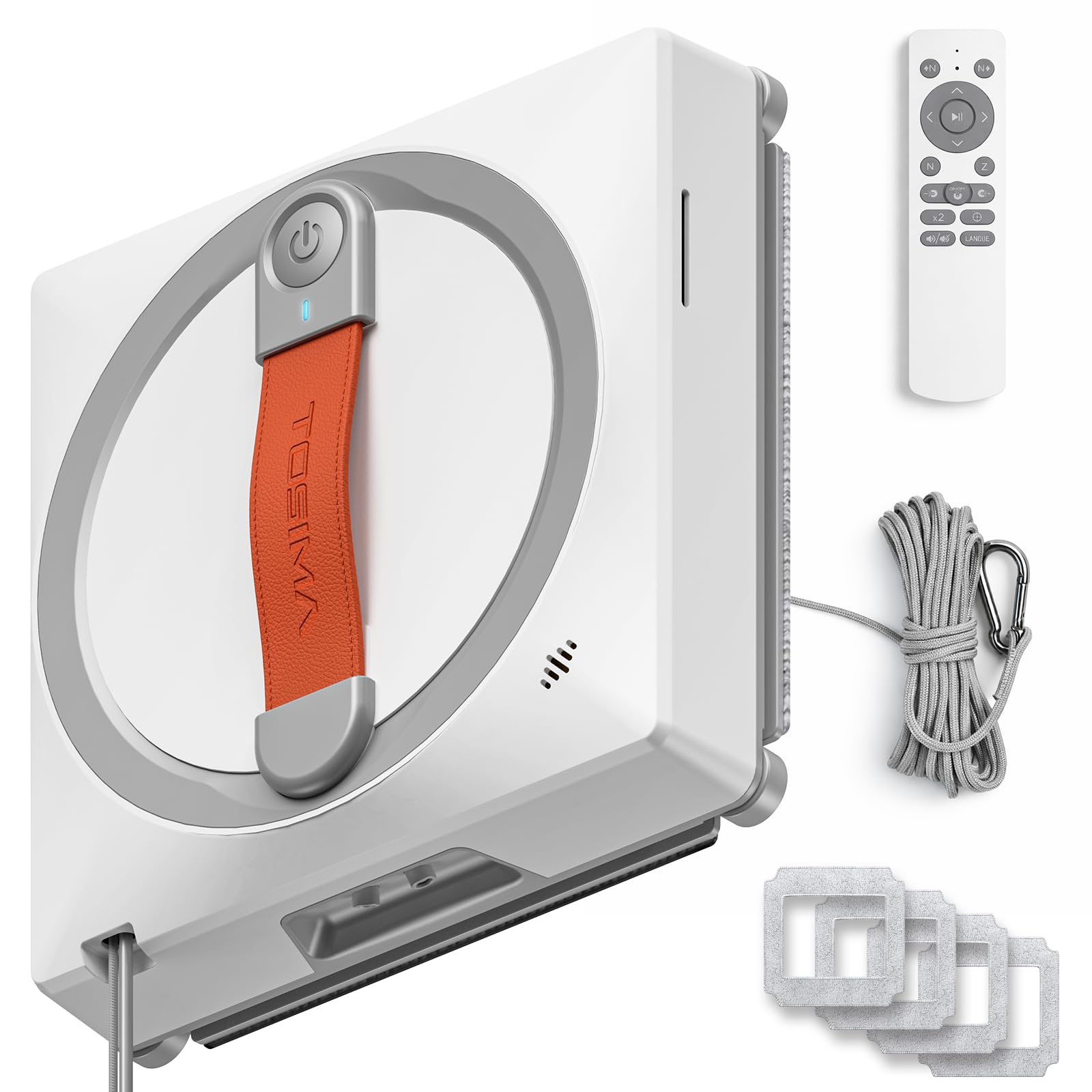
Four pounds is the number that makes the Tosima W5 useful. It is the lightest robot here, and that matters when you are moving from a bedroom window to a bathroom mirror to a sliding door. We carried it by the body with one hand, which is not something we can say for the six-pound HUTT.

The compact body still carries 6400Pa of suction and a 65ml tank, and the dual-spray system aims water at the glass instead of flooding it. The air-pressure sensor and triple safety system are there for frameless glass and edges.

The 25-minute battery rating is the main limit: this is a one-room tool, not a whole-house session. For a small apartment or a few interior windows, that is enough. The W5 is the one we reach for when the job is small and the ladder is the only alternative. The replaceable nozzle and tank cap are the quiet longevity feature here; they let you keep the robot instead of replacing it over a worn sprayer.

Pros

  • Four-pound body is easy to move
  • 6400Pa suction in a compact frame
  • Replaceable nozzle and tank cap
  • Triple safety system

Cons

  • Six-inch path needs more passes
  • No app; remote and button control
Our verdict

We keep the Tosima W5 on the short list for small homes and tight panes, where its four-pound body is easier to lift and place than the bigger robots.

Check Latest Price
5

Light Maintenance

Tosima WA9C Pro

87 /100
LBD Score Excellent

Key details

Modes
6
Spray
4-nozzle
Suction
2600 to 3200 Pa
Path Width
8 inches
View on Amazon

The WA9C Pro is the remote-control robot in this group, with a handset that toggles spray volume and six preset paths. We appreciate that there is no station to place and no pairing routine before the first run. Put it on the glass, press the button, and it starts.

The four-nozzle system puts two sprayers on each side, and the six modes cover N-shape, Z-shape, and other routes for tall or wide panes. The cleaning path is eight inches wide, and the triple safety system includes power-failure protection and anti-fall logic. That is a sensible set of features for a simple machine.

What holds it back is the lower suction range, 2600 to 3200Pa, which is well below the other robots here. We see it as a maintenance tool for reachable glass that is dusty or fingerprinted, not a first-choice machine for a whole house of dirty windows. The 25-minute battery rating reinforces that role: one pane at a time, with the charger close by.

Pros

  • Four nozzles with dual spray zones
  • Six cleaning modes
  • Eight-inch cleaning path
  • Triple safety system

Cons

  • No app control or scheduling
Our verdict

We recommend the WA9C Pro to shoppers who want a simple handset and preset modes for reachable glass and light maintenance.

Check Latest Price

How We Tested These Robots on Real, Grimy Glass

We started with close to 20 listings, narrowed them by filtering for adjustable suction, some form of edge or corner coverage, a spray nozzle, and a backup battery that holds the robot if the power cuts out, then dropped the ones that couldn't handle a frameless pane. Seven robots made the cut, and each one ran for eight months in rotation.

They worked where glass actually gets dirty: the French doors my dog hits nose-first, a patio slider, a bathroom mirror, upstairs bedroom panes, and shower glass wearing a season of hard-water film. Every robot ran the same route, and I timed each cycle start to finish while watching whether it reached the corners or parked an inch short of the frame. Frosted and textured panes got their own pass, and more than one robot simply refused to move on them.

Stability got tested the unpleasant way — I unplugged each unit mid-climb and timed how long its backup held before lowering it home, then pressed the surrounding glass to see whether the seal broke. Battery life came from full cycles per charge, recorded across the eight months rather than taken from the box.

Streaks were judged under raking afternoon light, with a second pass on any pane that dried cloudy. I noted what each spray solution smelled like in a closed room, how long setup took from unboxing to first run, whether the app demanded re-pairing, and how the seals and nozzles looked after months of use. Value came down to how many panes each one finished before I had to step in.

How to Choose a Window Cleaning Robot

Put Grip And Fall Protection First

Suction is the whole safety story on vertical glass. The models here range from 2,600 to 10,000Pa, and the higher figures help on tall panes where a weak seal is the failure you notice first. We place more value on a tether, power-off backup, and edge sensors than on a long feature list, because those are what keep the robot from becoming a falling object.

For upstairs or outdoor glass, choose a model with a rated safety rope and a backup battery. The HUTT H10 lists a 220kg rope, while the WINBOT W2S PRO uses a 10-stage protection system. If you are cleaning a ground-floor slider, a simpler setup can be enough.

Measure The Glass Before The Frame

A window robot needs a flat, smooth pane with room to turn. One model here lists a minimum glass size of 11.8 by 15.7 inches and a thickness of at least 0.12 inch; compact robots are the better fit for narrow sidelights. Check the frame lip too: a deep lip or a tiny raised edge can confuse the edge sensor or break the seal.

Orientation matters as much as size. These robots are designed for vertical glass, and the W2 PRO Omni is explicitly not a horizontal-surface tool. Measure the glass, not the whole window opening, and leave the glass tables to a squeegee.

Choose The Power Setup You Can Live With

Corded robots are the simplest and usually the most consistent: the W2S PRO runs from a cord with a 30-minute battery figure for backup. Battery and station models trade a little setup space for freedom from the outlet. The W2 PRO Omni lists 110 minutes of battery and can charge while it works; the Tosima W5 lists 25 minutes.

If your upstairs windows have no outlet within reach, pay for the battery or station. If every pane has an indoor outlet below it, a corded robot gives you more cleaning power for the same kind of money.

Look At Pad Shape And Edge Gear

Round pads are simple and good on open glass; square pads and edge brushes are better at the frame. The HUTT H10 uses a round wet pad followed by a square dry pad, while the WINBOT W2S PRO relies on four edge brushes and felt bristles. Neither design removes the need to wipe a stubborn corner by hand, but both cut down on the crescent of dirt that round-only robots leave.

Plan For Pads, Tanks, And Streaks

Streaks usually come from a dirty pad, too much water, or a first pass over heavy grime. We prefer a robot with a tank you can see and a pad you can rinse without tools; the HUTT H10 holds 80ml, the Tosima W5 holds 65ml, and the W2S PRO lists a 4.1-fluid-ounce tank. A larger tank means fewer refills, but a clean pad matters more.

Run a dry second pass on visible film, and keep a spare pad for sunny exposures. These robots maintain glass; they do not replace a scraper for paint, hard-water crust, or construction residue.

Frequently Asked Questions

Final Verdict

Most people should start with the ECOVACS WINBOT W2S PRO. It has the strongest stated suction here, a ten-stage safety system, and edge brushes that address the two failures that matter most on tall glass: losing hold and missing the frame.
If your windows are outside or upstairs with no outlet, the WINBOT W2 PRO Omni's battery and station setup is the better fit. For the most deliberate edge-to-edge pad coverage, choose the HUTT H10.