Best 4K Laser Projectors of 2026

The thing nobody tells you about projector shopping is that the demo footage is doing a lot of the work. Take the same unit home, put it in a living room with a window on the wrong side, and you find out what you actually bought. Laser light sources have closed most of that gap: no lamp to dim or replace, instant on and off, and enough brightness for a 100-inch image before sunset.

My team and I spent the past eight months with seven of them — long-throw boxes on ceiling mounts, ultra short throw units sitting on a console — through movie nights, weekend gaming sessions, and plenty of Week 3 sitcoms. Placement, and what you get for the money, is where they separate. Optical zoom and lens shift quietly matter more than any keystone slider, because correcting geometry digitally costs you pixels.

Brightness claims deserve skepticism, since the numbers on the box aren't measured the same way across brands. What I can tell you is which ones stayed sharp at the edges, which autofocus actually locked, which you could forget was running, and which I'd leave on all season. The picks below are the ones that survived.

1

Best Overall

XGIMI Horizon 20

85 /100
LBD Score Excellent

Key details

Gaming
240Hz, 1ms input lag
Placement
Optical zoom and lens shift
Brightness
3,200 ISO lumens
Resolution
4K UHD (3840 x 2160)
View on Amazon

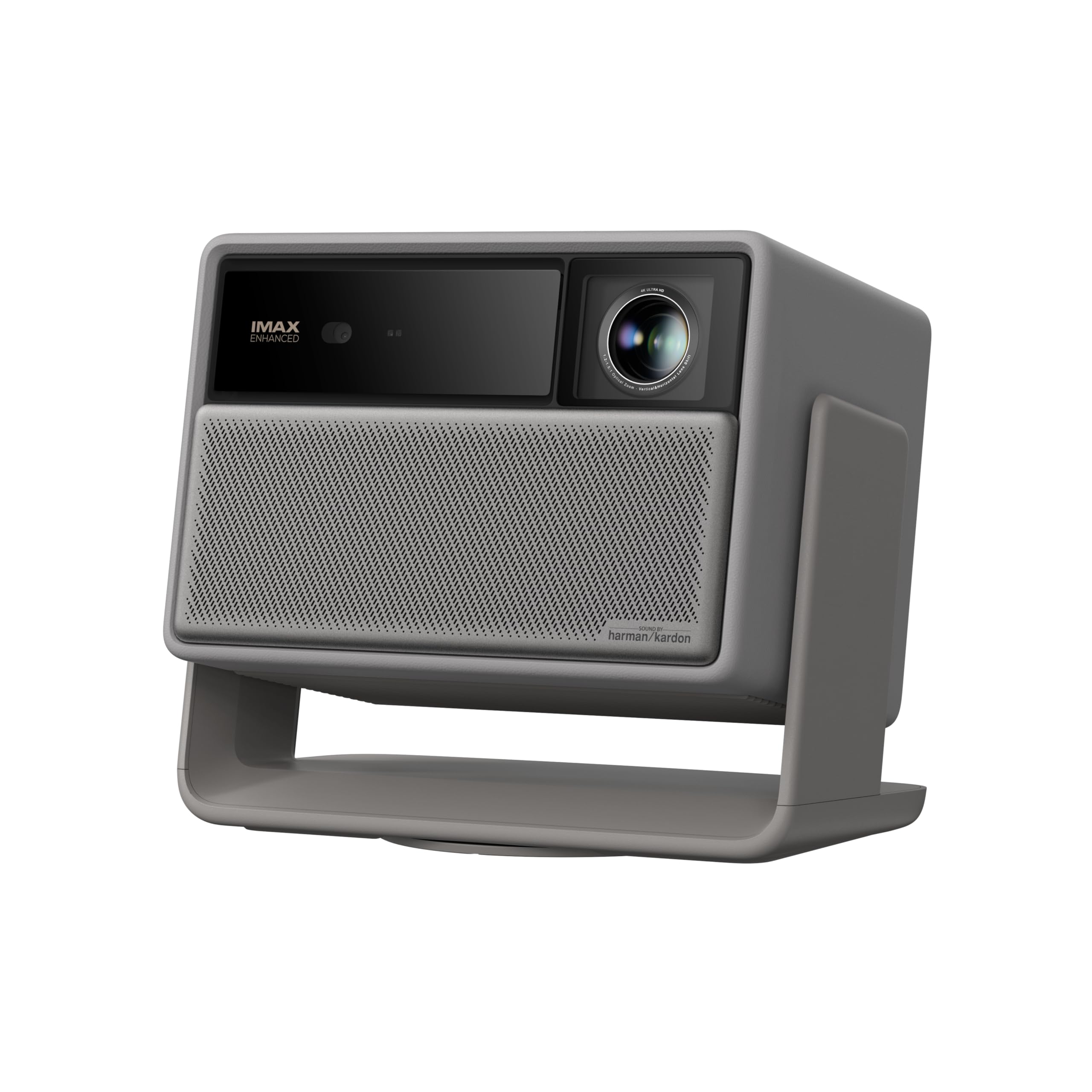
Lens shift is usually the first thing to disappear when a projector is built to a price, so finding it on the Horizon 20 changed where we put it. We could set the projector on a side table, use the vertical and horizontal adjustment to square the image, and keep optical zoom for sizing rather than leaning on keystone. That is the difference between a projector that lives where it is convenient and one that lives where the ceiling mount is.

The Horizon 20 is the one we recommend first because it does not force a choice between movie night and game night. Its 3,200 ISO lumens are bright enough for a dim living room, and the triple-laser engine gives Dolby Vision and IMAX Enhanced material the color and contrast to look intentional rather than merely large. Google TV with licensed Netflix is built in, and the Harman Kardon speakers are good enough to start with. We still prefer a soundbar for big nights, but the built-in sound is not an afterthought.

Gaming is the other half of the story. The 240Hz refresh rate and 1ms input lag make fast camera movement feel stable, and VRR and ALLM hand off from a console without fuss. We kept the projector in game mode and did the alignment optically, which is the setting where it feels most responsive. If you are mounting it high or off to one side, that lens shift is doing real work.

The integrated stand is more useful on a table than under a ceiling, so plan the mount before you buy. We also want to see how the electronics hold up over a few seasons, because this is a long-haul purchase rather than a holiday gadget. For most rooms, though, the combination of brightness, lens flexibility, and gaming speed is the most complete package here.

Pros

  • Lens shift and optical zoom simplify placement
  • 3,200 ISO lumens hold up in dim rooms
  • 240Hz refresh and 1ms lag for gaming
  • Google TV and Harman Kardon sound built in

Cons

  • Not a lightweight portable
Our verdict

For most rooms, we point to the Horizon 20 first because it combines lens flexibility, bright 4K, and 240Hz gaming without a complicated install.

Check Latest Price
2

Best Value Home Theater

Valerion StreamMaster Plus2

88 /100
LBD Score Excellent

Key details

Gaming
240Hz, 4ms input lag
Contrast
10,000:1 with Enhanced Black Level
Brightness
2,000 ISO lumens
Screen Size
Up to 300 inches
View on Amazon

The StreamMaster Plus2 makes the most sense once the curtains are closed. Its 2,000 ISO lumens are not the headline number in this group, but the 10,000:1 contrast and Enhanced Black Level processing give dark scenes a depth that a brighter, flatter image can miss. On a 120-inch screen in a dark room, the picture has weight rather than just size.

The 300-inch maximum is the spec that gets attention, and it is not just marketing: the projector has the lens range and processing to fill a very large frame. Dolby Vision, IMAX Enhanced, and HDR10+ are all supported, so the source material has a chance to look its best. The 4GB RAM and 128GB of storage are unusually generous for a projector, and Google TV feels less like a bolt-on because of it.

We think it is the value pick for a dedicated movie room. The 240Hz refresh rate and 4ms input lag are quick enough for console gaming, and the auto focus, screen alignment, and obstacle avoidance take the sting out of moving it between rooms. You are not paying for the brightest light engine here; you are paying for a balanced cinema image and a smart platform that does not feel starved.

The catch is that this is not the projector for a bright family room. With 2,000 ISO lumens, daytime viewing depends on shade or a good screen, and the picture rewards a proper matte-white surface. That is a fair trade in a dark room, where the StreamMaster Plus2 is doing exactly what we want.

Pros

  • Deep contrast for a dark room
  • Up to 300-inch screen
  • 240Hz and 4ms gaming response
  • 128GB storage and Google TV

Cons

  • Keystone can need manual cleanup
Our verdict

A dark movie room is where the StreamMaster Plus2 earns its place: cinematic contrast, a 300-inch maximum, and Google TV without the premium price.

Check Latest Price
3

Best for Bright Rooms

JMGO N3 Ultimate

84 /100
LBD Score Excellent

Key details

Gaming
240Hz, 1ms low latency
Brightness
5,800 ISO lumens
Lens Shift
H ±53%, V ±130%
Optical Zoom
0.88–1.7:1
View on Amazon

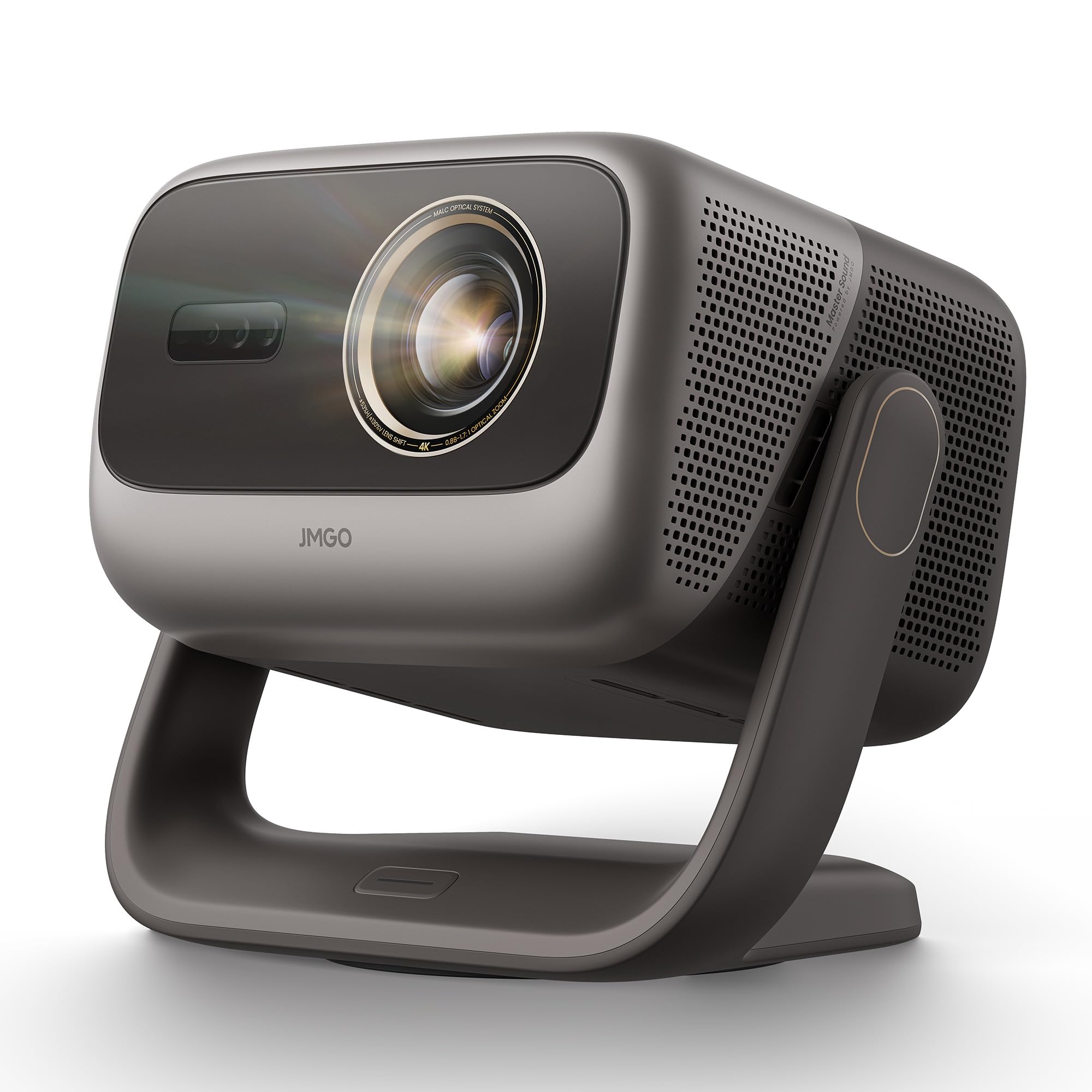
The N3 Ultimate is the projector we point to when someone says the room cannot be darkened. Its 5,800 ISO lumens are the highest output in this group by a wide margin, and that changes the practical conversation: you can watch sports with the blinds open, and dark scenes still hold together when the sun is not directly on the screen. It is not a television, but it is closer than most projectors here.

The placement hardware is just as important as the light output. Four-way lens shift covers H ±53% and V ±130%, and the 0.88–1.7:1 optical zoom gives you room to size the image without moving the projector. That is a rare amount of adjustment on a long-throw model, and it makes a shelf or side table far more viable.

Gaming is covered with 240Hz, 1ms low latency, VRR, and ALLM. Dolby Vision and Google TV with native Netflix round out the smart side, and the dual 12.5W speakers are loud enough to use before you add a soundbar. We like that JMGO did not make the bright mode the only story; the picture controls are there when you want to calm the image down.

The N3 Ultimate is the one to choose when ambient light is the enemy and the projector can live on a shelf. It is a specialist tool, and it earns its place by doing the one thing the others cannot.

Pros

  • 5,800 ISO lumens for bright rooms
  • Extensive lens shift and optical zoom
  • 240Hz, 1ms, VRR, and ALLM
  • Dolby Vision and Google TV with Netflix

Cons

  • Large and heavy at 15.4 pounds
Our verdict

When the lights stay on, the N3 Ultimate is our pick, with 5,800 lumens and enough lens shift to place it almost anywhere.

Check Latest Price
4

Best UST for Living Rooms

Hisense PX3-PRO

84 /100
LBD Score Excellent

Key details

HDR
Dolby Vision, IMAX Enhanced
Throw
Ultra short throw, 80–150 inches
Gaming
240Hz refresh rate
Brightness
3,000 ANSI lumens
View on Amazon

The PX3-PRO earns its place by removing the ceiling mount from the conversation. It sits inches from the wall and throws an 80- to 150-inch image, so a console under the screen becomes the projector stand. In a living room where a long-throw projector has to hang over the sofa, that is not a small convenience.

We think it is the best UST for a normal living room because it balances light output and living-room manners. The 3,000 ANSI lumens and triple-laser engine give it enough punch for a room with windows, and Dolby Vision, IMAX Enhanced, and Google TV cover the content side. The 240Hz refresh rate also makes it more than a movie-only box.

The 80–150-inch range is the right size for most walls, and the ultra short throw setup keeps cables near the furniture rather than running across the ceiling. The built-in Harman Kardon speakers are useful for everyday TV, though we still want a soundbar for Atmos. The Google TV interface is responsive enough that we did not reach for a streaming stick.

The limitation is the wall itself: an UST projector needs a flat, dedicated surface to look its best, and the PX3-PRO is heavy enough to set and leave. If your room has a suitable wall and you want the projector to disappear into the furniture, this is the one.

Pros

  • 3,000 ANSI lumens and triple laser
  • Ultra short throw for 80–150 inches
  • Dolby Vision, IMAX Enhanced, Google TV
  • 240Hz refresh for gaming

Cons

  • 150-inch maximum screen
Our verdict

We recommend the PX3-PRO when you want the projector to sit under the screen and fill a living-room wall without a ceiling mount.

Check Latest Price
5

Best Value UST

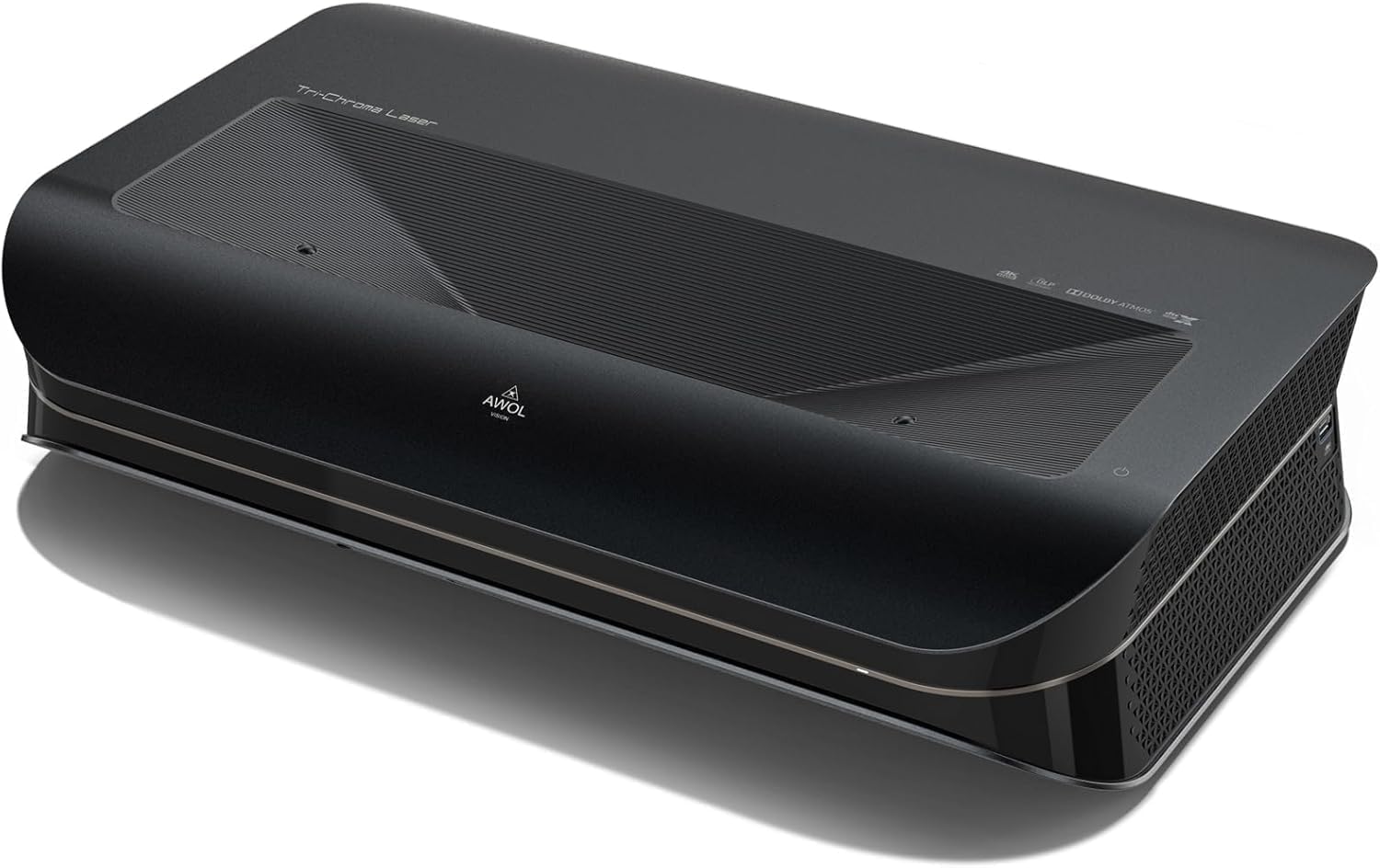
AWOL LTV-3000 Pro

85 /100
LBD Score Excellent

Key details

HDR
Dolby Vision, HDR10+
Throw
Ultra short throw, 80–150 inches
Brightness
3,000 ANSI lumens
Light Source
Triple laser
View on Amazon

A center-channel speaker inside a projector sounds like a gimmick until dialogue lands in the middle of the screen instead of under it. The LTV-3000 Pro uses that built-in center channel to anchor voices, and for a living-room UST that is a genuinely useful idea rather than a bullet-point curiosity.

The rest of the package is built for a dark or controlled living room: triple-laser color, Dolby Vision, HDR10+, 3D support, and an 80–150-inch image from a cabinet. The 3,000 ANSI lumens are enough to watch with some ambient light, and the triple-laser engine gives reds and greens more saturation than a single-laser projector at the same brightness.

We think it is the value UST in this group. You get the cinematic formats, the center-channel trick, and the ultra short throw convenience for less than the premium USTs. That is a lot of projector for a controlled living room, and it is the one we recommend before you spend more.

The 3D support is a nice bonus if you still have discs, and the center channel means you can skip a soundbar for everyday TV. For most people who want a big picture without a ceiling mount, the LTV-3000 Pro is the sensible first stop.

Pros

  • Triple-laser color with Dolby Vision
  • Built-in center-channel speaker
  • Ultra short throw up to 150 inches
  • 3D support

Cons

  • Remote and build feel basic
  • Lower brightness than premium USTs
Our verdict

Triple-laser color and Dolby Vision make the LTV-3000 Pro the value UST we reach for first in a controlled living room.

Check Latest Price
6

Best Gaming Value

ViewSonic LX700-4K

82 /100
LBD Score Excellent

Key details

Throw
100-inch image from 7.7 feet
Gaming
240Hz, 4.2ms input lag
Brightness
3,500 ANSI lumens
Resolution
4K UHD (3840 x 2160)
View on Amazon

The LX700-4K is a gaming projector first, and the 4.2ms input lag is the number that makes it worth a look. Pair that with a 240Hz refresh rate and you have a big-screen console projector that feels closer to a monitor than a home-theater box. For fast shooters and racing games, that responsiveness is the feature we noticed before the resolution.

The 3,500 ANSI lumens are bright enough for a room with some light, and the 4K UHD resolution keeps text and HUD elements clean. The throw is friendly for smaller rooms, putting a 100-inch image at about 7.7 feet, and optical zoom gives you a little room to adjust without moving the projector. It is a practical living-room gaming setup rather than a dedicated dark-room cinema.

HDR and HLG support are here, and the SuperColor processing gives games a punchy look. The 3,500 lumens are enough to keep color alive in a room with some light, and the 4K resolution keeps HUD text clean. It is a gaming projector, not a reference cinema one.

For Xbox or PC gaming, though, the speed is the point. The 240Hz mode and low lag make camera movement feel immediate, and the optical zoom helps you avoid keystone. We like it as a second-room projector or a game-room display where brightness and response matter more than absolute black depth.

Pros

  • 240Hz and 4.2ms input lag
  • 3,500 ANSI lumens for lit rooms
  • 100-inch image from 7.7 feet
  • 4K UHD with HDR and HLG

Cons

  • Black levels can look gray
  • Internal speaker can buzz
Our verdict

Gamers should start with the LX700-4K: 240Hz, 4.2ms lag, and 3,500 lumens make it feel quick in a lit room.

Check Latest Price
7

Best Portable

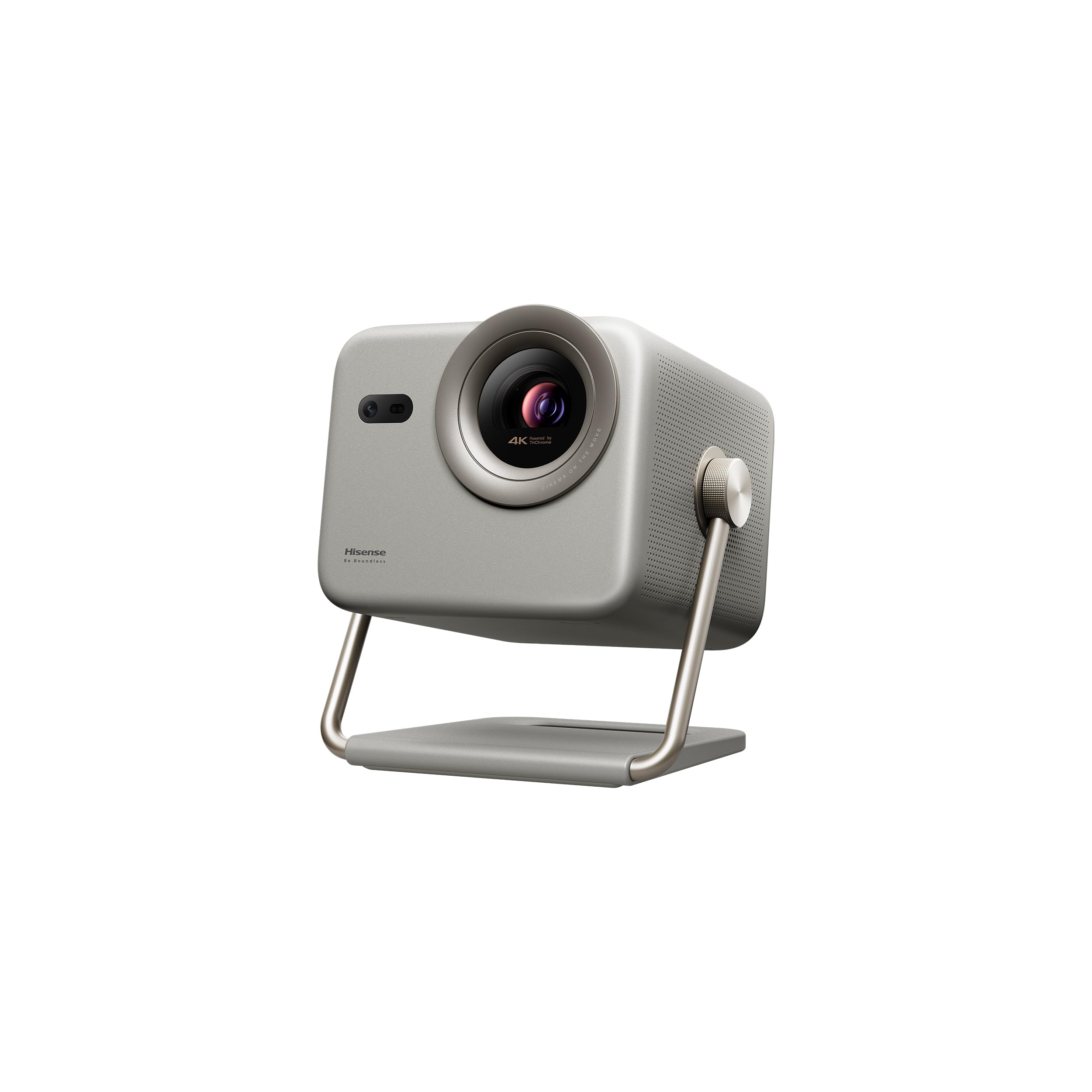
Hisense M2 Pro

87 /100
LBD Score Excellent

Key details

Weight
8.6 lb
Brightness
1,300 ANSI lumens
Screen Size
65–200 inches
Light Source
Triple laser
View on Amazon

The M2 Pro is the projector we carry from the bedroom to the backyard without treating it like an installation. At 8.6 pounds it is easy to pick up, and the auto focus and keystone do the setup work while you find a wall. That is the whole appeal of a lifestyle projector: it has to be easy enough that you actually use it.

The 1,300 ANSI lumens and triple-laser engine produce a colorful, sharp image up to 200 inches, and Dolby Vision gives movies a convincing sense of depth. Optical zoom is a real convenience here because you can resize the picture without moving the projector. The auto adjustments are the feature we appreciate most.

Keystone, focus, and screen fit happen quickly, so you can point it at a different wall and let the projector sort out the geometry. The speakers are good enough for a bedroom, and the Vidaa OS has Netflix built in. It is not as app-rich as Google TV, but the essentials are there.

We think it is the best portable 4K laser projector here for casual movie nights and dorm rooms. It is the one that can live in a closet and come out when you want it, rather than the one that replaces a living-room TV. That is a specific job, and it does it well.

Pros

  • 8.6 pounds and easy to move
  • Triple-laser color with Dolby Vision
  • Auto focus, keystone, and screen fit
  • 65–200-inch image

Cons

  • Dark-room brightness only
Our verdict

The M2 Pro is the one we carry from room to room, because it sets up quickly and makes a big 4K picture almost anywhere.

Check Latest Price
8

Premium Cinema

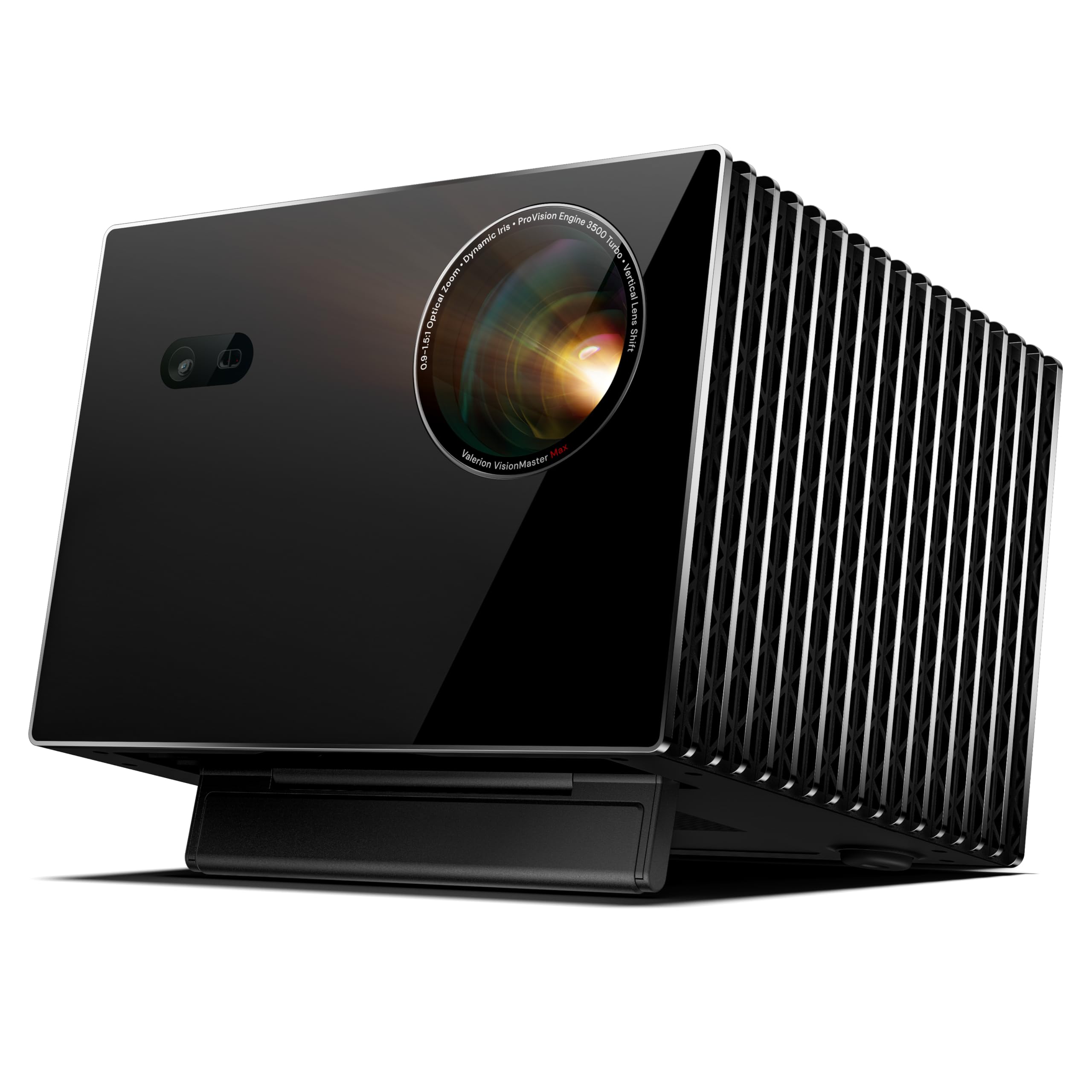
Valerion VisionMaster Max

88 /100
LBD Score Excellent

Key details

Anti-RBE
Yes
Contrast
50,000:1 viewing contrast
Brightness
3,500 ISO lumens
Lens Shift
±105% vertical
View on Amazon

Rainbow effect is the reason some people give up on DLP, and the VisionMaster Max is built to keep them in the room. Its anti-RBE processing is the feature that separates it from the rest of this set: the spec claims a 99.99% reduction, and the practical promise is a cleaner image for viewers who normally see color fringing in high-contrast scenes.

The rest of the hardware is aimed at a dedicated theater. The 3,500 ISO lumens are bright for a long-throw projector, the 50,000:1 viewing contrast with dynamic iris gives dark scenes more depth, and the 110% Rec.2020 coverage puts it in premium color territory. It supports Dolby Vision, IMAX Enhanced, HDR10+, and active 3D.

Placement is more flexible than most long-throw models. The 0.9–1.5x optical zoom and ±105% vertical lens shift let you move the image without leaning on keystone, and the native 4K panel keeps detail crisp at 300 inches. That combination is why we see it as a serious ceiling-mount projector rather than a tabletop novelty.

The StreamMaster Plus2 is the value choice in the Valerion range, and the VisionMaster Max is the step-up for a dark room where black level and color accuracy matter more. The anti-RBE mode alone is worth considering if rainbow artifacts have bothered you before. It is also a big, stationary projector, so plan the mount and the room around it.

We think it is the best premium long-throw projector here for a light-controlled theater. The picture is built around contrast and color rather than raw brightness, and the lens flexibility makes a proper installation easier. If you have a dedicated room and want the cleanest DLP image in this group, this is the one we point to.

Pros

  • Anti-RBE processing reduces rainbow artifacts
  • 3,500 ISO lumens and 50,000:1 contrast
  • Optical zoom and ±105% vertical lens shift
  • Dolby Vision, IMAX Enhanced, HDR10+, 3D

Cons

  • Premium price
  • One-year warranty
Our verdict

For a dedicated dark theater, the VisionMaster Max is the premium long-throw pick, with anti-RBE processing and deep-black tuning.

Check Latest Price
9

Bright-Room UST

AWOL Aetherion Max

85 /100
LBD Score Excellent

Key details

Throw
0.2:1 ultra short throw
Gaming
240Hz, 1ms input lag
Contrast
6,000:1 native, 60,000:1 dynamic
Brightness
3,300 ISO lumens
View on Amazon

The Aetherion Max is the closest thing here to a television replacement: its 0.2:1 throw ratio lets it sit inches from the wall and fill a 200-inch frame. That is the whole appeal of an ultra short throw, and AWOL has pushed the size and brightness further than the value USTs.

The 3,300 ISO lumens and RGB triple-laser engine are built for a living room with ambient light, and the 6,000:1 native contrast with a 60,000:1 dynamic claim gives it more depth than the spec sheet alone suggests. Dolby Vision, IMAX Enhanced, Google TV, and anti-RBE processing round out the premium feature set.

Gaming is covered with 240Hz, 1ms input lag, VRR, and ALLM, so it can serve as a big-screen console display as well as a movie projector. The 200-inch maximum and 0.2:1 ratio make it feel less like a projector and more like a wall-sized display. The Google TV interface means you can stream without a separate box.

The catch is that an UST projector is only as good as its setup. It needs a flat wall or a proper UST screen, precise leveling, and a little patience with alignment. That is a different ownership experience from a portable long-throw projector.

We think it is the best bright-room UST here. The extra brightness and anti-RBE processing make it easier to live with in a normal living room, and the 200-inch ceiling gives it a real advantage over the 150-inch USTs. If you want the projector to replace a TV and you have the wall for it, this is the one.

Pros

  • 3,300 ISO lumens for ambient light
  • 0.2:1 throw and 200-inch maximum
  • Anti-RBE and high contrast processing
  • 240Hz and 1ms gaming

Cons

  • 28 pounds and stays put
  • Premium price
Our verdict

The Aetherion Max is our bright-room UST recommendation when a 200-inch image and a television-like setup matter more than the lowest price.

Check Latest Price
10

Budget Theater

Dangbei DBOX02

86 /100
LBD Score Excellent

Key details

3D
Blu-ray 3D
Smart TV
Google TV with Netflix
Brightness
2,450 ISO lumens
Light Source
ALPD laser
View on Amazon

The DBOX02 is the projector we recommend when the budget is the first decision. It still delivers 4K, a 2,450 ISO lumen laser engine, and a 200-inch maximum, so the core experience is not a compromise. The surprise is the 3D support and dual 12W speakers at this end of the range.

Google TV with licensed Netflix is built in, and the auto focus, auto keystone, screen fit, and obstacle avoidance make setup quick. The 2,450 ISO lumens are bright enough for a dim room and usable with some ambient light, and the ALPD laser engine gives colors more punch than a lamp projector. It is a sensible first projector rather than a specialist cinema box.

The picture is sharp for the money, and the 3D support is a genuine extra if you have discs. The dual 12W speakers are better than most built-in audio, though a soundbar still helps for big action. The auto adjustments are the feature we lean on most, because they let you move the projector without a long setup ritual.

We think it is the best budget 4K laser projector here for a first home theater. It is not a specialist cinema projector, but it gets the format, the smart platform, and the setup convenience right for a lot less than the midrange picks. If you want the lowest entry point without dropping to 1080p, this is the one.

Pros

  • 4K laser image at a budget price
  • Google TV with licensed Netflix
  • Blu-ray 3D support
  • Auto focus, keystone, and screen fit

Cons

  • Autofocus can drift
  • Units can fail to power on
Our verdict

As a first laser projector, the DBOX02 gets the essentials right: 4K, Google TV, 3D, and enough brightness for a dim room.

Check Latest Price

How We Chose and Tested the Best 4K Laser Projectors

We started by pulling together every 4K laser projector with a real reason to exist — RGB triple-laser light engines, ultra short throw designs for people who can't ceiling-mount, and models built around gaming refresh rates — then filtered by throw distance, brightness, built-in streaming, and price, since a projector that costs twice as much needs to show it in the room and not just on the spec sheet. Seven made the cut, and each one lived in a home for eight months rather than a lab bench.

That meant a living room with a west-facing window, a light-controlled basement, and a console in a shared apartment where someone is always walking in front of the screen. We took brightness readings off the screen at midday with the blinds open and again at night, watched the same Dolby Vision and HDR scenes on every unit, and logged how often an autofocus pass actually landed versus hunted back and forth.

We also deliberately set each projector off-center and high to see what keystone correction did to edge sharpness, since that's the first control anyone without a perfect room reaches for. Noise got checked in eco mode during a quiet dialogue scene, and we listened to the onboard speakers before deciding whether a soundbar was mandatory. Reliability was the slow part: dozens of power cycles, months of standby, a few unplugged mid-update. We noted which ones came back without complaint.

How to Choose a 4K Laser Projector

Match brightness to the room, not the spec sheet

Laser projectors are sold on lumens, but the number only means something next to your room. In a dark theater, 1,500 to 2,000 lumens is enough for a satisfying image, and a brighter projector can actually be uncomfortable. In a living room with windows, 3,000 lumens or an ultra short throw with an ambient-light-rejecting screen is the safer target. We treat the StreamMaster Plus2 as a dark-room projector and the JMGO N3 Ultimate as the bright-room tool; both are good at what they are for, and neither replaces the other.

Use eco mode at night when you do not need maximum output. It usually cuts fan noise and keeps black levels steadier, which matters more than a big brightness number on a dark wall.

Choose the throw before the feature list

Ultra short throw changes the room as much as the picture: the projector sits inches from the wall, so cables stay near the furniture and no ceiling mount is needed. Long throw needs more distance and usually a ceiling or table position. Once you pick the type, check lens shift and optical zoom before keystone; optical adjustment keeps the full resolution, while keystone reshapes the image digitally. The Hisense PX3-PRO is the UST example here, and the XGIMI Horizon 20 is the long-throw one with the most placement freedom.

Measure the wall-to-seat distance and the projector-to-wall distance before ordering. A projector that misses its throw range cannot be fixed with a setting.

Read contrast claims with a dark scene in mind

Contrast ratios are not standardized across brands, so a big number is not a guarantee of inky blacks. What matters is how the projector handles a dark scene with a few bright highlights, and whether the black level stays neutral or turns gray. An ultra short throw with an ambient-light-rejecting screen can look more contrasty in a bright room, while a long-throw model in a dark room can deliver deeper blacks. The ViewSonic LX700-4K is a gaming-first projector, and the VisionMaster Max is the one built around contrast and black-level processing.

For gaming, look past refresh rate alone

240Hz and 1ms are useful, but only if the projector keeps latency low after processing. VRR and ALLM matter for consoles, and game mode often disables some image correction, so align the projector optically rather than with keystone. A 4ms input lag is already quick enough for most players; the bigger difference is whether the projector holds focus and brightness across the screen. The ViewSonic LX700-4K and XGIMI Horizon 20 are the two we point to first for fast play.

Decide how much smart TV and sound you want built in

Google TV, Netflix, and a decent speaker make a projector feel like a TV, but they also add cost and another app platform to live with. If you already have an Apple TV, console, or AV receiver, a simpler projector can be the better buy. If you move the projector between rooms, built-in streaming and automatic setup are worth more. The Hisense M2 Pro is the portable example, and the Dangbei DBOX02 is the budget one with Google TV built in.

Frequently Asked Questions

Final Verdict

For most people, the XGIMI Horizon 20 is the 4K laser projector we recommend first. It has the lens shift and optical zoom to fit a normal room, enough brightness for a dim living room, and 240Hz gaming without turning into a one-trick console box.

If your room stays bright, the JMGO N3 Ultimate’s extra output is the reason to step up; if you want the projector to sit under the screen, the Hisense PX3-PRO is the UST default.