Best 850W Power Supplies of 2026

A power supply is the one part of a build you never look at, right up until it takes everything else down with it. I've had a cheap unit die and drag a motherboard and a boot drive along with it, and that was the week I quit cutting corners on the PSU. An 850-watt unit is the sweet spot for most modern builds: real headroom for a big graphics card's power spikes, without paying for capacity you'll never touch.

Wattage is what everyone shops by, and it's the least interesting thing about a unit this size. What separates two 850-watt boxes is how they behave when a card yanks a few hundred watts for a few milliseconds, whether the fan stays off while you're reading email, and whether the 12V-2x6 cable actually reaches your card without a fight. We've spent eight months building and rebuilding around 11 of these.

The picks below are the ones I'd happily put in my own machine — a couple for tight cases, a couple for near-silent builds, all of them for the long haul.

1

Best Overall

Corsair RM850e

92 /100
LBD Score Outstanding

Key details

Output
850W
Warranty
7 years
Efficiency
Cybenetics Gold
Modularity
Fully modular
View on Amazon

The RM850e is the 850W unit we recommend to most builders, because it gets the modern essentials right without charging premium prices. It meets ATX 3.1 and PCIe 5.1, includes a native 12V-2x6 cable, and is fully modular. Those are the first three things we check, and it clears all of them.

The supporting hardware is sensible, too. Corsair uses 105°C-rated capacitors and a 120mm rifle-bearing fan with a low-noise curve, so the unit stays cool without becoming the loudest part of the build. The seven-year warranty covers a typical upgrade cycle.

Installing it is straightforward. The modular connectors are clearly keyed, and the native 12V-2x6 cable means no adapter for a modern NVIDIA card. The listed dimensions are 5.91 by 5.51 by 3.35 inches, which fits a standard ATX bay with room to route cables. We also like the plain black finish; it disappears inside a case rather than calling attention to itself.

What keeps the RM850e at the top is the balance: it covers the modern connector standard, gives you modular cables, and backs them with a seven-year warranty. If you need a white housing or the quietest possible fan curve, the alternatives below are worth the step up; otherwise, this is the one we start with.

Pros

  • Native 12V-2x6 cable for modern GPUs
  • Fully modular cabling keeps builds tidy
  • 105°C capacitors and a low-noise 120mm fan
  • Seven-year warranty covers a typical build cycle

Cons

  • Seven-year warranty trails the ten-year premium picks
Our verdict

For most builders, the RM850e is the one we point to first: modern connectors, fully modular cabling, and a seven-year warranty without a premium price.
Check Latest Price
2

Best Premium

Corsair RM850x

90 /100
LBD Score Outstanding

Key details

Output
850W
Cabling
Fully modular; embossed cables
Warranty
10 years
Efficiency
Cybenetics Gold
View on Amazon

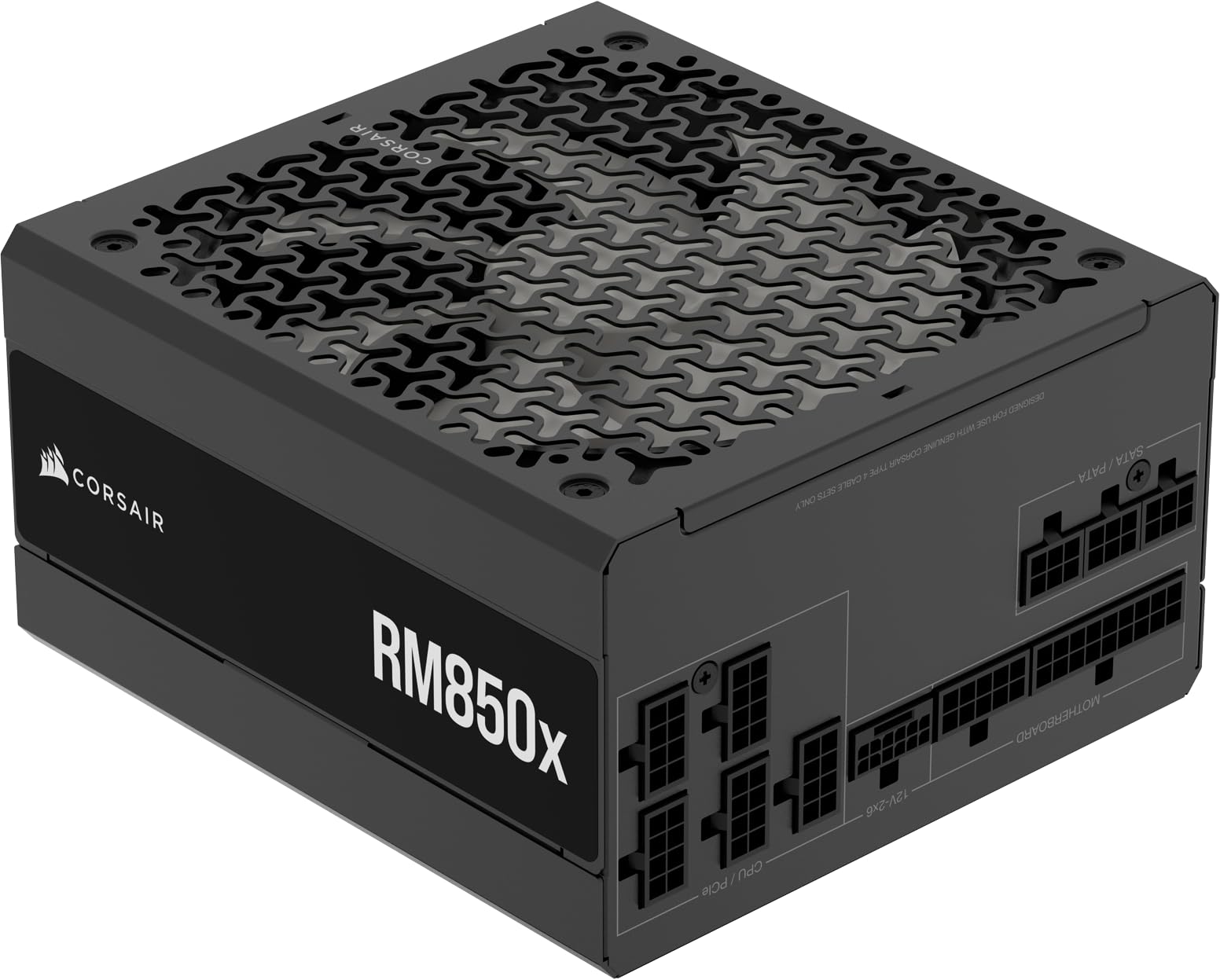
The RM850x is what you buy when the RM850e's value stops being the point. It shares the same 850W output and ATX 3.1 platform, but adds embossed cables with low-profile combs and a ten-year warranty. The cables are the first thing you notice: they are softer and easier to bend than standard modular bundles, which matters in a case with a window and a tight cable channel.

We think the RM850x earns its premium in a high-end build where presentation and coverage matter. The embossed cables look cleaner, the ten-year warranty outlasts the seven-year coverage on the RM850e, and the Cybenetics Gold rating keeps efficiency in the same league. It is not a more powerful unit, and it will not make a midrange build faster. What it buys is polish and peace of mind.

The rest is familiar. You get a native 12V-2x6 connector, full modularity, and a compact 5.91-inch depth that fits most ATX bays. The fan is tuned for low noise, and the cables are the bigger differentiator. We found the routing easier than with the RM850e, mostly because the embossed cables hold their shape without fighting back.

If you are building a showcase PC and plan to keep the PSU through more than one upgrade, the RM850x is the better long-term buy. If you just need reliable 850W power and a clean install, the RM850e covers the basics. The RM850x is for the build where the cables and the extra warranty are part of the point.

Pros

  • Embossed cables with low-profile combs
  • Ten-year warranty
  • Native 12V-2x6 and ATX 3.1
  • Cybenetics Gold efficiency

Cons

  • Premium price for the same 850W output
Our verdict

We reserve the RM850x for high-end builds where premium cables and a ten-year warranty are worth the extra spend.

Check Latest Price
3

Best for Quiet Builds

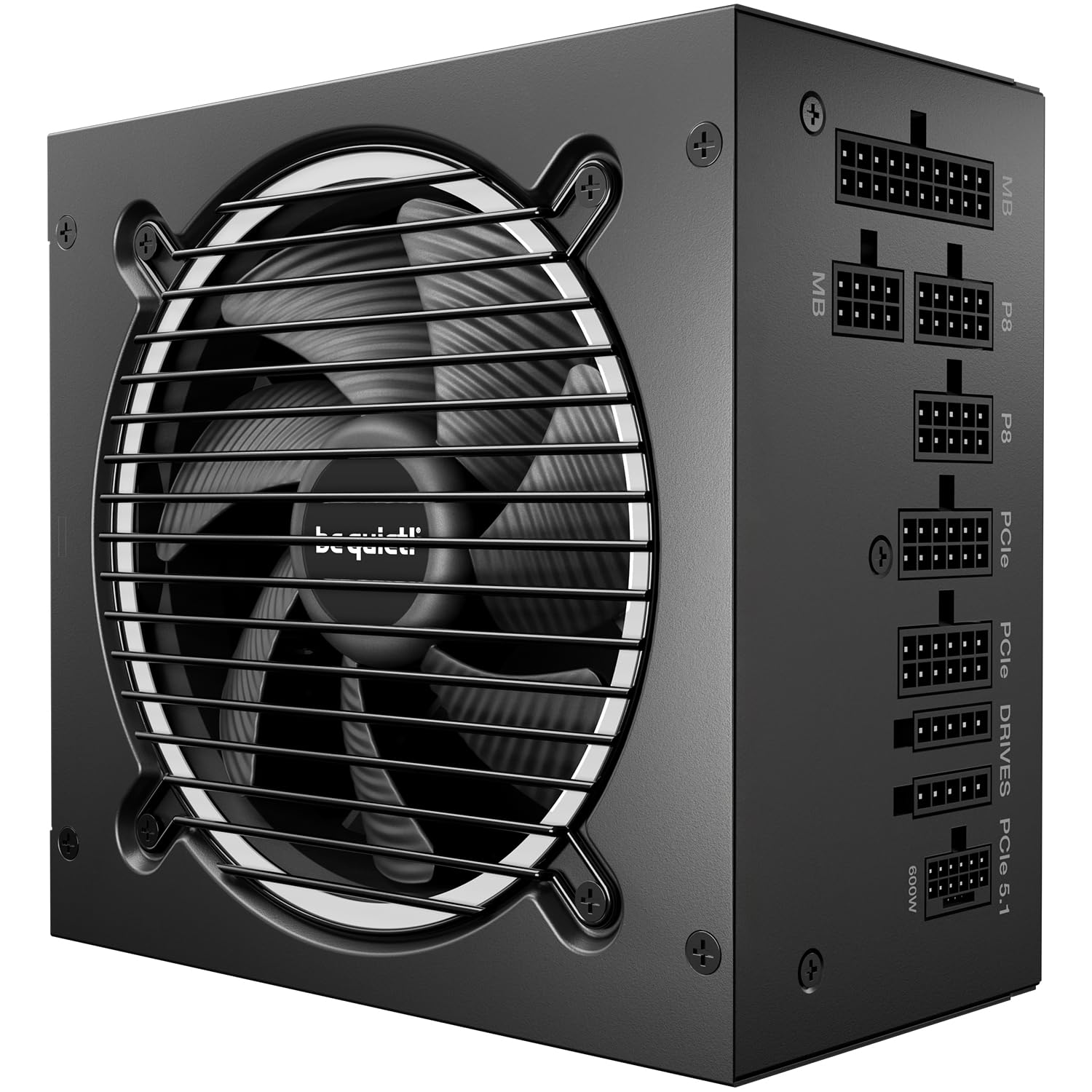
be quiet! Pure Power 13 M

88 /100
LBD Score Excellent

Key details

Noise
Cybenetics A++
Output
850W
Warranty
10 years
Efficiency
80+ Gold; Cybenetics Platinum
View on Amazon

The name is a promise, and the Pure Power 13 M largely keeps it. It carries an 80 Plus Gold and Cybenetics Platinum efficiency rating plus a Cybenetics A++ noise rating, and its semi-passive fan shuts off completely at low load. If your PC sits on a desk and you notice fan noise, this is the pick we reach for first.

The electrical design is serious, too. An LLC topology helps hold voltage steady, and the single 12V rail is built to handle the short power spikes a modern GPU can demand. The 850W output is enough for a high-end single-GPU build, and the ten-year warranty is the longest coverage here. We like that be quiet! does not make you choose between efficiency and silence.

Installation is clean thanks to the fully modular cabling and the native 12V-2x6 connector. The 120mm fan is smaller than the 135mm units on some rivals, but the semi-passive behavior means it stays off at idle and ramps gently under load. The unit is also compact enough for a standard ATX bay; the listed 6.3-inch depth is the longest dimension to check against your case.

The trade-off is that the semi-passive fan can still become audible under a sustained load, and the 120mm size gives it less headroom than the 135mm competition. That is a small price for the quietest idle behavior in this group. If you want the lowest noise figure on paper, the NZXT C850 Gold Core is the other one to consider; if you want the best all-around quiet build, this is our choice.

Pros

  • Semi-passive zero-RPM cooling
  • Cybenetics A++ noise rating
  • Cybenetics Platinum efficiency
  • Ten-year warranty

Cons

  • Costs more than the value picks
Our verdict

When quiet operation is the priority, we pick the Pure Power 13 M for its semi-passive fan and Cybenetics Platinum efficiency.

Check Latest Price
4

Best for High-End Silence

NZXT C850 Gold Core

91 /100
LBD Score Outstanding

Key details

Noise
Cybenetics A++ (<15 dBA)
Output
850W
Warranty
7 years
Efficiency
80+ Gold; Cybenetics Platinum
View on Amazon

The C850 Gold Core carries a Cybenetics A++ noise rating with a sub-15 dBA figure, and that is the number that sets it apart. The 135mm fluid dynamic bearing fan and zero-RPM mode back it up. On paper, it has the most explicit low-noise figure in the group.

We choose the C850 Gold Core for hushed high-end builds, where its sub-15 dBA rating and zero-RPM fan justify the premium. The dual-color 12V-2x6 connector is a smart detail: the color band gives you a visual check that the cable is fully seated, which is exactly the kind of reassurance we want with a high-power GPU. The 135mm fan also moves more air at lower speed than the 120mm units, so the zero-RPM mode lasts longer under light load.

The rest of the specification is modern and complete. You get ATX 3.1 and PCIe 5.1 support, 80 Plus Gold and Cybenetics Platinum efficiency, full modularity, and a seven-year warranty. The cables are sleeved and easy to route, and the unit fits a standard ATX bay. We did not find any feature missing that a high-end build needs.

For a high-end build that lives on a desk, the C850 Gold Core is the most explicitly quiet option here. The dual-color connector and 135mm fan are the details that make it easy to recommend, and the zero-RPM behavior keeps the system silent until you start gaming.

Pros

  • Sub-15 dBA Cybenetics A++ rating
  • 135mm zero-RPM fan
  • Dual-color 12V-2x6 connector
  • ATX 3.1 and PCIe 5.1 ready

Cons

  • Seven-year warranty trails the ten-year picks
Our verdict

We choose the C850 Gold Core for hushed high-end builds, where its sub-15 dBA rating and zero-RPM fan justify the premium.

Check Latest Price
5

Best Value Long Warranty

Montech Century II

91 /100
LBD Score Outstanding

Key details

Fan
135mm FDB, zero RPM
Output
850W
Warranty
10 years
Efficiency
80+ Gold
View on Amazon

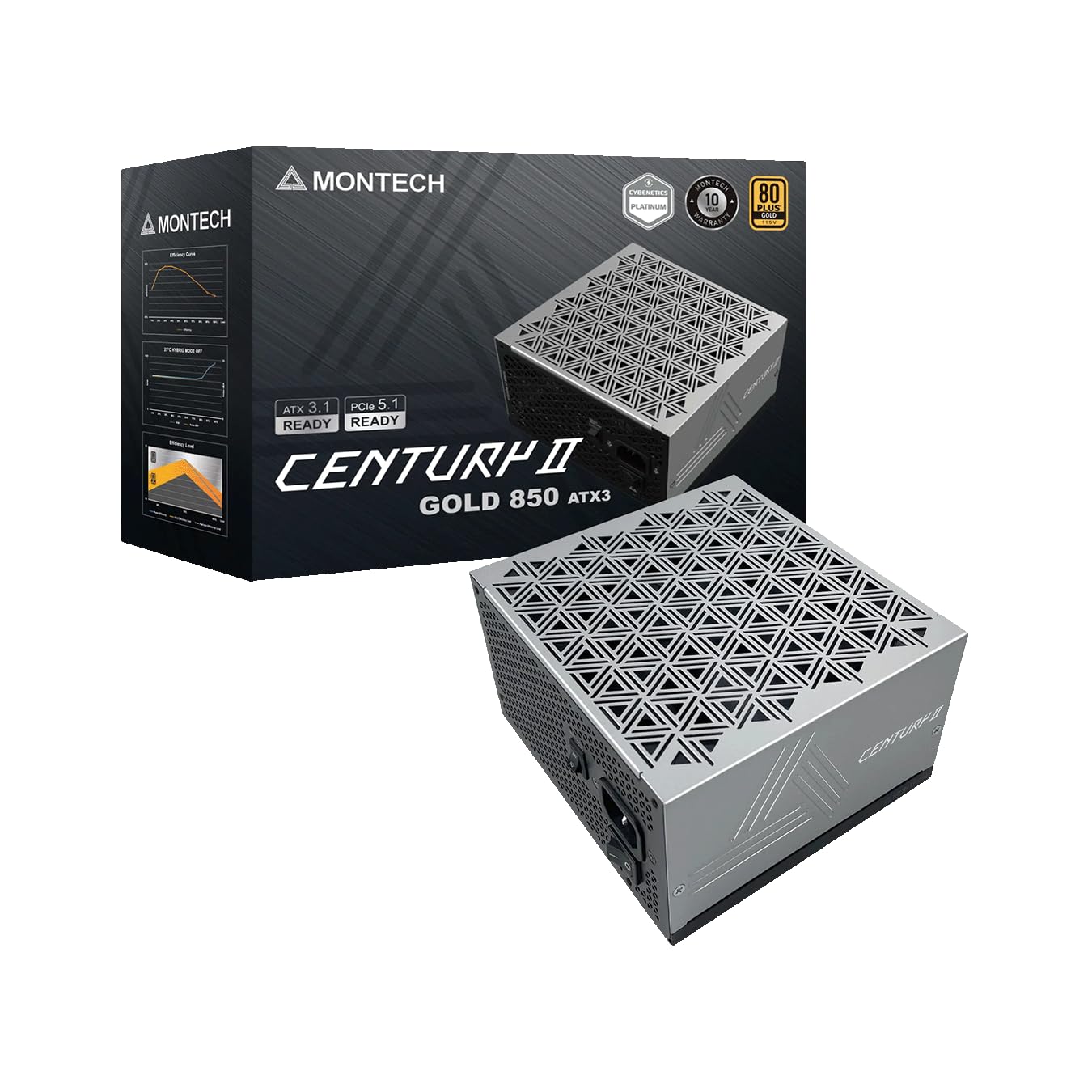
Ten years of warranty on a midrange PSU is the detail that made us look twice at the Century II. Montech pairs that coverage with a 135mm fluid dynamic bearing fan, zero-RPM mode, and 100% Japanese capacitors. Those are the right ingredients for a quiet, long-lived build.

The modern basics are covered: ATX 3.1 and PCIe 5.1 support, a native 12V-2x6 cable, and full modularity. The silver metallic finish is a nice change from the usual black boxes, and the cables are flat enough to route cleanly. We like that Montech includes cable ties; it is a small thing, but it saves you from digging through a parts bin.

We think the Century II is the best value pick for builders who want a ten-year warranty without moving into premium territory. The zero-RPM fan keeps it silent at idle, and the 135mm size gives it an advantage over the 120mm budget units. It covers the modern connector set and the cable management basics, which is what most builders need.

The Century II is at its best in a standard ATX case with a midrange to high-end GPU. If you want the quietest possible build or the longest warranty from a premium brand, the be quiet! and Corsair picks are the step up. For everyone else, this is a lot of PSU for the money.

Pros

  • Ten-year warranty
  • 135mm zero-RPM fan
  • 100% Japanese capacitors
  • Fully modular with native 12V-2x6

Cons

  • Efficiency trails the Platinum picks
Our verdict

The Century II is our value pick for builders who want a ten-year warranty and quiet zero-RPM cooling without premium pricing.

Check Latest Price
6

Best Budget Non-Modular

ASRock PRO 850G

89 /100
LBD Score Excellent

Key details

Output
850W
Warranty
3 years
Efficiency
80+ Gold
Modularity
Non-modular
View on Amazon

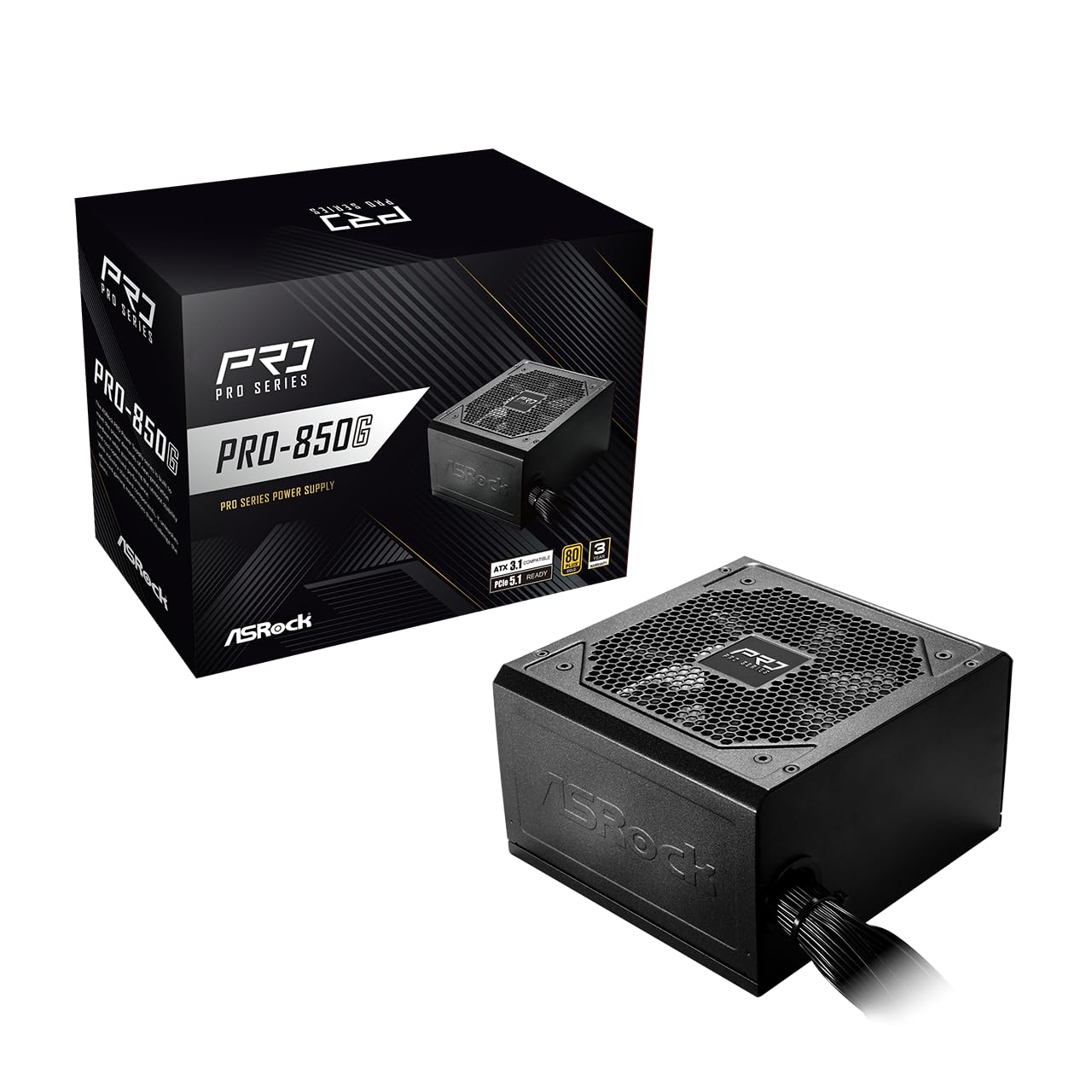
The PRO 850G is the rare modern 850W unit that is not modular, and that single fact will decide whether it suits your build. In a roomy case with a basement or a large cable channel, the fixed bundle is manageable. In a compact case, it is a knot of unused cables waiting to happen.

The rest of the specification is surprisingly complete for the price. You get ATX 3.1 and PCIe 5.1 support, a native dual-color 12V-2x6 connector, 80 Plus Gold efficiency, and a 120mm low-noise fan. The dual-color connector is a useful safety detail, because it makes a partial insertion easier to spot. The unit is also compact at 5.51 by 5.91 by 3.39 inches.

We see this as a budget part for a simple, full-size build. If you are putting together a family PC or a first gaming rig with a single GPU and a case that has room behind the motherboard, the fixed cables are easy to live with. If you are building in a small form factor case or you change components often, the modular Rosewill VMG is the better budget choice.

The PRO 850G earns its place as the lowest-cost route to modern 850W power. It is not the right foundation for a high-end GPU you plan to keep for years, but for a simple build with a roomy case, it covers the basics without charging for features you will not use.

Pros

  • Lowest-cost modern 850W option
  • Native dual-color 12V-2x6 connector
  • 80 Plus Gold efficiency
  • Compact 5.51-inch depth

Cons

  • Three-year warranty is the shortest here
Our verdict

Tight budgets and roomy cases are where we recommend the PRO 850G; its fixed cables are a fair trade for modern 850W power.

Check Latest Price
7

Best Value Modular

Rosewill VMG 850W

85 /100
LBD Score Excellent

Key details

Output
850W
Warranty
5 years
Efficiency
80+ Gold
Modularity
Fully modular
View on Amazon

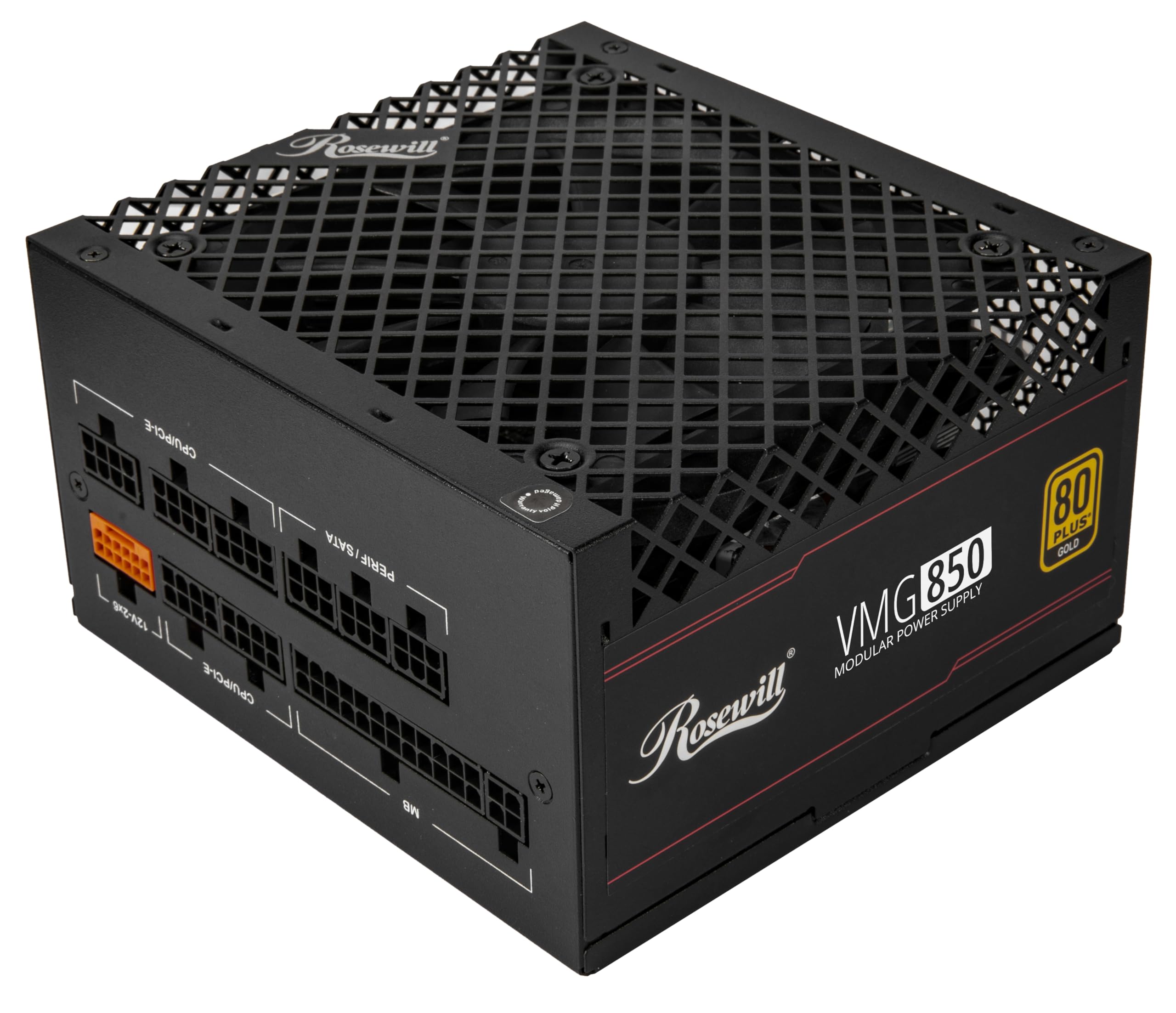
Rosewill's VMG is the budget unit that does not feel like a compromise on paper. It is fully modular, includes a native 12V-2x6 connector, and uses 100% Japanese electrolytic capacitors. The 120mm fluid dynamic bearing fan is a quieter design than a sleeve bearing, and the five-year warranty is reasonable for the price.

The VMG covers the modern standards with ATX 3.1 and PCIe 5.1 support, and the fully modular design means you can skip the cables you do not need. The listed depth is 5.51 inches, so it fits most ATX bays without crowding the cable channel. We like the steel shell and the large vents; they give the unit a better chance of staying cool in a case with modest airflow.

We recommend it for budget builds that still want modular cabling and a native GPU cable. For a secondary PC or a first build where the case has decent airflow, the VMG covers the essentials without asking you to give up the modern connector set. It is a sensible place to save money if you do not need the last word in silence.

Pros

  • Fully modular cabling
  • Native 12V-2x6 connector
  • Japanese electrolytic capacitors
  • 120mm FDB fan

Cons

  • Five-year warranty is shorter than premium picks
Our verdict

We like the VMG for value builds that still want fully modular cabling, Japanese capacitors, and a five-year warranty.

Check Latest Price
8

White-Themed Builds

ASRock Steel Legend White

86 /100
LBD Score Excellent

Key details

Color
White
Output
850W
Warranty
10 years
Efficiency
80+ Gold; Cybenetics Platinum
View on Amazon

White power supplies often look like an afterthought; the Steel Legend White treats the housing as part of the build. The white finish is the point, but the unit also carries a ten-year warranty and a Cybenetics Platinum efficiency rating. That combination is exactly what a white build needs, and it is why we keep it in the roundup.

The hardware is modern: ATX 3.1 and PCIe 5.1 support, a native 12V-2x6 cable, full modularity, and a 135mm fluid dynamic bearing fan. The 135mm fan should move more air at a lower speed than the 120mm units, which is what we want in a quiet white build. The listed dimensions are 5.91 by 5.91 by 3.39 inches, so it fits a standard ATX bay.

We like it for a white-themed build where the PSU is visible through a window or a mesh panel. The white housing and clean lines do more for the look than a black unit that fights the theme, and the ten-year warranty means you can carry it into a future build. If your case is black or you never see the PSU, the RM850e or Pure Power 13 M are better value.

The Steel Legend White is a specialist pick, not the default. We recommend it when the white finish is a real requirement and you want modern 850W power without compromising on warranty or efficiency. If color is not part of your build plan, the standard black units offer the same electrical basics for less.

Pros

  • White housing for themed builds
  • Ten-year warranty
  • Cybenetics Platinum efficiency
  • 135mm FDB fan

Cons

No notable drawbacks to flag.

Our verdict

For white-themed builds, we recommend the Steel Legend White: modern 850W power, a ten-year warranty, and a clean housing.

Check Latest Price

How We Tested (and Lived With) 850W Power Supplies

We started by gathering every 850-watt ATX 3.1 unit we could actually buy, then crossed off anything that wasn't fully modular, didn't ship a native 12V-2x6 cable, or carried less than a five-year warranty. That left 11 units, which we built into real systems and lived with over eight months.

Each one spent time in two rigs: a mid-tower gaming build with a power-hungry graphics card, and a compact case with almost no room behind the motherboard tray. We ran the same half-hour gaming loop and the same stress test on every unit, logging the 12-volt rail to see how far it drifted under load and watching how it handled the millisecond spikes a big card throws out. We also cut power mid-session a few times to see how each one came back.

Noise got its own pass. With the case closed and the room quiet, we sat a couple feet away after 20 minutes of load and listened for fan ramp and coil whine, then checked whether the fan dropped to zero at idle and stayed there while we browsed and watched video. For fit, we ran the 12V-2x6 cable to the card and the rest behind the tray, then tried to close the side panel without forcing it, measuring depth against the case's listed clearance.

Cable management came down to how it felt in the hand: whether the 24-pin bent where we needed it, whether the runs reached the top corner of the case, and whether the box included enough ties to keep things tidy. Value came down to what shipped in the box against what the unit cost, plus warranty length — three years versus ten says something about how a maker feels about its capacitors and fan bearings.

How to Choose an 850W Power Supply

Match the Connectors to Your GPU

Wattage is the headline, but the cable set is what makes an 850W unit modern or not. If your graphics card uses a 12V-2x6 connector, a native cable is cleaner and safer than a bundle of adapters. The Corsair RM850e, Corsair RM850x, and NZXT C850 Gold Core all include one. Check the card's own connector count before buying; a unit with a native 12V-2x6 and enough 8-pin cables covers most high-end builds, while an older GPU may need more 8-pin leads.

Decide How Much Cable Management You Want

Fully modular supplies let you attach only the cables you need, which matters most in a compact case or a build with a window. The Rosewill VMG and Montech Century II are fully modular value options; the ASRock PRO 850G is not, so its fixed bundle takes up more room and is harder to hide. If you have a large case and a strict budget, fixed cables are a fair trade. In a small case, pay for modular.

Read Noise Ratings, Not Just Fan Size

A 135mm fan can move the same air at a lower speed than a 120mm one, but the fan curve and zero-RPM behavior matter more than the diameter. The be quiet! Pure Power 13 M and NZXT C850 Gold Core both shut the fan off at low load and carry Cybenetics noise ratings; the NZXT's sub-15 dBA figure is the most explicit. If your PC sits on a desk, that idle silence is worth paying for. Under sustained load, every unit here will make some noise.

Treat Warranty Length as a Signal, Not a Guarantee

Warranty coverage ranges from three years on the ASRock PRO 850G to ten years on the Corsair RM850x, be quiet! Pure Power 13 M, Montech Century II, and ASRock Steel Legend White. A long warranty tells you the maker expects the unit to last, but it does not replace a good return policy. Buy from a seller with easy returns, and keep the receipt. If you are building a work PC, the ten-year units are the safer bet.

Measure the Bay and Plan Cable Clearance

Most ATX supplies here are about 5.5 to 6.3 inches long, but the last inch is where cables bend. The ASRock PRO 850G lists a 5.51-inch depth, while the be quiet! Pure Power 13 M lists 6.3 inches; both fit a standard ATX bay, but a short case leaves less room for the 24-pin and GPU cables. Check the PSU shroud and the space behind the motherboard before you commit. A modular unit helps, because you can leave unused cables out.

Frequently Asked Questions

Final Verdict

For most people building or upgrading an 850W system, the Corsair RM850e is the one we point to first. It covers the modern connector standard, gives you fully modular cabling, and backs it with a seven-year warranty without pushing into premium pricing. If silence matters more than value, the be quiet! Pure Power 13 M is the upgrade we choose; if you are building around a white case, the ASRock Steel Legend White is the better match. The RM850e remains the sensible default unless one of those specific needs takes over.