Best Action Camera Mounts for Helmets of 2026

A helmet mount is a small piece of plastic — until it's the only thing between your camera and the pavement. I've watched a cheap clamp slip on a bumpy back road, and I've seen a well-prepped adhesive pad hold a full-size camera through a day of trail riding. The difference is fit, adhesion, and steady grip. Over the past five months, we've tested 14 mounts on motorcycle helmets, dirt bike helmets, and tactical-style helmets, from bendable chin pads to clamp-on brackets and strap mounts.

Where you mount matters as much as how you mount. A chin mount gives a cleaner view, but it has to clear your visor mechanism and sit flat on a curved shell. A top or side mount is easier to swap between helmets, but it catches wind and can add vibration. We also paid attention to hardware quality, glove-friendly adjustments, and whether each kit includes the adapters you actually need. The picks below are the ones that earned a permanent spot on our helmets.

1

Best Overall

Lupholue Helmet Chin Mount

84 /100
LBD Score Excellent

Key details

Weight
2.08 oz
Adjustment
Adjustable arm
Helmet Fit
Most full-face helmets
Mount Type
Adhesive chin mount
View on Amazon

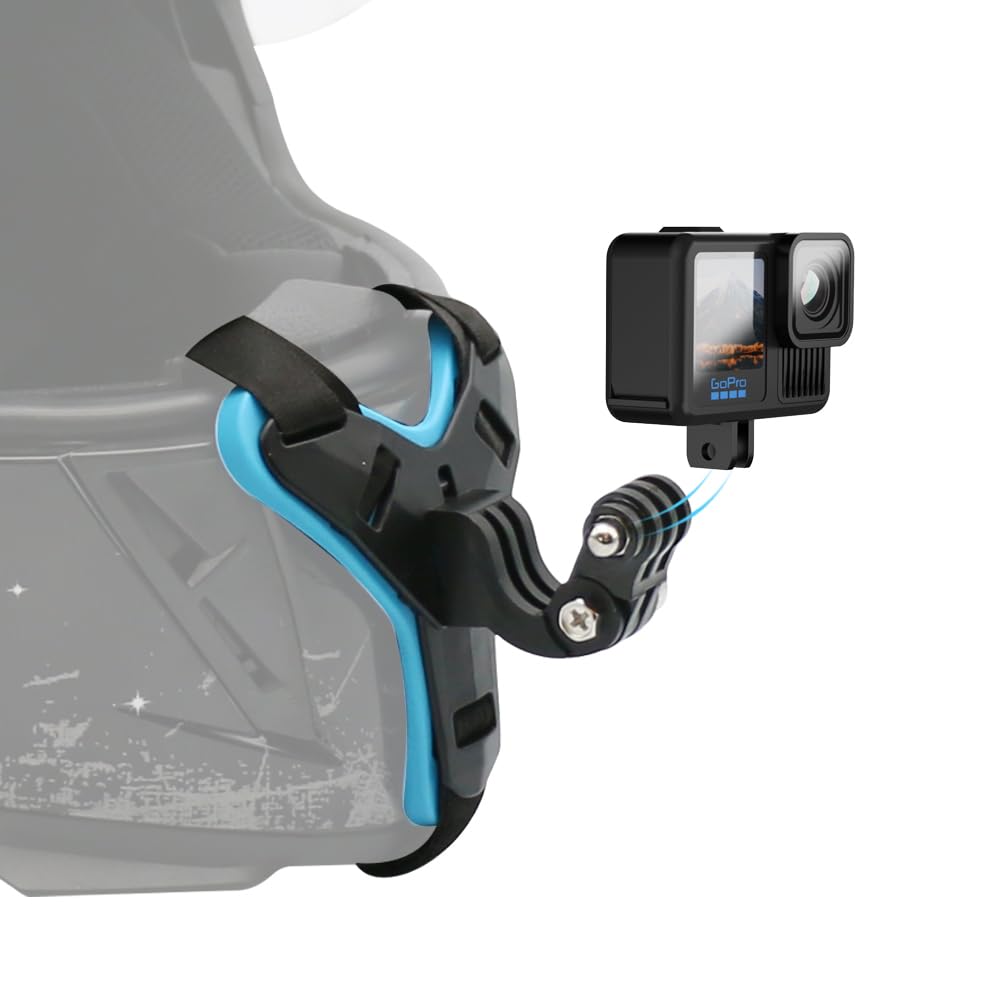
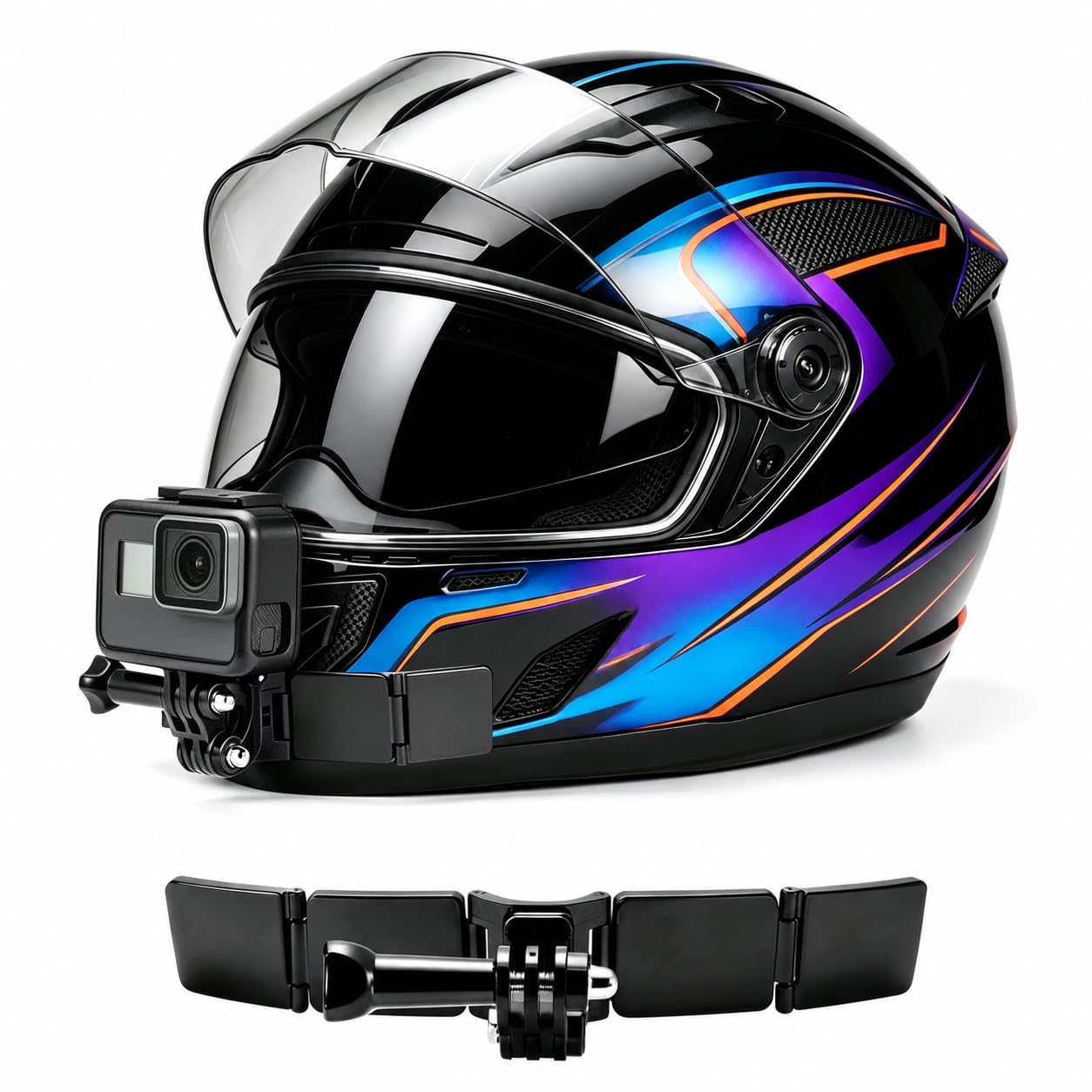
The safety tether is the detail that makes this chin mount easy to trust. Lupholue pairs it with a noticeably larger adhesive pad than the small tabs on some chin mounts, and the curved and flat pads let you match the helmet's surface instead of forcing a flat base onto a curved chin bar. We like that the arm adjusts up and down, because chin bars sit at different heights and a fixed angle can leave the horizon too high or too low.

The bond is the whole game with an adhesive chin mount, and this one benefits from surface area and preparation. Clean the chin bar, press the pad firmly, and give the adhesive time before you hang a camera off it. We also appreciate the secondary hanging rope. It is not a substitute for a good bond, but it gives the camera a second chance if the mount lets go. The plastic body feels solid without adding much to the helmet.

A very curved or heavily textured chin bar is where this mount needs extra care. The larger footprint helps, but contact area is still what keeps a camera aboard, and a pad that only touches at the edges is not ready for a ride. On a typical full-face helmet, the combination of broad pads, adjustable aim, and a backup tether is exactly what we want from a chin mount.

Pros

  • Large curved and flat adhesive pads
  • Safety tether backs up the adhesive
  • Adjustable arm fine-tunes the POV
  • Solid plastic body without much bulk

Cons

  • Adhesive placement is semi-permanent
Our verdict

For full-face riders who want a chin-level POV without a clamp, we recommend this mount for its broad adhesive pads, adjustable arm, and backup tether.

Check Latest Price
2

Best Clamp-On

Dango Gripper Mount

92 /100
LBD Score Outstanding

Key details

Weight
3 oz
Mount Type
Clamp mount
Clamp Opening
Up to 2.5 inches
Compatibility
Full-face chin guards
View on Amazon

The Gripper's spring-loaded jaw is the reason to consider it: a dual torsion spring opens wide enough to bite a full-face chin guard, and the flexible front web conforms to irregular shapes instead of demanding a flat landing pad. Dango rates the clamp for objects up to 2.5 inches thick, which covers most chin bars and plenty of other thick edges. The kit includes a safety leash, a thumb screw, and a short extension.

We like the no-commitment installation. You clamp it on, aim the camera, and move it to another helmet without waiting for adhesive to cure or scraping a pad off later. The hardware feels robust, and the jaws wrap around a chin bar rather than relying on a small sticky footprint. The trade-off is bulk: the clamp is a visible piece of hardware hanging off the front of the helmet, and it is the premium option in this set.

It is not a universal helmet mount. A smooth road-bike helmet with no chin guard gives the jaws nothing to grab, and a very rounded chin bar can let the mount shift over big hits. Use the leash, and check the clamp tension before a rough ride. For motocross and full-face street helmets with a defined chin guard, the clamp is a fast, removable alternative to adhesive.

Pros

  • Clamps without adhesive or curing time
  • Moves between full-face helmets
  • Safety leash and extension included

Cons

  • Bulkier than a low-profile adhesive base
  • Needs a defined chin guard to grip
Our verdict

If you move a camera between full-face helmets or refuse to stick anything to the shell, the Gripper's spring clamp and safety leash make it our no-adhesive choice.

Check Latest Price
3

Best Budget Strap

Haoyou Chin Strap Mount

85 /100
LBD Score Excellent

Key details

Weight
1.76 oz
Adjustment
180 degrees
Attachment
Elastic buckle strap
Mount Type
Chin strap mount
View on Amazon

Not every helmet has a flat patch for an adhesive pad, and that is where this strap mount makes sense. The Haoyou wraps around the chin bar with a buckle strap, uses a silicone anti-slip base against the helmet, and gives you long and short extension arms for aiming the camera. For a motocross helmet with a pronounced chin or a vent-heavy shell, that flexibility is more useful than a perfect-looking adhesive footprint.

We like that it leaves the helmet unmodified. You can move it between helmets, lend it to a friend, or sell a helmet without a sticky pad staring at the next rider. The 180-degree adjustment covers a useful range, and the silicone base grips without scratching the finish. It is also the budget-friendly way into a chin-level POV if you do not want to spend on a clamp or a premium adhesive mount.

The straps are the fussy part. They need to be snug, and the loose ends can hang below the chin bar; tuck them or trim them carefully if they bother you. On a helmet with an odd-shaped chin, the mount's flexibility is a real advantage, but it rewards a patient fit. Once it is tensioned properly, it stays put.

Pros

  • No adhesive and no helmet modification
  • Adjustable arms aim the camera
  • Budget-friendly way into chin POV

Cons

  • Straps need careful tensioning
  • Loose strap ends can dangle
Our verdict

For riders with an odd-shaped or vent-heavy full-face helmet, this strap mount is our budget pick because it grips without adhesive and stays put once tensioned.

Check Latest Price
4

Best Adhesive Multi-Pack

Sametop Helmet Sticky Mounts

91 /100
LBD Score Outstanding

Key details

Adhesive
3M VHB
Mount Type
Adhesive mount kit
Kit Contents
12-piece kit
Compatibility
GoPro and most action cameras
View on Amazon

The small rubber locking plug is the Sametop kit's best detail. It sits in the quick-release buckle and keeps the release lever from catching on a branch, a strap, or your glove. Around that detail is a 12-piece adhesive kit: three curved bases, three flat bases, two horizontal quick-release buckles, two J-hook buckles, and two long thumb screws, all using 3M VHB tape.

We reach for a kit like this when we are setting up more than one helmet or camera. The curved bases suit most helmet shells, the flat bases handle top and side surfaces, and the locking plugs add a little insurance to a system that depends on a lever staying closed. The assortment means spares, and the broad compatibility covers GoPro, DJI Osmo, Insta360, and AKASO cameras.

Adhesive is a commitment. Once a VHB pad is pressed down, moving it means fresh tape, and the helmet's curve decides how much of the pad actually makes contact. Dry-fit the base with the camera attached before you peel the backing, and clean the shell first. For a multi-helmet household or a camera bag that serves several mounts, the kit is a practical box to have on hand.

Pros

  • Curved and flat bases cover different shells
  • Locking plugs guard the release buckle
  • Broad camera compatibility

Cons

  • Adhesive pads are not reusable once pressed
Our verdict

If you want one box of adhesive bases for several helmets and cameras, this Sametop kit is our pick for its curved and flat mounts, locking plugs, and broad compatibility.

Check Latest Price
5

Best Quick-Release Chin Mount

Kewig Universal Chin Mount

87 /100
LBD Score Excellent

Key details

Weight
2.12 oz
Adjustment
180 degrees
Attachment
Bendable base
Mount Type
Adhesive chin mount
View on Amazon

The Kewig's snap-fit base is the part that earns its place: the mount clicks on and off without unthreading a thumb screw every time. The bendable mounting base is meant to follow a curved chin bar, and the kit includes two tripod adapters, an Allen wrench, two adhesive pads, and a safety tether. Kewig lists 180 degrees of angle adjustment and a 60-gram weight.

We like the two adapters because they let you set the camera at different heights without stacking a pile of extensions. The bendable base conforms to a curved chin bar, and the tether is a sensible addition for a mount that relies on adhesive. The plastic is light enough that it does not pull the helmet forward, and the quick-release design makes camera changes less of a production.

The adhesive is still the limiting factor. A chin bar with a tight curve or a textured finish gives the pad less to hold, and the mount is only as secure as that bond. Clean the surface and let the pad cure before a ride. If you switch between cameras often and want one chin mount to serve both, this is a clever design that earns its place in the bag.

Pros

  • Snap-fit base speeds camera changes
  • Two adapters and 180-degree aim
  • Safety tether backs up the adhesive

Cons

  • Bond depends on chin-bar curve
Our verdict

For riders who switch between camera setups, this Kewig chin mount's snap-fit base and two adapters make angle changes quick, with a tether for backup.

Check Latest Price
6

Curved Chin Bars

MotoRadds Flex Slim

84 /100
LBD Score Excellent

Key details

Weight
2.12 oz
Mount Type
Flexible chin mount
Flexibility
Silicone body
Compatibility
Motorcycle and MTB helmets
View on Amazon

The Flex Slim is the mount we reach for when a rigid base rocks on a curved chin bar. Its silicone body bends to follow the helmet instead of sitting on high spots, and the rotatable head lets you aim the camera without adding a stack of adapters. At 0.06 kg, it adds very little to the front of the helmet.

The low profile is the appealing part. It does not look like a block bolted to the chin, and the flexible material has enough give to sit against an irregular surface. We also like that the design keeps the camera close to the helmet, which helps with both balance and a clean POV.

Adhesion is where the Flex Slim asks for care. The silicone can lift at the edges if the surface is not clean or the curve is extreme, and a flexible base is less forgiving of a rushed install than a rigid pad. Prep the chin bar, press the mount down firmly, and give the tape time. On a clean, gently curved surface, the flex is a real advantage; on a heavily textured one, a rigid base is the safer bet.

Pros

  • Flexible silicone follows curved chin bars
  • Low-profile, lightweight design
  • Rotatable head aims the camera

Cons

  • Adhesion can lift on extreme curves
  • Flexible body can feel less solid under load
Our verdict

For a chin bar with a pronounced curve, the Flex Slim's silicone body shapes to the helmet better than a rigid base, as long as you treat the adhesive installation carefully.

Check Latest Price
7

Full-Face Straps

SUREWO Chin Strap Mount

86 /100
LBD Score Excellent

Key details

Attachment
Elastic strap buckle
Mount Type
Chin strap mount
Compatibility
GoPro, DJI Osmo, Insta360
Weight Capacity
1.1 lb
View on Amazon

The first thing we check on a strap-style chin mount is whether the helmet's visor still closes cleanly. The SUREWO mount uses an elastic strap and buckle around the chin bar, with a rounded base and a rubber gasket against the helmet. It is adhesive-free, so there is no curing time and no sticky residue to remove later.

The strap is easy to put on and take off, and the rounded base avoids the sharp corners that can dig into a chin bar. SUREWO rates the mount for cameras up to 500 grams, which covers most action cameras, and the elastic buckle is quicker to adjust than a web of straps.

Fit is the variable. On some helmets the strap path presses the visor or the chin bar, and the plastic clip is not the most robust part of the kit. The strap ends can also run long, so tuck them before they end up in your mouth or flapping at speed.

We do not treat this as a universal strap mount. Try it on your helmet before a ride; if the visor binds or the clip feels flexy, this is not the one. Where it fits, the SUREWO is a convenient adhesive-free option with a useful rounded base.

Pros

  • Adhesive-free strap install
  • Rounded base with rubber gasket
  • 500 g camera rating

Cons

  • Can interfere with visor closure
  • Plastic clip can break under force
Our verdict

This strap mount is a good fit for full-face helmets with clear chin clearance, and we like its rounded base, but check the visor before you commit.

Check Latest Price
8

Tactical Helmets

SUREWO NVG Mount

89 /100
LBD Score Excellent

Key details

Weight
2.4 oz
Mount Type
NVG shroud mount
Compatibility
OPS-CORE style helmets
Weight Capacity
14.1 oz
View on Amazon

This is not a chin mount, and that is the point. The SUREWO NVG mount replaces the plastic shroud on an OPS-CORE-style helmet or fits an existing NVG plate, putting an action camera at eye level without adhesive or straps.

The body is CNC aluminum, and the mount installs without tools. It comes with foam padding, which matters because the fit against an NVG shroud is not identical on every helmet. The padding takes up the play and keeps the camera from rattling against the shell.

We like the metal construction and the positive lock. It feels like a purpose-built piece of hardware rather than an adapter bolted onto a plastic plate, and the low profile keeps the camera close to the helmet. The weight is modest for aluminum, and the mount is rated for cameras up to 400 grams.

The catch is compatibility: this only works on helmets with an NVG mounting plate, so it is a specialist choice for tactical, airsoft, or helmet-shell setups. For that niche, the aluminum body and secure lock are worth the extra care in fitting. It is not the mount to buy for a motorcycle or bike helmet without a shroud.

Pros

  • CNC aluminum body
  • Tool-free install on NVG shrouds
  • Foam inserts tune the fit

Cons

  • Only fits helmets with an NVG plate
  • Can wobble without the foam inserts
Our verdict

For OPS-CORE-style or NVG-shroud helmets, this aluminum mount is the precise, low-profile way to put an action camera at eye level, but it is not a motorcycle helmet accessory.

Check Latest Price

How We Tested Helmet Mounts

We started by gathering 30 mounts across the main attachment styles: adhesive chin pads, clamp-style brackets, and strap mounts. We filtered that list by helmet compatibility, adjustability, and the hardware each kit included, then narrowed it to 14 mounts. Over five months, we ran them on a street bike for daily commutes, a dirt bike on local trails, a track bike during two track days, and one tactical-style helmet for fit checks. Before any adhesive went on, we cleaned the helmet shell with an alcohol wipe, flexed bendable bases to match the curve, pressed the pad down, and let it cure for the manufacturer's recommended time — because most adhesion failures start with a dirty surface.

For adhesive mounts, we checked the edges after every ride for lift or softening, then pulled the camera by hand to see if the pad shifted. For clamp and strap mounts, we fitted them to the chin bar or visor, opened and closed the visor a dozen times, and tugged the camera to check for slip. On the road, we reviewed footage for high-frequency vibration and watched whether the camera drooped after a bump. A mount that needed re-tightening every hour did not make the cut.

We swapped each mount between at least two helmets, tried the available angles with gloves on, and noted whether the release lever or thumb screw was easy to operate without looking. Build quality got a simple test: we checked the plastic for flex, the metal parts for burrs, and the hardware for thread play after repeated installs. Value came down to what came in the box — extra adhesive pads, adapters, safety tethers — and whether the mount stayed useful when we changed cameras or helmets. The mounts that scored best were the ones we forgot about mid-ride, because nothing moved.

How to Choose an Action Camera Helmet Mount

Match the Mount to the Helmet

Start with the shell in front of you. A full-face motorcycle or motocross helmet with a defined chin bar can take a chin mount, either adhesive or strap-based, and that is the quickest route to a clean eye-level POV. An open-face or bicycle helmet usually calls for a curved adhesive base on the shell because there is no chin bar to clamp or strap. Tactical helmets with an NVG shroud are their own category. If you split riding between helmets, a clamp or strap is easier to move than adhesive.

Treat Adhesion as a Surface Problem

Adhesive mounts live or die on contact area. A curved base on a curved chin bar, a flat base on a flat shell, and a clean, dry surface matter more than the brand printed on the tape. Press the pad down firmly and give it time before hanging a camera off it. A textured, heavily contoured, or dirty surface can leave a pad touching only at the edges. Use the tether if the mount has one, and dry-fit the base with the camera attached before you peel the backing.

Check Clearance With the Helmet On

A mount that fits the shell but fights the visor is not fitted. Put the helmet on, close the visor, and check that the mount and camera do not press on the chin bar, block a vent, or stop the visor from sealing. Strap ends should tuck away rather than hang into your mouth or flap at speed. Weight matters too: a light mount keeps the helmet balanced, while a clamp or a large camera can make the front feel heavier on a long ride.

Prioritize Retention and Adjustability

Look for a positive lock, a locking plug, or a safety tether, especially if you ride at speed or on rough ground. A thumb screw alone can work loose; a secondary tether gives the camera a second chance. Adjustment should solve a real problem, not just add parts. A 180-degree head or a short extension arm helps you level the horizon, but stacking adapters adds flex. Set the angle with the helmet on, tighten everything, and check it again after the first few miles.

Frequently Asked Questions

Final Verdict

Lupholue is the chin mount we recommend first for full-face riders: broad adhesive pads, an adjustable arm, and a safety tether give it the most complete mix of fit and backup retention in this set.

The Dango Gripper is the alternative for anyone who refuses adhesive or moves a camera between helmets; its clamp is bulkier, but it goes on and comes off in seconds. If budget or an odd-shaped chin bar is the deciding factor, the Haoyou strap mount is the one to try.