Best Audiophile Headphones of 2026

Audiophile headphones make a trade you can hear. Open-back models — most of what's worth buying in this range — leave the cups ventilated so air moves behind each driver, which is why a good recording sounds like a room rather than a wall. They also leak, and they let the world in. Listen at a desk and nothing else comes close; wear them on a bus and everyone hears your album.

So the real question is comfort and honesty: light enough to forget during a four-hour session, snug without clamping your jaw, and revealing enough that a bad master still sounds bad. My team and I spent eight months with 12 pairs of open and semi-open headphones, running them off laptops, phones, and a small desktop amp, and the gaps between them had little to do with spec sheets.

One thing first-time buyers get wrong is impedance. A high number isn't automatically better — it just means the headphones are hungrier. Some of these sing off a phone jack; others want real power behind them, and the picks below cover both.

1

Best Overall

Sennheiser HD 600

92 /100
LBD Score Outstanding

Key details

Cable
Detachable
Weight
9.1 oz
Impedance
300 ohm
Frequency Response
12-40,500 Hz
View on Amazon

The 300-ohm impedance is the first thing to settle: the HD 600 wants a real headphone amp, not a phone dongle. Plugged into a laptop jack, it plays, but the low end loses grip and the music feels polite. With a dedicated desktop amp, the same recordings gain weight and control. If your listening happens at a desk and you already have that amp, this is the most sensible starting point in the group.

What we appreciate most is how little the HD 600 adds. Voices sit in a natural midrange, strings and cymbals have texture without glare, and the open-back cups put depth between instruments instead of pushing everything forward. The 12-40,500 Hz range is broad, but the tuning matters more than the number: this is a headphone for hearing the recording rather than a highlight reel.

The open metal mesh and plush pads give it a light, non-fatiguing feel over long sessions, and the steel band feels built to be handled. The detachable Kevlar-reinforced cable is the quiet ownership win: a snagged lead becomes a replacement instead of a repair. We also appreciate that the cable is long enough to reach a desktop amp without stretching.

The HD 600 is not the choice for a noisy room or a bass-first playlist; its open-back design lets the room in and sends your music out. But for acoustic, jazz, classical, and well-recorded rock, it keeps revealing small choices in the mix without turning harsh. That is why it stays the reference we compare the rest against.

Pros

  • Neutral, detailed reference sound
  • Comfortable for long sessions
  • Detachable cable simplifies repairs
  • Solid steel-band build

Cons

  • Firm clamp on wider heads
Our verdict

If you listen critically at a desk and own a proper headphone amp, the HD 600 is the neutral, comfortable reference we recommend first.

Check Latest Price
2

Best for Bass and Easy Driving

Philips Fidelio X2HR

93 /100
LBD Score Outstanding

Key details

Cable
Detachable
Impedance
30 ohm
Driver Size
50 mm
Frequency Response
5-40,000 Hz
View on Amazon

Thirty ohms is the number that makes the X2HR easy to live with. We plugged it straight into a laptop and a phone and got usable volume without a dedicated amp; a small dongle DAC tightened the bass and cleaned up the edges. The 50 mm neodymium drivers give it more low-end weight than the neutral Sennheisers here, but the bass stays quick enough to follow a bassline rather than smother it.

The open-back shells and pre-tilted plates create a wide, roomy stage. On live recordings, applause and room ambience spread outside the cups, and the detachable cable makes it easy to swap in a shorter lead for desk use. The memory-foam velour pads are soft and breathable, though they are the part that needs the most attention in daily ownership.

Build is where the value equation gets interesting. The aluminum and leather-trimmed frame feels substantial, and the big cups sit around the ear rather than on it. It is not a travel headphone, because the open-back design leaks both ways, but as a home listen for rock, electronic, and film scores, it is the one we hand to friends who do not want to build a system around an amp. The velour can also feel warm after a while in summer.

Pros

  • Easy to drive from laptop or phone
  • Wide, bass-rich open-back sound
  • Detachable cable
  • Soft memory-foam pads

Cons

  • Snug clamp out of the box
  • Velour pads collect dust and hair
Our verdict

For a wide, bass-rich open-back sound you can run from a laptop or phone, the X2HR is the easiest fun listen in this group.

Check Latest Price
3

Best Wide Soundstage Without an Amp

beyerdynamic DT 990 Pro X

88 /100
LBD Score Excellent

Key details

Cable
Detachable mini-XLR
Weight
10.3 oz
Impedance
48 ohm
Driver Size
45 mm
View on Amazon

The detachable mini-XLR cable is the upgrade that matters most here. On the older DT 990 Pro the cable is fixed, so a snag can sideline the whole headphone; on the Pro X it unplugs. The 48-ohm impedance also means you can run it from a laptop, interface, or console without a dedicated amp, which makes it the more flexible version for a mixed desk.

The 45 mm STELLAR.45 driver and open-back cups throw a very wide stage. We heard reverb tails and background parts sitting well outside the center image, and the treble has the kind of bite that makes cymbals and acoustic strings easy to follow. That same brightness is the headphone's character, not a fault, but it rewards clean recordings.

We think it is a strong alternative to the HD 560S for detail hounds and gamers: it trades some neutrality for air and excitement. The velour pads are comfortable over long sessions, and the 10.3-ounce weight disappears quickly. The open-back design still leaks sound, so this is a desk headphone rather than a shared-room one.

Where it falls short is refinement. It is not the most neutral headphone here, and the treble-forward balance puts excitement ahead of evenness. If you want to hear exactly what a busy mix is doing, though, this is the most spacious listen in the group.

Pros

  • Very wide, spacious soundstage
  • Detail-forward treble
  • 48-ohm easy drive
  • Detachable mini-XLR cable

Cons

  • Mini-XLR plug can poke your neck
  • Ear pad edges may wear
Our verdict

The DT 990 Pro X gives you a spacious, detail-forward open-back sound and a detachable cable without demanding a dedicated amp.

Check Latest Price
4

Best Neutral Reference Value

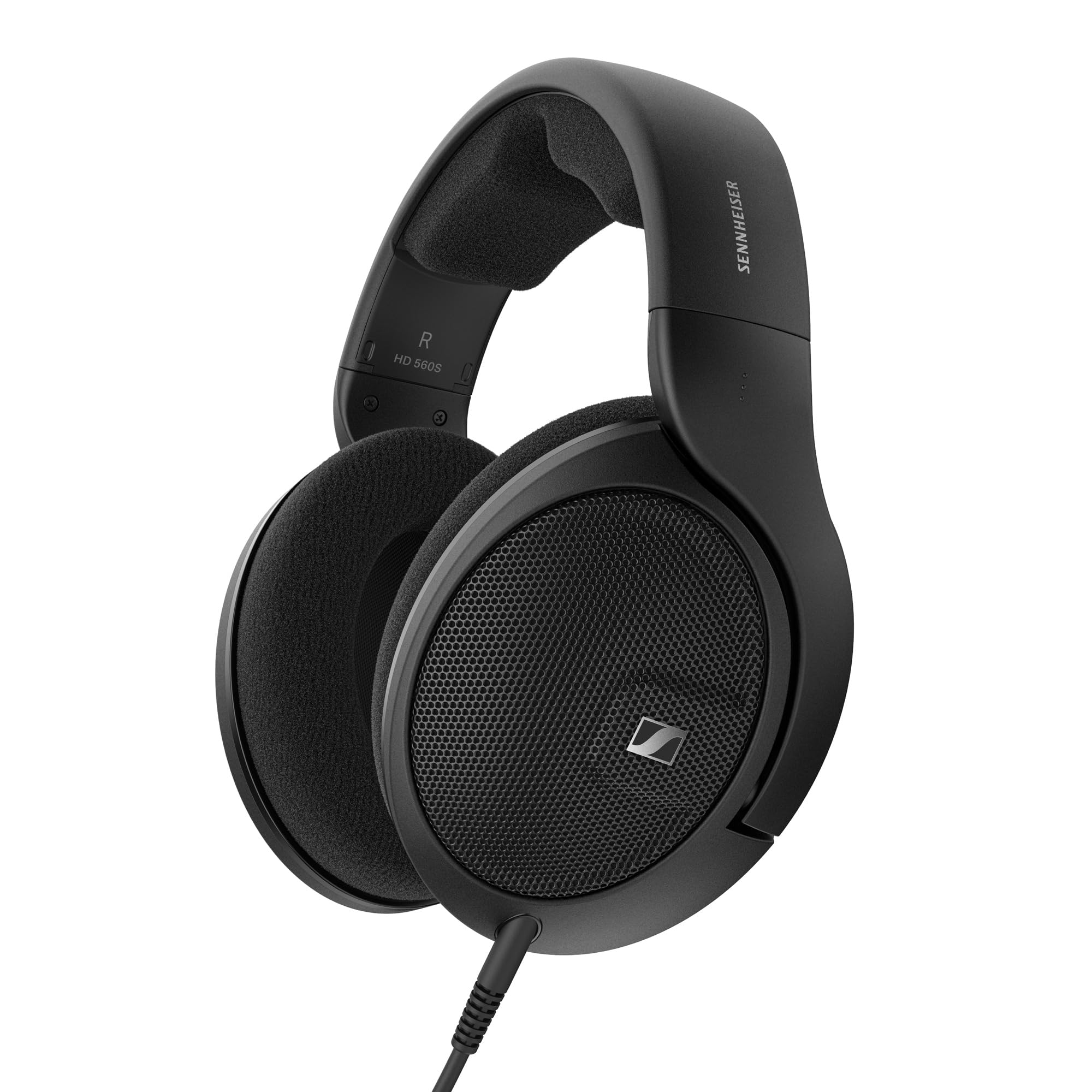
Sennheiser HD 560S

91 /100
LBD Score Outstanding

Key details

Cable
Detachable
Impedance
120 ohm
Driver Size
38 mm
Frequency Response
6 Hz-38 kHz
View on Amazon

The angled drivers are doing something you can hear immediately: the stage feels wider and more layered than a straightforward front-to-back presentation. Sennheiser calls it e.a.r. acoustic refinement, and the practical effect is that instruments have room around them without the warm glow of the HD 600. This is a more analytical headphone, and we mean that as a compliment.

For us, it is the best neutral value in the group for listeners who want detail without building a system around a 300-ohm flagship. The 120-ohm load is happier with a decent laptop or dongle than the HD 600, though a small DAC/amp still tightens the low end. The polymer-blend transducer is tuned for extended low-end reach, but it stays controlled rather than plump.

The velour pads are soft, and the open mesh cups keep the weight down. The detachable cable is a real plus for desk life, and the 38 mm drivers keep the presentation quick. The open-back design leaks sound, so it belongs at a desk rather than a shared train car.

For critical listening, the HD 560S rewards familiar recordings with separation and low-level detail, and it does not flatter a bad master. That makes it a wonderful second headphone for someone who already owns a warmer pair, and a demanding first step for someone who wants to hear what the fuss is about.

Pros

  • Neutral, revealing sound
  • Wide, layered soundstage
  • Detachable cable
  • Lower amp demand than HD 600

Cons

  • Firm clamp and shallow cups
  • Clinical on poor recordings
Our verdict

The HD 560S is the pick for listeners who want neutral, revealing sound and a detachable cable without stepping up to the HD 600's amp demands.

Check Latest Price
5

Best Budget Open-Back

Philips SHP9500

93 /100
LBD Score Outstanding

Key details

Cable
Detachable, 1.5 m
Weight
10.6 oz
Impedance
32 ohm
Driver Size
50 mm
View on Amazon

At 0.3 kg, the SHP9500 keeps weight off your head, and that is the reason to start here. The double-layered headband and breathable pads sit lightly, and we could wear it through a workday without a hotspot. The low clamping force is either the best part or the dealbreaker: it is friendly to glasses and long sessions, but it will not stay put if you move around.

The 50 mm drivers and open-back cups give it a wide, airy stage that punches well past its place in the group. Voices are clear, with a little extra presence in the upper mids that makes podcasts and acoustic music easy to follow; the bass is polite rather than punchy. If you want a bass-first listen, the X2HR is the better fit.

The steel enclosure feels sturdier than the price suggests, and the detachable 1.5 m cable is a practical touch for desk use. The open-back design means no isolation, so this is a home or quiet-office headphone, not a commute companion. The 1.5 m cable is short enough to avoid a desk tangle and detaches if it snags.

Pros

  • Very light for long sessions
  • Wide, airy open-back sound
  • Detachable 1.5 m cable
  • Sturdy steel build

Cons

  • Pads feel rougher than velour
Our verdict

If you want to try open-back listening for as little as possible, the SHP9500 delivers a light, spacious sound and a detachable cable on a tight budget.

Check Latest Price
6

Budget Studio

AKG K240 Studio

91 /100
LBD Score Outstanding

Key details

Cable
Detachable, 3 m
Weight
8.47 oz
Impedance
55 ohm
Driver Size
30 mm
View on Amazon

The self-adjusting headband is the reason this old design still works: there is no fiddling with clicks, just put it on and the cups find their place. At 240 g it is light enough to forget, and the semi-open cups let a little air into the stage. The gold-and-black finish is more distinctive than most budget headphones, too.

It is the best cheap entry into open-ish listening here. The 30 mm Varimotion drivers are not bass monsters; they have a clear midrange and a little sparkle up top, which makes vocals, acoustic guitar, and podcasts easy to follow. For light mixing or editing, the mid emphasis helps you hear what a voice is doing, even if the low end will not tell you everything.

The build is where the low price shows: the plastic frame feels basic, and the 3 m cable is long enough to trip over. The detachable cable is still welcome, and the self-adjusting band is the detail we keep coming back to. This is a headphone for a desk, a quiet room, and a listener who wants to spend more on music than gear.

Pros

  • Self-adjusting comfortable fit
  • Clear mids and detailed highs
  • Detachable 3 m cable
  • Light 240 g build

Cons

  • Ear pads can wear quickly
  • Semi-open cups leak sound
Our verdict

The K240 Studio is a cheap, comfortable way to hear a semi-open, mid-focused sound, and it makes sense for casual listening and light studio work.

Check Latest Price

How We Tested 12 Pairs of Audiophile Headphones Over Eight Months

We started by pulling every wired open and semi-open model sold as audiophile gear within the range most people actually spend, then cut anything that duplicated another pick's design too closely. That left 12 pairs. Testing ran for eight months, which is long enough for velour pads to flatten and for a headband to either relax or keep pinching.

Each pair lived on my desk for at least a week. We listened to the same set of tracks — dense orchestral passages, sparse vocals, bass-heavy electronic — and wrote down whether cymbals smeared, whether a bassline held its pitch, and whether a singer's breath sat forward or got buried. We ran everything from a phone jack, a laptop, and a small desktop amp to see which pairs needed the extra power, then swapped cables on the detachable models repeatedly, counting how many times the connectors went on and off before anything felt loose.

Comfort got its own pass: three-hour listening sessions with notes on hot spots at the crown, and two glasses-wearers on the team reporting whether the pads pressed frames into their temples. We judged clamping force by feel out of the box and again after a month, flexed each headband, coiled the cables, and carried pairs loose in backpacks to see how the finish held up. Reliability usually announced itself in small ways — a scratchy plug, a faint buzz on one side.

Isolation was tested against a TV and a coffee grinder two rooms away; none of these block much, so we noted which ones leaked least. Value came last: for each pair we asked whether the sound justified its cost next to the cheapest pick on the list, and a few didn't survive that question.

How to Choose Audiophile Headphones

Match Impedance to Your Source

Impedance tells you how hard a headphone is to drive, but sensitivity matters too. The 300-ohm HD 600 is the clear example here: it plays from a laptop jack, yet it needs a dedicated amp to sound controlled and dynamic. The 30-ohm X2HR and 48-ohm DT 990 Pro X are far easier to run from a laptop, phone, or interface, while the 120-ohm HD 560S sits in between.

If you already own a decent amp, high-impedance headphones open up more choices. If you do not, either budget for one or stay with the lower-impedance picks. Do not assume a phone dongle will get the best from a 300-ohm design.

Choose Open-Back for Space or Closed-Back for Quiet

Open-back cups trade isolation for a wider, more natural stage. That is the appeal of the HD 600, X2HR, DT 990 Pro X, HD 560S, and SHP9500: instruments sit farther apart, and the sound feels less boxed in. The trade-off is real. Open-back headphones leak music outward and let room noise inward, so they belong at a desk or in a quiet room.

A semi-open design like the K240 Studio lets in some air while still blocking a little more than a fully open pair, but it is not a commute solution. If you need to block a television, a shared office, or traffic, none of these is the right tool.

Pick a Sound Signature You Actually Like

Neutral does not mean boring, but it does mean the headphone refuses to flatter every recording. The HD 600 and HD 560S are the neutral references in this group; the X2HR adds low-end weight and a more relaxed, fun balance; the DT 990 Pro X pushes treble detail and air; the K240 Studio keeps mids forward and bass polite.

Choose by the music you play most and by how much treble you can take. A bright headphone can make cymbals and acoustic strings exciting, but it can also turn thin recordings harsh. A warmer headphone is easier to live with across poor masters, though it gives up some detail.

Treat Fit and Pads as Long-Term Costs

A headphone can sound right and still be unwearable after an hour. Clamp force, cup depth, and pad material matter as much as weight. The SHP9500 is very light with a loose hold, the K240 Studio uses a self-adjusting band, and the HD 600 relies on plush pads and a steel band. Firmer clamps show up on the HD 560S and X2HR, especially when new.

Check whether the pads are replaceable before you buy. Velour is breathable and soft, but it can collect dust and hair; foam pads flatten over time. A replaceable pad turns a worn headphone back into a comfortable one instead of an expensive annoyance.

Prefer Detachable Cables and Replaceable Parts

Cables fail before drivers do. A detachable cable is the simplest long-term insurance: the HD 600, X2HR, DT 990 Pro X, HD 560S, SHP9500, and K240 Studio all offer one in different forms. The DT 990 Pro X uses mini-XLR, while several others use simpler plug-in connections.

We treat a detachable cable as a genuine ownership feature, not a spec-sheet extra. Check the connector type and cable length for your desk before ordering, especially if you plan to use a balanced amp or a shorter lead.

Frequently Asked Questions

Final Verdict

The Sennheiser HD 600 is the one to build a serious listening setup around. Its neutral balance, open-back depth, and comfortable fit make familiar recordings feel unforced, and the detachable cable makes ownership easier. The catch is power: without a dedicated amp, the HD 600 never fully opens up.

For a desk with no amp, choose the Philips Fidelio X2HR for its easy drive and bass-rich stage. For the smallest budget, the SHP9500 is the better first step into open-back listening.