Best USB-C Headphones of 2026

The headphone jack didn't vanish all at once. It just quietly stopped being there, and the port you charge with became the port you listen with too. That's fine until you're on a long flight with earbuds that hiss through every quiet passage, or on a call where the mic makes you sound like you're shouting from a stairwell. A good USB-C pair fixes both, and it never needs charging.

My team and I have spent four months living with 16 pairs, earbuds and over-ears alike, and the lesson held: what decides whether a pair sounds clean isn't the driver, it's the little converter chip molded into the plug. Cheap ones add a hiss you can't unhear. Worth knowing too — the volume buttons on a USB-C cable are often software-dependent, working on your phone and doing nothing on your laptop.

These are also the least glamorous thing in your bag: coiled, crammed next to keys, borrowed by whoever forgot theirs. Fit and durability got as much attention as sound. Here's what earned a permanent spot.

1

Best Overall

Apple EarPods USB-C

91 /100
LBD Score Outstanding

Key details

Fit
Open-fit earbuds
Controls
Inline remote and mic
Connection
USB-C wired
Compatibility
USB-C devices
View on Amazon

The case for these is almost embarrassingly simple: they turn a USB-C port into working headphones with no battery, no pairing step, and no app. We kept a pair in a laptop bag because it was the one set we never had to think about before a call. There is no battery gauge to watch, no case to remember, and no pairing step when you switch from phone to laptop. The inline remote handles volume and playback, and the microphone is clear enough for the calls we took at a desk.

Sound is the other pleasant part. Vocals and podcasts come through clearly, and the open shape keeps you aware of a barista or a train announcement instead of sealing you off. That same shape is why they feel lighter than silicone-tipped earbuds over a long morning. The cable is light enough that it disappears in a pocket, and the built-in mic picks up voices without the hollow tunnel sound we associate with cheap wired buds.

They are not the pair for a noisy commute or a bass-heavy playlist. The BLXSounds two-pack gives you a sealed in-ear fit, and the JBL Tune 520C is the step up for bass and punch. The EarPods are the pair you choose when you want the least friction and a small footprint to carry.

Pros

  • Plug-and-play USB-C with no charging or pairing
  • Inline remote and mic for calls and volume
  • Clear sound for podcasts and calls
  • Budget-friendly everyday backup

Cons

  • Open fit can loosen during exercise
  • Cable and connector are the durability weak point
Our verdict

The pair we reach for first: plug them into a USB-C phone or laptop and calls, podcasts, and music just work, with no charging or pairing to think about.

Check Latest Price
2

Best On-Ear

JBL Tune 520C

84 /100
LBD Score Excellent

Key details

Audio
Hi-Res 96kHz/24bit
Weight
5.29 oz
Controls
3-button remote and mic
Driver Size
32 mm
View on Amazon

A small inline button is the reason to pay attention to the Tune 520C. It cycles EQ presets, so you can add bass or pull voices forward without opening an app. We liked that on a wired headphone: the tuning is part of the hardware, not a settings screen you forget. It is the most adjustable-sounding pair in this group, which is why it earns the on-ear slot.

The 32mm drivers and Hi-Res 96kHz/24bit support give it more headroom than the earbuds here, and JBL's Pure Bass tuning is the point. On a train, the on-ear cups also block more ambient sound than an open-fit bud, though they don't cancel noise. The 150g build is light enough to forget you're wearing it. The tuning favors energy over absolute neutrality, which suits pop, rock, and podcasts with background music.

The three-button remote and microphone make calls easy, and there is no battery to manage. We choose it for a flight or a focused listen; the Apple pair is the better pocket companion, and the Logitech is the better meeting tool. There is no battery to manage, which is the quiet luxury of wired headphones.

Pros

  • Inline EQ presets for bass or vocals
  • 32mm drivers with Hi-Res 96kHz/24bit audio
  • Three-button remote and microphone

Cons

  • On-ear cups can press during long sessions
  • No water resistance for workouts
Our verdict

If you want more bass and a proper on-ear fit than earbuds can give, the Tune 520C is the wired USB-C step-up we recommend.

Check Latest Price
3

Best for Work Calls

Logitech H391

84 /100
LBD Score Excellent

Key details

Weight
7.04 oz
Controls
Inline volume and mute
Connection
USB-C wired
Microphone
Rotating boom mic
View on Amazon

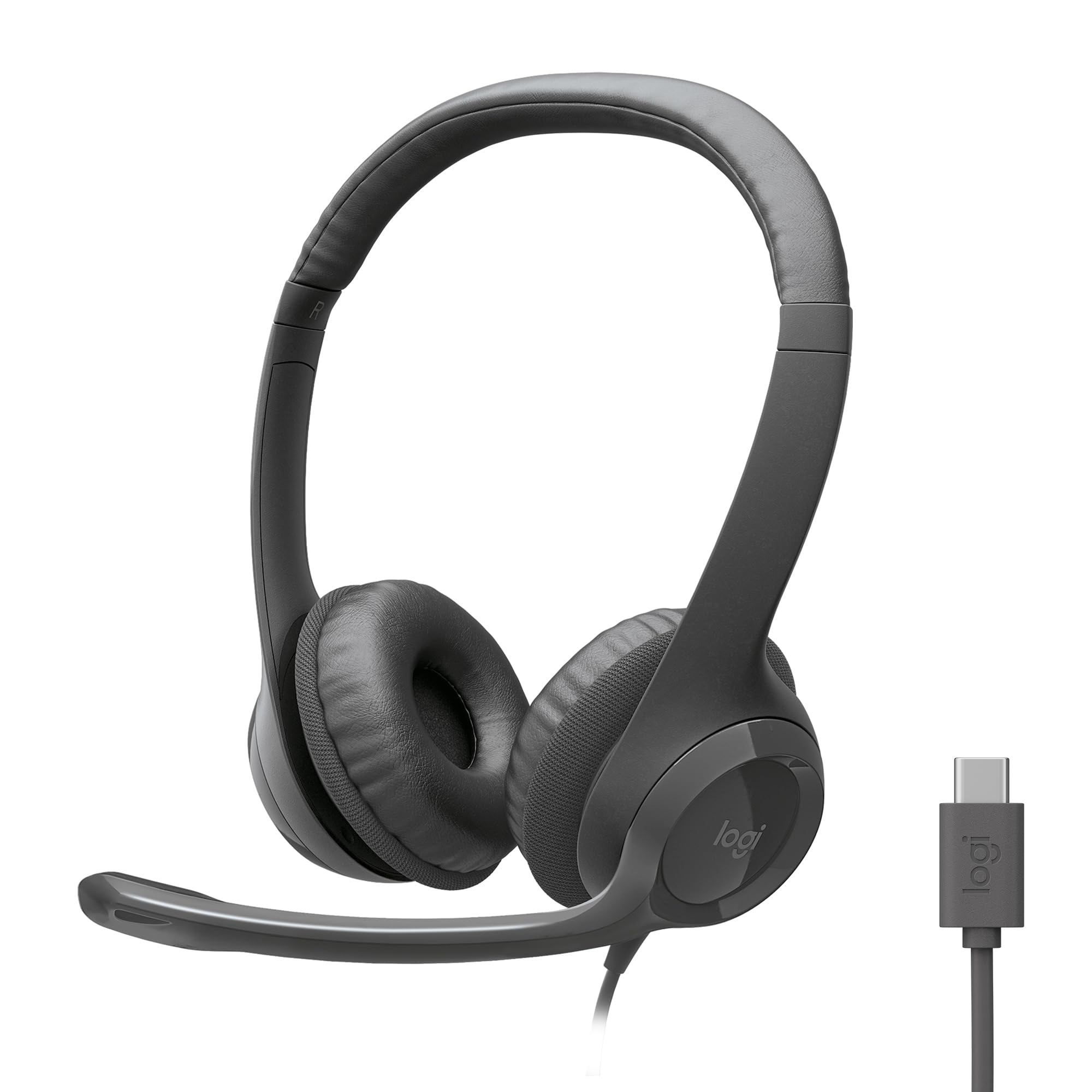
The rotating boom mic is the first thing we look for in a work headset, and the H391 has one that swings out of the way when you stop talking. It plugs into a USB-C port and works without software, which matters when you are joining a call from a loaner laptop. The inline controls handle volume and mute without a screen.

We think of this as a call tool first and a music headphone second. Voices come through clearly, and the leatherette pads and adjustable headband are comfortable for a meeting block. The 7.04-ounce weight is noticeable but not heavy, and the two-year warranty is the reassurance we want for something that lives on a desk. It is not the pair for a commute or a long flight; the on-ear cups don't seal.

The mic is the reason to buy it, and the inline mute is the feature we miss when we switch back to bare earbuds. If you split your day between calls and music, the JBL is the more enjoyable listen; if you live in meetings, the H391 is the one we put in the laptop bag.

Pros

  • Rotating boom mic tucks out of the way
  • Inline volume and mute controls
  • USB-C plug-and-play, no software
  • Two-year warranty

Cons

  • Clamp is firm on larger heads
  • Microphone reliability is the long-term question
Our verdict

For meetings, the H391 is the practical wired headset: a boom mic that tucks away, inline mute and volume, and no software to install.

Check Latest Price
4

Best Budget Over-Ear

Cowyawn USB-C Over-Ear

87 /100
LBD Score Excellent

Key details

Design
Foldable with swivel cups
Weight
8.82 oz
Warranty
12 months
Driver Size
40 mm
View on Amazon

Over-ear headphones at this price usually announce themselves with hard pads and a hollow shell. The Cowyawn pair is the exception we noticed first by feel: the pads are soft, the headband adjusts, and the whole thing folds into a bag without a fight.

We like them most for study and travel because the 40mm drivers give music and video enough body, and the passive cups take the edge off a busy room. The 90-degree swivel cups and folding hinge make them easy to pack. They are also light enough at 0.25kg to wear through a lecture without feeling weighed down. The sound is warm rather than sharp, which suits podcasts and pop more than critical listening.

The 12-month warranty is the main compromise, and the USB-C connection is the simple part: plug them in and go. We choose them when we want a comfortable over-ear for a long train ride and don't need a boom mic. If you need a mic for meetings, the Logitech is the better tool; if you want memory foam, the ADOOPE is softer. The folding hinge is the detail that makes them a bag headphone rather than a desk one.

Pros

  • 40mm drivers deliver full-bodied sound
  • Soft pads and adjustable headband
  • Folds with swivel cups for packing
  • Budget-friendly over-ear value

Cons

  • Call quality is the least consistent part
  • No water resistance for commutes
Our verdict

The best-value over-ear here for study and travel: soft pads, a folding frame, and 40mm drivers that make long listening sessions easy.

Check Latest Price
5

Best Budget Two-Pack

BLXSounds USB-C Earbuds 2-Pack

82 /100
LBD Score Excellent

Key details

Ear Tips
3 sizes included
Pack Size
2 pairs
Connection
USB-C wired
Water Resistance
Water resistant
View on Amazon

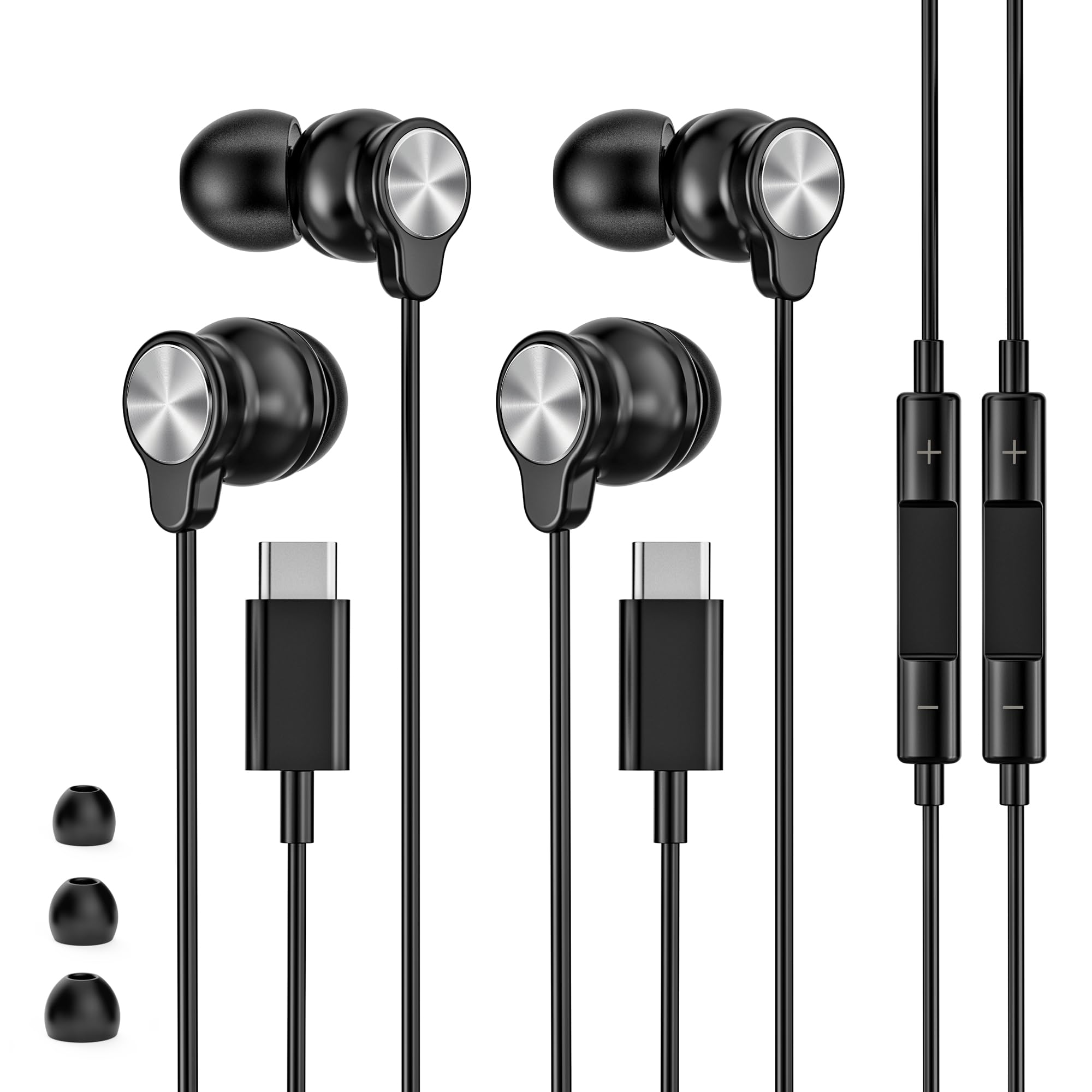
Two pairs in one package is only a deal if the buds stay in your ears. The BLXSounds set comes with three sizes of ear tips, and the small pair is the one we reach for when a standard in-ear feels like a cork.

The sound is clear and the microphone handles calls without a hollow, far-away quality. The bass is present without swallowing voices, and the 16-ohm impedance makes them easy to drive from a phone. The two-pack means one pair can live in a laptop bag and one at a desk. They are also water resistant, which is useful for a bag pair.

We recommend them for small ears and shared households because the fit is the feature that matters most, and the second pair is genuinely useful. The inline remote is easy to find by touch, and the mic is clear on calls. The second pair is the quiet luxury: one stays in the bag, one stays at the desk, and neither needs a charge.

Pros

  • Two pairs for bag and desk
  • Three ear-tip sizes for small ears
  • Clear microphone for calls
  • Water resistant

Cons

  • Cable durability is the weak point
  • No carrying case included
Our verdict

The two-pack we recommend for small ears and shared households: two pairs, three tip sizes, and a mic that handles calls without fuss.

Check Latest Price
6

School and Travel

KVIDIO USB-C Over-Ear

89 /100
LBD Score Excellent

Key details

Headband
5-level adjustable
Warranty
6 months
Cord Length
4.9 ft
Driver Size
40 mm
View on Amazon

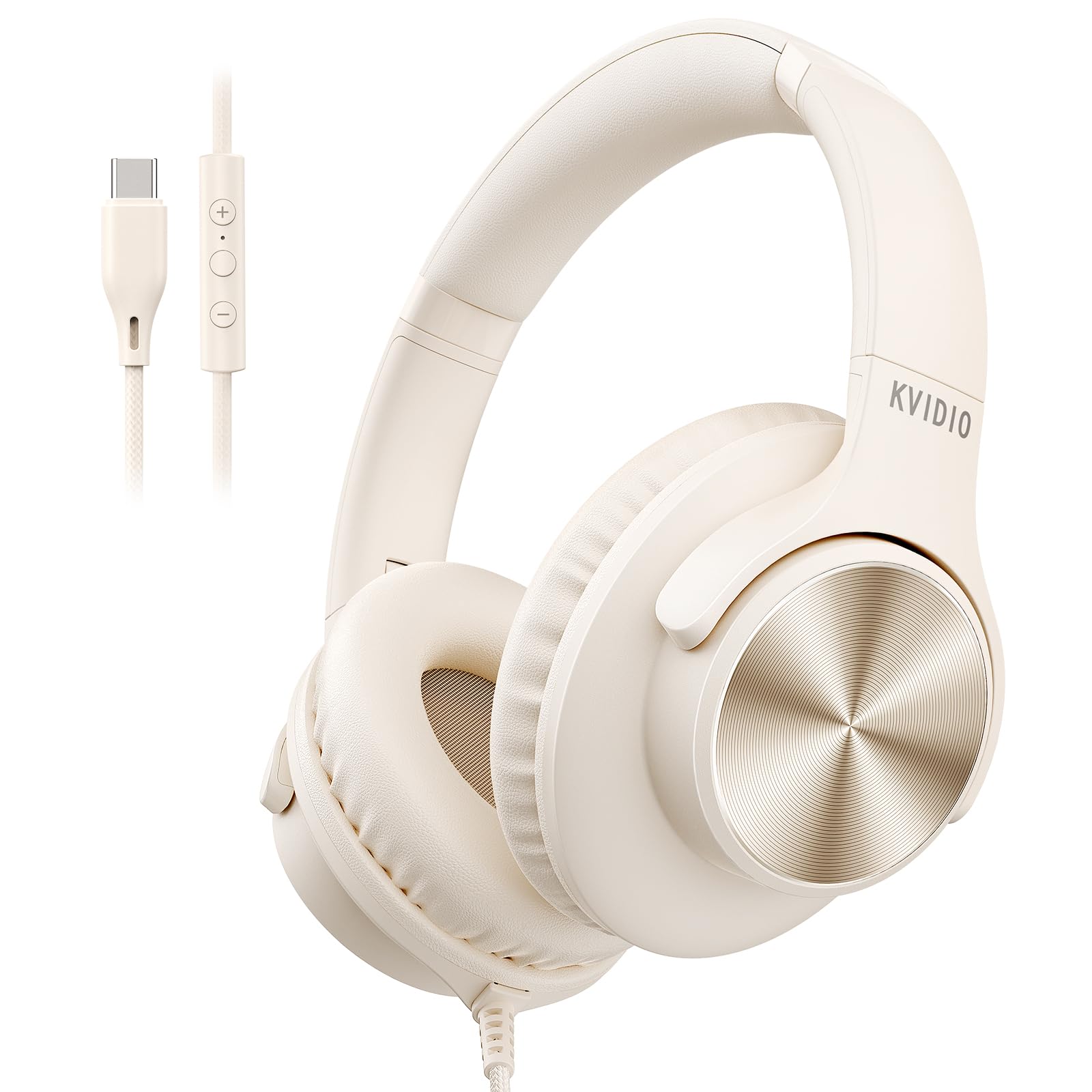
The 4.9-foot cord is the first thing that makes the KVIDIO pair useful: it lets you set the laptop down and still move around a small desk or classroom station. The beige finish is a nice change from black, but the cord is the practical hook.

The over-ear cups are soft, and the five-step headband gives more adjustment than most budget pairs. The 90-degree swivel cups and folding hinge mean they pack down for a backpack, and the 40mm drivers handle speech and music without strain. The 32-ohm impedance is easy to drive from a phone or laptop.

We like these for school and travel because the fit stays comfortable through a long class and the folding frame disappears into a backpack. The 4.9-foot cord is the detail we miss when we switch to shorter earbuds. They are not the pair for a sweaty workout, but they are easy to live with at a desk.

KVIDIO is also unusually direct about the port requirement: it won't work on charge-only USB-C ports, so check that before you buy. If you need a boom mic for meetings, the Logitech is the better tool.

Pros

  • 4.9-foot tangle-free cord
  • Five-level adjustable headband
  • Folds with 90-degree swivel cups
  • Explicit USB-C digital audio support

Cons

  • Six-month warranty is short
  • No water resistance
Our verdict

A cheerful, comfortable over-ear for school and travel, with a long cord and a folding frame, as long as your USB-C port carries audio.

Check Latest Price
7

Long Classes

ADOOPE AD1000

87 /100
LBD Score Excellent

Key details

Cushions
Memory foam
Warranty
2 years
Cord Length
1.2 m
Driver Size
40 mm
View on Amazon

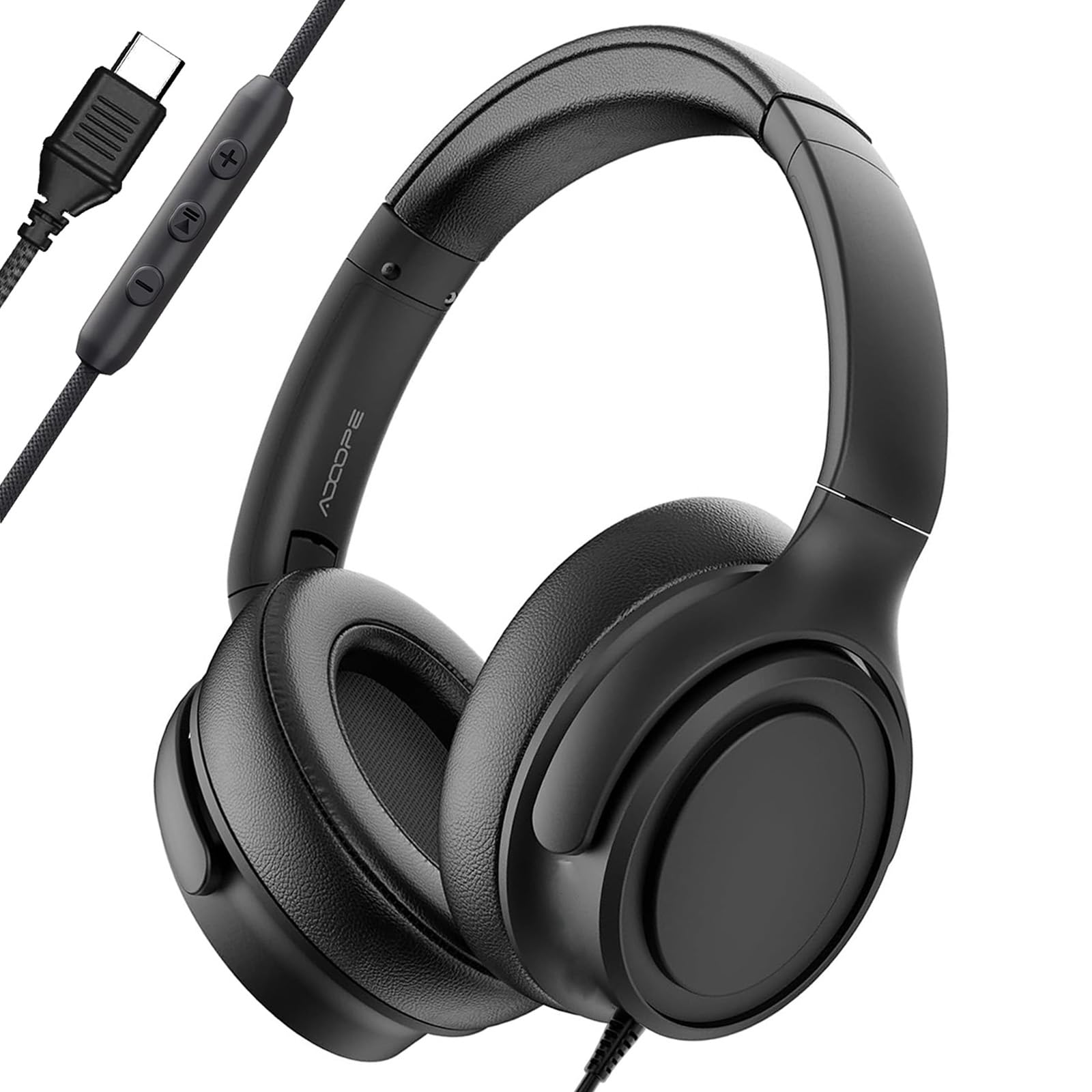
The memory-foam pads are what separate the ADOOPE from the other budget over-ears here. They are soft around the ear, and the 90-degree rotating cups let the headphone sit flat against your neck when you take it off.

The 40mm drivers are tuned for clear speech, which makes them a good fit for online classes, calls, and podcasts. The passive cups take the edge off a busy room without pretending to be active noise cancellation.

The braided 1.2-meter cord feels sturdier than the thin cables on the cheapest pairs. The foldable frame and adjustable headband are welcome, even if the headphone is not the lightest over-ear you can buy.

We recommend the ADOOPE for a student or remote worker who wears a headset for hours and wants the softest pads here. The two-year warranty and memory-foam cushions are the reasons this one stays in the rotation. If you want a more exciting sound, the JBL is the better listen.

Pros

  • Memory-foam ear cushions
  • Two-year warranty
  • Braided 1.2 m cord
  • Folds with rotating cups

Cons

  • Bass is modest for music
  • No carrying bag included
Our verdict

A comfort-first over-ear for online classes and long calls, with memory-foam pads and a two-year warranty; just don't expect punchy bass.

Check Latest Price
8

Spare Pairs

Basecolors USB-C Earbuds 5-Pack

80 /100
LBD Score Excellent

Key details

DAC
16bit/48KHz
Pack Size
5 pairs
Driver Size
10 mm
Cable Length
1.2 m
View on Amazon

Five pairs is a strange way to sell headphones until you think about all the places a cheap pair disappears to: the glovebox, the desk drawer, the backpack you take to class. The Basecolors pack is built for that kind of scatter.

The 10mm drivers and 16bit/48KHz DAC are more specification than we expect from a bulk pack. The inline remote handles calls and playback, and the 1.2-meter cord is long enough for a laptop without becoming a trip hazard. The anti-knot cord is a small win for a bag pair.

Sound is the trade-off. These are fine for calls and casual video, but they don't have the body or consistency of the Apple or JBL pairs. The inline remote is also basic, so don't expect the same control as a three-button headset.

We see the Basecolors pack as a backup buy, not a main headphone. If you want one pair for daily listening, spend more on the Apple EarPods or the JBL Tune 520C. If you want a pair in every bag and accept the trade-offs, the five-pack earns its place.

Pros

  • Five pairs for bags and desks
  • DAC chip supports 16bit/48KHz
  • Inline mic and remote
  • Low-cost bulk backup

Cons

  • Volume controls can behave unpredictably
  • Reliability is uneven
Our verdict

A bulk backup buy: five USB-C earbuds with a DAC and inline controls, best for keeping spares in several bags rather than for critical listening.

Check Latest Price

How We Tested USB-C Headphones

We started by pulling every USB-C-native pair we could find — no dongles, no adapters — then narrowed by format, price, and whether the listing named the devices it actually works with. Sixteen pairs made the cut, and each spent four months in rotation.

They went where wired headphones really go: a full workday of video calls, a week of commuting, a long flight, an eight-hour desk session, and a backpack that got shoved in and out of a locker. On every pair we played the same five tracks and noted whether bass bled into vocals or cymbals turned to mush. For the mic, we recorded one paragraph as a voice memo and played it back, listening for boxiness and shirt rustle.

Comfort got timed: three hours straight, then a note on where the pressure landed — crown of the head, tops of the ears, or ear canal. Durability meant coiling and uncoiling daily, pulling the plug out by the cord, and letting each pair ride loose in a bag with keys.

Connectivity meant plugging everything into an iPhone, an Android phone, a Windows laptop, and a Chromebook, and writing down which pairs needed a setting nudged before the volume buttons did anything. Noise isolation we judged in a coffee shop and on a bus, tracking how far we had to push the volume for a podcast. What survived all of that is below.

How to Choose Usb-C Headphones

Start with the port, not the plug

USB-C is a connector shape, not a promise of audio. Some budget laptops, tablets, and older phones use USB-C ports for charging only, and a wired headset plugged into one of those will stay silent. Check the device manual for audio support, or test with a known USB-C headset before you buy. If you are choosing for a phone, the USB-C port on recent iPhones and most Android phones is the safer bet.

The good news is that digital USB-C headphones carry their own converter, so you don't need a dongle or a separate DAC. That is why a simple pair like the Apple EarPods can work across a phone and a laptop with no setup.

Choose the fit you will actually wear

Open-fit earbuds like the Apple EarPods sit loosely and let you hear traffic, which is great for calls and walking, less so for a noisy bus. In-ear models like the BLXSounds pair seal with silicone tips and block more noise, but the tip size has to match your ear. On-ear headphones like the JBL Tune 520C are lighter than over-ears but can press on glasses; over-ears like the Cowyawn and ADOOPE spread the weight around the ear.

We put fit ahead of driver size because a great-sounding pair you take off after 20 minutes is a bad purchase. If you wear headphones for hours, comfort wins. If you commute, prioritize isolation. If you take calls all day, a boom mic is worth more than a fancy driver.

Treat the microphone and controls as the main event

For meetings, the microphone matters more than the music tuning. A rotating boom mic, like the one on the Logitech H391, sits closer to your mouth and tucks away when you are done. Inline remotes on earbuds are fine for quick calls, but they pick up more room noise and are easier to fumble.

Check that the buttons you need, including volume, mute, and answer, work with your phone or laptop. A three-button remote is more useful than a single multi-click button, but a dedicated mute on a work headset is the feature you miss when it is gone.

Spend for the cable, not the badge

Wired headphones fail at the joints: the plug, the strain relief, and the hinge on folding models. We prefer a braided cord and a sturdy connector over a fancy driver specification, because those are the parts that decide whether the pair survives a backpack. If you are rough on gear, a two-year warranty like the ADOOPE's is worth more than a slightly better frequency response.

Multipacks are tempting, and a two-pack like the BLXSounds makes sense for a shared household or a bag-and-desk rotation. A five-pack is for pure backup duty. For one pair you use every day, buy the best fit and cable you can afford and skip the spares.

Frequently Asked Questions

Final Verdict

Our default is the Apple EarPods USB-C. They are the least fussy way to get wired audio from a USB-C phone or laptop, and the inline remote and mic cover the everyday calls and podcasts that make up most listening. The open fit is the trade-off: you hear the room, and you may need a sealed pair for a noisy commute.

If you want more bass and an on-ear fit, choose the JBL Tune 520C. For work calls, the Logitech H391's boom mic is the better tool. And if you need a pair for small ears or a shared bag, the BLXSounds two-pack is the budget answer.