Best Car Alarms of 2026

A car alarm is only worth what it does when nobody's watching, and the ones that shriek at every passing truck are why we all ignore a siren. The trick is sensitivity that catches a hand on the door handle but not a thunderstorm. Strip the siren away and you're buying three things: the sensor setup, a way to know what happened, and an install that doesn't leave your dash hanging open.

My team and I have spent six months with 12 of these systems — some wired in by a shop, some installed in a driveway on a Saturday — and the differences turn up in the boring places. How the remote behaves from a few hundred feet out, whether a phone app pings you for a door opening or for a stray cat, how many false triggers a windy night brings. Volume is the number printed largest on the box and the one that matters least; the systems below are the ones that could tell a break-in from a shopping cart.

1

Best Overall

Compustar CS7900-AS

88 /100
LBD Score Excellent

Key details

Remote Range
3,000 feet
Remote Start
Yes, 2-way
Starter Kill
Relay included
Alarm Hardware
Shock sensor, siren, LED
View on Amazon

A 3,000-foot range is the headline, but what makes the Compustar CS7900-AS our top pick is the completeness of the bundle: a two-way LCD remote, a second four-button remote, shock sensor, siren, blue status LED, starter-kill relay, and even a cabin temperature sensor. For a driver who wants one system to handle both security and remote start, that saves the piecemeal shopping most alarms require. We also like that the two-way remote confirms a lock or start command instead of leaving you to guess from a parking lot.

The remote is the part we kept coming back to. A two-way LCD is genuinely useful when the car is out of sight: it tells you the command landed, and the 3,000-foot rating gives you more room than most systems here. The shock sensor and starter-kill relay give it real security teeth, not just a noisy siren.

Installation is the catch. Compustar expects professional installation, and the box does not include wiring diagrams or instructions; some vehicles also need extra bypass parts. That is not a reason to skip it, but it is a reason to price the install before you buy. If you want a bundle that covers the essentials without adding modules one at a time, this is the one we point to first.

Pros

  • Long 3,000-foot remote range
  • Two-way LCD confirms commands
  • Alarm hardware included in the box
  • Adds remote start and starter kill

Cons

  • Remote reliability is the weak point over time
Our verdict

We recommend the Compustar CS7900-AS as the best all-around choice for drivers who want alarm and remote start in one bundle, provided they plan for professional installation.

Check Latest Price
2

Best Premium 2-Way

Viper 5706V

87 /100
LBD Score Excellent

Key details

Security
4-channel
SmartStart
Compatible
Remote Type
2-way LCD plus sidekick
Remote Range
1 mile
View on Amazon

The Viper 5706V is the premium alternative to our top pick, and the step up buys a more configurable security system rather than a longer feature list for its own sake. It is a four-channel alarm with door and trunk triggers, a one-mile two-way LCD transmitter, and a second five-button sidekick remote for a spare key or a second driver. The LCD remote is the centerpiece: it shows command confirmation and gives you more control than a basic one-way fob.

We think that configurability is worth paying for if you plan to keep the car and want to add outputs later; the system is SmartStart compatible, so it can grow into app control. The sidekick remote is a small thing we appreciated more than expected, because it means the LCD remote does not have to be the only key in the house. The one-mile range is the headline, and it is excellent in open air, though buildings and parking structures cut into it.

The LCD remote has a learning curve. Functions are organized in levels, and we found ourselves reaching for the manual to remember which button did what. None of that undermines the security system, but it is the difference between a remote you hand to a guest and one you keep for yourself.

Pros

  • One-mile two-way range
  • Four security channels and door/trunk triggers
  • Includes a second sidekick remote
  • SmartStart-compatible for app control

Cons

  • Some vehicles need an extra bypass module
  • Remote battery life varies
Our verdict

We recommend the Viper 5706V for drivers who want a premium, highly configurable alarm and remote start with a one-mile two-way remote and a spare sidekick fob.

Check Latest Price
3

Best for Real-Time Alerts

CarLock

86 /100
LBD Score Excellent

Key details

Alerts
Motion, engine, vibration
Install
OBD plug-and-play
Connectivity
4G LTE, GPS
Subscription
Required
View on Amazon

The easiest install here is CarLock, an OBD plug-in that sends app alerts instead of sounding a siren. It watches the car through a 4G connection and pings your phone for motion, engine start, vibration, and even the device being unplugged. We recommend it for someone who parks on a street or in an apartment lot and wants to know the moment something changes, not for someone who wants a siren to chase a thief away.

The tracking side is what makes it useful after the alert. You can see the car on a map, set geofences, review trips, and check battery voltage; the last one is a genuinely practical touch, because a weak battery is a common reason a car fails to start. We also like that the app records where the car has been, which is handy for a shared vehicle or a teen driver.

The trade-off is that CarLock is a monitoring service, not a full security system. It does not lock doors, cut the engine, or sound a siren, and the alerts rely on a subscription and a cellular connection. If you want layers of physical deterrence, a wired alarm is the better fit; if you want to know what is happening, this is the simplest way to get there.

Pros

  • Plugs into the OBD port
  • Real-time GPS and trip tracking
  • Alerts for motion, engine start, and unplugging
  • Monitors battery voltage

Cons

  • Alerts can lag behind real time
  • False alarms can trigger when parked
Our verdict

We recommend CarLock for drivers who want app-based theft alerts and location tracking without a professional install, provided they want monitoring more than a siren.

Check Latest Price
4

Best Budget Full Alarm

Viper 350 PLUS

87 /100
LBD Score Excellent

Key details

Security
3-channel
Remote Range
100 meters
Starter Kill
FailSafe
Keyless Entry
Yes, 4-button remotes
View on Amazon

The Viper 350 PLUS is the budget pick for someone who wants a real alarm and keyless entry, not just a blinking light. It is a three-channel, one-way system with two four-button remotes, FailSafe starter kill, a six-tone siren, and a blue status LED. The feature set is focused: locks, triggers, siren, and starter kill, without the remote-start hardware that pushes other kits into a higher price tier.

We like it most for an older car that still uses a key and has power door locks, because the feature set covers the basics without dragging in remote start you may not need. The starter kill is the part that matters: it gives the system a second layer beyond noise. The blue LED is a small deterrent we appreciate more than we expected, since it signals the car is armed before anyone gets close.

Installation is still a wired job, so plan on tracing door-lock and trigger wires or paying a shop. The system is simpler than a remote-start kit because there is no starter integration for remote start, but it is not a plug-in accessory. For a budget alarm, that is the honest trade: fewer modules and a lower entry point.

Pros

  • Keyless entry and starter kill on a budget
  • Two four-button remotes included
  • Six-tone siren and blue status LED
  • Simpler than a remote-start system

Cons

  • One-way remote gives no command confirmation
  • Shock sensor needs careful adjustment
Our verdict

We recommend the Viper 350 PLUS as the budget full alarm for drivers who want keyless entry, starter kill, and a real siren without paying for remote start.

Check Latest Price
5

Best Value 2-Way

Prestige APS997Z

82 /100
LBD Score Excellent

Key details

Remote Type
2-way LCD
Remote Range
1 mile
Remote Start
Yes
Audible Noise
120 dB
View on Amazon

A one-mile two-way remote with remote start is the core of the Prestige APS997Z, and it is the value play among the two-way systems here. It pairs the LCD remote with remote start and a 120 dB siren, and it does not ask you to step up to the premium Viper to get confirmation from the fob. For a daily driver that sits outside, that combination covers the two things most people actually use: starting the car early and knowing the alarm is armed.

The remote is simple by two-way standards. You get confirmation on the LCD, and the range is rated at a mile, which is plenty for a house or an office window. We also appreciate that the system is not overloaded with menus; the trade-off is that it does not have the expandable outputs or the second sidekick remote of the Viper 5706V.

We think this is the right pick if you want the two-way remote-start experience without paying premium prices. The install is still a professional job, and the system's details are less documented than the Vipers, so check that your vehicle's bypass needs are covered before you buy. What you get for the money is a focused alarm and remote-start combo, not a project car's worth of expansion.

Pros

  • One-mile two-way LCD remote
  • Remote start included
  • 120 dB siren
  • Straightforward operation

Cons

No notable drawbacks to flag.

Our verdict

We recommend the Prestige APS997Z for drivers who want two-way confirmation and remote start at a midrange price, with the understanding that the feature set is straightforward rather than loaded.

Check Latest Price
6

Budget DIY Alarm

BANVIE Universal Alarm

84 /100
LBD Score Excellent

Key details

Siren
110 dB
Engine Kill
Cut-off relay
Remote Range
300 feet
Alarm Sensors
Shock and microwave
View on Amazon

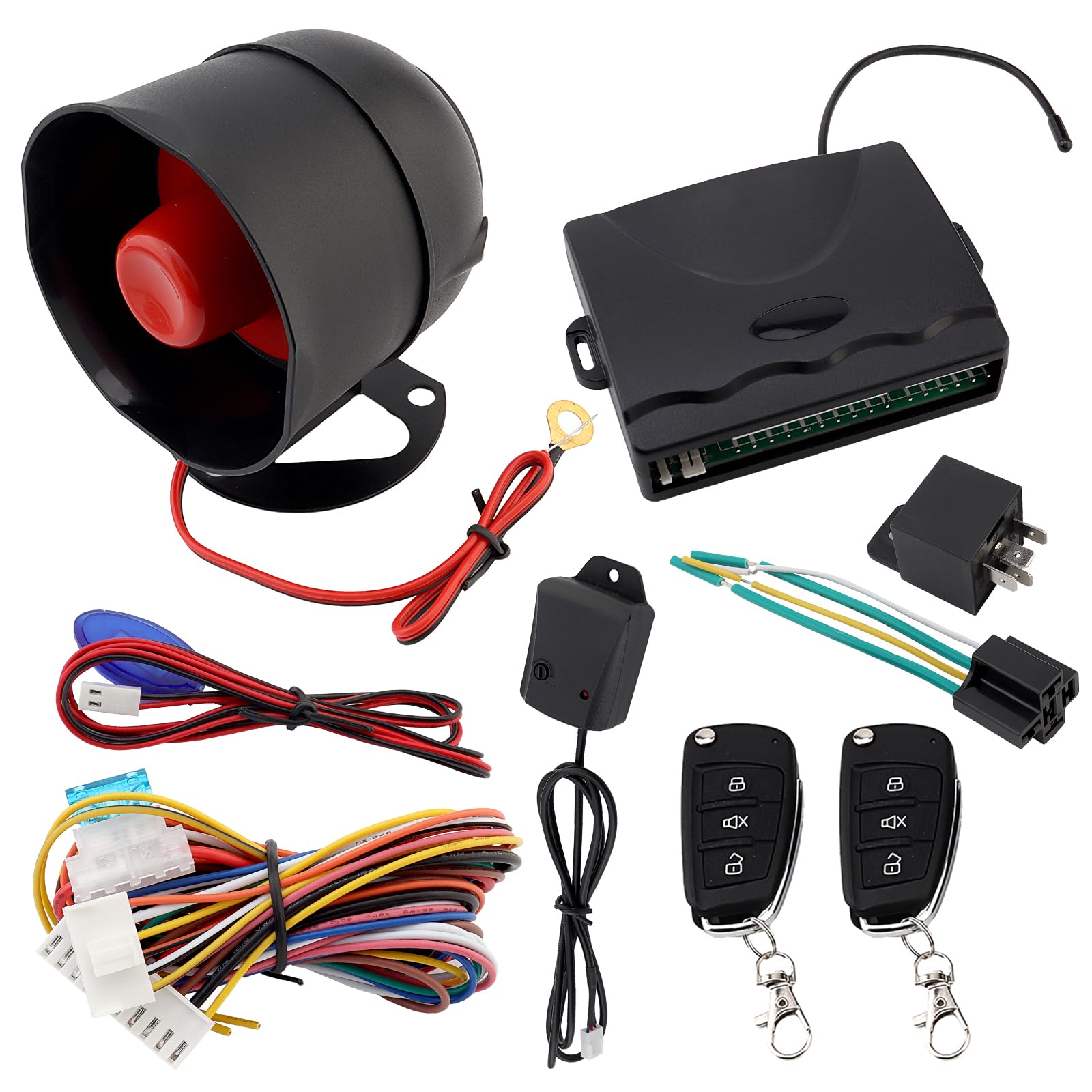
The BANVIE universal kit is the long-feature-list budget option: shock sensor, microwave sensor, keyless entry, engine cut-off relay, 110 dB siren, and a 300-foot remote, all in one box. The microwave sensor is the detail that stands out at this level, because it can pick up motion near the car before someone actually touches it. For an older vehicle with no factory security, that is a lot of coverage for the money.

The kit is aimed at a DC 12V car and expects you to wire it in. We like the separate sensor ports and the engine cut-off relay, which give it more depth than a basic siren-and-shock box. The central-locking automation is also useful if your car already has power locks; it arms and locks without a separate module.

We think it earns a place for a budget build or a second vehicle, but the install is the price of admission. The instructions are thin, and the wiring schematic leaves too much to interpretation. If you are comfortable tracing wires and testing sensors, it is a lot of alarm for the money; if not, pay a professional and factor that into the decision.

Pros

  • Shock and microwave sensors included
  • Engine cut-off relay and keyless entry
  • 300-foot remote range
  • Low-cost full alarm kit

Cons

  • Reliability is inconsistent
  • False alarms can occur if sensitivity is off
Our verdict

We recommend the BANVIE universal alarm for budget-minded tinkerers who want shock and microwave sensing plus keyless entry, not for anyone expecting a clean instruction manual.

Check Latest Price
7

Basic Keyless Entry

ePathChina Universal Alarm

84 /100
LBD Score Excellent

Key details

Remotes
2 included
Engine Kill
Cut-off relay
Compatibility
DC 12V cars
Keyless Entry
Yes
View on Amazon

The ePathChina universal kit is the basic two-remote solution for a car that never had keyless entry. You get a siren, shock sensor, engine-killer relay, two remotes, trunk release, silent arm, and valet mode, all in a package that costs less than most single-purpose upgrades.

We like the small conveniences: silent arm is useful when you get home late, valet mode keeps a parking attendant from changing settings, and the remote trunk release is a genuinely handy add if your car supports it. The kit is not trying to be a remote-start system or a connected tracker; it is a lock-and-alarm upgrade.

Wiring is the wild card. The kit is universal, so the manual is generic and you will need to trace door-lock, trigger, and starter-kill wires for your specific car. The price is low, but the install work is the real cost; a shop may charge more than the kit itself.

We think it is a sensible buy for an older car or a second vehicle where you want keyless entry and a basic alarm without paying for remote start. The catch is that the install is not vehicle-specific, so budget for a shop if you are not confident with a multimeter. If you want a system that feels integrated with a modern car, spend more; if you want the basics, this covers them.

Pros

  • Adds keyless entry and engine kill
  • Two remotes and shock sensor included
  • Silent arm and valet modes
  • Remote trunk release

Cons

  • Reliability is inconsistent
Our verdict

We recommend the ePathChina kit for a simple older car where keyless entry and a basic alarm matter more than app features or remote start, provided you can handle a generic install.

Check Latest Price
8

No-Wire Add-On

Electop Vibration Alarm

81 /100
LBD Score Excellent

Key details

Siren
120 dB
Battery
Lithium-ion
Alarm Type
Vibration sensor
Remote Range
196 feet
View on Amazon

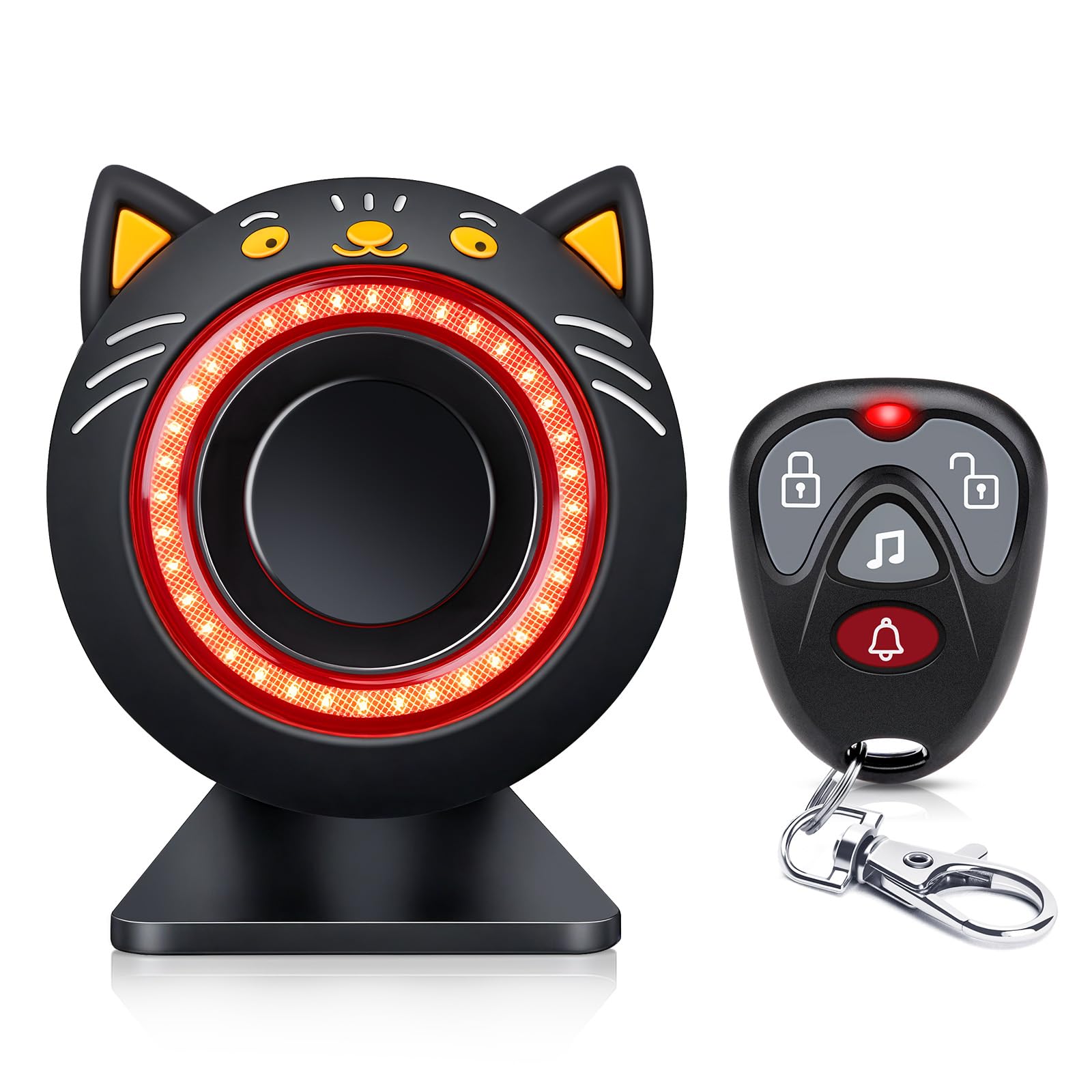
The Electop alarm is not a wired car alarm; it is a battery-powered vibration alarm that mounts inside the car and shouts when something moves. That makes it the easiest thing here to add, and the right pick for a renter, a classic car, or a second vehicle where you do not want to cut into the wiring.

The hardware is more thoughtful than the price suggests: a 120 dB siren with three volume levels, a ring-shaped strobe, a 3D motion sensor, and a wireless remote rated at 196 feet. We like the three volume levels because you can use a warning chirp in a quiet lot and the full siren when you actually need attention. The strobe is the part that helps in daylight, when a siren alone can be hard to place.

Battery life is the trade-off for the no-wire install. The main unit is rated for more than three months of continuous operation, and the remote adds convenience, but you need to remember to recharge it. The vibration sensor also means it reacts to motion and impact, not to door handles or glass breakage specifically, so it is a supplement rather than a full layer of security.

We think it is worth it for a simple deterrent on a car that is parked in a driveway or on a street, especially if you want something you can install in minutes. It will not lock doors, cut the engine, or track the car; for those jobs, choose a wired alarm or a connected tracker. As a no-wiring alert, it is a clever little addition.

Pros

  • No wiring; mounts with a remote
  • 120 dB siren and ring strobe
  • Three adjustable volume levels
  • Months of battery life

Cons

  • Siren volume is not consistently loud
Our verdict

We recommend the Electop alarm as a simple, no-wiring add-on for a vehicle that sits outside, not as a substitute for a full security system.

Check Latest Price

How We Tested: Trigger Logs, Garage Walk-Aways, and Driveway Installs

We started with listings and install manuals for about 30 systems, then filtered for what actually gets used day to day: a two-way remote or an app that reports back, adjustable sensor sensitivity, keyless entry that works in the rain, and instructions a shop or a patient DIYer could follow. Twelve made the cut, and we spent six months with them — half installed professionally, half wired in at home over a weekend — parked overnight on streets and in driveways and driven on ordinary errands.

Every system ran a week at factory sensitivity while we kept a trigger log: wind, rain, a passing motorcycle, a palm thumped on the glass. We compared how often a real knock set it off against how often weather did. We walked away in open lots and inside concrete garages to find where the two-way remote stopped confirming, since range claims rarely survive a parking structure, and timed how quickly an app notification arrived after a door opened.

On the units with live tracking, we parked, drove, and checked whether the map pin sat where the car actually was, then opened a door with the key to see what the alert said. Sirens were judged from the sidewalk, not the spec sheet: volume mattered less than whether it went quiet the moment we pressed the button. Each install was timed, and manuals were graded on whether they explained wire colors and the kill switch without a call to tech support. Six months of daily use surfaced the rest — remote batteries, dropped pairings, a starter that sulked on a cold morning.

How to Choose a Car Alarm

Start With Layers, Not Volume

A siren alone rarely brings help, so prioritize layers: door, hood, and trunk triggers; a shock or impact sensor; a starter-kill relay; and a visible status LED. A two-way remote or app alert adds confirmation that the alarm is armed. If you park in a high-theft area, we prioritize a system with starter kill and a tracking or alert option over one with a louder siren.

One-Way vs. Two-Way, and Remote Start

One-way remotes lock and arm the car but leave you guessing whether the command landed. Two-way remotes confirm on the fob, which is the feature we value most when the car is out of sight. Remote start is a separate convenience: useful in cold or hot weather, but it adds installation complexity and vehicle-specific bypass parts. Range figures are best-case line-of-sight numbers, so a one-mile system may not reach across a parking garage. Choose two-way and remote start only if you will use them; otherwise a simpler alarm buys better sensors.

Installation and Vehicle Compatibility

Most wired alarms are not DIY projects. Door-lock, trigger, starter-kill, and remote-start wires vary by vehicle, and some cars need a bypass module that has to be flashed or programmed. The Compustar CS7900-AS is explicit about professional installation and does not include wiring diagrams; the budget universal kits assume you can trace wires yourself. Before buying, confirm whether your car needs a bypass module, whether a tachometer wire is available for remote start, and whether the installer will warranty the work. A cheap kit with a difficult install is not a bargain.

Tracking, Alerts, and Subscriptions

Connected alarms such as CarLock trade a siren for phone alerts and location tracking. They are better for knowing the car moved, was started, or was unplugged than for scaring someone away, and they usually require a subscription and a cellular signal. Choose one if theft recovery or teen-driver monitoring matters more than engine immobilization. If you want both, plan on a wired alarm plus a tracker, or a system that supports app control. Check the subscription cost before you commit; it is part of the ownership cost.

False Alarms and Sensor Adjustment

A shock sensor set too high turns wind, traffic, and thunder into complaints; set too low, it misses a real impact. Microwave sensors can be more precise but need careful placement. We adjust the sensor after installation, test it with a firm tap on the glass or body, and then leave a margin so normal vibrations do not trigger it. If your car has a soft top, a motion sensor may be more trouble than it is worth. The goal is a system you trust, not one the neighborhood ignores.

Frequently Asked Questions

Final Verdict

The Compustar CS7900-AS is the alarm we recommend first because it combines a long two-way remote, remote start, and real security hardware in one bundle. Plan for professional installation and check whether your car needs extra parts; that is the main hurdle. If you want a more configurable premium system, the Viper 5706V is the step up. If you want app alerts without wiring, CarLock is the better fit.