Best Car GPS Trackers of 2026

A car tracker is really two devices wearing one case: a GPS receiver that works out where the vehicle is, and a radio link that carries that news to your phone. The second half is where the money hides, which is why two trackers that look identical can cost wildly different amounts by the end of a year. Either way the job is the same: know where the car is, and hear about it the moment it moves without you.

I've had a magnetic unit slide off a frame rail on a highway on-ramp, so I don't take mounting claims at face value. We spent six months with 12 trackers — plug-in, hardwired, and battery-powered — riding along in a commuter sedan, a teenager's car, a small work van, and a motorcycle parked outside. That's long enough to watch battery estimates fall apart and geofence alerts either fire or quietly die. The takeaway worth having up front: the cheapest device is rarely the cheapest year, and a fast refresh rate matters less than whether the alert fires at all.

1

Best Overall

Bouncie GPS Tracker

93 /100
LBD Score Outstanding

Key details

Data
Trip history and vehicle health
Install
OBD-II, 1996 and newer
Connection
4G LTE, North America
Subscription
Required, no contract
View on Amazon

The Bouncie plugs into the OBD-II port under the dash and starts logging the first time the car moves. No battery to charge, no harness to run, nothing to reattach after a service visit: you push it in, pair it with the app, and forget about it. It fits any vehicle from 1996 or newer, which covers nearly everything on the road today.

We made it our top pick because it gives you the most information for the least effort. Live location is only the start. Each trip comes back with distance, speed, hard braking, acceleration and idle time, plus engine codes, vehicle health data and crash alerts. If a new driver is borrowing the car, that's a much better picture than a dot on a map, and geofences tell you when the car reaches somewhere it shouldn't.

The subscription is the commitment to think about. The hardware does nothing without an active plan, so this is a tracker you buy into rather than try for a month. The plan runs without a contract and cancelling is straightforward if the car goes away, and for a vehicle that's on the road every day, what it buys is the thing you can't build yourself: a record of every trip, already there when you need it.

One quirk worth knowing is that geofence alerts can land a little after the car crosses the line, so treat them as confirmation rather than a live alarm. Set against that, nothing here has to come out of the car and go on a charger, which is the routine that quietly ends most tracking experiments.

Pros

  • Plug-in install takes seconds
  • Trip logs with speed, braking and idle time
  • Engine health and crash alerts
  • Nothing to charge, ever

Cons

  • Needs an active subscription
  • Visible in the OBD-II port
Our verdict

Our default for most cars: it installs in seconds, logs every trip, and never needs to come out for a charge.
Check Latest Price
2

Best No-Subscription OBD Tracker

Moto Watchdog OBD

85 /100
LBD Score Excellent

Key details

Install
OBD-II plug-in
Coverage
170+ countries
Subscription
None
Backup Battery
About 1 day
View on Amazon

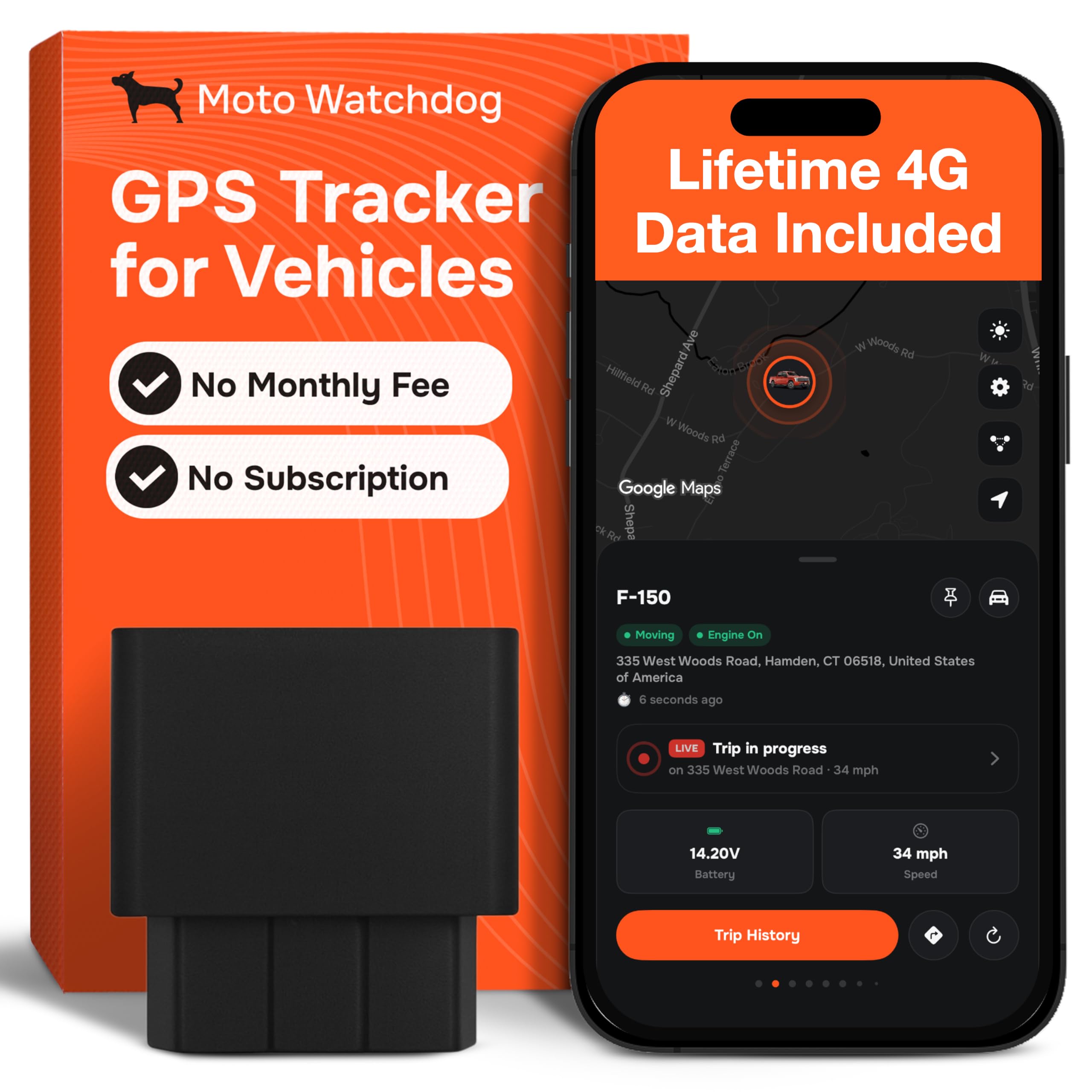
You buy the Moto Watchdog once, plug it into the OBD-II port, and never see another bill. That's rarer than it should be in this category, where most of the trackers on this page need a paid plan to keep the SIM alive, and it's the entire reason this one holds a place on our list.

Everything else is the standard plug-and-play package: live location, trip history, mileage, speeding alerts and geofences, with coverage claimed in more than 170 countries, so a vehicle that crosses into Canada or Mexico keeps reporting. There's no wiring, no charging and no account to keep funded, which makes it the easiest tracker here to hand to someone who doesn't want to think about it.

Notifications are the weak spot. Alerts can arrive after the fact, and the occasional one fires without cause, so it's a tool for knowing where the car went rather than for catching something in the moment. That's a fair trade for a tracker that never lapses because a card expired, and it suits someone checking in after the fact more than someone watching a screen.

Where it earns its keep is over years. A monthly plan never stops, and this one does. Keep vehicles for a long time and want the basics without a recurring line item, and nothing else here matches it on that single point.

Pros

  • No subscription or activation fee
  • Plug-in OBD-II install
  • Live tracking, history and geofences
  • Coverage in 170+ countries

Cons

  • Alerts can arrive late or fire falsely
  • Backup battery lasts about a day
Our verdict

Buy this if a monthly bill is the thing that stops you: you pay once, plug it in, and it keeps tracking for as long as you own the car.

Check Latest Price
3

Best Battery Life

Tracki Pro

89 /100
LBD Score Excellent

Key details

Mount
Magnet and screw mount
Battery
10,000 mAh, 2 to 7 months
Coverage
185+ countries
Subscription
Required, cancel anytime
View on Amazon

Ten thousand milliamp-hours is a power-bank number, not something you expect inside a tracker you hide under a seat. That battery is why the Tracki Pro can sit on a car for months between charges, and why we reach for it when the vehicle isn't driven every day.

The hardware suits that job. A built-in magnet holds it to a frame rail, a screw mount is in the box for anything that isn't flat steel, and the case is weatherproof enough for a trailer left outside. The 4G radio covers 185-plus countries with 5-to-10-meter outdoor accuracy and Wi-Fi fallback for the spots where GPS struggles.

Most of the time it behaves exactly as a tracker should: a stable signal while the car is moving, positions that match the map, and alerts for speed, movement, idle time and impact. Reliability is the exception we can't wave away. This is a device that either runs for months or quits early, and the split is wide enough that the warranty and the live support desk are part of what you're buying.

The screw mount is the detail we appreciated most. A magnet alone slides on a dirty frame rail, and having a bracket as a second option is what lets you put this somewhere it won't shift, which matters more than any specification on a vehicle that sits for weeks at a time.

Pros

  • Months of runtime per charge
  • Magnet plus screw mount
  • Global 4G coverage
  • Strong live accuracy while moving

Cons

  • Reliability is uneven, with some units quitting early
  • Bulky next to a coin-sized tracker
  • Subscription required
Our verdict

For a trailer, a second car or anything that sits parked for weeks, this is our pick: the battery makes charging a rare errand.

Check Latest Price
4

Best Hardwired Install

Optimus Wired Tracker

90 /100
LBD Score Outstanding

Key details

History
1 year
Install
Two-wire to car battery
Updates
30 seconds, 10-second upgrade
Subscription
Required
View on Amazon

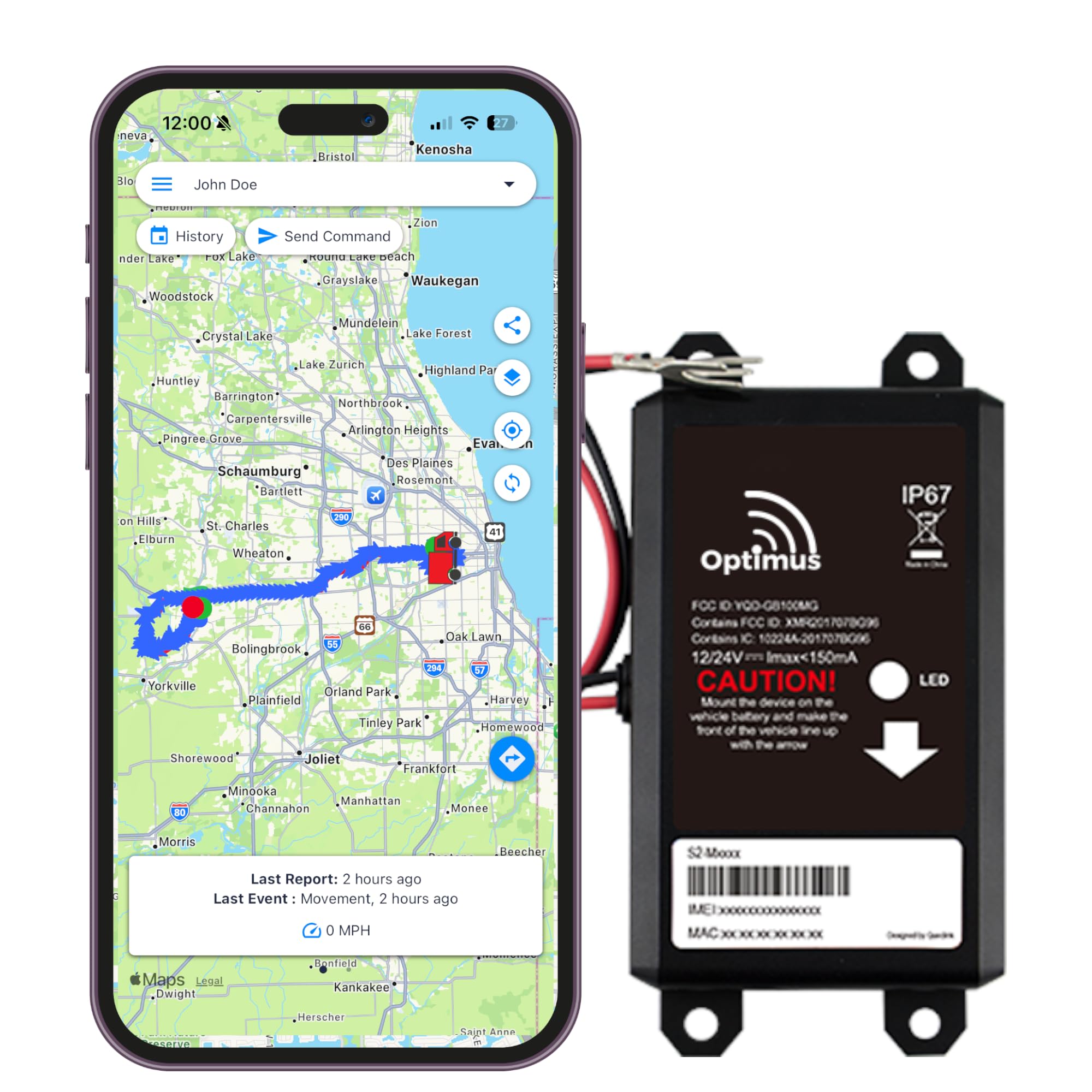
Two wires, positive and negative, straight onto the car's battery. That's the whole installation, and it's why this Optimus disappears into a vehicle in a way the plug-in units can't.

Once it's connected, nothing shows under the dash and nothing needs charging. The unit reports every 30 seconds, or every 10 if you pay for the faster tier, keeps a year of history, and sends email and text alerts for movement, speed and geofence crossings. An internal battery carries it for a few hours if someone cuts the car's power, which is exactly the scenario you're buying for.

Drawing from the car has a consequence. On a vehicle that sits for weeks, a tracker wired to the battery is one more thing pulling it down, and flat batteries and check-engine lights are the outcome to watch for. On a car that runs most days, that draw disappears into the noise.

Reporting every 30 seconds and on every turn is how the listing puts it, and the corner behavior is the part that matters: a tracker on a timer alone can lose a car at a junction. The 10-second tier tightens that further, and a year of stored routes means you can go back through a week you didn't think to watch.

Pros

  • Hardwired install hides completely
  • Reports every 30 seconds, or every 10
  • A year of route history
  • Backup battery if power is cut

Cons

  • Two-wire install is more work than plugging in
  • Subscription required
Our verdict

The one to wire in if you want a tracker nobody can unplug: no charging, no visible device, and a year of history behind it.

Check Latest Price
5

Best No-Fee Magnetic Tracker

VITALGLOW Magnetic Tracker

85 /100
LBD Score Excellent

Key details

Battery
Up to 20 days per charge
History
180 days
Updates
Every 30 seconds
Subscription
None, SIM and data included
View on Amazon

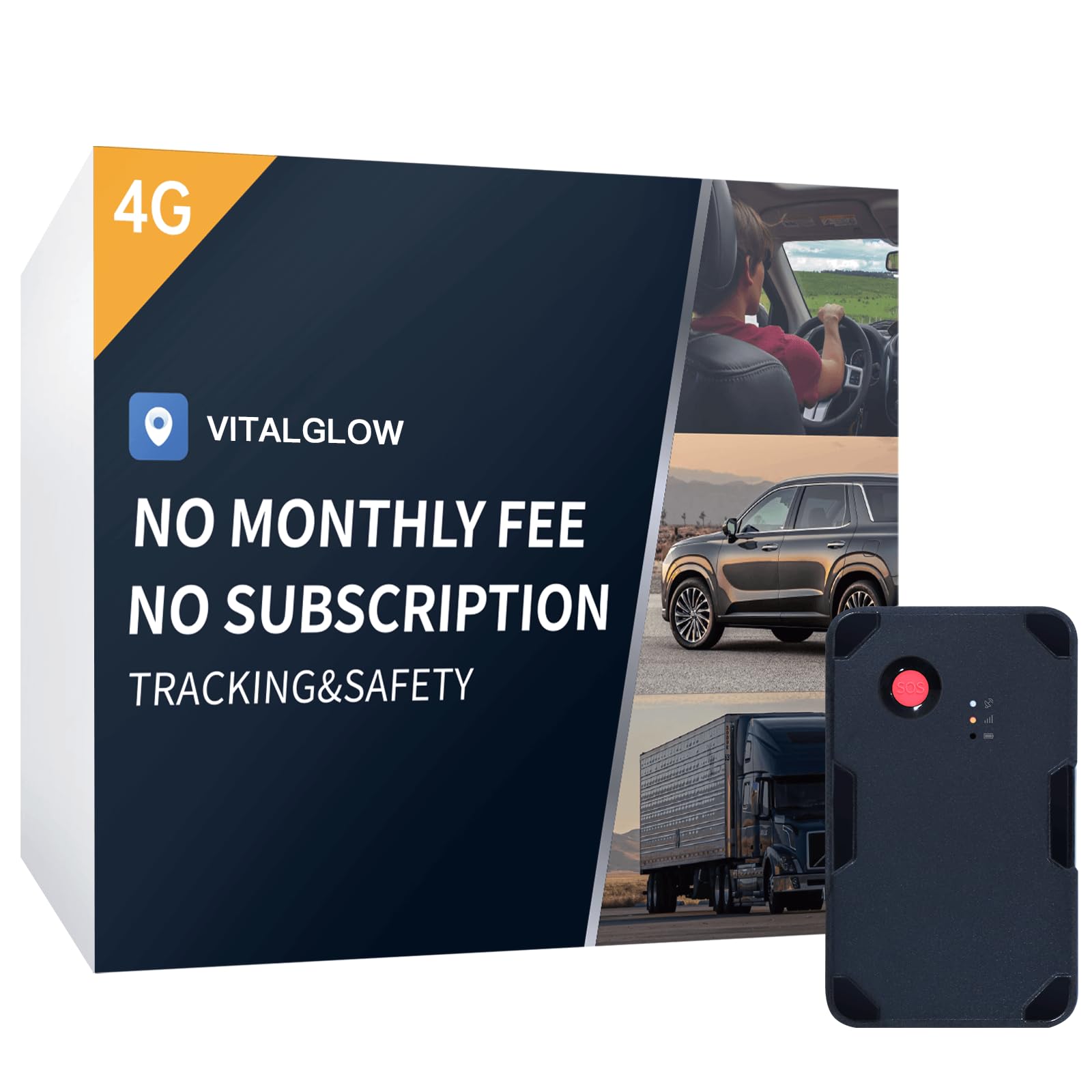
Twenty days per charge is the claim on the box, and it's the number we trust least here. The number we do trust is the absence of a bill. This is the only magnetic tracker in the group that includes the 4G SIM and the data in the purchase price, and that combination is why it made the list.

The setup matches the pitch. Stick it to a clean metal surface, open the app, and you get live location on 30-second updates, 180 days of history, and alerts for speeding, geofence crossings, movement and removal. Nothing is wired into the car, nothing occupies the diagnostic port, and there's no plan to remember to cancel.

Battery is where reality bites. Twenty days assumes light use and gentle update settings; with tracking turned up, weekly charging is the realistic routine, and that's the price of the fees you aren't paying. Placement matters too, since the magnet holds to steel and not to much else, so a spot that gets road spray and vibration is not where you want it.

Where it wins is the second-vehicle problem: no port, no wiring, no account, and it moves from the truck to the trailer in under a minute. Just don't expect the map to pick out a specific parking bay. Garages and dense blocks blur it, as they blur everything else here.

Pros

  • No monthly fee, with SIM and data included
  • Live 30-second updates and 180-day history
  • Magnetic and moves between vehicles
  • Removal and low-battery alerts

Cons

  • Needs clean, flat metal for the magnet
  • Runtime drops sharply with frequent updates
Our verdict

If a monthly fee is a dealbreaker but you still want live 4G tracking, this is the one we point to for cars, trailers and anything with a metal panel.

Check Latest Price
6

Trailers, Boats

PAJ POWER Finder 4G

87 /100
LBD Score Excellent

Key details

Case
IP65, magnetic
Size
4.6 x 2.6 x 1.4 in
Battery
10,000 mAh, up to 90 days standby
Subscription
Required
View on Amazon

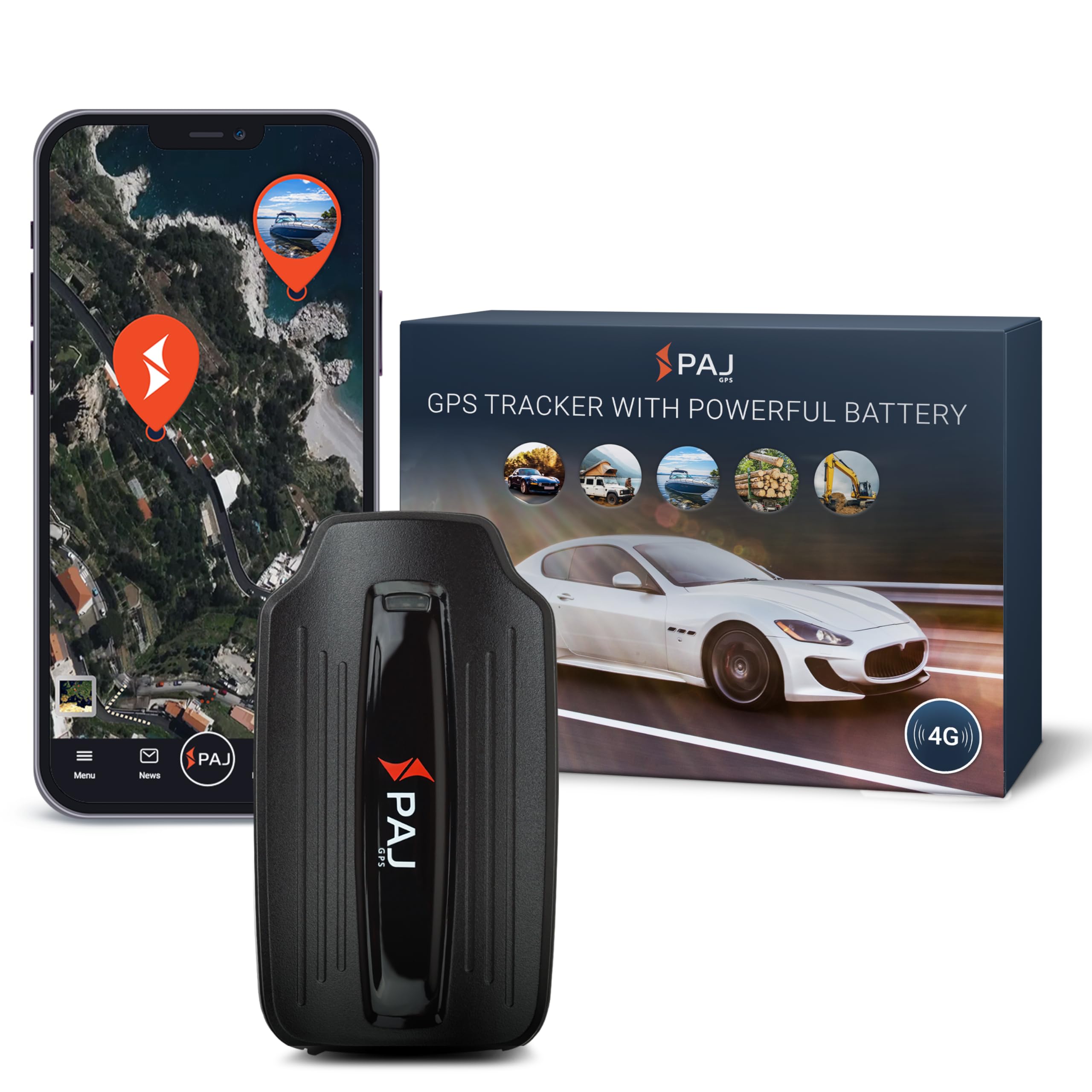
The POWER Finder's battery is rated for up to 90 days on standby, or around 40 days at an hour of active tracking a day, which puts it among the longest-running units here. The case that houses it is honest about the trade: 4.6 inches long, 9.8 ounces, and IP65-sealed, which makes it the biggest tracker in this roundup.

We like it for trailers, boats and equipment more than for a daily driver. The magnet is built in, so it slaps onto a tongue or a frame and stays put, and a tracker this size is easier to find again when the charge finally runs down. It's the one we picture on a boat trailer rather than tucked under a car seat.

What you take on is a charging routine, a monthly date with a cable rather than a weekly one, and a mounting spot that can hold something this heavy. Given that, it suits a trailer, a boat or a piece of equipment that sits between trips far better than a sedan you drive every day.

Pros

  • Up to 90 days on standby
  • Magnetic, IP65 case
  • Real-time 4G with unlimited geofences

Cons

  • Too bulky to hide inside a car
  • Subscription required to activate
Our verdict

For a trailer or a boat that sits between trips, the standby time here is among the best in the group; just give it a mounting spot that can hold the weight.

Check Latest Price
7

Budget Starter

LandAirSea 54

84 /100
LBD Score Excellent

Key details

Mount
Internal magnet
Battery
1,500 mAh, up to 30 days
Updates
As fast as 3 seconds
Subscription
Required
View on Amazon

The 54 is the veteran here: a small puck with an internal magnet and a waterproof case, from a U.S. company that describes itself as a pioneer in GPS tracking, and priced at the bottom of this group.

Setup is about as simple as it gets. Charge it, activate it, stick it to metal, and reporting starts quickly, with updates as fast as every three seconds and motion-activated sleep to stretch the battery when the vehicle is still. For a straight answer to where is it right now, it delivers.

Where we hesitate is the battery. The 1,500 mAh cell is small next to the 10,000 mAh units here, and runtime depends almost entirely on the update rate you choose: three-second reporting is a very different commitment from a ping every few minutes. Set it fast and you'll be pulling it off the car to charge often.

Reliability is the other question, and the cases where this one goes quiet tend to be early ones. Buy it as a cheap first tracker, check the app a month in, and lean on the lifetime warranty if it stops; depend on it for a year of uninterrupted history and you're taking a bigger chance than the price suggests.

Pros

  • Very strong magnet
  • Updates as fast as 3 seconds
  • Waterproof, compact case
  • Lifetime warranty
  • Simple setup

Cons

  • Some units stop reporting within months
  • Subscription required to track
Our verdict

A low-cost, waterproof puck that's easy to hide and quick to report: we rate it a first-tracker pick rather than a long-term guardian.

Check Latest Price
8

Occasional Checks

zxhtqtx Find My Tracker

89 /100
LBD Score Excellent

Key details

Size
1.14 inches, 0.25 oz
Battery
Up to 12 months
Network
Apple Find My, Google Find Hub
Subscription
None
View on Amazon

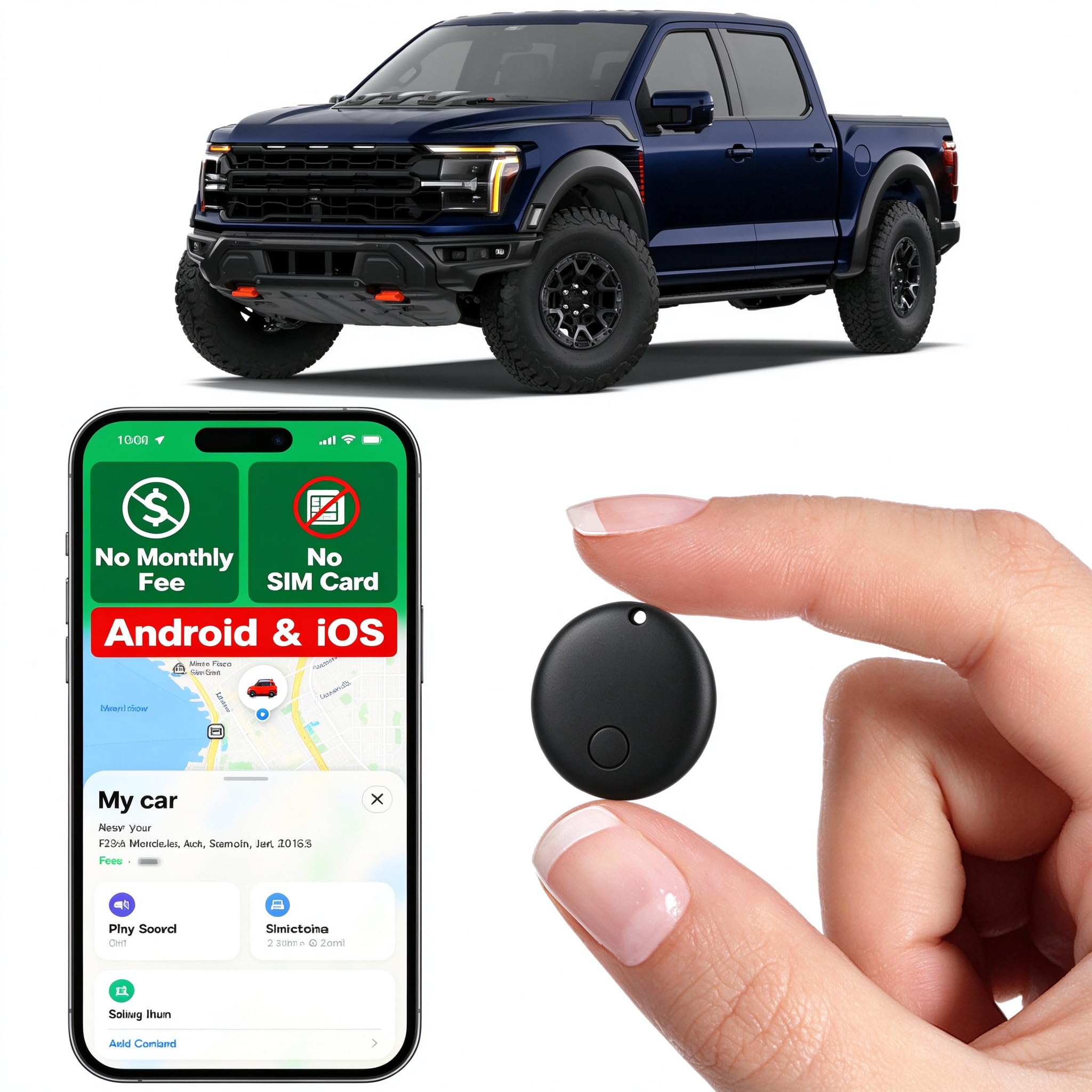
This isn't a GPS tracker in the sense the rest of this list is. It's a Bluetooth tag that reports through Apple's Find My network or Google Find Hub, which means no SIM, no plan and no monthly bill, and also no live, every-30-seconds view of a moving car.

What the money buys is a genuinely tiny puck: about an inch across, a quarter of an ounce, IP68-sealed and claimed to run up to a year on its battery. It pairs with a button press, appears in the same app you use to find your keys, and slips into a glovebox, under a seat or onto a bike frame without anyone noticing.

The behavior is different from a cellular unit. It refreshes when another Apple or Android phone passes within range, so in a busy lot or on a city street you get useful, near-real-time positions. Leave the car in a garage or an empty lot and the last known point can be hours old.

That makes it a second layer rather than a primary tracker. For a rarely driven car, a trailer, or a has-it-moved check on a vehicle that already has security, it's a cheap and genuinely useful tag. For recovering a stolen car that could be anywhere by morning, the cellular units above are the ones that keep reporting.

Pros

  • No fees, no SIM, no plan
  • Tiny, IP68, up to a year per battery
  • Works with both iPhone and Android

Cons

  • No trip history or driving alerts
  • Needs nearby phones to update
Our verdict

The cheapest entry onto this page: no fees, a year of battery and a real location network, as long as you accept that it only reports near other phones.

Check Latest Price

How We Chose and Tested Car GPS Trackers

We started by pulling every tracker a normal person might buy, then sorted them by how they install — plugged into the OBD port, wired to the car's battery, or stuck on with a magnet — and by whether they needed a monthly plan. That filter mattered most: we worked out the first-year cost of each, subscription included, so a cheap device with a steep monthly fee couldn't pretend to be the bargain. Twelve made the cut, and we lived with each for six months.

Each tracker was timed from box to first pin on the phone, which ranged from under a minute for a plug-in unit to a genuinely annoying afternoon for the hardwired one. Then we drove. Fixed routes, known parking spots, a long highway run, and a garage with no signal — we compared the pin against where the car actually was when we stopped, and noted how far behind the map lagged.

Mounting got its own abuse. We stuck the magnetic units to a frame rail and drove a week of speed bumps, a gravel lot, and one very bad road, checking afterward whether they had shifted or slid. The adhesive pads were watched through hot afternoons and cold mornings to see if they let go. Battery claims were tested at a fixed reporting interval until each unit died, and we logged the gap between what the app promised and what we got.

Finally, alerts. We set geofences, moved cars without warning, and pulled units off to see how fast a removal notification reached the phone. Some fired in seconds; others arrived late enough to be useless. Reliability like that, weighed against the yearly cost, decided the list.

How to Choose a Car Gps Tracker

Pick the Install You Can Live With

Plug-in OBD-II units are the easiest: they take seconds and work on vehicles from 1996 on, but the device sits in the port below the steering column, so the word hidden is optimistic. Hardwired units connect to the battery in two wires, which is more work, completely out of sight, and permanent. Magnetic battery units need neither a port nor a wire and move between vehicles, at the cost of a charging routine and a mount that can be knocked loose. If you swap cars often, go magnetic; if you keep one car for years, hardwire it.

Work Out What the Subscription Buys

Almost every cellular tracker needs a data plan. The exceptions fold the SIM and data into the purchase price, as the VITALGLOW and the Moto Watchdog do, or skip cellular entirely with a Find My tag like the zxhtqtx. Before you buy, check three things: whether the plan runs monthly or annually, whether it follows the device to another car, and what the tracker does if you stop paying. A cheap device with a pricey plan usually costs more over three years than an expensive one with a cheap plan.

Battery Life Is a Setting, Not a Promise

Every runtime figure assumes an update interval and a driving pattern. Three-second reporting will flatten a small cell in days, while movement-only reporting can stretch the same battery for weeks. Decide how fresh you need the position to be first: theft recovery wants frequent updates, a has-it-moved check does not. Then compare batteries on equal settings. A big battery on a slow schedule is worth more than a bigger one running flat out, which is why the Tracki Pro and the PAJ both look strong until you turn the updates up.

Match the Alerts to Why You're Tracking

A parent watching a new driver wants trip logs, speed, hard braking and curfews, and the Bouncie and the Moto Watchdog both cover that ground. Protecting a car is a different job: the unit needs to be out of sight, with a movement alert and enough battery to survive weeks of sitting. Trailer and fleet use leans on history length and country coverage. If you set a geofence, make the radius wider than the position error or a parked car will set it off all afternoon.

Frequently Asked Questions

Final Verdict

The Bouncie earns its place as the default because it asks almost nothing of you: plug it in once, never charge it, and the trip data is already there when you want to look. For a family car that gets driven most days, that combination is hard to beat.

If a recurring fee is the line you won't cross, the Moto Watchdog does the same job on a single payment. And if the vehicle sits for weeks at a time, the Tracki Pro is the one whose battery keeps the whole arrangement running.