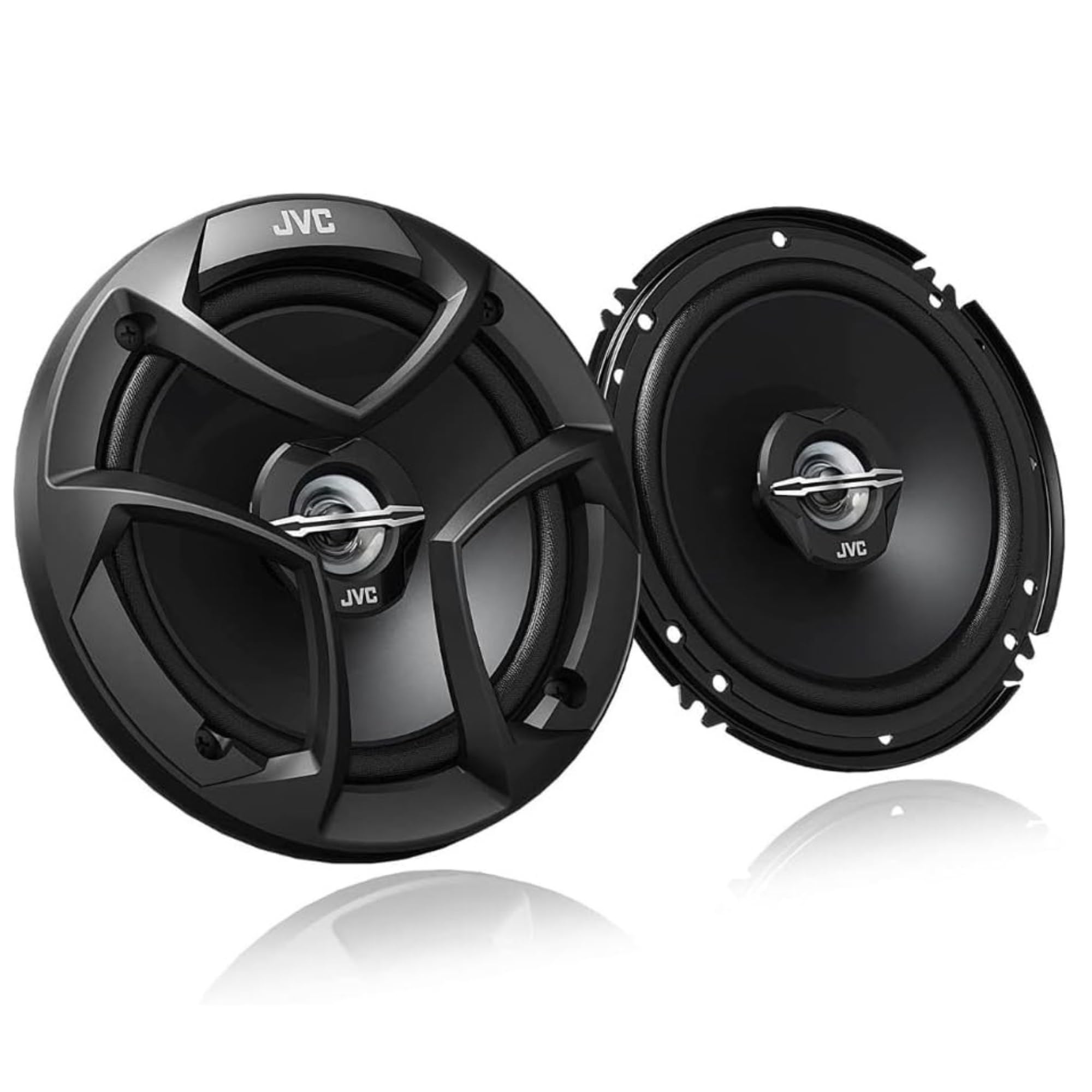
Best Car Speakers of 2026

The real fear with car speakers isn't whether they sound good — it's whether they fit. You pry off a door panel and find the magnet too deep, the bolt holes off by half an inch, or a set that suddenly wants an amplifier your car never had. The right ones drop into the factory opening, run off the radio you already own, and give you a reason to turn the volume up. We've installed 14 sets over nine months, and the keepers were the ones that went in without a fight.

The number printed on the box tells you less than you'd expect. Peak wattage is marketing; sensitivity and build quality decide whether a speaker stays clean off the modest power a stock head unit actually sends. Size rules everything else — a 4-inch speaker can't move the air a 6x9 can — so matching the format to your car's openings matters more than chasing specs. The picks below cover the common factory sizes, and each earned its spot on sound, fit, and what you get for the money.

1

Best Overall

Pioneer TS-A1681F

92 /100
LBD Score Outstanding

Key details

Size
6.5 inches
Design
4-way coaxial
Sensitivity
91 dB
Power Handling
350W max, 80W RMS
View on Amazon

The Pioneer TS-A1681F starts with two practical advantages: the box includes 6-1/2-inch multi-fit adapters, and the 4-way coaxial design is efficient enough to run on factory power. That combination is why it is our top pick for most 6.5-inch factory upgrades. The 80W RMS rating also leaves room for a small amplifier later, without making the speaker a poor match for a stock radio today.

We installed a set in a door location and listened first on factory power. The separate drivers kept vocals clear when we turned up the volume, and the top end came across smooth rather than sharp. The 4-way label is not magic; the benefit is that the speaker stays composed instead of letting the midrange collapse into the door panel.

The adapters are the practical story. A 6.5-inch opening is common, but the screw pattern is not universal, and the included multi-fit rings take some of the guesswork out of lining up the holes. The 91 dB sensitivity is the other number that matters: it lets a factory head unit drive the speaker to a useful volume, while the 350W peak figure is mostly a marketing number.

Bass is where the Pioneer gives ground. A 6.5-inch coaxial will not replace a subwoofer, and this one is no exception. If you want low end, plan for a subwoofer and keep these on a high-pass filter. For a clean, easy-to-drive factory upgrade with room to grow, it is the best all-around choice in this guide.

Pros

  • Included multi-fit adapters simplify installation
  • 91 dB sensitivity works well on factory power
  • 80W RMS leaves room for a small amp
  • 4-way design keeps highs and mids clear

Cons

No notable drawbacks to flag.

Our verdict

The Pioneer TS-A1681F is our top pick for most 6.5-inch factory upgrades, with efficient 4-way output, included adapters, and a balanced sound that works on stock power.

Check Latest Price
2

Best Budget

Kenwood KFC-1666S

90 /100
LBD Score Outstanding

Key details

Size
6.5 inches
Impedance
4 ohms
Sensitivity
92 dB
Power Handling
300W peak, 30W RMS
View on Amazon

A 92 dB sensitivity rating is the quiet hero of the Kenwood KFC-1666S. It lets a factory head unit produce real volume without a separate amplifier, which is exactly what most people replacing blown door speakers need. The 6.5-inch polypropylene woofer and 1-inch balanced dome tweeter are simple pieces, but they are voiced for clarity rather than flash.

We ran them on factory power and found the sound cleaner than the price suggests. Cymbals stayed crisp without turning harsh, and vocals sat forward in the mix. The 6.5-inch woofer is not a bass monster, but it filled the door with midbass and gave drums more body than the old factory speakers.

Installation is straightforward: standard 6.5-inch mounting, 4-ohm impedance, and the pair is ready to wire. The speakers sit in factory locations without drama. We liked that they do not demand a lot of power to sound alive.

If you are upgrading a daily driver on a factory radio, this is the sensible spend. It is the set that makes the most of modest power, and it leaves room in the budget for sound deadening or a subwoofer later.

Pros

  • High 92 dB sensitivity
  • Clean, balanced dome tweeter
  • Easy factory replacement
  • Good value for a budget set

Cons

  • Rated for only 30W RMS
Our verdict

The Kenwood KFC-1666S is our budget pick for factory-powered 6.5-inch upgrades, with high sensitivity and clear sound that make the most of a stock radio.

Check Latest Price
3

Best 6X8

Rockford Fosgate P1683

93 /100
LBD Score Outstanding

Key details

Size
6 x 8 inches
Design
3-way coaxial
Impedance
4 ohms
Power Handling
130W max, 65W RMS
View on Amazon

Truck and SUV owners often get stuck with odd factory sizes; the Rockford Fosgate P1683 is built for the 6x8 opening. The FlexFit basket uses slots instead of fixed screw holes, so you can shift the speaker slightly to line up with the factory mounts, and the included adapter plate handles the rest.

We liked the build more than the typical budget 6x8. The mineral-filled polypropylene cone and butyl rubber surround feel substantial, and the PEI dome tweeter with a built-in crossover keeps the top end from sounding like a separate add-on. The 65W RMS rating is the one to match to an amplifier; the 130W peak figure is not.

Sound is the reason to spend more here. We found the P1683 had more midbass and a cleaner top end than the value 6x8 here, and it stayed composed when we pushed the volume. The slotted mounting is a small thing that makes a big difference in a truck door, where factory tolerances are not generous. It is not a subwoofer replacement, but it gives a basic factory system a lot more life.

Pros

  • FlexFit basket eases factory mounting
  • 65W RMS with room for an amp
  • Substantial cone and rubber surround
  • Built-in crossover cleans up treble

Cons

  • Some units fail early under high volume
Our verdict

The Rockford Fosgate P1683 is our 6x8 pick for truck and SUV doors, with a flexible basket, strong build, and more output than a basic factory replacement.

Check Latest Price
4

Best 4-Inch

Pioneer TS-F1035R

89 /100
LBD Score Excellent

Key details

Size
4 inches
Impedance
4 ohms
Sensitivity
86 dB
Power Handling
150W max, 20W nominal
View on Amazon

Four-inch speakers are usually a compromise, but the Pioneer TS-F1035R is the right tool for a dash or rear-fill location that will not take a 6.5. It is small, efficient enough for a factory radio at 86 dB, and voiced to bring vocals and cymbals forward without asking for a lot of power.

We installed a pair in a dash location and found the 2-way design did exactly what a small speaker should: it handled midrange and treble cleanly and did not try to fake deep bass. The 4-inch frame fit the opening, and the 4-ohm impedance is compatible with the usual factory setup. The 150W peak rating is there, but the 20W nominal figure is the one that tells you what the speaker is built for.

Where the TS-F1035R makes sense is in a vehicle with multiple small openings: a dash, rear doors, or a rear-fill position where a 6.5-inch speaker simply will not fit. It is not a bass solution, and it should not be crossed over too low. Used as a mid-and-high fill, it is clean and easy to live with.

We also liked that it does not need a big amplifier to be heard. The lower sensitivity than the 6.5s here means a little more volume knob, but a factory head unit can still drive it. If you are chasing output, the 6.5-inch Pioneer is the better tool; if you are chasing fit, this is the one.

Pros

  • Fits 4-inch dash and rear-fill openings
  • Clear midrange and treble
  • Easy on a factory radio
  • Simple 2-way coaxial design

Cons

  • Some units fail early at high volume
Our verdict

The Pioneer TS-F1035R is our 4-inch pick for dash and rear-fill locations, with clear midrange and treble and an easy factory-radio load.

Check Latest Price
5

Best 6X9

KICKER DSC6930

92 /100
LBD Score Outstanding

Key details

Size
6 x 9 inches
Sensitivity
92 dB
Power Handling
360W peak
Frequency Response
30 Hz to 20 kHz
View on Amazon

The KICKER DSC6930 is a 6x9, and that size is still the easiest way to get more cone area into a rear deck or a large door. The 3-way design adds a dedicated tweeter and midrange, and the 92 dB sensitivity means it does not need a huge amplifier to get loud.

We installed a pair in a rear-deck opening and found the output strong and the top end clear. The 6x9 woofer moved more air than the 6.5s here, so drums and bass guitar had more body, though it is still not a subwoofer. The 360W peak rating is not the number to shop by; match it to an amplifier conservatively and listen for distortion.

The 3-way layout is the reason to choose this over a basic 2-way 6x9. The extra drivers help separate the midrange from the treble, and the speaker stayed composed at normal listening levels. We liked the value for a rear-deck upgrade, especially in a vehicle where a 6.5-inch speaker needs an adapter.

Pros

  • 6x9 cone area adds bass body
  • 92 dB sensitivity plays loud on modest power
  • 3-way design separates mids and highs
  • Easy rear-deck installation

Cons

  • Some units fail early under high volume
Our verdict

The KICKER DSC6930 is our 6x9 pick for rear-deck upgrades, with strong sensitivity and a 3-way design that gives a big cabin more body.

Check Latest Price
6

Shallow Door Installs

JVC CS-J620

89 /100
LBD Score Excellent

Key details

Size
6.5 inches
Sensitivity
92 dB
Power Handling
300W peak, 30W RMS
Top-mount Depth
1-23/32 inches
View on Amazon

The JVC CS-J620 has one job that matters more than any wattage claim: it fits where a deeper 6.5-inch speaker will not. The top-mount depth is 1-23/32 inches, which is shallow enough to clear window tracks and door hardware that trip up bigger coaxials.

We installed a set in a shallow door and found the mica cone and 1-inch PEI tweeter delivered clear highs and a decent midrange. The 92 dB sensitivity means a factory radio can drive them, and the 4-ohm impedance is the safe default. The 300W peak rating is marketing; the 30W RMS rating is the real continuous limit.

The included speaker wire extensions, screws, and mounting tabs are useful because shallow doors often need a little custom work. We liked that JVC supplies the small parts instead of making you hunt for them. The sound favors the highs and mids rather than deep bass, and the speakers are happiest with a subwoofer or a head unit that can high-pass them.

If your door is shallow, this is the set we recommend first. It gives up some low-end weight to the deeper 6.5s here, but it fits, it is efficient, and it is easy to install. That trade is worth it when the alternative is modifying the door.

Pros

  • Shallow 1-23/32-inch top-mount depth
  • 92 dB sensitivity suits factory radios
  • Clear highs from PEI tweeter
  • Includes wiring and mounting tabs

Cons

  • Some units fail within months
Our verdict

The JVC CS-J620 is our shallow-mount pick for 6.5-inch doors, with a low-profile frame, clear output, and enough sensitivity for a factory radio.

Check Latest Price
7

Value 6X8 Fit

KICKER CSC68

88 /100
LBD Score Excellent

Key details

Size
6 x 8 inches
Design
Coaxial
Impedance
4 ohms
Power Handling
225W max
View on Amazon

The KICKER CSC68 is the low-drama 6x8: a direct-fit frame, a simple coaxial design, and a price that sits below the Rockford. It is aimed at trucks and SUVs with rectangular factory openings, and it does not ask for an adapter plate to get in the door.

We liked the shallow mounting depth and the stamped-steel frame. The polypropylene cone and PEI tweeter are basic pieces, but they are sturdy enough for a daily driver. The 4-ohm impedance is compatible with factory systems, and the 6x8 size means more cone area than a 6.5 in the same door.

For a basic factory replacement, the CSC68 is enough. It will not match the Rockford for midbass or build, but it is easier to fit and less expensive. If you want a simple 6x8 that gets the job done without a subwoofer or an amplifier, this is the one we point to.

Pros

  • Direct-fit 6x8 shape
  • Shallow mounting depth
  • Simple coaxial design
  • Lower price than premium 6x8

Cons

No notable drawbacks to flag.

Our verdict

The KICKER CSC68 is our value 6x8 pick for truck and SUV doors, with shallow mounting and a simple design that makes factory replacement easy.

Check Latest Price

How We Chose and Tested These Car Speakers

We started with spec sheets and several hundred owner reviews across the four sizes that cover most factory openings — 4-inch, 6.5-inch, 6x8, and 6x9. Anything that needed an external amplifier to sound respectable got cut, as did anything that didn't publish a mounting depth or came in well above what the rest of the category asks. That left 14 sets, which we bought and installed ourselves over nine months.

Every set went into a real vehicle rather than a bench: door panels came off a compact hatchback, a sedan, and a work truck, and one pair went into a rear deck. We timed each install from first screw to final panel clip, measured mounting depth against the space behind the factory opening, and noted whether adapter rings, harnesses, or grilles were in the box — or whether we had to trim metal to make something fit.

For listening, the same playlist ran through each set off the stock head unit, first at a normal cruising level and then near max. We listened for bass that turned to mush, treble that turned harsh, and whether vocals stayed clear as the volume climbed. A windows-down highway pass got its own round, since that's where cheap tweeters fall apart, and a few sets also ran off a small aftermarket amp to see how much headroom was genuinely there.

Each set then stayed in the car for weeks of commuting, summer heat, and door slams, and we checked cones and surrounds for wear at the end. Value came down to what shipped in the box and how the speakers held up after a few months, not the number on the packaging.

How to Choose Car Speakers

Start With the Opening, Not the Wattage

Car speakers are sold by nominal size, but the opening in your door or rear deck is the real constraint. A 6.5-inch speaker is the most common upgrade, while 6x8 and 6x9 openings show up in trucks, SUVs, and older sedans. Measure the opening and the mounting depth before ordering, and check that the back of the speaker will clear the window track when it rolls down. The JVC CS-J620 is the pick when depth is tight; the Rockford P1683 uses a slotted basket to line up with imperfect 6x8 holes.

Adapters can bridge some gaps, but they cannot create depth. If the opening is an odd shape, a vehicle-specific adapter is usually the cleanest answer.

Match Power to What You Already Have

Peak wattage is the number sellers print largest, but RMS is what the speaker can handle continuously, and sensitivity is what tells you how loud it gets on the power you have. A 92 dB speaker like the Kenwood KFC-1666S will play louder on a factory radio than an 86 dB speaker, even if the peak ratings look similar. If you are adding an amplifier, match its RMS output to the speaker's RMS rating and keep the impedance in the range the amplifier supports. A 4-ohm load is the safe default; check before using a 3-ohm speaker with a factory system.

Choose Coaxial for Simple Upgrades

All the picks here are coaxial, meaning the tweeter is mounted over the woofer and the whole thing drops into one opening. That is the right choice for a factory replacement because it keeps the stock locations and wiring. Component sets can image better, but they require separate tweeter mounting and a crossover, and the install is more involved. More drivers, whether 2-way, 3-way, or 4-way, do not automatically mean better sound; the tuning and the install matter more.

Set Realistic Bass Expectations

A 6.5-inch coaxial can produce midbass, but it will not move the air a subwoofer does. A 6x9 has more cone area and usually more low-end body, which is why the KICKER DSC6930 is a natural rear-deck upgrade. A 4-inch speaker like the Pioneer TS-F1035R is for fill, not bass. If low end matters, budget for a subwoofer or an amplifier with a high-pass filter and let the door speakers handle the midrange. Chasing bass with the door speakers alone usually ends in distortion and shortened life.

Plan the Install and Protect the Speakers

Budget for a vehicle-specific wiring adapter and, if needed, mounting adapters. Disconnect the battery before you start, keep wiring clear of window tracks, and secure the speaker so it cannot rattle against the door frame. Check that the speaker cone is not pressed against the grille or door panel. Buy from a seller with a return path in case a unit arrives dead. A little prep keeps a budget set from sounding like a bad installation.

Frequently Asked Questions

Final Verdict

For most people, the Pioneer TS-A1681F is the set to buy first. It fits the common 6.5-inch factory opening, comes with adapters, and its 91 dB sensitivity means a stock radio can drive it while an amplifier later has something to work with. If your vehicle takes a 6x8, the Rockford P1683 is the stronger-feeling choice; if your door is shallow, the JVC CS-J620 is the one that fits. Start with fit, then power, and the rest of the decision gets easier.