Best Car Subwoofers of 2026

A subwoofer is the one car upgrade you feel in your chest before you consciously hear it—and the wrong one can turn every song into a rattle trap. I’ve spent plenty of afternoons chasing clean bass in driveway installs, and the lesson is consistent: bigger isn’t automatically better. What you want is controlled low end that fills out music without swallowing the mids, plus a box that fits your actual car and doesn’t demand a trunk rebuild.

We spent eight months testing 12 subwoofers, from loaded dual-12 enclosures to slim under-seat powered models and shallow-mount drivers. They went into a hatchback, a sedan, and a pickup for commutes, grocery runs, and weekend highway trips. Sound quality and value separated the top picks, but so did installation fuss, fit, noise, and compact size—how much space a box steals and whether it stays tight when you turn up the volume. A sub that fits your cabin gets used; one that blocks cargo or rattles trim does not.

1

Best Overall

MTX Terminator TNE212D

89 /100
LBD Score Excellent

Key details

Enclosure
Sealed 5/8-inch MDF
Dimensions
29.63"W x 13.5"D x 14"H
Configuration
Dual 12-inch, 2-ohm
Power Handling
400W RMS / 1,200W peak
View on Amazon

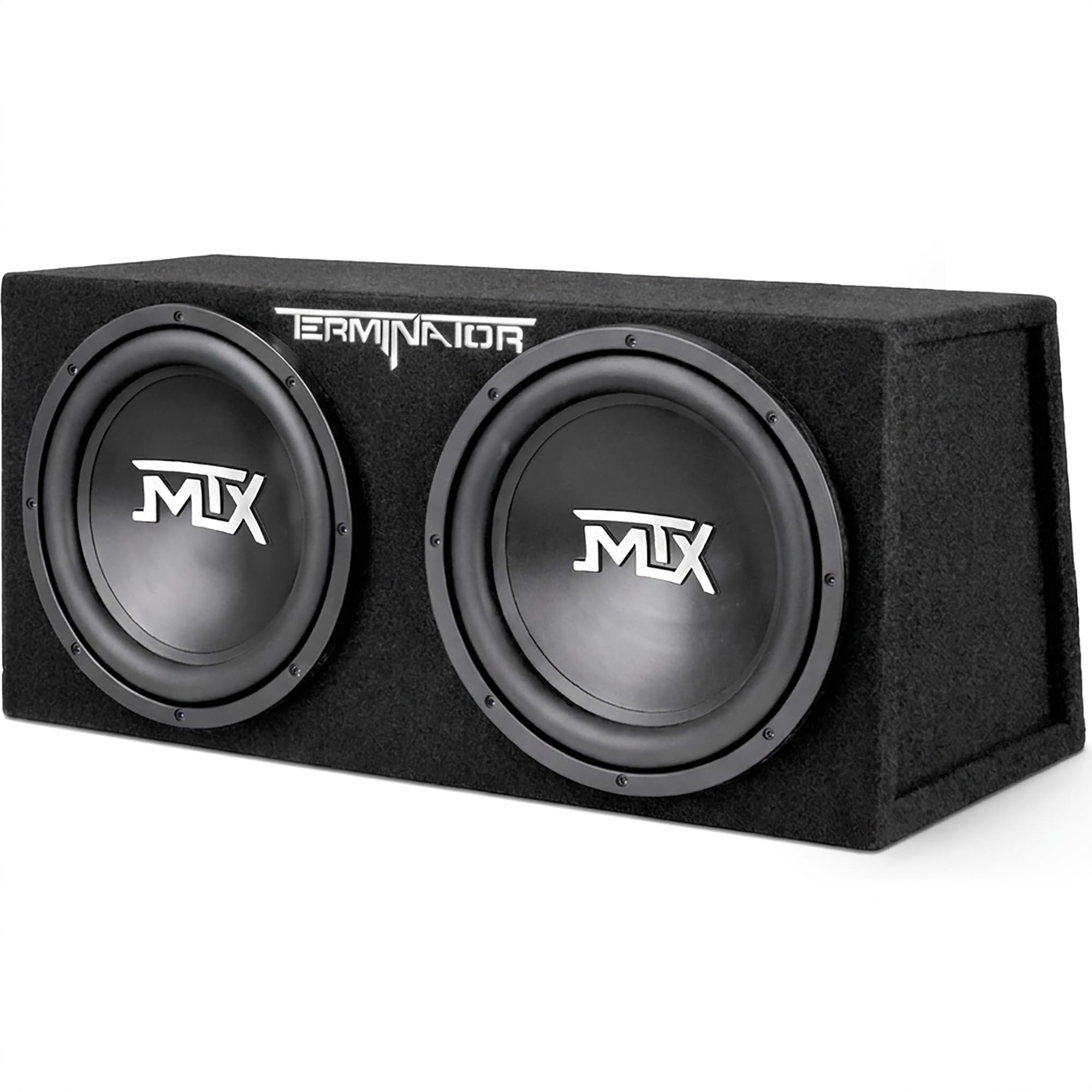
The Terminator earns its spot with dimensions before it plays a note: a dual-12 enclosure just 29.63 inches wide and 14 inches tall fits trunks that swallow a conventional 12-inch box and then complain. That footprint is why it's our default recommendation for a first serious bass system. The sealed 5/8-inch MDF cabinet feels substantial, and the 2-ohm load is easy to pair with a mono amp.

On music, the 400W RMS rating sets the character. It delivers balanced, punchy bass rather than the kind of low-frequency violence that loosens trim panels. The 37–150 Hz range means it won't plumb the deepest movie-effects octave like a big vented box, but it stays composed with rock, electronic, and factory systems. We also like that it doesn't demand a 1-ohm-stable amplifier; a good 2-ohm mono amp is enough.

The ceiling is real. If you want competition-level output, the Skar SDR-2X12D4 is the obvious step up, and it takes a lot more trunk space. The Terminator is better for someone who wants a clean improvement without rebuilding the whole cargo area. Long-term results vary, so run it on clean power, set gain conservatively, and don't treat peak wattage as a target.

The bass stays tight enough to follow a bass line, which is not something every dual-12 box manages. That musicality is the reason we keep recommending it over louder, bulkier options for a daily driver.

Pros

  • Balanced, musical bass from a sealed dual-12 box
  • Compact 29.63-inch width fits many trunks
  • Easy 2-ohm load for common mono amps
  • Solid 5/8-inch MDF construction

Cons

  • 400W RMS limits maximum output
  • Sealed design gives up some deep-bass volume
Our verdict

For most drivers, the Terminator is the right first serious sub: a compact dual-12 box that delivers balanced bass without demanding a monster amplifier.

Check Latest Price
2

Best for Maximum Output

Skar SDR-2X12D4 Enclosure

91 /100
LBD Score Outstanding

Key details

Enclosure
Vented 5/8-inch MDF
Dimensions
37.88"W x 18.75"D x 14.25"H
Configuration
Dual 12-inch, 1-ohm final
Power Handling
1,200W RMS / 2,400W peak
View on Amazon

A 1-ohm final load and a 1,200W RMS rating are the headline, but the practical story is size: this is a 37.88-inch-wide, 92-pound vented box that wants real trunk space. It is not the sub you tuck behind a seat. It is the one you plan around.

The payoff is in output. The dual 12s move a lot of air, and the pre-wired 1-ohm terminal makes the amplifier decision simple: you need a mono amp that is genuinely stable at 1 ohm, not one that merely claims the number. The 32 Hz frequency response gives it reach the sealed MTX Terminator can't match. The double-baffle, 5/8-inch MDF cabinet feels purposeful, and the countersunk drivers give it a cleaner look than most big boxes.

The trade-off is that this box rewards restraint. Long-term durability is the question mark: the SDR can take power, but it also makes it easy to overdrive a cheap amplifier or chase peak numbers. Run it on clean power, set gain conservatively, and give the vent room to breathe. If you do, it delivers the biggest bass hit in this group; if you don't, it's the pick most likely to expose a weak install.

Space is the other cost. The 92-pound cabinet takes two people to place safely, and it leaves less room for cargo than the MTX. That is the trade: more output, more commitment. For a dedicated bass build, we think it's worth it.

Pros

  • Pre-wired 1-ohm load simplifies amp matching
  • 1,200W RMS and 2,400W peak for high output
  • Vented 5/8-inch MDF cabinet with double baffle
  • 32 Hz response reaches deeper than sealed boxes

Cons

  • Needs a 1-ohm-stable amplifier
  • 92-pound, 37.88-inch-wide box demands space
Our verdict

Choose the SDR-2X12D4 when you want the most bass this group can make and have room for a big vented box and a 1-ohm-stable amp.

Check Latest Price
3

Best Under-Seat Powered

Rockville SS10P

89 /100
LBD Score Excellent

Key details

Design
10-inch powered, under-seat
Controls
Remote bass knob
Enclosure
Cast aluminum
Power Handling
200W RMS / 800W peak
View on Amazon

The SS10P is built around the space it doesn't use. It's a powered 10-inch sub in a cast-aluminum enclosure, with 200W RMS and 800W peak, designed to slide under a seat. For a daily driver with a factory stereo and a trunk full of groceries, that is a more useful brief than another big box.

It adds a genuinely useful layer of low end: kick drum and bass guitar get weight, and the cabin feels fuller without the sub taking over. The high-level and RCA inputs, adjustable input sensitivity, and auto turn-on make it easy to integrate with a factory system. The remote bass knob is the detail we kept using; you can trim the sub from the driver's seat without digging into menus.

Installation is straightforward because the amp is built in: you're running power, ground, and signal, not mounting a separate amplifier and setting gains on two boxes. The cast-aluminum enclosure also helps the amp shed heat in a tight space. Check under-seat clearance before you buy, since seat frames and wiring vary.

The cast-aluminum body is the quiet advantage here: it helps the amp stay cool in the tight space under a seat, which is exactly where heat has nowhere to go.

Pros

  • Adds useful low end without taking cargo space
  • Built-in amp simplifies installation
  • High-level and RCA inputs suit factory systems
  • Remote bass knob adjusts from driver's seat

Cons

  • 200W RMS limits maximum output
Our verdict

When cargo space matters more than maximum output, the SS10P is our pick for adding bass without surrendering the back of the vehicle.

Check Latest Price
4

Best Premium Compact

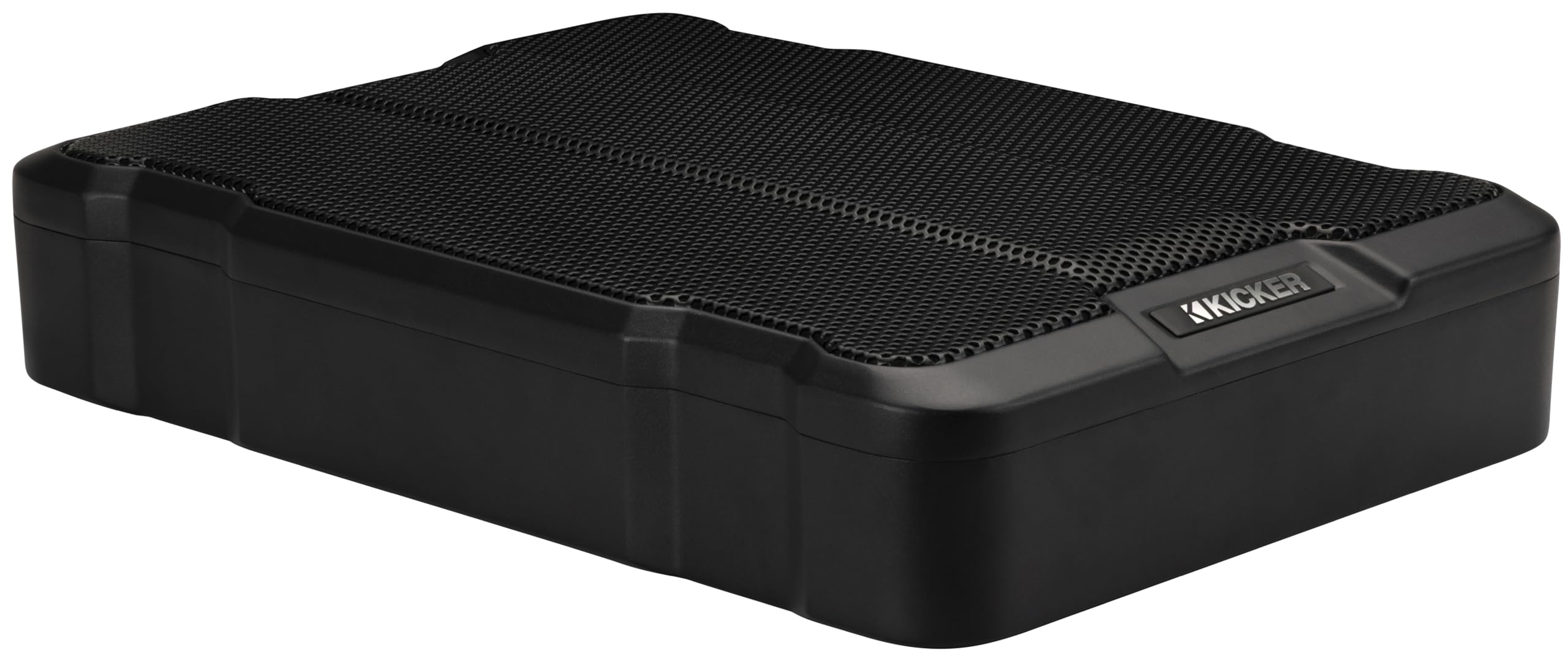
Kicker 51HS12 Hideaway

83 /100
LBD Score Excellent

Key details

Design
12-inch powered, under-seat
Height
3.5 inches
Input Range
0.25V–40V
Power Handling
230W RMS
View on Amazon

The Hideaway is the premium compact answer: a 12-inch powered subwoofer in a 3.5-inch-tall aluminum enclosure that weighs about 17.5 pounds. It is designed to disappear under a seat or behind a seat, not to dominate a trunk.

The FIT+ input accepts 0.25V to 40V, which is the specification that matters for modern factory systems; it lets the sub take a speaker-level signal without an external line-out converter in many vehicles. You also get a 50–120 Hz low-pass, a 25 Hz high-pass, phase control, and a remote bass knob. For a clean, integrated install, that is a useful set of controls.

The sound is crisp and well controlled rather than brute-force loud. The 230W RMS amplifier gives it enough output to fill a cab, but it won't satisfy someone chasing window-shaking bass; the Rockville SS10P is the better value for pure output, while the Kicker is the more polished integration piece. That is a fair trade for a daily driver where factory audio needs refinement, not a competition build.

The 25 Hz high-pass is the unglamorous detail we appreciate: it keeps the smallest driver from wasting excursion on subsonic content, which helps it stay clean when you turn it up.

Pros

  • 3.5-inch aluminum cabinet fits tight spaces
  • FIT+ accepts 0.25V–40V factory signals
  • Built-in 230W RMS amp and remote bass knob
  • Clean, controlled bass rather than one-note boom

Cons

  • 230W RMS caps maximum output
Our verdict

If you want factory-friendly integration in a compact package, the Hideaway earns its premium price with clean sound and a slim aluminum cabinet.

Check Latest Price
5

Best Shallow-Mount Driver

Skar VD-10 D4

90 /100
LBD Score Outstanding

Key details

Sensitivity
85.1 dB
Configuration
10-inch, dual 4-ohm
Mounting Depth
4.41 inches
Power Handling
500W RMS / 800W peak
View on Amazon

A 4.41-inch mounting depth is the reason to look at the VD-10 D4. It is a 10-inch dual 4-ohm subwoofer with 500W RMS and 800W peak, built for boxes that can't fit a full-depth driver. In a truck, a hatchback, or a spare-tire well, that half-inch can decide whether the project happens. We like that it doesn't force a huge enclosure.

It hits harder than its shallow frame suggests. The 85.1 dB sensitivity means it doesn't need a huge amplifier to get moving, and the 500W RMS rating is realistic for a 10-inch sub in a small enclosure. It gives a tight, punchy bottom end that makes a factory system feel flat by comparison. The dual 4-ohm voice coils also give you wiring options for a 2-ohm or 8-ohm final load.

Shallow subs work harder to produce deep bass, so pair it with a sealed box that matches its recommended airspace and keep the gain conservative. The mounting depth is the point: it makes a difficult install possible without asking for a huge box. That is why it earns a spot even though a full-size 12 will always have more output on tap.

Pros

  • 4.41-inch mounting depth fits tight spaces
  • 500W RMS with 85.1 dB sensitivity
  • Hard-hitting, tight bass for a shallow 10
  • Dual 4-ohm voice coil offers wiring options

Cons

  • Shallow design limits ultimate deep-bass output
Our verdict

Depth is the deciding factor here: the VD-10 D4 is the shallow sub we recommend when you still want a genuine bass upgrade.

Check Latest Price
6

Best for Simple Builds

Pioneer TS-A120D4

82 /100
LBD Score Excellent

Key details

Weight
10.3 lb
Sensitivity
77 dB
Configuration
12-inch, dual voice coil
Power Handling
500W RMS / 1,500W peak
View on Amazon

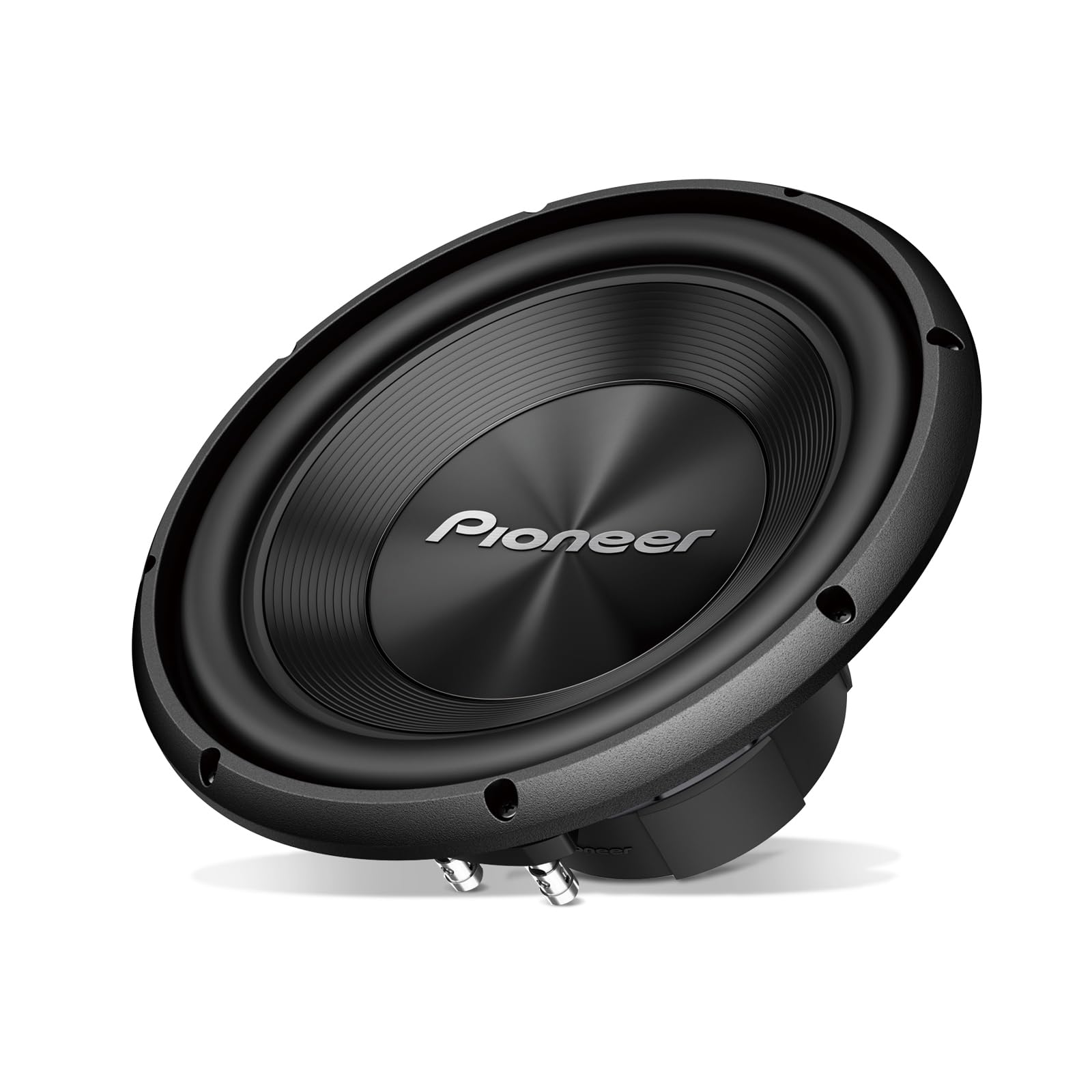
The TS-A120D4 is refreshingly simple: a raw 12-inch subwoofer, 500W RMS and 1,500W peak, with a 10.3-pound frame and 77 dB sensitivity. No enclosure, no amplifier, no wiring kit. You are buying the driver and taking responsibility for the rest, which is exactly what some builds need.

The 77 dB sensitivity is the number to notice. It means the Pioneer wants a real amplifier, not a head unit's internal power, but 500W RMS is a sensible target for a single 12. The dual voice coils give you wiring options, and the 1,500W peak rating is best treated as headroom, not a goal. Put it in a solid sealed box and give it clean power, and it produces solid, weighty bass without sounding strained.

We like this one for a straightforward build because it doesn't ask you to learn a new system. It is less efficient than some drivers here, so plan on an amplifier that makes real power. The 500W RMS rating is the useful guide; ignore the peak number and match the amp to the voice-coil wiring.

Pros

  • Straightforward 12-inch driver for simple builds
  • 500W RMS / 1,500W peak handling
  • Dual voice coils offer wiring flexibility
  • 10.3-pound frame is easy to handle

Cons

  • Requires a separate enclosure and amplifier
  • 77 dB sensitivity demands adequate power
Our verdict

A simple amp-and-box build is exactly what the TS-A120D4 is for, with 500W RMS handling and dual voice coils to match your amplifier.

Check Latest Price
7

Tight Depth

CT Sounds Hydro 10

87 /100
LBD Score Excellent

Key details

Configuration
10-inch, dual 4-ohm
Mounting Depth
3.90 inches
Power Handling
500W RMS / 1,000W peak
Cutout Diameter
9.29 inches
View on Amazon

The Hydro 10 is for the install where a normal 10-inch sub won't fit. Its 3.90-inch mounting depth and 9.29-inch cutout are the whole argument: 500W RMS, 1,000W peak, dual 4-ohm voice coils, and a shallow frame that can go into a box a full-depth driver can't.

It works in both sealed and ported enclosures, which is not a given for a shallow sub. The 39.37 Hz FS and 0.569 QES suggest it will play reasonably low for its size, and the 500W RMS rating gives you something to work with. It is not a miracle worker; a shallow 10 still gives up some output to a full-size 12.

The reason it lands in also-consider rather than a runner-up spot is the competition. The Skar VD-10 D4 costs less, has a deeper 4.41-inch mounting depth, and carries a much larger body of feedback. If you have the extra half-inch, the Skar is the easier recommendation. The Hydro is the one you choose when 3.90 inches is the hard limit.

Durability is the other thing we watch. Shallow subs live in small boxes and get pushed hard, so clean power and the right enclosure matter more than usual. Given the tighter fit, this is a specialist, not the default.

Pros

  • 3.90-inch mounting depth for very tight boxes
  • 500W RMS / 1,000W peak handling
  • Works in sealed or ported enclosures
  • Dual 4-ohm voice coils

Cons

  • One-year warranty
Our verdict

The Hydro 10 is the specialist pick when 3.90 inches of mounting depth is all you have and you refuse to give up a real subwoofer.

Check Latest Price
8

Budget Tight Fit

Seventour ST800

84 /100
LBD Score Excellent

Key details

Design
10-inch powered, under-seat
Inputs
RCA and high-level
Controls
Remote bass knob
Peak Power
800 watts
View on Amazon

The ST800 is a budget under-seat powered sub with a built-in amplifier, a 10-inch driver, and a blue LED ring that makes itself known. It comes with a high-to-low level converter, power cable, RCA cables, and a wired volume controller. For a small cab, a convertible, or a work truck, that bundle is the appeal.

It adds decent bass for its size: enough to fill out a factory system, not enough to shake a parking lot. The RCA and high-level inputs cover most installs, and the remote bass knob is useful when the sub is buried under a seat. We appreciate the cast-aluminum enclosure, which is a sensible choice for heat in a tight space.

Fit is the part to measure. The enclosure is slim, but seat frames, carpet, and wiring all take up room, and under-seat clearance varies a lot from one vehicle to the next. The blue LED ring is another love-it-or-hate-it detail; it cannot be switched off on this version. If that light will bother you at night, look elsewhere.

The bigger issue is the power claim. Seventour lists 800 watts peak but no RMS figure, so treat the number as a ceiling rather than a realistic output target. We treat the 800-watt figure as a ceiling, not a goal. That doesn't make the ST800 a bad buy for a tight cabin; it just means you should buy it for convenience and size, not for the wattage on the box. The included converter is the practical detail that saves you from adding another box.

Pros

  • Compact powered sub for tight cabins
  • Includes high-to-low converter and wiring
  • RCA and high-level inputs
  • Remote bass knob

Cons

  • Peak-only power rating
  • Blue LED cannot be switched off
Our verdict

The ST800 is a low-cost way to add usable bass to a tight cabin, as long as you can live with peak-only power claims and an always-on blue light.

Check Latest Price

How We Tested Car Subwoofers

To build the shortlist, I started with the formats shoppers actually compare—loaded enclosures, powered under-seat boxes, and shallow-mount drivers—then filtered by footprint, power handling, enclosure type, wiring requirements, and price against owner reviews. We bought 12 units and lived with them for eight months, rotating them through a compact hatchback, a midsize sedan, and a pickup. Each one was installed by one person using ordinary hand tools, timed from first panel removal to final gain adjustment.

On the road, we played the same familiar tracks—bass-heavy hip-hop, acoustic recordings, podcast dialogue—on commutes, grocery runs, and weekend highway stretches. We listened for whether low end stayed tight at moderate volume or turned muddy and distorted when pushed; we also noted power output relative to the amp and whether the sub added clean volume without overwhelming the cabin. For noise, we checked for trim rattles, enclosure buzz, and mechanical noises from under-seat units. To judge fit and compact size, we measured trunk and under-seat footprints, folded seats, and loaded cargo around each box.

Installation and wiring got their own pass: we noted terminal quality, how easy it was to route power and signal cables, whether included wire kits were usable, and how often we had to re-tighten connections. Value came down to build materials, included hardware, and whether the performance justified the space it occupied. Over eight months, we also watched durability—how enclosures held up to heat, cold, and the occasional shifted cargo—and whether controls stayed smooth. The picks below reflect that full picture, not a single loud demo.

How to Choose a Car Subwoofer

Start With the Form Factor

We put form factor first because it changes everything else. A loaded enclosure like the MTX Terminator or Skar SDR-2X12D4 gives you the box and sub together; you add an amplifier. A powered under-seat model like the Rockville SS10P or Kicker Hideaway has the amp built in, which saves space and installation time. A raw driver like the Pioneer TS-A120D4 or CT Sounds Hydro 10 is for a custom box and a separate amp. Decide how much space and work you want to give up before you compare wattage.

Match RMS Power and Final Impedance

We treat RMS as the real ceiling, not peak wattage. The MTX Terminator is a 400W RMS, 2-ohm load; the Skar SDR-2X12D4 is a 1,200W RMS box pre-wired to 1 ohm. The Skar needs an amplifier rated stable at 1 ohm, and that is not a spec to fudge. Match the sub's RMS handling to the amp's clean output, check the final impedance after wiring the voice coils, and set gain with the head unit below its maximum clean volume. Peak numbers sell boxes; RMS and impedance make them work.

Measure the Space Before You Commit

Measure width, height, and depth before you order, then leave room for cone excursion and the port. A 29.63-inch-wide dual-12 like the MTX Terminator fits many trunks; the 37.88-inch Skar SDR-2X12D4 asks for more. For a raw driver, mounting depth is the hard limit: the Skar VD-10 D4 needs 4.41 inches, the CT Sounds Hydro 10 needs 3.90. For an under-seat sub, check seat travel and wiring clearance, not just the enclosure's footprint.

Choose Sealed or Vented for Your Taste

Sealed boxes are smaller and more forgiving, with tighter, more controlled bass; the MTX Terminator is the sealed example here. Vented boxes are larger and more efficient, and they can play louder lower, which is the Skar SDR-2X12D4's approach. A vented design needs the right port area and tuning, and it takes up more room. If you want musical bass in a daily driver, start sealed. If you want maximum output and have the space, plan for vented and build around it.

Plan the Install and Factory Integration

A powered sub still needs power, ground, and signal. A separate amp needs a fused power lead, a good ground, and RCA or speaker-level input. Factory systems often need a line-output converter or high-level inputs; the Kicker Hideaway's FIT+ input accepts 0.25V to 40V, while the Seventour ST800 includes a high-to-low converter. Use oxygen-free copper wire sized to the amp's fuse rating, keep signal cables away from power cable, and disconnect the battery before you start.

Frequently Asked Questions

Final Verdict

Most shoppers should start with the MTX Terminator. It gives you a compact dual-12 box, balanced bass, and an easy 2-ohm load without asking for a huge amplifier. If you want more output and have the space, the Skar SDR-2X12D4 is the step up; if you want to keep your cargo area, the Rockville SS10P or Kicker Hideaway makes more sense.

The deciding advantage is fit: the Terminator is the rare dual-12 that behaves like a daily-driver upgrade rather than a dedicated bass build. Choose the Skar when output is the priority, and choose a compact powered sub when space is. That is the whole decision.