Best Dash Cams of 2026

The moment I became a dash cam person wasn't a crash. It was a rainy evening in a parking garage, a scraped bumper, and two drivers with completely different stories. A camera that starts recording when you turn the key would have ended that in ten seconds — and that, more than dramatic footage, is what most people are actually buying.

Over the past eight months my team has tested 12 dash cams, from screen-free minis to four-channel setups that watch the cabin along with the road. The ones that held up got the boring things right: legible plates at dusk, a memory card that holds a week of driving, and an install you can finish in a driveway without swearing.

One thing worth knowing before you scroll: resolution alone doesn't tell you much. A well-tuned 2K sensor beats a sloppy 4K, and in a front-and-rear setup the rear camera usually works with less light and fewer pixels than the front. Every pick below earns its spot on footage you can actually read, not the number on the box.

1

Best Overall

VIOFO A229 Plus

86 /100
LBD Score Excellent

Key details

Sensors
Dual Sony STARVIS 2
Parking Mode
Buffered 24H
Included Card
None
Front/rear Resolution
1440p + 1440p
View on Amazon

Two Sony STARVIS 2 sensors, one in front and one in back, are the reason the VIOFO A229 Plus is our top pick. The pair records at 1440p rather than pretending a smaller sensor is 4K, and the HDR processing keeps both channels usable when headlights and streetlights blow out a scene. In our test car, the front clips held plate detail at a distance that most single-camera setups lose, and the rear view was close enough in quality that we stopped thinking of it as the weak extra camera. That balance is what we want from a dash cam: evidence from both ends of the car, not one sharp view and one afterthought.

The hardware is reassuring in other ways. A supercapacitor instead of a battery makes more sense for a device that bakes on a windshield, and the 5GHz Wi-Fi moved clips to a phone quickly enough that we used the app instead of pulling the card. Voice control is genuinely handy when the camera sits behind the mirror and you do not want to reach for a button. Parking modes include a buffered option, though you need the hardwire kit to use them.

The app is the one part that feels less polished. The 5GHz connection is quick when it works, but ours sometimes took a second attempt; we started connecting before pulling away rather than at the side of the road. Voice commands and the physical buttons cover the basics when the phone refuses.

Those are small costs against the main advantage. The A229 Plus gives us the most trustworthy front-and-rear footage in this group without jumping to flagship money, and it does it in a body that tucks behind the mirror.

Pros

  • Dual 2K STARVIS 2 sensors front and rear
  • HDR keeps both channels usable at night
  • Supercapacitor suits hot windshields
  • Buffered parking mode

Cons

  • No memory card included
Our verdict

We recommend the A229 Plus to anyone who wants the clearest front-and-rear evidence without moving up to a flagship price.
Check Latest Price
2

Best Value Dual-Channel

ROVE R2-4K Dual

89 /100
LBD Score Excellent

Key details

GPS
Built-in
Field Of View
150° front / 140° rear
Included Card
128GB
Front/rear Resolution
4K upscaled + 1080p
View on Amazon

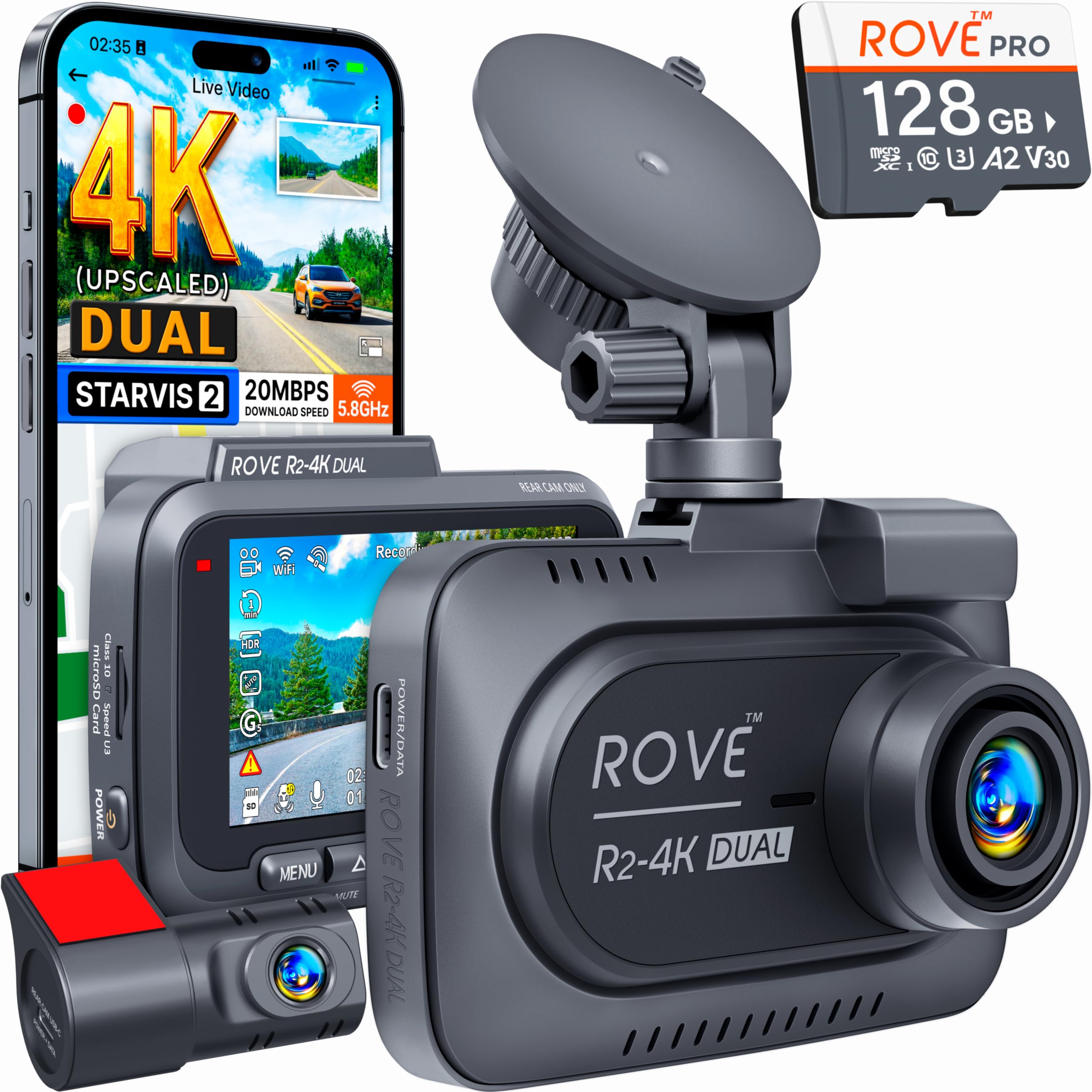
The ROVE R2-4K Dual is the kit we hand to someone who wants front and rear coverage without buying a pile of extras. The box includes a 128GB card, a suction mount, a sticky mount, a rear cable, and the trim tool for tucking wires, so the first drive is possible without another order. We used the suction mount first because it let us move the camera between cars; the sticky mount is there when we want a lower-profile install.

Its front footage is detailed enough for road signs and nearby plates, and the rear gave us the context we want after a close call. What we appreciate most is the completeness: the 3-inch screen makes setup easy, GPS stamps speed and location, and the 5.8GHz link is quicker than the older 2.4GHz cameras we have used.

The catch is the app. It can be fussy about connecting, especially if the phone is already juggling CarPlay, so we treat Wi-Fi as a download tool rather than something to rely on at the roadside. The screen and buttons mean you are not stranded when it acts up.

For a first dual-camera setup, that trade-off is easy to live with. The R2-4K Dual covers both ends, includes the card, and costs less than our top pick, which is exactly what a value pick should do.

Pros

  • Included 128GB card and both mounts
  • Dual front and rear coverage
  • GPS and 3-inch screen simplify setup

Cons

  • Front 4K is upscaled from 2.5K
Our verdict

The R2-4K Dual is our pick for a first dual-camera setup because it includes the card and mounts you need to start.

Check Latest Price
3

Best Budget Front-Only

Galphi Q2

88 /100
LBD Score Excellent

Key details

Display
None
Field Of View
160 degrees
Included Card
32GB
Front Resolution
4K
View on Amazon

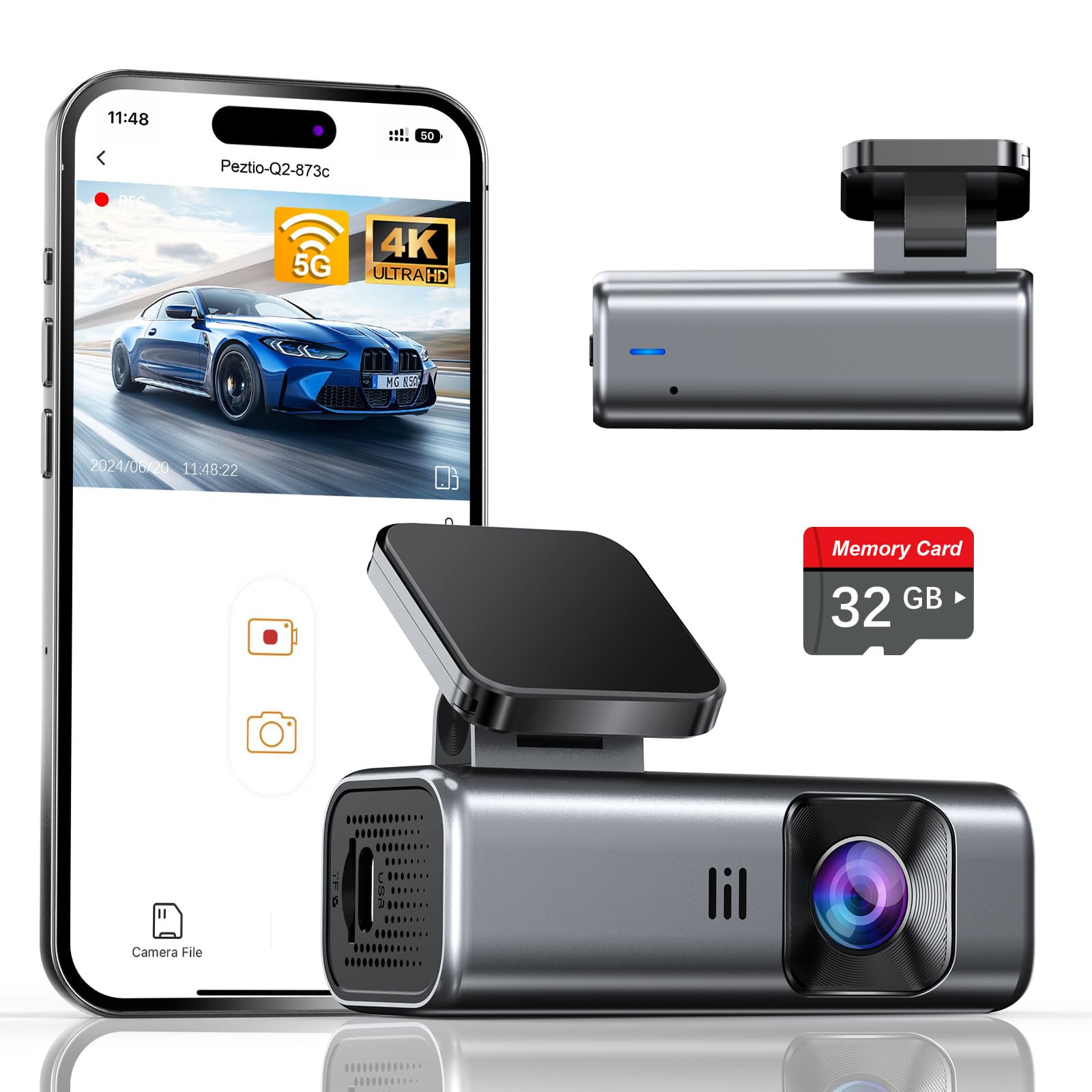
The Galphi Q2 is the dash cam for someone who wants the camera to disappear. There is no screen, the body is small enough to sit behind the mirror, and the 160-degree lens covers a wide slice of the road. We mounted it, paired the phone, and largely forgot it was there, which is the highest compliment for a front-only camera.

The 4K footage is the main event, and it held up in daylight and in lit parking lots. At night, headlights still flare, as they do on every camera here, but the f/1.6 aperture and WDR kept the scene readable rather than a wash of white. The 5GHz Wi-Fi is a step up from the 2.4GHz connections we have used; clips reached the phone quickly enough that we did not bother removing the card.

The 32GB card in the box gets you recording right away, though a front-only camera this small is best treated as a starter kit: plan on a larger card if you save clips rather than letting loop recording overwrite them. The screen-free design also means every adjustment happens in the app, so a phone mount or a patient passenger helps during setup. What we keep coming back to is the price-to-footprint ratio. It does one job, front coverage, and does it without cables running to the back of the car or a display shouting for attention.

Pros

  • Tiny screen-free body hides behind mirror
  • 4K front footage with 160-degree view
  • Included 32GB card and 5GHz Wi-Fi

Cons

  • Front-only coverage
Our verdict

Buy the Q2 if you want a nearly invisible front camera and do not need rear coverage.

Check Latest Price
4

Best for Full Around-Car Coverage

IIWEY N6

88 /100
LBD Score Excellent

Key details

Channels
4
Parking Mode
Hardwire kit required
Included Card
128GB
Front/rear Resolution
2K + 1080p
View on Amazon

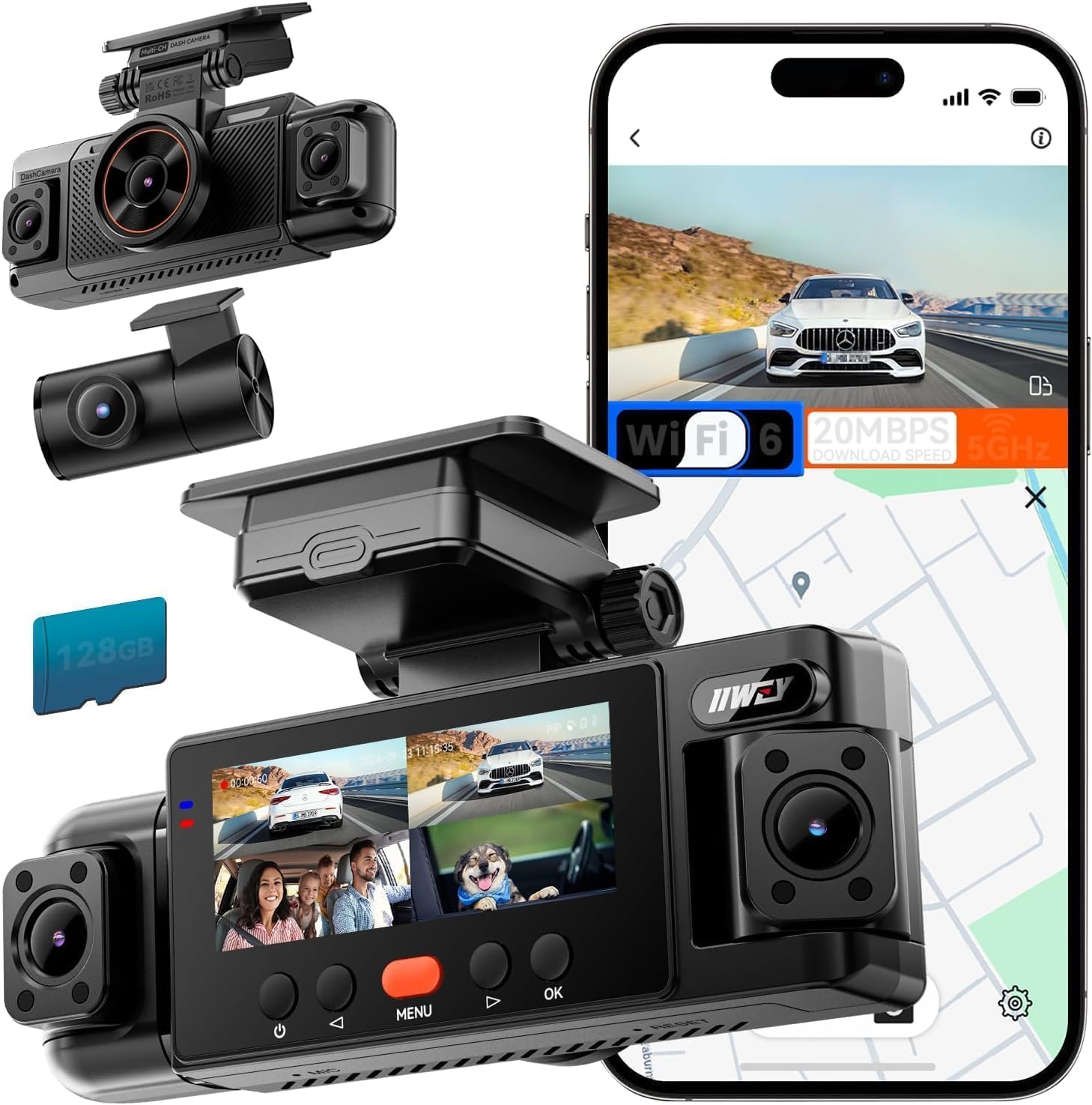
Four cameras is a different kind of dash cam ownership. The IIWEY N6 records the road ahead at 2K and the rear, left, and right at 1080p, so a parking-lot scrape or a lane change has a second angle. We walked around the car after installation and could see the coverage gaps close; the 170-degree front lens helps, but the side cameras are what make this one unusual.

We think the N6 earns its place if you want evidence from every side and are willing to spend an afternoon routing cables. The 128GB card is included, the 3.18-inch screen is readable, and the 5.8GHz Wi-Fi 6 connection moved files without the usual wait. GPS stamps speed and route, and the IR lights help the interior views at night.

Parking surveillance is the part to read carefully. The N6 is wired and has no built-in battery, so it only watches while parked if you set up the power side properly. That is not a dealbreaker, but it changes the installation job; if parking coverage is the reason you are buying, plan for that extra step. The N6 is not the camera we recommend to someone who wants a five-minute install. It is the one we recommend to the driver who wants the whole car on record and will do the work to get there.

Pros

  • Four cameras cover front, rear, and both sides
  • 128GB card and Wi-Fi 6 included
  • IR night vision for interior views

Cons

  • Hardwire kit sold separately for parking mode
Our verdict

The N6 is for drivers who want to see every side of the car and will budget the time for a four-camera install.

Check Latest Price
5

Best for Rideshare and Interior Recording

70mai T800E

88 /100
LBD Score Excellent

Key details

Channels
3
Included Card
64GB
Operating Range
14°F–140°F
Front/rear Resolution
4K front + 1080p rear/interior
View on Amazon

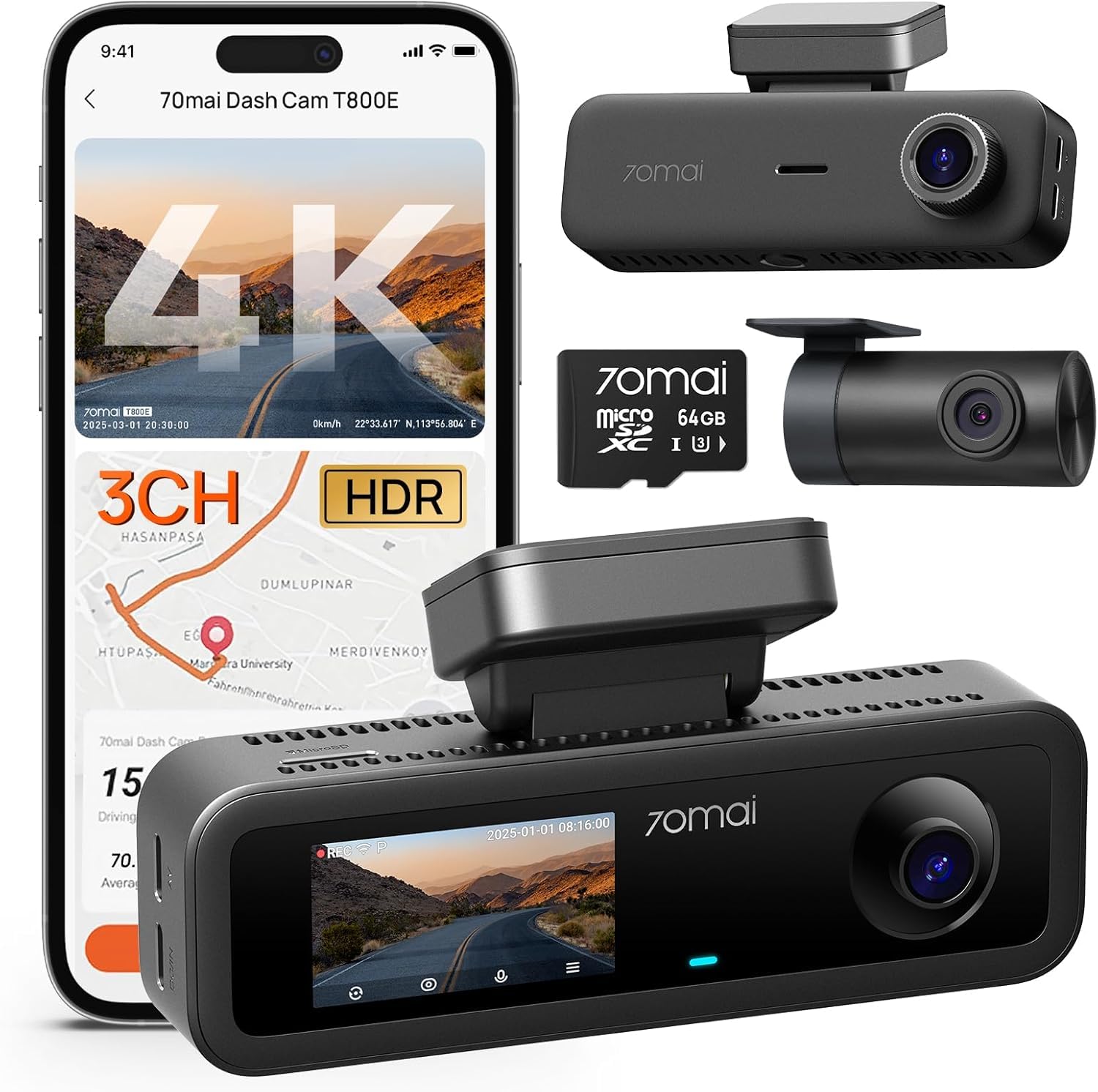
The interior camera is what makes the 70mai T800E worth a look. It records 4K ahead, 1080p behind, and 1080p inside the cabin, which is the combination rideshare drivers and families ask for. We set it up with the interior view angled to catch the back seat, and the switchable IR made a difference when the cabin went dark without turning the whole frame into a gray blur.

The front footage is the sharpest part, as you would expect, and the 5-mode GPS and Wi-Fi 6 are useful when you need to hand a clip to someone quickly. A 64GB card is included and the camera supports up to 512GB, so the memory path is clear.

The app is where the T800E feels less settled. Pairing took patience, and the connection is really only useful while you are in the car. We ended up using the app for setup and downloads and leaving the camera to record on its own, which is fine once you know the routine. The 4K front view and interior coverage are worth that bit of friction if you carry passengers.

For a driver who wants one camera to cover the road and the cabin, the T800E is the most sensible fit in this group. We kept the interior angle aimed at the back seat and left it there; that is the view we checked first after every drive.

Pros

  • 4K front, 1080p rear, and interior camera
  • Switchable IR for cabin night recording
  • 64GB card included and 512GB support

Cons

  • 64GB card is small for three-channel use
Our verdict

Choose the T800E if you carry passengers and want a clear interior record alongside the road ahead.

Check Latest Price
6

High-Res Dual View

Aputeta 4K+4K

90 /100
LBD Score Outstanding

Key details

Warranty
18 months
Field Of View
170° front / 160° rear
Included Card
128GB
Front/rear Resolution
4K + 4K
View on Amazon

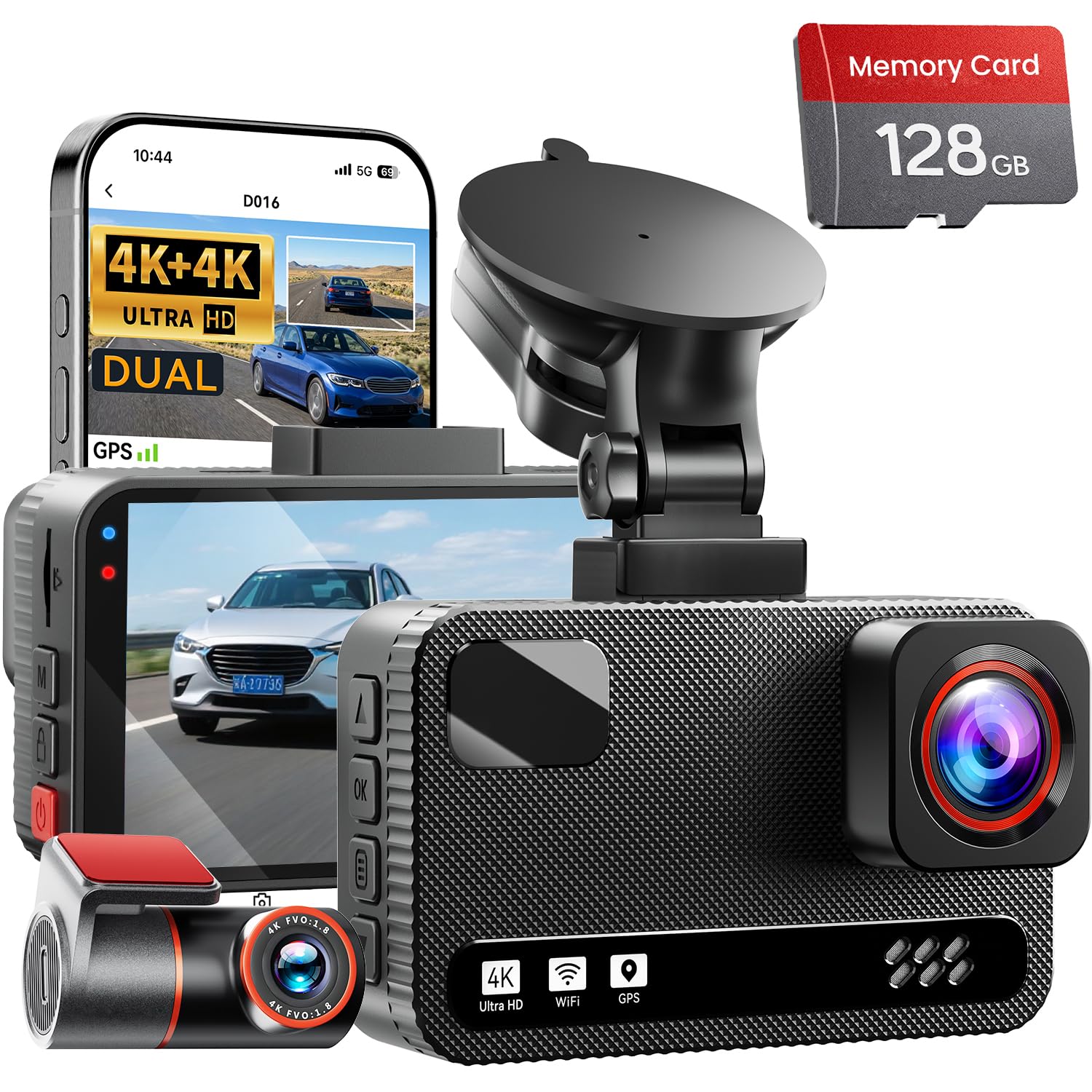
A 4K rear camera is still uncommon, and the Aputeta puts one on the back glass to go with a 4K front. That is the spec that made us stop and look. The rest of the kit is equally complete: a 128GB card, a 3-inch screen, GPS, and a 5.8GHz Wi-Fi link. We installed it in a mid-size SUV and had enough rear cable to route cleanly.

The front and rear footage both looked sharp in daylight, and the f/1.5 front aperture pulled more detail out of dusk than we expected. The 170-degree front lens is wide enough to catch cross traffic without making the image look like a fisheye, and the rear view gives a useful second angle after a tailgater closes in.

The screen is small and the menus take a little learning, but the physical controls mean you are not locked into the app for every change. GPS stamps speed and route, and the 18-month warranty is longer than some here.

Even with the extra resolution, the Aputeta is not automatically our top pick. It is a compelling alternative for a driver who wants high-resolution coverage at both ends and will check the cable run before ordering.

Pros

  • 4K front and 4K rear recording
  • 128GB card included
  • 3-inch screen and GPS
  • 18-month warranty

Cons

  • Rear cable may be tight in long vehicles
Our verdict

The Aputeta is worth a look if a 4K rear camera matters more to you than a long track record.

Check Latest Price
7

Budget 360 Coverage

Icesky S03

87 /100
LBD Score Excellent

Key details

Channels
4
Max Card
512GB
Included Card
128GB
Front Resolution
4K
View on Amazon

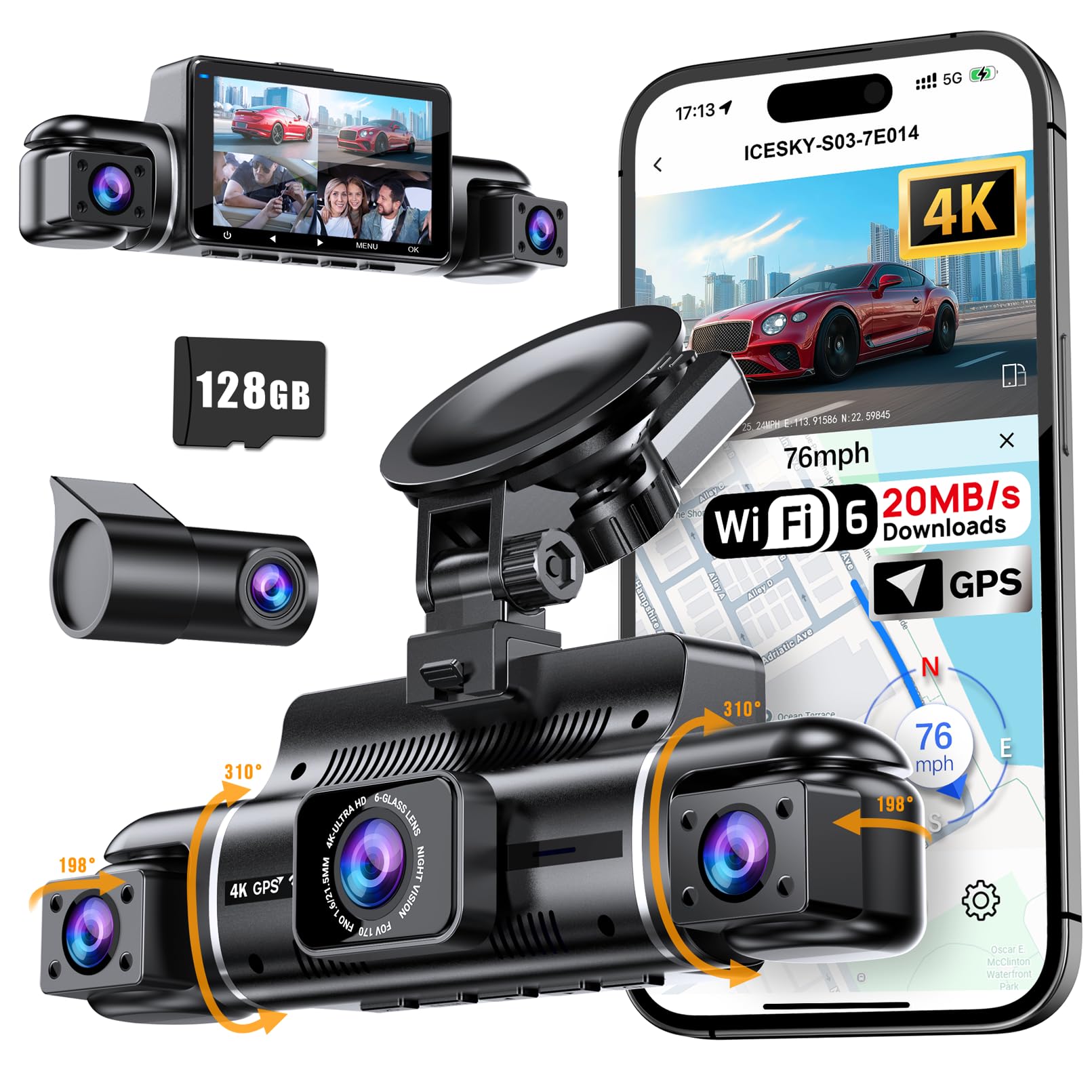
The Icesky S03 takes the four-camera idea and squeezes it into a much lower price. You get a 4K front camera, three additional views, a 3-inch display, GPS, Wi-Fi 6, and a 128GB card in the box. That is a lot of coverage for the money, and it is the reason this one stays in the conversation.

We liked the front image most; it is the sharpest channel, and the detail is a clear step above the side views. The side cameras need careful aiming, because a few degrees one way or the other decides whether you capture a lane or half of your own door. The 8 IR lights help at night, though the side views are still the place where low light shows its limits.

The S03 makes the most sense for a driver who wants a budget safety net around the whole car. It is a bigger install than a front-only camera, and the app is the usual Wi-Fi handshake rather than a magic replacement for buttons. We think the included card and GPS tip it ahead of the other cheap four-channel cameras here.

If you mainly want sharp front evidence, spend elsewhere. If you want to see who came down your driver's side in a parking lot, the S03 covers the angles without stretching the budget.

Pros

  • Budget four-channel 360 coverage
  • 4K front footage
  • 128GB card and GPS included
  • 8 IR lights for low-light side views

Cons

  • Side and rear channels are 1080p only
Our verdict

The S03 makes sense for a budget four-camera setup, provided you accept 1080p on the side and rear views.

Check Latest Price
8

Premium Front Detail

VIOFO A229 Pro

84 /100
LBD Score Excellent

Key details

Sensors
IMX678 + IMX675
Parking Mode
Buffered 24H
Included Card
None
Front/rear Resolution
4K + 2K
View on Amazon

The A229 Pro is what happens when the top pick's idea is pushed to the front of the sensor queue. It records 4K up front and 2K in the rear, using Sony's IMX678 and IMX675 sensors, and it includes a polarizing filter that cuts dashboard glare. We noticed the difference most in bright, low-sun driving, where the front image stayed contrasty instead of washing out across the hood.

The rest of the package is familiar VIOFO: 5GHz Wi-Fi, GPS, voice control, buffered parking mode, and a supercapacitor. The buffered parking mode is the feature we appreciate most after the image quality, because it keeps a rolling buffer and saves the moments before an impact rather than starting late.

The costs are real. The app connection can be slow, and this is the most expensive camera in the group. The price is enough to keep it off the top step for most buyers.

If the sharpest possible front plate shot is the whole reason you are buying, the A229 Pro earns the upgrade. For everyone else, the A229 Plus is the more sensible balance.

Pros

  • 4K front and 2K rear STARVIS 2 sensors
  • Included polarizing filter cuts glare
  • Buffered parking mode
  • Voice control and 5GHz Wi-Fi

Cons

  • No memory card included
Our verdict

The A229 Pro is the one for buyers who want the sharpest front footage and will pay for it.

Check Latest Price

How We Tested the Best Dash Cams

We started with roughly 40 models and cut the list to 12 by reading spec sheets the way a suspicious buyer would: which sensor, whether a memory card comes in the box, how the camera mounts, and whether the features it advertises need an extra cable or a paid plan. Anything that only worked on paper got dropped before it reached a windshield.

Testing ran for eight months across two cars. Each camera lived through a daily commute, at least two long highway drives, and repeated night runs on unlit back roads. I installed every one myself and timed it, because a 40-minute job behind trim panels is a different purchase than a 10-minute adhesive mount. After a week of driving, we pulled footage over each unit's WiFi or app and noted whether it took seconds or a frustrating run of retries.

Footage got graded the same way for everyone: could we read a plate at 20 feet at dusk, could we make out a face in a dim parking garage, did oncoming headlights bloom into white blobs. We noted how many hours of driving fit on the included card before loop recording overwrote the oldest clip, and we left each camera running overnight in parking mode to see whether it caught a motion event or slept through it. Over the months, we logged freezes, dropped clips, and cameras that needed a reformat.

At the end, we weighed what each one cost against what came in the box, since a camera that ships with a card and a hardwire kit is a better deal than one that quietly needs both.

How to Choose a Dash Cam

Start With Coverage

Front-only cameras are the simplest install and the smallest footprint, which is why the Galphi Q2 makes sense for a commuter who mainly wants a record of what happens ahead. A front-and-rear pair is the better default for most drivers: it captures rear-end collisions and parking-lot contact that a single lens misses. Three- and four-channel cameras add the cabin or both sides, but each extra lens means another cable to route, another view to aim, and more footage to store. Choose the coverage first, then the resolution.

Resolution and Sensor Quality

A 4K badge is not automatically better evidence. Some cameras upscale a lower-resolution sensor; others record native 2K front and rear with better processing. We prioritize a clean native image, strong HDR, and a large aperture over a headline number, because night-time plate detail and glare control matter more than a sharp daylight frame. The VIOFO A229 Plus is the clearest example here of dual 2K sensors doing real work; the ROVE R2-4K Dual shows why an upscaled 4K label needs context. Look for STARVIS-class sensors if low light matters.

Parking Mode and Power

Parking mode is useful only if it is installed correctly. Most cameras need a hardwire kit to keep watching after the ignition is off, and some kits are sold separately; the IIWEY N6 is one example. A supercapacitor is preferable to a battery in a hot car because it tolerates temperature swings better. Buffered parking mode saves the seconds before an impact, which is more useful than a clip that starts after the bump. If you park on the street, check the camera's voltage cutoff and have the hardwire install done properly.

Memory, Apps, and Daily Use

An included card gets you recording on day one, but check its size against the number of channels. A 32GB card is fine for a front-only starter camera; a three- or four-channel setup will fill it faster. The app matters more than the spec sheet suggests: a fast 5GHz connection makes downloads painless, while a fussy pairing process can leave you pulling the card at the roadside. We prefer a camera with buttons or a screen as backup, and we treat Wi-Fi as a tool for retrieving clips rather than a full-time connection.

Installation and Windshield Fit

Measure before you mount. A camera that sits in your line of sight will annoy you every day, and a rear cable that is too short turns a simple job into a rewiring project. Compact front cameras hide behind the mirror; four-channel setups need more planning and more trim work. Check the rear cable length against your vehicle before ordering, and decide whether you want a screen for setup or a screen-free body that relies on the app. The less you notice the camera, the more likely you are to leave it alone.

Frequently Asked Questions

Final Verdict

Our default is the VIOFO A229 Plus. It records real 2K front and rear from dual STARVIS 2 sensors, keeps both channels usable with HDR, and uses a supercapacitor that makes more sense than a battery on a hot windshield. Add a high-endurance card and accept a sometimes-stubborn app connection.

If you want the complete kit and a lower entry point, the ROVE R2-4K Dual is the easier first buy. If you need every side covered, choose the IIWEY N6.