Best Electric Bikes for Commuting of 2026

The pitch for a commuter e-bike is simple: cover your four or five miles without arriving in a puddle, and skip the parking permit and the second car. What the pitch leaves out is that commuting is a harder job than weekend riding. Your bike sits locked to a rack for eight hours, carries a laptop and a bag of groceries, and climbs the same hill twice a day.

My team and I spent nine months riding seven of them to work and back, and the pattern that emerged had little to do with peak motor numbers. The line I'd hunt for on the box is UL 2849, the safety standard covering the battery and electrical system. It's the closest thing this category has to a baseline, and a surprising number of listings skip it.

The other thing the marketing glosses over is assembly: most of these arrive mostly built, and how one goes together in your hallway on a Tuesday night says a lot about the parts you can't see. Below are the bikes that survived the commute.

1

Best Overall

Jasion Roamer

78 /100
LBD Score Very Good

Key details

Motor
1,200 W peak
Battery
528 Wh removable
Maximum Rider Weight
400 lb
Safety Certification
UL2849
View on Amazon

Turn signals on a bicycle sound like a gimmick until the afternoon you cross two lanes with one arm out. The Roamer is the only bike here that has them, along with a brake light, a tail light, and a headlight worth riding behind, and that lighting package is what we noticed first and kept appreciating. In traffic, being predictable matters more than being fast.

Underneath the lights is a sorted commuter rather than a trail bike wearing street tires. The 528 Wh battery lifts out so you can charge it at a desk, Jasion claims 45 to 60 miles per charge over six or seven hours, and the 26-inch wheels roll over expansion joints and grated bridge decks in a way the 20-inch fat tires elsewhere in this group do not. The 1,200 W peak motor matters less for the 28 mph top speed than for pulling away from a light or holding pace up a ramp.

Two things we wanted and could not confirm are fenders and a rear rack. Neither appears in Jasion's specs, and for a bike you plan to ride to work in anything but perfect weather, that is a conversation to have before the first rainy Monday. Adding them afterward is routine, but it turns an out-of-the-box commuter into a project.

Assembly is the usual 80-percent-done job, and the parts you touch daily, the trigger shifter and the LCD with speed, charge, and trip readout, are ordinary in the best way. Certification is the piece we care about most: UL2849 covers battery, charger, and motor as a system, and it is the one line we will not skip on a bike charged overnight in a hallway.

Pros

  • UL2849-certified battery, charger, and motor
  • Turn signals plus brake light and headlight
  • 528 Wh removable battery, 45 to 60 mile claim
  • 400 lb rider limit with 26-inch wheels

Cons

  • Six to seven hours for a full charge
Our verdict

We send most daily commuters here: UL2849-certified electrics, a 528 Wh battery, and turn signals that make a busy left turn feel less like a gamble.
Check Latest Price
2

Easiest to Carry

Hoverfly 26-Inch

79 /100
LBD Score Very Good

Key details

Battery
374.4 Wh removable
Top Speed
20 mph
Bike Weight
53.4 lb
Safety Certification
UL2849
View on Amazon

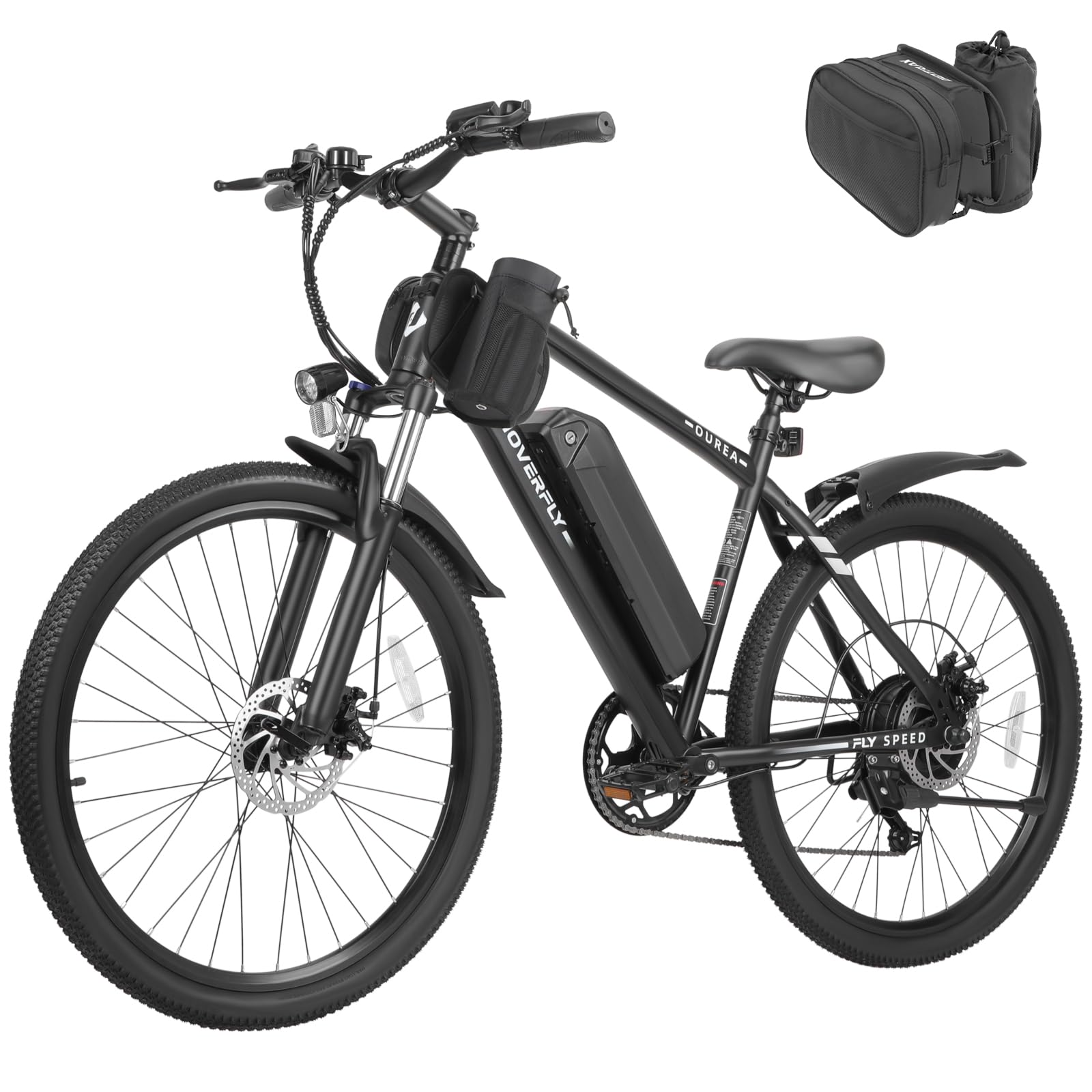
At 374.4 Wh, the Hoverfly's battery is the smallest in this group, and that one number decides who should buy it. The claim is 40 miles on pedal assist and 20 on throttle, and we appreciate a page that separates the two instead of quoting a single optimistic figure, because that split is exactly what a commuter needs to think about.

For a ten-mile round trip it means a week of charges with margin to spare. For thirty miles with a hill at each end it does not, and no accessory makes up the difference. What you get in exchange is the lightest bike here at 53.4 pounds, plus fenders, a headlight, a tail light, a bell, and a frame bag, which is the whole commuting kit rather than a bike you have to finish yourself.

It is also the budget route into a UL2849-certified electrical system, and that matters more than anything on the accessory list. The limits are real, though: 264 pounds is the lowest maximum rider weight here, and the frame asks for a rider at least 5 feet 2 inches tall. Ride it to empty and you are pushing 53 pounds home rather than pedaling it, so plan charging around your longest day rather than your shortest.

Dual disc brakes, a front suspension fork, and a five-hour charge round it out. It reads like a bike specced by someone who actually commutes.

Pros

  • UL2849 certified at the budget end
  • Fenders, lights, bell, and frame bag included
  • Lightest bike here at 53.4 pounds

Cons

  • Smallest battery in this group at 374.4 Wh
  • 264 lb maximum rider weight
Our verdict

A certified, fully equipped commuter at the budget end, with fenders, lights, and a 365-day warranty. Its small battery and 264-pound limit decide who it fits.

Check Latest Price
3

Best Budget Step-Through

Qlife Cityone

82 /100
LBD Score Excellent

Key details

Frame
Step-through
Motor
1,000 W peak
Battery
48 V removable
Top Speed
25 mph
View on Amazon

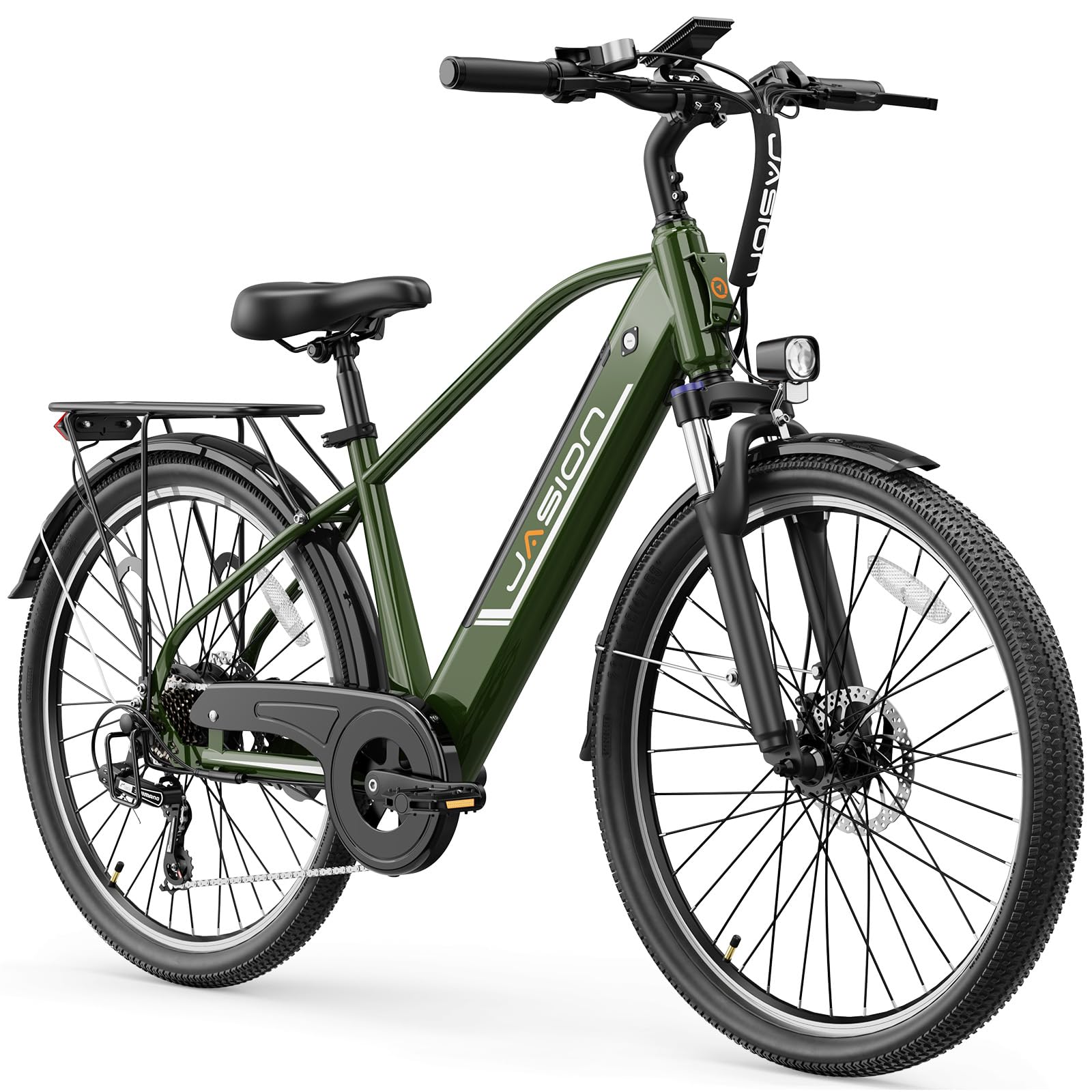
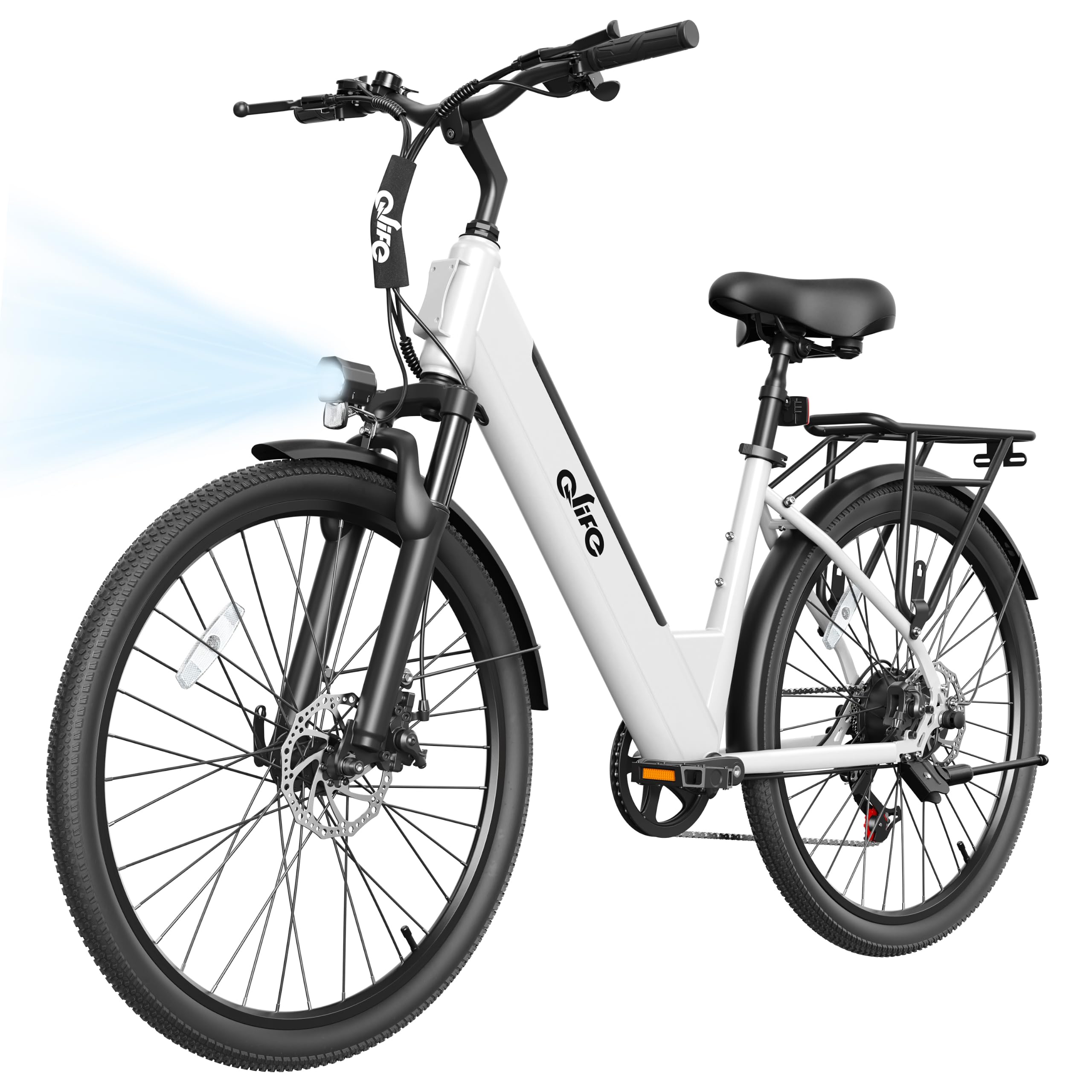
If you step off a bike in work clothes, a step-through frame stops being a style choice and becomes the reason you ride instead of drive. The Cityone is the one here that leans that way, and it commits: a low frame, 26-inch city tires, and adjustable handlebars that let you sit upright enough to see over parked cars.

The 1,000 W peak motor takes it to 25 mph, and the seven-speed Shimano gearing does the rest when the battery drops. The ride is the part that convinced us: 26-inch tires and a suspension fork soak up the kind of pavement that makes a small-wheeled fat-tire bike feel like work.

Where the budget shows is in what is not in the box. You get a charger, a tool kit, and a manual, with no lights, no fenders, and no rack. On a commuter that is not fatal, but it is a second order and a Saturday, and it is the difference between riding to work the day it arrives and riding to work the week after. The display is on the small side too, so a glance at speed costs you a beat.

Range needs its own caveat. The 55-mile figure assumes pedal assist on flat ground with a light rider; lean on the throttle and you see a fraction of it, and hills and cold mornings cut it further. For a five- or ten-mile commute the arithmetic works out comfortably, which is the trip this bike is built for.

Pros

  • Step-through frame is easy to mount in work clothes
  • 26-inch tires and a suspension fork ride well on city pavement
  • Seven-speed Shimano gearing covers a low battery

Cons

  • No lights, fenders, or rack in the box
Our verdict

The step-through we point new riders and short-trip commuters to: easy to mount, simple to run, and the budget end of this group. Plan on adding your own lights.

Check Latest Price
4

Best for Longer Rides

TST R004

84 /100
LBD Score Excellent

Key details

Motor
750 W rated
Battery
48 V 15 Ah removable
Tire Size
20 x 4 in
Maximum Rider Weight
450 lb
View on Amazon

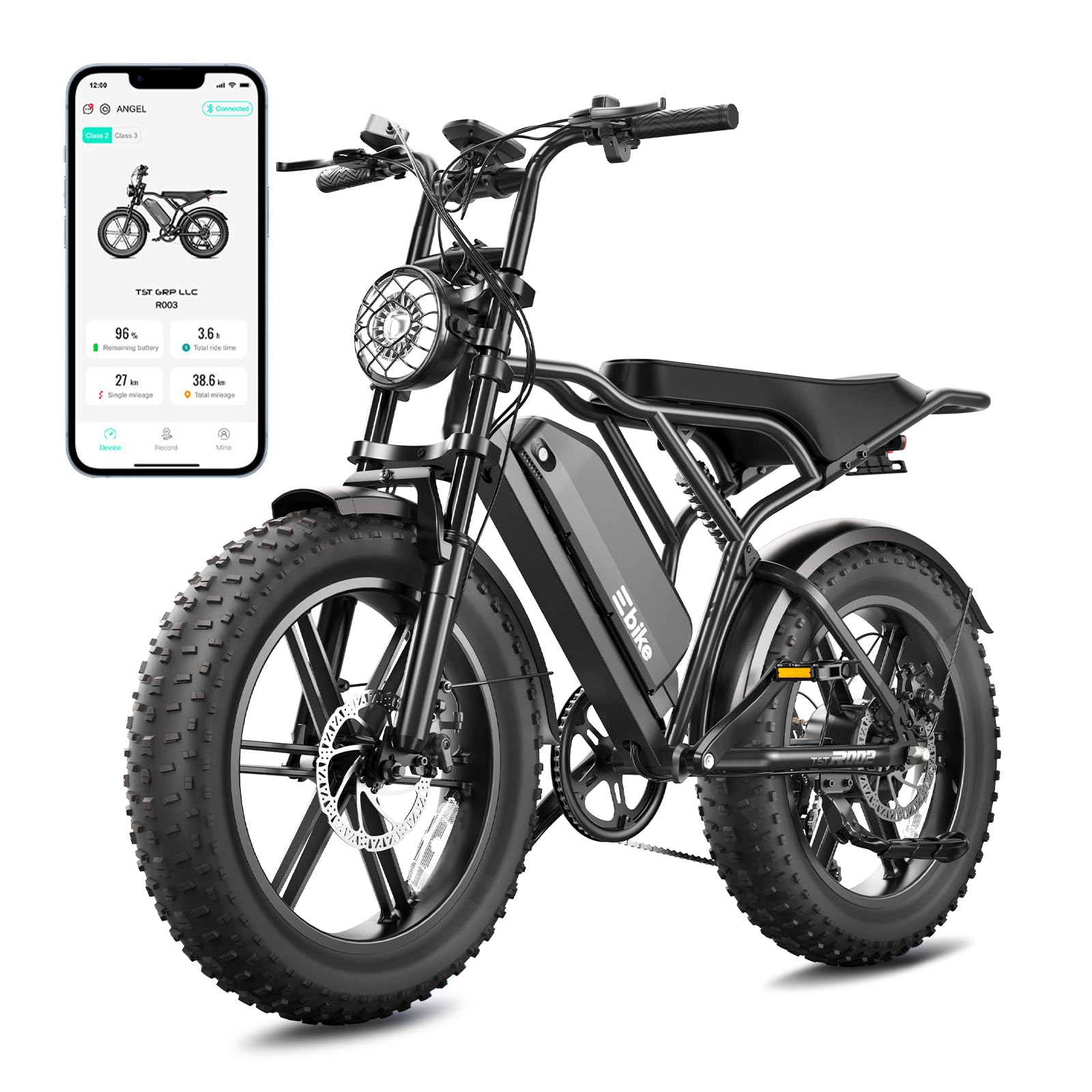
At 720 Wh, the TST carries the largest stated battery in this group, nearly double the Hoverfly's, and on paper that is 60 miles of pedal-assisted commuting. For a rider whose round trip runs 25 miles or more, that single figure is worth more than every other specification combined.

The tires are the part we keep arguing with ourselves about. Twenty-inch fat tires with front and rear suspension make broken pavement and gravel feel like nothing, and the 450-pound weight limit is the highest here. But small wheels and four-inch rubber spin up slower and steer heavier than the 26-inch tires on the rest of this group, and on a clean bike lane you pay for that cushioning in effort.

Battery life is what to watch. A pack that quits around 18 miles instead of 60 is the failure to catch early, and the 180-day warranty is the shortest of any bike here, so the first month is when you want to track how fast the gauge drops against the miles you have ridden. A full charge takes six to seven hours.

The brakes are linear-pull rim rather than disc: fine in dry weather, noticeably less reassuring in the wet, and the one place this bike feels built to a budget. Everything else is aimed squarely at distance.

Pros

  • 720 Wh battery, the largest stated here
  • Dual suspension and fat tires smooth rough roads
  • 450 lb rider limit, highest in this group

Cons

  • Rim brakes lose bite in wet weather
  • 180-day warranty is the shortest here
Our verdict

The biggest stated battery and the highest rider limit here, built for long and rough commutes. Watch the charge closely in the first month and it is a lot of bike for the money.

Check Latest Price
5

Hilly Commutes

ASKGO G26

80 /100
LBD Score Excellent

Key details

Motor
1,500 W peak
Battery
48 V 10.4 Ah removable
Suspension
Dual
Claimed Range
45 miles
View on Amazon

ASKGO's page lists one speed in the spec table and 1-7 speed in the bullets, calls the suspension a front fork in one place and front and rear in another, and gives the warranty as both 36 months and one year. None of that makes the bike bad. It does mean the questions you normally ask a seller become the whole purchase.

What the page does say is appealing. A 1,500 W peak motor is the highest claim here, paired with a 48 V 10.4 Ah pack and a 45-mile range figure, so expect the motor to eat that range quickly on a climb. Dual suspension, dual disc brakes, a 400-lumen headlight, and 95 percent pre-assembly are the right parts for a route that is not flat, and the 26-inch wheels with 2.1-inch tires suit pavement better than the fat-tire bikes here despite the mountain framing.

How it holds up over a season is the open question, and for a bike parked outside an office five days a week that question matters more than peak watts. Buy it for the hills and the light, get the gear count and the warranty confirmed before you pay, and keep the first month's rides honest about range.

Pros

  • 1,500 W peak motor, the highest claim here
  • Dual suspension and dual disc brakes
  • 400-lumen headlight and 95% pre-assembly

Cons

  • Smaller battery than the other high-power picks
Our verdict

A 1,500 W peak motor, dual suspension, and a bright headlight for hilly routes, worth a look once you have the gearing and the warranty confirmed in writing.

Check Latest Price
6

Easy Mounting

Jasion Roamer ST

80 /100
LBD Score Excellent

Key details

Motor
1,200 W peak
Battery
48 V 11 Ah removable
Top Speed
28 mph
Safety Certification
UL2849
View on Amazon

Jasion sells two versions of the same idea, and the Roamer ST is the one for riders who want to step through the frame rather than swing a leg over it. That is not a small thing if you commute with a backpack, wear a skirt, or have a hip that complains. The low frame turns a mount into a step.

The lighting is the best in this group: a headlight, a turn-signal tail light, a brake light, and reflective strips on the tire hubs. The battery is a 48 V 11 Ah pack, the 62-mile range claim is the longest here, and the 26-inch tires and front suspension make it an easy roller on pavement.

The step-through premium is the hard part. This is the same motor and the same size pack as the standard Roamer, which sells for far less, so what you are really buying is the frame, the lights, and the low standover. Those are worth something. We are less convinced they are worth that much.

Two things to check before ordering. The minimum rider height is 57 inches, so shorter riders should sit on one first, and the throttle can stick a little out of the box, usually an adjustment rather than a return but worth testing on the first ride. Look the rims over on delivery as well.

Pros

  • Step-through frame mounts easily with a bag
  • Turn signals, brake light, and reflective tire strips
  • 62-mile range claim, the longest here

Cons

  • 65 pounds, the heaviest stated weight here
  • 300 lb rider limit, below the standard Roamer
Our verdict

The step-through of the group, with the best lighting package and a 528 Wh-class battery. Buy it for the frame and the fit, and accept the premium as the trade.

Check Latest Price

How We Tested These Commuter E-Bikes

The shortlist started with spec sheets and customer reviews, filtered for what a commuter can't work around: a removable battery, real gearing for hills, disc brakes front and rear, and an electrical system listed as UL 2849 certified. I cut anything with a vague warranty or a battery sealed into the frame, then deliberately narrowed across formats — step-through, standard, and fat-tire — so different riders and routes were covered. Alongside each bike I kept a running note of what the price actually bought: motor, brakes, display, tires.

All seven bikes came out of a box and were built solo in a hallway over nine months, stopwatch running and torque wrench handy. I recorded what arrived pre-assembled, whether the front brake rubbed out of the gate, whether the derailleur shifted cleanly once the bars were on, and how long the job took someone without a shop stand. A week later I went back over every bolt, because the first fifty miles are where things shake loose.

Then the real work started. Each bike did my actual commute — a few miles of cracked pavement, a long grade, four traffic lights, and a stretch of door-zone bike lane — plus grocery runs and weekend errands. I paid attention to how the assist kicked in from a stoplight, how much throttle I genuinely needed, how stable the bike felt at top speed on rough asphalt, and whether the frame flexed when I stood on the pedals. At set check-ins I looked at brake pads, cables, chain stretch, and tire wear, and noted each bike's first rattle and where it came from.

Battery testing was the patient part: a measured loop ridden until the assist cut out, charging timed from empty, then the same loop repeated months later to see how much capacity had drifted. Removable packs came inside to charge at a desk, which is how most people will actually live with one.

How to Choose a Commuter Electric Bike

Work Backward From Your Round Trip

Every range figure is a best case: pedal assist, flat ground, a light rider, warm weather, a fresh battery. Throttle-only riding, hills, cold mornings, and a loaded backpack can cut the real number by half or more. Start with the round trip you actually ride, add half again as margin, then compare packs.

The TST's 720 Wh pack and the Hoverfly's 374.4 Wh sit at the two ends of this group: a short city commute is well served by the smaller one, and a long suburban run is not. Also check whether the battery lifts out. Charging at your desk beats carrying the whole bike up the stairs.

Check the Certification and the Brakes

The electrical system is the part of an e-bike that can genuinely hurt you, and UL2849 covers the battery, charger, and motor together. Jasion and Hoverfly both list it. Where it is missing, ask the seller in writing rather than assuming the worst or the best.

Brakes matter just as much for a bike that lives in traffic. Disc brakes, which every pick here except the TST uses, keep more bite when the road is wet. Linear-pull rim brakes are fine in dry weather and need more frequent attention the rest of the year, especially on a heavy bike.

Budget for the Commuting Kit

A headlight, a tail light, fenders, and a rack are not glamorous, and they are the difference between a bike you ride daily and one you ride when the forecast is good. The Hoverfly ships with fenders, lights, a bell, and a frame bag; the Qlife box holds a charger, a tool kit, and a manual.

Fitting lights and fenders afterward is routine, so do the arithmetic before you compare two bikes on price alone. Look for a tail light wired into the main battery, because chasing coin cells every month is how a light ends up permanently dead.

Frame, Weight, and Where It Sleeps

Where the bike lives decides how much weight matters. A garage makes a 65-pound step-over bike a non-issue. A third-floor walk-up makes weight the most important figure on the page, well ahead of motor wattage. Weigh the carrying, not just the riding.

Step-through frames, on the Qlife and the Jasion Roamer ST, are easier to mount with a bag on your back or in work clothes and give up nothing in strength. Check the minimum rider height before ordering: the Hoverfly wants 5 feet 2 inches, the Roamer ST 57 inches.

Read Motor Watts and Speed Carefully

A 1,500 W figure in a product title is usually peak output for a few seconds, not the continuous rating that decides how the bike climbs a bridge every morning. Compare peak to peak, and expect a larger-capacity 48 V pack to hold speed longer than a small one with the same motor.

Speed divides the same way. Twenty miles per hour is plenty in city traffic; 25 to 28 mph is genuinely useful on a long open commute but draws attention on shared paths, and the rules vary by state and by trail. Confirm what your route allows before paying for speed you cannot legally use.

Frequently Asked Questions

Final Verdict

The Jasion Roamer is the bike we hand most commuters, and the reason is narrow and practical: it is the only one here that pairs a UL2849-certified electrical system with turn signals, so the two things that make traffic feel safer are already on the bike rather than on your shopping list.

If your commute runs long or your pavement is rough, the TST R004's larger pack and dual suspension are the better trade. If the bike has to come up a flight of stairs every night, the Hoverfly's 53.4 pounds settles it before any other specification gets a vote.