Best Electric Bikes for Hills of 2026

A hill is where an e-bike either earns its keep or doesn't. On flat ground, almost anything with a motor feels quick; uphill, you find out whether the gearing, weight, and assist work together. A big peak-motor number means less than a well-matched drivetrain and a battery that doesn't sag halfway up. Over the past nine months, my team and I put eight e-bikes through the same climbs—some short and sharp, some long.

We assembled each one from the box, timed the build, and checked build quality against the instructions. On the road, we cared about speed—not just top speed, but how quickly the motor kicked in to clear a rise—and ride quality over cracked pavement and gravel. Battery life got tracked on repeated hill loops, durability showed up in loose bolts and brake rub after weeks of use, and appearance mattered too; a bike you don't want to look at is one you won't ride. Value came down to what held up after the honeymoon phase—and those are the bikes that made the cut.

1

Best Overall

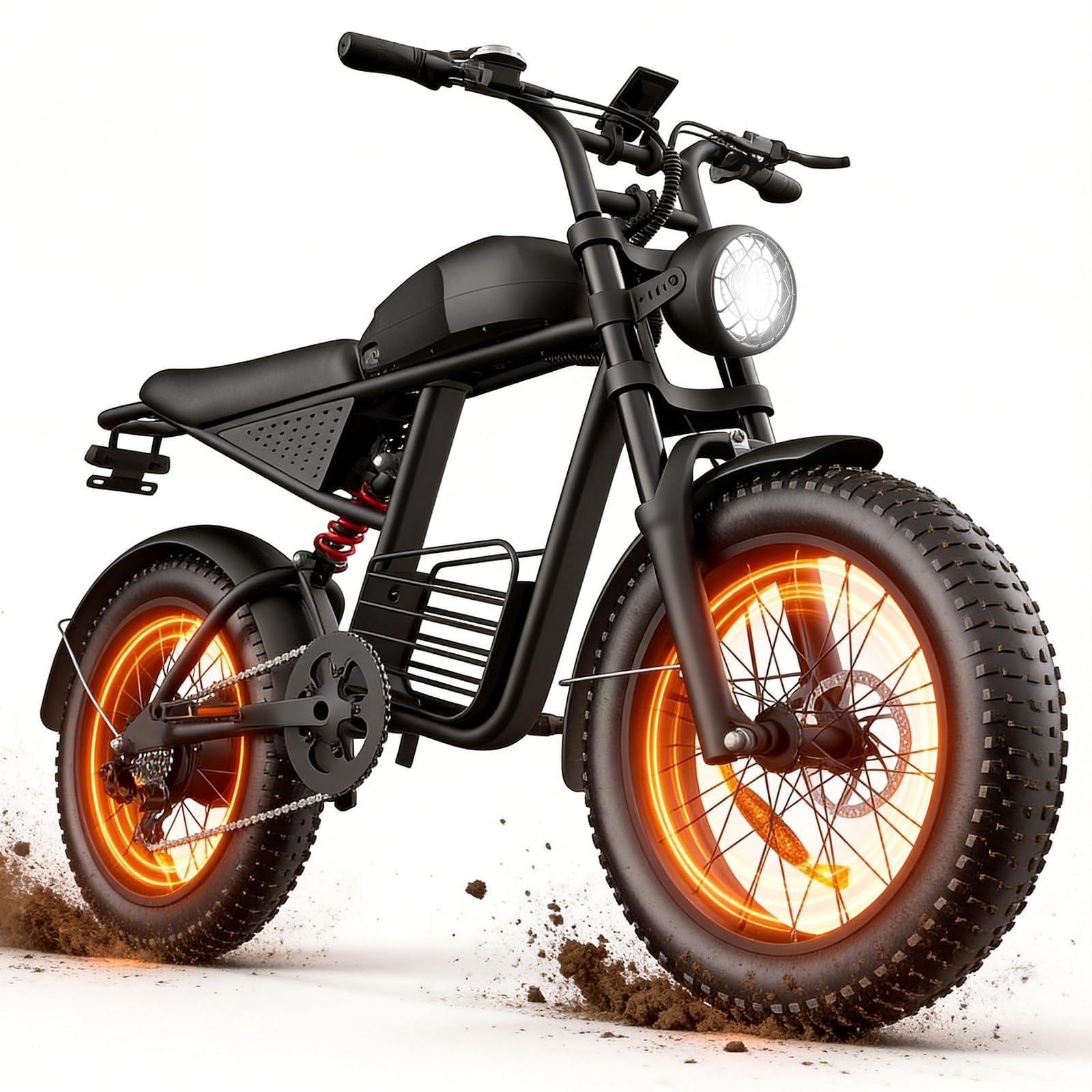
ESKUTE M200F

84 /100
LBD Score Excellent

Key details

Wheels
27.5 in
Battery
48V 20.8Ah (998Wh)
Claimed Range
Up to 80 miles (PAS1)
Peak Motor Power
1500W
View on Amazon

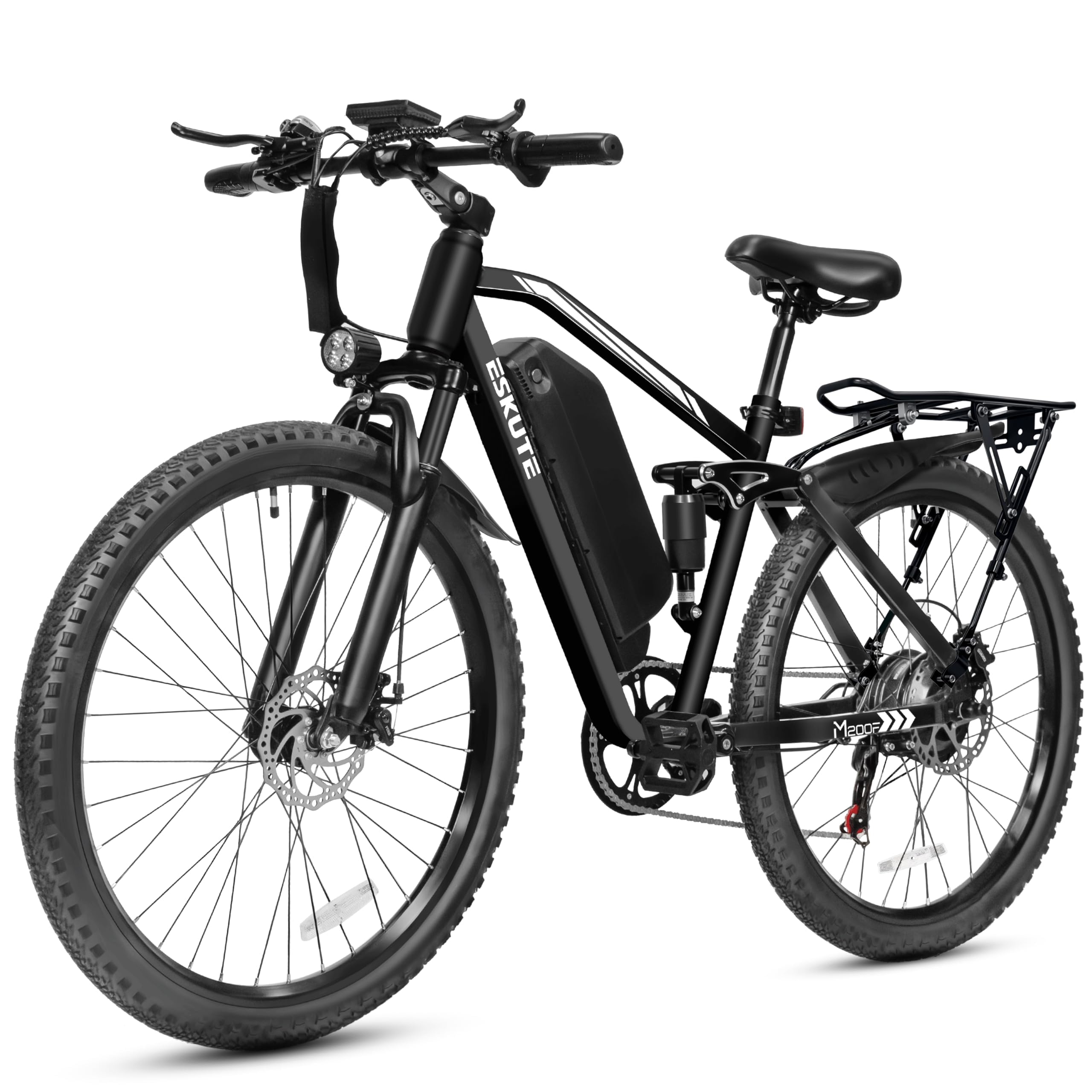
A 1500W peak motor and a 998Wh battery are the two figures that decide this one for us. Plenty of bikes in this group quote a big peak wattage; the M200F is the one where the pack behind it is large enough to feed that motor up a long grade instead of sagging halfway. The battery also sits low in the frame, which keeps the weight where you want it once the road tilts up.

On the climb itself, the assist arrives early — before you've committed to the slope rather than after. What we noticed first is how little the bike seems to care about the incline: it holds speed on a sustained grade while the smaller-motored bikes here are asking you to help. Full suspension and 27.5-inch tires take the sting out of frost heaves and patched asphalt, and the seven-speed rear gives you something to drop into when you want to contribute.

The details are the ones that matter on a hill bike. The central display shows speed, battery level, and trip distance at a glance, the NFC card starts it without a key, and the pack lifts out for charging if you park in a stairwell building. Minimum rider height is listed at 5 feet 1 inch, which is a real answer for shorter riders rather than a guess.

The trade is frame style. This is a step-over, and swinging a leg over a loaded bike on a slope is the one moment the design is awkward; a step-through would be kinder if you commute with a rear basket. The 2.1-inch tires are quick on pavement and noticeably less plush than the fat-tire bikes here once the surface breaks up.

Pros

  • 1500W peak with a 998Wh pack behind it
  • 27.5-inch wheels roll over rough pavement
  • Full suspension front and rear
  • Keyless NFC start and a clear central display

Cons

  • Step-over frame is awkward on a slope
  • 2.1-inch tires are firm off pavement
Our verdict

For hills, this is the one we point people to: 1500W of peak assist backed by a 998Wh battery, on 27.5-inch wheels that keep rolling. Buy it if your commute has a grade you dread.
Check Latest Price
2

Best for Mixed Terrain

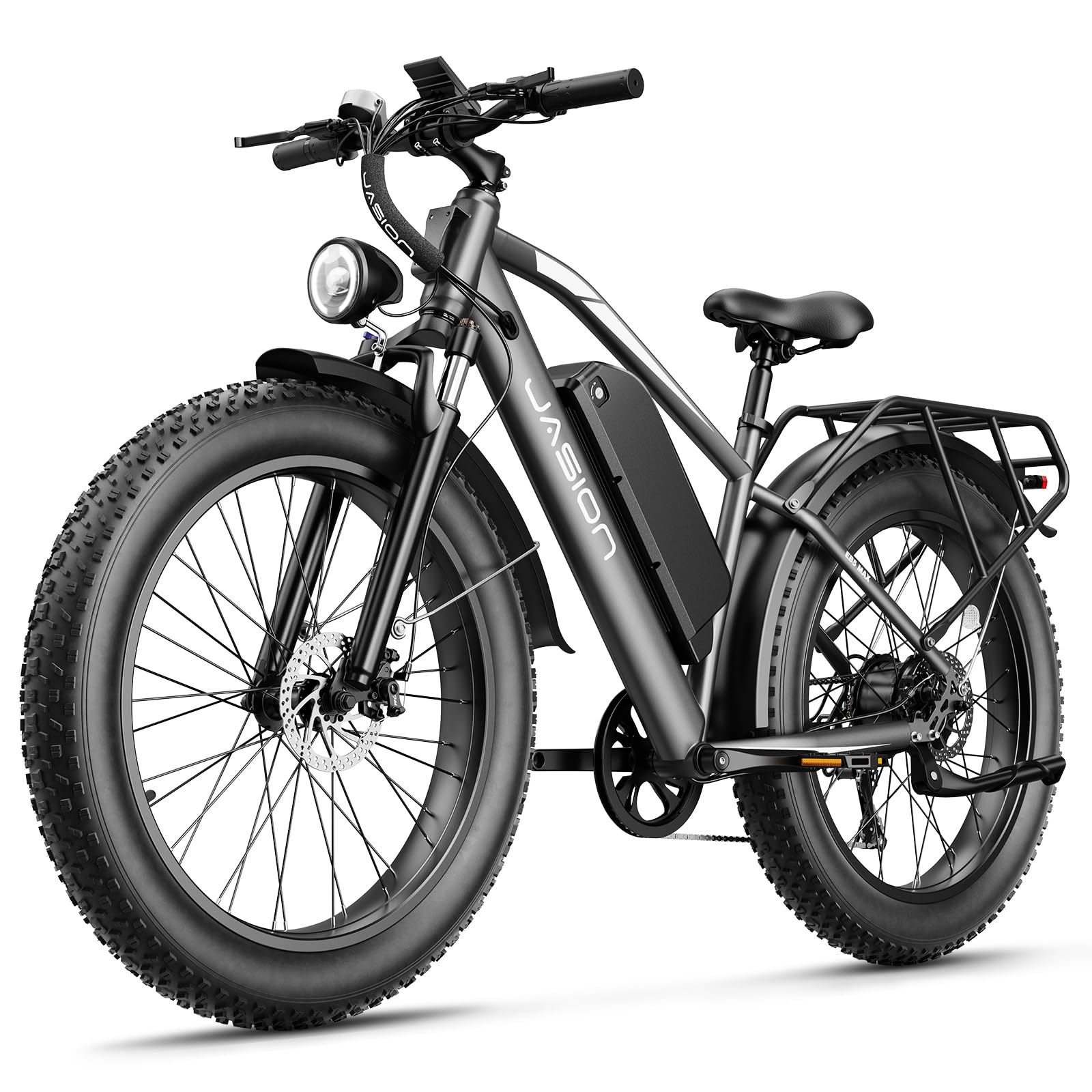
Jasion EB5 MAX

88 /100
LBD Score Excellent

Key details

Tires
26 x 4.0 in
Battery
48V 15Ah (720Wh)
Claimed Range
Up to 65 miles (PAS)
Peak Motor Power
2000W
View on Amazon

Twenty-six-inch fat tires are why this Jasion is our pick for hills that aren't paved. The bigger diameter rolls over ruts and roots where a 20-inch wheel stalls, and the 4-inch width puts a lot of rubber on gravel. Puncture-resistant rubber matters here too, because a flat halfway up a trail is a long walk.

What we like most is that the power arrives without drama. A 2000W peak motor on a 720Wh battery pulls a heavier rider up a grade where the smaller motors here are working hard, and the seven-speed rear lets you keep the pedals turning at a cadence you can live with. Jasion also fits the practical bits: a rear rack and fenders come in the box, which turns a hill-capable toy into something you can commute on through a wet week.

The rest of the spec sheet is sensible for the money. Cruise control holds a set speed on a long drag, the battery is removable and lockable so it can come inside with you, and the color display shows speed, mileage, and charge instead of a row of blinking dots. Jasion quotes 65 miles on assist and 35 on throttle, and the throttle figure is the one to plan a hilly route around.

Pros

  • 26 x 4.0 tires grip loose, steep surfaces
  • 2000W peak on a 720Wh battery
  • Rear rack and fenders included
  • Cruise control and a color display

Cons

  • Fat-tire tread adds drag on paved climbs
Our verdict

We reach for the EB5 MAX when the climb turns to gravel: 26-inch fat tires, 2000W of peak power, and a rack and fenders already fitted.

Check Latest Price
3

Best Value

FLIWIN FX20

87 /100
LBD Score Excellent

Key details

Tires
20 x 4.0 in
Battery
48V 20Ah
Peak Motor Power
2000W
Safety Certification
UL 2849/2271/2238
View on Amazon

A 20Ah battery and a 2000W peak motor at a budget price is the pitch, and it's a persuasive one. The FX20 has the biggest pack in the budget tier of this group, and its electronics — battery, motor, and controller — are certified to UL 2849, 2271, and 2238. That last part is the detail we care about most when a bike charges in a hallway.

The rest of the package is complete: a 7-speed rear, three riding modes, disc brakes, and a box that includes a basket, fenders, a headlight, and reflectors. The basket is a small thing that turns out not to be, because a hill commute usually ends with something to carry.

Where it gives ground is the wheel size. Twenty-inch wheels have to be muscled over obstacles that a 27.5-inch wheel rolls across, so on a long, broken-up climb the motor ends up doing work the wheel should have done. Short, sharp hills on good tarmac are its territory. Long grinds and loose gravel are not, and a rider who wants both should look at the 26- and 27.5-inch picks.

Pros

  • 20Ah pack, the biggest in the budget tier
  • 2000W peak power at a budget price
  • UL 2849/2271/2238 certified electronics
  • Basket and fenders included

Cons

  • 20-inch wheels stall on rough climbs
  • 115-pound build is awkward to move
Our verdict

Our budget pick carries 2000W of peak power, a 20Ah battery, and UL-certified electronics for less than most of this group.

Check Latest Price
4

Best for Pedalers

ESKUTE M200

82 /100
LBD Score Excellent

Key details

Tires
27.5 x 2.1 in
Battery
48V 10.4Ah (499.2Wh)
Gearing
21-speed
Peak Motor Power
1200W
View on Amazon

Twenty-one gears is a number nothing else in this group offers, and on a hill it's the difference between a motor that assists and a motor that carries you. We like the M200 for exactly that reason: it's the pick for someone who intends to pedal. When the battery is half gone and the grade stiffens, there's a gear low enough to keep your legs turning at a speed the 1200W peak motor can still help with.

The trade is the battery. At 48V and 10.4Ah it's the smallest pack here, and climbing is the thirstiest thing you'll ask of it. Expect to lean on the gears more than the throttle on a long ascent, and expect to charge more often than the M200F's 998Wh pack requires. If your route is one big hill rather than rolling ones, this is the compromise to think hardest about.

What the money buys is a proper bicycle underneath the motor. Twenty-seven-and-a-half-inch tires roll well on pavement, front suspension softens frost heaves and patched asphalt, and the TUV-certified battery and NFC start are both good to have at this price. With 21 gears it's also the one here that still makes sense on the days you switch the assist off.

Pros

  • 21-speed drivetrain for real pedaling
  • 27.5-inch tires roll well on pavement
  • TUV-certified battery
  • NFC unlock and a low price for the class

Cons

  • Smallest battery here at 499Wh
  • Front suspension only
Our verdict

If you intend to pedal, we think the M200 is the smarter buy: 21 gears for the climb, with 1200W of peak assist filling in.

Check Latest Price
5

Best Folding

Aipas F3 Max

84 /100
LBD Score Excellent

Key details

Brakes
Dual hydraulic disc
Torque
110 Nm
Battery
48V 18Ah (864Wh)
Peak Motor Power
1800W
View on Amazon

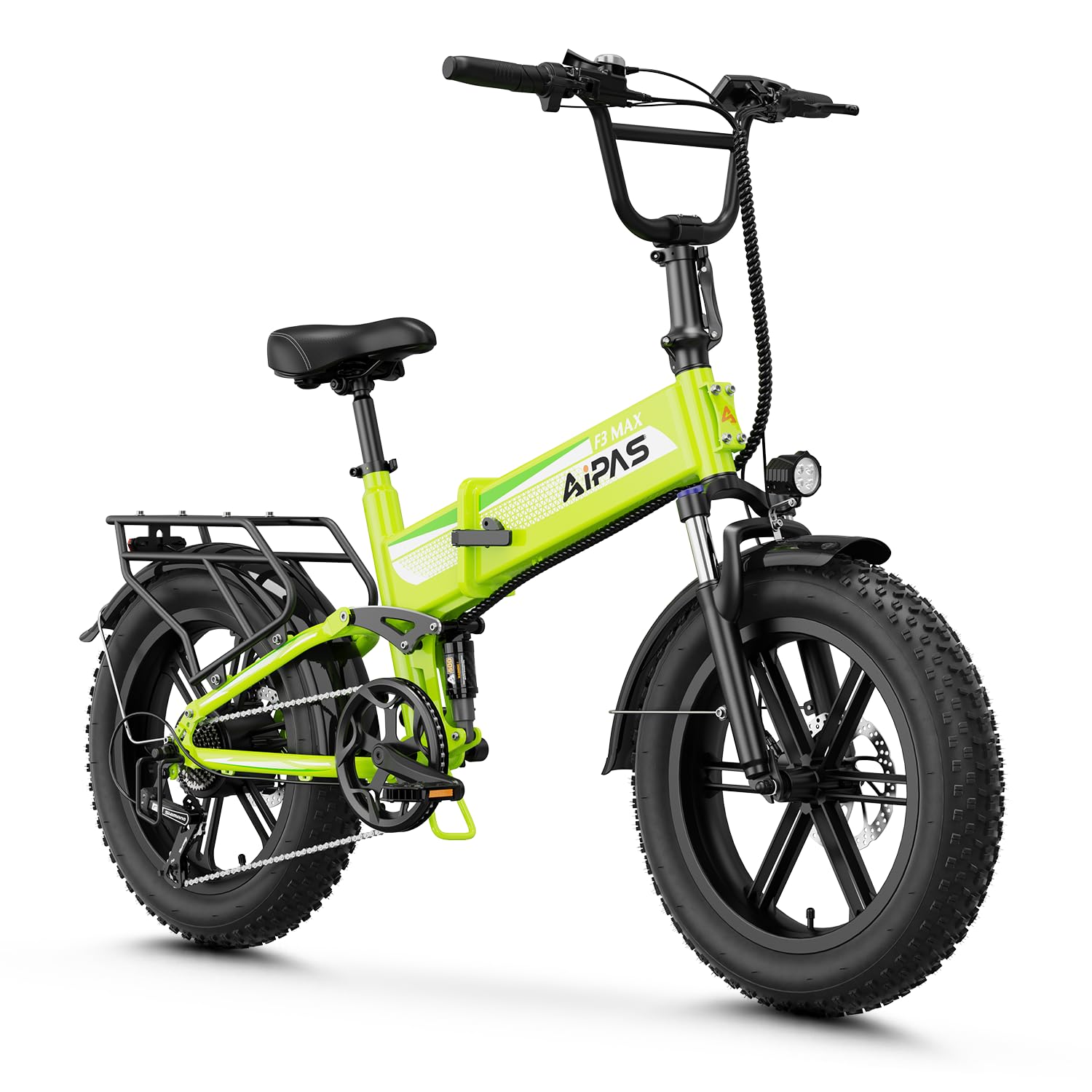
The F3 Max folds, and that single fact decides who should read the rest. If your hill commute ends at a train, a third-floor walk-up, or the back of a hatchback, a bike that folds in half solves a problem no amount of torque can. If it doesn't, you're paying for a hinge you'll never use.

The power is not an afterthought. An 1800W peak motor with 110Nm of torque is the highest torque figure anyone here quotes, and Aipas claims a 25-degree climb rating with 0 to 20 mph in five seconds. The 48V 18Ah battery is good for 40 to 60 miles in mixed use and up to 85 in the lowest assist level.

The chassis is built for the descent as well as the climb. Full suspension with a Horst-link rear, 20 x 4-inch fat tires, and 180mm dual hydraulic disc brakes are the right pieces for a bike that goes up as steeply as it comes down, and the 500-pound maximum rider weight is the highest in this group. It has also been tested to UL 2849 by SGS, which matters on something this quick.

Two things cost you. The fold takes some wrangling to manage alone, and this is the priciest bike here. Neither is fatal when the alternative is leaving the bike at home, and that's the calculation we think buyers should make: the F3 Max earns its place on the days a rigid bike stays locked up.

Pros

  • 110Nm of torque, the most here
  • Folds for a trunk or a closet
  • 180mm dual hydraulic disc brakes
  • 500-pound maximum rider weight

Cons

  • Fold is fiddly to manage solo
  • Highest price in this group
Our verdict

We keep the F3 Max on the list because it folds — 110Nm of torque and hydraulic brakes in a package that fits a trunk.

Check Latest Price
6

Heavy Riders

TST R004

84 /100
LBD Score Excellent

Key details

Motor
750W rated, 1500W peak
Battery
48V 15Ah (720Wh)
Gearing
7-speed
Max Rider Weight
450 lb
View on Amazon

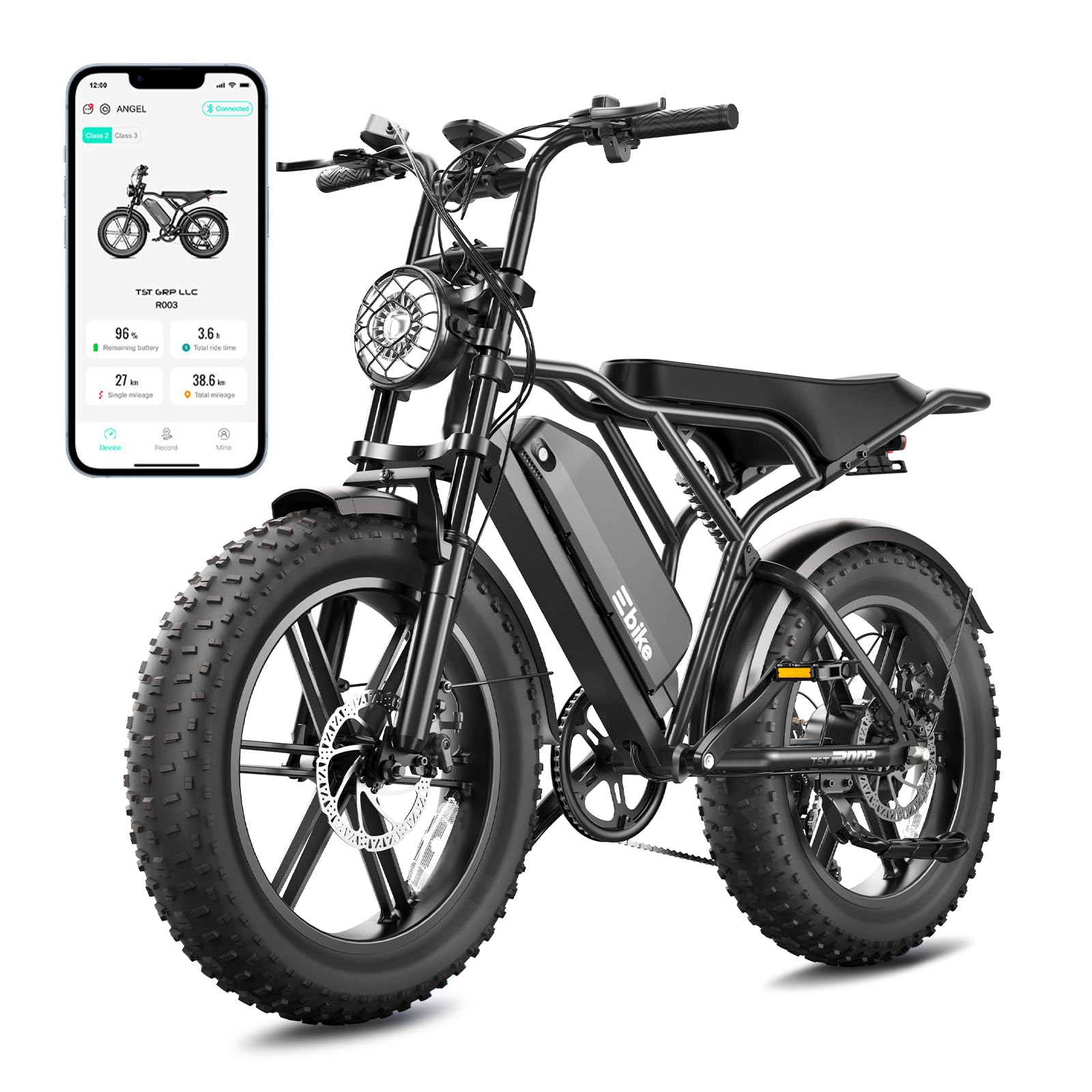
A 450-pound maximum rider weight is what puts the R004 on this list, and it's a real rating on a bike with a 750W-rated motor that peaks at 1500W, a 720Wh battery, and an iron frame. Only the Aipas is rated higher. If other listings have told you that you're over the limit, this one probably hasn't.

What we rate is the load-carrying composure. Dual suspension and 20 x 4-inch tires soak up rough pavement under a heavy rider, where a lighter frame feels nervous, and the seven-speed rear with a twist-grip shifter is simple enough to work with gloves on. What gives us pause is the braking: linear-pull rim brakes on a bike rated to 450 pounds, on a descent, is the one line on this spec sheet that doesn't add up. Every other pick here stops with discs.

Range is the other thing to plan around. The 60-mile figure assumes pedal assist on flat ground, and a rider who leans on the motor up a long grade will see considerably less; the pack can give out well before the claim on a route with real climbing. Plan the longest loop around that, not around the brochure number.

Pros

  • 450-pound maximum rider weight
  • 1500W peak from a 750W-rated motor
  • Dual suspension and 20 x 4 tires
  • 720Wh removable battery

Cons

  • Linear-pull rim brakes on a 450-pound bike
  • 180-day warranty, the shortest here
Our verdict

We recommend the R004 for riders who need the 450-pound rating, since it pairs that capacity with a 1500W peak motor and dual suspension.

Check Latest Price
7

Maximum Torque

Jasion YR20 Pro

80 /100
LBD Score Excellent

Key details

Brakes
Dual hydraulic disc
Torque
93 Nm
Battery
52V 20Ah (1040Wh)
Peak Motor Power
3000W
View on Amazon

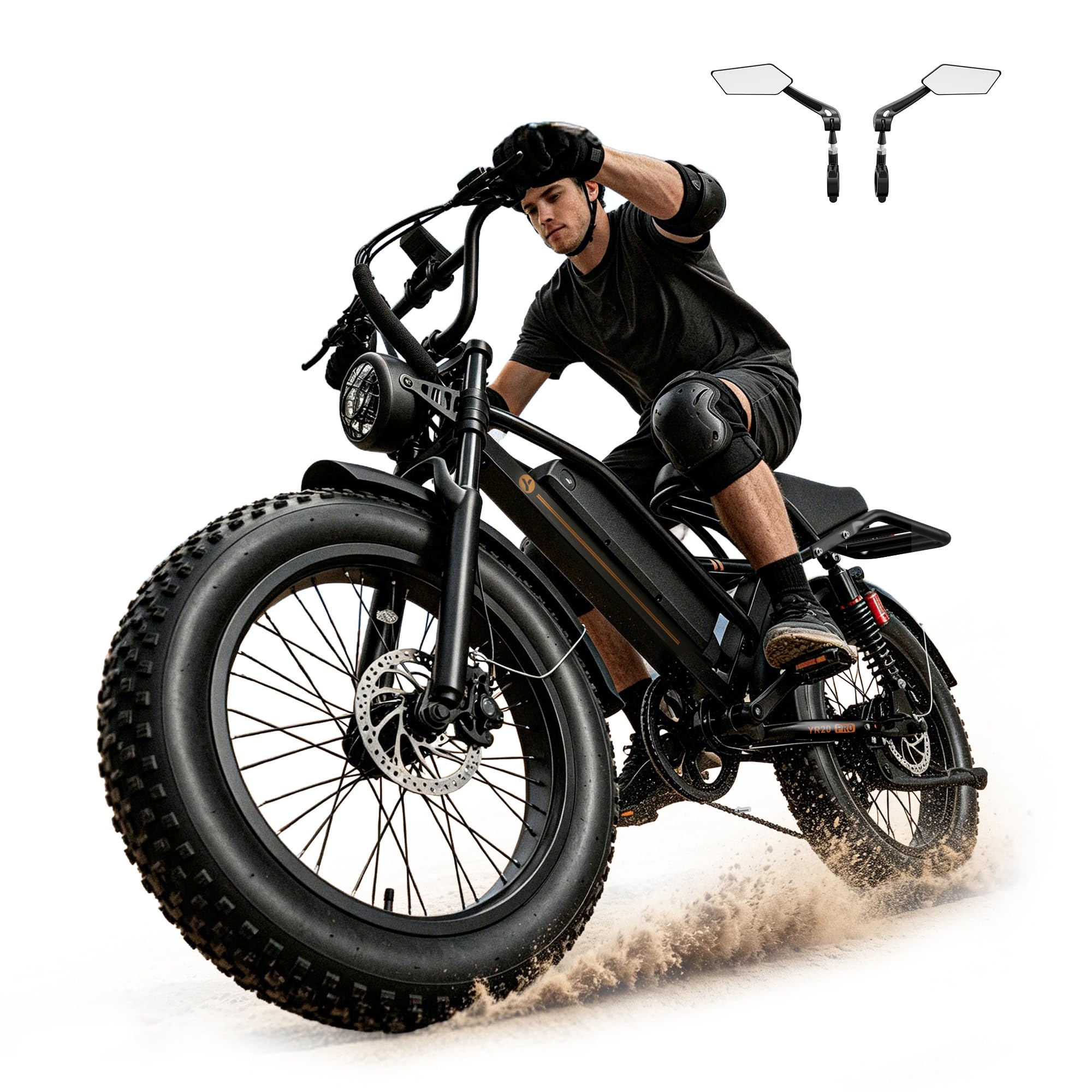
Three thousand watts of peak power and 93Nm of torque are the biggest numbers anyone here quotes, and they're why this Jasion can be the right answer for the steepest driveway in the group. The rest of the sheet reads like a small motorcycle too: a 52V 20Ah battery, full suspension, and hydraulic discs at both ends.

It mostly behaves like one. Five riding modes include a throttle setting with cruise control, turn signals and mirrors come in the box, and the 20 x 4-inch tires and dual suspension make rough pavement feel smoother than it has any right to. At 330 pounds of maximum rider weight, though, it's rated for fewer riders than the heavy-duty bikes here.

The catch is the pack. Battery behavior is the least consistent part of this bike's story, and a pack that stops holding charge well before the claimed life is the failure to watch for. The 90-mile figure is a low-assist, flat-ground number; at the speeds this thing is capable of, plan on a fraction of it.

Where that leaves us: the YR20 Pro earns a place for a rider who wants the most torque here and will accept a battery that needs watching. The turn signals and mirrors are the detail we didn't expect to care about, and on a fast descent in traffic they're the difference between signaling and hoping.

Pros

  • 93Nm of torque for the steepest grades
  • 1040Wh battery, the largest here
  • Full suspension and hydraulic disc brakes
  • Turn signals and mirrors included

Cons

  • Battery charge can fade earlier than claimed
  • 330-pound maximum rider weight
Our verdict

93Nm of torque and the biggest battery here make the YR20 Pro our choice for the steepest grades, with hydraulic discs for the way back down.

Check Latest Price
8

Short City Climbs

DTTZH F6

85 /100
LBD Score Excellent

Key details

Tires
20 x 4 in
Battery
48V 15.6Ah
Peak Motor Power
2000W
Safety Certification
UL 2849
View on Amazon

Tap a card on the frame and the F6 wakes up. Keyless start sounds like a gimmick until you're wearing gloves in a cold parking lot, and the four-digit backup code means you can hand the bike to a family member without handing over a key.

The hardware is reasonable for the money: a 2000W peak motor, a 48V 15.6Ah removable pack with 3A charging, full suspension, and one-piece 20-inch wheels on a 7-speed rear. The one-piece rims are the detail worth noticing — fewer spokes to true and a wheel that holds its shape on potholed streets.

Where it lands for us is a city bike that happens to climb. Twenty-inch wheels and a 15.6Ah pack are fine for rolling streets and short steep pitches; on a long ascent the motor runs out of enthusiasm before the bike does. For a commute with one nasty ramp in it, that's a fair trade for the keyless convenience and the budget price.

Pros

  • Keyless NFC start with a backup code
  • Full suspension on one-piece 20-inch wheels
  • 2000W peak power at a budget price

Cons

  • Top speed can fall short of the claim
  • Battery can stop accepting a charge
Our verdict

For short steep pitches on a city commute, we like the keyless start, full suspension, and 2000W of peak assist at a budget price.

Check Latest Price

How We Tested the Best Electric Bikes for Hills

We started by pulling together the e-bikes shoppers actually cross-shop for hill-heavy riding—models with removable batteries, fat or knobby tires, and enough gear range to matter—then filtered out anything with a suspiciously small battery for its claimed range or a price that didn't match the parts list. That left eight bikes, which we rode over nine months on morning commutes, weekend gravel loops, and grocery runs. The main loop included a half-mile climb at a 10 percent grade, a rolling route with 6 to 8 percent rises, and a short kicker that forced us into the lowest gear.

Assembly happened at a workbench, not a bike shop: we unboxed each one, timed the build with basic tools, and noted whether the brakes and derailleurs needed adjustment out of the box. On the hill loop, we paid attention to speed—how fast the motor responded when we needed a burst to clear a rise, and whether the bike held speed on the descent without feeling twitchy. Ride quality came down to how the suspension and tires handled cracked pavement, gravel, and roots, and build quality showed up in things like rattles, loose bolts, and brake rub after a few weeks.

Battery life got tracked on repeated climbs with a mix of assist levels, and we noted how much range disappeared on a hill-heavy route versus a flat one. Durability meant rechecking torque on bolts, listening for new noises, and watching for rust or wear on the battery mount. Appearance mattered too—we looked at paint, weld quality, and whether the bike looked like something you'd want to leave parked outside a coffee shop. Value was the last filter: we asked whether the bike's parts and performance justified its price after the honeymoon phase, not just on the first ride.

How to Choose an E-Bike for Hills

Torque and peak watts: what actually pulls you up

Peak wattage is the number on the box, and it's the one that gets stretched hardest. What you feel on a grade is torque delivered at low motor speed, and how long the battery can sustain it. A 2000W peak motor on a 720Wh pack will haul a heavy rider up a short pitch; the same motor with 998Wh behind it keeps pulling on the third pitch. Where a maker states torque, use it — the Aipas F3 Max quotes 110Nm, the Jasion YR20 Pro 93Nm.

Check the maximum rider weight before anything else, because the ratings in this group run from 330 to 500 pounds and it's the one figure that can rule a bike out entirely.

Gears are your second motor

Hub motors drive the wheel, not the drivetrain, so gearing doesn't multiply the motor's output — it multiplies yours. That still matters on a climb: a low gear keeps your legs at a cadence the motor can assist efficiently, and it's the only way home if the pack empties. Seven speeds is the norm here; the ESKUTE M200's 21-speed is the outlier, and it's why that bike is our pick for riders who pedal. If you plan to throttle up every hill, spend the difference on battery instead.

Buy watt-hours, not miles

Range claims assume pedal assist on flat ground, and a hill route won't deliver them. Two bikes can quote figures within ten miles of each other with packs that differ by hundreds of watt-hours, because the claim depends on which assist level it was measured in. Compare watt-hours, then size the pack to the longest climb on your route rather than the longest ride.

A removable pack is worth insisting on: it lets you charge at a desk or in an apartment rather than running a cord to a garage, and most of these lock into the frame so the battery can stay with you.

Wheels, tires, and the surface you climb

Wheel diameter changes how a bike behaves when the ground is bad. A 20-inch wheel is compact and cheap to build around, but it drops into holes a 27.5-inch wheel rolls across, and the motor has to make up the difference. Tire width is the other half of the decision: 4-inch fat tires float over gravel and sand and drag on pavement, while a 2.1-inch tire on a 27.5-inch wheel is the quicker choice for a paved commute.

Match the tire to the worst surface on your route, and weigh the carried size before you buy — a 115-pound bike is a ground-floor purchase, not a third-floor one.

Brakes matter on the way down

Every climb has a descent attached, and that's where a hill bike earns or loses trust. Hydraulic discs with 180mm rotors, as on the Aipas F3 Max and the Jasion YR20 Pro, give the most control for the least hand effort on a long, steep drop, and they don't fade the way cable brakes can when you're dragging them. Cable-actuated discs are fine for rolling terrain and short descents.

Linear-pull rim brakes still turn up on heavy-duty, high-capacity frames, and they're the wrong choice if your route includes a sustained descent with weight on board.

Frequently Asked Questions

Final Verdict

The ESKUTE M200F is the bike we point to for hills: enough peak power to start on an incline, a 998Wh battery big enough to keep feeding it, and 27.5-inch wheels that roll rather than stumble. It's the safest default in this group for a commute with a grade you dread.

Change the surface and the answer changes. If your climbs are gravel and roots, the Jasion EB5 MAX's 26-inch fat tires are the better tool. If the bike has to fold into a trunk at the end of the ride, the Aipas F3 Max is the only folder here — and its 110Nm makes the hill part easy.