Best Overall
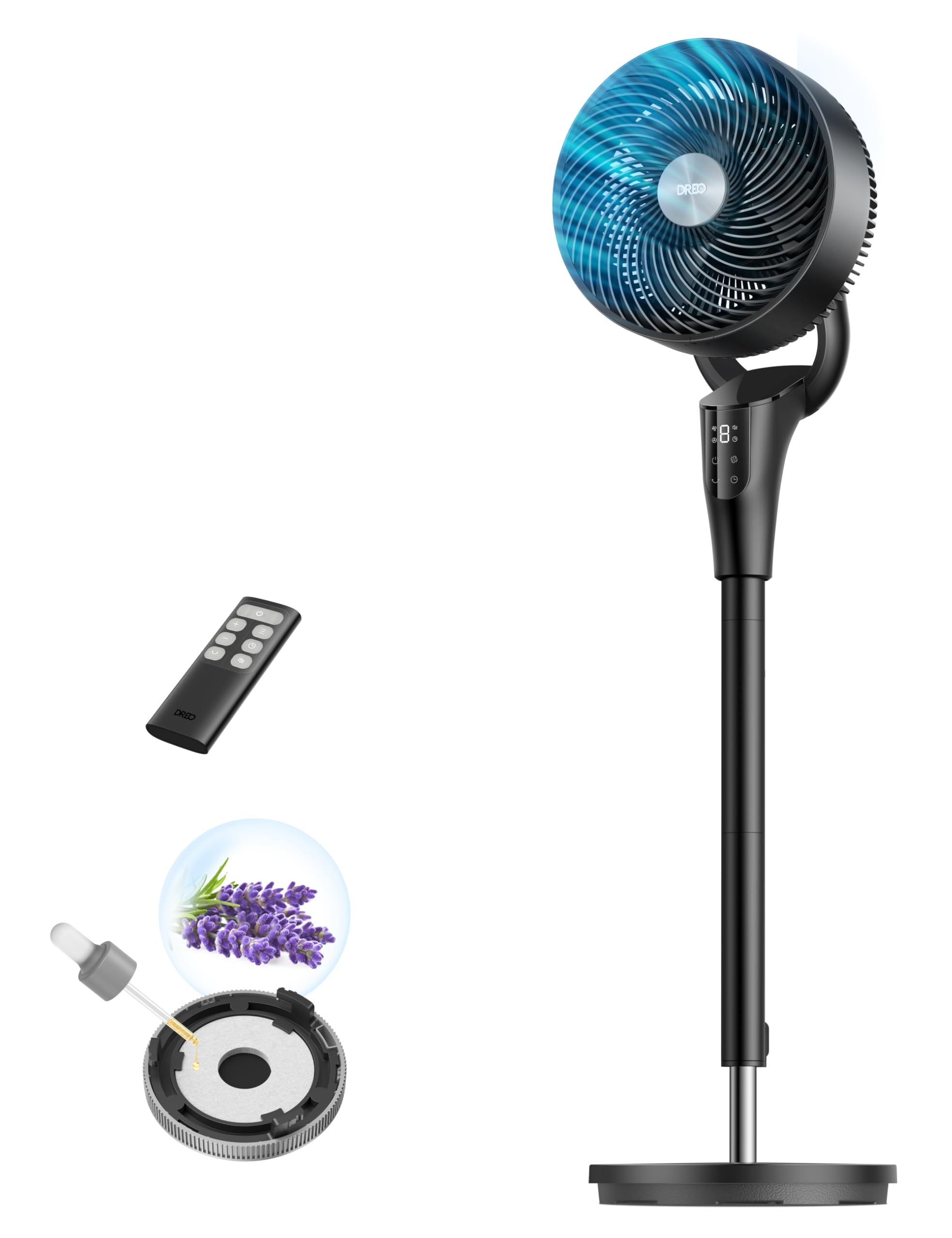
DREO Pedestal Fan
Key details
- Speeds
- 8
- Airflow
- 1000 cfm
- Noise Level
- 28.2 dB
- Height Range
- 38–42 in
The first thing we noticed about the DREO pedestal fan is how little floor space it takes for a fan that stands 42 inches tall. The base is compact, the head tilts through 105 degrees, and the height moves between 38 and 42 inches, so we could aim it at a bed, a sofa, or a standing desk without moving the whole fan. That combination is why it is our top pick: it covers a room like a pedestal fan but tucks into a corner like a tower.
Airflow is the reason to choose it over a table fan. DREO rates it at 1,000 cfm, and the eight speeds let us pick a gentle breeze for sleep and a much stronger stream for a stuffy afternoon. The 90-degree oscillation sweeps across a bed or seating area, and the natural and sleep modes change the feel rather than just the volume. We kept it on low overnight and found the 28.2 dB claim believable in a quiet room, though high speed is naturally more audible.
The controls are sensible for a bedroom fan. The remote handles power, speed, mode, oscillation, and the eight-hour timer, and the display dims enough that it did not glow across the room. We also liked that the grille comes apart for cleaning; dust on blades is the usual reason a fan starts to feel weak, and this one is easier to keep ahead of than a sealed tower.
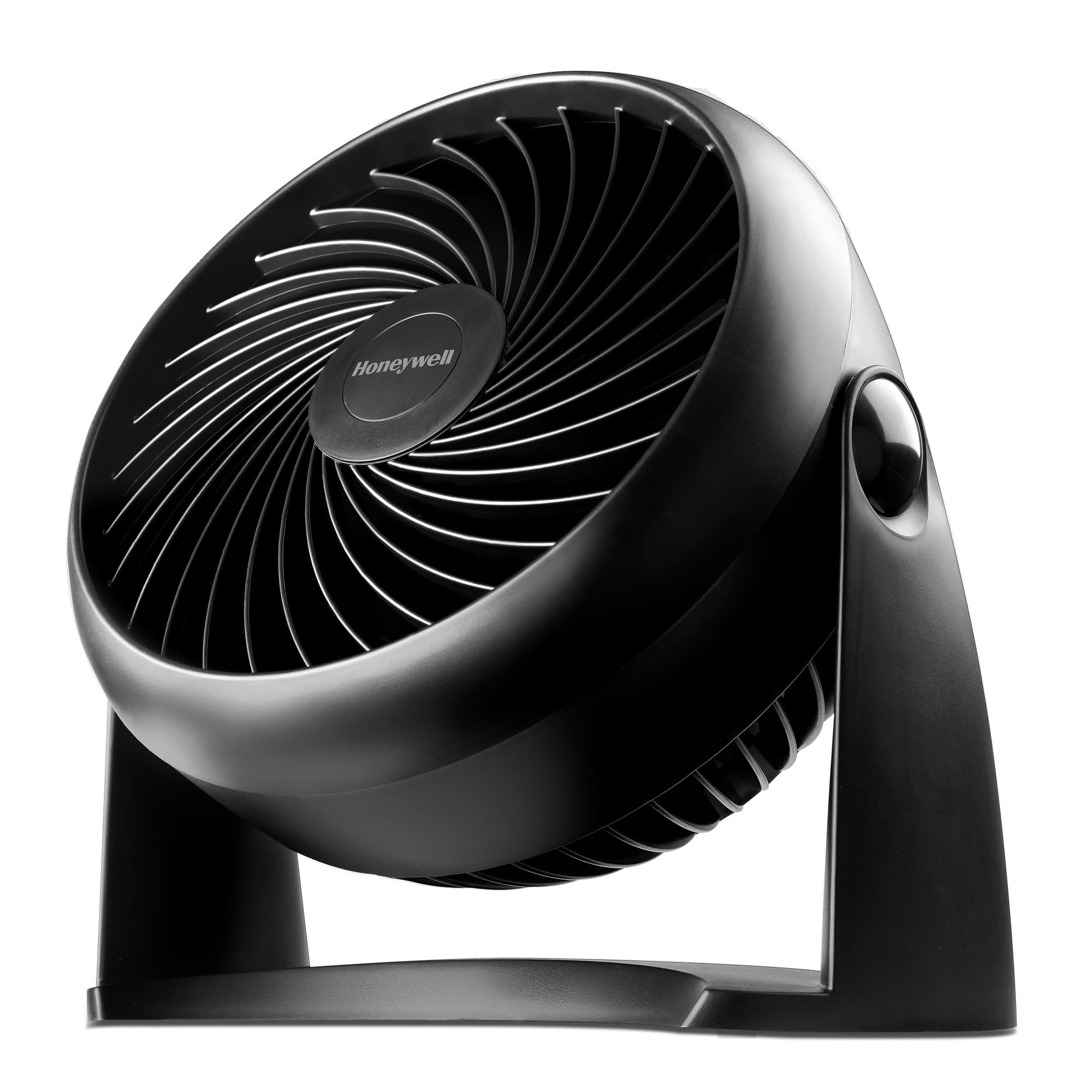
If you only need a breeze on one person at a desk, this is more fan than you need; the Honeywell HT-900 is the smaller, cheaper answer. For a bedroom, a living room, or any space where the air has gone stale, the DREO's reach and adjustability are worth the extra floor space.
Pros
- Moves up to 1,000 cfm with eight speeds
- Adjusts from 38 to 42 inches tall
- 90-degree oscillation and 105-degree tilt
- Quiet 28.2 dB low setting for bedrooms
Cons
- Costs more than basic pedestal fans
For most rooms, this is the electric fan we recommend first: it moves serious air, adjusts from 38 to 42 inches, and stays quiet enough for sleep.