Best Electric Pressure Cookers of 2026

The first few minutes of any pressure-cooker meal are the nervy ones: the pot ticks and hisses, the lid strains against its lock, and you stand a foot farther back than you need to. Then it settles into a low hum, and forty minutes later you've got chickpeas from dry that taste like they soaked overnight — one pot to wash instead of three.

We've cooked with 12 of them over the past six months, and the differences that matter rarely make the box. Preset counts climb into the teens, but you'll use three. What separates a good cooker from a frustrating one is how fast it climbs to pressure, how legible the panel is at 6 p.m. with someone asking what's for dinner, and whether the inner pot is stainless or ceramic-coated — stainless sears better and takes a scratch, ceramic releases rice cleanly and doesn't want metal utensils. The ones below got all three right.

1

Best Overall

Instant Pot Duo 6 Qt

95 /100
LBD Score Outstanding

Key details

Wattage
1000 watts
Capacity
6 quarts
Functions
7-in-1
Smart Programs
13
View on Amazon

The Instant Pot Duo is the pressure cooker we recommend first because it makes the category feel less fussy than it looks. You get pressure cooking, sautéing, rice, yogurt, steaming, slow cooking, and warming in a six-quart body, and the 13 smart programs cover the meals most people actually repeat. The control panel is busy enough to look capable but not so crowded that you need to keep the manual on the counter. That balance is why it remains the default here.

The stainless inner pot is the right call for a first cooker: it can take a hard sear, go through the dishwasher, and does not ask you to baby a coating. The lid and accessories are dishwasher-safe too, which matters more than another preset because cleanup is what decides whether an appliance earns counter space. At 14.6 pounds and about a foot in each direction, the Duo is substantial but not awkward to move when you need the counter for something else.

Where the Duo separates itself from the cheaper 6-quart options is the breadth of everyday jobs it handles without a steep learning curve. We used the sauté setting to start aromatics before closing the lid, and the manual pressure setting is there when a recipe does not match a preset. The steam release is the familiar lever-and-valve arrangement rather than a new system to learn, which is a quiet advantage if you cook with other people in the kitchen.

For a first pressure cooker or a replacement for one that never became routine, this is the one we point to. The six-quart size is the sweet spot: big enough for a batch of beans, small enough that the sauté step does not feel like heating a stockpot. The stainless pot will also look the same after a hundred batches of chili, which is more than you can say for every appliance on the counter.

Pros

  • Seven functions cover everyday cooking
  • Stainless pot is dishwasher-safe
  • 13 customizable smart programs
  • 6-quart capacity for everyday batches

Cons

  • Appliance durability is the weak spot
Our verdict

We recommend the Duo first for most kitchens: it covers the widest range of everyday pressure-cooking jobs here, and the 6-quart stainless pot is easy to live with.
Check Latest Price
2

Best for Easy Cleanup

Cosori 6 Qt

96 /100
LBD Score Outstanding

Key details

Wattage
1100 watts
Capacity
6 quarts
Functions
9-in-1
Inner Pot
Ceramic-coated
View on Amazon

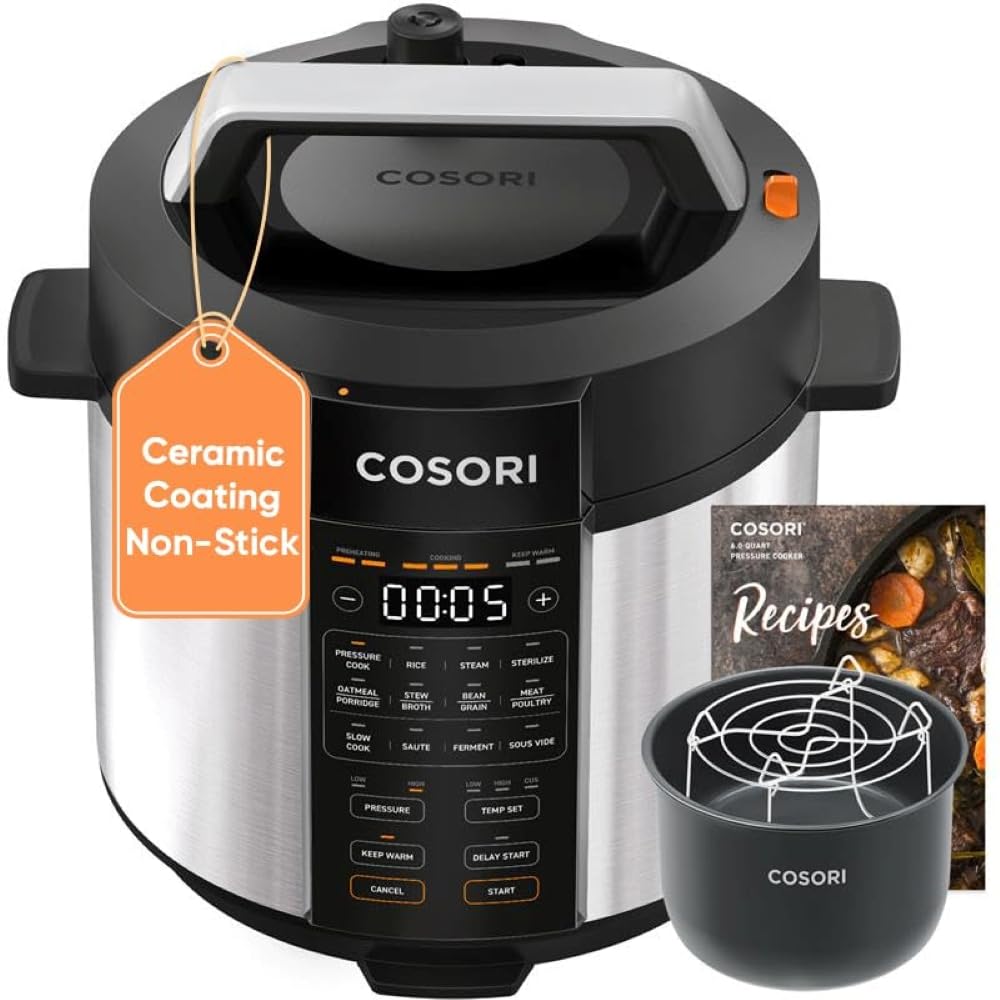
The Cosori's ceramic-coated pot is the first thing we noticed, because it changes the cleanup math. Instead of scrubbing a stainless pot after sticky rice or a bean stew, you wipe it out and move on. That makes it the pick for anyone who likes the idea of a pressure cooker but dreads the cleanup more than the cooking. The six-quart body is the same size as the Duo, but the pot material gives it a different personality.

We were pleasantly surprised by how much the Cosori packs into that familiar footprint: nine functions, 13 presets, sous vide and ferment settings, and a 1100-watt element. The extra functions are not just badge engineering; sous vide and ferment are the kind of features that let one appliance cover projects a basic cooker cannot. The seal and vent button sits away from the steam release, which is a small safety detail we appreciate when the pot is under pressure.

The lid locks with an orange-dot alignment, and the 0.5-inch widened pot gap makes the inner pot easier to lift out without wedging a fingernail under the rim. Those are the little things that separate a cooker you use weekly from one that stays in the cabinet. The stainless housing is fingerprint-resistant, so it does not look smudged the way some glossy appliances do.

The two-year warranty is the longest in this group, which gives the ceramic pot a longer safety net than the rest. If cleanup is the thing that keeps you from using a pressure cooker, the Cosori is the one we reach for. The pot is the part that changes the daily experience; the warranty is the part that makes the risk easier to accept.

Pros

  • Ceramic pot releases food easily
  • Nine functions include sous vide and ferment
  • Vent button sits away from steam
  • Two-year warranty

Cons

  • Dented units have arrived
Our verdict

The Cosori is our easy-clean pick: the ceramic pot releases sticky food, and the 9-in-1 feature set covers more than the basics.

Check Latest Price
3

Best for Searing and Serving

Ninja HyperHeat 6.5 Qt

90 /100
LBD Score Outstanding

Key details

Wattage
1200 watts
Capacity
6.5 quarts
Functions
9-in-1
Inner Pot
Removable SimpliServe
View on Amazon

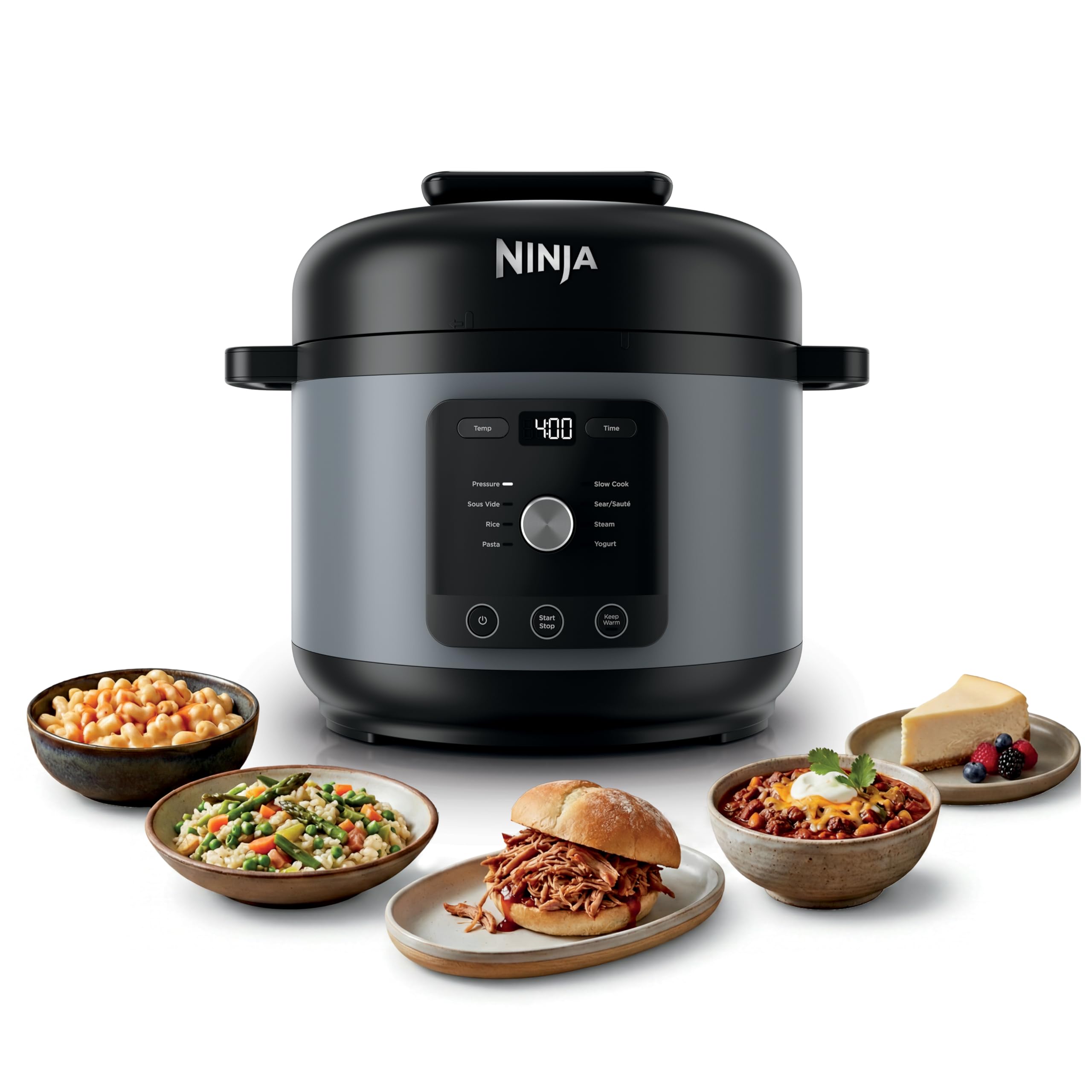
The Ninja HyperHeat's removable SimpliServe pot is the feature that sold us. The inner pot lifts out and goes to the table, so you are not transferring a hot roast into another dish or washing a serving platter. That sounds like a small convenience until you have done the two-pot shuffle on a weeknight. It is the most polished serve-from-the-pot design in this group.

Ninja pairs that pot with a wide cooking surface and a 1200-watt element, which puts it at the top of this set on searing power. We used the sear setting to brown meat before pressure cooking, and the extra surface area made it feel closer to a skillet than the narrower 6-quart cookers here. The 9-in-1 functions include sous vide, yogurt, steam, slow cook, and rice, so it covers the same ground as the others while doing the browning step better.

The 6.5-quart capacity is a useful middle ground: more room than a standard 6-quart for a big batch, but not the cabinet-hogging footprint of an 8-quart. The 14.76-inch width still takes up real counter space, so measure before you commit. It is a countertop appliance, not a stash-it-away one.

The reversible rack is the only accessory in the box, so add a steamer basket if steamed vegetables are a regular side. The SimpliServe pot is the part that earns its counter space: it turns the cooker into a serving vessel, not just another pot to wash. That is a small luxury, but it is the one we notice every time we skip the serving dish.

Pros

  • Removable pot goes from cooker to table
  • Wide surface sears before pressure cooking
  • 1200-watt element heats quickly
  • 6.5-quart capacity fits family meals

Cons

  • Heavy at 15.9 pounds
Our verdict

Choose the Ninja if you want to sear and serve in one vessel; its removable pot and wide cooking surface make it the most polished cooker here for one-pot meals.

Check Latest Price
4

Best Budget

COMFEE' 6 Qt

92 /100
LBD Score Outstanding

Key details

Presets
14 programmable
Wattage
1000 watts
Capacity
6 quarts
Inner Pot
Ceramic nonstick
View on Amazon

Value does not have to mean a short feature list, and the COMFEE' proves it. The six-quart cooker has a ceramic nonstick inner pot, 14 programmable presets, and a 24-hour delay timer, which is the feature that makes it useful on a schedule. Load it before work, set the delay, and dinner is ready when you walk in. That is a lot of practical utility in a compact body.

The manual controls are there when you want to ignore the presets. The 1000-watt element is standard for a six-quart cooker, and the pot comes with a useful starter kit: spoon, ladle, measuring cup, steam rack, condensation cup, and cord. The nonstick pot is the easy-clean part; treat it more gently than stainless and it will stay that way. We found the ceramic surface especially welcome after a rice night, when a stainless pot would need a soak.

Safety is the other place COMFEE' does not cut corners. The lid lock, overheat protection, and automatic pressure release are the features you want on a budget cooker, and the 24-hour timer is genuinely useful rather than a box-check. It is not the most feature-dense cooker here, but it covers the jobs most weeknight cooks need.

The 12.2-inch width leaves room on a small counter, and the starter accessories mean you can cook the first meal without another shopping trip. If you want the essentials without paying for sous vide or a serving pot, this is the one we point to. The delay timer is the part that changes how often you use it.

Pros

  • 24-hour delay timer
  • 14 programmable presets
  • Ceramic pot is easy to clean
  • Useful accessory set included

Cons

  • Preset menu is crowded
Our verdict

The COMFEE' is the budget pick we trust for weeknights, with a 24-hour timer, a ceramic pot, and enough presets to cover dinner without extras you will not use.

Check Latest Price
5

Best Large-Capacity Value

Sweetcrispy 8 Qt

88 /100
LBD Score Excellent

Key details

Presets
12
Wattage
1200 watts
Capacity
8 quarts
Functions
16-in-1
View on Amazon

Eight quarts for a budget price is the reason the Sweetcrispy exists. It gives you the big-pot capacity for batch cooking and family meals without moving into premium territory, and the 1200-watt element gives it enough power for a pot this size. The 16-in-1 label is marketing, but the functions underneath it, including pressure cook, slow cook, rice, steam, sauté, yogurt, and warm, are the ones you will actually use.

The ceramic inner pot is a nice surprise at this end of the group. It resists sticking and scratching, and it is dishwasher-safe, so cleanup after a bean or rice night is quick. The 12 presets are easy to follow, and the keep-warm setting makes it more flexible than a bare-bones cooker. We also appreciate the measuring cup and rice scoop in the box, small as that sounds.

The 8-quart body is 14.57 inches wide and 13.78 inches tall, so it takes up real estate on the counter. That is the trade-off for cooking a large batch without a second pot. The 14.4-pound weight is manageable for a big cooker, but this is not an appliance you will tuck into a drawer. For a family that regularly fills a pot, the extra capacity is the point.

The 14.57-inch width is the number to check before you clear counter space. The extra capacity is worth it if you routinely cook for a crowd or prep freezer meals. The ceramic pot is what keeps the cleanup from becoming the chore.

Pros

  • 8-quart capacity for large batches
  • 1200-watt element for a pot this size
  • Ceramic pot resists sticking
  • Dishwasher-safe lid and sealing ring

Cons

  • No steam rack included
Our verdict

The Sweetcrispy is the affordable way into an 8-quart cooker, and its 1200-watt element and ceramic pot keep it from feeling like a bare-bones big pot.

Check Latest Price
6

Big Stainless Batches

Midea 8 Qt

89 /100
LBD Score Excellent

Key details

Wattage
1200 watts
Capacity
8 quarts
Functions
12-in-1
Inner Pot
Stainless steel
View on Amazon

Stainless steel and eight quarts are the two things the Midea gets right. It puts a big, metal-on-metal cooking pot on the counter without asking you to baby a nonstick coating, and the 1200-watt element gives it enough power for the size. If you like to sauté hard and scrub without worrying about a coating, that matters more than another preset.

The 12-in-1 functions cover pressure cook, sauté, steam, slow cook, rice, yogurt, and more, and the 24-hour delay timer gives it the same set-and-forget flexibility as the smaller picks. The REALSAFE system includes pressure limit, over-temperature, and overpressure release, which is the kind of safety package we want on an 8-quart pot. The stainless pot also avoids the nonstick-care question entirely.

The DIY manual setting lets you set time and pressure directly, which is useful once you know your own recipes. The stainless pot and lid seal with a reassuring turn, and the pot is dishwasher-safe, so the cleanup routine stays simple. That manual mode is the feature we reach for after the first week, because it lets you cook by time rather than by label.

At 14 inches in each direction and 14 pounds, it is a countertop appliance rather than a cabinet one, so measure before you commit. For big batches of beans, stews, or rice with a stainless pot, it is a solid alternative to the Sweetcrispy. The 8-quart capacity is the reason to choose it; the stainless pot is the reason to keep it.

Pros

  • Stainless pot avoids nonstick care
  • 8-quart capacity for big batches
  • 1200-watt element
  • 24-hour delay timer

Cons

  • Preset menu requires repeated button presses
Our verdict

For big batches in a stainless pot, the Midea gives you 8 quarts, 12 functions, and a manual mode that skips the preset menu.

Check Latest Price
7

Knob-Control Cooking

KINGBULL 8 Qt

84 /100
LBD Score Excellent

Key details

Wattage
1200 watts
Capacity
8 quarts
Controls
Knob and buttons
Functions
14-in-1
View on Amazon

The Kingbull is the one for cooks who want a physical knob. Instead of tapping a glass panel, you turn the dial to scroll programs and use the buttons to adjust time and pressure. That is a small interface choice with a big effect on how the cooker feels, especially if you have used a stovetop pressure cooker and want something that behaves more like an appliance and less like a tablet.

The 8-quart pot and 1200-watt element put it in the same big-batch class as the Midea and Sweetcrispy, and the 14-in-1 functions include a DIY mode and keep-warm setting. We were struck by how much the knob simplifies navigation once you learn the order of the programs. The control layout feels more like a kitchen appliance than a touchscreen gadget.

The learning curve is real. The knob-and-button logic is not as immediately obvious as the Duo's panel, and you will want to keep the manual nearby for the first few meals. The 8-quart pot is the same size as the Midea's, but the interface makes it feel like a different machine.

The LCD is the part that makes the knob system easier to live with than a bare dial: it shows time, pressure status, and settings without making you decode a row of icons. That readability keeps the old-school control style from feeling old-school in a bad way. For a cook who wants a dial rather than a touch panel, it is the detail that makes the difference.

Pros

  • Physical knob simplifies program selection
  • 8-quart capacity for batch cooking
  • 1200-watt element
  • Clear LCD shows time and pressure

Cons

  • No recipe book included
Our verdict

The Kingbull suits cooks who prefer a dial to a touch panel, and its 8-quart pot makes it a useful big-batch alternative.

Check Latest Price

What Six Months of Pressure Testing Looked Like

We started by pulling current models from the names that dominate this category and the smaller ones chasing them, then filtered hard: 6- and 8-quart sizes, a real sauté function, and a manual pressure setting for anyone who doesn't want to be told what to cook. Twelve made the cut and cooked with us for six months — weeknights, lazy Sundays, and one 11 p.m. pot of beans I'd forgotten to soak.

Every cooker got the same workload: a pound of unsoaked chickpeas, timed from cold start to the moment the float valve rose and again through a full natural release; a three-pound chuck roast seared in the pot and then pressure-cooked; pot-in-pot rice; and a batch of yogurt incubated overnight. We noted whether the sauté actually browned or just steamed, how violent the quick release was, and how loud the thing sat on the counter next to a phone call.

Then we handed each one to someone who had never used a pressure cooker, said nothing, and watched how long it took them to reach manual high pressure, whether they found the release valve without hunting, and whether the display was readable from standing height. At the one-, three-, and six-month marks we checked sealing rings for stretching and trapped odor, ran a fingernail over the coating, and tested whether the lid lock still felt tight. Value came down to one question: did the extra presets and accessories earn their cabinet space, or were they clutter with a manual?

How to Choose an Electric Pressure Cooker

Start with capacity, not the preset count

Capacity is the first decision because it shapes everything after it, from how often you lift the pot to whether you have room for it on the counter. A 6-quart cooker is the easier default for two to four people and leftovers; an 8-quart model earns its space when you batch cook, freeze meals, or regularly fill a big pot. Bigger is not automatically better: an 8-quart body is wider, heavier, and harder to store. Match the pot to the batch you actually make most weeks.

Choose a pot material you will maintain

Stainless and ceramic nonstick are the two useful choices here, and they trade cleanup against care. Stainless takes a hard sear, tolerates metal utensils, and goes in the dishwasher; it can also hold onto starchy or sugary food until it soaks. Ceramic nonstick releases rice and beans more easily and wipes clean, but it rewards gentler utensils and washing. If you brown meat in the pot before pressure cooking, stainless is the more forgiving long-term surface. If cleanup is the barrier to using the cooker, ceramic is worth the compromise.

Make the controls fit your cooking

A long preset list is less useful than a clear manual mode and a delay timer. Presets are convenient when they match your routine, such as rice, beans, yogurt, or oatmeal, but they become a scroll wheel when you cook by feel. Look for a direct way to set time and pressure, plus a keep-warm or delay function if you want dinner waiting when you get home. The Midea's DIY mode and the COMFEE's 24-hour timer are more useful in daily life than another preset you never touch.

Check the steam release and the footprint

The steam release is the part you interact with under pressure, so it deserves a look before you buy. A clear seal and vent control and a lid that locks with an obvious alignment are worth more than another cooking mode; they make the cooker less intimidating for everyone in the kitchen. Then check the footprint. A 6-quart model can be easier to keep out; an 8-quart model may take a dedicated counter spot. Measure the width, height, and clearance for the lid before you clear space.

Treat durability as part of the recipe

Pressure cookers combine heat, steam, and electronics, and that makes durability a real shopping criterion rather than a footnote. Look for a warranty you can live with, a pot and lid that come apart for cleaning, and a design that does not depend on a fragile latch or a hard-to-replace seal. The Cosori's two-year warranty is the longest here; the Instant Pot Duo's one-year coverage is more typical. Whatever you choose, register the cooker and keep the receipt.

Frequently Asked Questions

Final Verdict

For most kitchens, the Instant Pot Duo 6 Quart is the electric pressure cooker we recommend first: it covers the widest range of everyday jobs here, and the six-quart stainless pot is easy to live with. Choose the Cosori if cleanup is the sticking point, the Ninja if you want to sear and serve in the same vessel, or the COMFEE' if you want the essentials for less. The Sweetcrispy is the large-capacity value pick when an eight-quart pot is the priority.