Best Electric Guitars for Kids of 2026

A kid who asks for an electric guitar wants two things at once: something that looks and sounds like the real thing, and something their hands can actually get around. Most children's guitars give you one or the other. The toy-aisle ones are light but sound like a ringtone; a full-size Stratocaster is out of reach for a seven-year-old. A short-scale guitar — roughly three-quarter size — with a small amp in the box closes that gap, putting real strings under small fingers at a volume the whole house can live with.

These kits are won or lost on the bundle. A strap that slips, a bag zipper that fails on the way to a lesson, strings that drift sharp the moment a kid strums hard — any one of those kills the excitement faster than a wrong note, which is why the clip-on tuner in the box counts for more than wattage. We've spent six months with ten kits and a rotating cast of players aged six to eleven.

Some picks below suit a kid who has never held a guitar; others are better for someone already taking lessons. All of them are playable on day one.

1

Best Overall

Donner DSJ-100 30-Inch Kit

90 /100
LBD Score Outstanding

Key details

Bridge
Fixed hardtail
Weight
5.97 lb
Amplifier
Clean and distortion channels
Scale Length
500 mm
View on Amazon

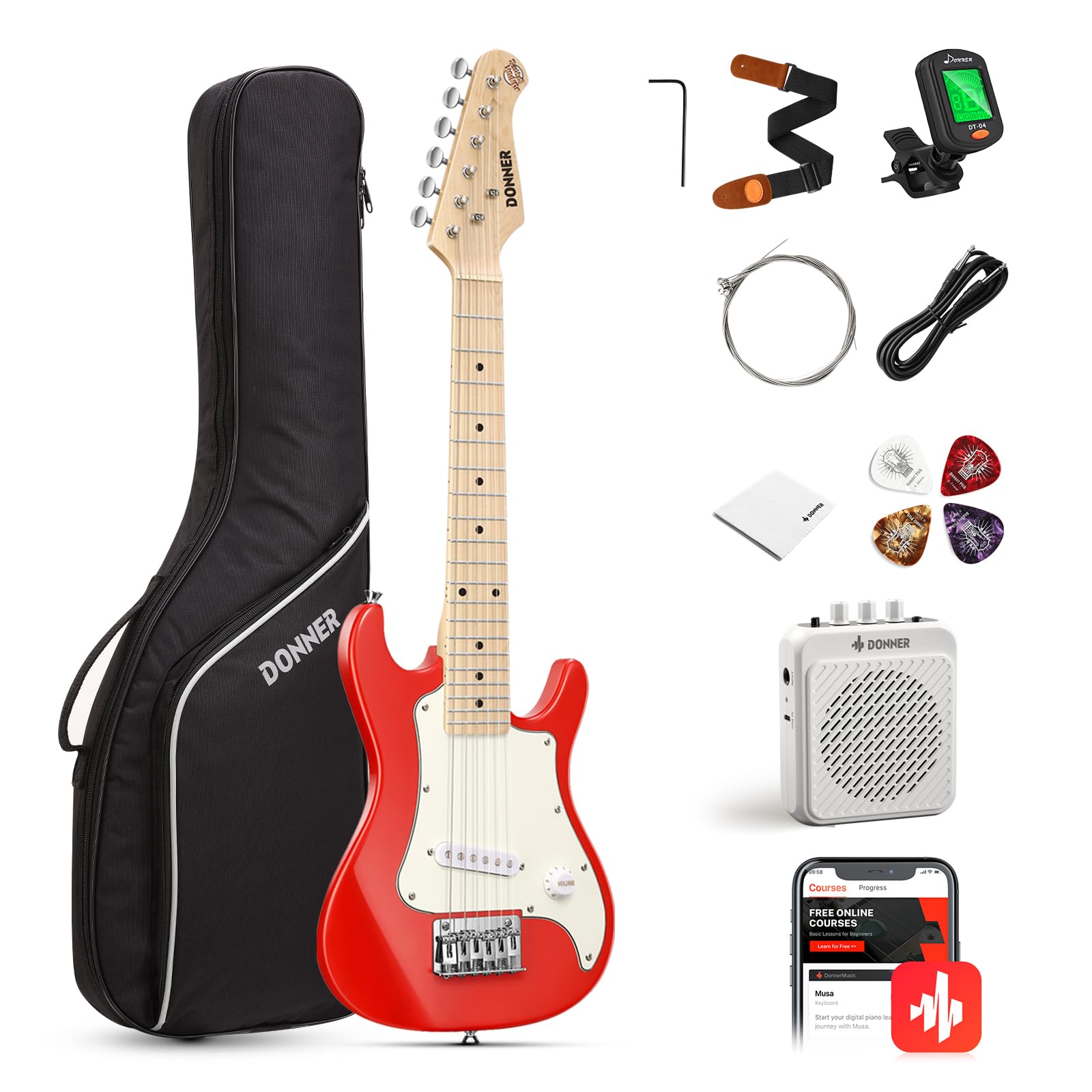
The number that matters first with a kids' guitar is not on the headstock — it is the weight on the strap. At 5.97 pounds, the DSJ-100 is light enough for a seven-year-old to hold in playing position through a half-hour lesson, and its 500 mm scale, about 19.7 inches with a 35 cm neck, puts the first fret within reach of a small hand instead of at the end of a stretched arm. That pair of figures is why it is our top pick: the guitar fits before it flatters.

The rest of the build is deliberately unremarkable, which is a compliment. Poplar body, maple neck and board, one single-coil pickup, and a fixed hardtail bridge with no tremolo arm for a beginner to lean on and detune. The edge where the forearm rests is rounded rather than sharp, a small thing a kid notices in the second week rather than the first. The single pickup is the honest limitation: there is no five-way switch to explore, so a child who gets curious about tones will want something else before they outgrow the neck.

Out of the box you get a padded 600D gig bag, a tuner, a strap, a cable, picks, a spare set of strings and a set of lessons. The bag is backpack-grade fabric with real padding, and we rate it above the amp that ships beside it. That amp has clean and distortion channels and is fine for a first riff, but it is a small speaker, and chords come out boxy and occasionally harsh. Here is what makes that easy to live with: the guitar uses a standard 1/4-inch jack, so it plugs into any amp, a headphone amp, or an uncle's cast-off, and the guitar keeps up long after the little amp has been retired to a shelf.

Pros

  • Light 5.97 lb body on a short scale
  • Complete kit with bag, tuner and spare strings
  • Fixed hardtail bridge, no tremolo to detune
  • Standard 1/4-inch jack takes any amp

Cons

  • One single-coil pickup, so no tonal switching
Our verdict

For most kids between five and nine, this is the one: light at 5.97 pounds, scaled to small hands, and complete enough that nothing else is needed on day one.
Check Latest Price
2

Best Upgrade Pick

Squier Mini Strat Bundle

87 /100
LBD Score Excellent

Key details

Bridge
Hardtail
Pickups
Three single-coil, five-way switch
In The Box
Amp, cable, tuner, strap, picks, DVD
Scale Length
22.75 in
View on Amazon

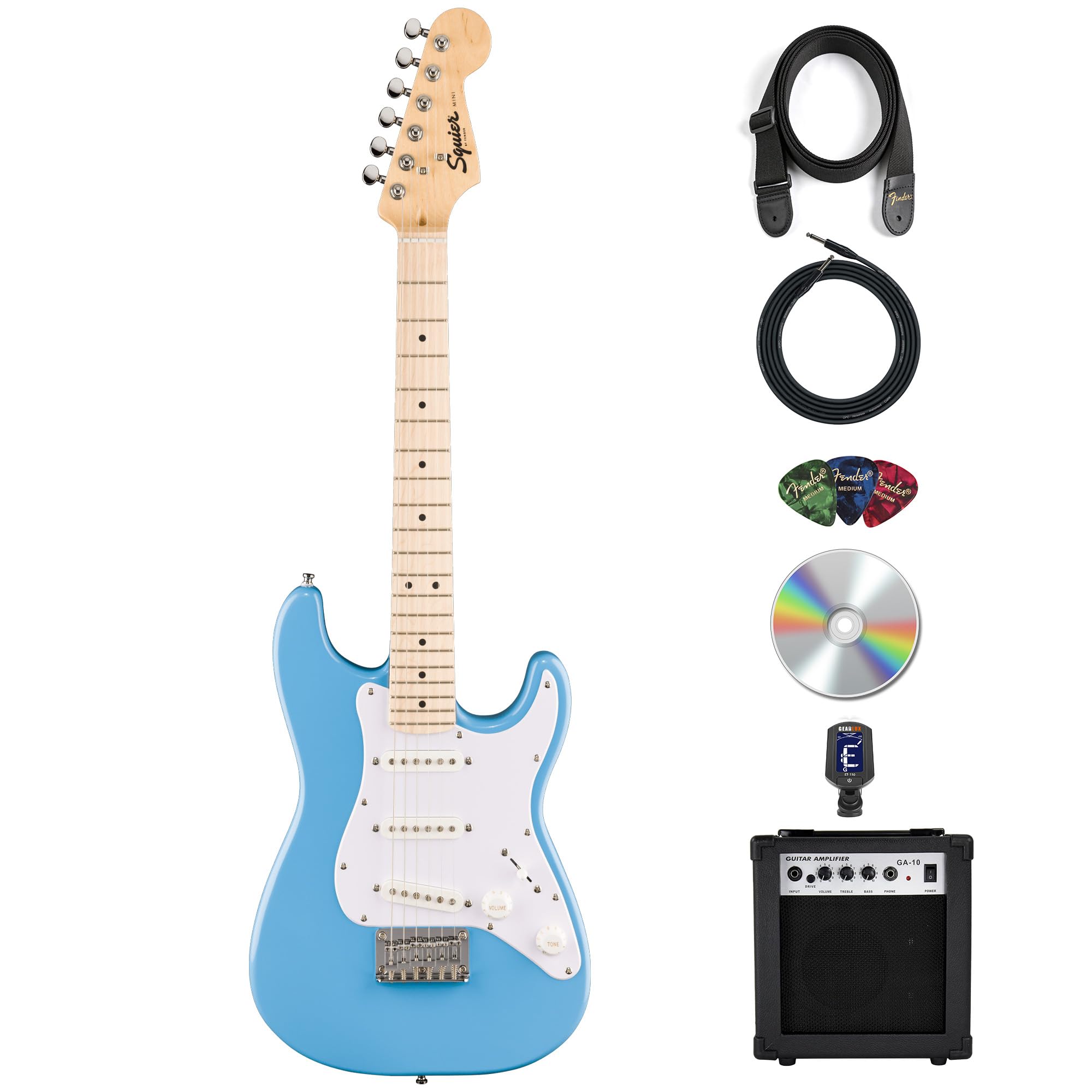
Put the Squier Mini Stratocaster next to the thirty-inch kits and the difference is plain: this is a guitar that happens to be small rather than a small guitar-shaped object. The 22.75-inch scale, poplar body, maple neck and three single-coil pickups with five-way switching are the same recipe as Squier's full-size Strats, and the bridge is the hardtail version with nothing on it to knock out of tune.

That is what makes it our upgrade pick rather than the default. Its scale runs longer than the Donner's 19.7 inches — the right call for a nine- or ten-year-old with longer arms, the wrong one for a six-year-old who will have to reach. What the reach buys is a guitar that still fits in three years, plus a five-way switch that lets a beginner hear the difference between a warm neck pickup for chords and a bright bridge pickup for a riff. If your kid has asked for lessons rather than merely agreed to them, this is the one we point at.

The bundle is thinner than the guitar deserves. An amp, cable, tuner, strap, picks and an instructional DVD are all in the box, but the amp is a small home-practice unit rather than something a player keeps, and there are no spare strings in the list. Set against that: a two-year warranty, the longest of any kit here, and a conventional build a shop can adjust the way it would an adult Strat — action, intonation, the usual — so the guitar can grow with the player instead of being replaced.

Pros

  • Genuine 22.75-inch short-scale Strat
  • Three single coils with five-way switching
  • Hardtail bridge and standard parts
  • Two-year warranty, longest in this group

Cons

  • Most expensive kit in this group
  • No spare strings in the bundle
Our verdict

Buy this when the child is nine or older and serious — the 22.75-inch scale and standard Strat parts outlast a beginner kit, and the money buys a guitar worth setting up.

Check Latest Price
3

Best Practice Amp

LyxPro 30-Inch Starter Kit

86 /100
LBD Score Excellent

Key details

Bridge
Tremolo
Pickups
Three single-coil
Amplifier
20 W, headphone jack, aux in
In The Box
Gig bag, tuner, strap, cable, picks, strings
View on Amazon

What separates the LyxPro kit from the other thirty-inch guitars here is the amplifier: a 20-watt box with a headphone jack and an aux input, so a kid can practice silently at nine at night or plug in a phone and play along to a song. It is the only amp in this group with an aux input and one of two with a headphone jack, and for a family in an apartment that is not a small thing.

The guitar around it is a full package: a 30-inch body, three single-coil pickups, a tremolo bridge, a padded soft case, a clip-on tuner, strap, cable, two picks, a set of strings and a short instruction book, with a one-year warranty behind it. We like that the tuner comes in the box, because tuning is the skill a beginner practices most in the first month. The tremolo arm is the piece to leave alone at first — it is fun, and it is the quickest way for a beginner to knock the guitar out of tune mid-song.

Consistency is where the kit gives us pause. Of the four guitars here, this is the one where a unit most often arrives with fret buzz, a loose output jack or a knob working its way loose — small faults, all of them the sort the one-year warranty exists for, and none of them something a beginner can diagnose alone. Buy it for the amp; if the guitar is what you care about most, the Donner is the safer place to put the money.

Pros

  • 20 W amp with headphone jack and aux in
  • Clip-on tuner and full accessory set included
  • Three single-coil pickups at 30 inches

Cons

  • Tremolo bridge gives beginners another tuning variable
  • Build quality is the most uneven of these four
Our verdict

We recommend it for the amp: 20 watts, a headphone jack and an aux input make quiet practice and play-alongs possible, and the guitar is a bonus you may have to fuss over.

Check Latest Price
4

Lowest Cost

ZENY 30-Inch Kids Kit

83 /100
LBD Score Excellent

Key details

Bridge
Adjustable
Amplifier
5 W with headphone jack
In The Box
Gig bag, strap, cable, spare strings, picks, wrench
Overall Length
30 in
View on Amazon

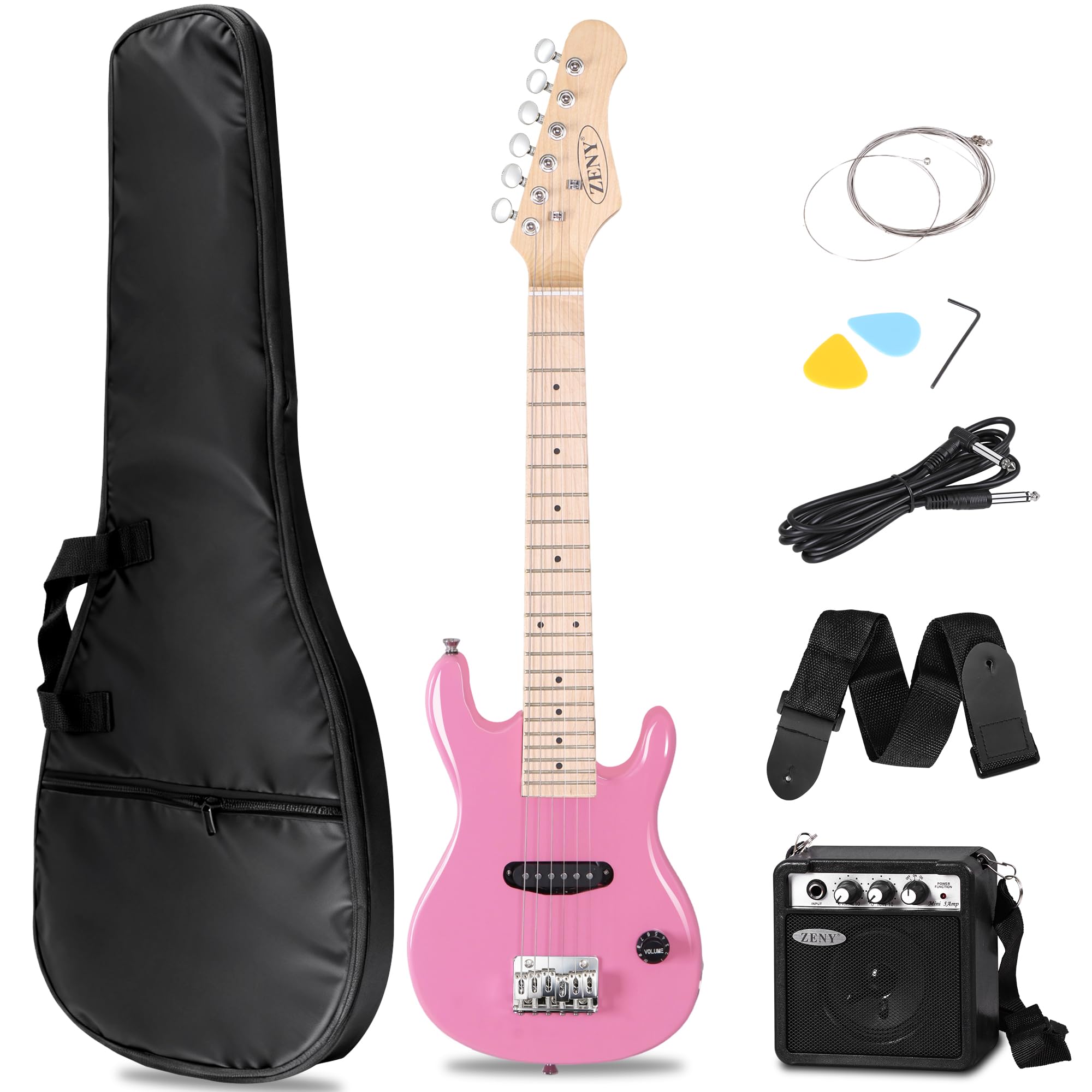
The ZENY kit is the least expensive way into a playable thirty-inch electric here, and the compromise sits in the amp rather than in the guitar. You get a solid hardwood body with a rosewood fingerboard, 22 frets, an adjustable bridge and a single pickup — the same broad recipe as kits costing more — plus a five-watt amp with volume, tone and gain controls and a headphone jack, small enough at five inches square to clip onto a belt.

Whether you end up happy comes down to that amp. It is the component most likely to arrive dead or give up early, and the guitar is not the casualty: a standard cable takes it into any amp or headphone amp. Set up properly — truss rod, intonation, fresh strings — the instrument plays like a basic but serviceable electric, and that setup is the step separating a frustrating budget guitar from a usable one. The kit ships with a gig bag, strap, cable, spare strings, picks and a wrench but no tuner, so add a clip-on. For a family testing whether the interest is real, or for a second guitar that lives at a grandparent's house, that is a fair trade.

Pros

  • Lowest-cost complete kit here
  • Amp has a headphone jack for quiet practice
  • Guitar works with any amp via standard cable

Cons

  • Bundled amp is the least reliable here
  • No tuner included in the kit
Our verdict

A fair first electric when the outlay has to stay small: the guitar is serviceable once set up, but treat the five-watt amp as a maybe and add your own tuner.

Check Latest Price

How We Tested the Best Electric Guitars for Kids

We started with the kits sold as complete packages — guitar, amp, cable, strap, and a way to tune — rather than toy instruments shaped like guitars, then narrowed by scale length and by what each box actually contained. Spare strings, a gig bag, a clip-on tuner: we noted all of it and how much of it looked like it would survive a school term, since replacing the missing pieces is where the real cost of a cheap kit shows up.

Ten kits went home with families for six months. They lived in bedrooms and living rooms, got plugged in after homework, traveled to first lessons in their gig bags, and were handed to kids between six and eleven with no instructions beyond "have a go." For size, we watched whether a smaller player could reach the low E and wrap a thumb around the neck, how the body sat against their ribs during a seated practice, and whether the strap held the guitar at a playable height for a twenty-minute session. For tuning, we tuned each guitar with its included tuner, let the kid strum hard for ten minutes, and checked again to see how far it had drifted.

Build quality showed up in the small things — sharp fret ends, an output jack that wiggled when the cable was tugged, strap buttons that let go mid-song. We ran every amp at bedroom volume and then at full, listening for hum at idle and for distortion that sounded broken rather than simply loud, and we played each guitar unplugged to hear what the kids would hear at 7 a.m. Over the months we tracked which zippers still worked, which cables crackled, and which guitars got picked up unprompted in week twenty. Value came down to how much of the box was still in use at the end.

How to Choose a Kids' Electric Guitar

Read the Scale Length, Not the Box

A 30-inch kids' guitar is measured end to end, and that figure tells you more about the gig bag than about reach. What a child's hands actually work with is the scale length, and it is where these kits differ most: the Donner lists 500 mm, about 19.7 inches, while the Squier Mini Strat, sold as a 3/4-size, measures 22.75 inches. Neither is correct — the shorter neck is easier to fret and hold, the longer one survives a growth spurt.

Weight belongs in the same calculation. The Donner's 5.97 pounds is a figure a seven-year-old can hold in playing position through a lesson, and a padded bag keeps it carryable to and from school. Our rule of thumb: short and light for five-to-eight, 22.75 inches for nine and up, and a full-size only once the child's reach has caught up with it.

The Amplifier Is Where These Kits Cut Corners

Every kit here bundles an amp, and the amp is the piece most likely to disappoint: dead on arrival, distorting, or failing within a few weeks. Wattage is a poor guide to anything. A 20-watt practice amp is louder than a bedroom needs and a 5-watt box is plenty, so check instead for a headphone jack and an aux input, which is what the LyxPro offers and what makes quiet practice and play-alongs possible.

A dead amp does not mean a dead guitar. Every guitar here takes a standard 1/4-inch instrument cable, so it plugs into any amp, a headphone amp, or a relative's cast-off. Treat the bundled amp as a bonus rather than the reason to pick a kit, and the buying gets simpler.

Tuning Hardware Is the Real Beginner Feature

A beginner spends more time tuning than playing in the first month, and that is normal — new strings stretch. What is not normal is a guitar that will not settle after a week. A fixed hardtail bridge, as on the Donner and the Squier, has no tremolo arm for a child to lean on and detune; the LyxPro's tremolo is fun for an adult and one more variable for a seven-year-old.

A clip-on tuner, included with the Donner, Squier and LyxPro kits, keeps tuning a two-minute job rather than a chore. If your kit has none, buy one before the first lesson — it does more for a beginner's ear than any pedal will.

Check the Box Before You Check Out

The accessories do more work than they get credit for. A padded gig bag matters if the guitar travels to lessons, and a 600D shell is backpack-grade fabric that will not shred in a car trunk. Spare strings and a spare cable cover the two things that actually fail, and most kits here include both.

Then look at the warranty, which is the real measure of how much faith a maker has in a child-sized instrument: one year on the Donner, LyxPro and ZENY kits, two on the Squier.

Frequently Asked Questions

Final Verdict

The Donner DSJ-100 is the kit we recommend to most families, and the reason is fit: at 5.97 pounds with a 500 mm scale and a fixed bridge, it stays out of the way of the lesson instead of becoming the lesson. The box is complete enough that nothing else is needed on day one, and the guitar is worth keeping long after the little amp starts to annoy you.

If your child is nine or older and has already asked for lessons, the Squier Mini Strat bundle is the better long-term buy — a 22.75-inch scale and standard Strat parts will outlast a first year, and the two-year warranty covers the gap. Where noise is the deciding issue, the LyxPro kit's 20-watt amp with headphones and an aux input settles it.