Best Electric Toothbrushes of 2026

The first week with an electric toothbrush can feel like a mistake: the handle buzzes, the bristles tickle, and foam lands on the mirror. Stick with it, and the right brush makes your mouth feel cleaner with less effort than a manual ever did. Over the past nine months, my team and I have brushed with 12 different electric toothbrushes, from simple rechargeables to models with enough modes to feel like a cockpit.

The number of cleaning modes matters less than how the brush handles pressure and whether its two-minute timer keeps you honest. We also tracked what you notice after the novelty fades: how many days a charge really lasts, whether the motor stayed consistent, how loud the handle hums in a quiet bathroom, and whether the vibration felt controlled or like a tiny jackhammer. We noted how clean your teeth felt after a full cycle, whether you could switch settings with one thumb, priced a year of replacement heads, and even checked whether new brush heads left a plastic aftertaste. The picks below are the ones we kept reaching for after the honeymoon phase.

1

Best Overall

Oral-B Pro 1000

91 /100
LBD Score Outstanding

Key details

Modes
3
Weight
3.88 oz
Cleaning Action
Oscillating-rotating
Gum Pressure Control
View on Amazon

The feature that earns the Pro 1000 its place at the top of this list is Gum Pressure Control, which cuts the pulsations when you press too hard instead of just flashing a warning. That matters more than a long mode menu: most of us brush harder than we think, and the handle gives you an immediate correction. We also like the round brush head, which cups each tooth and reaches along the gumline in a way a rectangular manual head does not. For a first serious electric brush, that combination is the most useful one here.

The rest of the package is deliberately simple. You get three cleaning modes, a two-minute timer with 30-second quadrant alerts, and a rechargeable handle that weighs 3.88 ounces. That is enough to brush well without a setup routine, and the light handle is easy to move around the mouth. The single button cycles through the modes, and its sequence is easy to learn.

What keeps it from feeling premium is the noise and the basic hand-feel, but those are also what make it easy to recommend: there is nothing to configure and nothing to distract you from two minutes of brushing. The Pro 1000 is the brush we reach for when we want the cleaning to feel obvious.

Pros

  • Gum Pressure Control cuts pulsations when you press too hard
  • Round head reaches along the gumline
  • Three modes and a quadrant timer
  • Light 3.88-ounce handle

Cons

  • Battery life is inconsistent
  • Button takes several presses to turn off
Our verdict

We recommend the Pro 1000 first because its round head cleans thoroughly and Gum Pressure Control gives you a real correction when you press too hard.

Check Latest Price
2

Best Value Bundle

Aquasonic Black Series

91 /100
LBD Score Outstanding

Key details

Modes
4
Motor
40,000 VPM
Travel Case
Included
Included Heads
8 DuPont
View on Amazon

Eight brush heads and a travel case come in the box, and that bundle is the first reason the Black Series makes sense. At three to four months per head, the extras cover roughly two years of replacements, so you are not hunting for heads a few weeks after the handle arrives. The wireless charging base adds to the convenience: you set the handle down rather than plugging it in.

The cleaning side is more than a bundle, though. The 40,000 VPM motor and four modes give you a fast, buzzy clean, and the ADA acceptance is a useful confidence signal for a brush at this end of the market. We like the smart timer because it breaks the two minutes into quadrants without a separate app. For a household that wants one box to cover the next year or two, this is the value pick here.

The handle is heavier than the Oral-B Pro 1000 at 10.55 ounces, and the black finish looks less clinical on a shared sink than a white handle. The travel case is a genuine help for weekends away. We keep this one in the rotation for its completeness rather than its subtlety.

Pros

  • Eight DuPont heads and a travel case included
  • 40,000 VPM motor with four modes
  • Wireless charging base
  • ADA accepted

Cons

  • Handle durability is inconsistent
Our verdict

Eight heads and a travel case make this the most complete kit here and an easy value pick for a household.

Check Latest Price
3

Best Budget Sonic

Sonicare 1100

89 /100
LBD Score Excellent

Key details

Timer
2-minute SmarTimer
Battery
Up to 14 days
Included Heads
1
Cleaning Action
Sonic
View on Amazon

If you want the feel of a sonic brush without a lot of setup, the 1100 is the simplest way in. It has one brush head, a two-minute SmarTimer with QuadPacer, and a 14-day battery, so the routine is already decided for you. The EasyStart feature ramps up the power over the first few uses, which is a small thing that makes the vibration easier to get used to.

What we like most is the restraint. The feature set is deliberately basic: one head, a two-minute timer, and a 14-day charge, plus a light 9.07-ounce handle that is easy to move around the mouth. The cleaning feels gently thorough rather than aggressive. For a first sonic brush or a second one for a guest bathroom, that is the right trade. It is the budget sonic we recommend here, and it does not feel like a punishment to use.

The 1100 is the budget entry into the Sonicare line here, and it feels like it: the handle is light and the package is spare. That is also why we like it for a guest bath or a first try. Its 14-day battery is the detail that makes it a better travel brush than the simple package suggests.

Pros

  • 14-day battery on a full charge
  • EasyStart ramp and quadrant timer
  • Light 9.07-ounce handle

Cons

  • USB cord only; no wall adapter
  • Durability is inconsistent
Our verdict

For a first sonic brush, this is the simplest way into the Sonicare family, with a 14-day battery and a gentle start.

Check Latest Price
4

Best Battery-Powered

Oral-B 3D White

91 /100
LBD Score Outstanding

Key details

Power
1 AA battery
Weight
2.56 oz
Strokes
14,000 per minute
Brush Head
Rotating Action Cup
View on Amazon

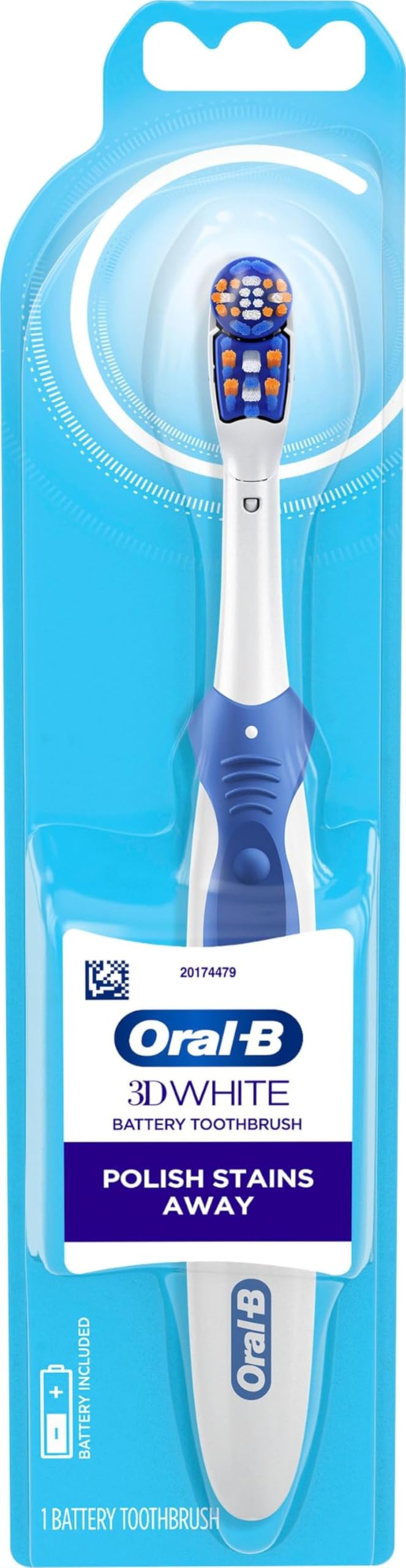
The 3D White takes a single AA battery, and that one fact explains why it belongs here. There is no charging dock, no cable, and no waiting for a handle to top up; you drop in a fresh cell and keep brushing. For a guest bathroom, a travel bag, or a house where counter space is tight, that is a genuinely useful kind of convenience.

The brush itself is a rotating-action model with a cup-shaped head and 14,000 strokes per minute. It feels more like a polisher than the sonics here: you guide it tooth to tooth and let the head do the work. The replaceable heads are compatible with several Oral-B styles, and the handle weighs 2.56 ounces, so it is the lightest one in this group. We reach for it when we want a brush that can live in a drawer without a charging base.

The trade is noise and size. The motor has a loud, buzzy note that carries, and the head is on the large side for a smaller mouth. Those are real annoyances, but they do not change the fact that this is the simplest way to keep a powered brush ready without a charger. The AA battery is the whole trick: no dock, no cable, no waiting.

Pros

  • AA battery means no charging dock
  • Lightest handle here at 2.56 ounces
  • Rotating cup head polishes as it cleans

Cons

  • Battery life is inconsistent
Our verdict

Keep this AA-powered brush for travel or a guest bath, where its light handle and self-contained design matter more than quiet operation.

Check Latest Price
5

Best for Sensitive Gums

Sonicare 5300

91 /100
LBD Score Outstanding

Key details

Modes
3
Battery
Up to 14 days
Included Heads
3
Pressure Sensor
Visual
View on Amazon

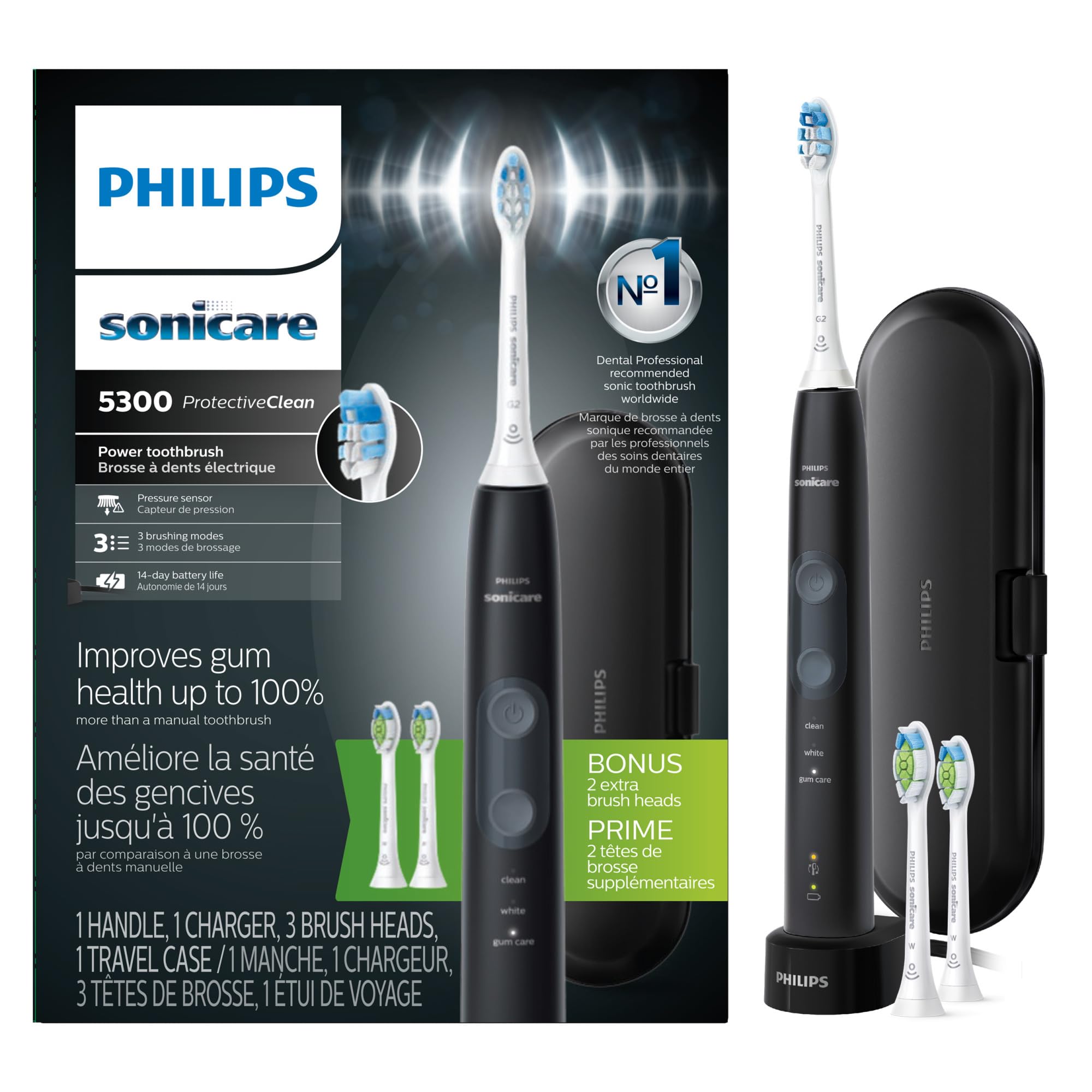
The 5300 costs more than the other Sonicare here, and the premium buys a visual pressure sensor, three cleaning modes, and a travel case. For anyone whose gums sting after brushing, that pressure sensor is the feature that justifies the upgrade: it warns you when you lean too hard, so you can ease off before you irritate the gumline. That is the trade we make for sensitive gums.

The brush uses sonic action with Clean, White, and Gum Care modes, and the Gum Care mode is the one we keep coming back to when we want a softer session. The 14-day battery and included travel case make it easy to pack for a trip, and the handle feels more substantial at 13.3 ounces. BrushSync also reminds you when the head needs changing, which takes one more decision off your plate.

If you want the pressure feedback and the gum-care mode, this is the one to choose. If you do not, the 1100 or the Oral-B Pro 1000 gets you a good clean without the premium. The 5300 is the sensitive-gums upgrade in this group, and it earns that role with features rather than a fancy finish.

Pros

  • Visual pressure sensor
  • Gum Care mode
  • 14-day battery and travel case
  • BrushSync head replacement reminder

Cons

  • Replacement heads are costly
  • Long-term durability is inconsistent
Our verdict

Choose this one if your gums sting: the visual pressure sensor and Gum Care mode are the features that make it worth the upgrade.

Check Latest Price
6

Tight Budgets

COSLUS C30

91 /100
LBD Score Outstanding

Key details

Modes
5
Weight
6.38 oz
Intensities
3
Included Heads
2 types
View on Amazon

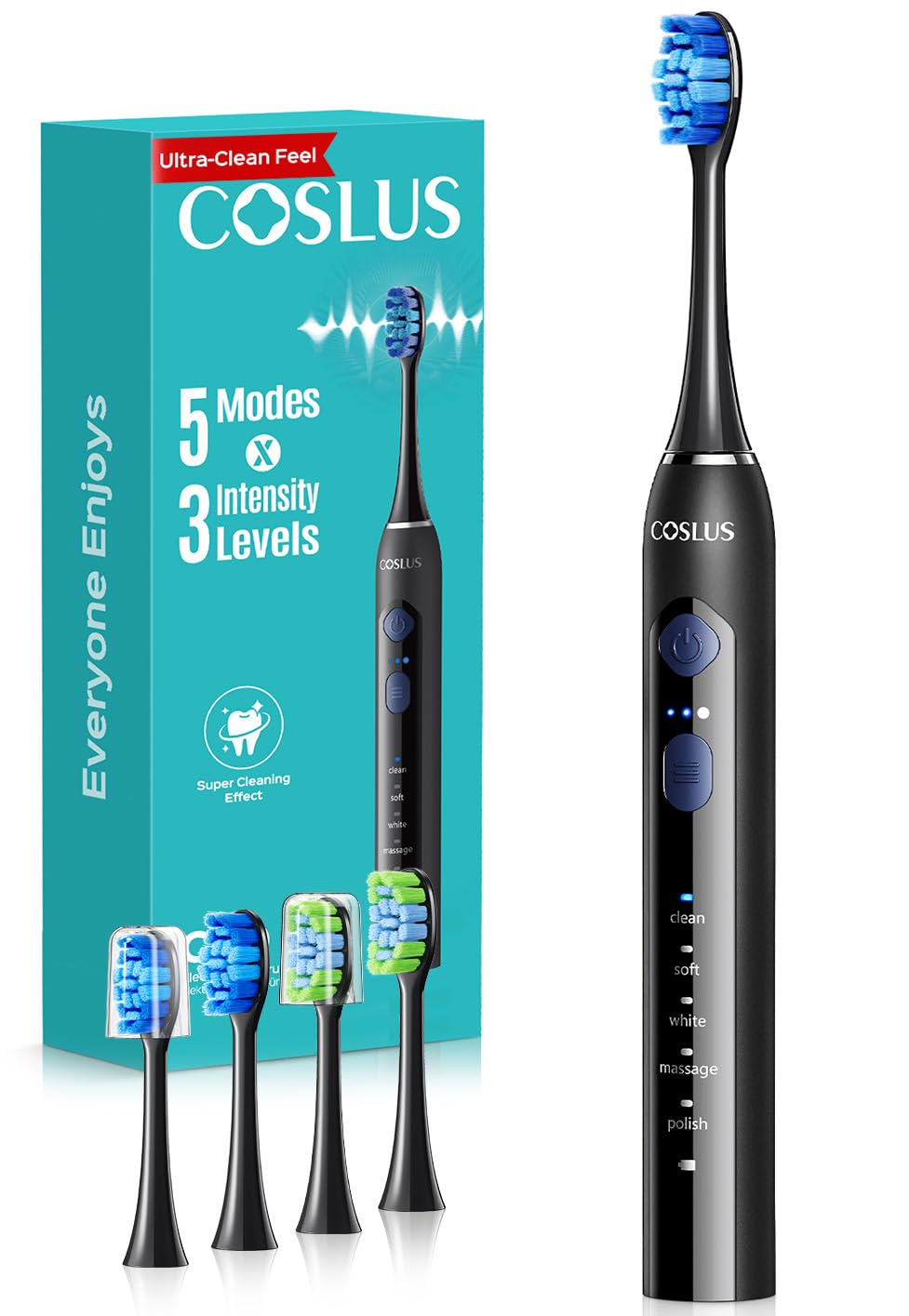
Five modes and three intensity levels is a lot of toothbrush for the least expensive pick here. The C30 also comes with two types of brush head, soft and medium firm, so you can dial in the feel without buying a separate sensitivity head. The handle is slim at 6.38 ounces and 7.16 inches long, which makes it easy to pack.

The cleaning action is sonic, and the mode count is more than most people will use, but the range is useful if you share a bathroom with someone who likes a gentler brush. We were surprised by the pause feature: press too hard and the handle stops, which is a useful nudge for a brush at this end of the market. Battery life is a strong point here, and the compact size makes it a natural second brush for travel or the gym.

The C30 is more flexible than most brushes at this end of the market, even if it is not as refined as the Sonicare or Oral-B picks. The five modes and three intensities give you room to experiment, and its 7.16-inch handle slips into a toiletry bag more easily than the full-size brushes here.

Pros

  • Five modes and three intensities
  • Two brush head types included
  • Pauses when you press too hard
  • Slim 6.38-ounce handle

Cons

  • Vibration can feel weak or harsh
  • Durability is inconsistent
Our verdict

A feature-packed second brush with five modes and three intensities for someone who wants options without a premium handle.

Check Latest Price

Our Nine-Month Electric Toothbrush Test

We started by pulling together the brushes that show up again and again in reviews and dental-hygiene threads, then narrowed the list by price, brush-head availability, and whether the specs suggested a real difference in cleaning. We ended up with 12 models and brushed with each one twice a day for nine months, rotating them among four testers so no single person's mouth was the only data point.

Most testing happened in our own bathrooms, morning and night, but we also packed the travel cases for weekend trips and left a few brushes at the office for midday cleanups. After each two-minute cycle, we chewed a disclosing tablet to see where plaque lingered—especially along the gumline and between the back molars. We deliberately leaned hard on the handles to see whether the pressure sensor warned us with a light, a vibration, or nothing at all, and we cycled through every mode to note which ones actually changed the brush's motion versus just blinking a different color. We also tried switching settings one-handed with toothpaste on our fingers, and noted whether the vibration felt smooth or buzzy against the gums.

Battery life was timed from a full charge to the first red light, with a note on whether the brush slowed down before it died. We measured noise from arm's length and from the next room, dropped each handle from counter height onto tile, and kept an eye on how the bristles splayed after a month of use. By month six, we checked whether the motors still felt as strong as they did on day one and whether the buttons or charging contacts had gotten finicky. We brushed with each new brush head for the first three days to catch any plastic taste, priced a year of replacement heads, and at the end asked whether we'd spend our own money on each brush.

How to Choose an Electric Toothbrush

Cleaning action matters more than mode count

Oscillating-rotating brushes, like the Oral-B Pro 1000 and 3D White, use a small round head that cups each tooth; they feel more mechanical and polished. Sonic brushes, like the Sonicare 1100 and 5300, vibrate at high speed and feel lighter and buzzier. Neither is automatically better, but the round head is easier to place along the gumline, while the sonic action is often gentler for people who find the round head too intense. Pick the action that feels comfortable enough for twice-daily use, then choose the mode count you will actually touch; five modes do not make a better brush if you leave it in Clean.

Pressure feedback is the feature to pay for

Gum pressure control is the one upgrade we notice every time we brush. On the Oral-B Pro 1000, the handle cuts its pulsations when you press too hard; on the Sonicare 5300, a visual sensor warns you. Either cue helps you ease off before your gums complain. If you already brush lightly, this matters less. If your gums bleed or you have recession, it is worth choosing a handle with some form of pressure feedback over a longer mode menu.

Decide how you want to charge it

Rechargeable handles are the default, but they differ in how they live on a counter. The Aquasonic Black uses a wireless base, the Sonicare 1100 gives you up to 14 days per charge, and the Oral-B 3D White takes a replaceable AA battery. A rechargeable brush is convenient until the battery or charging base fails; an AA brush is simpler to keep going but costs you batteries and often runs louder. Check whether a travel case protects the brush or actually charges it; they are not the same thing.

Budget for heads, not just the handle

Every brush here needs a new head every three months or so. The Aquasonic Black includes eight heads, which covers about two years of changes; the Sonicare 1100 includes one, and the 5300 includes three. Before you choose, price the replacement heads and check that they are easy to find. A cheap handle with expensive or hard-to-find heads is not a bargain. We also look at handle durability: a sealed battery and a charging base are the parts most likely to end the brush's life.

Frequently Asked Questions

Final Verdict

For most adults, the Oral-B Pro 1000 is the one to buy. Its round head and Gum Pressure Control give you the two things that matter most day to day: a clean that feels thorough and a warning when you press too hard. If you want the most complete kit in one box, choose the Aquasonic Black Series; if you want the simplest Sonicare, the Sonicare 1100 is the better fit. The Sonicare 5300 is the upgrade for tender gums, as long as the pressure sensor and Gum Care mode are worth the extra to you.