Best Electric Scooters for Kids of 2026

The first time your kid asks for an electric scooter, your brain runs two lists: the fun one—speed, lights, instant cool factor—and the cautious one—brakes, battery, will it wobble apart by June. The right one feels exciting enough to ride, but stable enough that you're not jogging alongside giving safety briefings.

Over eight months, my team and I tested 12 kids' electric scooters, from seat-equipped first rides to adjustable models for older kids. We assembled every one, handed them to riders ages 4 to 12, and noted which got reached for after school, which speed modes felt controllable, and which needed constant tightening.

Top speed isn't the whole story: a scooter that lurches from slow to fast feels twitchy, while clear low-speed modes build confidence. Battery claims deserve a side-eye once kids ride hard, climb the driveway, and leave the lights on. The picks below earned their place on fun, sturdiness, real-world range, and value—whether it's a birthday gift or a first set of wheels.

1

Best Overall

Segway Ninebot C2 Lite

86 /100
LBD Score Excellent

Key details

Ride Time
70 minutes
Rider Age
6–10 years
Top Speed
9.9 mph
Safety Certification
UL 2272 and UL 2271
View on Amazon

The C2 Lite waits for a 3 mph kick before the throttle engages, and that short pause tells you a lot about the design. It is meant for a child who is still learning, not one who wants to twist and go. The three modes step up from a walking pace to a 9.9 mph top speed, and the 70-minute run time is enough for neighborhood loops and park trips. The 7-inch solid tires and steel frame give it a planted feel that smaller-wheel scooters lack.

That combination is why it is our default recommendation for ages 6 to 10. The C2 Lite carries both UL 2272 and UL 2271 certification, adds IPX4 water resistance, and stops with a rear drum brake plus a mechanical handbrake—details we care about more than a flashy light show. It is not the lightest scooter here, and the fixed handlebar means you need to check the listed height range before ordering, but the package is unusually complete for a kid's first powered scooter.

We also appreciate that the controls stay simple: release the thumb throttle and the motor cuts, which makes the first few rides feel less twitchy. The 5.5-hour charge time is a weekend-planning detail rather than a dealbreaker, and the solid tires mean no flat-fix routine. For a family that wants one scooter to cover the driveway, the park, and the walk to school, this is the one we reach for.

Pros

  • Two UL certifications for electrical safety
  • Kick-start and three modes suit beginners
  • 70-minute run time for neighborhood rides
  • Solid tires and two braking systems

Cons

  • Battery life can fall short of the 70-minute claim
Our verdict

For most 6- to 10-year-olds, we recommend the C2 Lite first: it pairs two UL safety certifications with three ride modes and a manageable 9.9 mph top speed.
Check Latest Price
2

Best for Tech-Loving Kids

Gyroor H30Max

85 /100
LBD Score Excellent

Key details

Max Range
10 miles
Top Speed
10 mph
Rider Weight Limit
132 lb
Safety Certification
UL 2272
View on Amazon

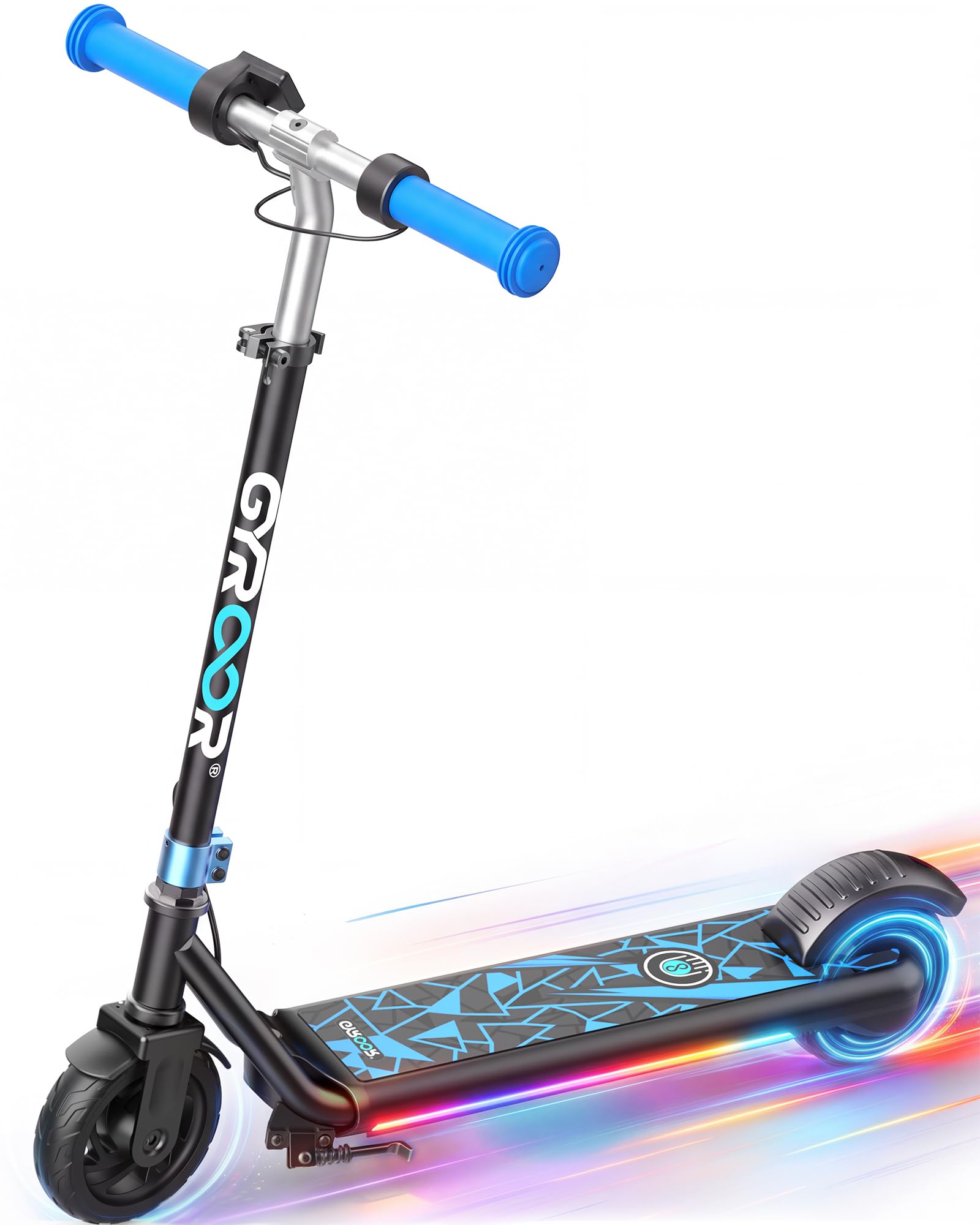
The H30Max turns a scooter ride into a small production. A Bluetooth speaker, LED deck lights, and a 150W motor with 6, 8, and 10 mph modes make it the most entertaining scooter in this group. What sells us is that the fun is bolted to a serious frame: UL 2272 certification, dual electronic and foot brakes, and a 132-pound weight limit. For a kid who needs a nudge to go outside, that combination earns its place.

The adjustability is the practical reason to choose it over the simpler 10 mph scooters. The handlebar moves through 34, 36, and 38 inches, so the same scooter can fit a 6-year-old and still work two growth spurts later. At 13.2 pounds it is light enough to hand off at the door, and the listed 10-mile range is the longest here. The 5-hour charge is a weekend consideration, but the H30Max does not feel like a novelty once the music is off.

Pros

  • Bluetooth speaker and LED deck lights
  • Three speed modes up to 10 mph
  • Handlebar adjusts to three heights
  • UL 2272 and dual brakes

Cons

  • Battery warranty is six months, not a full year
Our verdict

The H30Max is the fun-first choice for a 6- to 12-year-old: Bluetooth music, LED lights, and three modes make it feel like an event, and the UL 2272 build backs it up.

Check Latest Price
3

Best Adjustable Fit

FanttikRide C9 Pro

87 /100
LBD Score Excellent

Key details

Max Range
5 miles
Ride Time
Up to 40 minutes
Top Speed
10 mph
Handlebar Heights
31.7, 34.1, 36.5 inches
View on Amazon

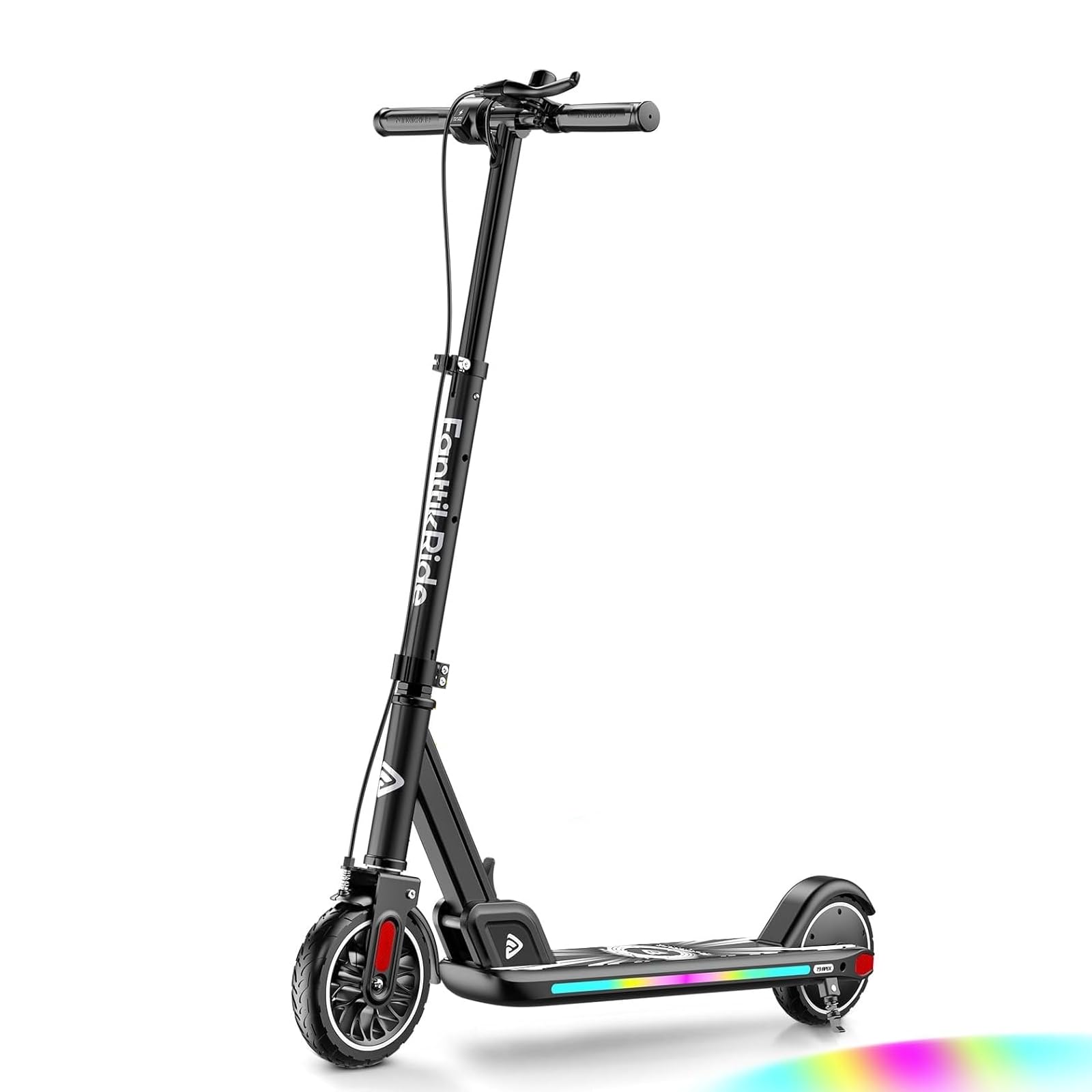
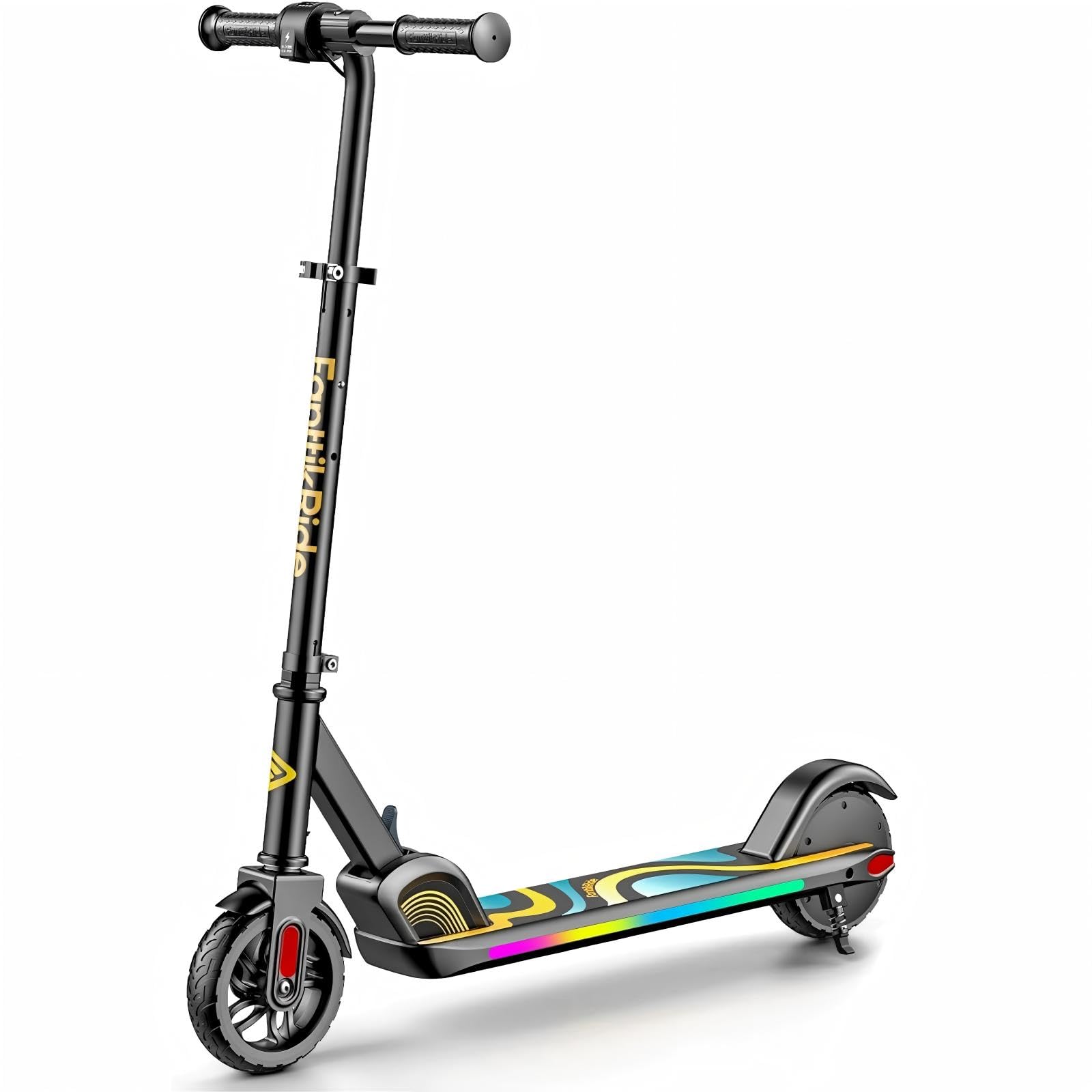
Three handlebar heights and three speed settings make the C9 Pro feel like a scooter designed to be handed down. The bars move through 31.7, 34.1, and 36.5 inches, which covers a wide stretch of childhood, and the 5, 8, and 10 mph modes let you keep the scooter in its gentlest setting while a new rider builds confidence. At 14 pounds it is light enough for a child to fold and wheel inside, and the one-step folding system is simple enough to use after a ride.

The rest of the package is practical rather than flashy. You get 6-inch rubber tires, a rear foot brake plus an EABS brake, a 132.3-pound weight limit, and a listed 5-mile range with up to 40 minutes of ride time. The LED lights near the deck add visibility at dusk, and the display keeps speed and battery status in view. It is not the plushest ride here—there is no suspension—but the firm setup suits paved paths and smooth sidewalks.

We choose the C9 Pro over the Segway when handlebar height matters more than range or a second UL battery certification. It is the better long-term fit for a family that wants one scooter to last through several growth spurts. The 14-pound build and one-step fold make it easy to stash in a garage or bring inside, which is the sort of convenience that keeps a scooter in use instead of leaning against a wall.

Pros

  • Three height settings fit growing kids
  • Three speed modes from 5 to 10 mph
  • Folds in one step at 14 pounds
  • Rear foot and EABS brakes

Cons

  • Battery life can fall short of the 40-minute claim
Our verdict

The C9 Pro is our pick for a growing rider: three handlebar heights and three speed modes let it fit an 8-year-old now and a 12-year-old later.

Check Latest Price
4

Best for Ages 3–8

Gyroor KS2

85 /100
LBD Score Excellent

Key details

Rider Age
3–8 years
Top Speed
5 mph
Handlebar Heights
29.5 to 33.5 inches
Rider Weight Limit
121 lb
View on Amazon

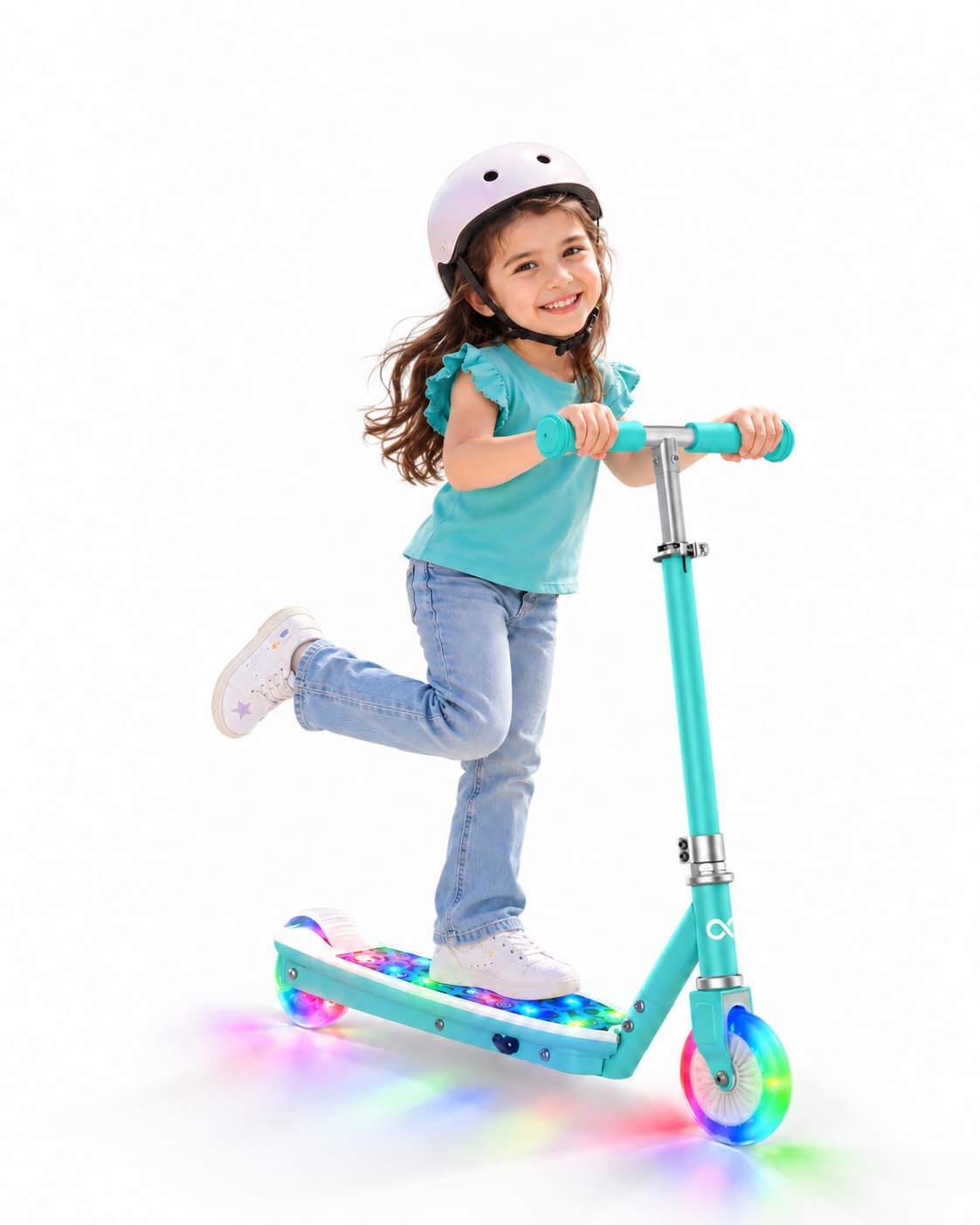
Five miles per hour is not a limitation here; it is the whole point. The KS2 caps at 5 mph, waits for a 2 mph kick before the motor engages, and fits riders from 3 to 8 years old with a 121-pound weight limit. At 9.3 pounds, it is the lightest scooter in this group, which matters when a parent is carrying it back from the park or lifting it over a curb.

We hand this to a first-time rider with less worry than anything else on the list. There is no throttle to bump accidentally, the deck is low, and the two height settings from 29.5 to 33.5 inches keep the bars within reach as a child grows. The LED wheels and deck lights are a genuine visibility aid at dusk, not just decoration, and the 4-hour charge is quick enough for a weekend. The narrow 4-inch wheels are the trade-off: they are fine on smooth sidewalks and driveways, but cracked pavement and tree roots feel busy.

Pros

  • 5 mph cap suits first-time riders
  • Kick-start prevents accidental acceleration
  • Only 9.3 pounds
  • LED wheels and deck lights

Cons

No notable drawbacks to flag.

Our verdict

For a first scooter, the KS2 is the calmest choice here: a 5 mph cap, a 2 mph kick-start, and a 9.3-pound build that a small child can handle.

Check Latest Price
5

Best with a Seat

Hiboy Q2 Lite

85 /100
LBD Score Excellent

Key details

Max Range
5 miles
Rider Age
4–10 years
Top Speed
9.3 mph
Wheel Size
8.5 inches
View on Amazon

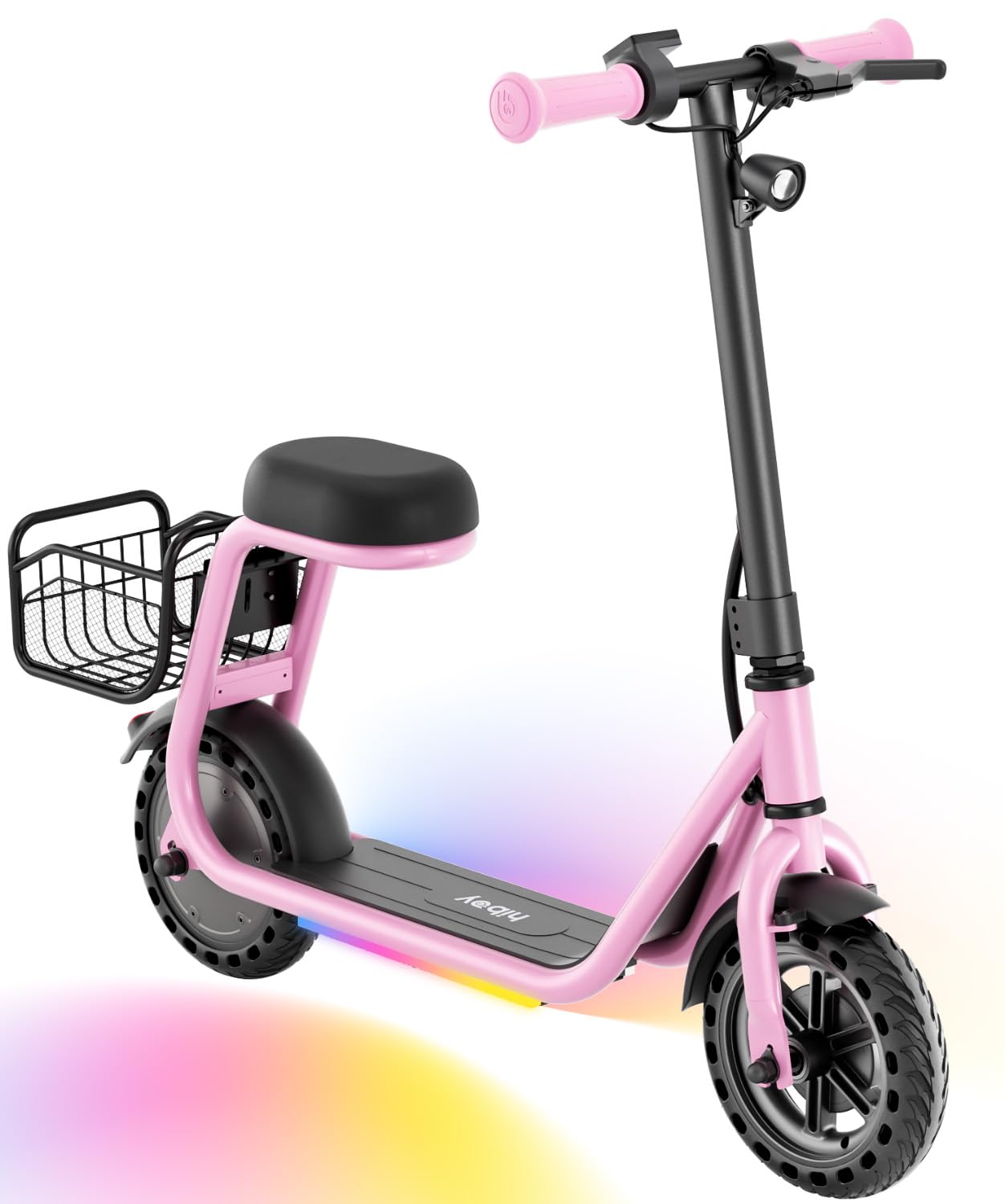
The Q2 Lite is the only pick here with a seat, and that single choice changes who can ride it. We found that a 4- or 5-year-old who is not ready to stand for a whole ride can sit, steer, and build confidence at 4 mph in ECO mode before moving up to 6 or 9.3 mph. The 8.5-inch solid tires and 110-pound weight limit make it feel more like a small vehicle than a toy, and UL 2272 certification covers the electrical side.

The seat is not just a novelty. The 100W motor handles gentle neighborhood grades, the 5-mile range is enough for a loop around the block, and the neon light strips and brake light add visibility. Assembly is mostly a matter of attaching the handlebars and basket, and the controls are simple enough for a child to learn without a long explanation.

The trade-off is that the seat and steel frame make it the heaviest scooter in this group at 25.8 pounds. That is fine if it lives in a garage and gets lifted by an adult, but it is not the one to carry up a flight of stairs every day. For a family with a young rider who wants to keep up on walks, the seated design is worth the weight.

Pros

  • Built-in seat for younger riders
  • 8.5-inch solid tires smooth the ride
  • Three modes from 4 to 9.3 mph
  • UL 2272 certified

Cons

  • Battery life can fall short of the 5-mile claim
Our verdict

The Q2 Lite is the seated scooter we recommend for ages 4 to 10: it gives a younger rider a place to sit, a gentle 4 mph first mode, and 8.5-inch tires that smooth out the sidewalk.

Check Latest Price
6

Best for Older Kids

FanttikRide T9 Apex

87 /100
LBD Score Excellent

Key details

Max Range
7 miles
Top Speed
12 mph
Handlebar Heights
34, 36.5, 39 inches
Rider Weight Limit
154 lb
View on Amazon

The T9 Apex is the one we point to when the rider is outgrowing the starter scooters but is not ready for an adult model. The 7, 10, and 12 mph modes give a big kid room to progress, the handlebar rises to 34, 36.5, or 39 inches, and the 154-pound weight limit is the highest here after the WEELMOTION. The 7-inch solid tires and dual braking system—front hand brake plus rear fender brake—make it feel more substantial than the 5 mph scooters without turning it into a commuter machine.

The extras are aimed squarely at older kids: a Bluetooth speaker, five flashing light modes, and a digital display that shows speed and battery status. The 7-mile range and 40-minute ride time are useful for longer neighborhood loops, and the one-step fold makes it easy to store. At 16.6 pounds it is not a featherweight, but it is manageable for a 10-year-old to fold and carry.

We like the T9 Apex best for a child who is near the top of the height range and has already ridden a slower scooter. It gives them a real speed step without the size and weight of an adult e-scooter, and the taller bars make the riding position less cramped. The C9 Pro is the better choice for a younger sibling; the T9 is the one that feels like a graduation.

Pros

  • 12 mph top speed for older kids
  • Three height settings up to 39 inches
  • Dual hand and fender brakes
  • Bluetooth speaker and LED lights

Cons

  • No suspension for rough pavement
Our verdict

The T9 Apex is the step-up scooter for a tall 10- to 12-year-old: 12 mph, a 154-pound limit, and handlebars that reach 39 inches.

Check Latest Price
7

Heavier Riders

WEELMOTION S31

83 /100
LBD Score Excellent

Key details

Max Range
5 miles
Top Speed
10 mph
Handlebar Height
30 inches
Rider Weight Limit
175 lb
View on Amazon

The S31's 200W motor and 175-pound weight limit stand out in a category where many scooters top out around 110 to 132 pounds. That extra capacity makes it the one to look at for a big 10- to 12-year-old, or for a family that wants a scooter to stay useful as a child grows. The 10 mph top speed is modest, but the motor has more in reserve than the 100W and 150W scooters here, which should make gentle slopes feel less strained.

The rest of the build is straightforward: 6.5-inch solid tires, front and rear fender brakes, UL 2272 certification, a bright front light, and RGB deck lights. The LED display is easy to read at a glance, and the 5-mile range is in line with the other 10 mph scooters. At 15.4 pounds it is light enough to fold and carry, though the aluminum frame feels substantial when you pick it up.

The fixed handlebar is the detail to check before ordering. It sits at 30 inches and does not adjust, so this is not a scooter to buy for a child who is still growing into the bars. Measure your rider's height and compare it with the stated dimensions; if you are between sizes, one of the adjustable picks is the safer choice.

We keep the S31 on the list because it covers a rider the others do not: a heavier kid who still wants a 10 mph scooter and does not need a seat. The 175-pound limit and 200W motor are the reasons to choose it over the lighter, more adjustable options, and the fixed height is the reason to measure first.

Pros

  • 200W motor with a 175-pound weight limit
  • 10 mph top speed and 5-mile range
  • UL 2272 certification and dual brakes
  • Folds to 15.4 pounds

Cons

  • Battery life can fall short of the 5-mile claim
Our verdict

The S31 is the pick for a heavier or taller rider: a 200W motor, a 175-pound limit, and a 10 mph top speed give it more headroom than most kid scooters here.

Check Latest Price

How We Chose and Tested Kids' Electric Scooters

We started by researching the current market and narrowing by age range, adjustable handlebar height, deck size, speed modes, and clear electrical certification; anything with vague safety claims or a one-size handlebar that didn't match its stated age range was cut. That left 12 scooters, which we assembled and ran for eight months.

Testing happened where kids actually ride: the driveway, the sidewalk loop, the park path, and the block to school. We timed assembly out of the box, then had parents and kids adjust the handlebar to each rider's height and fold or carry each scooter the way they would at the end of a ride. Kids rode in every speed mode; we clocked the modes on a flat stretch and watched whether the throttle felt smooth or jumpy. After each session we checked the stem, folding joint, deck, and brake setup for wobble, scuffs, or loosening hardware.

For battery life we started every ride at full charge, ran a mix of steady cruising and hard stop-and-go, then timed how long each lasted and how long a recharge took; we also tracked whether the display's estimate held up. To judge sturdiness and reliability, we repeated curb drops, grass edges, and hard braking, and weighed how solid each deck felt under the listed max load. Enjoyment was less scientific: we asked kids which scooter they grabbed without prompting and which lights, sounds, or music features they showed friends. Assembly and gift appeal got the parent test—how much of the box was plastic wrap, whether tools were included, and whether a kid could be riding within 20 minutes.

Value came down to what still felt tight after eight months, not what looked impressive on day one. We noted which scooters charged reliably, kept their speed modes consistent, and needed no replacement parts.

How to Choose a Kid's Electric Scooter

Start With Fit, Not Age

Start with the child's height and weight, not the age on the box. A scooter that fits at 4 feet will feel unwieldy at 4 feet 6 inches, and a handlebar that sits too low pushes a rider to lean forward. The picks here span handlebar heights from 29.5 to 39 inches and weight limits from 110 to 175 pounds; that spread matters more than the age label. Measure your child in shoes, then compare the handlebar range and deck height. We put more weight on a comfortable standing position than on a top speed a child cannot use yet.

Treat Safety Certification and Brakes as Non-Negotiable

Electrical safety and stopping power are the two places we refuse to compromise. UL 2272 covers the scooter's electrical system, and UL 2271 covers the battery; the Segway C2 Lite carries both, while several other picks carry UL 2272. A second brake matters too: a rear fender brake alone is common, but a hand brake or drum brake gives a rider a backup. A kick-to-start system is not a defect—it prevents the motor from lurching when a child steps on the deck. Look for at least one UL mark and two independent braking methods before you buy.

Match Speed Modes to Experience

Speed modes do more for safety than a low top speed alone. A 5 mph scooter like the Gyroor KS2 suits a 3- to 8-year-old who is still learning, while a 10 mph model with 5, 8, and 10 mph settings gives a 6- to 12-year-old room to progress. The 12 mph FanttikRide T9 Apex is for a taller, more experienced rider. Range figures are best-case: a 5-mile claim shrinks when a child stays in the fastest mode, and a 70-minute run time assumes a steady pace. Plan shorter rides at first, and treat the charger as part of the routine.

Decide Between a Seat, Big Wheels, and Portability

The choice between a seat and a stand-up deck comes down to the rider's confidence. A seated scooter like the Hiboy Q2 Lite lets a 4- or 5-year-old ride without balancing for a full trip, but it is heavier and less agile than a stand-up model. Wheel size is the other comfort decision: 4-inch wheels are fine on smooth pavement, while 8.5-inch tires roll over cracks and driveway seams more easily. Check folded weight before you plan to carry it upstairs or load it into a car—the lightest pick here is 9.3 pounds, the heaviest 25.8.

Frequently Asked Questions

Final Verdict

For most families, the Segway Ninebot C2 Lite is the scooter we recommend first. It has the strongest safety package in this group—UL 2272 and UL 2271 certification, IPX4 water resistance, and two braking systems—and its three modes and 9.9 mph top speed suit a 6- to 10-year-old without feeling like a toy.

If your rider is 3 to 8, the Gyroor KS2's 5 mph cap is the calmer choice; if you need a seat, the Hiboy Q2 Lite is the one to get. For a tall 10- to 12-year-old, the FanttikRide T9 Apex gives more speed and a taller bar. The C2 Lite remains our first recommendation for most families.