Best Espresso Grinders of 2026

Home espresso has an uncomfortable truth built into it: the grinder matters more than the machine. A pump pushes water through a puck in roughly 25 seconds, and if the grounds are a mix of powder and pebbles, the water finds the loose spots and the shot runs fast, thin, and sour. Technique can't fix that. Over the past eight months, my team and I put 12 grinders through exactly that problem, and the gap between a good one and a frustrating one shows up in the first week.

The number of settings on the box is the least useful thing about it. What matters is how fine the adjustments get in the espresso range — a grinder that jumps from gusher to choked in two clicks is harder to live with than one with fewer, better-spaced steps. Hand grinders aren't the automatic compromise, either: for a single shot, a good one is quieter, cheaper, and about 30 seconds of cranking.

What follows earned its counter space over months of daily shots. Two run loud enough that I moved them off the kitchen island, and a couple needed wiping down after every dose — but each one pulled a shot worth paying for.

1

Best Overall

Breville Smart Grinder Pro

91 /100
LBD Score Outstanding

Key details

Burr Type
Conical
Dose Control
Programmable, 0.2-second steps
Grind Settings
60
Hopper Capacity
1.1 lb
View on Amazon

The portafilter cradle is what puts this grinder at the front of the guide. It holds the basket under the chute while the timer runs, so the dose lands where it needs to go instead of in a cup you then tip and tap into the basket. The timer adjusts in two-tenths-of-a-second steps and keeps its setting between sessions, which is the whole game when you change beans and need to find the same shot again.

On espresso specifically, we trust this one more than anything else in this set. Sixty settings run from Turkish-fine to French press, but the espresso range is where it earns its keep, and the pre-programmed shot and cup buttons turn a two-shot dose into a single press. The motor is working hardest at the finest few clicks, which is below what most machines need — stay a notch coarser and it sounds relaxed and feeds evenly.

Day to day it is the easiest of the electrics to live with: a 1.1-pound hopper that saves refilling mid-week, a grounds container that doubles as a catch cup, and brushed steel that wipes clean. It is a tall machine, though, just over 15 inches with the hopper seated, so measure the gap under your wall cabinets before you clear a space for it.

Pros

  • Fills a portafilter with no transfer step
  • Dose timer repeatable in 0.2-second steps
  • 60 settings cover espresso through French press

Cons

  • Long-term reliability is the weak spot
Our verdict

For a home espresso machine, this is the grinder we point people to first: it doses straight into the portafilter by time, and it goes properly fine.

Check Latest Price
2

Best for Espresso and Filter

Baratza Virtuoso+

90 /100
LBD Score Outstanding

Key details

Burrs
Hardened steel conical
Timer
40-second digital, 0.1-second steps
Grind Settings
40
Hopper Capacity
8.11 oz
View on Amazon

This is the most expensive grinder in the guide, and the extra money goes into timing rather than settings. The digital timer runs to forty seconds and moves in tenths, the grounds bin is backlit so you can see what you just ground, and the sculpted metal top and base look like something that cost what it did.

What you are buying is range. Forty settings stretch from espresso at one end to French press at the other, and the hardened steel conical burrs are built to keep cutting cleanly rather than bruising the beans. We think of it as the grinder for someone who pulls two shots and then brews a Chemex for a friend — competent at both ends rather than a specialist at one.

Where it wins us over is repeatability. Nudge the timer by a tenth, taste, nudge it back; the machine gives you the same dose on command, and it comes apart for servicing rather than being a sealed box you throw away. What it will not do is fill a portafilter — the dose lands in the bin and you transfer it — so if you already own a semi-automatic machine, our top pick is the better fit for less money.

Pros

  • Timer adjusts in tenths of a second
  • 40 settings span espresso to French press
  • Designed to be serviced, not replaced

Cons

  • No portafilter cradle
  • Priciest grinder in this set
Our verdict

Buy this if you brew espresso some mornings and filter on others: it is the most refined all-rounder here, as long as you do not mind dosing into a bin.

Check Latest Price
3

Best Manual for Espresso

KINGrinder K6

91 /100
LBD Score Outstanding

Key details

Burrs
Stainless steel conical
Weight
1.39 lb
Capacity
1.06 oz
Adjustment
16 microns per click
View on Amazon

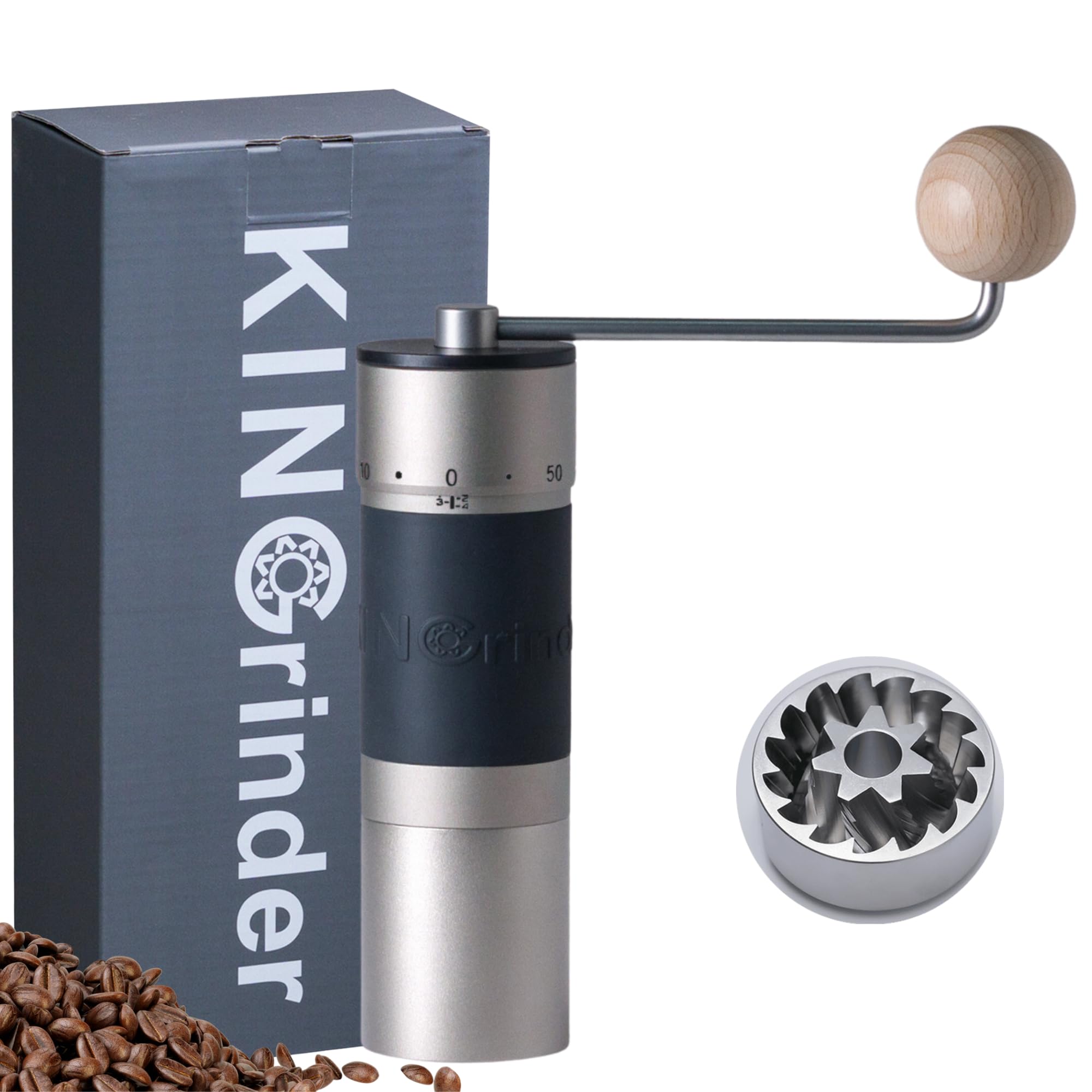
Sixteen microns is the whole argument for the K6. That is how far the burr moves with each click of the external adjustment nut, and it is fine enough to make the small changes an espresso machine actually responds to. Hand grinding stops being a compromise at that resolution: you dial a shot in, count your clicks, and find the same setting tomorrow without guessing.

The rest of the package is built for the same job. The stainless burr set cuts cleanly, the aluminum body feels machined rather than pressed, and the threaded catch cup holds about 30 grams, a double shot with a little to spare. It is also quieter than any electric here, which matters when the machine and the grinder share a kitchen at six in the morning.

The trade is time. Every drink means standing at the counter turning a handle, and a household of espresso drinkers will do it more than once before work. One or two shots a day and the ritual is part of the appeal; four milk drinks and you want an electric. What we keep coming back to is that the adjustment precision is the part you cannot fake, and this grinder has it.

Pros

  • 16-micron adjustment clicks
  • Solid aluminum and steel build
  • Quiet enough for an early kitchen

Cons

  • Heavy 630-gram body stays home
  • Hopper holds only about 30 grams
Our verdict

Sixteen-micron clicks give a hand grinder the adjustment a real espresso machine needs, and this one delivers them for mid-range money.

Check Latest Price
4

Best Budget Electric

AMZCHEF Conical Burr Grinder

89 /100
LBD Score Excellent

Key details

Burrs
40 mm conical
Timer
Up to 40 s, 0.5-second steps
Grind Settings
48
Portafilter Fit
51–54 and 58 mm
View on Amazon

Meaningfully cheaper than our top pick, and the cradle is still there. The AMZCHEF holds a portafilter under the chute the same way the Breville does — 51 to 54 mm baskets and the 58 mm standard both sit in it — and the touchscreen sets the dose in half-second steps out to forty seconds.

The ingredients are the ones the expensive machines list: 48 settings, 40 mm conical burrs, a 10.6-ounce hopper with a UV-blocking tint, and anti-static hardware in the cup. Espresso comes out even and repeatable, the fine end is genuinely espresso territory rather than espresso in name only, and the grounds drop into a neat pile instead of climbing the walls.

What you give up is feel. The body is plastic with steel panels and the interface is a touch panel rather than a knurled dial, so it does not have the planted, machined quality of the Breville. In exchange you get a grinder that looks better than its price on the counter and one a first-time espresso owner can learn in an afternoon.

Pros

  • Portafilter cradle at the low end of the range
  • 48 settings with a 0.5-second timer
  • Anti-static cup keeps the counter tidy

Cons

  • Light body shifts while dosing one-handed
Our verdict

The least expensive way here to get a portafilter filled directly, with 48 settings and an even espresso grind that belie what it costs.

Check Latest Price
5

Best for a Clean, Quiet Counter

Aromaster Conical Grinder

0 /100
LBD Score Fair

Key details

Burrs
Stainless steel conical
Timer
40-second adjustable
Grind Settings
48
Hopper Capacity
3.9 oz
View on Amazon

Static is the quiet reason a grinder ruins a morning, and this is the one we recommend first when the mess is the problem. The bin carries an anti-static treatment and a tinted body, so the grounds fall in a heap and pour out cleanly rather than clinging to plastic and drifting across the counter.

Underneath, it is a 48-setting conical grinder with a 40-second timer, a removable ring burr and a brush that clips into the machine, so a proper clean is a two-minute job rather than a project. The grind is even across the range and the motor is one of the quietest here — a low whirr rather than the shriek of the machines it replaces. It is also a tall, narrow machine, which suits a galley run of counter better than a deep one.

Pros

  • Anti-static bin pours clean
  • Quiet motor for early mornings
  • Removable ring burr and built-in brush

Cons

  • Small 3.9-ounce hopper
Our verdict

If the mess on your counter is what pushed you to replace your last grinder, this is the pick: the anti-static bin keeps fine grounds where they belong.

Check Latest Price
6

Best for Travel

TIMEMORE Chestnut C3S Pro

95 /100
LBD Score Outstanding

Key details

Burrs
S2C660 conical
Weight
15.2 oz
Capacity
0.88 oz
Grind Settings
36
View on Amazon

The crank folds flat against the body, which sounds like a novelty until you are packing a bag and the grinder has to fit beside a camera and a jacket. Folded, the C3S Pro is roughly thermos-sized, and it weighs 430 grams, so it earns its place in a carry-on rather than arguing for it.

It grinds well for the size. The S2C660 hexagonal burr cuts evenly, the 36 clicks run from fine to coarse, and there is a bearing in the handle so the crank keeps turning after your wrist stops — a detail we noticed every time we picked it up. The cup screws on, magnets keep the pieces aligned, and it comes apart for cleaning without a diagram.

Espresso is where it asks for patience. Thirty-six clicks is a coarser ladder than the K6's sixteen-micron steps, so the difference between a gushing shot and a choked one can be a single click with nothing in between. For pour-over, Aeropress and the occasional shot on the road that is a fair trade: this is the grinder that lives in our bag, not the one on the counter.

Pros

  • Folding crank packs flat
  • 430 grams with an all-metal body
  • Even grind from a 36-click dial

Cons

  • 25-gram capacity is one drink at a time
Our verdict

A travel grinder that is genuinely pleasant to use, with a crank that folds flat — just accept coarser steps than our manual espresso pick.

Check Latest Price
7

First Burr Grinder

SHARDOR Conical Burr Grinder

88 /100
LBD Score Excellent

Key details

Burrs
Stainless steel conical
Timer
40-second digital
Grind Settings
48
Hopper Capacity
9.7 oz
View on Amazon

If you are buying your first burr grinder and do not want to spend like it is your fifth, start here. It is one of the two least expensive electrics in this guide, and it still comes with 48 settings, a 40-second timer on a clear LCD, and a stainless conical burr set.

The workflow is what we like most. Set the time, press once, and the grounds land in a container that stays genuinely static-free, which is what separates this from the flat-burr bargains that dust your counter. It is quiet, too: a full hopper is over quickly and the kitchen does not know about it.

The hopper, chamber and burrs all detach for cleaning, with a brush clipped inside the body, and 9.7 ounces of capacity covers a week of shots for most people. Two kilos of machine also means it stays put on the counter when you set the portafilter down beside it.

Pros

  • 48 settings and a 40-second timer
  • Quiet for an entry-level electric
  • Hopper, chamber and burrs detach for cleaning

Cons

  • Static creeps back at espresso fineness
Our verdict

A first burr grinder that does not feel like a compromise: quiet, quick and easy to clean, with a timer that makes doses repeatable.

Check Latest Price
8

Big Hand-Ground Batches

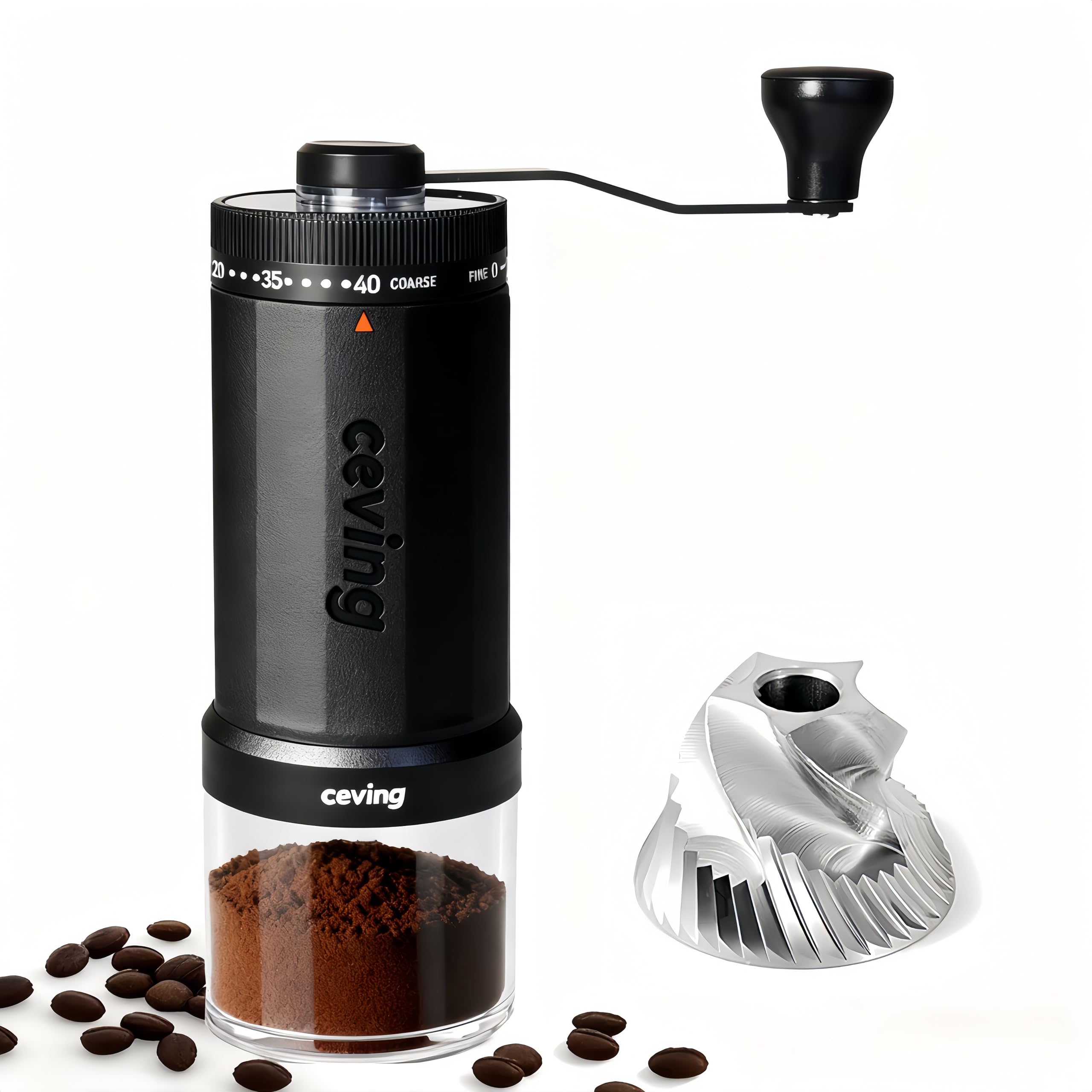
CEVING 60g Manual Grinder

88 /100
LBD Score Excellent

Key details

Burrs
Stainless steel conical
Capacity
2.12 oz
Adjustment
0.05 mm per click
Grind Settings
40 external
View on Amazon

Grinding for a full pot by hand is the job nobody wants, and this is the grinder that makes it tolerable. The hopper holds 60 grams — roughly double what the other hand grinders here take — so one session covers four large cups instead of one.

Forty external settings move the burr 0.05 mm per click, fine enough to trim an espresso shot and coarse enough for a French press, and the ring sits on the outside where you can read it. The steel burr is quick for a manual, and the whole thing weighs about half a kilo, so it travels if you want it to.

For a household where one person drinks two flat whites and another drinks filter, that capacity is the whole pitch: grind once, split the dose, and you are done. Nothing else here grinds that much at one go, and nothing else here costs as little.

Pros

  • 60-gram hopper for multi-cup batches
  • External dial adjusts 0.05 mm per click
  • Steel burr grinds fast for a hand mill

Cons

  • Plastic catch cup is the weak point
  • Cranking a full hopper takes real effort
Our verdict

For grinding more than one drink at a time by hand, the 60-gram hopper is the reason to choose it over every other manual here.

Check Latest Price

How We Tested 12 Grinders Over Eight Months of Daily Shots

We started with about 40 burr grinders and filtered hard: burr type, whether the espresso range had usable micro-adjustment, price, and how much metal was in the parts that touch coffee. Anything with blades or a lone fine button came off immediately. Twelve made the cut — eight electric, four hand.

Each grinder moved onto my counter and got used the way a grinder is actually used: a double shot before work, milk drinks on Sunday, coarse grounds for the drip pot, and one hand grinder that came camping. For each, I started at the manufacturer's espresso setting and counted the adjustments it took to get from a 15-second gusher to a shot that choked the machine; that window is the honest measure of control. Then I pulled three shots back to back at a single setting and compared the times.

I weighed 18 grams in and the dose out to see what stayed behind in the chute, and watched how much static threw fines across the counter and the portafilter rim. Noise got checked with a decibel app at arm's length — two electrics were loud enough that I stopped grinding before the house was awake. Capacity was judged in real doses, not hopper specs: how many shots before a full hopper went stale, and how much a hand grinder's basket held for two cups.

Eight months is long enough for the usual failures to surface: motors bogging on light-roast beans, burrs that wobble, catch cups that crack, settings that drift after a few weeks of daily use. Cleaning counted too — how many pieces came apart and whether the burrs came out without a manual. At the end, I weighed each grinder's price against the shots it poured and the fuss it demanded.

How to Choose an Espresso Grinder

Why the fine end matters more than the settings count

Espresso needs a narrow spread of particle sizes, and the difference between a shot that runs and one that stalls is often a few microns. A dial with 48 positions spread across the whole range from Turkish to cold brew can take bigger jumps than a dial with half as many moves, because what counts is how far the burrs travel per click. Look for a published step size where the maker gives one: the KINGrinder moves 16 microns per click, which is the kind of increment an espresso machine actually responds to.

In practice you will live within a few clicks of the finest setting. If espresso is the main event, buy the grinder whose fine end is the point of the machine rather than an advertised extra, and expect the coarsest third of the dial to go unused.

Dosing: cradle or catch cup

Where the grounds land shapes your morning more than the dial does. A cradle holds the portafilter under the chute so the basket fills level, with no transfer step and no grounds on the counter; a catch cup means you grind, then tip and tap and hope. Two grinders here fill a basket directly, the Breville and the AMZCHEF, and if you own a semi-automatic machine that is the feature we put first.

If you already single-dose by weight into a cup and pour it into the basket, a plain bin costs you nothing. Match the workflow to the one you already have rather than the one you plan to adopt.

Manual or electric, and what each costs you

A hand grinder is quiet, cheaper, and indifferent to your outlet; it also asks you to stand at the counter and crank for every dose. That trade is a pleasure for one or two drinks a day and a chore at four. Electrics finish in seconds and hold a hopper of beans, but they are louder and bulkier and they want counter space beside the machine.

Our rule: a single espresso most mornings is manual territory, especially if the machine is in a small kitchen or a shared office. Steaming milk for the household is electric territory, and the extra cost buys you speed rather than better grounds.

Static, retention and the mess nobody mentions

Fine espresso grounds are light and dry, which makes them cling to plastic and fly when you pour. Anti-static coatings and metal catch cups genuinely help — the Aromaster and the SHARDOR both earn their keep on this — but nothing is spotless at espresso fineness, and the brush clipped into the body is there for a reason.

Retention is the hidden cost: a gram or two of the previous dose sits in the chute, so the first shot after you change beans is a blend of old and new. Grind and discard a small handful when you switch, and brush the chute weekly rather than waiting for a clog.

Height, hopper size and where it lives

Espresso grinders are taller than the product photos suggest, because the hopper sits on top. Our top pick runs just over 15 inches with the hopper seated and the Aromaster reaches 16, which is enough to foul a shelf or an over-cabinet light. Measure from the counter to the underside of the cabinet before you order; if the gap is tighter than about 15 inches, plan on a hand grinder that stows away instead.

Hopper size cuts both ways. A big hopper means fewer refills and staler beans, so buy whole beans in amounts you will finish within a couple of weeks and treat the hopper as a staging area, not storage.

Frequently Asked Questions

Final Verdict

For most people with an espresso machine on the counter, buy the Breville Smart Grinder Pro. It fills a portafilter on a timer you can repeat to a fraction of a second, it goes genuinely fine, and it removes the fiddliest step in the morning.

If you do not own a machine yet, or the counter will not take a 15-inch appliance, the KINGrinder K6 delivers the adjustment espresso needs for a fraction of the money and asks only for your arm. And if a portafilter cradle at the lowest price is the whole requirement, the AMZCHEF covers it without asking you to spend like a barista.