Best Golf Rangefinders with Slope of 2026

A slope rangefinder should make club selection feel obvious, not turn every approach shot into a guessing game. The good ones lock the flag quickly, show a reading you can see in bright sun, and switch out of slope mode when tournament rules require it. The bad ones feel flimsy and add clutter: a magnet that lets go on a bumpy cart path, a battery that quits on the back nine, or a slope reading you can't trust from an awkward lie.

I know a spec sheet doesn't tell you how one behaves at dusk or with a glove on. Over eight months, my team and I tested 12 slope rangefinders on the course, at the practice range, and from golf carts, watching for accuracy, ease of use, battery life, value, and whether the magnet holds. We also checked display visibility in glare, durability after a few drops, and whether repeated readings stayed consistent—because reliability is what separates a useful tool from a gadget that lives in the bag. The picks below stayed in play.

1

Best Overall

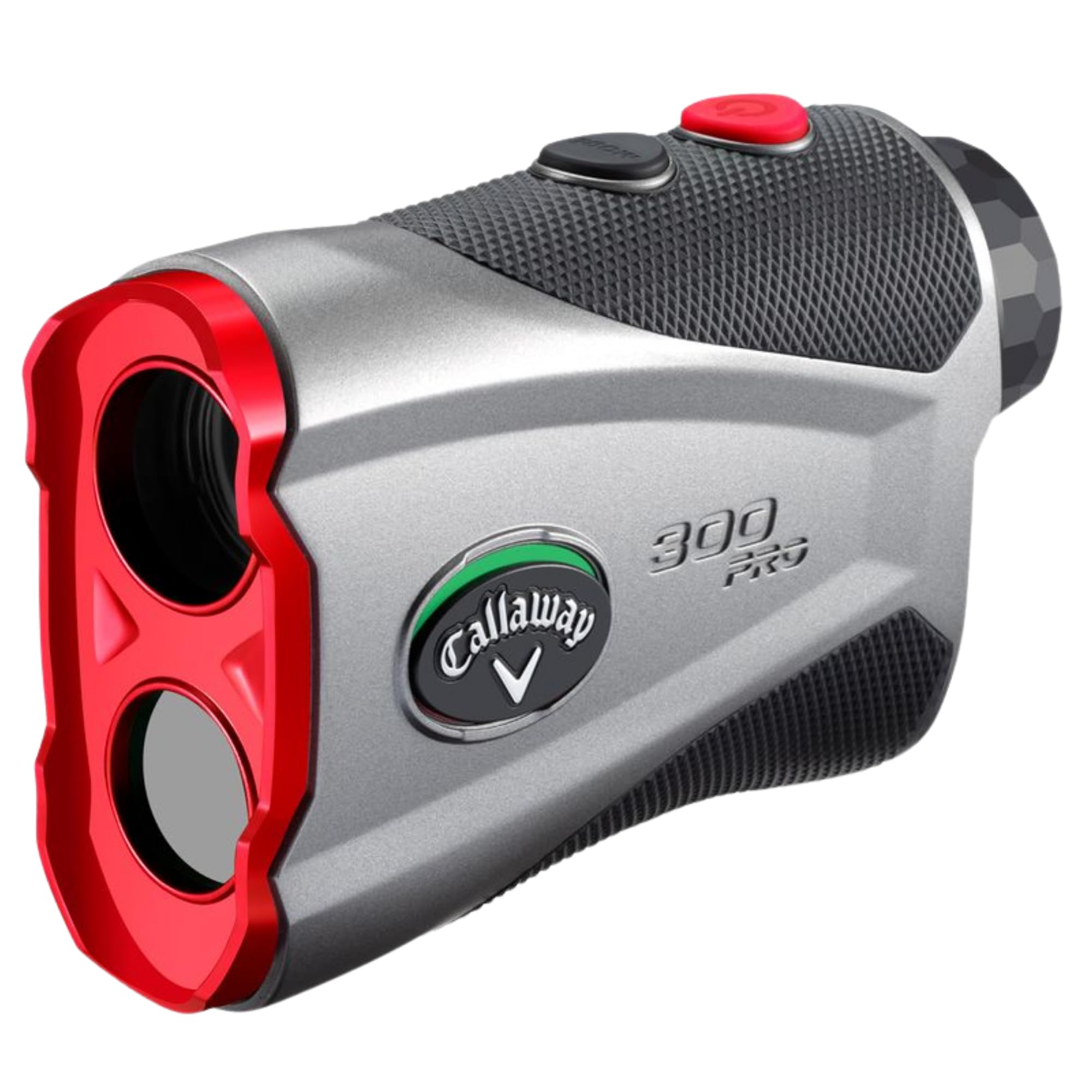
Callaway 300 Pro

93 /100
LBD Score Outstanding

Key details

Range
5–1,000 yards
Weight
8 oz
Magnification
6x
Slope Control
External switch
View on Amazon

A slope rangefinder only earns a place in a competitive bag if the slope can be shut off in seconds. Callaway puts that control on the outside of the body as a physical switch instead of burying it in a menu, so you flip it before the first tee and flip it back for a Tuesday nine. With slope off, the 300 Pro still locks the pin and still pulses; it just stops correcting for the hill.

The rest of the package suits the way a round actually goes. Magnification is 6x, the range runs 5 to 1,000 yards with ±1 yard accuracy, and pin acquisition is rated to 300 yards, comfortably past anything most of us face into a green. When it catches the flag the body gives a short pulse, and that pulse is the detail that stops you walking to your ball with a number you took off the trees behind the green. The Magnahold magnet is strong enough that we stopped putting it back in the case between shots.

What we appreciate most is how little fuss sits between shots: one button, a clear view, a number. The body is 4 inches long and 8 ounces, closer to a small binocular than a pocket gadget, and that's a trade we're happy with, because the larger eyepiece settles against your brow when it's windy. It's rated IPX4, so a passing shower is fine and a soaked round is not.

The hard case clips to the outside of a bag with a carabiner and closes with an elastic band, which is where a rangefinder belongs. One thing to know: the unit can catch the background behind a green instead of the flagstick, and the pulse is your tell. No pulse, take the shot again — it costs two seconds.

Pros

  • External slope switch for competition rounds
  • Pin lock with pulse confirmation to 300 yards
  • Strong magnet and a case that clips on
  • Simple one-button operation

Cons

  • Runs on a replaceable cell, not USB-C charging
Our verdict

This is the slope rangefinder we point most golfers to: a real switch for tournament days, a magnet that stays on the cart, and a case that survives the trunk.

Check Latest Price
2

Best Premium

Bushnell Tour V6 Shift

93 /100
LBD Score Outstanding

Key details

Range
5–1,300 yards
Weight
16 oz
Battery
CR2 lithium
Water Resistance
IPX6
View on Amazon

Step up from our top pick and you buy two things it can't match: a 1,300-yard range and an IPX6 body that shrugs off rain rather than tolerating it. Everything else is Bushnell doing what Bushnell does — PinSeeker target acquisition with a red flashing ring and a firmer vibration, a BITE magnet built for one-handed grabs off a cart bar, and 6x magnification behind the brightest view in this group.

The JOLT feedback is the part we came back to. The ring flashes and the body buzzes the moment it has the flag, and the confirmation is definite enough that you stop re-shooting the same pin to be sure. Add a two-year warranty, a premium case and a battery in the box, and it's the least fiddly unit here.

At 16 ounces it's one of the two heaviest picks, which you notice on a belt clip and not at all sitting in a cart cradle. The premium price is the real obstacle, and it's the only argument against it: play twice a month in good weather and the Callaway does the same work for less money. Play often, in all weather, and want the cleanest look at a flag you can get here, and this is where the money goes.

Pros

  • IPX6 sealing for genuinely wet rounds
  • Clearest optics in this group
  • Unmistakable pin lock with visual JOLT
  • 1,300-yard range with a two-year warranty

Cons

  • Premium price is hard to justify for occasional play
Our verdict

If your budget stretches to the premium tier, this is the one: the clearest view here, a pin lock that snaps, and IPX6 sealing for wet mornings.

Check Latest Price
3

Best Value

Acer Golf Rangefinder

93 /100
LBD Score Outstanding

Key details

Range
800 yards
Weight
11.2 oz
Battery
USB-C rechargeable
Magnification
6x
View on Amazon

No coin cell, no spares rattling around the bag: the Acer charges over USB-C, and a single charge covers a good stretch of golf. For a first rangefinder that's the difference between a tool that stays in the bag and one that gets left at home because the battery died. It also has the features that matter — 6x magnification, an 800-yard range, flag lock with vibration, a cart magnet and slope compensation. We expected to make excuses for it at this price and never had to.

Two things to weigh. Slope sits among six modes rather than on a labeled external switch, so if your club wants a visible toggle for competition play, the Callaway or the REVASRI is the safer buy. At 11.2 ounces it's heavier than the compact picks, though it still disappears in a side pocket. The 800-yard ceiling is the other compromise, and it's one that never touches a shot at a flag.

Pros

  • USB-C charging with no coin cell to buy
  • Slope, flag lock and a magnet at a budget price
  • Anti-shake helps steady the reading

Cons

  • Built-in battery means charging, not swapping
Our verdict

The pick for anyone buying a first slope rangefinder or replacing one on a budget: it charges over USB-C and locks the flag without drama.

Check Latest Price
4

Best Compact

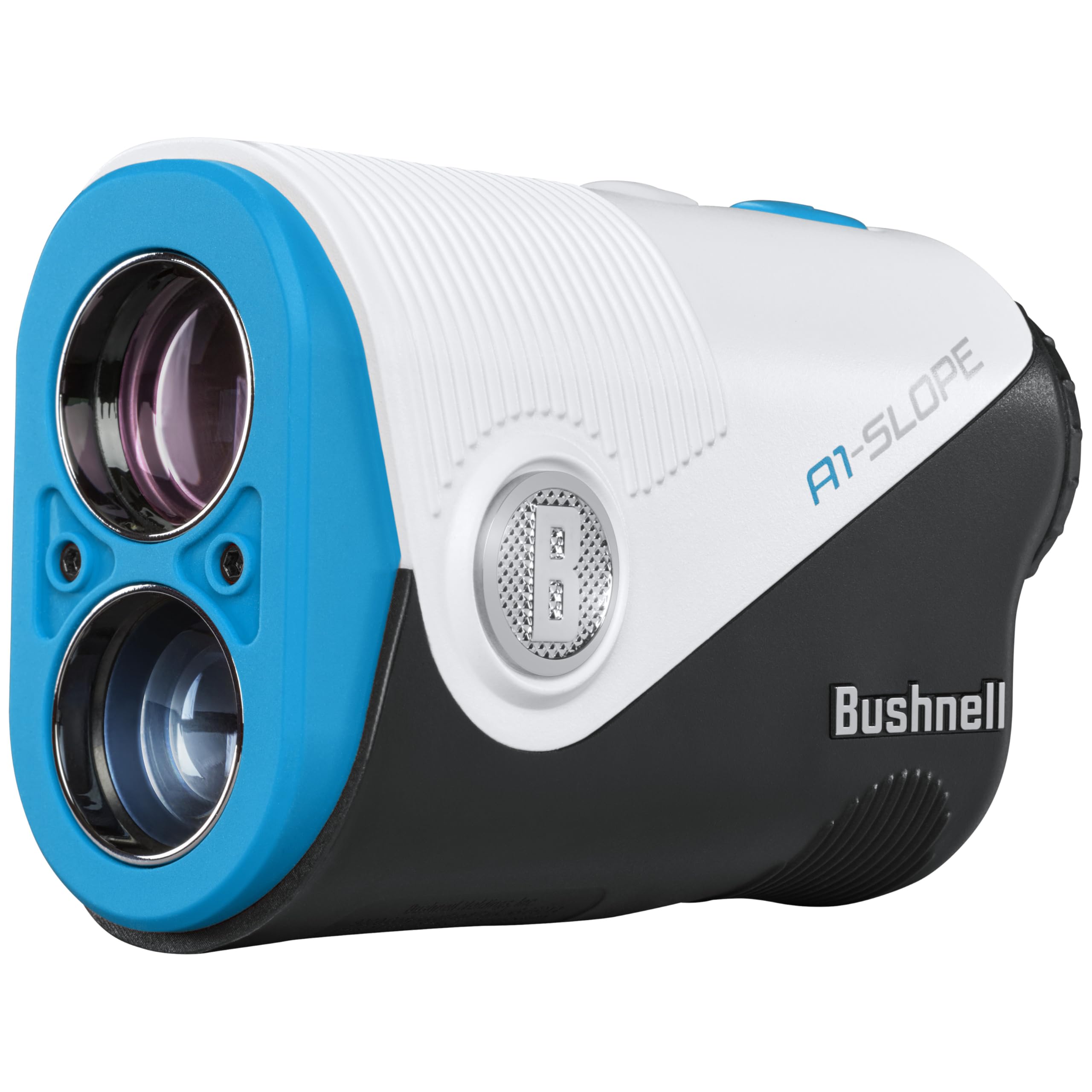
Bushnell A1-Slope

89 /100
LBD Score Excellent

Key details

Range
5–1,300 yards
Weight
5.1 oz
Battery
USB-C rechargeable
Flag Range
1–350 yards
View on Amazon

At 5.1 ounces and under four inches long, the A1-Slope is the smallest unit here and the only one we forgot we were carrying. Bushnell builds it as its smallest laser, and the number that matters is the weight: it rides in a shirt pocket without dragging the fabric down, which is not something you can say about the 16-ounce models in this group.

What surprised us is that the small body doesn't cost you the lock. PinSeeker with JOLT still finds the flag with a buzz and a red ring, slope still switches off for competition play, and the view is bright enough to pull a pin out of a dark treeline late in the day. The eyepiece is smaller than the Tour V6's, which takes a shot or two to get used to if you wear glasses.

Charging is USB-C, and the BITE magnet is a separate skin that wraps the body, so it protects the corners as well as grabbing a cart bar. Range runs 5 to 1,300 yards with flag acquisition out to 350, and Bushnell backs it for two years. It's the pick for walkers, and for anyone who has ever left a rangefinder in the cart.

Pros

  • Pocket-small at 5.1 ounces
  • USB-C charging in a tiny body
  • Slope switch and JOLT pin lock
  • Magnetic skin protects as it mounts

Cons

  • Nearly the money of the larger Tour V6
  • Charges by cable only, with no spare cell
Our verdict

Our pick for walkers and minimalists: it vanishes in a pocket, charges over USB-C, and still gives you Bushnell's slope and pin lock.

Check Latest Price
5

Glare-Prone Days

Blue Tees Series 3 Max+

85 /100
LBD Score Excellent

Key details

Range
1,000 yards
Weight
16 oz
Display
Auto-adjusting red/black
Water Resistance
IPX4
View on Amazon

Most rangefinders give you one display color and let you squint. The Series 3 Max+ reads the light and switches between black text and red, which sounds trivial until a bright, hazy afternoon washes out every other screen in the group. It's the unit we reached for first on those days.

The rest of the package is solid: 1,000 yards of range, 6x magnification, a built-in magnetic strip that grabs a cart frame, IPX4 sealing, a weather-proof case, a lanyard and a two-year warranty. At 16 ounces it's a chunky thing next to the compact picks, though it sits in a cart cradle or a bag pocket without complaint.

One design detail we liked: the display adjusts on its own rather than making you hunt for a brightness button, so there's nothing to fiddle with between shots. The magnet is genuinely strong and never let go on a bumpy path, and the case is the sort you can throw in a car trunk and forget about until the next round.

If glare is what ruins your reads, this is the pick. The display alone is worth the step up from the budget units, the magnet keeps the unit within reach, and the warranty matches what Bushnell gives you. Judge it on readability rather than on raw numbers.

Pros

  • Auto-adjusting red or black display
  • Strong built-in magnetic strip
  • Two-year warranty and weather-proof case
  • 1,000 yards with 6x magnification

Cons

  • Readings and lock can be inconsistent at distance
Our verdict

Buy it for the display: it flips between red and black text as the light changes, which is the most readable screen here in glaring sun.

Check Latest Price
6

New Golfers

MOESAPU BH-GF108

85 /100
LBD Score Excellent

Key details

Range
5–1,200 yards
Weight
6.4 oz
Battery
USB-C rechargeable
Magnification
7x
View on Amazon

At the bottom of the price range, the GF108 hands you most of the premium feature list: 7x magnification, more than several picks here, slope compensation with its own switch, a transflective LCD that stays legible in direct sun, flag lock with vibration, a magnet and USB-C charging. We came away impressed by how little was stripped out to hit the price.

Range runs 5 to 1,200 yards with ±1 yard accuracy, and the body weighs 6.4 ounces, small enough for a jacket pocket and light enough to hang from a bag loop. In the box you get a case, a charging cable, a lens cloth and a lanyard, which is more than a couple of the premium units include.

The honest limit is the company behind it rather than the unit in your hand, and that's a question of how much backup you want when something goes wrong in year two. As a first rangefinder, a second bag, or a gift for someone starting out, it makes a lot of sense. It's the cheapest route to slope, a magnet and magnification, and it behaves like a proper tool rather than a toy.

Pros

  • 7x magnification, more than most picks here
  • Slope switch, magnet and USB-C at a budget price
  • Case, cable, cloth and lanyard included

Cons

  • One-year warranty and no service network behind it
Our verdict

The cheapest way into slope, a magnet and a 7x view: a sensible first rangefinder, as long as you accept a one-year warranty.

Check Latest Price
7

Spare or Backup

REVASRI NK1000

84 /100
LBD Score Excellent

Key details

Range
5–1,000 yards
Weight
4.3 oz
Magnification
6.5x
Slope Control
External switch
View on Amazon

Its 6.5x magnification is higher than most of the picks here, and it does it in the lightest body of the group at 4.3 ounces. Small, light and magnified is a combination that survives on a page with two Bushnells on it, and at this price that's the whole argument.

The external angle switch is what earns the spot: slope off, and the unit is legal for competition play while flag lock and pulse vibration keep working. Charging is USB-C, the pouch has a carabiner for a bag loop, and at under four inches long it disappears in a pocket or a cart cubby.

Where it gives ground is everything after the price. The view is the least consistent here, readings take more attempts at distance, and focus can be fussy from one unit to the next. As a spare, a loaner or a junior's first rangefinder, that's a fair trade; as the only one you carry into a medal round, it isn't.

Pros

  • Cheapest external slope switch in this group
  • 6.5x magnification in a 4.3-ounce body
  • USB-C charging and a carabiner pouch

Cons

  • No cart magnet in the box
  • Battery life is the least predictable here
Our verdict

A cheap second unit with a genuine external slope switch; don't expect the view or the readings to match the picks above it.

Check Latest Price

How We Tested Slope Rangefinders

We built the shortlist by reading through listings and reviews, filtering for slope compensation you can switch off for tournament play, flag-lock vibration, magnetic mounting, and either rechargeable or long-life batteries. We also kept an eye on price so the final group covered the range golfers actually shop, then tested 12 units over eight months.

On the course, we lasered the same pin from the same spot three times in a row and noted whether the reading drifted; we also hit fixed targets at the practice range to see how quickly each unit settled on a number. With a glove on, we timed how long it took to raise the rangefinder, find the flag, and get a lock, and we noted whether the vibration was strong enough to feel through the glove.

We stuck each one to a cart frame and drove over rutted paths to see if the magnet held, then read the display into low sun and deep shade to judge visibility. Durability got a less gentle treatment: a waist-high drop onto grass, a check after morning dew, and a look at the housing and eyecup for build quality and wear. Battery life was tracked across a full weekend of rounds, with rechargeable models noted for how many rounds they lasted per charge.

Value wasn't just the sticker price; we compared what each unit delivered—consistent locks, a readable display, a secure mount—against what it asked us to spend. The ones that scored best did the small things reliably, round after round.

How to Choose a Golf Rangefinder with Slope

Start With a Slope Switch You Can Turn Off

Slope compensation reads the angle between you and the target and turns it into a plays-like number, so the uphill 150 in front of you stops being a 150 club. Competition golf allows a distance device but not slope-adjusted yardage, which makes the off switch the feature you'll actually be asked about at the first tee.

A dedicated external switch is the fastest way to comply and the easiest for a playing partner to see. The Callaway 300 Pro and the REVASRI both use one. Slope handled inside a menu, as on the Acer, can still be legal, but confirm it with your committee before a qualifier rather than on the first fairway.

Range Figures Describe a Reflector, Not a Flag

A 1,300-yard range is how far the laser reaches a reflective surface, not how far it will pick a flagstick out of a green. The number that matters is flag acquisition: the Bushnell A1-Slope is rated to 350 yards on a flag and the Callaway to 300, both beyond anything you'll face at a pin.

So don't pay for total yardage; pay attention to the flag figure and to magnification. Six power is the norm in this group, and the MOESAPU's 7x pulls a distant pin closer while magnifying your own hand shake by the same amount. If your hands aren't steady, magnification is not the upgrade it looks like.

The Pin Lock and the View Matter More Than the Spec Sheet

Pin lock with vibration — JOLT on the Bushnells, pulse on the Callaway — is the most useful feature after slope, because it tells you the number belongs to the flag and not the fence behind it. A buzz or a flashing ring is worth more than another hundred yards of quoted range.

Then check the view. Brightness and focus decide whether you can find a flag at 180 yards in flat afternoon light, and a display that shifts color with the conditions, as the Blue Tees does, is genuinely easier on the eyes than a fixed one. Smaller eyepieces on the compact units take a round to get used to, particularly with glasses.

Battery, Magnet, and Weather Sealing

There are two power philosophies here: a replaceable lithium cell on the Callaway and the Tour V6, or USB-C charging on the Acer, A1-Slope, MOESAPU and REVASRI. Charging is cheaper to run and one less thing to buy; a spare cell takes seconds and never leaves you waiting on a cable in the parking lot.

A built-in magnet is the other small thing that changes daily use, turning a cart frame into a holster so the unit is in your hand before you're out of the seat. Sealing is worth a look if you play in drizzle: IPX6 on the Tour V6 is the best in this group, while most of the rest sit at IPX4.

Frequently Asked Questions

Final Verdict

The Callaway 300 Pro is the slope rangefinder most golfers should buy. The external switch keeps it legal, the pulse lock keeps your numbers honest, and the magnet and hard case keep it where you can reach it between shots.

If you play in real weather and want the best view in this group, the Bushnell Tour V6 Shift earns its premium with IPX6 sealing and a 1,300-yard range. If the budget is fixed, the Acer delivers slope, a vibration lock and a rechargeable battery for a fraction of either.