Best Overall

aosu D1 Classic 4-Cam Kit
Key details
- Power
- Solar, wire-free
- Storage
- 32GB in base, no subscription
- Coverage
- 360° pan and tilt
- Resolution
- 2K (3MP)
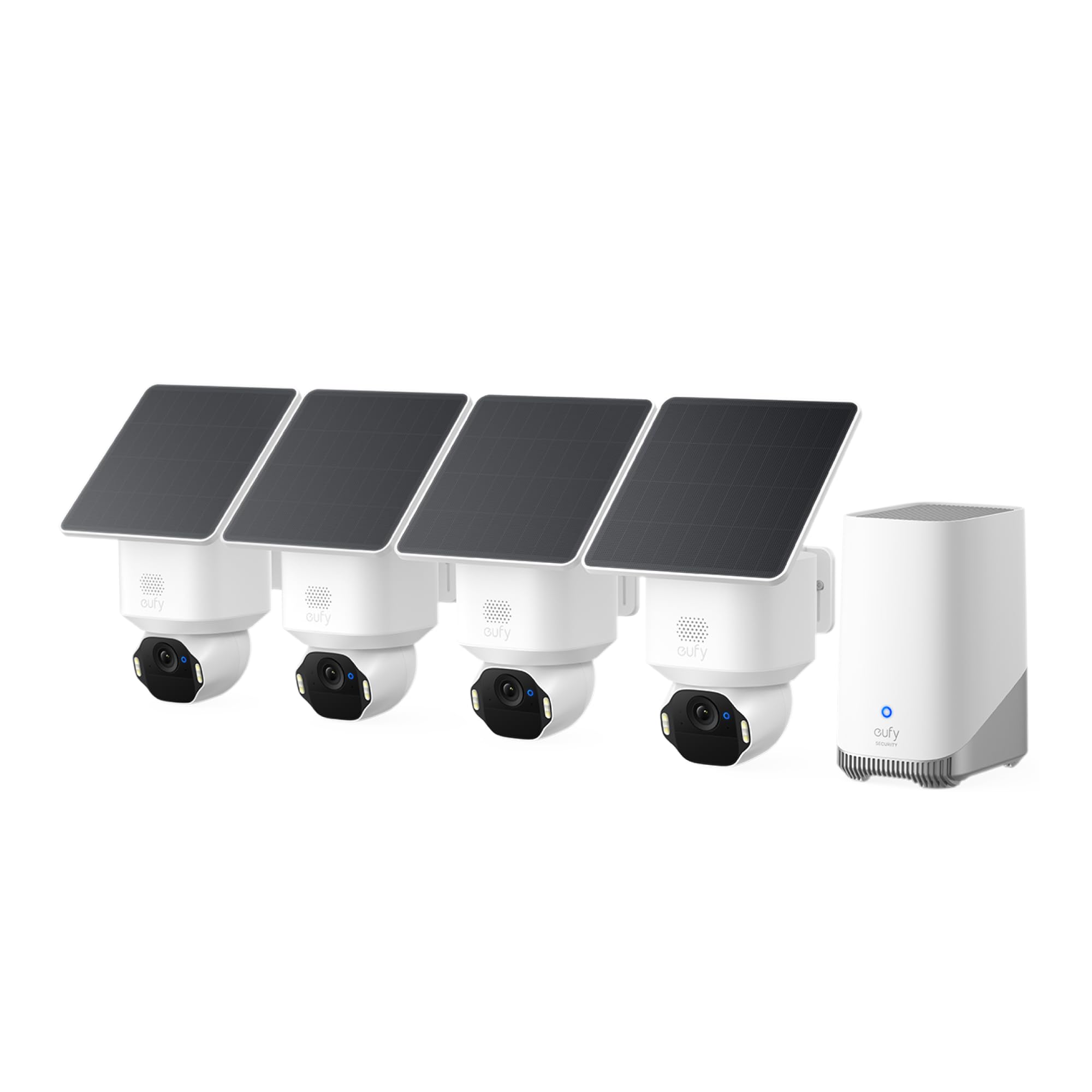
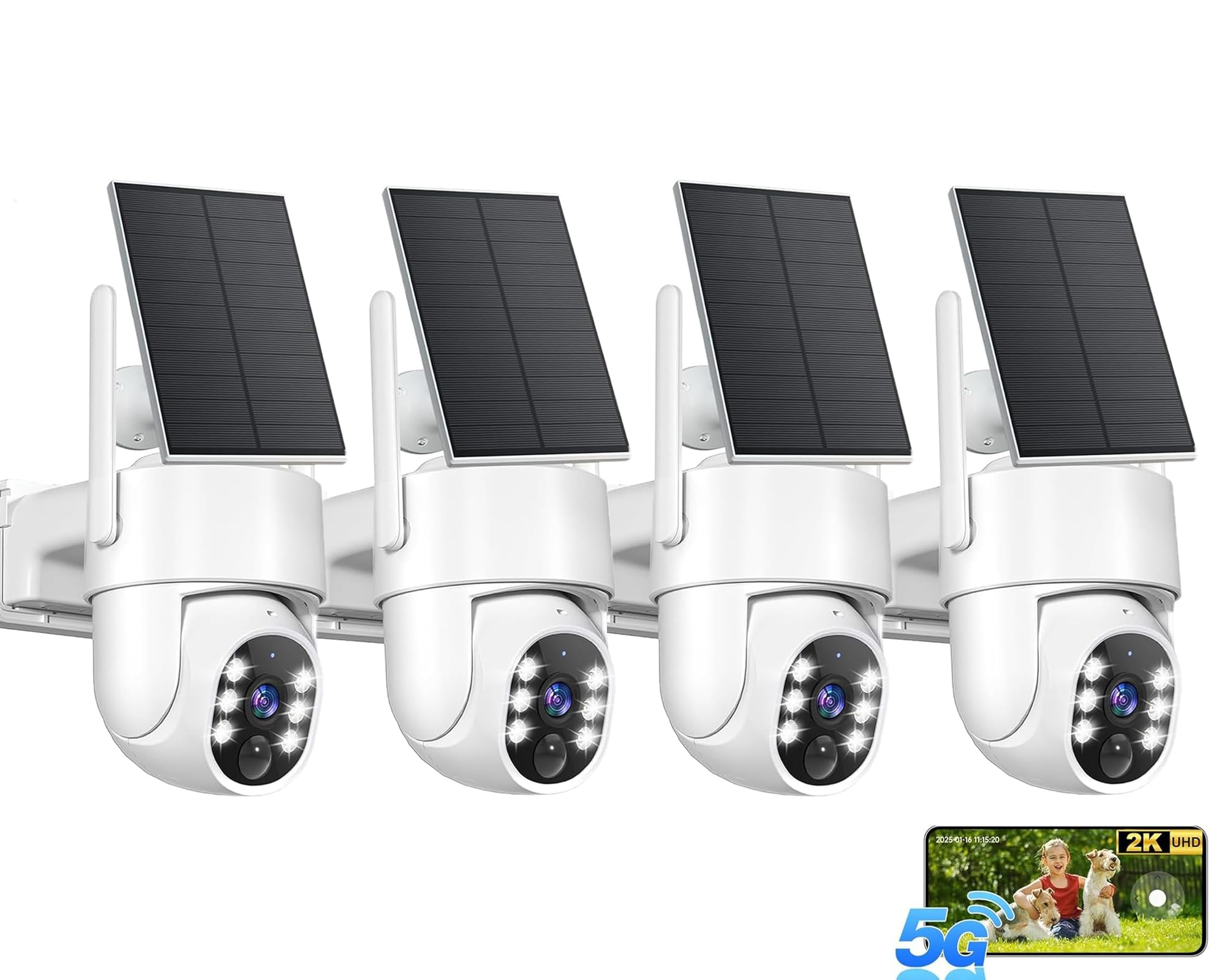
Thirty-two gigabytes sit inside the base station, and nothing about it requires a monthly plan. That combination is why the aosu D1 Classic is the kit we point most people toward: four solar cameras, a hub that records about 120 days of looped footage before it starts overwriting, and a single app screen showing all four feeds at once. It is the closest thing here to a system you buy once and then stop thinking about.
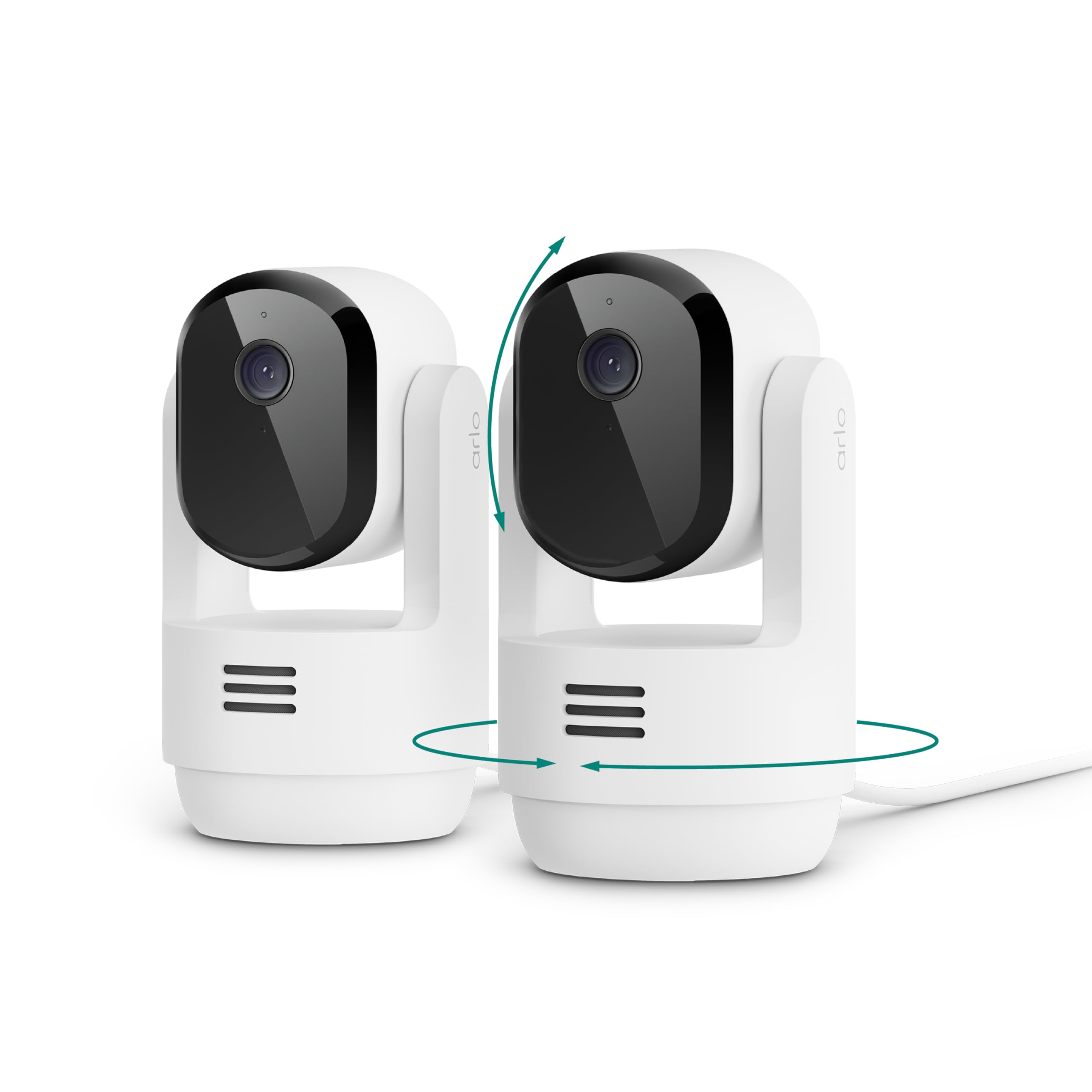
Coverage is the second reason. Each camera pans and tilts through 360 degrees and follows a person once it picks them up, so four of these sweep far more ground than four fixed lenses bolted to the same walls. The 2K sensor and 6x digital zoom are enough to tell a delivery driver from a neighbor at the end of a walk, and the built-in spotlights give you full-color night footage instead of grey ghosts.
Setup was the part that surprised us. The cameras do not join your home Wi-Fi at all; they pair to the base, which takes an Ethernet cable to the router. Keeping four video streams off a network already carrying phones and a television made a bigger difference to how quickly live view opened than we expected, and it means the cameras keep working when the Wi-Fi side of the house gets busy.
One thing to plan around: that base wants a free LAN port at the router, so a finished basement or a closet router turns into a cable run you had not budgeted for. A solar panel that sits in shade most of the day will also fall behind while the other three stay full, so walk your mounting spots before you drill.
Pros
- 32GB local storage with no subscription
- Pan and tilt tracking follows movement
- Solar panels keep four cameras charged
- Cameras talk to the base, not your Wi-Fi
Cons
- Base needs a free Ethernet port at the router
- Auto tracking can lose a subject after the first pass
For most homes this is the kit to buy: four solar cameras, local recording in the base, and no monthly bill. The hub is what makes it feel like a system.