Best Key Finders of 2026

Losing your keys is a five-second mistake that can eat an entire morning, and by the time you're patting down pockets you're already late. A key finder does one thing: it makes the missing item shout for you. The complication is that the category splits in two. One kind pairs a handheld remote with receivers you clip to a keyring or stick to a TV remote, and it works with no phone in sight; the other is a small Bluetooth tag that talks to your phone and, often, to a network of other people's devices, so it can be found from across town.

I've kept a spare key in the same drawer for years and still had opinions going in. Over the past four months, my team and I lived with 14 of these things — on keys, on remotes, in bags, on a suitcase headed out of state — and the deciding factors turned out to be volume, range, battery life, and whether setup took ten seconds or ten minutes.

Here's what first-time buyers miss: the loudness figure on the box is measured at the tag, not through a couch cushion or the bottom of a tote, and the range figure assumes open air. The picks below were judged on real rooms instead.

1

Best Overall

Jegoteer KF04A Key Finder

89 /100
LBD Score Excellent

Key details

Receivers
4 oval tags
Alarm Volume
85 dB
Battery Type
CR2, replaceable
Working Range
131 ft
View on Amazon

Four beeping tags and a handheld remote for less than any other four-tag set here is the short version of why this Jegoteer kit is our top pick. There's nothing clever about it: four oval receivers, a transmitter with a colored button for each, 131 feet of stated range and an 85 dB chirp. The model has been sold in roughly this form for years, which reads to us as a good sign — the design has had time to settle, and nobody has replaced it with something flimsier.

It earns its place in the hand. The buttons are big and color-coded, so someone who has never paired a Bluetooth device can work it on the first try, and there's no app, no account and no phone involved at any point: drop in the included batteries, press, follow the sound. Each receiver also flashes an LED while it beeps, which is the part that helps when the keys are in a coat pocket in a dark hallway. The pry tool packed in for changing a CR2 cell is a small thing that saves a kitchen-knife operation.

Two costs come with it. The tags measure 1.9 by 1.2 by 0.3 inches, which sits fine on a keyring and feels chunky stuck to the back of a phone, and the warranty runs three months, thin for something that lives in a pocket. Neither is enough to move it off the top spot. What you're buying is radio range, a loud chirp and four beepers for the least money in this group — and a house that stops shouting about where the keys went.

Pros

  • Four receivers for the lowest outlay here
  • 85 dB beep with a flashing LED
  • Works with any phone, no app or account
  • Replaceable CR2 cells with a pry tool included

Cons

  • Bulky on a phone or a slim wallet
  • Three-month replacement warranty
Our verdict

Our default pick for most households: a big-buttoned remote that works with any phone, needs no app or account, and puts four loud beepers on the things that go missing.
Check Latest Price
2

Best for iPhone Households

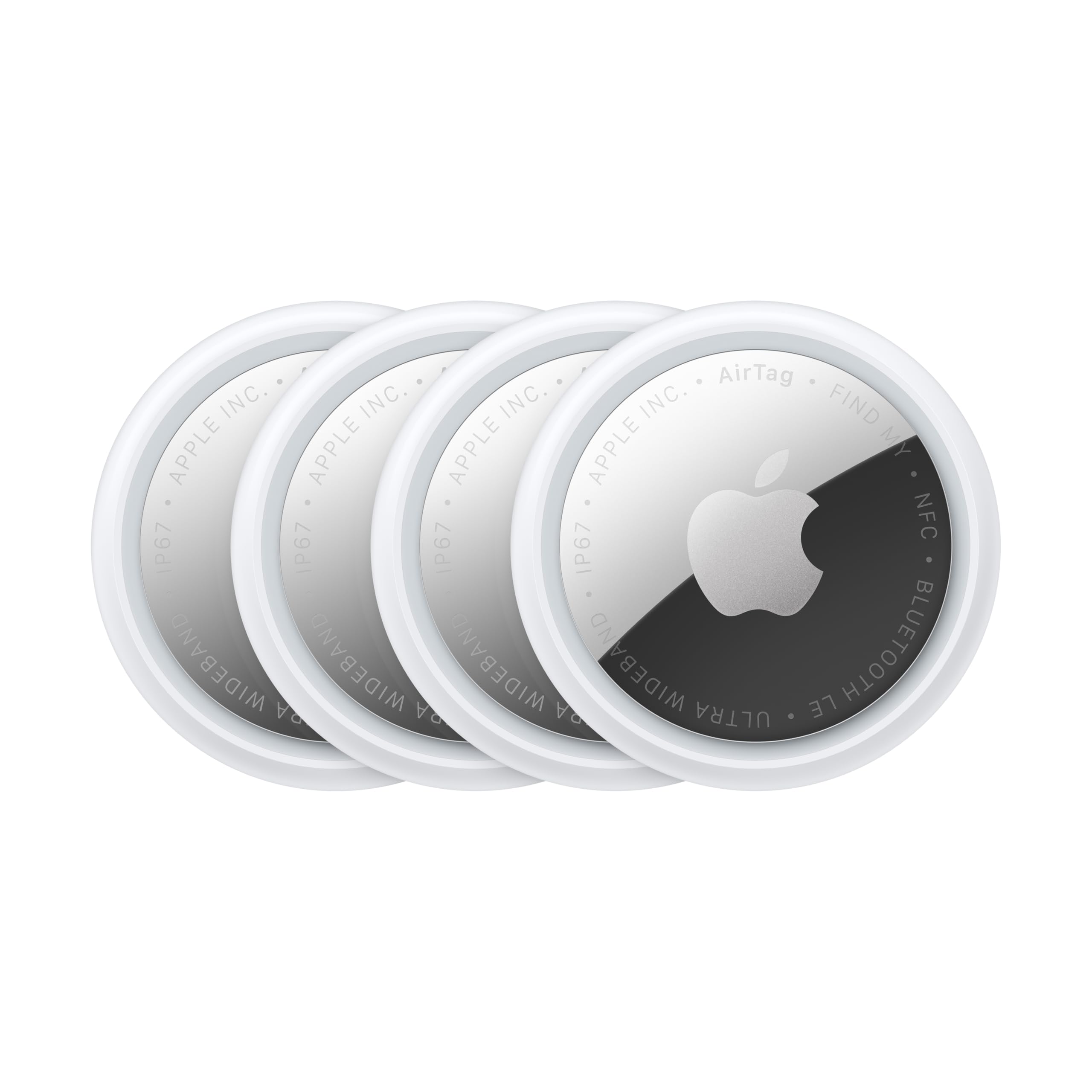
Apple AirTag (2nd Gen, 4-Pack)

93 /100
LBD Score Outstanding

Key details

Battery
Replaceable CR2032
Speaker
50% louder than previous generation
Pack Size
4 tags
Precision Finding
Ultra Wideband, iPhone and Apple Watch
View on Amazon

Nothing else here tells you how far away your keys are and which direction to walk. Precision Finding turns the last few yards of a search into step-by-step directions on an iPhone and, now, an Apple Watch, and it's the one capability the cheaper Find My tags on this page simply don't have. Once you've used it to walk straight to a set of keys under a coat, going back to following a beep feels primitive.

The second generation is also a better beeper than the first: Apple claims a 50% louder speaker with a new, more distinctive chime, which is the difference between hearing the tag in the next room and guessing. The tag is the familiar 1.26-inch disc with a user-replaceable CR2032 inside. Setup is one tap, and you can share a tag's location with a partner or an airline's lost-bag desk for a set period, then take the access back.

The catch is the ecosystem. None of this works on Android, and the tag is invisible to anyone you haven't explicitly shared it with — which is the point, but it does mean one household, one platform. Pairing is usually instant and occasionally stubborn; if a tag refuses to join Find My on the first attempt, reset it before deciding it's faulty. On battery, the quoted year from a CR2032 is realistic for most people and unrealistic for some, so glance at the battery level in the app before a trip.

This is the priciest thing on the page by a wide margin, and it doesn't come with a keyring loop — plan on a holder. What the money buys is a shorter search: an arrow in the last ten yards, a louder chime, and a network that keeps reporting after your keys have left the neighborhood. For an iPhone household that misplaces things outside the house, that's the whole argument.

Pros

  • Precision Finding shows direction and distance
  • 50% louder speaker than the previous generation
  • Find My network locates items far from home
  • Share location with contacts and airlines

Cons

  • iPhone and iPad only, no Android
  • Most expensive pick in this set
Our verdict

For an all-iPhone household that loses things away from home, this is the pick — the direction arrow is worth the premium the first time a bag goes missing.

Check Latest Price
3

Best for Remotes and Wallets

Esky KF-06A Key Finder

89 /100
LBD Score Excellent

Key details

Receivers
6
Alarm Volume
85 dB
Tag Thickness
0.2 in
Working Range
100 ft
View on Amazon

Six things go missing in a normal house — two sets of keys, the spare, the TV remote, a wallet, the glasses — and this Esky box covers all six from one handheld remote. It's the set we point at anyone who wants to walk around pressing buttons until something beeps, and the whole setup takes about five minutes because there is nothing to pair and nothing to download.

The receivers are 0.2 inches thick, which matters more than it sounds: they sit almost flat on the back of a TV remote or inside a wallet pocket without turning it lumpy, and that thinness is why this one wins for remotes rather than keys. Esky includes the CR2032 cells, a key ring for each tag and hook-and-loop pads for the things you don't want to hang. The transmitter has a single button per receiver, color-coded, which is the entire interface.

The claim of 100 feet is optimistic in the way every radio remote is optimistic: it finds keys two rooms away and struggles with a set buried in a coat in the basement. The beep is a small-speaker 85 dB rather than a siren, so the practical rule is to keep receivers where sound can escape — on a keyring, on the outside of a bag, not inside a closed drawer. Six receivers also means six settings to remember when nothing beeps, and the color coding is the only thing keeping that straight.

Pros

  • Six receivers cover the whole household
  • 0.2-inch tags sit almost flush on remotes
  • Set up in about five minutes, no app
  • Batteries, key rings and pads included

Cons

  • Six coin cells rated at about six months
Our verdict

The set we hand to a busy household: six thin stick-on receivers, a remote anyone can work, and a five-minute setup with no app in sight.

Check Latest Price
4

Best for a Whole Household

Segauin KF08A Key Finder

88 /100
LBD Score Excellent

Key details

Receivers
8
Alarm Volume
85 dB
Working Range
115 ft
Stated Battery Life
9 months
View on Amazon

Most receivers in this category are flat plastic pebbles. Segauin's are little square boxes with a light on top that stand up on a desk, which is either pointless or quietly clever depending on where things get lost in your house — a receiver you can prop on a shelf where it's visible beats one that slides behind the sofa cushions and stays there.

Eight receivers, a 115-foot range and the same 85 dB rating as everything else here, with the sound and a flashing red LED working together. The transmitter is color-keyed and stands upright too, so it has a home of its own rather than rolling around a drawer. Batteries go in, you press a button, and you're done — no app, no pairing, no account, which is the entire appeal of this family of finder.

Where it falls down is bulk. The kit weighs 150 grams and the boxes are noticeably chunkier than the flat tags on the Jegoteer or Esky sets, which is fine hanging off a keyring and clumsy on a phone or a slim wallet. Battery life is quoted at nine months with a year of standby, and that's a best case, not an average. Buy it for the count: eight separate things, one remote, one place to look. For a single set of keys, the extra tags are just extra batteries.

Pros

  • Eight receivers in one set
  • 115 ft range through walls
  • Beep plus flashing LED on every tag

Cons

  • Receivers are bulky next to flat tags
  • Nine-month battery claim is a best case
Our verdict

Buy this when eight separate things need a beeper and one remote should cover all of them — a whole house, a workshop, or a parent who misplaces everything.

Check Latest Price
5

Best Budget Find My Tracker

UGREEN FineTrack Tracker (4-Pack)

89 /100
LBD Score Excellent

Key details

Tag Size
1.42 x 0.29 x 1.42 in
Pack Size
4 tags
Battery Life
Up to 2 years, replaceable
Certification
Apple Find My (MFi)
View on Amazon

Four Find My tags for a fraction of what Apple charges for four is the pitch, and unlike most cheap AirTag alternatives, this one is properly certified rather than merely compatible-sounding. UGREEN's FineTrack four-pack gets you onto Apple's network with one tap per tag, and once a tag is on your account it reports the same way an AirTag does: last known location, directions in Maps, a sound you can trigger from the app.

The battery is the part we appreciate most. It's a replaceable CR2032 rated for up to two years, where a lot of Bluetooth trackers seal the cell in and turn the whole tag into landfill the day it dies. Each tag is 1.42 inches across and 0.29 thick, small enough to disappear on a keyring and slim enough to slip into a bag pocket. Pairing really is one tap when it takes — this is the least fiddly setup in the Apple-compatible group.

What you give up is precision. There's no direction-and-distance finding here, so the app shows a location and a radius and leaves the last few yards to your ears, and the alert is a brief chirp rather than a full alarm. It's iPhone and iPad only, as the packaging says. Four tags on four bags for roughly the price of one brand-name tag changes the arithmetic enough that we forgive most of it.

Pros

  • Two-year replaceable CR2032 battery
  • One-tap pairing with Apple Find My
  • Four Apple-certified tags in one pack

Cons

  • No Precision Finding, so location stays approximate
  • Alert is a brief chirp, not an alarm
Our verdict

The way we put four Find My tags on four bags without paying Apple prices — just don't expect the arrow that walks you to the exact spot.

Check Latest Price
6

Cheap Starter Set

Reyke QF04A Key Finder

89 /100
LBD Score Excellent

Key details

Receivers
4
Alarm Volume
80 dB
Working Range
131 ft
Batteries Included
4 lithium metal
View on Amazon

Press the button, hear one chirp, press it again. The Reyke receivers sound once per press rather than beeping continuously, so a search develops a rhythm: tap, listen, step, tap. That's fine when the keys are somewhere quiet and mildly maddening when they're under a pile of laundry and you have to keep thumbing the remote to keep the sound coming.

Four receivers, a 131-foot range, 80 dB and color-coded buttons big enough to work by feel — for the money this is a solid starter set, and the oversized buttons make it the version we suggest for an older parent who won't open an app, let alone pair a tag. The receiver bodies are a step above the flimsiest tags in this group, and the LED on each one does more for a dark-corner search than the extra decibels would.

The mounting kit is the usual mix: key rings, adhesive pads and a small screwdriver for the battery doors. The pads are the weak link, as they are on every stick-on tag here — a receiver that silently falls off a remote is worse than no receiver, because you think it's still attached. The claimed 131 feet is a straight line with a fresh battery in it; walls take most of that back, which is true of every RF set on this page.

Pros

  • Large color-coded buttons suit older hands
  • 131 ft stated range through doors and cushions
  • Four receivers on a tight budget

Cons

  • Batteries run down faster than expected
Our verdict

A cheap, genuinely simple starter set with buttons big enough for anyone — as long as you don't mind pressing the remote over and over while you hunt.

Check Latest Price
7

Trying Find My

Qylara Find My Tracker (2-Pack)

78 /100
LBD Score Very Good

Key details

Pack Size
2 tags
Alarm Volume
80–100 dB
Working Range
400 ft
Water Resistance
IPX4
View on Amazon

At 1.25 inches square and 6.6 grams, this is the smallest of the Find My tags here — small enough to vanish into a bag pocket and light enough that a cat collar wouldn't notice it. The shell is IPX4, so rain on a backpack or a splash by the sink isn't the end of it, and the CR2032 inside is replaceable and rated for about a year.

Pairing is one tap in the Find My app on paper, and the sound alert and location reporting both work through Apple's network once a tag is on your account. The 400-foot Bluetooth figure is a line-of-sight number in open air; inside a house, treat it as a room-to-room device and let the network handle the rest. Two tags for the least money in this group is the honest summary of the value.

Pairing is also the least predictable part, and it's the first thing to test when the box arrives: if a tag won't join Find My after two attempts, exchange it rather than fight it, because a tracker that won't pair is a plastic square. The sound is on the quiet side for a tag claiming up to 100 dB, which makes it better suited to a bag you can see than a set of keys under a sofa. Try this pair to learn whether app tracking fits how you lose things, then spend properly if it does.

Pros

  • Smallest, lightest tags in this set
  • IPX4 shell handles rain and splashes
  • Two tags with a one-year CR2032

Cons

  • Quiet alert for a tag rated up to 100 dB
  • Three-month warranty
Our verdict

An inexpensive two-tag way to find out whether app-based tracking suits you, provided you test the pairing the day the envelope arrives.

Check Latest Price
8

Keys Plus a Light

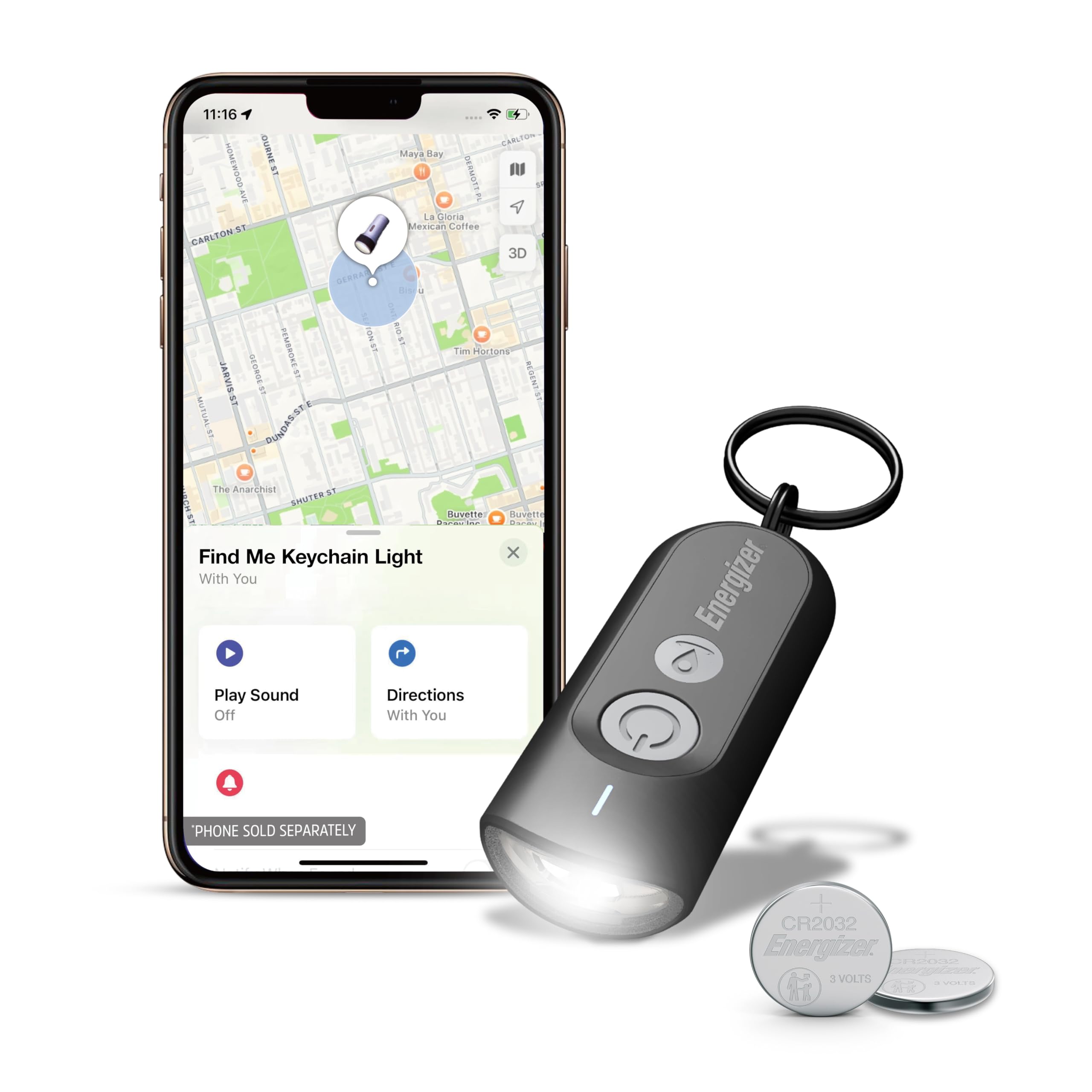
Energizer Find Me Keychain Light

79 /100
LBD Score Very Good

Key details

Light
LED keychain light
Weight
0.78 oz
Battery
Replaceable CR2032
Compatibility
iPhone, iPad, Mac
View on Amazon

A keychain light that also lives on Apple's Find My network is a small idea, neatly executed: one object on your keys instead of two, and the light is the part you'll use most. It's a bright little LED with a tracking chip behind it, and for anyone who has ever fumbled for a lock in a dark stairwell, that combination makes more sense than a bare tag.

At 63 by 25 by 13 millimeters and 22 grams, it hangs like a small fob rather than a disc, and it sits comfortably against a keyring without bulk. Pairing is the standard Find My one-tap, and once it's in the app you get the usual: play a sound, check the last known location, walk to it with directions in Maps. It connects to iPhone, iPad and Mac, and that is the entire list.

Two CR2032s run both the light and the radio, and they're replaceable, which we like. Treat the cells as consumable if the flashlight becomes a habit — a light that gets used nightly will drain them well inside a year, and both functions die with the same battery. It's a fair trade for the convenience, but it's the reason this isn't the set to buy for a drawer full of tagged items.

The arithmetic is the sticking point: this is one tag for more money than several four-packs in this group, and it only works if you're on Apple. Set that against buying a light and a tracker separately and clipping them to the same ring, and the single object starts to look like the tidier answer. For a person whose keys are also their flashlight, that's the whole decision.

Pros

  • Find My tracking plus a usable LED light
  • 22 g and short enough for a keyring
  • Replaceable CR2032 cells

Cons

  • iPhone, iPad and Mac only
  • One tag costs more than some four-packs here
Our verdict

Worth it if your keys already carry a light or should: one object on the ring instead of two, with Apple's tracking built into the same body.

Check Latest Price

How We Chose and Tested Key Finders

We started by mapping the two families of product — remote-and-receiver kits and Bluetooth tags — then cut the field by price per tag, how many receivers came in the box, whether the battery could be replaced or was sealed in, and whether the thing needed a phone (or specific phone) to function at all. That left 14 units, which we then used the way people actually use them.

Receivers went onto keyrings and wallets, adhesive tags went onto TV remotes, and one tag rode along in a checked bag for a weekend trip. To judge volume, we set each finder off from the far end of the house, then again with a couch cushion dropped on top of it, and noted whether we could actually hear it over a running faucet. To judge range, we walked down the block and around a corner until the signal quit, marking the spot where it went from reliable to a coin flip.

For accuracy, we watched whether the app pointed to a specific spot or just a general area, and how long it took to refresh. We timed setup with a family member who doesn't enjoy this sort of thing, tracked how often the Bluetooth link dropped and how fast it reconnected, and pressed the remote repeatedly to see if it pinged the right tag when six were in range.

Battery life got tracked across the whole four months, with notes on which tags were already fading by month two. We also checked clips and adhesive strips for looseness, tested whether the little LED actually helped inside a dark tote, and priced out kitting an entire house — keys, wallet, remote, second set of keys — since that's the number most shoppers end up paying.

How to Choose a Key Finder

Radio remote or phone tracker

An RF set like the Jegoteer or the Esky ships a handheld transmitter and battery-powered receivers that beep when you press the matching button. No app, no pairing, no account, and it works with any phone or none at all, which is why it's still the right answer for a lot of households. A Bluetooth tag like the AirTag or the UGREEN FineTrack does the opposite: everything runs through an app, and a crowd-sourced network keeps reporting after your keys have left the house.

The trap is the range claim. 131 feet is a straight line with nothing in the way, and in a real house walls, floors and a closed door eat most of it. The other thing nobody mentions: the remote is one more object to lose. Give it a fixed home — a hook by the door, a spot on a shelf — and it becomes a habit inside a week. And check the platform before you spend: the Find My tags here are iPhone-only.

What 80 dB actually sounds like

Every RF set on this page claims 80 to 85 dB, which is close enough to tell you nothing. Those figures are measured at the receiver, and a tiny piezo speaker loses volume fast the moment something is between you and it. What matters more is whether the beep repeats while you hold the button or sounds once per press, and whether an LED flashes alongside it — a light does the work in a dark room where sound bounces uselessly.

Sound also has to escape. A receiver in a closed drawer, a zipped bag or a coat pocket is a quieter receiver, whatever the box says. Decide where the tag will live before you decide which one to buy: clipped to a keyring or the outside of a bag, it's a different device than one buried in a wallet.

How many receivers you actually need

Count what genuinely goes missing in a week before you buy anything: your keys, the spare keys, the second car's keys, the TV remote, a wallet, a bag. Four covers a couple. Six or eight covers a household, a shared office, or a parent in assisted living whose keys have a habit of wandering — the assisted-living case is where the bigger sets earn their money.

More receivers is more upkeep, not less. Each one is another cell to replace and another thing to attach, and an eight-tag set where two tags are used is worse value than a two-tag set where both are. Buy the count you'll actually populate.

Mounting, thickness and batteries

A tag only helps if it stays attached. Keyrings and clips are the reliable option; adhesive pads are the weak link on every stick-on set here, and adhesive is exactly what you use on a remote or a phone. If you're sticking a tag to something, press it onto a clean, flat surface and expect to re-do it eventually.

Thickness matters more than footprint on a TV remote or inside a wallet. The Esky tags are 0.2 inches thick and sit almost flush; a 0.3-inch receiver on the back of a phone is noticeable in the hand. On batteries, buy replaceable every time — a finder with a sealed cell is a finder with an expiry date. Keep spare coin cells and any receiver with a loose battery door away from small children; a swallowed button battery is a medical emergency.

Frequently Asked Questions

Final Verdict

Start with the Jegoteer set. Four receivers and a big-buttoned remote cover the keys, the spare and the TV remote, the chirp is as loud as anything on this page, and none of it depends on which phone you carry. For most households that's the whole job, done.

If everyone in the house is on iPhone and things go missing outside the front door as often as inside, the AirTag's Precision Finding is worth the step up. Tighter budget, same ecosystem? The UGREEN four-pack gets you onto Find My with a battery you can actually change.