Best Lenses for Street Photography of 2026

Half of street photography is simply not being noticed. A lens the size of a thermos turns a quiet moment at a crosswalk into a scene, and once someone clocks you, the frame is gone. The catch is that the smallest lenses are usually the slow ones, so the real decision is where to sit between staying invisible and still having something left at dusk.

We spent eight months carrying 11 lenses through crowded markets, evening transit platforms, and drizzle nobody planned for. The ones that lasted focused without hunting, stayed sharp wide open, and never made me feel conspicuous. They held up in editing too, where edge distortion and the way a lens renders a stranger's face are what you actually notice.

Not every pick is a small prime. A few zoom across the street range, a couple close-focus almost like a macro, and one or two shrug off weather. Value mattered as much as any of that, since a lens that lives in the bag isn't a bargain at any price. The list below starts with the ones we argued over.

1

Best Overall

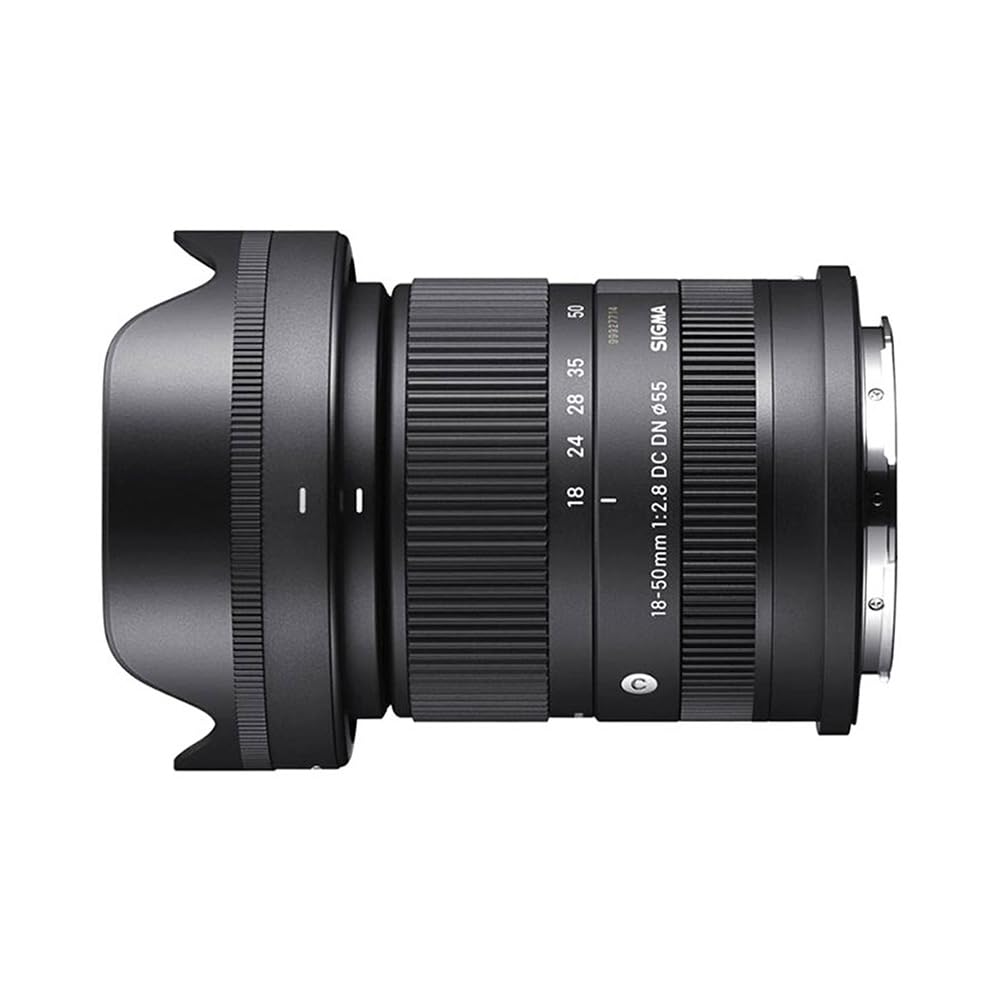
Sigma 18-50mm f/2.8 DC DN

93 /100
LBD Score Outstanding

Key details

Mount
Sony E
Weight
10.2 oz
Focal Length
18-50mm
Max Aperture
f/2.8
View on Amazon

The 18-50mm f/2.8 DC DN is the lens we reach for when we want one small zoom to cover almost every street situation. On an APS-C Sony body it frames like a 27-75mm, so you can go from a wide street corner to a compressed candid without changing lenses, and the constant f/2.8 keeps the finder bright when the light drops. That combination is why it is our top pick.

At 290 grams it does not drag on a small body, and the barrel stays short enough to keep the camera low and unobtrusive. We appreciated the smooth zoom ring and the simple handling; there is no aperture ring, so you set exposure from the camera. Autofocus is generally quick, though it can take a moment to settle on low-contrast subjects.

Image quality is the reason it earns the top spot: the lens stays sharp through much of the range, with the long end especially crisp. The seven-blade aperture gives reasonable separation at f/2.8, though this is not a bokeh specialist. For most Sony APS-C street shooters, it is the most versatile street lens here.

Pros

  • Constant f/2.8 across the zoom
  • Compact 290 g body
  • Versatile 27-75mm equivalent range
  • Sharp, useful all-around zoom

Cons

  • No optical stabilization on non-IBIS bodies
  • Not weather-sealed for wet streets
Our verdict

We recommend the Sigma 18-50mm f/2.8 as the street lens most people should start with: it is small, covers wide-to-tight framing, and keeps a fast aperture throughout.

Check Latest Price
2

Best Compact Prime

Fujinon XF27mm f/2.8 R WR

90 /100
LBD Score Outstanding

Key details

Weight
2.96 oz
Focal Length
27mm
Max Aperture
f/2.8
Weather Resistance
Water resistant
View on Amazon

If the goal is to disappear into the street, the Fujinon XF27mm f/2.8 R WR gets closer to that than any other lens here. Its 27mm focal length gives roughly a 40mm view on Fuji's APS-C bodies, a natural angle that includes context without shouting wide-angle, and the 84-gram barrel barely adds anything to the camera.

The aperture ring is the detail we appreciate most. It lets you set exposure by feel, and on a Fuji body with a dedicated shutter-speed dial it makes the camera feel like a street tool rather than a computer. The lens is also weather-resistant, which is rare at this size, and the 39mm filter thread keeps accessories small. Image quality is crisp and contrasty, with the kind of natural rendering that suits documentary work.

The catch is the focus motor, which is audible enough to notice in quiet scenes and can be distracting on video. That is a real trade-off for a lens this small, but it does not affect stills much in noisy streets. If you want the most compact Fuji street prime and can live with that, this is the one.

Pros

  • Tiny 84 g body
  • Weather-resistant construction for street use
  • Natural 40mm-equivalent field of view
  • Aperture ring for direct control

Cons

  • No optical stabilization
Our verdict

We recommend the XF27mm f/2.8 for Fuji shooters who want a near-pocketable, weather-resistant street prime with a natural 40mm view and traditional aperture control.

Check Latest Price
3

Best Full-Frame Zoom

Canon RF28-70mm f/2.8 IS STM

90 /100
LBD Score Outstanding

Key details

Weight
1.6 lb
Focal Length
28-70mm
Max Aperture
f/2.8
Weather Resistance
Water resistant
View on Amazon

Full-frame Canon shooters have a different street problem: most f/2.8 standard zooms are big enough to announce themselves. The RF28-70mm f/2.8 IS STM is the exception in this set, a weather-resistant zoom that covers 28-70mm without the bulk of an L-series 24-70. On a full-frame body it gives you a wide-enough 28mm for street scenes and a 70mm end for tighter candids.

At 1.6 pounds it is not a pocket lens, but it balances well on a full-frame body and saves weight over the L-series alternative. The constant f/2.8 aperture and optical stabilization make it a genuinely useful evening lens, and the weather sealing means you do not have to head home when the weather turns. The zoom ring is smooth and the autofocus is fast and quiet.

We think it is the best full-frame Canon street zoom here because it combines a useful range, a fast aperture, and sealing in one lens. The images are sharp through the range, with good center performance and colors that need little work. If you want one lens for travel and street, this is the Canon zoom that earns its space.

Pros

  • Constant f/2.8 full-frame zoom
  • Weather-resistant build for bad weather
  • Optical stabilization for handheld shots
  • Fast, quiet autofocus for street

Cons

  • Premium price for a street zoom
Our verdict

We recommend the RF28-70mm f/2.8 for full-frame Canon shooters who want one weather-sealed street zoom with a useful range and fast aperture.

Check Latest Price
4

Best Wide-Angle Prime

Tamron 20mm f/2.8 Di III

85 /100
LBD Score Excellent

Key details

Mount
Sony E
Weight
7.76 oz
Focal Length
20mm
Max Aperture
f/2.8
View on Amazon

Twenty millimeters is wider than most street photographers need, and that is the point of the Tamron 20mm f/2.8 Di III. On a full-frame Sony it gives a sweeping 94-degree view that pulls in the whole corner, and on APS-C it behaves like a 30mm equivalent. The 220-gram barrel is light enough to keep on the camera, which makes it a natural choice for tight streets and layered scenes.

The 1:2 close-focus magnification is a genuine bonus. It lets you move from a wide street scene to a detail on a wall or a market stall without switching lenses, and the moisture-resistant construction adds confidence in bad weather. Sharpness is good for the money, and the wide angle makes zone focusing easy.

Barrel distortion is visible at f/2.8, so keep straight lines away from the edges or correct it in post. If you want a light wide-angle street lens and can work around that, it is a strong choice. The wide view rewards careful framing more than quick snapshots.

Pros

  • Light 220 g body
  • Weather-resistant construction for wet days
  • 1:2 close-focus magnification for details
  • Wide 94-degree view for tight streets

Cons

  • Audible, slow autofocus in low contrast
Our verdict

We recommend the Tamron 20mm f/2.8 for Sony shooters who want a light, weather-resistant wide-angle street lens with a useful close-focus bonus.

Check Latest Price
5

Best Budget Prime

Canon RF50mm f/1.8 STM

94 /100
LBD Score Outstanding

Key details

Mount
Canon RF
Weight
5.6 oz
Focal Length
50mm
Max Aperture
f/1.8
View on Amazon

The RF50mm f/1.8 STM is the least expensive way into a fast normal prime for Canon's mirrorless bodies, and it does not feel like a compromise. On full-frame it is a true 50mm, the classic street focal length that keeps a natural perspective without pressing into the scene. At 5.6 ounces it adds almost nothing to the camera, and the f/1.8 aperture opens up evening streets and shallow-focus details.

What we appreciate most is the balance: it is small enough to leave on the camera, fast enough for low light, and quiet enough for video. The STM motor focuses smoothly, and the control ring can be set to aperture or exposure compensation, which keeps your eye on the street. For full-frame Canon shooters, it is the natural first prime.

The images are sharp and contrasty, with pleasing background blur at f/1.8, and the lens handles color well. It is a straightforward prime that rewards you for learning one focal length, and it is the one we keep on a full-frame Canon body when we want to travel light.

Pros

  • Fast f/1.8 aperture for low light
  • Light 5.6-ounce body for daily carry
  • Quiet STM autofocus for video
  • Control ring for settings

Cons

  • No weather sealing for rain
  • 80mm-equivalent on APS-C bodies
Our verdict

We recommend the RF50mm f/1.8 for full-frame Canon shooters who want a fast, light normal prime at the lowest price in this set.

Check Latest Price
6

Tight Street Portraits

Sony E 50mm f/1.8 OSS

93 /100
LBD Score Outstanding

Key details

Mount
Sony E
Weight
7.13 oz
Focal Length
50mm
Max Aperture
f/1.8
View on Amazon

On an APS-C Sony body, the E 50mm f/1.8 OSS frames like a 75mm lens, which is tighter than most street photographers want for environmental scenes. That is also its role: it is the pick here for compressed candid portraits, where the longer view isolates a face or a gesture without stepping into the scene. At 202 grams it is light, and the optical stabilization helps keep the view steady.

The f/1.8 aperture and seven-blade diaphragm produce creamy background blur, and the lens stays sharp where it matters. We found it a natural fit for street portraits and details rather than wide street scenes; if you want the whole corner in frame, the Sigma zoom or Tamron wide is the better tool.

The autofocus is the weak spot: it can be slow and occasionally miss in low light, so it is not the lens for fast-moving action. But for considered portraits and quieter moments, the 75mm equivalent gives you a useful compression that the wider picks cannot. We recommend it when your street work leans toward people rather than places.

Pros

  • Fast f/1.8 aperture for portraits
  • Optical SteadyShot stabilization for handheld shots
  • Light 202 g body
  • Creamy background blur for portraits

Cons

  • No weather sealing for wet days
Our verdict

We recommend the Sony E 50mm f/1.8 OSS for APS-C Sony shooters who want a light, stabilized short-tele prime for candid street portraits, not wide street scenes.

Check Latest Price

How We Chose and Tested These Lenses

We started with every native-mount lens between 20mm and 50mm we could get our hands on for the major mirrorless systems, then cut the list by size and weight — anything that wouldn't slide into a jacket pocket or hang at the hip without drawing a look was out — along with anything that needed an adapter to mount. Eleven lenses came home with us, and each one spent at least a week as the only lens on the camera.

Testing happened where these lenses actually get used: two-hour walks through farmers markets and downtown sidewalks at lunch, evening rush on transit platforms, one deliberately rainy afternoon, and several dusk shoots to see what each one had left when the light dropped. We asked strangers if we could take their picture — roughly a dozen over the eight months — because that's the only honest way to judge how a lens renders skin and separates a subject from a busy background.

Along the way we kept notes on things that never make it onto a spec sheet. We racked focus from a shaded doorway to a sunlit sidewalk and counted how often each lens hunted; we recorded the focus motor in a quiet room to hear whether it would carry on a silent street; we shot brick walls and rows of parked cars head-on to check the lines at the edges, then cropped the corners at 100 percent to see where sharpness fell off. On the zooms, we framed the same corner at both ends of the range to watch how edge rendering changed. We pushed files to high ISO at dusk to compare grain, and at the end of each week we wrote down whether we'd have bought that lens with our own money.

How to Choose a Street Photography Lens

Start With Field of View

Street photography lives between roughly 28mm and 50mm on full frame. A 28-35mm view lets you include buildings, gestures, and layers of a scene; a 40-50mm view feels closer to human sight and keeps you from stepping into the action. On APS-C, divide by the crop factor: a 27mm Fuji lens gives about 40mm, while a 50mm Sony lens gives about 75mm. That is why the same focal length can feel wide on one camera and tight on another.

If you want one lens for everything, a standard zoom like the Sigma 18-50mm f/2.8 covers the useful range without changing lenses. If you prefer a single angle, a 27-35mm equivalent prime keeps the camera small and the decision simple.

Keep Size and Weight in Check

A lens that stays in the bag does not make street photos. The Fujinon 27mm is 84 grams and turns a Fuji body into something close to pocketable; the Tamron 20mm is 220 grams; the Sigma zoom is 290 grams. The Canon RF28-70mm is 1.6 pounds, which is manageable on a full-frame body but noticeably more lens to carry. We prioritize a body-and-lens combo you can hold for an hour without thinking about it.

Do not confuse compact with invisible. A small zoom can still be conspicuous if it extends; a prime with a short barrel is usually easier to keep low and unobtrusive. Check the working length with the hood on, not just the bare lens.

Choose Aperture for Light, Not Just Blur

A fast f/1.8 prime helps in low light and gives you separation when you want it, but street photography often looks better at f/5.6-8, where more of the scene is sharp. The practical advantage of f/1.8 is a brighter viewfinder and more autofocus confidence in dim conditions. A constant f/2.8 zoom like the Sigma or Canon RF28-70mm is the middle ground: fast enough for evening streets and flexible enough to frame quickly.

If you shoot mostly daylight and want deep focus, a slower ultra-wide can work, but you give up low-light flexibility. We still prefer f/2.8 or faster for a street lens because it keeps more options open after sunset.

Audition the Autofocus

Street moments are short, so autofocus speed and accuracy matter more than a long feature list. A quiet motor also helps: audible focusing can draw attention, and it is picked up on video. The Fujinon 27mm and Tamron 20mm have audible focus motors, while the Canon RF50mm and RF28-70mm use quieter STM motors.

Test autofocus in low contrast if you can, or buy from a seller with a return window. A lens that snaps in good light but hunts on flat gray pavement will cost you more shots than a slightly softer optic.

Match the Mount and Weather Sealing

Mount compatibility is not optional: a Sony E lens will not fit a Fuji X body, and Canon RF-S lenses will not cover a full-frame sensor without cropping. Full-frame lenses can be used on APS-C bodies with an adapter or native mount, but the field of view changes. Weather sealing is worth paying for if you shoot in rain or dust; the Fujinon 27mm, Canon RF28-70mm, and Tamron 20mm are listed as weather-resistant, while the Sigma 18-50mm and Canon RF50mm are not.

Also check the controls you use without looking: an aperture ring is a real advantage on Fuji bodies, while a control ring on the Canon RF50mm can be set to aperture or exposure compensation. The more you can adjust by feel, the less you have to take your eye off the street.

Frequently Asked Questions

Final Verdict

For most street photographers, the Sigma 18-50mm f/2.8 is the lens we recommend first. It covers the useful wide-to-tight range, stays small on an APS-C body, and keeps a constant f/2.8 aperture, so you can adapt to the scene without changing lenses. The lack of weather sealing and stabilization are the compromises, but they are easier to accept at its size.

If you shoot Fuji and want a true compact prime, the XF27mm f/2.8 is the better fit. Full-frame Canon users who need weather sealing and a standard zoom should choose the RF28-70mm f/2.8, provided they are comfortable with the extra size. For a wide Sony street kit, the Tamron 20mm f/2.8 is the lightest way to go wide.