Best Overall

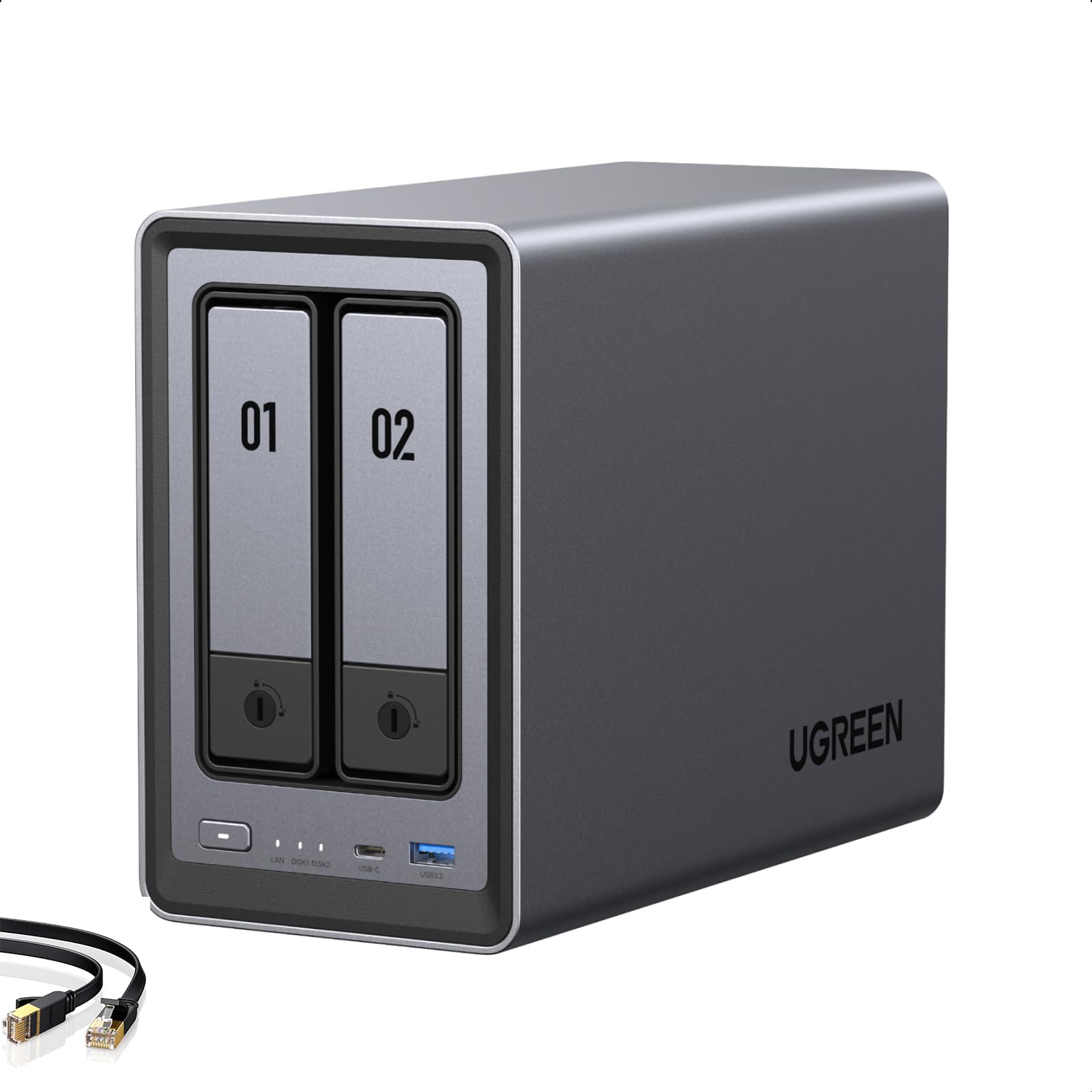
UGREEN DXP4800 Plus
Key details
- RAM
- 8GB DDR5
- Network
- 10GbE + 2.5GbE
- Processor
- Intel 8505
- Drive Bays
- 4 bays
The 10GbE port is the headline, but the four drive bays are what make the DXP4800 Plus our default Plex server. A two-bay box forces a choice between capacity and redundancy; four bays let you run a protected array and still leave room to grow. Inside, the Intel 8505, 8GB of DDR5, and hardware transcoding give Plex the muscle to convert video for phones and older TVs, while the built-in 128GB SSD and two M.2 slots keep metadata and containers off the spinning disks.
The network side is unusually generous for a home NAS. The 10GbE port is there for moving a large library onto the box or feeding several viewers at once, and the 2.5GbE port is the more practical everyday connection. We also appreciate the way the hardware leaves room for Plex to grow into other jobs, whether that is Docker containers or a backup target for the rest of the house.
The extra hardware is aimed at a library that is already large or clearly heading that way. If you are starting with a few hundred titles, the DXP2800 covers the same Plex basics for less. For a collection that will keep expanding, the four-bay frame and faster network are the parts that age well.
Pros
- Four bays support RAID and growth
- Intel 8505 hardware transcoding for Plex
- 10GbE and 2.5GbE ports
- 8GB DDR5 and dual M.2 slots
Cons
- 10GbE needs matching switch and client
- Four-bay body takes more shelf space
For a growing Plex library, the DXP4800 Plus is our default: four bays, Intel hardware transcoding, and a 10GbE path you can grow into.