Best Outdoor Security Cameras Without Subscriptions of 2026

The camera is the cheap part; the plan is where they get you. Cloud storage tiers, per-camera fees, features that work for a free month and then quietly stop — that's the worry I brought with me when I started looking for outdoor cameras that skip the subscription. The real question was never whether a camera can record without one, since plenty can; it's whether the free version is worth living with. A camera that saves you a monthly bill but misses the delivery driver isn't a bargain.

Cameras tend to fail in unglamorous ways: a clip too dark to identify anyone, an alert that fires every time a moth crosses the lens, a battery that quits in a cold snap. Over seven months, my team and I ran 14 cameras from eight systems across a porch, a driveway, a side gate, and a shed to see which ones held up.

One thing worth knowing before you read the list: no-subscription almost always means local storage, so footage lives on a card in the camera or in a small hub indoors. It's fast and free, and it's why placement matters more than megapixels. The picks below are the ones where the free version felt like the whole product.

1

Best Overall

aosu 2-Cam Kit

87 /100
LBD Score Excellent

Key details

Resolution
2K (2048 x 1536)
Battery Life
Up to 240 days
Field Of View
166°
Local Storage
32GB base station
View on Amazon

Two cameras and a base station arrive in one box, and the base station is the reason this is our pick. It holds 32GB of footage on its own — aosu puts that at 240 to 360 days of event clips — so there's no card to buy for each camera and no monthly fee to unlock recordings you already own.

Setup works differently from a standalone camera. The base plugs into your router with Ethernet and the cameras pair to the base rather than your home network, which is a real advantage at the far end of a yard where the Wi-Fi is thin, and it means the cameras aren't competing with your streaming for bandwidth.

The lens is wider than most here, at 166 degrees, and aosu builds it from seven elements to correct the bowing you normally get at the edges of a view that wide. What that buys you is one camera covering most of a driveway instead of two.

The 240-day battery figure is best case. Runtime tracks how often the camera wakes to record, so one pointed at a sidewalk will want charging long before one watching a quiet side gate. Detection leans eager as well — ours flagged moving shadows until we tightened the zones. Neither is a reason to walk away at this price, but budget a recharge and ten minutes of tuning. The Dzees pair below is cheaper if buying two memory cards appeals more than a hub.

Pros

  • 32GB hub storage included, no cards to buy
  • 166° view covers a driveway per camera
  • Cameras link to the hub, not your home Wi-Fi

Cons

  • Battery runtime drops sharply with frequent triggers
  • Detection flags shadows until zones are tuned
Our verdict

We recommend it to most households: the base station holds months of footage, so you buy two cameras once and never pay to watch them.
Check Latest Price
2

Best Wired for Detail

Tapo C120

88 /100
LBD Score Excellent

Key details

Power
Corded electric
Resolution
2K QHD, 4MP
Local Storage
microSD up to 512GB
Weather Rating
IP66
View on Amazon

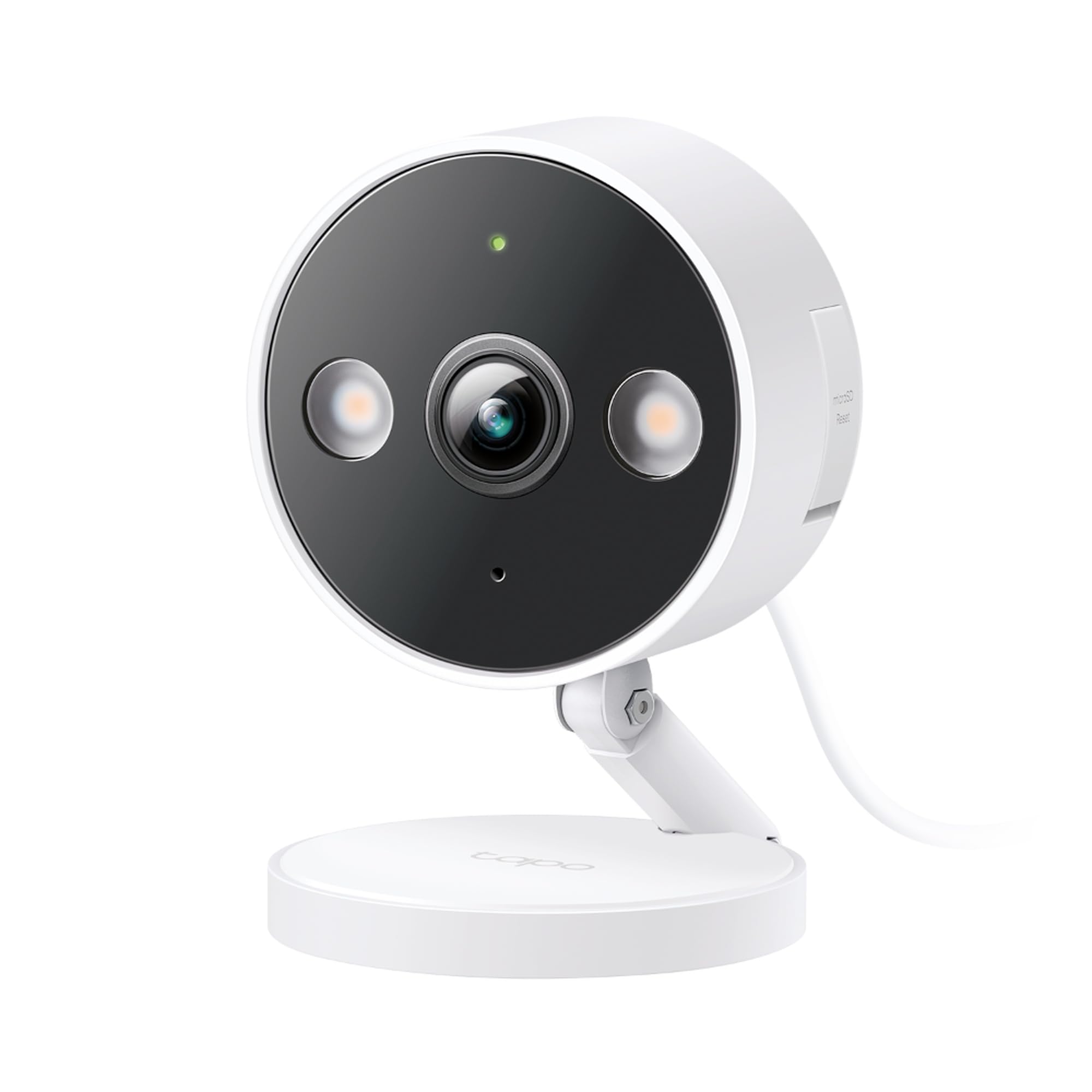
Four megapixels on a 2K QHD sensor, matched in this group only by the Vivideye kit, and it shows where it counts: a face at the end of a walkway, a plate on a parked car. The starlight sensor and twin spotlights keep color after dark rather than dropping to infrared grey.

It's also the easiest camera here to point. The magnetic base sticks to a railing, a gutter, or a fridge door, so you can aim it, check the live view on your phone, and move it without a screwdriver. Person, pet, and vehicle detection run on the camera with no fee, and the microSD slot takes cards up to 512GB — the largest ceiling in this group by a wide margin, which matters if you'd rather review a week of clips than a day.

The catch is the cord. There's no battery, so you need an outlet or a weatherproof run within reach of wherever you mount it, and that rules out the top of a fence post. Wi-Fi is the other soft spot: a marginal 2.4GHz signal at the mount costs you the live view that makes the camera worth having, so test the spot on your phone first. Get the signal right and the picture is the best value here.

Pros

  • 4MP sensor, the sharpest image in this group
  • microSD up to 512GB, the largest ceiling here
  • Magnetic base re-aims without tools

Cons

  • No battery
  • Weak 2.4GHz signal costs you live view
Our verdict

If an outlet reaches your mounting spot, this is the sharpest picture you can get here without a subscription, and the easiest to aim.

Check Latest Price
3

Best for 24/7 Recording

eufy C31

84 /100
LBD Score Excellent

Key details

Power
Plug-in, corded
Coverage
360° pan and tilt
Resolution
1080p
Local Storage
microSD up to 256GB
View on Amazon

Every battery camera here records when something moves and stops when it doesn't, so the ten seconds before an alert are simply gone. The C31 records around the clock, to a microSD card or to a NAS on your own network, with no plan attached to any of it.

For a front door or a driveway, that's the job we want done. It's 1080p — a step down beside the 2K and 4MP cameras here, and you do get less detail per foot of distance. What you get instead is color at night without a spotlight: an f/1.2 aperture and a backside-illuminated sensor pull enough light to skip the usual black-and-white infrared. On a porch with a streetlight nearby, that's the difference between a shape and a face.

Two things to plan for. It's plug-in, with a 6.5-foot cable in the box, so an outdoor outlet or a protected run is part of the purchase. And continuous recording eats storage — a card fills and starts overwriting, so buy the largest one it accepts. The dual external antennas are the detail we didn't expect to matter; they're why this holds a signal on a garage wall where a phone gets thin.

Pros

  • Records 24/7, not just motion events
  • Color night vision without a spotlight
  • 360° pan and tilt from the phone

Cons

  • 1080p only, less detail than the 2K picks
  • Continuous recording fills a card fast
Our verdict

Our choice when you need to see what happened before the alert: it's the only camera here that records continuously, and it does it in color.

Check Latest Price
4

Best for Large Properties

aosu D1 4-Cam Kit

86 /100
LBD Score Excellent

Key details

Power
Solar powered
Cameras
4
Resolution
2K (3MP)
Local Storage
32GB base station
View on Amazon

Four cameras, four solar panels, and the same 32GB base station as our top pick, at roughly twice the money. What the extra buys is cameras that move: each one pans a full 360 degrees, tilts, and follows a person across the yard on its own.

Coverage is where this departs from the two-camera kit. That one sees a whole driveway in a single 166-degree frame; these see 105 degrees at a time and sweep for the rest. Better for a side yard or a corner where the action arrives from more than one direction, worse if you want the entire front of the house in one glance.

The panels are what make four cameras practical. Without them, four mounts means four batteries and four trips up a ladder every few months; with them, the maintenance mostly disappears, as long as each panel gets direct sun rather than an eave's shadow. That's the trade we'd point a large-property buyer toward — the kit costs more than four standalone cameras, and it's the only way here to keep four of them fed without a wiring job.

Two things to check. Charging is the recurring fault: confirm each camera takes a charge on arrival rather than after the return window. And tracking is a moving target — it follows people smoothly and will sometimes settle on a car passing the driveway instead. For a property where one camera can't cover the ground, that's worth living with; for a single door, the two-camera kit does the same job for less.

Pros

  • Four solar cameras on one 32GB base
  • 360° auto tracking follows people
  • No recharging trips when panels get sun

Cons

  • 105° per frame, narrower than the fixed-lens kit
  • A camera that won't take a charge is the fault to check
Our verdict

Worth the money when one camera can't see enough: four solar cameras that track movement, sharing one base and one storage pool.

Check Latest Price
5

Best Budget Two-Camera Set

Dzees 2-Pack

86 /100
LBD Score Excellent

Key details

Cameras
2
Resolution
2K
Local Storage
microSD up to 128GB
Weather Rating
IP65
View on Amazon

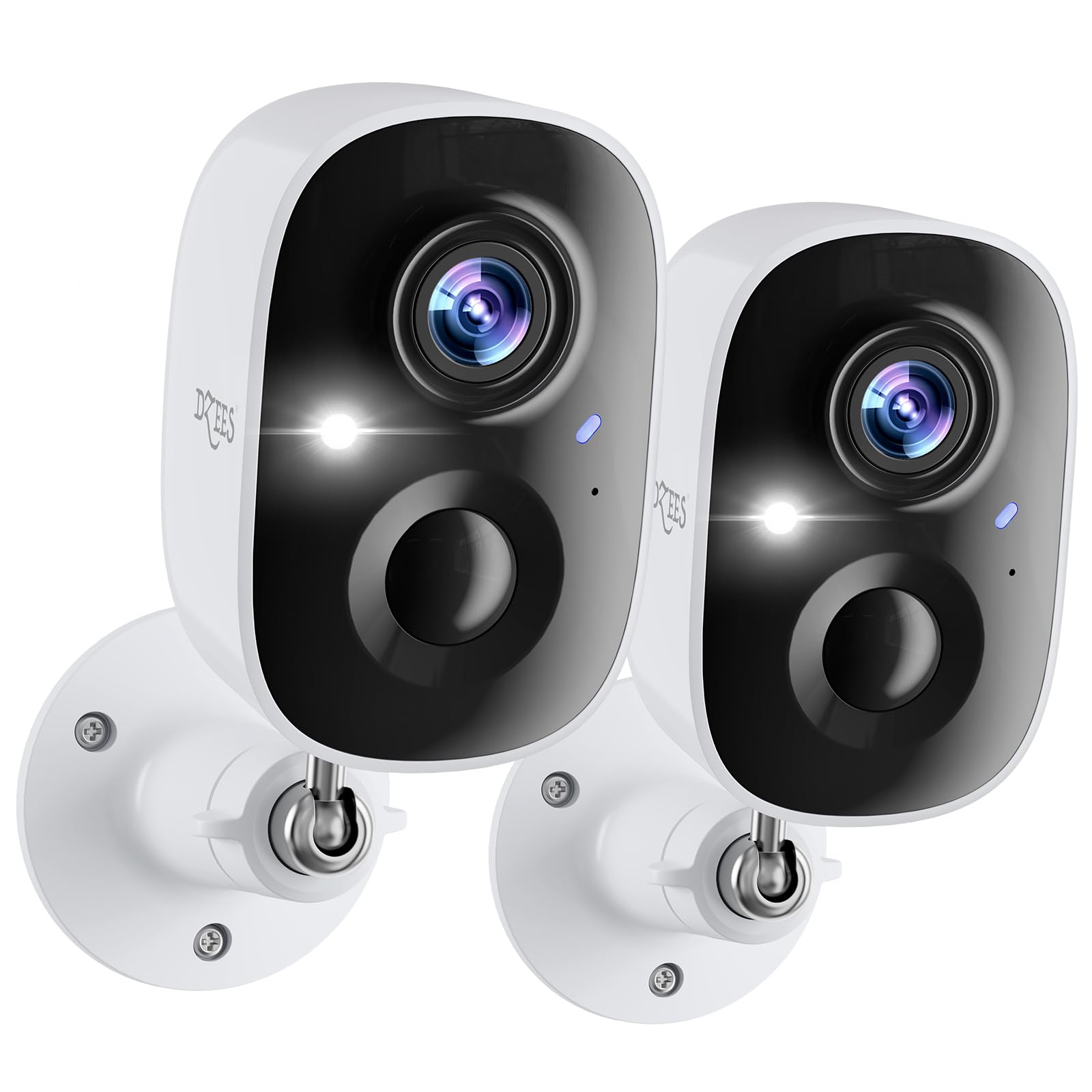
Two 2K cameras for close to the price of one of the single cameras here. That's the whole pitch, and it holds up if the budget is the constraint and you want a front door and a back gate watching by the weekend.

The hardware is plainer than the kits. No hub, so each camera needs its own microSD card — up to 128GB, none in the box, which is the hidden cost. The PIR sensor reads about 25 to 30 feet, shorter than the wide-lens kits, so mount these where people come close rather than at the far end of a long drive. The spotlight gives color after dark, and the housing is rated IP65 with an operating range of -20°F to 120°F, which is more weather detail than most listings offer.

Battery is where these reward a little restraint. Dzees rates them at up to three months, and that number moves hard with sensitivity: turn everything up and you're recharging monthly, keep the zones tight and the same camera runs far longer. We pointed ours at a gate and a path rather than the whole yard, and the difference was obvious within a fortnight.

The one failure worth catching early is a camera that stops powering on after a charge. Test both indoors before you climb a ladder with them, and if one is dead, exchange it rather than troubleshoot. Even allowing for that, two working cameras are still the cheapest route to covering two doors.

Pros

  • Two 2K cameras for one camera's money
  • IP65 with a stated -20°F to 120°F range
  • Adjustable PIR trims false alerts

Cons

  • Memory cards not included, one per camera
  • 25-30 ft detection range is short
Our verdict

Two working 2K cameras for close to what a single one costs here — the budget answer when you need two doors covered.

Check Latest Price
6

Best Budget Single Camera

HITELLARCAM 2K Camera

86 /100
LBD Score Excellent

Key details

Battery
5,200 mAh
Storage
Free cloud or microSD
Resolution
2K
Weather Rating
IP66
View on Amazon

This is the least expensive single camera we're recommending, and the storage terms are the reason it made the cut: free cloud storage with no subscription attached, plus a microSD slot if you prefer to keep footage in the house.

The specifications outrun the price in a couple of places. It's one of the few budget cameras here with dual-band Wi-Fi, so it can ride the 5GHz band instead of crowding 2.4, and the 5,200mAh battery is the same capacity as cameras asking more. Picture quality is the standout: 2K with full-color night vision that stays readable when you zoom into a still.

Two limits. The infrared reach is listed at 8 meters — about 26 feet — so on a long driveway the view dims and narrows before the far end. And this is a camera you take down to charge: the one-to-six-month range is real, but it depends entirely on how busy the view is. Both are fine for a porch or a side gate. Neither suits a fence line 80 feet from the house.

Pros

  • Free cloud storage and a microSD slot
  • Dual-band 2.4GHz and 5GHz Wi-Fi at this price
  • 5,200mAh battery, same as pricier models

Cons

  • Infrared reach is only about 26 feet
Our verdict

The cheapest camera we're comfortable recommending: free cloud storage, dual-band Wi-Fi, and a card slot if you want footage at home.

Check Latest Price
7

Tracking Coverage

Tapo C216 2-Pack

89 /100
LBD Score Excellent

Key details

Power
Corded electric
Cameras
2
Coverage
360° pan, 152° tilt
Resolution
2K (3MP)
View on Amazon

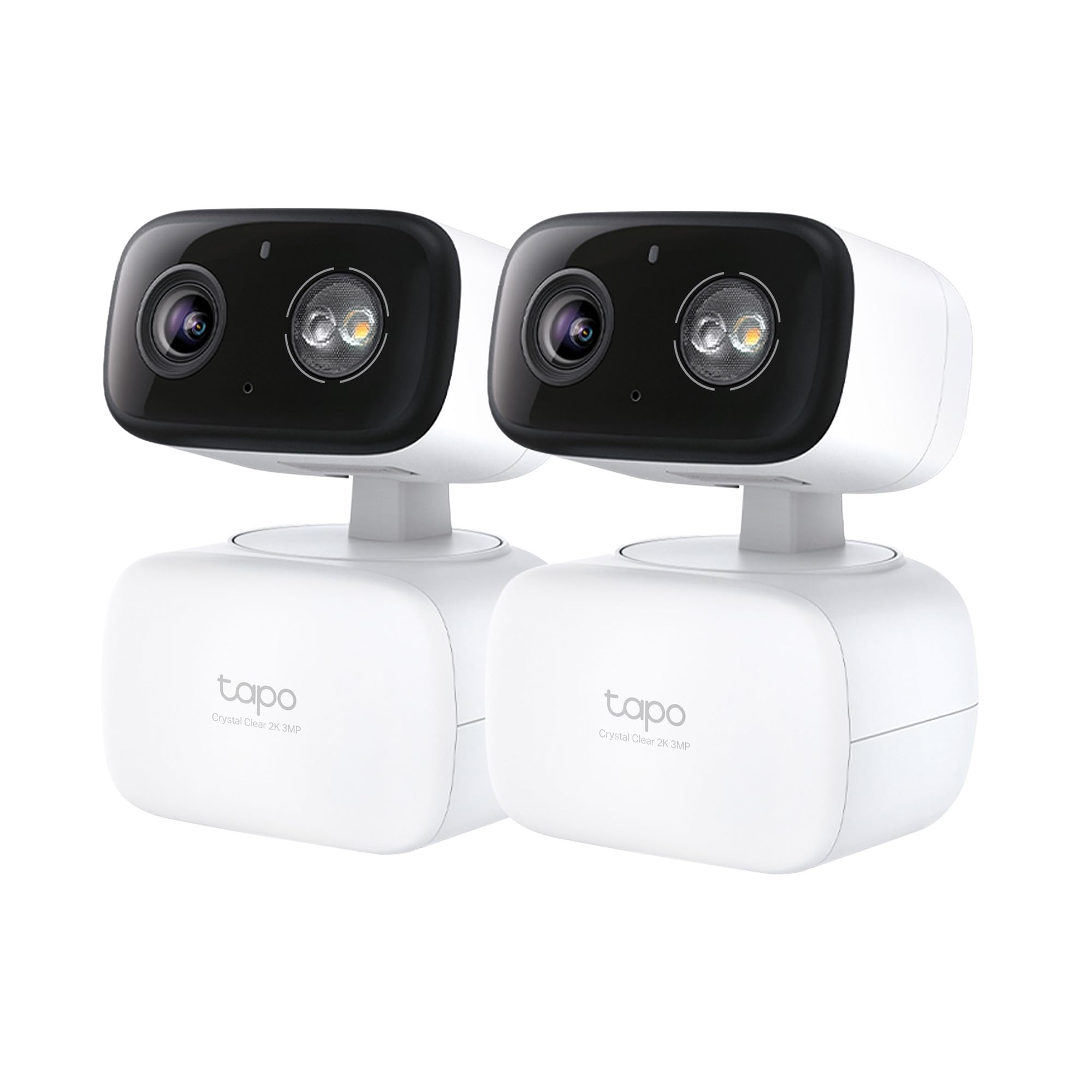
Two cameras that turn. Each pans a full 360 degrees and tilts 152 degrees, so a pair mounted at opposite corners can sweep most of a yard without a third or fourth mount.

Resolution is 2K at 3MP and the housing is IP65, which covers rain and dust but isn't the highest rating here. Detection runs on the camera with no fee — people, pets, and baby cries, each switchable, so pet alerts can stay off while person alerts stay on. Recording goes to a microSD card, with cloud storage optional rather than required.

The trade is power. Both cameras are corded, so each mount needs an outlet or a protected extension run, and that shapes where they can go more than anything else about them. The app also takes learning: the settings you want sit a few screens deep, and the notification retrigger is quicker than we liked until we changed it.

What makes the pair worth it is the geometry. A fixed camera's coverage is decided the day you drill the holes; these can be re-aimed from the phone when a hedge grows out or a car parks where it shouldn't, and auto tracking holds a person in frame as they cross. If you have two outdoor outlets and a wide area to watch, that flexibility buys more than the resolution you give up to the C120.

Pros

  • 360° pan and 152° tilt per camera
  • Person, pet, and cry detection with no fee
  • 2-pack covers two corners at once

Cons

  • Both cameras need a power outlet
  • App buries key settings a few screens deep
Our verdict

We like the pair for wide, awkward spaces — two cameras you can re-aim from the phone beat four stuck where you bolted them.

Check Latest Price
8

Solar with Storage

Vivideye 2-Cam Kit

84 /100
LBD Score Excellent

Key details

Power
Solar powered
Coverage
360° auto tracking
Resolution
4MP
Local Storage
128GB base unit
View on Amazon

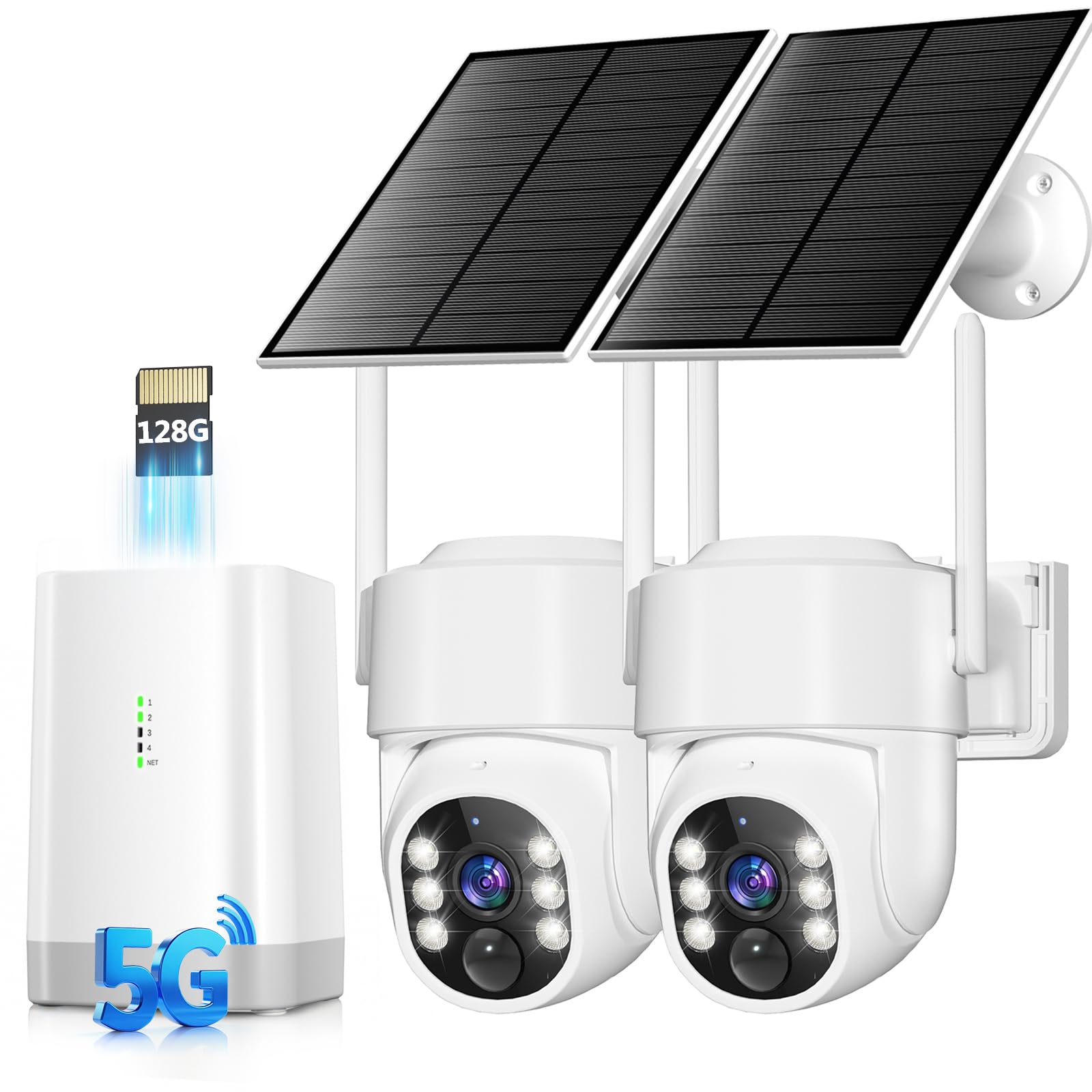
The 128GB card is already in the base unit when the box arrives. No hub to buy, no card to add, no plan — two 4MP solar cameras and a four-channel recorder for midrange money.

Each camera carries an 8,000mAh battery and its own 5W solar panel, and the pair pans a full 360 degrees with auto tracking. One detail worth knowing before you judge it: tracking ships switched off and has to be enabled in the app, so a first day of testing without it looks like a camera that ignores everything.

The hub is the part that makes this pleasant to live with. Four channels mean two more cameras can be added later without replacing anything, and H.265 encoding keeps file sizes down on that card. Color night vision is rated to 65 feet, further than most here, though that's a claim we haven't pushed to its limit.

Our reservation is track record. This is the newest design in the group and the one we've spent the least time with, so the specification is more persuasive than the history behind it. If 4MP and included storage are what you want and you don't mind being an early owner, it's a lot of kit for the money. If you want the camera with thousands of installations behind it, the aosu kits are the safer call.

Pros

  • 128GB card included in the base unit
  • 4MP resolution, the highest here
  • Four-channel hub takes two more cameras

Cons

  • Storage caps at 128GB with no upgrade path
  • Newest design, shortest track record here
Our verdict

A 4MP solar pair with 128GB already in the base — the most storage and resolution for the money here, if you're happy to be an early owner.

Check Latest Price

How We Tested Subscription-Free Security Cameras

We started with about 40 outdoor cameras and cut anything that charged for the basics or locked person detection behind a plan. Then I looked at how each one stores footage without a subscription — a built-in drive, a memory card, or a hub — and split the list by power source, since battery, solar, and plug-in cameras can't go in the same places. Eight systems and 14 cameras made it outside for seven months, judged on what they delivered without a monthly bill.

Install came first, because a camera you can't get online is a paperweight. I set each one up alone, timing the pairing, the mounting, and the first live picture. For connectivity, I put cameras at the far end of the yard where the signal is weakest and watched how fast live view opened, whether alerts arrived seconds or minutes late, and whether the feed came back on its own after a dropout.

Motion detection was the part that wore me down. I walked the same path at 10, 25, and 40 feet, at noon and at dusk, and sorted every alert into "actually me" or "a branch, a moth, a passing headlight." Cameras that let me narrow alerts to people and vehicles beat the ones that only understood motion. Picture quality I judged the way a neighbor would: read a plate at 20 feet, recognize a face on the porch, see anything at 2 a.m.

Battery models ran a month at full sensitivity, then again on person-only alerts — the setting that decides whether they actually last. Two storms and a summer of spiders tested the weatherproofing. I fired every siren from the driveway and talked through every speaker, which is the fastest way to learn how much wind a microphone can eat. And I let each card fill up, since a camera that quietly stops recording is worse than no camera.

How to Choose an Outdoor Security Camera without a Subscription

Decide Where the Footage Lives

Three storage designs cover almost everything here. A microSD card in each camera is cheapest and fiddliest — you buy the card, and you pull it to review anything the app won't serve. A base station puts one card in one box and keeps a single timeline across every camera on the system, which is why the aosu kits are easier to live with than their prices suggest. Free cloud storage is the third option, and the one to read carefully: some of it is a rolling window measured in hours, not days.

Settle the storage first, then the camera. If you want nothing to buy and nothing to swap, a base-station kit is the answer. If you already own cards and only want one camera, a slot is enough.

Match Power to the Mounting Spot

Battery cameras go anywhere the Wi-Fi reaches and then ask you to climb a ladder every few months. The listed maximums — six months, 240 days, 180 days — assume a quiet view; a camera watching a sidewalk wants charging far sooner. Solar panels remove most of that maintenance, but only where the panel sees direct sun rather than the shade of the eave it hangs under. Corded cameras never need charging and can record continuously, at the cost of an outlet at every mount.

Detection Is Where Disappointment Lives

Picture quality is the least of your problems. The complaints that cluster around this category are about alerts: nothing when a person walks up, six notifications when a branch moves. Basic PIR sensors trigger on heat and motion indiscriminately; person, vehicle, and pet detection runs a model on the camera or the hub and is worth having.

Two settings decide whether you'll tolerate it — adjustable sensitivity and activity zones. Check both exist before you buy, then spend ten minutes drawing zones around the path and excluding the street. That is the difference between a camera you trust and one you mute.

Resolution Means Nothing Without Distance

A 2K camera covering a 166-degree view puts fewer pixels on a face at 40 feet than a 1080p camera covering 120 degrees. Wide views trade detail for coverage, which is right for a yard and wrong for an entry. Match the lens to the job: narrower over the door, wide over the driveway.

Night vision has the same shape of problem. Color after dark needs light — a spotlight, a porch lamp, or a sensor sensitive enough to work without either, as on the eufy C31. Otherwise you get infrared black and white, and on most of these its reach runs roughly 25 to 35 feet.

Count Cameras, Then Measure Coverage

A fixed wide lens sees everything at once and can't change its mind; a pan-tilt camera sees one direction at a time and can be re-aimed from the phone. The aosu two-camera kit covers a driveway in two frames. The four-camera kit covers more ground over a day by sweeping. Neither is better in the abstract — they answer different questions about how much you need to see at once.

Before you drill, stand where the camera will go and look at what it can see. Most disappointing installs were decided by how far the ladder reached.

Frequently Asked Questions

Final Verdict

For most people the aosu two-camera kit is the one to buy, and not because it takes the best picture — the Tapo C120 does. It's the base station that makes a subscription-free camera genuinely free: you buy it once, it holds months of footage, and there's no card to buy, swap, or lose.

Two requirements change that answer. If an outlet reaches the mount and identifying faces matters most, the C120's 4MP image is a clear step up. If you want the seconds before an alert, no battery camera here can give them to you, and the eufy C31 is the one that records straight through.