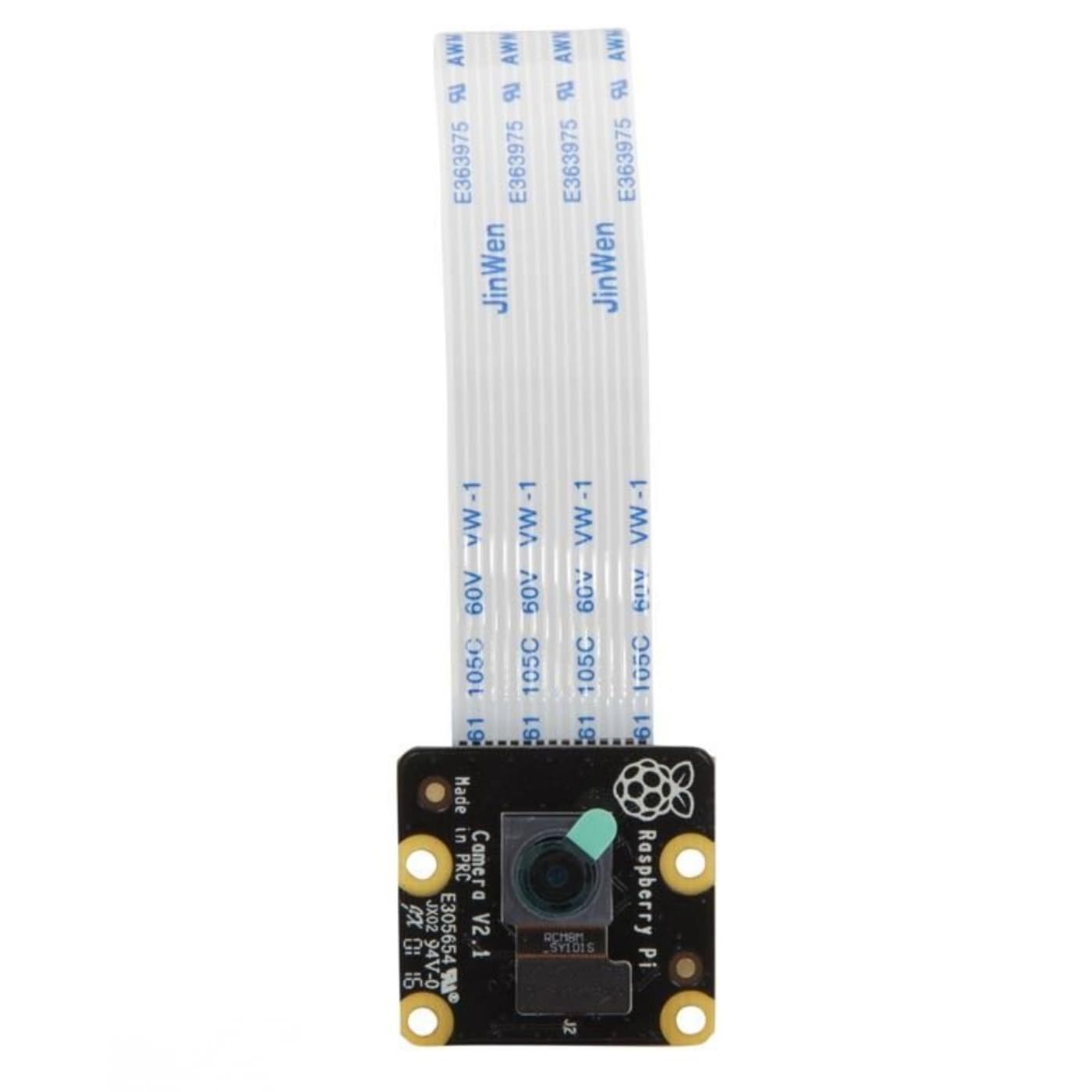
Best Overall

Raspberry Pi Camera Module 3
Key details
- Aperture
- f1.8
- Autofocus
- Phase Detection Autofocus (PDAF)
- Video Modes
- 1080p50, 720p100, 480p120, HDR mode
- Image Sensor
- 12MP Sony IMX708
The Camera Module 3 is the board we keep coming back to for a general-purpose Pi camera. It pairs a 12-megapixel back-illuminated Sony IMX708 sensor with phase-detection autofocus, and that combination is what makes it feel like a camera rather than a sensor on a ribbon. The f1.8 aperture is the brightest lens in this group, and the larger sensor has more headroom in dim rooms than the older 5MP and 8MP boards.
What separates it from the cheaper fixed-focus modules is not just resolution. With PDAF, the module can lock onto a subject quickly, which matters when you are capturing a moving build plate, a pet, or a time-lapse subject that shifts. The 12MP stills also leave more room to crop than the 5MP OV5647 boards, and the 10g board is small enough to tuck into a printed enclosure without a custom mount.
As the official module, it is the one the Pi camera software stack is built around. That matters more than a spec sheet suggests: libcamera and Picamera2 examples assume it, and you spend your time on the project instead of on a config file. We also appreciate that the board is light and compact enough to mount with the usual Pi camera brackets.
The one place we hesitate is the Pi Zero. The board is supported, but the package ships with a 200mm ribbon cable, so confirm the connector width before ordering if you are fitting a Zero. The Arducam 12MP below is the smoother route because it includes the 15-to-22-pin cable.
Pros
- 12MP IMX708 sensor with crisp detail
- PDAF autofocus is quick and reliable
- Official libcamera and Picamera2 support
Cons
- HDR mode tops out at 3MP
We recommend the Camera Module 3 as the default for a standard Raspberry Pi: it pairs 12MP stills with fast autofocus and the least fiddly software setup.