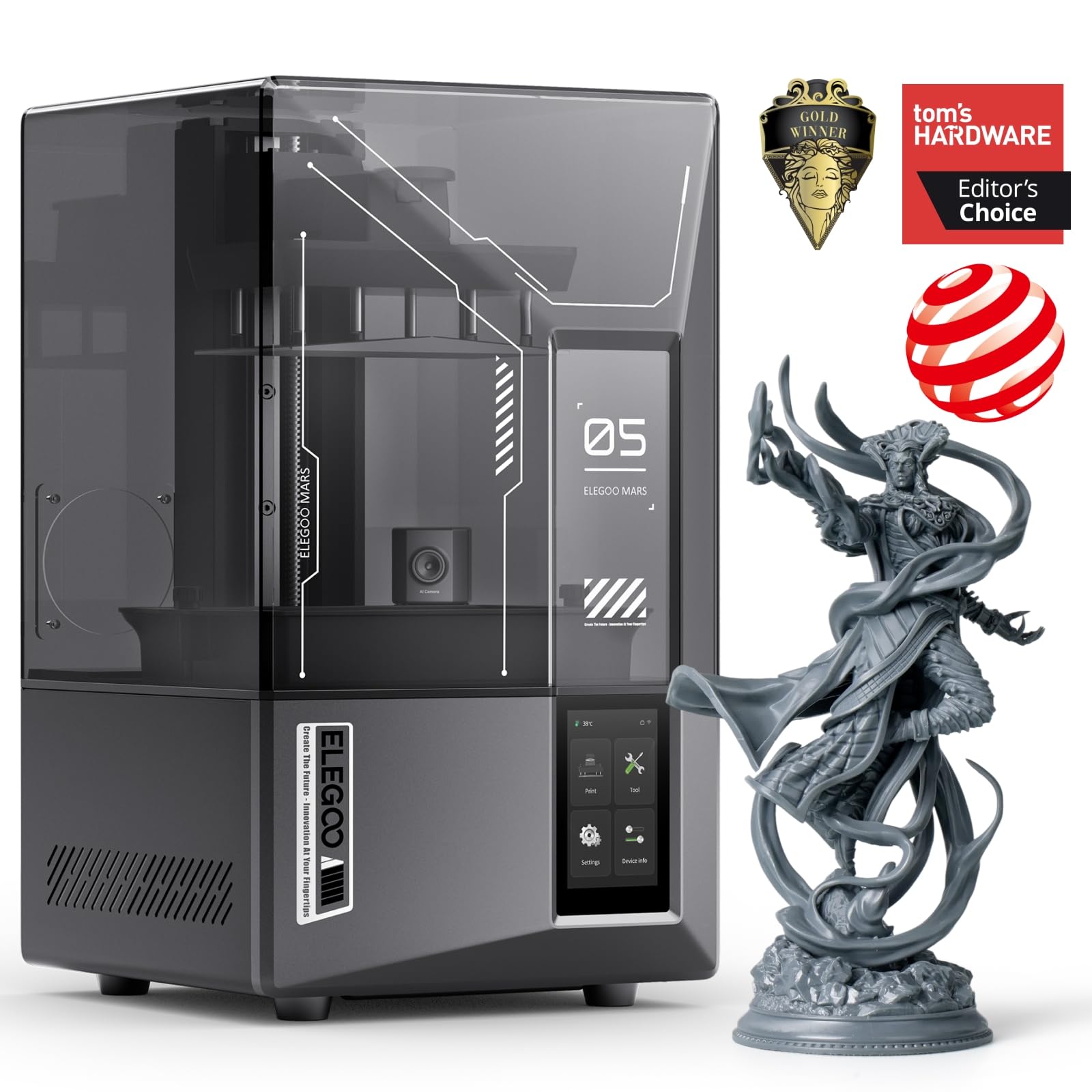
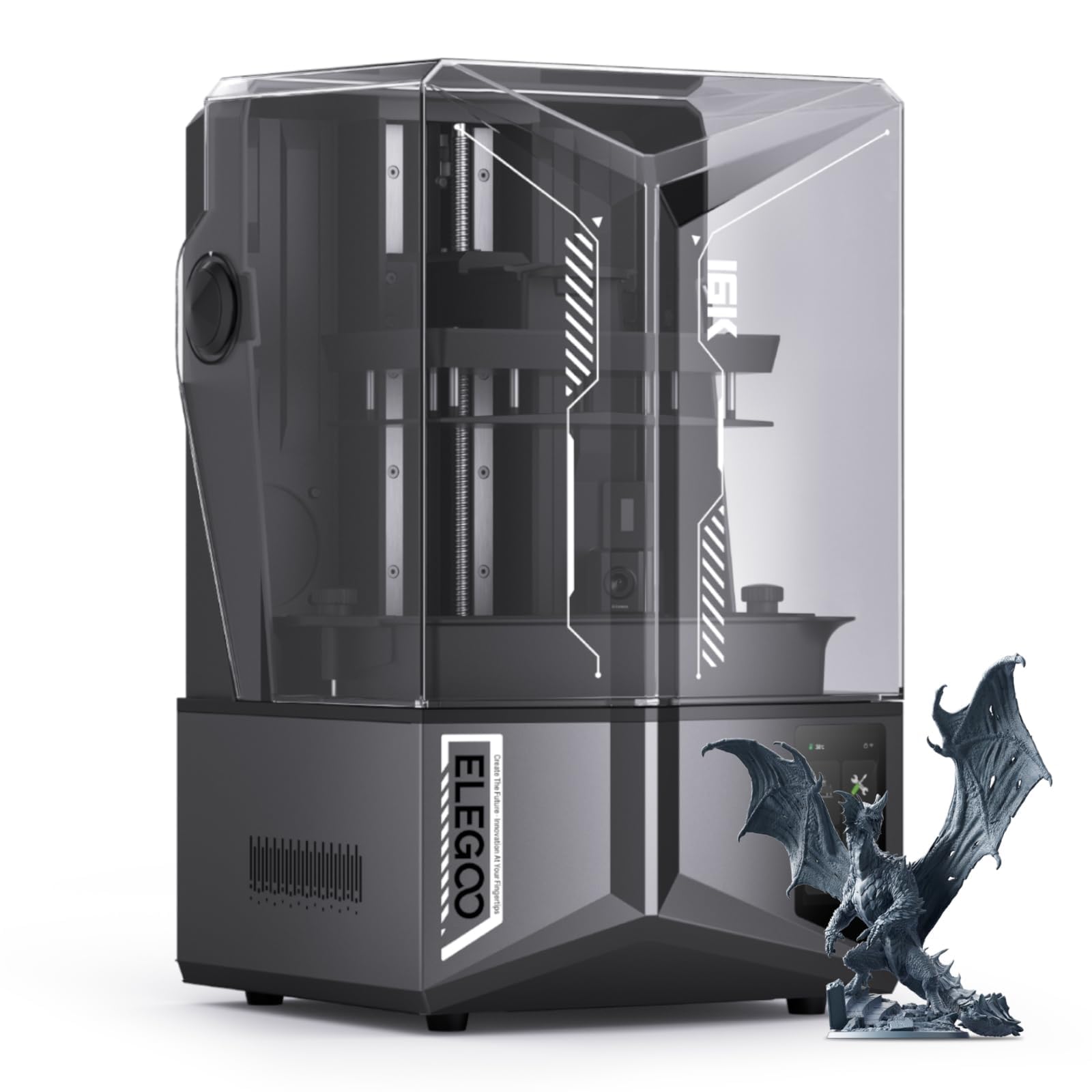
Best Overall

ANYCUBIC Photon Mono 4
Key details
- Weight
- 7.7 lb
- Build Volume
- 6.04 × 3.42 × 6.49 in
- XY Resolution
- 17 × 17 µm
- Max Print Speed
- 70 mm/h
The cheapest machine in this roundup also has the finest pixel pitch of the five, and that is the whole reason it sits at the top. A 7-inch 10K screen works out to 17 × 17 microns per pixel, a smaller point of light than machines costing appreciably more. Pixel size, not the K printed on the box, is what decides whether the edge of a cloak or the bridge of a 28mm nose survives the print. Our test figures came off the plate with faces and folds intact, which is the entire job at this scale.
Setup is the other half of the argument. The four-point leveling is a one-time job — seat the plate, tighten the screws in sequence, and the machine holds it — and it stayed put for the rest of our testing. At 7.7 pounds it is the lightest printer here by a wide margin, light enough to lift onto a shelf when the desk has to be a desk again, which is not true of anything else in this group.
What it prints well is the small stuff: a plate of 28mm figures, a set of props, a run of chess pieces, a weekend of bits for a kit. The vat holds a manageable volume of resin, so topping off and draining are quick jobs rather than a project, and a bad print wastes a modest amount of material. Anything past about six inches in one piece is a job for the larger machines here, which is the boundary of what this one is for rather than a flaw in it.
Speed is where it gives ground: 70 mm/h against the Mars 5 Ultra's 150. On a plate of miniatures that gap is minutes; on a tall print it is most of an evening. We kept reaching for this one anyway, because a slow print you trust beats a fast one you are watching.
Pros
- 17 µm pixels
- Levels once and holds through the test
- Lightest machine here at 7.7 lb
- Lowest-priced machine we recommend
Cons
- 70 mm/h top speed trails the fast small-format pick
- Build volume rules out large single-piece prints
We recommend the Photon Mono 4 to anyone who wants fine detail without paying for it twice — it is the best default for miniatures, props, and small functional parts.