Best Robot Vacuums for Small Apartments of 2026

Space is the wrong thing to judge a robot vacuum on. A tight one-bedroom is a harder test than a big house: the floor is chopped up by furniture legs, thresholds, and a rug it has to climb, and the dock has to fit somewhere you won't trip over it. I've watched one grind against a radiator for ten minutes instead of cleaning. So my team and I spent six months running 12 models through studios and small one-bedrooms to find the ones that finish a cycle without a rescue.

What separates them isn't the suction number on the box. In a small apartment, navigation and noise matter more than raw power — a vacuum that maps your rooms gets them done in one pass, and one you can run during a work call is one you'll actually run. Mapping, no-go zones, and tangle-resistant brush rolls look great on a spec sheet, and the price tag doesn't reliably predict which ones deliver. The picks below earned their outlet space in tight floor plans, not on a test bench.

1

Best Overall

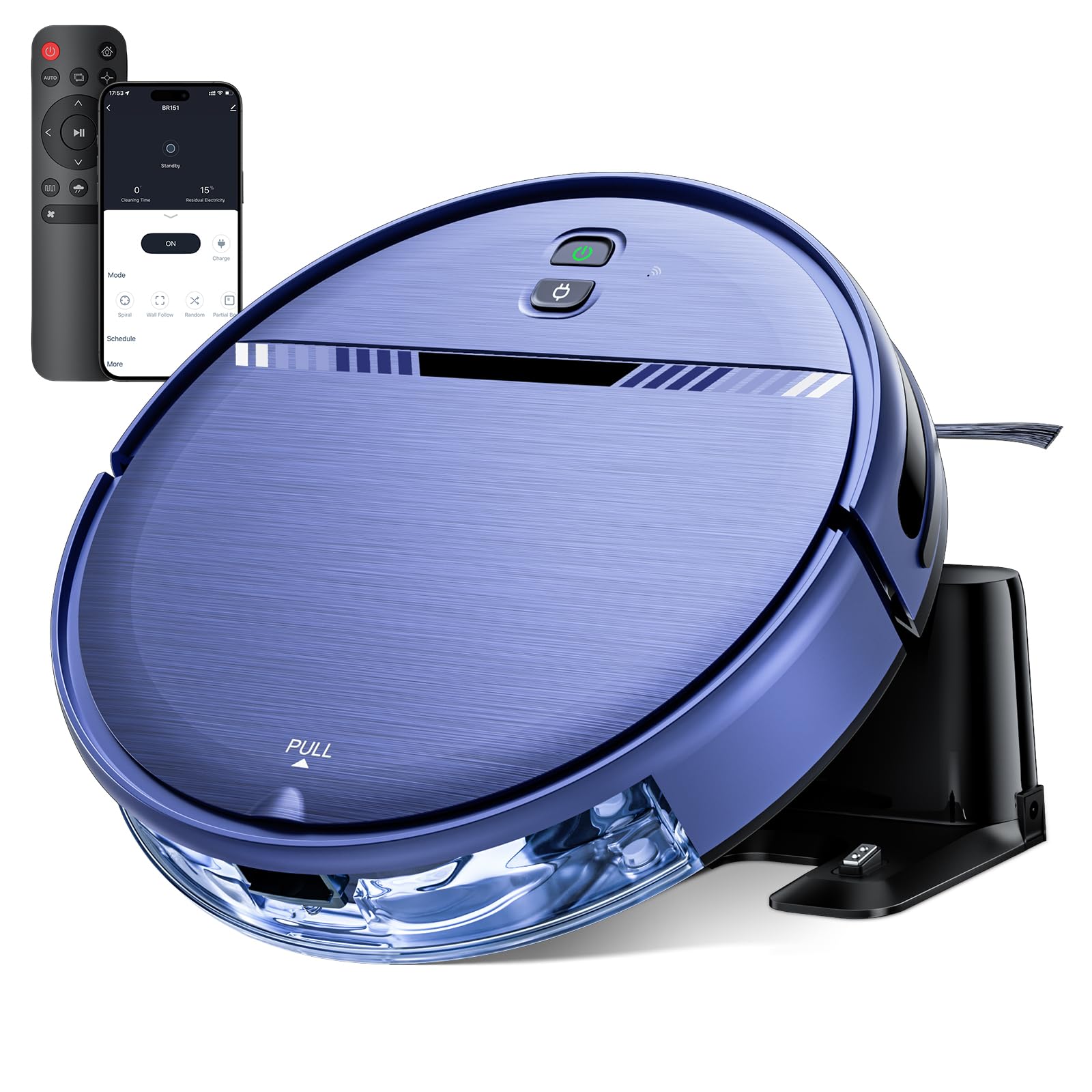
iMartine BR151

89 /100
LBD Score Excellent

Key details

Height
2.87 inches
Runtime
100 minutes
Navigation
Infrared obstacle avoidance
Dustbin And Water Tank
200 ml dustbin, 230 ml water tank
View on Amazon

At 2.87 inches, the iMartine BR151 is the lowest robot here, and that is the number that won us over for a small apartment. It lets the vacuum work under a sofa, a bed, or a low media console that stops taller models, and its 11.8-inch body turns in tighter gaps. The 100-minute runtime is not the longest in this group, but it is enough for a one-bedroom or studio on a single charge, especially if you run it on hard floors and low-pile rugs rather than wall-to-wall carpet.

The 2-in-1 design adds a 230ml water tank and a 200ml dustbin, so you can vacuum and damp-mop in one pass. We like the simplicity of the controls: the app, remote, and voice commands all work, and the four modes cover auto, spot, edge, and zig-zag cleaning. There is no room map or no-go zone, which is the main feature gap. In a compact apartment, that is a fair trade if your furniture layout is simple and you can close a door or move a chair before a run.

The small bin is the everyday trade-off. With a shedding pet, expect to empty it after most runs and rinse the mop pad before the next one. The cleaning and pet-hair results are strong for the size, and the low body is the reason we keep coming back to it. Long-term durability is the open question, so we treat it as a strong first apartment robot rather than a decade-long appliance. If you want room-by-room control, the ILIFE A30s or Roborock Q7 L5 is the better fit.

Pros

  • Lowest 2.87-inch body here
  • 100-minute runtime for a one-bedroom
  • Vacuum and mop in one compact body
  • App, remote, and voice control

Cons

  • No room mapping or no-go zones
  • Small 200ml bin needs frequent emptying
Our verdict

The iMartine BR151 is our top pick for small apartments because its 2.87-inch body reaches under low furniture and its 100-minute runtime covers a one-bedroom, with a mop for hard floors.
Check Latest Price
2

Best Budget

ILIFE V2

86 /100
LBD Score Excellent

Key details

Height
2.99 inches
Control
Remote control
Dustbin
300 ml
Runtime
120 minutes
View on Amazon

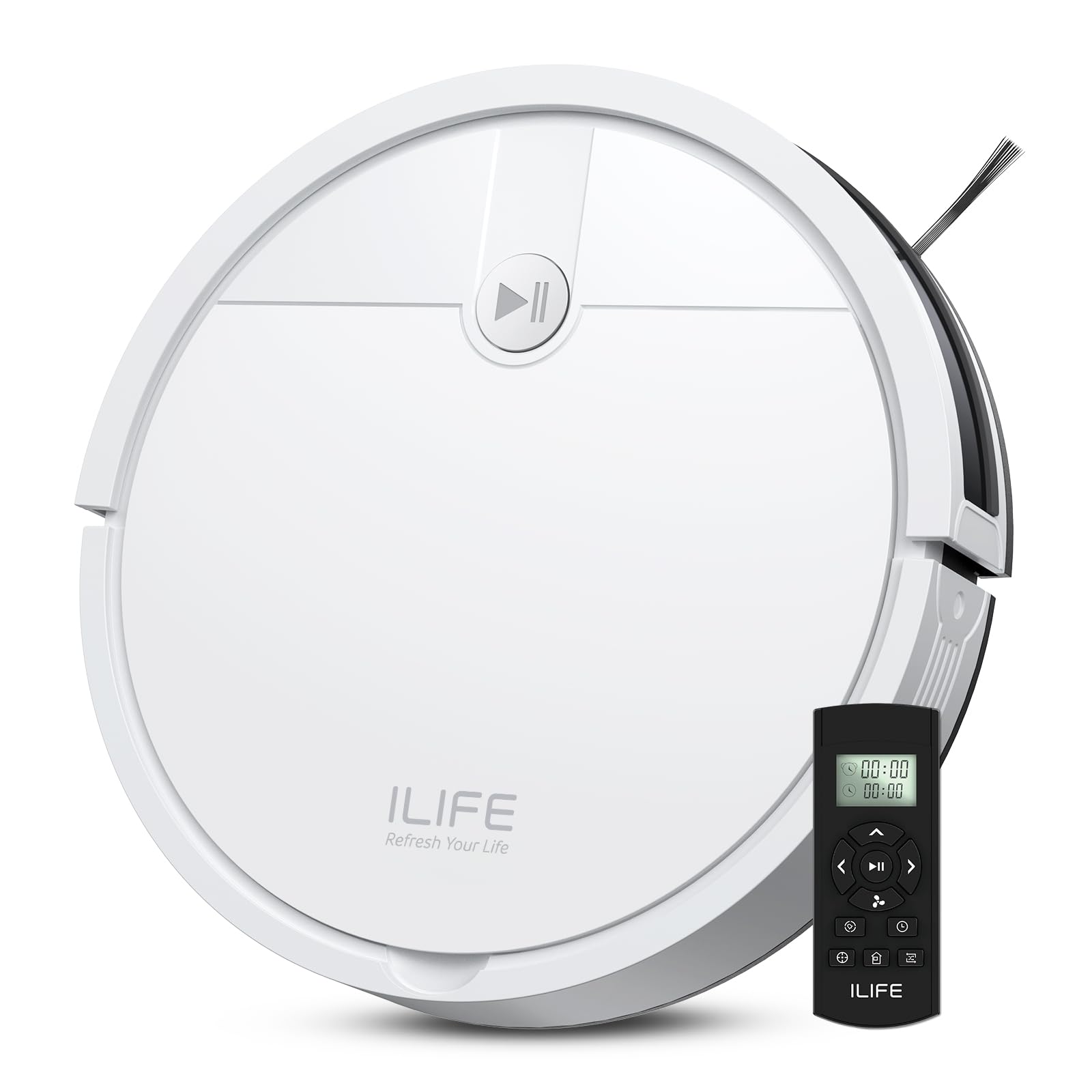
The ILIFE V2 is the robot for someone who wants clean floors without adding another app to their phone. It comes with a physical remote, works without Wi-Fi, and keeps a 120-minute runtime and a 300ml bin in a 2.99-inch body. That makes it a sensible fit for a hard-floor studio or a rental where the network is not yours to manage.

We like it best as a pet-hair vacuum for hard floors. The tangle-free suction port is designed to pull hair in without a roller brush wrapping it, and the low body gets under a bed or sofa. It has three cleaning modes and a schedule, but navigation is basic: there is no room map, no no-go zone, and no mop. In a one-room apartment, that simplicity is the point. You set it loose, let it cover the floor, and put it back on the dock.

The bin is small enough that a heavy shedding season means emptying it often, and the lack of a mop means it is a vacuum-only answer. Neither issue changes what the V2 is good at: a low-cost, low-profile cleaner that does not need your phone. If you have a lot of carpet or want room-by-room control, the step up to a LiDAR model is worth it.

Pros

  • 120-minute runtime on a charge
  • Tangle-free suction for pet hair
  • Remote works without Wi-Fi
  • Low 2.99-inch body

Cons

  • No app, mapping, or mop
  • 300ml bin fills quickly with pet hair
  • Long-term reliability is the weak spot
Our verdict

The ILIFE V2 is our budget pick for hard floors and pet hair, with a 120-minute run and a remote that works without Wi-Fi.

Check Latest Price
3

Best for Carpets and Mapping

Roborock Q7 L5

82 /100
LBD Score Excellent

Key details

Height
3.89 inches
Runtime
150 minutes
Suction
8,000Pa
Navigation
LiDAR
View on Amazon

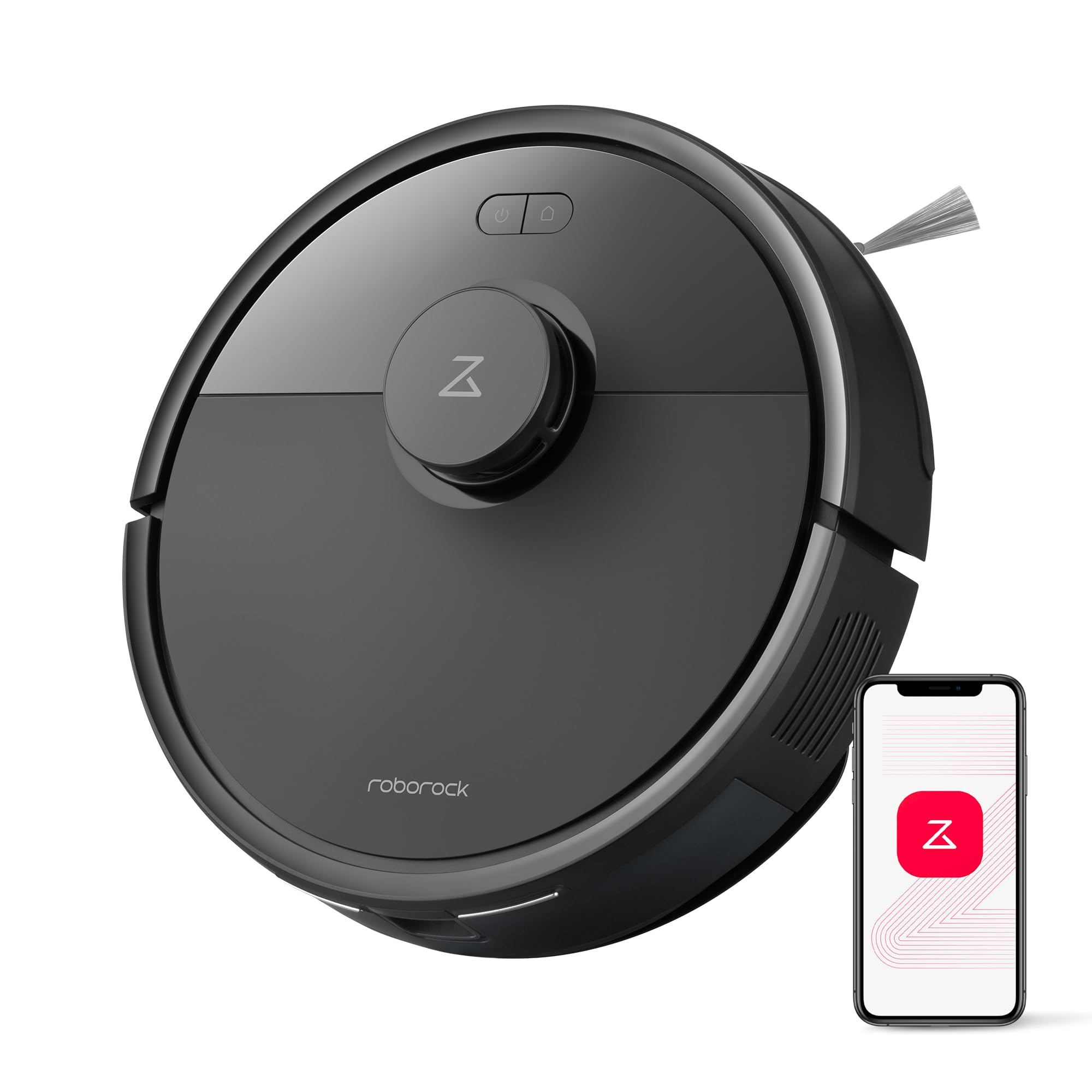
The Roborock Q7 L5 brings 8,000Pa suction and pairs it with LiDAR mapping and dual anti-tangle brushes. For a carpeted apartment, those are the specs that matter: more lift from the pile, a real map instead of a random path, and less hair wrapped around the brush.

The 150-minute runtime covers a one-bedroom with room to spare, and the 270ml water tank lets it damp-mop sealed hard floors in the same pass. The LiDAR map supports room-by-room cleaning, no-go zones, and multiple floor maps, which is useful if your apartment has a weird L-shaped living area or a rug that keeps catching robots. At 3.89 inches tall, it clears more furniture than a standard vacuum but not the lowest sofa or bed frame.

The Q7 L5 is the pick when carpet and mapping matter more than the smallest possible body. We are more cautious about long-term durability than about cleaning, because the vacuum's core performance is strong but its reliability is the weaker part of the case. It is also one of the heavier and taller robots here, and it does not empty itself. If you want the best cleaning and navigation in this set and can accept those trade-offs, it earns the step up.

Pros

  • 8,000Pa suction for carpet
  • LiDAR mapping and no-go zones
  • 150-minute runtime
  • Dual anti-tangle brushes

Cons

  • Taller 3.89-inch body clears less low furniture
  • No self-empty base
Our verdict

The Roborock Q7 L5 is the pick for carpet-heavy apartments and anyone who wants LiDAR mapping, as long as you accept the higher price and a less certain long-term reliability.

Check Latest Price
4

Best Vacuum-And-Mop Value

Tikom G8000 Max

88 /100
LBD Score Excellent

Key details

Height
3 inches
Runtime
150 minutes
Suction
5000Pa
Dustbin And Water Tank
450 ml dustbin, 300 ml water tank
View on Amazon

A 150-minute runtime and a 450ml dustbin are the two numbers that make the Tikom G8000 Max appealing in a small apartment. The runtime is quoted in quiet mode, so expect less on the higher suction settings, but it still gives you more cleaning time between charges than the 100-minute iMartine. The bin is also large enough that a pet household is not emptying it after every single run.

The vacuum and mop combination is the other draw. A 300ml water tank sits alongside the dustbin, and the robot can vacuum and mop in one pass. Controls are generous for the price tier: app, remote, voice, and a physical button, plus four cleaning modes. The 3-inch body slips under low furniture, and anti-collision and anti-fall sensors help it navigate a compact room.

The caveats are navigation and battery life. The G8000 Max does not build a LiDAR map, so it works best in a simple, open apartment rather than a room full of chair legs and rug edges. It can get stuck under low furniture or in corners, and the battery life is less consistent than the runtime figure suggests. Those are real limits, not deal-breakers for a renter who wants a first vacuum-mop combo.

We see the Tikom as a value pick, not the most polished robot here. If you want one dock to handle both vacuuming and mopping without paying the premium tier, it makes sense; if you have a lot of furniture or carpet, the Roborock's mapping and suction are worth the step up. The 450ml bin and 150-minute run are the reasons it stays on our list.

Pros

  • 150-minute runtime in quiet mode
  • 450ml bin and 300ml water tank
  • App, remote, voice, and button control
  • 3-inch low body

Cons

  • No LiDAR map
  • Can get stuck in corners and under furniture
  • Battery life can fall short
Our verdict

The Tikom G8000 Max is the best vacuum-and-mop value here, with a 150-minute runtime and a 450ml bin, though basic navigation and uneven battery life keep it behind our top pick.

Check Latest Price
5

Best Midrange Mapper

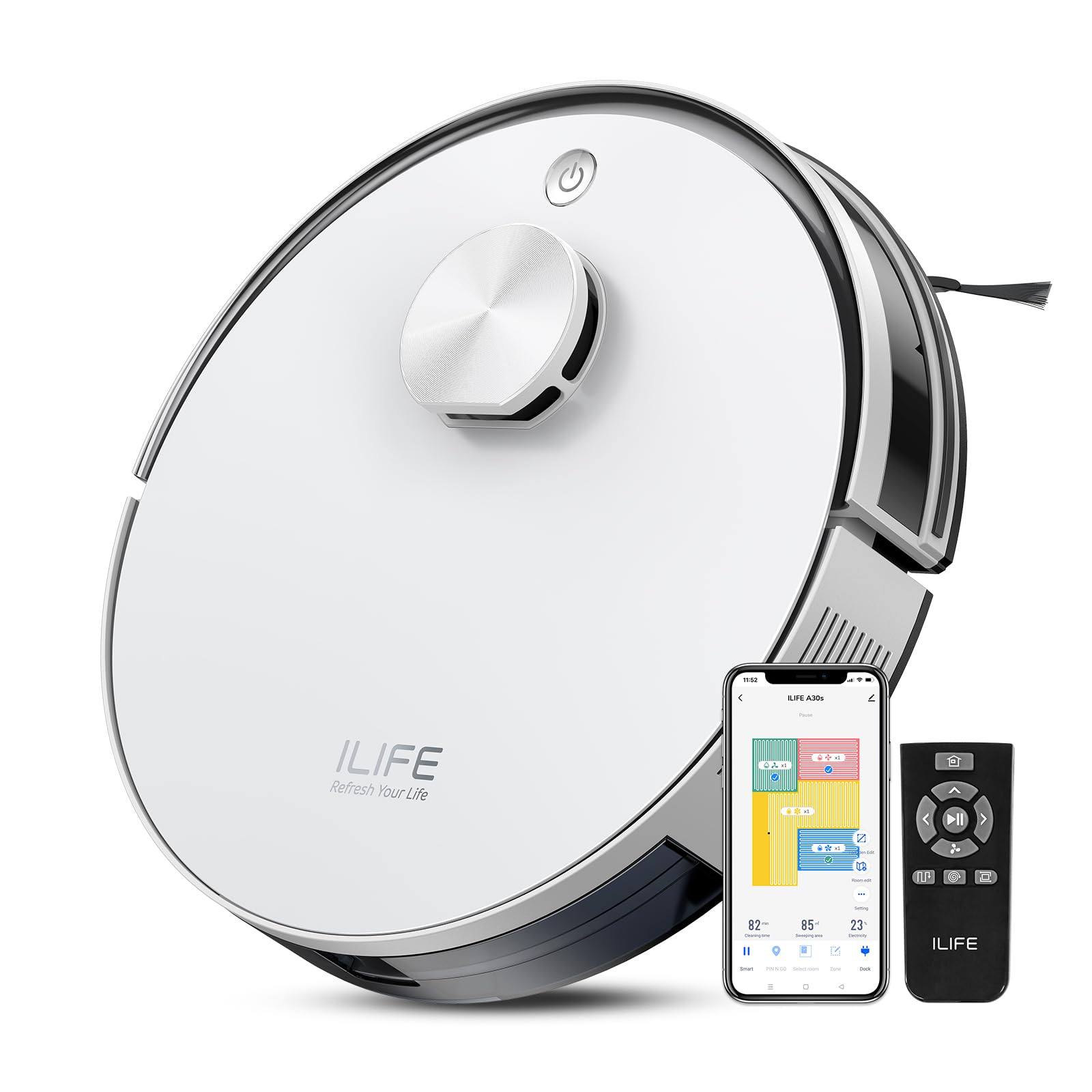
ILIFE A30s

83 /100
LBD Score Excellent

Key details

Height
3.74 inches
Runtime
150 minutes
Suction
10,000Pa max
Navigation
LiDAR
View on Amazon

If you want LiDAR mapping in a small apartment without moving into the premium tier, the ILIFE A30s is the middle path. It maps rooms, lets you set no-go zones and virtual walls, and stores a 500ml dustbin, so it handles a furniture-dense one-bedroom with fewer surprises than the remote-only budget robots.

The 10,000Pa figure is a spot-mode maximum, not what you get in a normal whole-room pass, so do not buy it on that number alone. The more useful specs are the 150-minute runtime, the dual anti-tangle brushes, and the 3.74-inch body. The A30s is taller than the iMartine and Lefant, so it will not slide under the lowest furniture, but it clears most sofa and bed frames and gives you room-by-room control that those simpler robots lack.

Battery life is the weak point: the runtime is long when it holds, but the charging record is less consistent. It can also snag on fringed rugs and cords, and at 72 dB it is one of the louder robots here. Those are the reasons it sits below our top pick despite the better mapping. If your apartment has a few rugs and you want to send the robot to one room at a time, the A30s earns its place.

Pros

  • LiDAR mapping and no-go zones
  • 500ml dustbin
  • 150-minute runtime
  • Dual anti-tangle brushes

Cons

  • Battery life can be inconsistent
  • Can snag on fringed rugs and cords
  • Taller 3.74-inch body
Our verdict

The ILIFE A30s is the best midrange mapper here, pairing LiDAR, no-go zones, and a 500ml bin with a 150-minute runtime for apartment-sized floors.

Check Latest Price
6

Tight Hard Floors

Lefant M210

84 /100
LBD Score Excellent

Key details

Height
2.8 inches
Dustbin
500 ml
Runtime
120 minutes
Diameter
11 inches
View on Amazon

The Lefant M210 has the smallest footprint here at 11 inches across and 2.8 inches tall. In a studio where a bike, a dining table, and a couple of chair legs eat up the floor, that size matters more than a long feature list. It can slip under furniture and turn in places where a 12-inch robot has to back out.

We like it best on hard floors. The brushless suction port is designed to pull in hair without a roller to untangle, and the 500ml bin is larger than the iMartine's. It runs quietly at 52 dB and offers app and Alexa control, which is more than you get from the remote-only ILIFE V2. On low-pile rugs it is fine; on thicker carpet, the weaker suction shows.

The M210 is not the robot for deep carpet or a home with several rug transitions. Navigation is basic, so it can repeat areas, and battery life is the other weak spot. It also lacks a mop. What it does have is the tightest turning circle and a low body for the money, which makes it a useful hard-floor specialist in a small apartment.

Pros

  • 11-inch body and 2.8-inch height
  • 500ml dustbin
  • Quiet 52 dB operation
  • App and Alexa control

Cons

  • Weak on thicker carpet
  • Battery life can fall short
  • No mop function
Our verdict

The Lefant M210 is the tight-space pick for hard-floored apartments, where its 11-inch body and 2.8-inch height slip under furniture that stops larger robots.

Check Latest Price
7

Budget Two-In-One

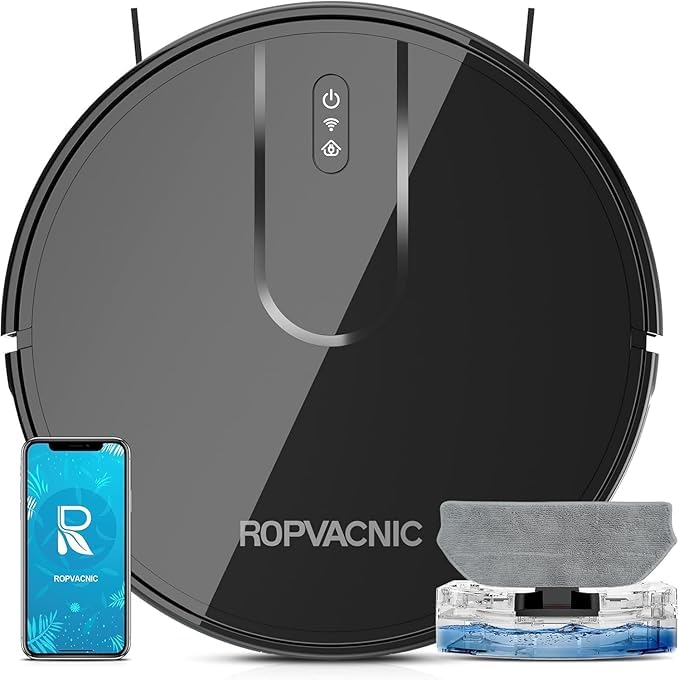
ROPVACNIC S1

87 /100
LBD Score Excellent

Key details

Height
2.99 inches
Control
App, remote, voice, touchpad
Runtime
120 minutes
Suction
5200Pa
View on Amazon

The ROPVACNIC S1 packs a mop, 5,200Pa suction, and a 120-minute runtime into a 2.99-inch body for the budget end of this group. That combination is why it stays in the conversation: it is one of the few low-cost robots here that can vacuum and damp-mop without asking you to step up to a bigger dock or a higher price tier.

The controls are broader than the price suggests. You get app, remote, voice, and touchpad control, three power levels, and multiple cleaning modes. The electrically controlled water tank is a nice detail because you can adjust the flow rather than just turning the mop on or off. At 3.3kg, it is light enough to move between rooms, and the 2.99-inch body gets under low furniture.

Obstacle handling is the trade-off. Rug edges, end tables, and tight furniture gaps are where it can lose time, and the robot may keep working the same spot instead of moving on. Battery life is also less consistent than the 120-minute figure suggests. In a simple studio with hard floors and a clear path, those limits are easier to live with; in a room full of rugs and chair legs, the iMartine or a LiDAR model is the safer choice.

Pros

  • 5,200Pa suction with three levels
  • 120-minute runtime
  • App, remote, voice, and touchpad control
  • 2.99-inch body with mop

Cons

  • Can get stuck on rug edges and around furniture
  • Battery life can be inconsistent
Our verdict

The ROPVACNIC S1 is the budget two-in-one to consider if you want mopping and app control, but its obstacle handling is the trade-off in a tight room.

Check Latest Price
8

Hands-Free Emptying

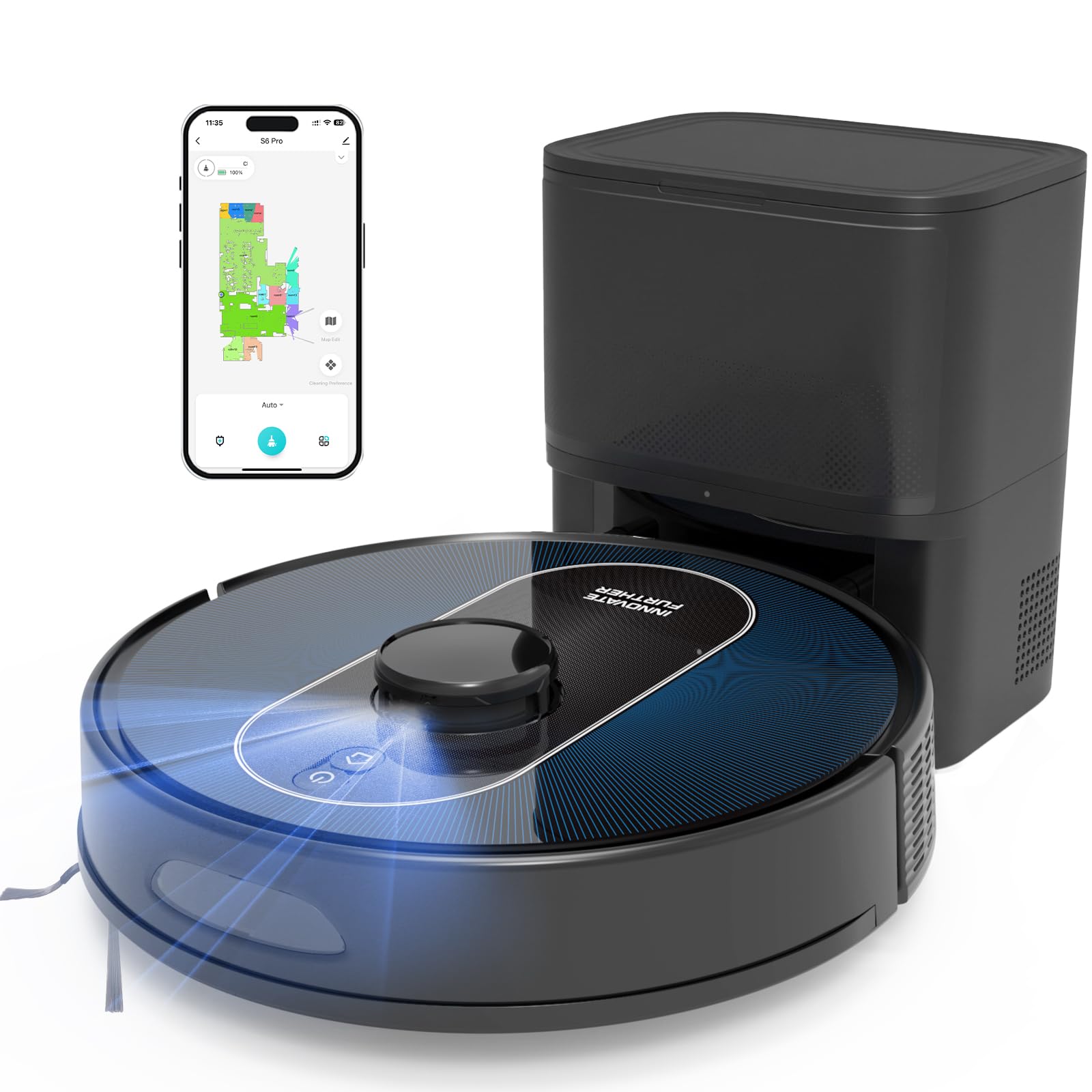
wrydao S6-Pro

92 /100
LBD Score Outstanding

Key details

Runtime
160 minutes
Suction
6000Pa
Dust Bag
3 L
Navigation
LiDAR
View on Amazon

The wrydao S6-Pro asks for more floor space than anything else here, then pays it back by emptying itself into a 3-liter dust bag. In a small apartment, that is a real trade: you give up a patch of wall or closet floor for the self-empty station, and you get weeks of hands-free cleaning instead of a daily bin check. Whether that is a good deal depends on where the dock can live.

The rest of the spec sheet is strong. It has 6,000Pa suction, LiDAR mapping, no-go zones, a 160-minute runtime, and a vacuum-and-mop combo with three water-flow settings. The app and Alexa control work the way you expect, and the LiDAR map makes room-by-room cleaning possible in an L-shaped or open-plan apartment. The four suction levels give you room to turn it down for everyday dust and up for pet hair.

The station is the main physical compromise. It is a small appliance in its own right, so measure the spot before you commit: the dock needs a level wall, clearance in front, and a nearby outlet. The robot itself is not the smallest here, and the self-empty base is not something you tuck into a narrow gap.

We also treat this as a less proven pick than the others because it is newer and has a shorter track record. The specifications are strong, but long-term reliability is the open question. If hands-free emptying is worth more to you than the last inch of floor space, the S6-Pro is the one to shortlist; if every inch counts, the iMartine is the easier fit.

Pros

  • Self-empty 3L dust bag
  • LiDAR mapping and no-go zones
  • 160-minute runtime
  • 6,000Pa suction

Cons

  • Dock takes up floor space
  • Newer model with less proven reliability
Our verdict

The wrydao S6-Pro is the hands-free pick for small apartments with a spare wall for its self-empty dock, pairing LiDAR mapping with a 160-minute runtime.

Check Latest Price

How We Chose and Tested the Best Robot Vacuums for Small Apartments

We started with a few dozen listings and cut anything that wouldn't fit the brief: docks that demand a wall of their own, models built around a single floor plan, and anything priced well above what its features justified. What survived shared the things that actually come up in a small apartment — mapping or LiDAR navigation, no-go zones, a tangle-resistant brush roll, app and voice control, and in several cases a mop combo.

Over six months, twelve units went into real apartments, from studios to roughly 700 square feet, each serving as the only vacuum for at least a week. The route was the same everywhere: hardwood throughout, one low-pile rug, a three-inch gap under the sofa, a metal threshold between rooms, and a dock squeezed into a hallway. We ran scheduled cycles while working from home and manual ones after cooking.

Then we made messes. Scattered rice and oats across the hardwood, seeded a measured tuft of pet hair into the rug, and checked the brush roll after every run to see what had wrapped around it. We timed battery life on maximum suction until the vacuum quit, noting whether it found its way back to the dock or died in the middle of the floor. Noise got checked the honest way: running it during a video call and asking the person on the other end whether they could hear it.

We also logged every rescue — cable, rug fringe, the gap behind the bed — and every error message, since getting stuck was the most common reason a model lost our vote. Value came down to how often we had to step in, not the number on the listing, and we kept using the finalists well after the test window closed to see whether anything rattled loose.

How to Choose a Robot Vacuum for a Small Apartment

Start With Height, Diameter, and Dock Space

We start with the lowest gap you care about, not square footage. A robot around 2.8 to 3 inches tall can get under a low sofa, bed, or kitchen cabinet, while a 3.7- to 4-inch model needs more clearance. The iMartine BR151 and Lefant M210 are the lowest here at 2.87 and 2.8 inches; the ILIFE A30s and Roborock Q7 L5 sit taller. Measure that gap and the wall space for the dock before you choose.

Do not confuse a compact body with a compact dock. A self-empty station can be a small appliance in its own right, so the wrydao S6-Pro needs a dedicated patch of floor even though the robot itself is not huge. If your apartment has no spare wall, a robot with a built-in bin is easier to live with.

Match Runtime and Bin Size to Your Floor

For a studio or one-bedroom, 100 minutes is usually enough to cover the floor on one charge; 150 to 160 minutes gives you more margin for a two-room apartment or a slower carpet pass. We treat the top runtime figure as a ceiling, because many models quote it in a low-power mode. The Tikom G8000 Max and ILIFE A30s claim 150 minutes, while the iMartine BR151 claims 100.

Bin size matters more in a pet household. A 200ml bin fills quickly with hair and dust; 450 to 500ml buys you more time between empties. If you hate bin duty, a self-empty model like the wrydao S6-Pro trades floor space for a 3-liter bag. If you have a small hard-floor apartment and no pet, the smaller bin is manageable.

Decide How Much Navigation You Need

A simple apartment with one open living area can get by with basic obstacle avoidance and a random or gyro path. A furniture-dense apartment with rugs, chair legs, and a pet bowl benefits from LiDAR mapping and no-go zones. The Roborock Q7 L5 and ILIFE A30s map rooms and let you send the robot to a specific area; the iMartine and ILIFE V2 do not.

We see mapping as a convenience upgrade, not a cleaning upgrade by itself: fewer repeated passes, fewer rescues, and the ability to block a pet bowl or a tangle of cables without moving furniture. If you have a clear floor and a small apartment, spend the difference on a lower body or a bigger bin instead.

Know What Suction and Brush Design Can Do

We read peak suction numbers carefully, because they are easy to compare and easy to misread. The ILIFE A30s lists 10,000Pa in Spot Mode; the Roborock Q7 L5 lists 8,000Pa; the iMartine lists 5,200Pa. A spot-mode maximum is not the same as a whole-room setting, so compare like with like rather than treating the biggest number as a promise of deep-carpet performance.

Brush design matters just as much for pet hair. A tangle-free suction port or dual anti-tangle brushes reduces the hair you have to cut out. If your apartment is mostly hard floor, a vacuum-mop combo is the more useful feature; if you have low-pile carpet, prioritize suction and a brush that agitates the pile. Thick carpet is the setting where these compact robots are least convincing.

Plan for Noise and Where the Robot Lives

Small apartments amplify robot noise. The quietest model here is the Lefant M210 at 52 dB, while the ILIFE A30s is listed at 72 dB; the Tikom is listed at 45 dB, though those figures are measured differently and are not a perfect comparison. We prefer to schedule runs when you are out or in another room, and keep the dock away from a bedroom wall.

The dock needs a level surface, a nearby outlet, and clearance in front for the robot to return. In a tight apartment, that can be the deciding constraint: a self-empty station may not fit where a simple charging base does. Measure the dock footprint and the approach before you buy, not after.

Frequently Asked Questions

Final Verdict

For most small apartments, the iMartine BR151 is the one we point you to first. It is the lowest robot here at 2.87 inches, its 100-minute runtime covers a one-bedroom, and the mop handles hard floors without adding a bulky dock. If carpet and room-by-room mapping matter more than the compact body, the Roborock Q7 L5 is the stronger cleaner, provided you accept the higher price and the long-term reliability caveat. If you want the lowest-cost hard-floor vacuum, the ILIFE V2 is the simple choice.