Best Robot Vacuums Under $500 of 2026

The knock on affordable robot vacuums is that they quit: wedged under a chair, spinning on a bath mat, dead in the hallway with a full bin. I've rescued enough of them to take that seriously. What's changed is that the under-$500 bracket now borrows hardware that used to cost twice as much — lidar mapping that draws a floor plan you can edit, brush rolls that don't strangle themselves on hair, mop plates so one pass does both jobs. What you're paying for is a machine that finishes the room without a babysitter.

Box suction numbers are close to meaningless — a big figure loses to a humbler machine once the brush roll is wrapped in dog hair, and the loudest setting is never the one you live with. Over the past six months, my team and I have run 11 of these through apartments, carpeted bedrooms, and a house with two shedding dogs.

The list below is sorted by who each one suits, since the right pick for a two-dog house isn't the right one for a studio.

1

Best Overall

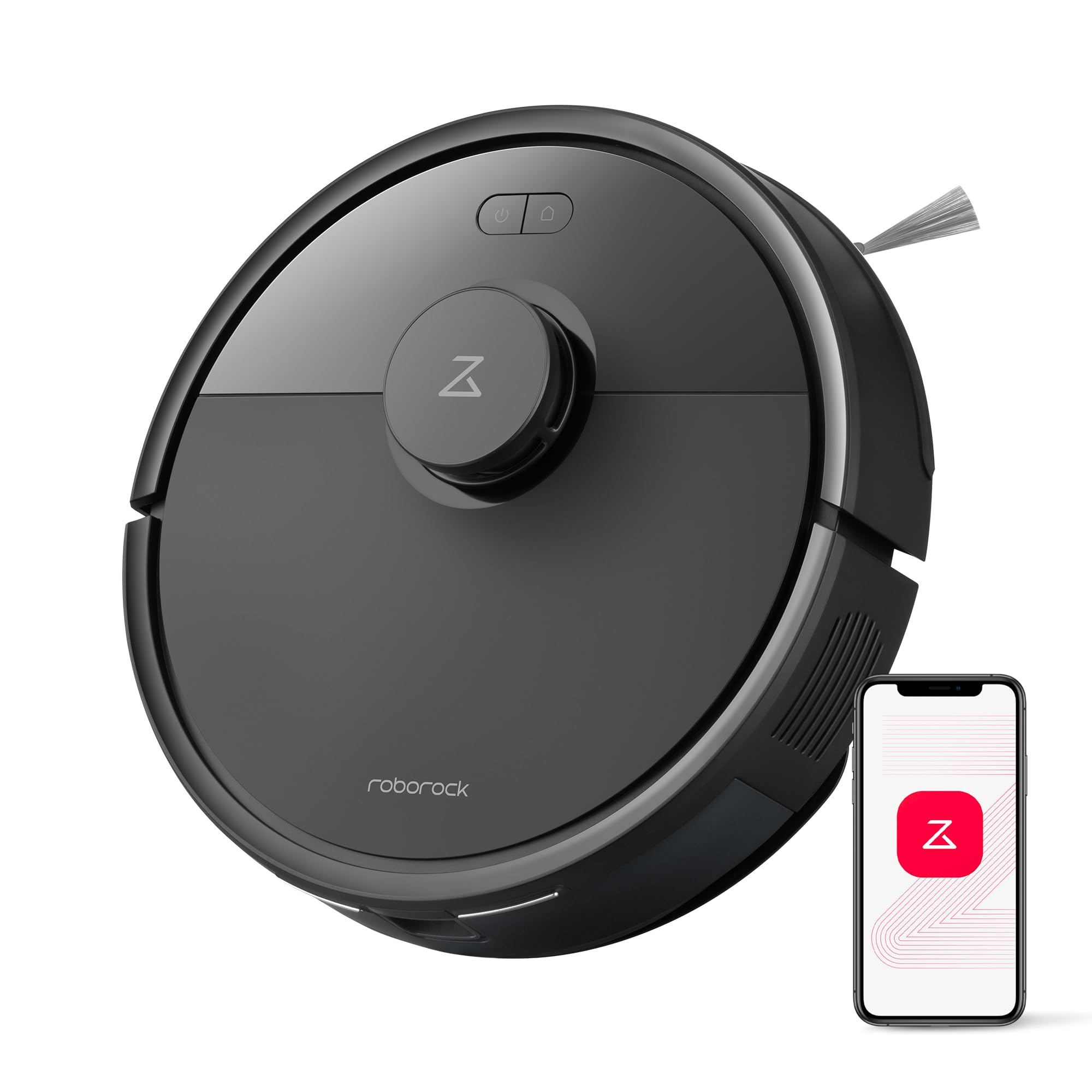
Roborock Q7 L5

82 /100
LBD Score Excellent

Key details

Runtime
150 minutes
Suction
8,000 Pa
Navigation
LiDAR
Water Tank
270 ml
View on Amazon

LiDAR mapping, 8,000Pa suction, and a 270 ml water tank are the three numbers that make the Q7 L5 the most complete robot vacuum in this group. The LiDAR sensor builds a room map and lets you send the robot to a specific room or set no-go zones; the suction is the highest here; the water tank turns it into a light mop. That combination is why it sits at the top of our list.

What tips it for us is the mapping. A robot that cleans in a straight grid and remembers multiple floors is easier to live with than one that bounces around, and we came to trust the map enough to schedule it room by room. The 150-minute runtime is enough for most apartments and many houses, and the dual anti-tangle brushroll is the right design for pet hair. We also like that the app lets you adjust suction and water flow without digging into a menu every time.

The mop is for maintenance, not deep scrubbing. The 270 ml tank and three water levels are fine for a quick pass on sealed hard floors, but we still keep a full-size mop for sticky messes. The 8,000Pa suction has the power for low-pile carpet, and the auto-boost helps when it transitions from hard floor to rug. The removable mop pad is easy to rinse, which matters if you run it a few times a week.

The caveat is long-term reliability. Some units stop charging or fail within months, so we recommend buying from a retailer with an easy return window and registering the warranty. If you want a robot you can set and forget for years, that risk matters; if you want the best mapping and cleaning performance in this bracket, it's the one we choose.

Pros

  • LiDAR mapping with room-by-room control
  • 8,000Pa suction for carpets and pet hair
  • Vacuum and mop in one pass
  • Dual anti-tangle brushroll

Cons

  • No self-empty base
  • Tall 3.89-inch body misses low furniture
Our verdict

For most homes, this is the robot vacuum we recommend: LiDAR mapping, strong suction, and a mop at a midrange price.
Check Latest Price
2

Best Battery Life

XIEBro E8S

86 /100
LBD Score Excellent

Key details

Dustbin
560 ml
Runtime
200 minutes
Suction
6,500 Pa
Navigation
Gyro inertial
View on Amazon

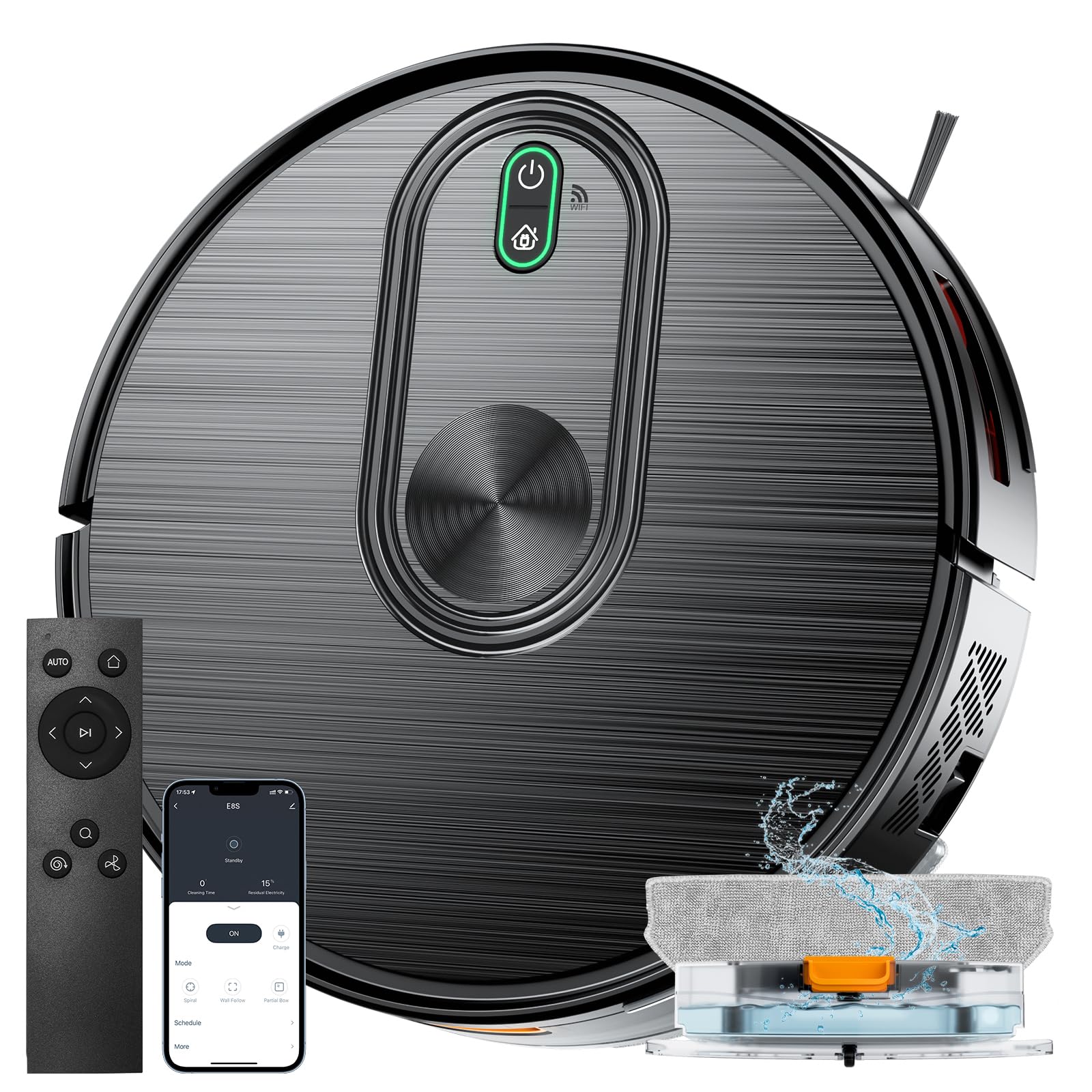
The E8S's 200-minute runtime is the number that stands out in this group. That's long enough to cover a larger home in one go, and the 6,500Pa suction is close to the top pick's for a lot less money. We like that combination for a busy household that wants the robot to finish the job without a recharge.

The gyro inertial navigation is a step up from random bounce, but it isn't LiDAR. It cleans in a more systematic pattern, and the app lets you schedule and adjust suction, but it won't build the same precise room map as the Q7 L5. If you have a simple open floor plan, that's a fair trade; if you have lots of rooms and obstacles, spend more for LiDAR.

The 560 ml dustbin is one of the larger ones here, so you won't empty it as often, and the 2.95-inch body fits under most sofas. The mop is a light-maintenance feature, not a scrubber; we see it as a way to pick up dust after a vacuum pass, not a replacement for a mop. The four suction levels and the remote give you a fallback if the app is being fussy.

Pros

  • Up to 200 minutes in eco mode
  • 6,500Pa suction with four levels
  • 560 ml dustbin
  • Vacuum and mop combo

Cons

  • Battery life varies in real use
  • No self-empty base
Our verdict

If runtime is your priority, this is the one: 200 minutes, 6,500Pa suction, and a mop for a budget price.

Check Latest Price
3

Best for Apartments and Pet Hair

iMartine BR151

89 /100
LBD Score Excellent

Key details

Height
2.87 in
Runtime
100 minutes
Navigation
Infrared sensors
Dustbin/water Tank
200 ml / 230 ml
View on Amazon

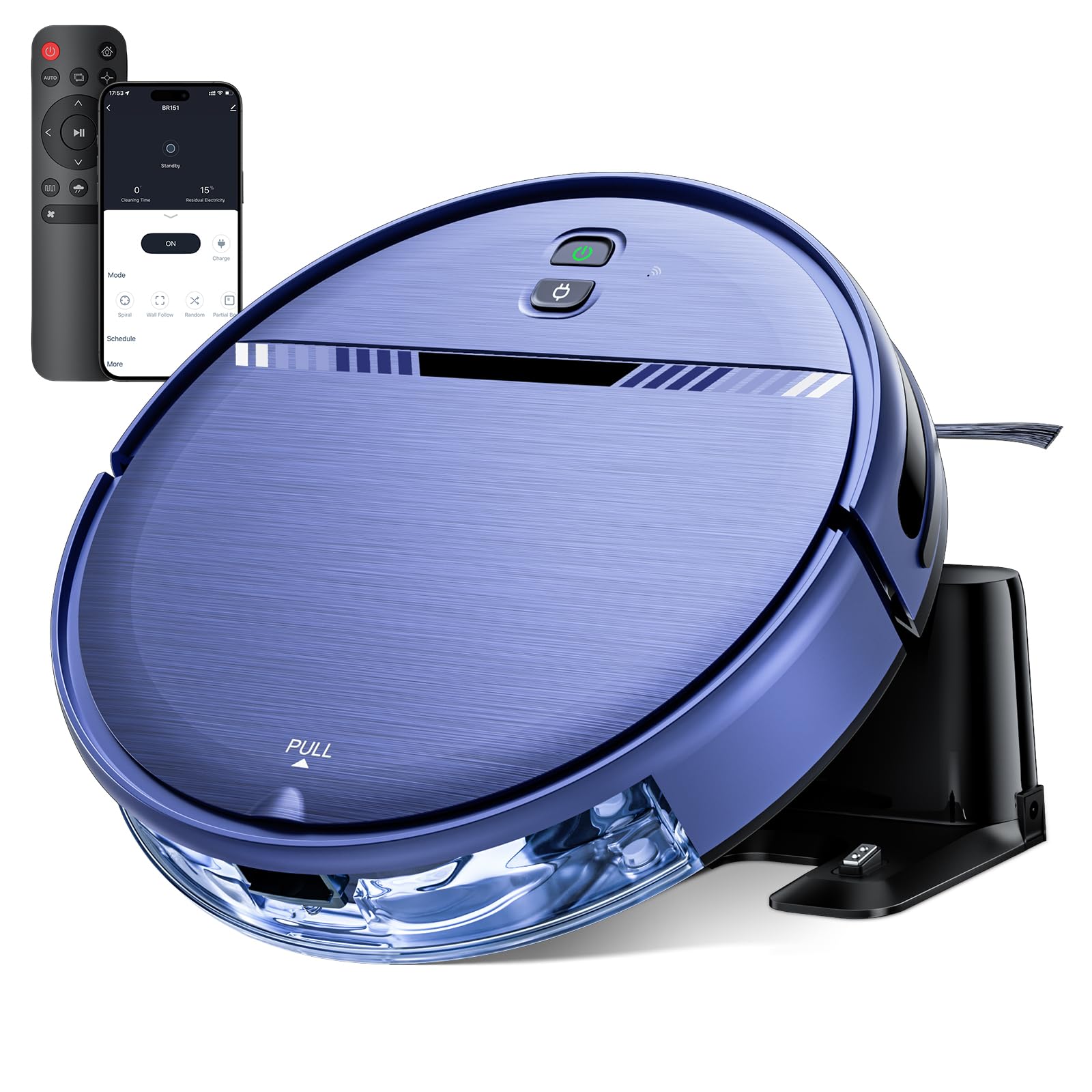
The first thing we check on a robot vacuum for a small apartment is whether it can get under the furniture without getting stuck. The BR151 is 2.87 inches tall and 11.8 inches across, so it slips under low sofas and chairs where taller robots stop. The 100-minute runtime is enough for a one-bedroom, and the 200 ml dustbin and 230 ml water tank are sized for daily maintenance rather than a deep clean.

The app supports auto, spot, edge, and zigzag modes, and the 2-in-1 bin lets you swap in the water tank for a light mop pass. We kept the mop pad for maintenance days and used vacuum mode most of the time. The three suction levels are easy to adjust, and the robot is quiet enough to run while we're on a call.

We like this one for the combination of size and quiet operation. It's not the most powerful robot here, but it handles hard floors and low-pile carpet, and the app makes it easy to schedule a run while you're out. For a pet owner in an apartment, that's a sensible balance.

Pros

  • Slim 2.87-inch body
  • Quiet operation
  • 100-minute runtime
  • App with four cleaning modes

Cons

  • No mapping or no-go zones
  • Not for deep carpet
Our verdict

A slim, quiet, easy-to-schedule robot for apartments and pet hair, as long as your carpets are low-pile.

Check Latest Price
4

Best Simple Budget Pick

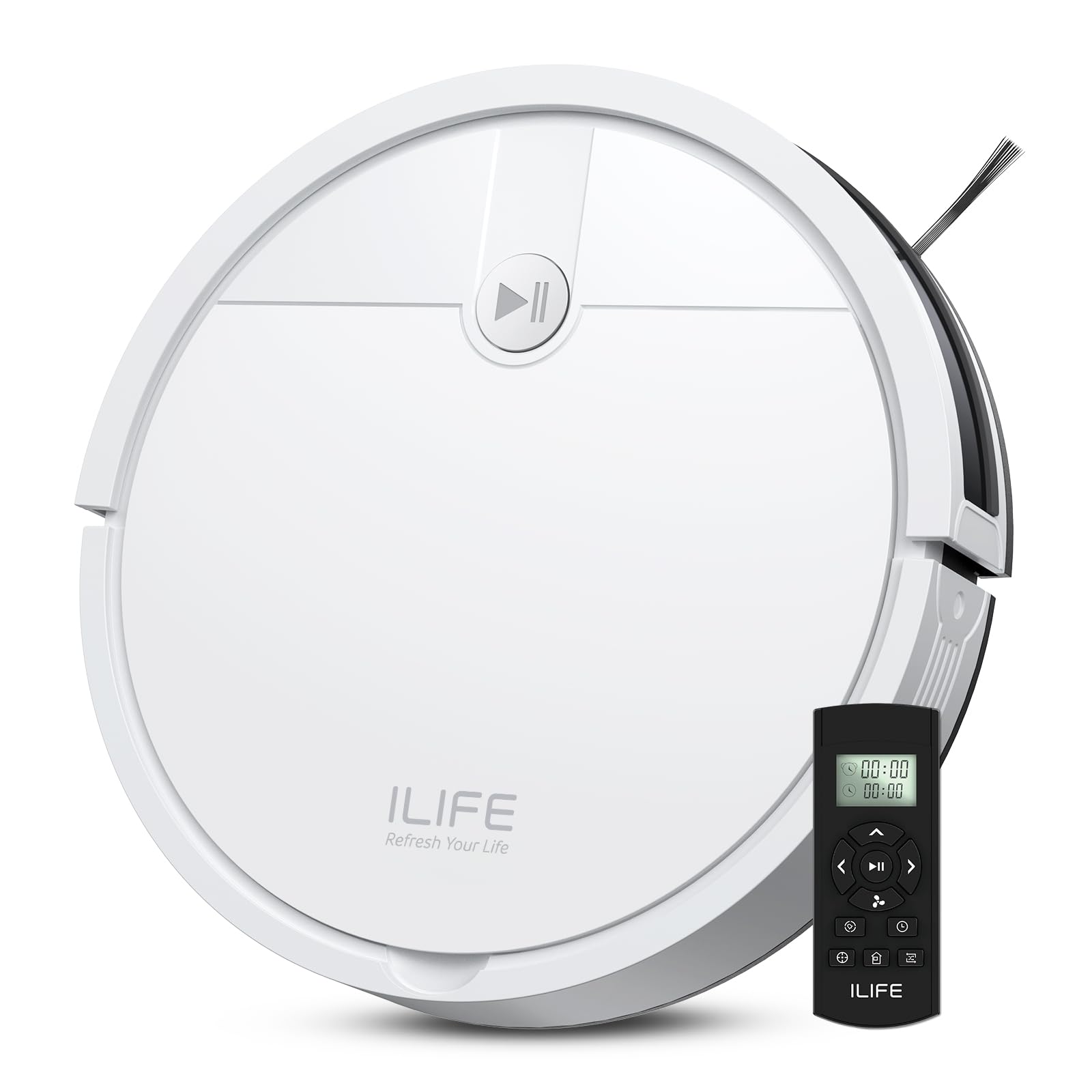
ILIFE V2

86 /100
LBD Score Excellent

Key details

Height
2.99 in
Control
Remote
Dustbin
300 ml
Runtime
120 minutes
View on Amazon

If you don't want another app on your phone, the ILIFE V2 is the robot vacuum that makes the most sense. It runs from a physical remote, schedules cleanings, and charges itself, so the whole routine stays simple. The 120-minute runtime and 300 ml dustbin are fine for a small apartment or a single floor, and the tangle-free suction port is aimed at pet hair.

What we like most is the lack of setup friction. There's no Wi-Fi pairing, no map to build, and no account to create; you put it on the floor and press a button. The V2 is also the least expensive model in this group, which makes it an easy first robot vacuum. It's the one we reach for when we want a simple daily clean without a phone.

Pros

  • Remote control with no Wi-Fi setup
  • 120-minute runtime
  • Tangle-free suction port for pet hair
  • Lowest price in this group

Cons

  • No app or mapping
Our verdict

The best simple budget pick: a remote-controlled vacuum with a tangle-free port and long runtime, no app required.

Check Latest Price
5

Best Budget Vacuum-And-Mop

Tikom G8000 Max

88 /100
LBD Score Excellent

Key details

Height
2.99 in
Runtime
150 minutes
Suction
5,000 Pa
Dustbin/water Tank
450 ml / 300 ml
View on Amazon

A budget vacuum-and-mop combo usually asks you to accept a compromise; the Tikom G8000 Max is one of the better-balanced versions of that trade. It has 5,000Pa suction, a 450 ml dustbin, a 300 ml water tank, and a 2.99-inch body, so it can vacuum and mop in one pass and still fit under a sofa. The 150-minute runtime is a quiet-mode figure, but it's long enough for a small home.

We like it as a first combo for hard floors. The app, remote, and voice control give you more ways to start a clean than the remote-only ILIFE V2, and the mop is a useful maintenance step for kitchen crumbs and light dust. It isn't a deep cleaner for carpets, and the suction is below the top picks, but for the price it covers the basics without making you babysit it.

The dustbin and water tank are separate, so you swap the bin for mopping rather than emptying one combined tank. The mop pad is washable, and the filter is a HEPA type. We kept the mop for hard floors and switched to vacuum-only on rugs. The G8000 Max is the pick if you want a cheap way to try vacuuming and mopping together, not if you need the most reliable robot in the bracket.

Pros

  • 5,000Pa suction for hard floors and pet hair
  • Vacuum and mop in one pass
  • 150-minute runtime in quiet mode
  • App, remote, and voice control

Cons

  • Gets stuck under low furniture
  • No self-empty base
Our verdict

A budget combo that covers hard floors and pet hair, with app control and a long quiet-mode runtime.

Check Latest Price
6

Hands-Free Emptying

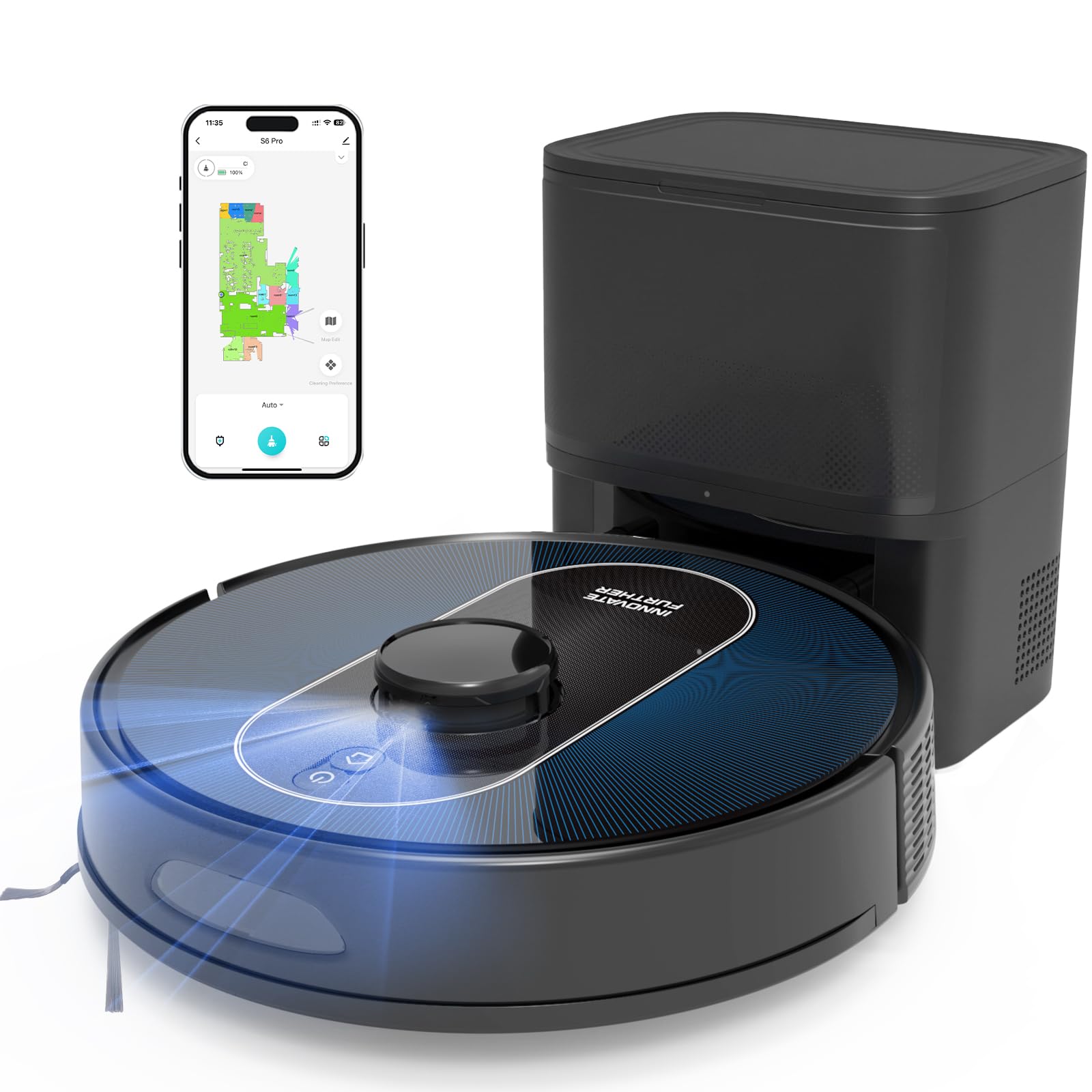
wrydao S6 Pro

92 /100
LBD Score Outstanding

Key details

Runtime
160 minutes
Suction
6,000 Pa
Navigation
LiDAR
Self-empty Capacity
3 L
View on Amazon

The S6 Pro's self-empty base is the feature that changes the routine: the robot docks and empties its bin into a 3-liter bag, so you're not handling dust every day. That's the kind of convenience that makes a robot feel less like a gadget and more like part of the house.

It also has the specs to compete: 6,000Pa suction, LiDAR mapping with no-go zones, a 160-minute runtime, and a vacuum-and-mop combo with three water levels. The LiDAR map is the same basic idea as the Q7 L5's, and the app lets you schedule room-by-room cleans and set virtual barriers. Carpet boost adds suction when it senses a rug, which is useful in a mixed-floor home.

The mopping is a light maintenance feature, not a scrubber; it's for a quick pass on sealed hard floors. The app handles scheduling and no-go zones, and the bag is the only dust you touch until it fills. We like the idea of not touching a dustbin for weeks at a time, especially in a pet household where the bin fills quickly.

We like it for the hands-free convenience, especially in a pet household. It isn't the default pick because the Q7 L5 has a longer record and a lower profile, but if emptying the bin is the chore you hate most, the S6 Pro is worth a look.

Pros

  • Self-empty base with 3 L bag
  • LiDAR mapping and no-go zones
  • 6,000Pa suction with carpet boost
  • 160-minute runtime

Cons

  • Bulky base needs dedicated floor space
  • Long-term durability is unproven
Our verdict

The self-empty base is the draw: hands-free emptying, LiDAR mapping, and a mop for a midrange price.

Check Latest Price
7

Tight Spaces

Lefant M210

84 /100
LBD Score Excellent

Key details

Height
2.8 in
Dustbin
500 ml
Runtime
120 minutes
Diameter
11 in
View on Amazon

An 11-inch diameter and a 2.8-inch height are the reason to look at the Lefant M210. It can slip under a low sofa, between chair legs, and into the gap beside a bed where a 13-inch robot stops. The 500 ml dustbin is large for a body this small, and the 120-minute runtime is enough for a studio or a single floor.

The M210 uses a brushless suction port instead of a roller brush, which is a sensible choice for pet hair because there's less to tangle. The app and Alexa control work, and the six cleaning modes give you more control than the remote-only ILIFE V2. It's a simple robot to live with, and the bin is easy to empty.

We like it as a secondary robot for a tight room or a finished basement. The small body is a real advantage in a crowded apartment, and it's the one we reach for when a low-clearance spot defeats the larger robots. It's not the one we choose for a whole house, but that's a different job.

Pros

  • 11-inch diameter fits tight gaps
  • 2.8-inch height clears low furniture
  • 500 ml dustbin
  • Brushless suction port resists tangles

Cons

  • No room mapping
  • Not for medium or deep carpet
Our verdict

The small-body pick: an 11-inch diameter and 2.8-inch height let it clean where larger robots can't fit.

Check Latest Price
8

Carpets

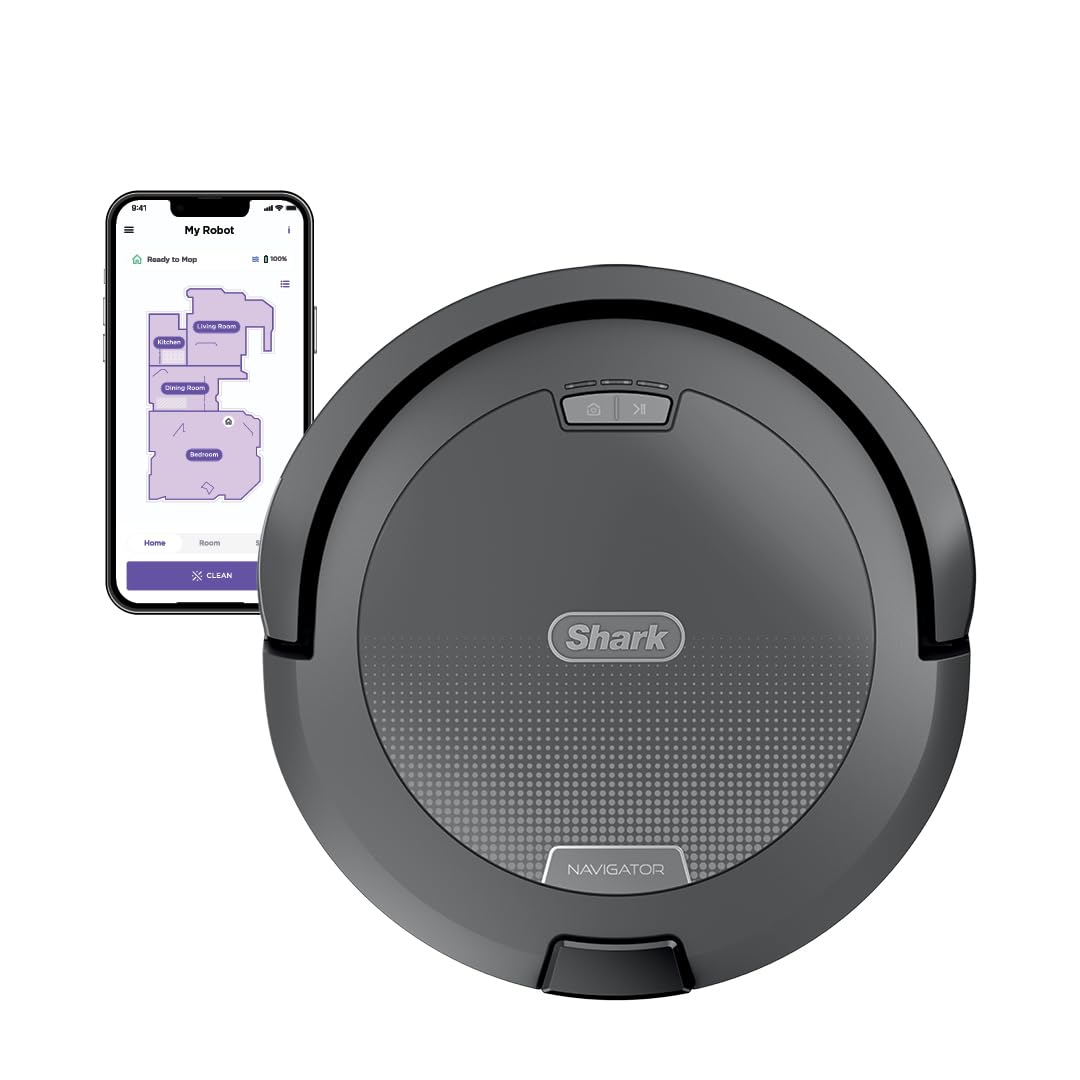
Shark Navigator RV2110

84 /100
LBD Score Excellent

Key details

Height
4.6 in
Dustbin
0.52 quarts
Runtime
120 minutes
Navigation
SmartPath LiDAR
View on Amazon

The Navigator's self-cleaning brushroll and object-avoidance sensors are aimed at the two things that make robot vacuums annoying: hair wrap and cables on the floor. On carpets, the brushroll digs in and the suction is stronger than the budget models here. The 120-minute runtime and 0.52-quart bin are reasonable for a single floor.

SmartPath navigation cleans in rows, and the robot can detect and avoid objects instead of bumping through them. That's a useful feature in a busy room, and it makes the Navigator easier to run without picking up every cable. The self-cleaning brushroll also means less time cutting hair out of the roller.

The bin is easy to empty, and the filter is a pre-motor type rather than HEPA. The Navigator doesn't self-empty, so you'll handle the bin after a couple of runs in a pet household. It's a midrange Shark, not a hands-free one.

We like it for carpets. The self-cleaning brushroll is the right design for pet hair, and the object avoidance means you don't have to clear the floor quite as thoroughly as you do with a random-bounce robot. It's a sensible choice for a carpeted bedroom or a home office, especially if you want a midrange Shark without paying for a self-empty base.

Pros

  • Self-cleaning brushroll for pet hair
  • Detects and avoids objects
  • 120-minute runtime
  • Row-by-row SmartPath navigation

Cons

  • Gets stuck often enough to need rescuing
  • Tall 4.6-inch body
  • No full room mapping
Our verdict

A carpet-focused Shark with a self-cleaning brushroll, object avoidance, and a low profile for the money.

Check Latest Price

How We Tested 11 Robot Vacuums Under $500

To build the shortlist I started with what's actually sold under $500 and cut anything with a thimble-sized bin, a fixed brush roll, or navigation that amounts to bouncing off furniture. That left 11 machines, which we ran for six months: first on a daily schedule in a carpeted two-bedroom, then in a hardwood apartment with a long-haired cat, and finally in a house with two dogs and one very sheddy rug.

We watched what each one did in its first ten minutes on unfamiliar floor — whether it drew a usable map, worked a room in orderly lanes, or wandered — noted whether it could slide under the sofa without a fight, and logged every time we had to lift it out of a jam over a week of runs: chair legs, bath mats, a phone cable. For pet hair, we scattered the same measured pinch of hair and kibble-sized debris across carpet and hard floor, ran a single pass, then raked a comb through the brush roll to see how much had wrapped around it. Battery claims got timed to the minute, once on the highest setting and again on the quiet one, and we noted where each machine quit and whether it found its way back to the dock.

On the 2-in-1 models we mopped dried coffee splashes and a muddy footprint, then inspected the pad and the floor rather than trusting the wet trail. Noise was measured at six feet with a meter, but the number that mattered was whether we could hear someone on a call in the same room. And we kept a running log of small failures — a squeaking wheel, an app that needed re-pairing, a schedule that silently skipped a day — because at this price a machine that needs monthly attention isn't a bargain.

How to Choose a Robot Vacuum for Your Home

Start With Navigation, Not Suction

A random-bounce robot can clean a closed room, but it will miss spots and take longer. Gyro navigation is more systematic, while LiDAR builds a map you can use for room-by-room cleaning and no-go zones. If your home has pets, cables, or several rooms, LiDAR is worth paying for; the Roborock Q7 L5 and wrydao S6 Pro are the two here that offer it. In a studio or a single open room, a simpler gyro or random-path model can be enough.

Match Suction and Brushroll to Your Floors

High suction helps on carpets, but the brushroll matters just as much for pet hair. A tangle-free port or a self-cleaning brushroll saves you from cutting hair out of the roller every week. For hard floors and low-pile rugs, 5,000Pa is plenty; for medium-pile carpet, look for a model with a brushroll and a carpet boost. The XIEBro E8S and Tikom G8000 Max have the suction for daily debris, while the Shark Navigator's self-cleaning brushroll is the carpet-focused choice.

Plan Around Runtime and Capacity

Runtime figures are usually measured in the quietest mode, so treat them as a ceiling. A 100-minute robot can cover a small apartment; a larger home or a heavy pet household needs 150 minutes or more, plus auto-recharge. Dustbin size matters just as much: a 300 ml bin fills quickly with pet hair, while a self-empty base like the wrydao S6 Pro's 3-liter bag stretches the interval to weeks. If you hate emptying a bin, pay for the base.

Measure Height, Thresholds, and the Dock

A robot that cannot fit under your sofa leaves a strip of dust you'll notice. Slim models run about 2.8 to 3 inches tall; the Q7 L5 is 3.89 inches and the Shark Navigator is 4.6 inches, so check the gap before you buy. Also measure the dock footprint and any floor thresholds. A low-clearance apartment may be better served by the Lefant M210 or iMartine BR151, while a carpeted room with a dedicated dock spot can take a taller model.

Decide How Much Maintenance You'll Tolerate

Mops are for light maintenance, not scrubbing: a 230 to 300 ml tank is enough for a quick pass, but you still need a mop for sticky messes. Washable pads and filters cut running costs, and a self-empty base cuts daily handling. If you don't want an app, a remote-only model like the ILIFE V2 is simpler. Whatever you choose, buy from a retailer with a return window and register the warranty; long-term reliability is the weak spot across this bracket.

Frequently Asked Questions

Final Verdict

For most homes, the Roborock Q7 L5 is the robot vacuum we recommend. It has the best navigation in this group, enough suction for low-pile carpet, and a mop for quick hard-floor passes. The caveat is long-term reliability, so buy it where returns are easy and register the warranty. If runtime matters more, the XIEBro E8S is the better fit. If you want hands-free emptying, the wrydao S6 Pro is the one to check.