Best Studio Headphones of 2026

Studio headphones ask you to pick a side. Closed-back pairs seal you off from the room, which is why they end up in vocal booths and on drum takes; open-back pairs let the room back in and expose the flaws in a mix that a sealed cup tends to flatter. Choose against your actual setup and you'll spend months fighting the headphones instead of hearing the work. The right pair mostly disappears — no clamping jaw, no hot ears after the second hour, no guessing at what's happening in the low end.

My team has spent the last six months with eight pairs of both kinds, tracking, editing, and mixing on them daily. The thing first-time buyers routinely miss is impedance: a high-impedance pair can sound thin and quiet straight out of a laptop jack and only wake up behind an amp or an interface, while a low-impedance pair plays from almost anything you plug it into.

The eight below are the ones we kept reaching for after the novelty wore off — honest-sounding, comfortable past hour three, and built like they'd survive a few more years of sessions.

1

Best Overall

Audio-Technica ATH-M50x

95 /100
LBD Score Outstanding

Key details

Cable
Detachable
Earcups
90° swiveling
Impedance
38 ohm
Frequency Response
20 Hz to 28,000 Hz
View on Amazon

The M50x and M40x look like near twins, but the extra low-end weight in the M50x is what makes it our default for a studio that has to do more than mix. Its 38-ohm impedance is easy to drive from an interface or laptop, and the detachable cable system, 90-degree swiveling earcups, and closed-back cups make tracking, one-ear cueing, and editing straightforward. We think that versatility is worth more than the last word in neutrality, especially for a first serious pair.

The cable setup is the practical advantage. A fixed cable is one of the first things to fail on a work headphone, so being able to swap one out matters. The swiveling cups also let you slide one side back for a quick listen to the room or a bandmate during tracking, and the closed cups keep the click out of the mic.

Comfort is solid rather than plush. The pads and headband are built for daily use, and the folding design makes the M50x easier to store in a small home setup. We also appreciate that replacement pads are easy to find, which extends the useful life. It is the pair we leave on the desk, not because it is the most specialized, but because it is the least likely to get in the way of the next job.

Pros

  • Detachable cables are easy to replace
  • Swiveling cups help with one-ear cueing
  • Easy to drive from an interface
  • Closed cups keep click out of the mic

Cons

  • Firm clamp can bother glasses wearers
Our verdict

Our top pick for a first serious studio setup: easy to drive, cable-replaceable, and versatile across tracking, editing, and everyday listening.

Check Latest Price
2

Best for Tracking and Editing

Sony MDR-7506

95 /100
LBD Score Outstanding

Key details

Cable
Fixed 9.8 ft
Weight
8 oz
Impedance
63 ohm
Frequency Response
10 Hz to 20,000 Hz
View on Amazon

A folding closed-back with a 9.8-foot coiled cable is a specific kind of studio tool, and the MDR7506 is the one we reach for when a session moves between a desk and a mic. The closed cups keep bleed out of a vocal take, and the hinge folds the whole thing into the supplied soft case.

We keep recommending it for editing and tracking because the sound is clear and unshowy rather than hyped. The 63-ohm impedance is easy enough for a laptop but benefits from an interface. It is a tool, not a showpiece, and that is exactly why it earns its place.

The folding joints and coiled cable make it feel like a real studio tool, and the closed design stays comfortable for long stretches. It is the pair we leave in the bag for a session because it is ready for a take, an edit, or a quick reference check without fuss.

Pros

  • Folds into a compact package for transport
  • Closed cups reduce bleed into a vocal mic
  • Clear, unshowy sound for editing

Cons

  • Fixed 9.8-foot cable cannot be replaced
  • Snug clamp can bother larger heads
Our verdict

A dependable closed-back workhorse for tracking and editing, with clear, unshowy sound and a folding body that travels easily.

Check Latest Price
3

Best Closed-Back for Long Sessions

Beyerdynamic DT 770 Pro

93 /100
LBD Score Outstanding

Key details

Cable
Fixed 3 m
Weight
9.5 oz
Ear Pads
Replaceable velour
Impedance
80 ohm
View on Amazon

Velour pads change the feel of a long tracking session, and the DT 770 Pro's are the ones we appreciate most in this group. The closed-back cups seal well enough for a vocal booth or a shared room, and the replaceable pads and spring-steel headband make it feel like a long-term tool rather than a disposable pair.

The 80-ohm version is the flexible middle ground: loud enough from most laptops, better with an interface, and not as demanding as the 250-ohm open-back beyer. The sound is detailed without being thin, and the closed cups keep the click out of a mic. The metal joints and spring-steel headband feel sturdy without making the headphones heavy.

We prefer this one for a closed-back that has to do tracking and all-day listening. The velour pads are replaceable, which matters because pads are the first part to flatten, and the secure seal is enough for most home booths. It is not the most portable pair here, but it is the one we keep on the desk for a long session.

Pros

  • Velour pads stay comfortable in long sessions
  • Closed-back seal suits vocal booths
  • Replaceable pads extend useful life
  • 80-ohm version works from most laptops

Cons

  • Fixed 3-meter cable cannot be replaced
Our verdict

Our favorite closed-back for long sessions: velour pads, a secure seal, and 80-ohm flexibility make it a comfortable tracking and editing companion.

Check Latest Price
4

Best Open-Back for Mixing

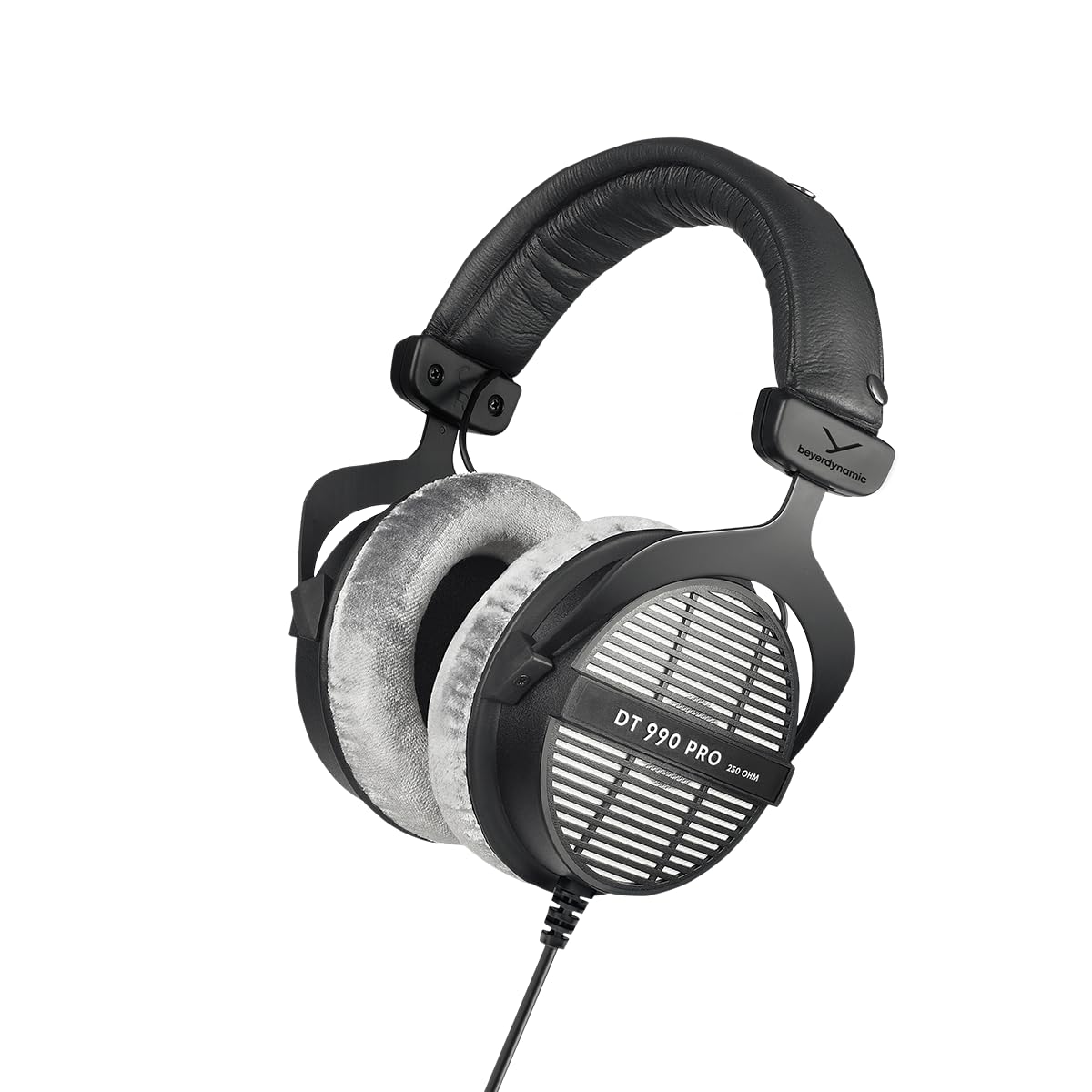
Beyerdynamic DT 990 Pro

93 /100
LBD Score Outstanding

Key details

Cable
Fixed 3 m coiled
Weight
14.1 oz
Impedance
250 ohm
Frequency Response
5 Hz to 35,000 Hz
View on Amazon

The first thing to accept about the DT 990 Pro is that it is not a plug-and-play headphone: its 250-ohm impedance wants a proper amp or a strong interface output, and the open grilles leak sound in both directions. We think that is a fair trade for mixing, where the wide image and bright top end make panning and reverb tails easier to judge. This is a tool for checking a mix, not for tracking a vocal in a shared room.

The open-back design is the reason to buy it. The soundstage is wider than any closed-back here, and the detail up top exposes problems instead of smoothing them over. It is not a relaxed listen, and that is the point. If you want a headphone that flatters a rough mix, this is the wrong one.

The velour pads and spring-steel headband are comfortable for long mixing sessions, and the replaceable pads are a practical touch because the foam is what flattens first. This is a specialist, and it rewards the person who gives it the right setup.

Pros

  • Wide soundstage helps judge panning
  • Bright detail exposes mix problems
  • Velour pads suit long mixing sessions

Cons

  • Fixed coiled cable cannot be replaced
Our verdict

The open-back reference in this group: a wide, honest image for panning and depth that makes critical mixing easier.

Check Latest Price
5

Best Isolation for Loud Rooms

Sennheiser HD 280 Pro

91 /100
LBD Score Outstanding

Key details

Cable
3.3 to 9.8 ft coiled
Weight
1.3 lb
Impedance
64 ohm
Noise Attenuation
Up to 32 dB
View on Amazon

There is a number that matters more than any other for the HD 280 Pro: up to 32 dB of passive attenuation. That is the figure to check when you are tracking next to a drummer or monitoring in a room with a noisy computer fan, and it is why the closed cups feel like a tool rather than a pair of headphones.

We recommend it first for loud rooms and shared studios. The sound is warm and clear rather than clinically flat, which makes it easy to listen to for hours, and the 64-ohm impedance works from an interface without much fuss. Earpads, headband padding, and the audio cord are replaceable, a real advantage where pads wear out before drivers do.

The trade-off is weight and clamp. At 1.3 pounds, it is the heaviest headphone in this group, and the fit is snug enough that some listeners will feel it across the jaw after a while. That is a lot of mass, but it buys serious isolation and a sturdy, serviceable build. For a loud room, we accept the weight.

Pros

  • Up to 32 dB of passive isolation
  • Replaceable pads, headband, and cable
  • Warm, clear sound for long sessions

Cons

  • Coiled cable is bulky for portable use
Our verdict

The isolation specialist: up to 32 dB of passive attenuation and replaceable parts make it the right closed-back for loud rooms and shared studios.

Check Latest Price
6

Best Flat-Tuned Closed-Back

Audio-Technica ATH-M40x

93 /100
LBD Score Outstanding

Key details

Cable
Detachable, two included
Earcups
90° swiveling
Impedance
35 ohm
Frequency Response
15 Hz to 24,000 Hz
View on Amazon

The M40x looks like the M50x's quieter sibling, but the more important difference is tuning: Audio-Technica aims this one flat for monitoring rather than adding the M50x's low-end lift. The 35-ohm impedance is easy to drive from an interface or laptop, and the detachable cables matter for long-term ownership.

The swiveling earcups and protective case make it a practical travel partner, and the detachable cable helps because the cable is the part most likely to fail first. The frame is plastic, so treat the hinges kindly; this is not the headphone to toss loose into a bag. The low end can feel lean on bass-heavy genres, but that is the trade-off for a closed-back that stays honest.

We prefer its midrange honesty for checking vocals and acoustic instruments; the M50x is more fun, but the M40x is more useful when the job is hearing what is actually there. For a first monitoring pair, the M40x is the one we hand to someone who wants to hear the midrange clearly. It is the flat reference of this group, and that is a specific job rather than a universal upgrade.

Pros

  • Flat tuning suits critical monitoring
  • Detachable cables are easy to replace
  • Easy to drive from an interface

Cons

  • Snug clamp on larger heads
  • Earpads feel stiff at first
Our verdict

The flat-tuned closed-back for mixing on a budget: detachable cables, easy drive, and honest mids make it a serious monitoring tool.

Check Latest Price
7

Best Semi-Open for Long Sessions

AKG K240 Studio

91 /100
LBD Score Outstanding

Key details

Cable
Detachable 3 m
Weight
8.47 oz
Impedance
55 ohm
Frequency Response
15 Hz to 25 kHz
View on Amazon

A semi-open headphone with a self-adjusting headband sounds like a compromise, but the K240 Studio makes that combination work for long editing sessions. The over-ear pads leave room around the ears, and the 3-meter detachable cable is easier to live with than a fixed studio cable.

Its 55-ohm impedance is easy to drive, and the 30mm Varimotion drivers give it a wide, open feel without asking for a dedicated amp. The sound is open and articulate, with enough bass to hear what a track is doing without turning into a basshead headphone.

The detachable cable helps, and the low weight means you can wear it for hours without the jaw pressure of the HD 280. The self-adjusting headband is the detail we appreciate most: it settles onto the head instead of clamping in one spot.

We like the K240 as a light, open-sounding companion for editing and casual referencing. For a desk-bound session it is easy to forget you are wearing it, and that comfort is the reason it stays in the rotation.

Pros

  • Self-adjusting headband spreads weight
  • Open, articulate sound for editing
  • Detachable 3-meter cable adds flexibility

Cons

  • Semi-open cups leak sound into the room
  • Ear pads wear before the drivers
Our verdict

A light, semi-open pair for long editing sessions, with a self-adjusting fit and a detachable cable that make marathon listening easy.

Check Latest Price
8

Shared Monitoring

OneOdio A71

91 /100
LBD Score Outstanding

Key details

Cable
Detachable, coiled
Sharing
Second headphone port
Impedance
32 ohm
Frequency Response
20 Hz to 40,000 Hz
View on Amazon

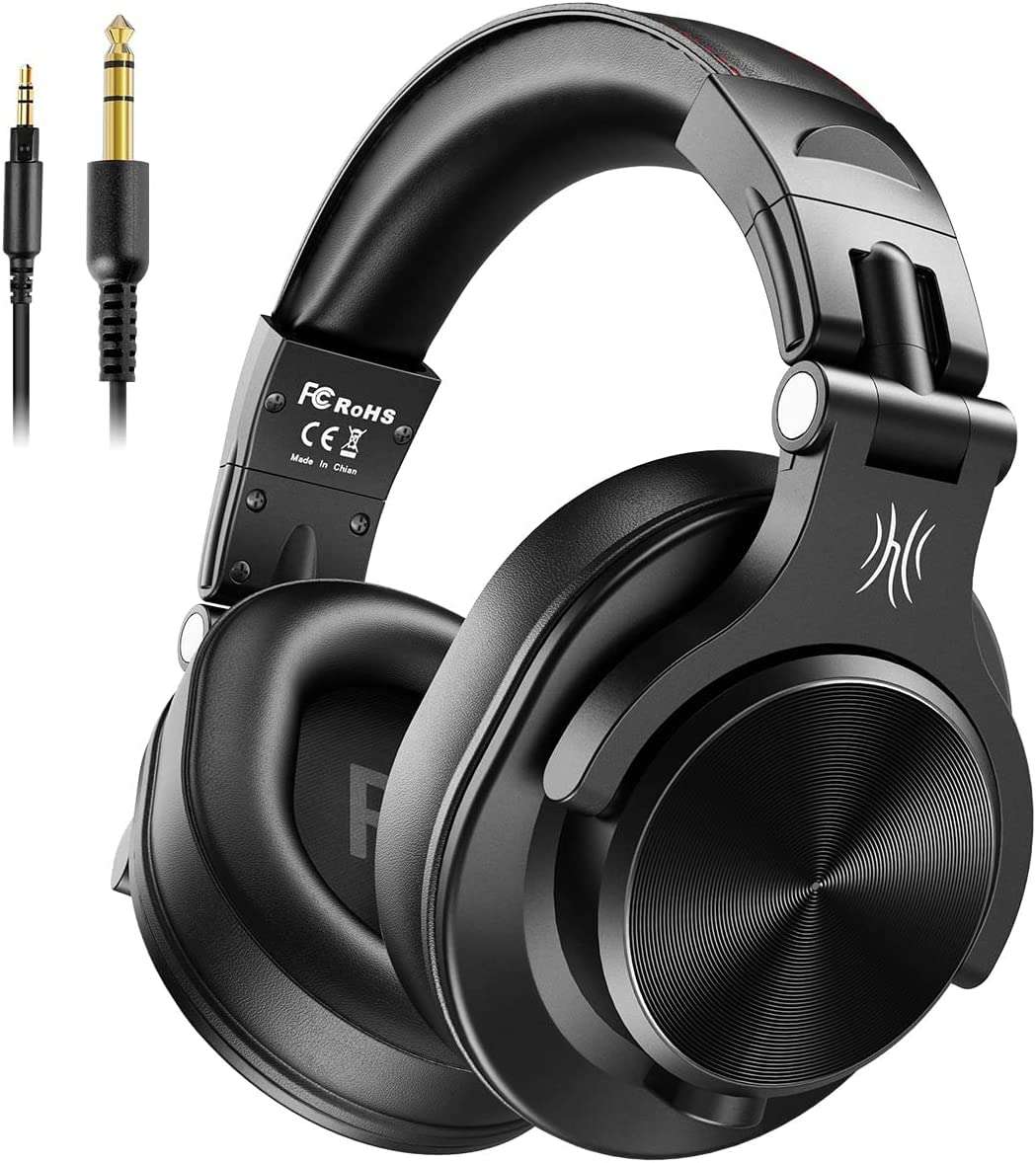
A second headphone jack in the earcup is the sort of detail that makes the A71 useful before you even press play. You can plug another pair into the earcup and listen along without a splitter, which is genuinely useful for a podcast duo, a teacher, or a friend who wants to hear the same take. The 90-degree swiveling cups and dual 3.5mm/6.35mm jacks add to the practical, budget-friendly package.

The 40mm drivers and 32-ohm impedance are easy to drive, and the detachable coiled cable is a nice touch at this end of the market. The tuning is more consumer-friendly than flat, so do not expect it to expose a mix the way the M40x does. It is a monitor for rough work, not a reference for final decisions.

The build is the weak point. The plastic frame and hinges are the parts to watch, and the folding design still makes it easy to carry. The included case and dual jacks mean you can move between a phone and an interface without an adapter hunt. It is not a lifetime studio tool, but it is a useful one to have around.

We like the A71 as a second pair for casual monitoring and one-ear work. The share port is the feature that earns it a place here, and the swiveling cups make one-ear cueing easy. If you need a budget utility pair that can serve two people, this is the one we reach for.

Pros

  • Share port links a second pair
  • Swiveling cups help with one-ear work
  • Dual 3.5mm and 6.35mm jacks
  • Detachable coiled cable is replaceable

Cons

  • Fit runs tight on larger heads
Our verdict

A budget utility pair with a share port and swiveling cups, ideal for two-person monitoring, teaching, and one-ear work.

Check Latest Price

How We Tested the Best Studio Headphones

We built the shortlist from the pairs working engineers, podcast editors, and bedroom producers keep recommending, then filtered by the specs that actually change how a headphone behaves in a room: open-back or closed, impedance, pad material, detachable versus fixed cable, and price relative to what you get. That left eight pairs, which we lived with for six months in a home studio tracking vocals and acoustic guitar, at a kitchen table cutting podcasts, and through late mixing sessions in a shared apartment where leaking sound is a genuine problem.

Every pair got at least one four-hour stretch on a single head, and we noted where the clamp landed first — jaw, crown, or the tops of the ears — how much each one weighed after an hour, and whether the pads ran hot. For isolation, one of us wore each pair while a colleague played drums and a click track eight feet away, then we listened back to the vocal mic to see how much click bled into the take. Open-back pairs failed that test outright, which is the point of them.

Sound was judged on the same handful of reference tracks played through an audio interface, a laptop jack, and a phone, with notes on whether the bass stayed defined once the arrangement got busy and whether cymbals turned brittle at volume. Cables got their own notes: we measured each one, coiled and uncoiled it, checked whether it detached, and asked how expensive a replacement would be if a chair rolled over it.

Durability came last and least gently. We twisted cups the wrong way, dropped pairs from desk height onto a wood floor, yanked at the plug, and checked the hinges for play after a month of daily folding. The ones still in the rotation are the ones that never gave us a reason to baby them.

How to Choose Studio Headphones

Closed-Back, Open-Back, or Semi-Open

A closed-back pair keeps sound in and room noise out, which is what you want for tracking vocals, guitar, or drums while a click plays. An open-back pair trades isolation for a wider image and more natural depth, making panning and reverb easier to judge. Semi-open models like the AKG K240 sit in between: lighter and airier than a closed can, but not for a loud room. If you record and mix in the same room, start closed-back and add an open pair later.

Impedance and Amplification

Impedance decides whether your laptop or interface can drive the headphones properly. Lower numbers are easier: the 32-ohm OneOdio A71, the 35-ohm ATH-M40x, and the 38-ohm ATH-M50x will play from most laptops and interfaces. The 250-ohm DT 990 Pro is the exception here; it needs a dedicated headphone amp or an interface with a strong output to reach its potential. If you do not own an amp, do not buy a high-impedance model and hope. The 80-ohm DT 770 Pro and 64-ohm HD 280 Pro are middle ground, and both benefit from an interface.

Comfort and Clamp Force

Studio headphones are often worn for hours, so pad material and clamp matter as much as sound. Velour pads, like those on the Beyerdynamic models, breathe better than pleather and stay comfortable in a warm room, but they do not seal as tightly as a firm closed-back. Weight is the other half: the HD 280 Pro is 1.3 pounds, which buys isolation but can feel heavy across the jaw, while the AKG K240 is 240 grams and self-adjusting. If you wear glasses, give the temples room; a tight clamp that feels fine for ten minutes can be a headache at hour two.

Cables, Adapters, and Replacement Parts

Detachable cables are the quiet reliability feature of a studio headphone. The ATH-M50x, ATH-M40x, K240, and OneOdio A71 let you replace the cable instead of retiring the whole pair, and the M50x's swiveling cups make one-ear cueing easier. Fixed cables, like the Sony's 9.8-foot cord and the DT 770's 3-meter cable, are sturdy but become the failure point if the plug is yanked. Check that the box includes a 1/4-inch adapter, especially for interface headphone jacks, and favor models with replaceable pads and headband padding if the headphones will be shared.

Tuning: Flat Reference Versus Listening

Studio headphones do not all aim for the same target. The ATH-M40x is tuned flat for monitoring, which makes it useful for hearing what is actually in a vocal or acoustic track, while the ATH-M50x adds a little low-end weight and is easier to enjoy for long editing sessions. The DT 990 Pro is bright and open, which exposes problems but can be tiring; the HD 280 Pro is warmer and more forgiving. Decide whether you need a truth-teller for critical mixes or a comfortable pair for takes and rough work. The wrong choice is buying a bass-heavy headphone and expecting it to translate.

Frequently Asked Questions

Final Verdict

The Audio-Technica ATH-M50x is the pair we recommend first for most studio desks: easy to drive, closed-back for tracking, and equipped with swiveling cups and detachable cables that make daily work less fragile. It is not the flattest option here, and that is the trade-off for a headphone that is also comfortable for editing and listening.

If your work is open-back mixing and you own an amp, the Beyerdynamic DT 990 Pro is the better tool; for loud rooms, the Sennheiser HD 280 Pro isolates more.