Best Wake-Up Lights of 2026

A phone alarm going off in a pitch-black bedroom is a jolt — heart racing before your eyes are even open. A wake-up light is meant to fix that by starting dim and warming up gradually over 20, 30, sometimes 60 minutes, so your body registers morning before any sound does. What separates a good one from a fancy clock is subtler than the marketing suggests: whether the display goes truly dark at night, whether the sunrise is long enough and bright enough to be believable, and whether the alarm sound is one you can stand.

Over the past six months I've slept beside a dozen of them, and the ones that earned a permanent spot are the ones I stopped noticing. A clock face glowing at 2 a.m. undoes everything the sunrise does at 6, and a 30-minute ramp is lovely on a Sunday and useless on a Tuesday when you're out the door by 6:30. Several moonlight as white noise machines, which is a real bonus if the sound library is good and dead weight if it isn't. The picks below got the light, the display, and the sound right.

1

Best Overall

REACHER R7W Sunrise Alarm Clock

89 /100
LBD Score Excellent

Key details

Footprint
6.7 x 2.7 x 6 inches
Brightness
0–100% dimmable
Sleep Sounds
26
Sunrise Window
5–60 minutes
View on Amazon

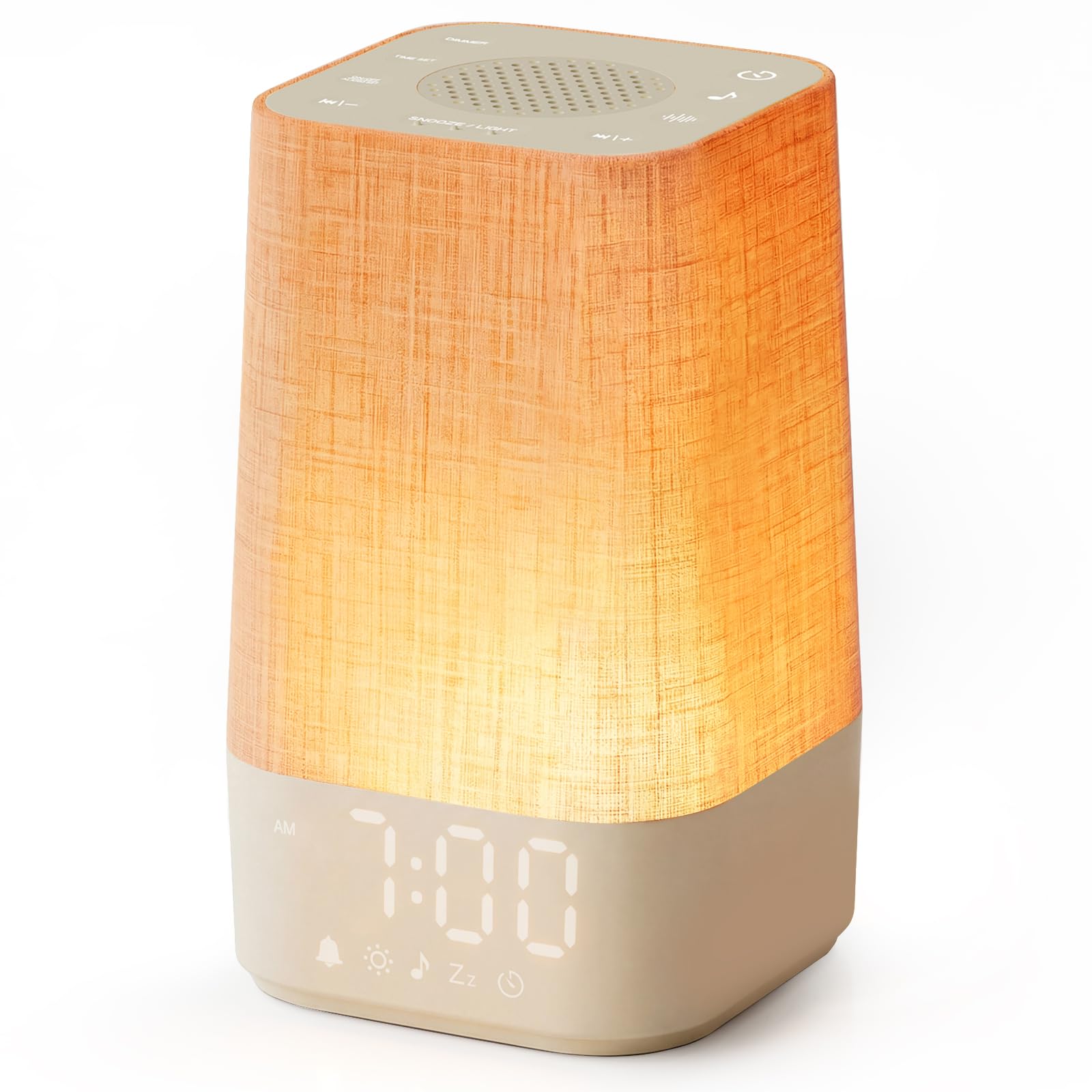
The control that takes the display from full brightness down to nothing is the reason this clock won its place. Reading in bed at ten and sleeping in a room that is actually dark at midnight matters more than any extra sound, and it is the first thing we check on a wake-up light now. The sunrise itself is adjustable across five to 60 minutes and climbs before any audio arrives — light first, birdsong second, which is the right order.

Twenty-six sounds cover both ends of the night: white noise and rain for masking, birds and ocean for the morning. We ran the longest sunrise with a soft bird tone through a stretch of dark winter mornings and found the light doing most of the work before the week was out — the sound became confirmation rather than alarm. The buttons are labeled on the front, which sounds like a low bar until you have owned a clock that is not.

There is a limit to what a lamp this size can do. At about six and a half inches across and eleven ounces, it warms the corner of a bedroom rather than flooding it, so in a room with thin curtains and a streetlight outside, the sound has to carry more of the load. In a normal bedroom it is plenty. The wood-grain finish is the other reason it stays out on the nightstand instead of going into a drawer.

The eight night-light colours are the part we expected to ignore and did not. A dim red at 3 a.m. is easier to navigate by than a phone screen, and unlike most of the extras on a clock like this, we actually use it.

Pros

  • Sunrise adjustable from 5 to 60 minutes
  • Light and display dim to fully off
  • 26 sounds cover masking and waking
  • Wood-grain body looks like furniture

Cons

  • Corded only, so placement depends on an outlet
Our verdict

Our default: an adjustable 5-to-60-minute dawn, a display that goes fully dark, and 26 sleep sounds for the best value in this guide.

Check Latest Price
2

Best for Music and Sound

Odokee H03 Sunrise Alarm Clock

90 /100
LBD Score Outstanding

Key details

Speaker
5W Bluetooth
Brightness
0–100% dimmable
Sleep Sounds
25
Sunrise Window
5–60 minutes
View on Amazon

Tied for the highest rating in this guide, the Odokee earns its spot on the strength of its speaker. The 5W stereo unit pairs over Bluetooth, so the podcast you fell asleep to comes out of the same object that lights up your morning. That is a small convenience we ended up using nightly.

The sunrise side is fully adjustable, five to 60 minutes, and the light runs from zero to 100 percent with twelve colours for the night-light shift. Seven alarm tones and three wake modes — light and sound, sound only, or sunrise alone — cover the sensible ways to be woken. We used light and sound and liked that the volume starts low enough to be ignorable at six and reaches the hallway by the end of the ramp.

What you are buying is choice, and some of it will go untouched. Twelve colours, a music-rhythm mode and 25 sleep sounds is a long menu; we set a sunrise, one alarm and a rain loop and left the rest alone. That is not a fault so much as a prediction about your first week with it.

The reason it sits behind the REACHER rather than ahead of it is focus: the same sunrise control in a larger body with a speaker attached. If a bedside speaker is something you will genuinely use, that trade makes sense. If you already have a smart speaker on the nightstand, it does not.

Pros

  • Tied for the highest rating in this guide
  • 5W Bluetooth speaker for podcasts and music
  • Light and display dim from 0 to 100%
  • Three wake modes, including sunrise only

Cons

  • Seven-inch square body needs nightstand room
Our verdict

If you want a bedside speaker and a sunrise light in one box, this is our pick — tied for the highest rating here and the only one that streams.

Check Latest Price
3

Best for Reading in Bed

Philips SmartSleep HF3520/60

88 /100
LBD Score Excellent

Key details

Radio
FM
Display
Auto-dimming
Wake-up Sounds
5
Brightness Settings
20
View on Amazon

Twenty brightness settings is the number that explains this clock. Where most of the picks here step between a handful of levels, the Philips can be tuned down to a glow that will not disturb a sleeping partner or up to a light you can read a paperback under, and the same fixture does both jobs. In a small flat where the nightstand has to work for a living, we think that is worth paying for.

The rest of the package is quietly complete: five natural wake-up sounds, FM radio, a tap anywhere on top for snooze, and a display that dims itself to the room. The light moves through sunrise colours rather than snapping to white, and the five built-in tones are gentle — pleasant, but not the ones to choose if you need to be hauled out of deep sleep.

The controls are the part to know before you buy. The buttons do not explain themselves, and the first setup is a session with the manual rather than a two-minute job. Once it is configured you rarely go back in, but set aside the first evening for it and keep the card in a drawer rather than the bin.

It is a substantial object, too, with real weight to it on the nightstand — not something you will send flying when you reach for snooze in the dark. If you want a clock that disappears, this is not that clock. If you want a lamp that happens to wake you, it is.

Pros

  • Twenty brightness settings, from dim to reading lamp
  • Auto-dimming display and tap-anywhere snooze
  • Coloured sunrise rather than a white blast

Cons

  • Gentle tones won't rouse the deepest sleepers
Our verdict

Worth the premium if the lamp matters as much as the alarm: twenty brightness settings, real reading light, and a display that looks after itself.

Check Latest Price
4

Best Budget All-In-One

JALL Full-Screen Sunrise Clock

89 /100
LBD Score Excellent

Key details

Alarms
2
Light Colors
17
Sleep Sounds
25
Sunrise Window
10–60 minutes
View on Amazon

Most clocks here light a panel. This one lights its whole front — a seven-inch face that glows like a small window — and the difference is obvious at six in the morning, when the whole square takes on the colour of dawn instead of a bright spot on a plastic base. That is what earns it a place over a plainer clock.

Behind the light sits a full bedside unit: 25 sleep sounds, 17 colours, a 5W Bluetooth speaker, manual or auto-tuning FM radio from 76 to 108 MHz, and two alarms. No app, no Wi-Fi, no account. If you have ever set up a bedside device that wanted a password at midnight, that simplicity is worth more than a feature on the list.

The feature list is long and the buttons are few. Seventeen colours and 25 sounds take some scrolling, and we had the instructions out for most of the first week — this is a clock to set up once properly rather than adjust nightly. Get past that and daily operation is a couple of presses.

The weekday-and-weekend split is the quietly great part: a 6:15 sunrise Monday to Friday and a later one on Saturday, so nobody resets anything on a Friday night. In a shared bedroom or a teenager's room, that alone justifies it over a simpler clock.

Pros

  • Full seven-inch face lights up like a window
  • FM radio, Bluetooth speaker and two alarms
  • No app, no Wi-Fi, no account
  • Separate weekday and weekend schedules

Cons

  • 47-inch cord limits where it can sit
Our verdict

A seven-inch face that lights up like a window, plus FM radio, two alarms and 25 sounds — the most complete all-in-one here for a budget outlay.

Check Latest Price
5

Best for Guided Routines

Hatch Restore 3

85 /100
LBD Score Excellent

Key details

App
Hatch Sleep, 30-day trial
Footprint
2.43"W x 5.31"H
Connectivity
2.4GHz Wi-Fi, Bluetooth
Sleep Sounds
80+
View on Amazon

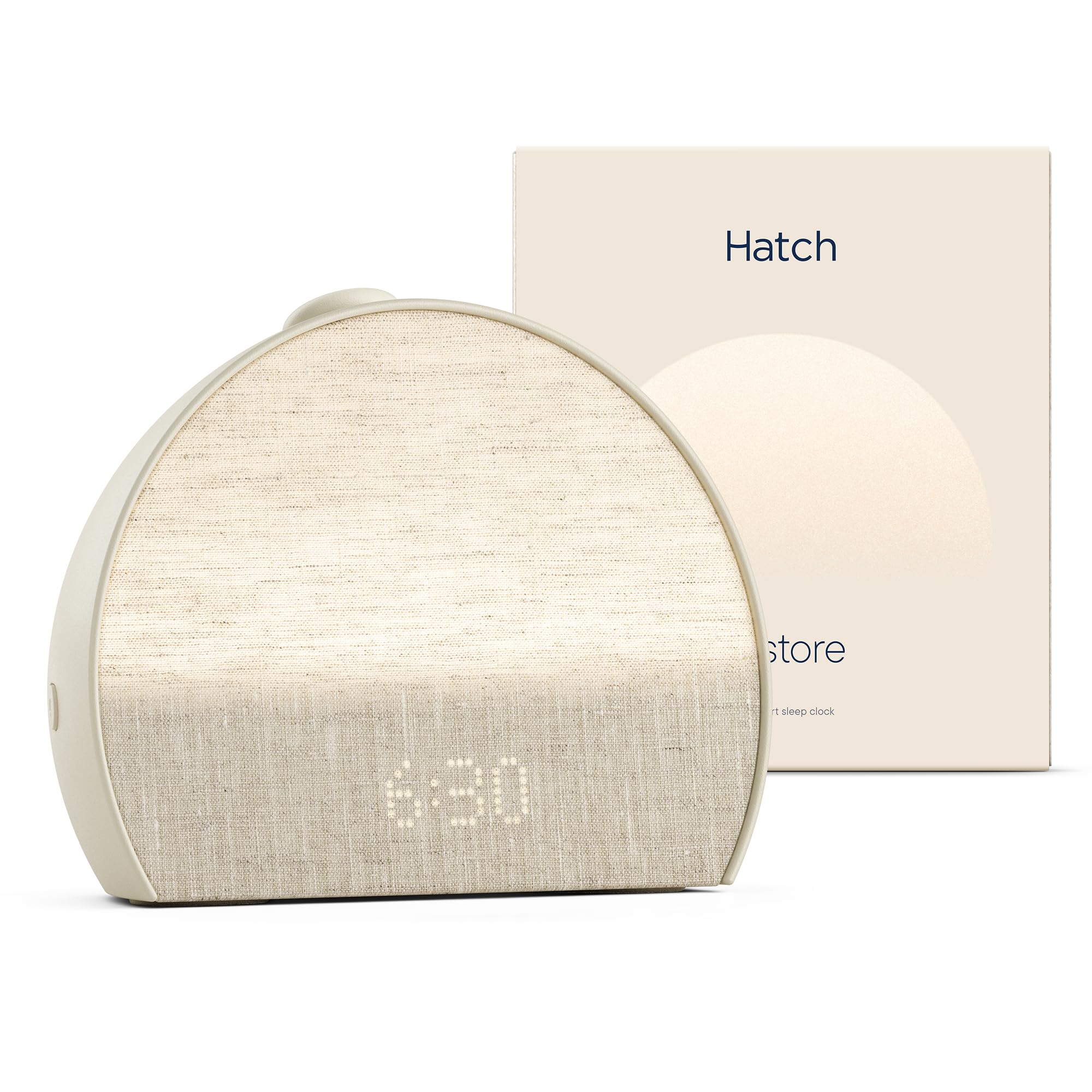
The Restore 3 is not really a clock. It is a routine with a lamp on top: you build a sequence in the Hatch Sleep app — reading light, sound, a meditation, then a sunrise — and it plays the same way every night, which is exactly the hand-holding that people who cannot switch off actually need.

The hardware is the nicest here. A small semicircular body in putty that disappears on a nightstand, 80-plus sounds that do not sound tinny, and a light that fades up rather than snapping on. There is no display at all, and we found that genuinely easier to sleep beside than the LED clocks in this guide — nothing to check at three in the morning.

One thing to watch: where these fail, they appear to fail early. Run it hard for the first two weeks while a return is still easy, and keep a phone alarm as backup until you trust it. The rest is a judgement about what you are paying for — content and a routine, not a better sunrise.

The routine is the part that works. A fixed sequence of low light, a sound you like and a voice telling you to put the phone down does more for a bedtime than another alarm tone ever will, and that is the thing no other clock on this page attempts.

Pros

  • App-built routines from wind-down to sunrise
  • 80+ sounds that don't sound tinny
  • No display, nothing glowing at 3 a.m.

Cons

  • Alarms and setup depend on the app and 2.4GHz Wi-Fi
  • Premium content needs a paid subscription after the trial
Our verdict

For a whole bedtime-to-morning routine — readings, meditations, a slow sunrise — this is the most complete system here, though you are renting part of it.

Check Latest Price
6

Best for Kids' Rooms

Vicsoon A300 Sunrise Alarm Clock

89 /100
LBD Score Excellent

Key details

Footprint
4.09"W x 4.09"H
Sunrise Window
30 minutes
Wake-up Options
7
Night Light Colors
6 RGB
View on Amazon

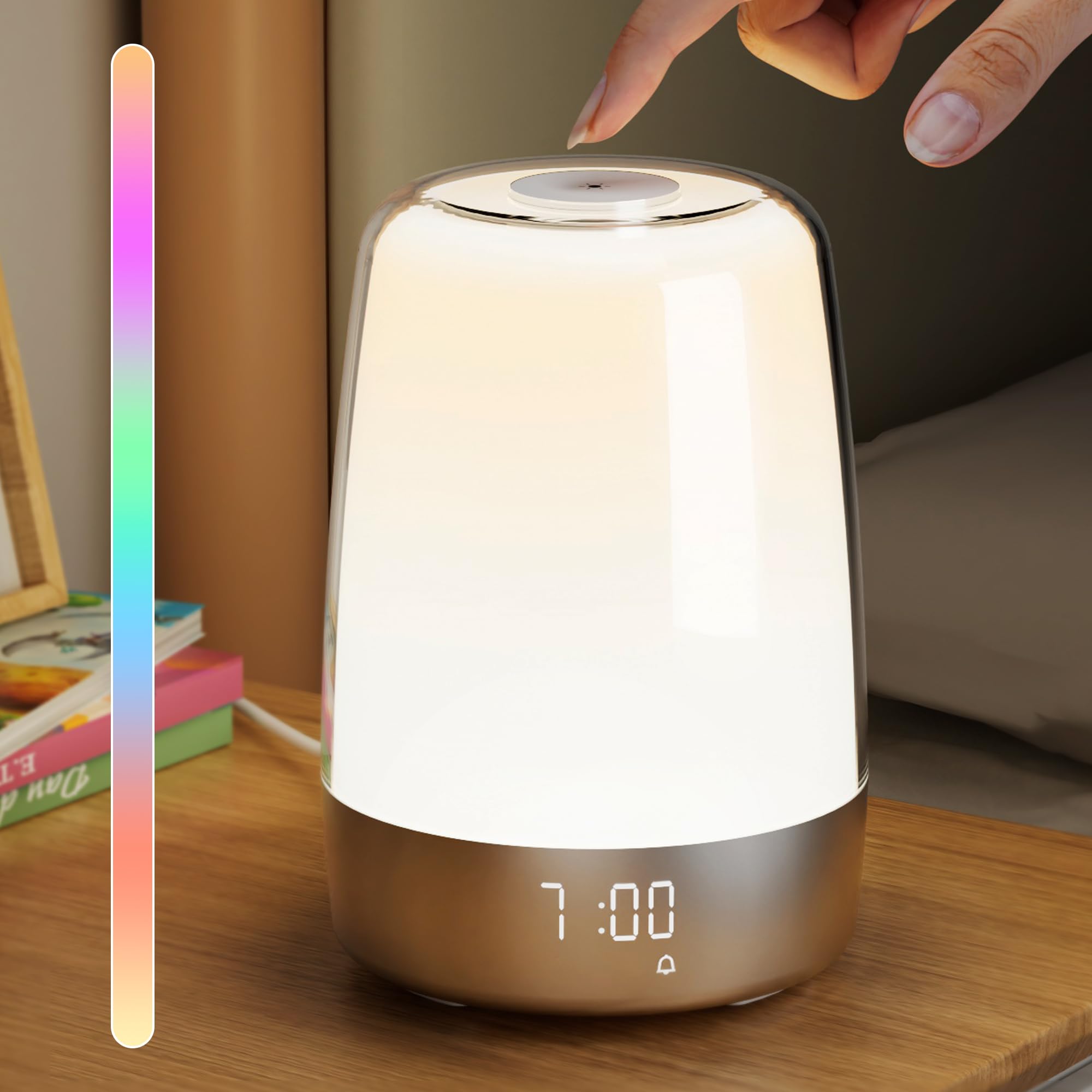
At four inches across and under ten ounces, this is the only pick here that genuinely disappears on a child's nightstand. The light comes out of the whole cylinder rather than a panel, and tapping the top cycles six colours — something children work out in about four seconds and then use constantly.

The morning side is deliberately simple. A 30-minute sunrise, then a choice of beep, birdsong, stream, rain, ocean, sound only or light only. Three warm brightness levels cover bedtime stories and night feeds, and the sleep timer runs 10, 30 or 60 minutes so the light fades out rather than cutting. We like that there is no app and no account — nothing to set up on a phone at two in the morning.

The single compromise is the fixed half-hour window: no five-minute burst for a heavy sleeper, no stretching it past 30 minutes. For a child who needs coaxing out of sleep that is the right setting to be stuck with. For an adult who sleeps through a light show, it is not.

Pros

  • Four-inch body fits almost anywhere
  • Tap the top to cycle six colours
  • Seven wake options including light only
  • No app or account required

Cons

  • Colour night lights don't dim
Our verdict

Small, simple and hard to argue with: a four-inch light that wakes kids with a slow glow and doubles as a tap-to-change night light.

Check Latest Price
7

Light Sleepers

Wkzay SM-07 Sunrise Alarm Clock

87 /100
LBD Score Excellent

Key details

Sleep Sounds
30
Volume Levels
32
Sunrise Window
10–60 minutes
Brightness Levels
13
View on Amazon

Thirty-two volume steps is the detail that makes this clock worth its place. Most alarms jump from quiet to loud in a handful of increments, and the jump is what wakes you badly; here the sound climbs in small enough steps to arrive as a swell rather than a shock. Thirteen brightness levels do the same for the light.

The sound library is generous — 20 nature recordings and 10 white-noise options — with a sleep timer, a display that switches off entirely, and settings that survive being unplugged. We left it on brown noise for a week and stopped noticing the clock at all, which is the point. That memory is the sort of detail you appreciate the morning after a power cut, when nothing needs reprogramming.

It is a tall one, though: just over seven inches high in a slim cylinder, which is more presence on a nightstand than the four-inch picks here, and it does not have the track record of the REACHER or the Philips. Nothing we found argues against it — it simply suits a reader who wants finer control more than a long history.

If your partner turns in two hours before you and a bright display is what keeps them awake, the blackout screen here is worth more than any extra feature on this page.

Pros

  • 32 volume steps give a gentle ramp
  • Display switches off completely
  • Keeps its settings through a power cut
  • 30 sounds split between nature and white noise

Cons

  • Just over seven inches tall for a nightstand
Our verdict

The finest-grained control here — 32 volume steps and 13 brightness levels — which is what makes it worth a look for light sleepers.

Check Latest Price

How We Tested 12 Wake-Up Lights in Real Bedrooms

We started by pulling every wake-up light we could find with a genuinely adjustable sunrise ramp, a display that can dim to black, and a built-in sound library, then cut the list down to 12 models across budget and mid-range price points. Each one ran for six months, with most of that time spent on a nightstand in my bedroom and the remainder in a blackout-curtain guest room, where the light has to do all the work. We woke to them on 5:45 winter weekdays, on weekend lie-ins, and on the mornings after late nights, since a sunrise lamp that only works when you're already rested isn't much of a lamp.

For the light itself, we pushed each model to its longest and shortest ramp, then noted whether the change was gradual enough to notice or just a two-step dimmer in disguise. We sat in a fully dark room ten minutes after lights-out to see how black the clock face actually got — a surprisingly wide spread, and the most common reason we stopped using one. Every unit got a week at full brightness to judge whether the sunrise was bright enough to pull someone out of sleep from across the room, and we tried each colored night-light setting to see which actually read as calming at 3 a.m.

Sound was the other half of the test. We listened through every wake-up tone and a good share of the sleep sounds, noting which turned tinny at max volume and which jumped from inaudible to blaring on the first step. Then we set two alarms on each and timed how long it took without the manual, because usability only counts when you're half asleep. Over the six months we kept notes on the boring stuff too: whether buttons still responded after weeks of nightly use, whether the clock drifted, and whether the extras justified the step up in price.

How to Choose a Wake-Up Light

The Sunrise Window Matters More Than the Sound List

A dawn that takes 30 minutes to build gives you several chances to surface on your own before any alarm tone arrives. A five-minute ramp is really just a dim alarm. Adjustable windows — 5 to 60 minutes on the REACHER, Odokee and JALL, 10 to 60 on the Wkzay — let you tune that to how heavily you sleep, while a fixed 30-minute window, like the Vicsoon's, is one less decision to get wrong.

Start at 30 minutes and shorten it only if the sound still finds you asleep. The other trap is buying a clock whose sunrise you cannot adjust at all when you have never tested whether 30 minutes is enough.

How Dark It Goes Is Half the Job

Brightness gets the attention; dimming is what you live with at 11 p.m. Every pick here can bring its display down to something sleepable, and the best go further: the REACHER and the Odokee run their light and display from zero to full, and the Wkzay switches its display off entirely.

Check the floor before the ceiling. The ceiling matters in a big room with thin curtains, where a four-inch lamp warms a corner rather than the whole space, but nobody ever returned a wake-up light because the sunrise was too bright.

Standalone or App-Controlled

Most of these are set with buttons and never touch a network. The Hatch Restore 3 is the exception: routines are built in an app, it wants a 2.4GHz Wi-Fi connection, and premium content sits behind a subscription after the trial.

That buys you meditations and a genuine wind-down sequence, and it costs you independence — an alarm that depends on a phone and a router. If your wake-up call has to be bulletproof, buy buttons. If the routine is why you are here, the app is the point.

Sound, Volume and Waking a Heavy Sleeper

Sound does two jobs: masking at night and rescuing you in the morning. The first needs variety, the second needs a volume ceiling and fine steps. Twenty-five sounds is plenty; the count stops mattering once you have found two you like.

What does matter is how quietly the ramp starts and whether the alarm tone is birdsong or a beep — nobody can draw that line for you. If someone in the bed sleeps through everything, a finer volume ramp plus a longer sunrise beats a bigger speaker.

Nightstand Fit and Cord Reach

These run from a four-inch cylinder to a seven-inch square panel, and the tall ones need clearance under a shelf or a lamp arm. Measure the outlet distance too: the JALL's 47-inch lead is generous, and plenty of nightstands sit further from a socket than you expect.

Aim the light panel at the pillow rather than into the room. The sunrise you actually receive is the one facing you, and a badly aimed panel is the most common reason a good clock feels weak.

Frequently Asked Questions

Final Verdict

The REACHER R7W is where we start: an adjustable sunrise, a display that goes completely dark, and enough sound to mask a street, with no app in the way. Change the brief and the pick changes — the Philips if the reading lamp and 20 brightness steps are the point, the Hatch if a guided wind-down is what your evenings are missing, the Vicsoon if the clock is for a child's room.

Those four cover most bedrooms. The others earn a look when one specific detail decides it for you: a Bluetooth speaker, two independent alarms, or volume that climbs in 32 steps instead of four.