Best 48-Amp EV Chargers of 2026

For my first year of EV ownership, charging was something I planned my week around: a public fast charger on the way home, a trickle from a wall outlet overnight. A 240-volt line in the garage changed that in a weekend. A 48-amp charger is the fastest most houses can realistically support, adding roughly 40 miles of range an hour, so you leave every morning full even if you don't plug in until 11 p.m. The catch is that most 48-amp units are hardwired, which puts your electrical panel at the center of this decision.

Over the past eight months, my team and I installed and lived with seven of them, from bare metal boxes with no app to units that chart every kilowatt-hour on your phone. What separated them had almost nothing to do with peak amperage or sticker price. It came down to whether the app held a WiFi signal through a garage wall, whether the cable stayed supple in February, and how much an electrician had to improvise at the bracket. These are the ones worth the wall space.

1

Best Overall

EVIQO 48A Level 2 Charger

93 /100
LBD Score Outstanding

Key details

Connector
J1772
Max Output
48A
Cable Length
25 ft
Enclosure Rating
IP66 / NEMA 4
View on Amazon

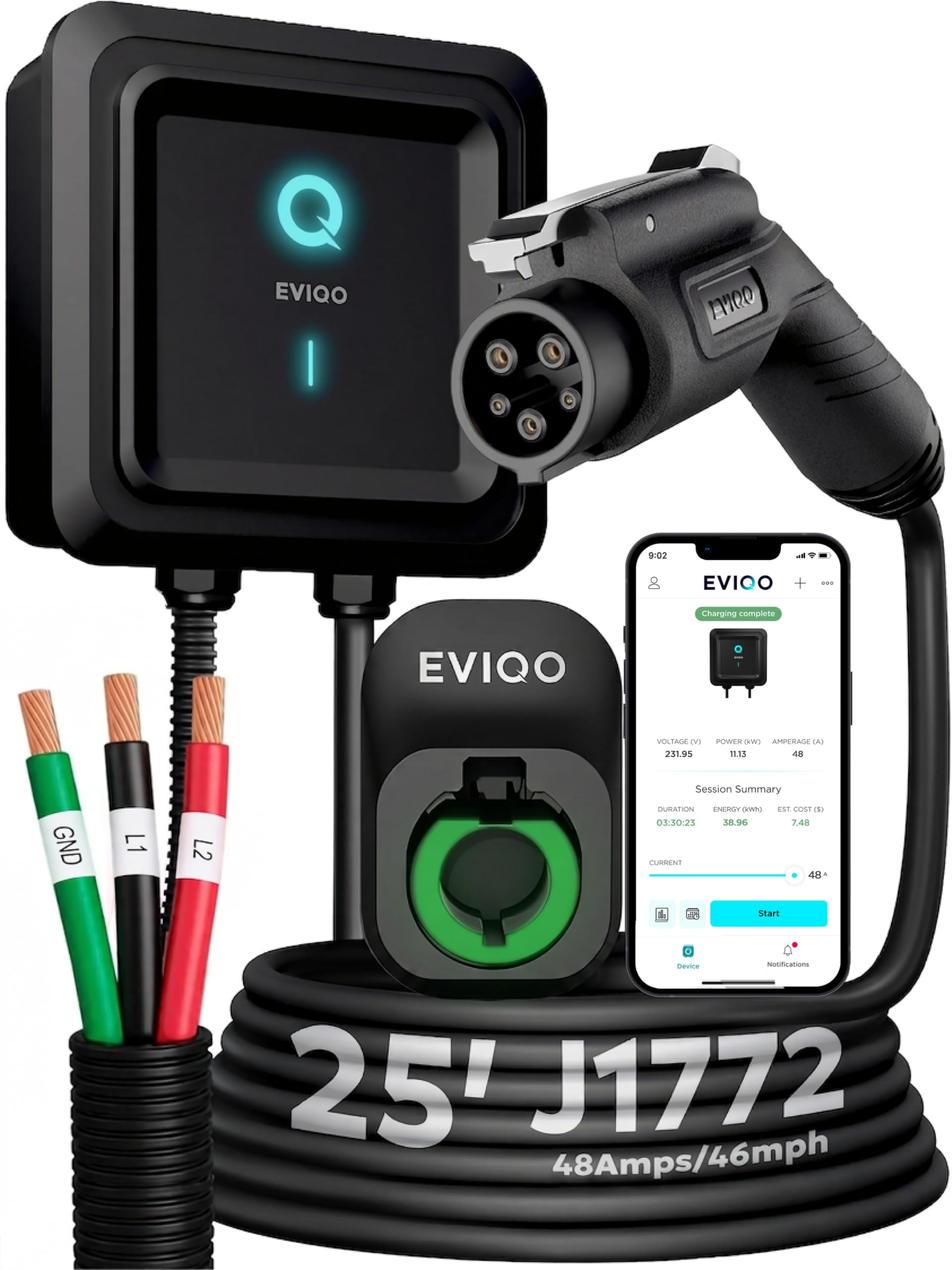
Of the eight chargers in this guide, this is the one we hand to most people, and the reason is boring in the best way: nothing about it needs managing. It delivers the full 48 amps on a hardwired 60-amp circuit, carries UL, ETL, FCC and Energy Star certification, and seals the electronics behind an IP66/NEMA 4 housing — the toughest weather rating here, shared only with its NACS twin. At about four inches deep and nine and a half inches square, it mounts between garage studs without crowding the wall.

The detail we didn't expect to care about is the holster. It glows in the dark, which reads as a gimmick until you're docking the connector in an unlit garage at eleven at night. The 25-foot cable is the standard length in this group, long enough for a one-car garage and short enough to coil on a hook, and the rubberized jacket stays workable instead of stiffening into a rope once the temperature drops.

The app is where this one separates itself. Charging current is adjustable in steps below the 48-amp ceiling, which is handy for a slow overnight top-up, and the schedule and cost-per-charge reporting take a couple of minutes to set up. The antenna is built to hold a signal in a garage or basement, and that matched what we saw — it stayed online in spots where other chargers in this group have gone quiet.

Installation is the part worth planning. This is a hardwired unit, so there's a 60-amp circuit and an electrician in your future, and the bill depends on how far the panel sits from where you park. What you get back is a charger that vanishes into the background: no daily fiddling, no reconnecting, no surprises. That trade — a hardwired commitment for a box you never think about — is one we make happily.

Pros

  • Full 48 amps on a hardwired 60-amp circuit
  • IP66/NEMA 4 housing for exposed outdoor mounting
  • Adjustable current and scheduling in a stable app
  • Glow-in-the-dark holster for dark garages

Cons

  • Tesla vehicles need an adapter on the J1772 plug
  • No automatic load management for a tight panel
Our verdict

If you're hardwiring 48 amps and want the least fiddly ownership experience in this group, this is the one we point you to first.
Check Latest Price
2

Best for Tesla and NACS

EVIQO 48A NACS Charger

91 /100
LBD Score Outstanding

Key details

Connector
NACS (Tesla-style)
Max Output
48A
Cable Length
25 ft
Enclosure Rating
IP66 / NEMA 4
View on Amazon

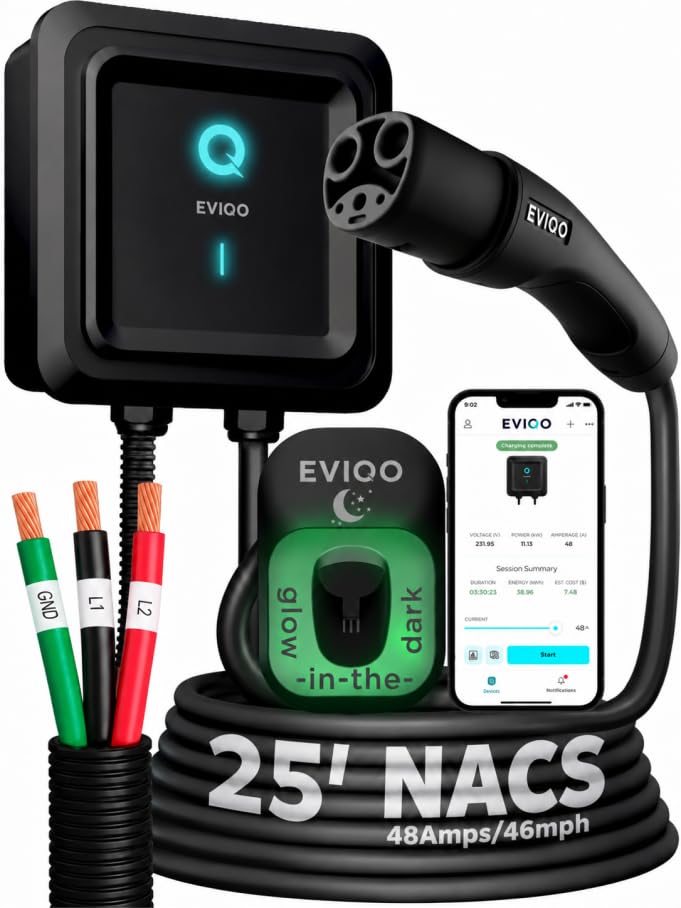
The plug is the whole point. A built-in NACS connector goes straight into a Model 3, Y, S or X — or any EV with a NACS port — with no adapter rolling around in the glovebox. Everything behind the plug is the hardware we recommend in the J1772 model: 48 amps hardwired, UL, ETL, FCC and Energy Star certification, an IP66/NEMA 4 housing, a 25-foot cable, and the same glow-in-the-dark holster.

We point Tesla owners here rather than at an adapter for a simple reason: the two EVIQO models cost about the same, and a native plug is one less thing to lose, forget, or leave lying on a driveway. Nothing about the ownership experience changes — same app, same current adjustment, same scheduling — which is exactly what you want from a charger in a one-brand household.

It does have less history behind it than its J1772 sibling, so there's a shorter record to lean on, though nothing in it argues against the purchase. If a non-Tesla EV is likely to join the driveway in the next couple of years, the J1772 model plus an adapter is the more flexible buy; for a Tesla-only household, this is the cleaner answer and the one we recommend.

Pros

  • Native NACS plug, no adapter needed
  • Same 48-amp hardware as our top pick
  • App scheduling and current adjustment

Cons

  • Hardwired only, with no 14-50 plug option
Our verdict

For a Tesla or any NACS car, this is the same charger without the adapter, and the simplest 48-amp answer in this guide.

Check Latest Price
3

Best for Energy Data

Emporia 48A Level 2 Charger

94 /100
LBD Score Outstanding

Key details

Connector
J1772
Max Output
48A hardwired
Cable Length
25 ft
Installation
NEMA 14-50 or hardwired
View on Amazon

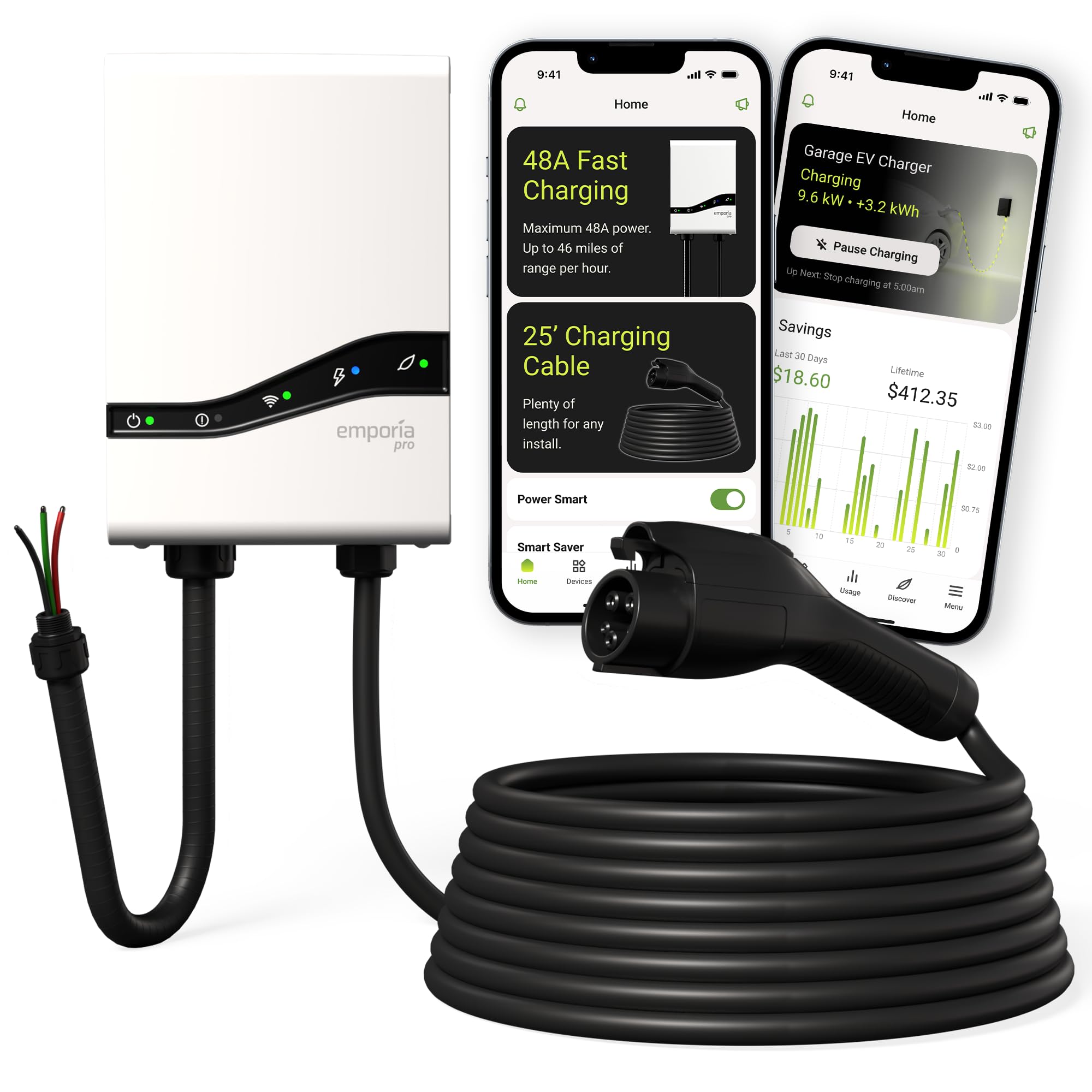
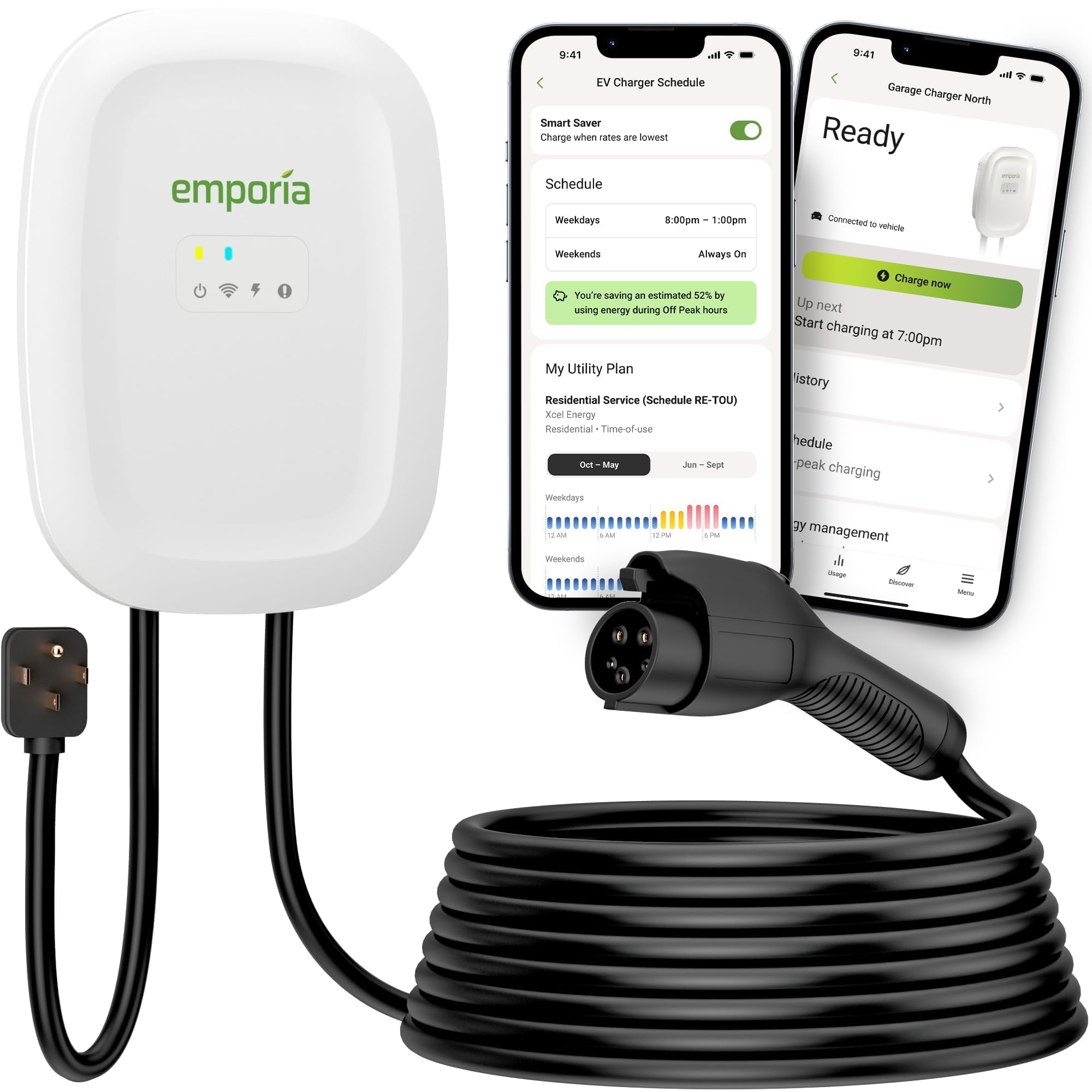
It arrives with a NEMA 14-50 plug on the end of the cord, and that plug decides how much power you get. Feed it from a 50-amp outlet and the car sees 40 amps; hardwire it and the full 48 shows up. Emporia builds both paths into the same unit, which is why it's the pick if you want to be charging this weekend and still end up at 48 amps once the electrician has run the circuit.

What you're really buying is the reporting. The app pulls live energy data off the charger, prices each session against the rate you enter, and schedules around off-peak windows so the car fills while the house sleeps. For a household trying to work out what an EV actually costs to run, that's worth more than another status light.

Of the two Emporias here, this is the one we reach for when the wiring isn't settled yet, and the one to skip if your panel is already near its limit — the Pro handles that case and this one doesn't. The radio is the weak spot: 2.4 GHz only, and a detached garage at the far end of the property is exactly where that band gives up. Add a mesh node before you mount it, not after.

The cable earns a mention. It's noticeably thicker than most of the cords here, with insulation that doesn't kink into a spring when you coil it against a cold garage wall — the sort of difference that separates a unit built for daily use from one built to hit a spec sheet number.

Pros

  • 14-50 plug now, 48 amps after hardwiring
  • Real-time energy and cost reporting in the app
  • Thick, commercial-grade 25-foot cable
  • UL listed and Energy Star certified

Cons

  • Early failures are this model's weak spot
Our verdict

Buy this one if you want to start charging now at 40 amps and finish the job at 48 later, with the best energy reporting here.

Check Latest Price
4

Best for Older Panels

Emporia Pro with PowerSmart

91 /100
LBD Score Outstanding

Key details

Connector
J1772
Max Output
48A
Installation
NEMA 14-50 or hardwired
Load Management
PowerSmart with Vue monitor
View on Amazon

Here's the problem the Pro solves: most 48-amp chargers assume your panel has room for another 60-amp circuit, and plenty of houses don't. Emporia ships this one with a Vue monitor that clamps onto the mains and tracks the whole home's draw; PowerSmart then trims the charger's output in real time so the service stays inside what it can carry. That's the one feature in this guide that can spare you a service upgrade, and it's why this earns a place despite costing more than anything else here.

The rest is familiar: 48 amps hardwired or 40 through a NEMA 14-50, a 25-foot cable, a J1772 connector, UL listing, and the Emporia app with scheduling, cost tracking and live consumption data. Solar owners get more out of it than anyone, because with production data coming in the charger can soak up excess generation instead of pushing it back to the grid.

We found the usage and cost readouts easier to trust here than on most of the apps in this group, and the Vue is the reason: it's measuring the whole house rather than inferring from the charger's own draw. Setting a schedule and watching a session fill both took a couple of minutes, and the solar routing is the sort of thing you notice on a sunny afternoon when the meter stops spinning.

It's the most expensive pick here, and the premium only makes sense if PowerSmart is doing real work for you. A newer panel with spare capacity doesn't need it, and the standard Emporia does the same charging for a lot less. Buy this one because your service is tight, not because it's the top of the line.

Pros

  • Charges at full speed without a panel upgrade
  • Whole-home energy monitoring included
  • Routes excess solar production to the car
  • 48 amps hardwired or 40 on a 14-50

Cons

  • J1772 only, so Teslas need an adapter
  • Adds a second box and wiring step in the panel
Our verdict

The pick for a house whose panel is already close to its limit — PowerSmart is the only feature here that can spare you a service upgrade.

Check Latest Price
5

Best for Long Driveways

ApexCharger MACH 1

89 /100
LBD Score Excellent

Key details

Warranty
5 years
Connectors
J1772 plus NACS adapter
Max Output
48A hardwired
Cable Length
30 ft
View on Amazon

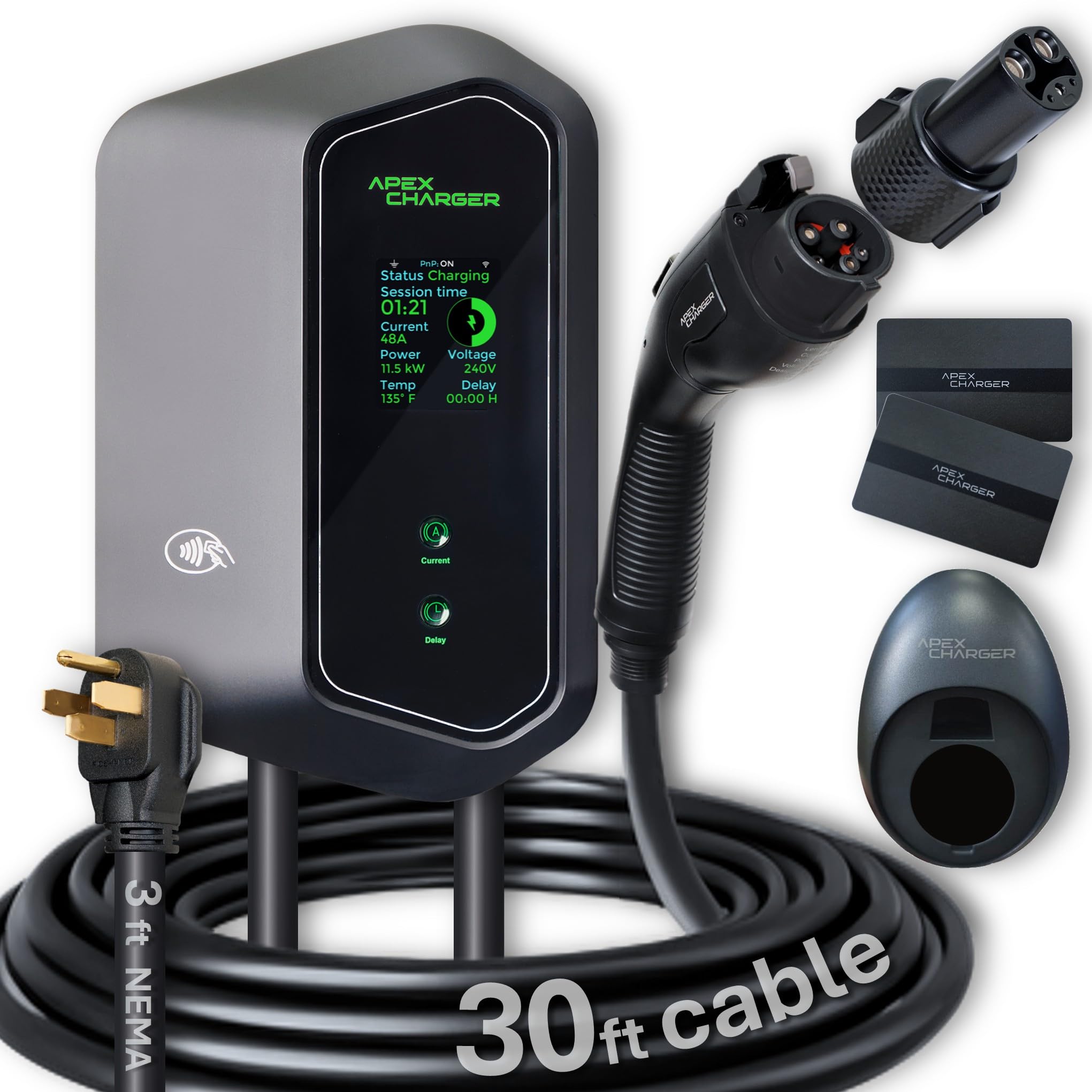
Thirty feet of charging cable is the reason to start here. Five extra feet over everything else in this guide doesn't sound like much until the panel is on the far wall or the car parks nose-in at the end of a driveway. Apex also puts a J1772-to-NACS adapter in the box, so the same unit covers a Tesla and a Bolt without a second purchase.

That combination — the longest cable here and both connectors included — makes this the pick when the mounting spot is fixed and awkward. It delivers 48 amps on a hardwired circuit, hangs on a plate small enough to fit between garage doors, and carries a five-year warranty, the longest in this group.

Around the hardware, Apex has added things you may or may not want: two RFID cards for authorizing sessions, an LED light ring, and a mobile app. The cards are the sleeper feature — on a shared drive or at a rental property, handing someone a card beats handing them your app login.

Wi-Fi is the fussy part. Pairing can take a couple of goes, and the back of a detached garage is exactly where it struggles; a mesh node before the electrician arrives costs less than moving the charger afterward. Get it connected and the schedule takes over, which is all most people need from a charger this capable.

Pros

  • 30-foot cable, the longest in this group
  • J1772 and NACS covered in the box
  • Five-year manufacturer warranty
  • 48 amps hardwired, 40 on a 14-50

Cons

  • 40 amps if you use the NEMA 14-50 plug
  • No load management for a tight service panel
Our verdict

For a fixed, awkward parking spot, the 30-foot cable and included NACS adapter make this the most practical unit here.

Check Latest Price
6

Best Budget

IYILO 40/48A Charger

84 /100
LBD Score Excellent

Key details

Safety
Dual plug temperature sensors
Connector
J1772
Max Output
48A hardwired, 40A plugged
Cable Length
25 ft
View on Amazon

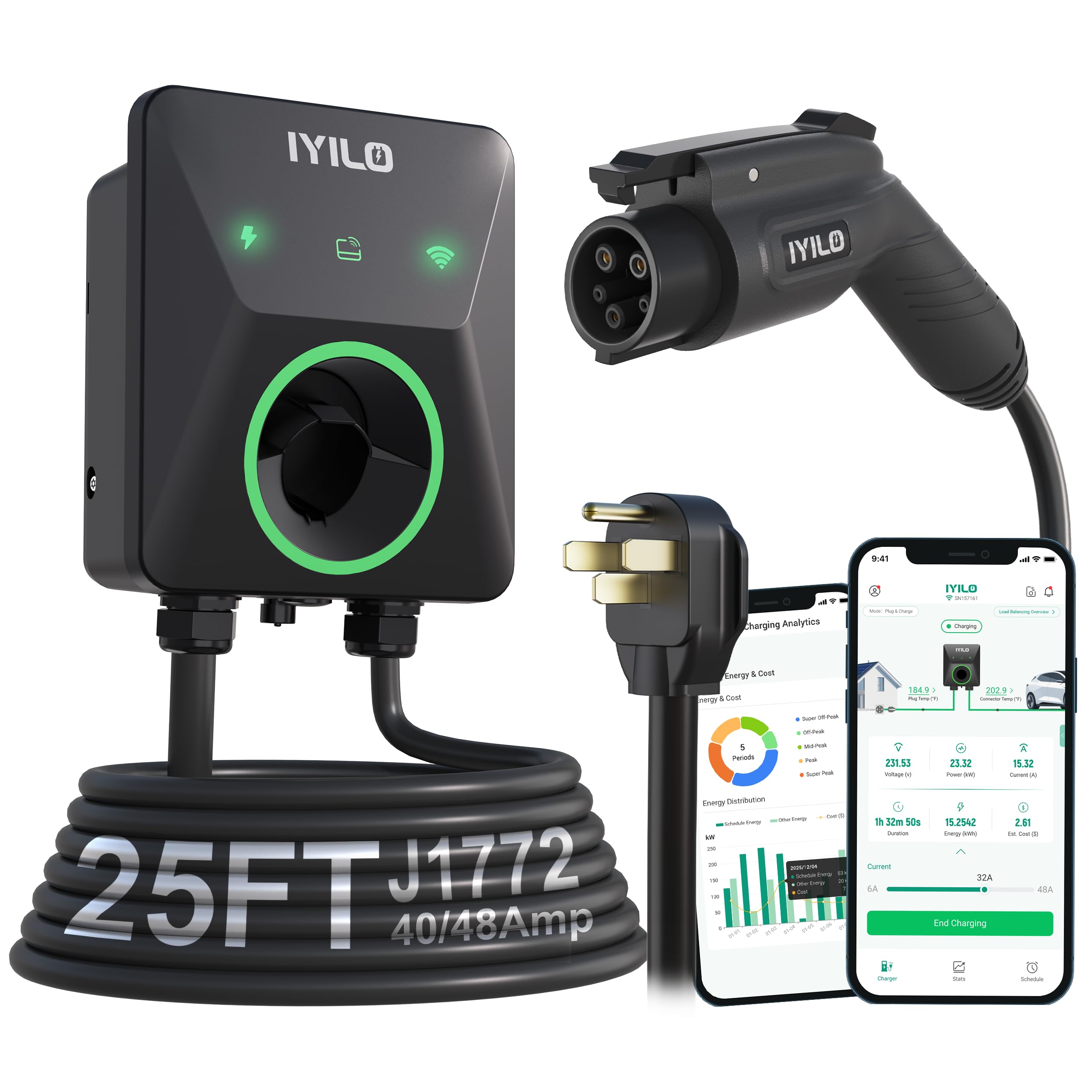
The feature that earns this one a place is thermal. Sensors in the connector watch the plug's temperature, the charger backs the current down when things get hot, and the app shows you the numbers as they move. On a 48-amp circuit, where the connector works harder than it does on any 32-amp unit, that isn't a marketing line — it's the kind of protection that separates a careful charger from a careless one.

Flexibility is the second argument. IYILO ships it with a NEMA 14-50 plug fitted and a hardwire kit in the box, so you can start at 40 amps on an outlet you already have and move to 48 when the circuit goes in. Power sharing lets a second unit on the same service split the available capacity instead of fighting for it, and five RFID cards cover a shared garage.

At 11.5 kW it adds range fast enough that a nightly plug-in is the entire routine. The 25-foot cord crosses a two-car garage, and the body is light enough at 15 pounds to hang on a bracket without extra bracing.

At the bottom of this group's price range, this is the unit we're most comfortable recommending, because the savings clearly didn't come out of the safety hardware. Temperature sensing, a plug-or-hardwire install and current you can trim by the hour are things cheap chargers leave out. For a first 48-amp install, or a second unit in a two-EV garage, it does the job without asking you to trust an unknown name on the parts that get hot.

Pros

  • Connector temperature sensors with automatic de-rating
  • Plug-in at 40 amps, hardwired at 48
  • Power sharing for a second unit
  • Light 15-pound body and 25-foot cable

Cons

  • Wi-Fi setup can take a few attempts
  • No NACS connector option
Our verdict

Our budget pick, because the money went into connector heat sensing and a plug-or-hardwire install rather than into the app.

Check Latest Price
7

Harsh Locations

Grizzl-E Ultimate 48A

83 /100
LBD Score Excellent

Key details

Connector
J1772
Enclosure
Cast aluminum, UL Type 4
Max Output
48A
Installation
Hardwired only
View on Amazon

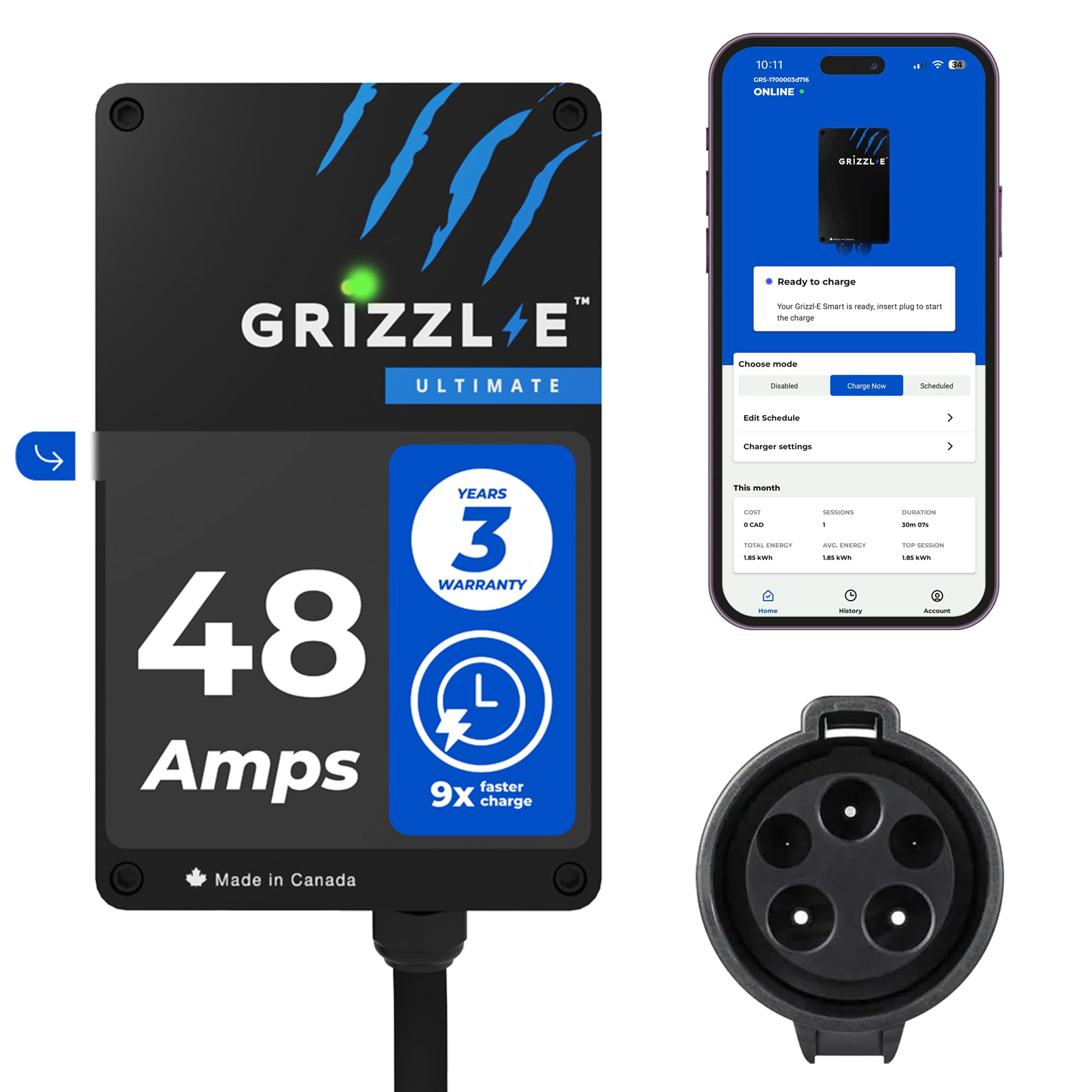
The case is the argument. Grizzl-E builds this one into a cast-aluminum enclosure rated UL Type 4, which is a different class of hardware from the plastic housings most of this group uses — the sort of thing you mount on a barn wall, a carport post, or anywhere a ladder and a lawnmower share space.

Inside, it's deliberately simple: 48 amps hardwired, a 25-foot cable, UL and Energy Star certification, and a hardwire kit with terminal lugs and heat shrink in the box so the electrician isn't improvising parts. It's assembled in Canada and covered for three years.

We like it for the installs where the charger is going to take abuse and doesn't need to be clever. The app is where it shows its age: 2.4 GHz Wi-Fi, and a unit that loses the connection sometimes needs a breaker reset to come back. If you set a schedule once and forget it, that's survivable; if you want to watch live data every day, one of the Emporias suits you better.

Pros

  • Cast-aluminum enclosure rated UL Type 4
  • Hardwire kit with lugs included
  • 48 amps, UL and Energy Star certified

Cons

  • Hardwire only, with no 14-50 option
  • Pricier than the Emporia despite a simpler app
Our verdict

The one to mount somewhere it might get hit — a cast-aluminum case rated UL Type 4, and a hardwired install with nothing extra to buy.

Check Latest Price
8

Screen on Unit

EVDANCE 48A Charger

90 /100
LBD Score Outstanding

Key details

Display
3.5 in color TFT
Connector
J1772
Max Output
6A to 48A adjustable
Installation
Hardwired, 240V/60A
View on Amazon

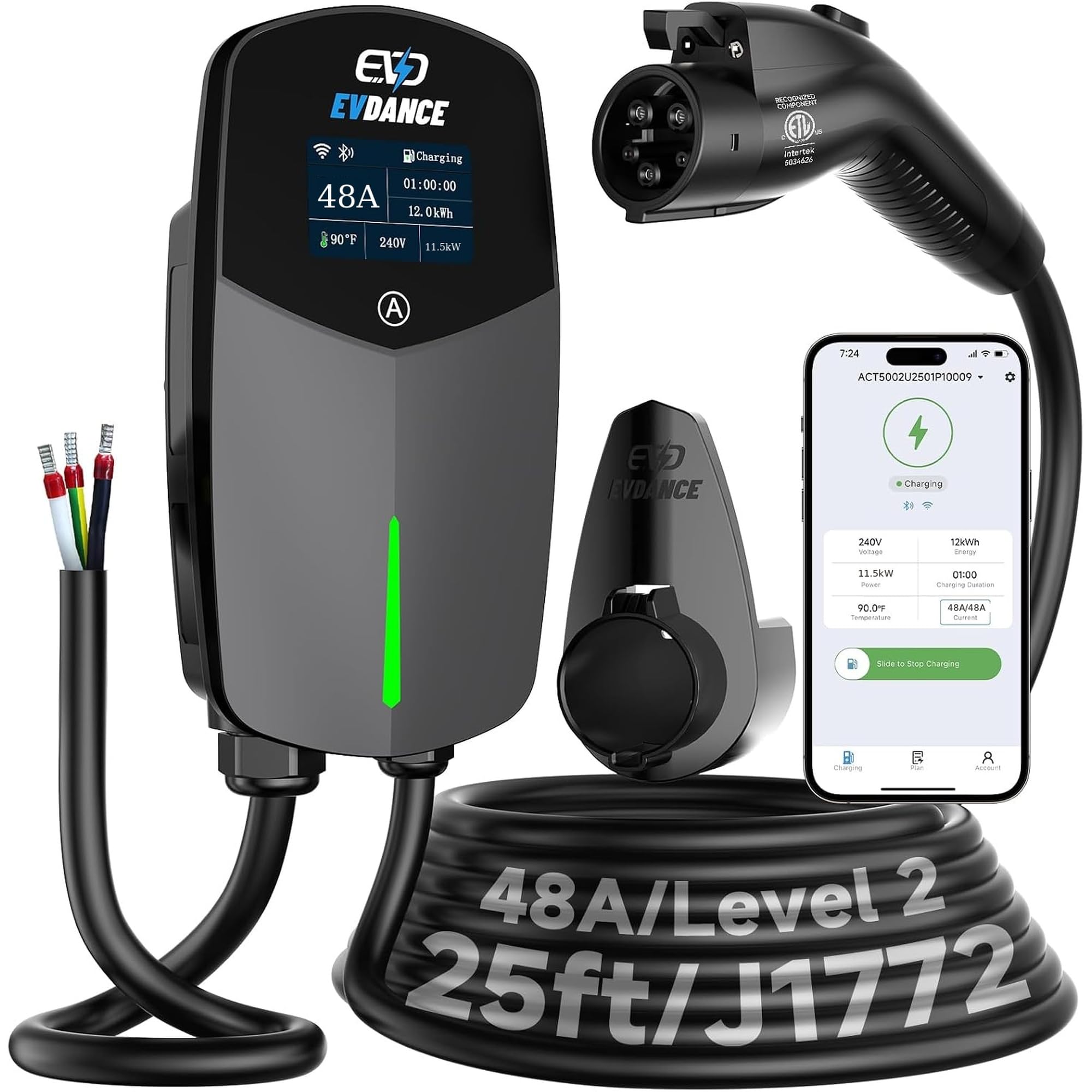
There's a 3.5-inch color screen on the front of this one, and it changes how you use it. Live voltage, current, power, kilowatt-hours and the plug's temperature are all on the unit, so you can check a session at the wall without digging a phone out of a pocket — which matters most in the garages where Wi-Fi doesn't reach.

The sensor behind that readout does real work. The charger steps down to 8 amps once the plug hits 70 to 90 degrees Celsius and cuts off above 90, so a connector that starts running hot throttles itself instead of cooking. On a 48-amp circuit, that's the feature we care about more than any dashboard.

Everything else is adjustable. Current runs from 6 to 48 amps, the install is a hardwired 240V, 60-amp circuit on 7-gauge cable, and up to six people can each hold their own app account — genuinely useful on a shared driveway or in a rental.

For a garage where the phone stays in the house and the charger has to be readable at a glance, this is the pick. The multi-user sharing is the detail that doesn't get enough attention: two drivers, two phones, two separate views of the same charger, and no shared password to argue about.

Pros

  • 3.5-inch display shows live power and plug temperature
  • Staged plug overheat protection with auto de-rating
  • Adjustable from 6 to 48 amps
  • Up to six separate user accounts

Cons

  • Less of a track record than the bigger names here
  • Hardwired only, with no 14-50 option
Our verdict

Pick this if the garage has no signal: the screen on the unit shows power, energy and plug temperature without a phone anywhere near it.

Check Latest Price

How We Tested 48-Amp Home Chargers

We started with spec sheets, filtering to chargers that can genuinely hold 48 amps continuously — that takes a 60-amp breaker, and plenty of listings blur the line between a peak figure and a sustained one. We cross-checked UL and ETL listings, noted which units hardwire and which accept a NEMA 14-50 plug, and cut anything charging a premium it couldn't justify. Seven made it to installation.

Installation was its own test. An electrician took the first one while we timed the job and tracked what came in the box versus what he had to go buy — a breaker, conduit, a mounting plate nobody mentioned. Then we mounted on a garage stud wall, on exterior brick, and on a driveway post, and watched how each handled its cable being coiled and hung every night.

For eight months we plugged in nightly and compared the app's reported amperage against the car's own readout, timing how long it really took to add a set number of miles. We noted whether the connector seated one-handed in the dark, whether the holster kept the cable off the ground, and how much of daily operation lived on the unit versus three menus deep. WiFi got its own protocol: router on the far side of a wall, rebooted twice, then we timed reconnection and checked whether the schedule survived. Outdoors, they saw a wet fall and a cold snap, and we watched for stiff cables, fogged displays, and cracked housings.

Value was tallied at the very end — unit, breaker, conduit, hardware, and labor together. A cheaper charger that sends you to the hardware store twice isn't cheaper.

How to Choose a 48-Amp Ev Charger

Start With the Circuit, Not the Charger

Forty-eight amps of continuous load needs a dedicated 60-amp circuit and a hardwired connection; there's no plug-in shortcut at that current. A NEMA 14-50 outlet caps you at 40 amps, which is why several chargers here — the Emporia, the ApexCharger, the IYILO — sell as both plug-in and hardwired units with different output for each.

Decide which you're doing before you shop. If the answer is hardwired, ask the electrician for a load calculation on the panel first. A 48-amp charger on a service that's already near capacity turns a weekend job into a different project entirely.

Match the Connector to the Car

J1772 remains the standard on most non-Tesla EVs in North America, and a J1772 charger plus an adapter works fine on a Tesla. A native NACS unit, like the EVIQO NACS, skips the adapter for Tesla and newer NACS-port cars but needs one in the other direction.

If your household is likely to have one of each within a few years, J1772 plus an adapter is the more flexible buy. If you're a two-Tesla house, buy the NACS plug and stop thinking about it.

Load Management: When It's Worth Paying For

If your panel has spare capacity, skip this section. If it doesn't, a charger that reads the whole home's draw and throttles itself — Emporia's PowerSmart on the Pro is the clearest example here — can be the difference between a charger and a service upgrade. The trade is a second box inside the panel and an electrician who understands both.

For a 100-amp house with electric heat or a hot tub, that math usually favors paying for the feature rather than the panel work.

Cable, Mounting and Weather

Twenty-five feet is the norm in this group; the ApexCharger's 30 feet is the exception, and worth the extra reach if the car parks far from the panel. Think about where the holster goes before the electrician arrives — the cable has to reach the port with slack, and coiling it on a hook at chest height beats draping it over a mirror.

For outdoor mounting, look for IP66 or NEMA 4 rather than IP65, and pick a spot where snow won't bury the holster. The EVIQO and its NACS twin carry the highest weather rating here.

What the App Should Do — and What Your Car Already Does

Scheduling is the feature that pays for itself: set the charger to run during off-peak hours and the car fills while you sleep. Energy reporting is the other one worth having, because it's the only way to see what a charge actually cost you.

What you shouldn't pay extra for is something your car already handles. Plenty of EVs schedule their own charging, and a second schedule fighting the first is a common reason a car doesn't charge overnight. Pick one place to control it and leave the other alone.

Frequently Asked Questions

Final Verdict

If we had to fit one charger to one wall, it would be the EVIQO. Full 48 amps, an IP66/NEMA 4 housing that shrugs off weather, an app that stays connected, and a holster you can find in the dark — it's the least eventful ownership experience in this group, which is the highest compliment a wall box can earn.

Two things legitimately change that recommendation. Tesla and NACS drivers should take the NACS version of the same unit and skip the adapter. And a house whose panel is already close to its limit should look at the Emporia Pro instead: PowerSmart is the only feature here that can turn a service upgrade into an ordinary install, and that's worth more than everything else on this page put together.