Best 8-Inch Tablets of 2026

An 8-inch tablet is the one that actually leaves the house — dropped into a tote, wedged into a seat-back pocket, passed to a kid in the back seat. The trouble is that this is exactly the size where manufacturers start shaving costs: screens soften, chips age out, and a tablet that looks fine on the product page stutters through a video. Over the past six months my team and I have tested 10 of them side by side, from big-name models to lesser-known imports, and the gap between the good ones and the rest is wider than the price tags suggest.

Here's something first-time buyers don't find out until after setup: a small tablet can have a genuinely nice display and still stream everything in standard definition if it's missing Widevine L1 certification — we hit that on more than one unit. The same goes for imported models, where Google Play and app compatibility can be a coin flip depending on which region version you end up with. And because onboard storage is usually tight at this size, a microSD slot is what keeps a cheap tablet useful in year three. The picks below got those unglamorous details right.

1

Best Overall

Lenovo Tab One

83 /100
LBD Score Excellent

Key details

Memory
4GB RAM, 64GB storage
Weight
11.2 oz
Battery
Up to 12.5 hours YouTube streaming
Display
8.7 in, 1,340 x 800, 60Hz
View on Amazon

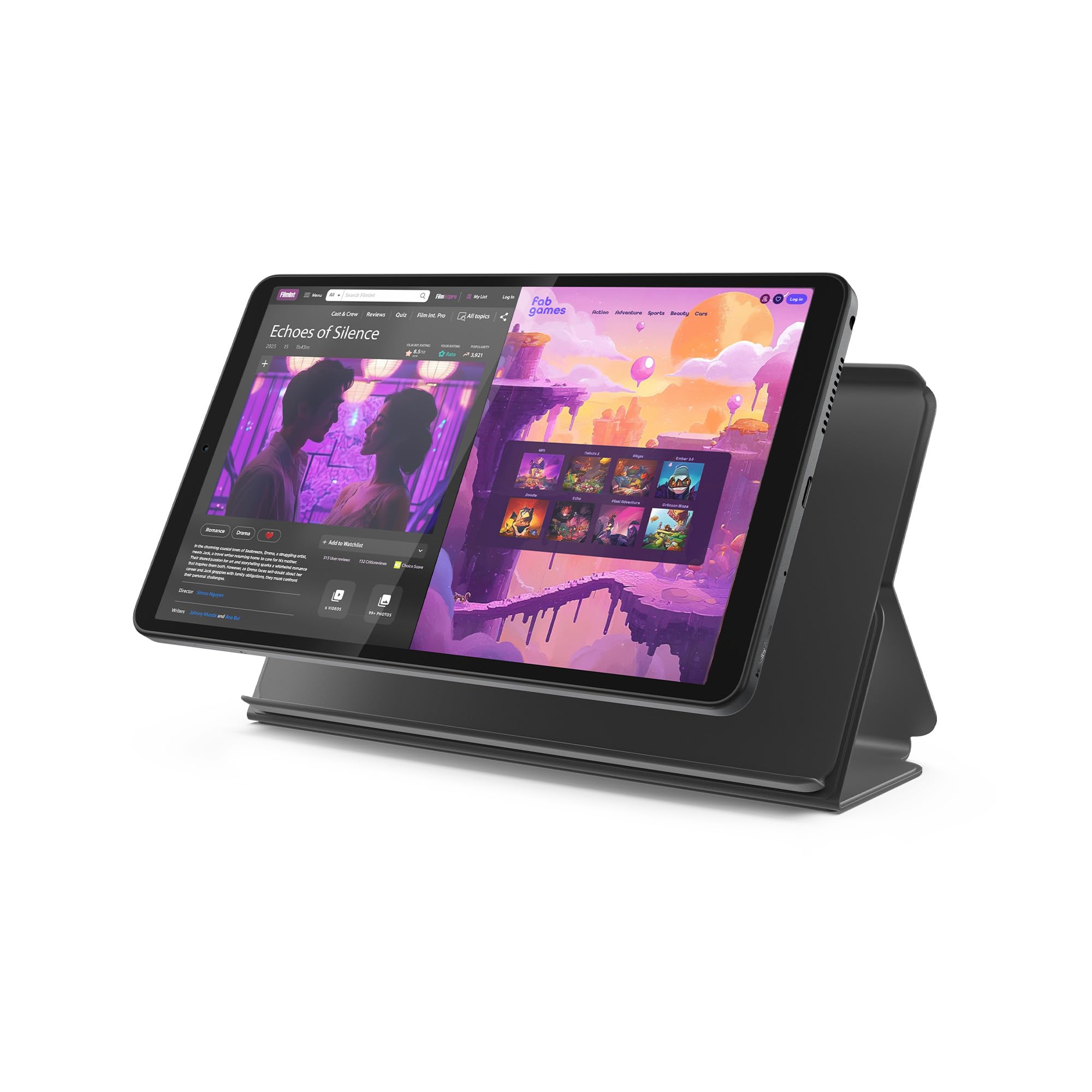
Eleven ounces and change is the number that decided this one for us. The Tab One is the lightest tablet in this group by a wide margin, light enough that holding it one-handed through a chapter doesn't turn into a forearm workout, and slim enough at 8.7 inches to vanish into a tote. Lenovo also includes a folio case in the box, which we appreciated more than we expected: no separate purchase, nothing to arrive late.

The panel is the compromise. It's a 1,340 x 800 LCD at 60Hz, rated at 480 nits, which is comfortable at the kitchen table and short of what you want in direct sun. Text is legible rather than crisp. The Helio G85 and 4GB of RAM keep streaming and browsing moving; open several apps and you can watch it consider the request before it responds.

Battery is where Lenovo has been unusually specific, quoting up to 12.5 hours of YouTube streaming rather than a vague all-day figure. The box list doesn't mention a charger, so dig out a USB-C one you already own. Storage lands at 64GB with a microSD slot for anyone who carries a lot of downloaded video.

The one-year mail-in warranty matters more than it usually would at this size, because the nearest rival here is an import with no domestic coverage. Nothing about the Tab One feels expensive — it feels thought through, from the weight to the case that comes with it. That's the quality we kept coming back to.

Pros

  • Under a pound, so one-handed reading works
  • Folio case included in the box
  • Battery quoted as 12.5 hours of YouTube streaming
  • microSD slot for downloaded video

Cons

  • 60Hz panel looks ordinary next to the 90Hz picks
  • Slows down with several apps open
Our verdict

The best all-around 8-inch tablet here for everyday streaming, reading, and travel, with the lightest body and the longest quoted battery life.
Check Latest Price
2

Best for Smooth Scrolling

Samsung Galaxy Tab A11

82 /100
LBD Score Excellent

Key details

Memory
4GB RAM, 64GB storage
Weight
15.2 oz
Display
8.7 in, 1,340 x 800, 90Hz
Warranty
International model, no US warranty
View on Amazon

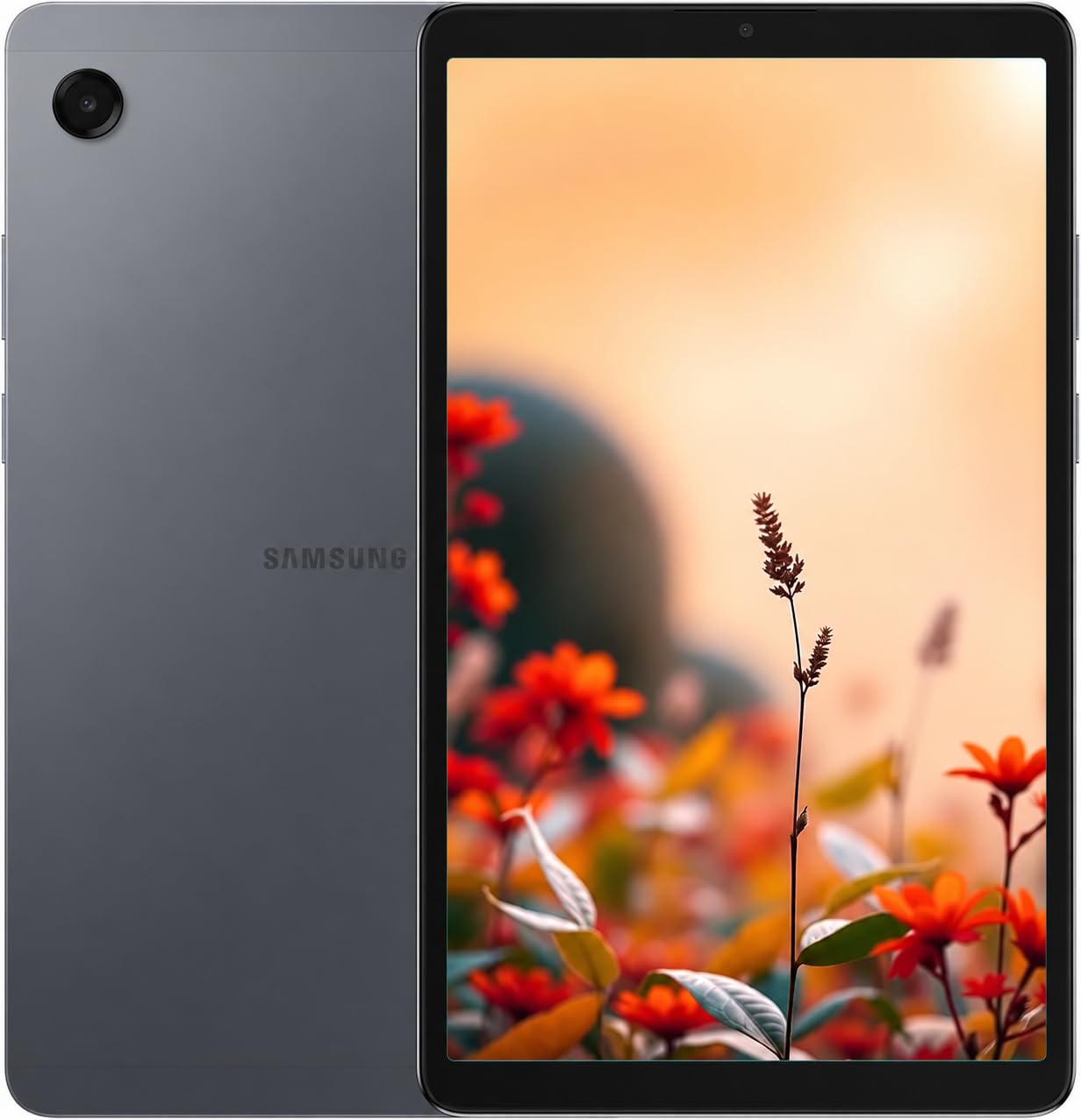
Two tablets in this group refresh at 90Hz, and the Galaxy Tab A11 is the less expensive of them. The faster refresh matters more than the number suggests: it takes the smear out of a long scroll and makes the 8.7-inch 1,340 x 800 panel feel livelier than its resolution really earns.

Underneath sits the stronger of the two Samsung chips in this guide, a 6nm Helio G99, paired with 4GB of RAM, 64GB of storage, a microSD slot that takes cards up to 2TB, and a headphone jack. What we can't get past is the provenance. This is an international Latin American model sold without a domestic warranty, and at setup the country list may not include the US at all. Choose any country and change it later; the effect is cosmetic in practice, landing on things like the built-in weather app rather than the apps you actually use.

Weight is the other trade. At 15.2 ounces it's the heaviest tablet here, which you notice holding it up in bed, and there's no charger in the box. Neither is disqualifying next to a 90Hz screen and the quicker chip — they are just the reasons it sits behind the Lenovo rather than in front of it.

Pros

  • 90Hz screen makes scrolling feel current
  • Helio G99 is the stronger of the two Samsung chips
  • microSD slot accepts cards up to 2TB
  • 3.5mm headphone jack and Bluetooth 5.3

Cons

  • International model with no US warranty
  • Charger not included
Our verdict

The pick if you want the smoothest screen here and don't mind an import: 90Hz, the stronger Samsung chip, and no US warranty.

Check Latest Price
3

Best for Shared Family Use

Samsung Galaxy Tab A7 Lite

91 /100
LBD Score Outstanding

Key details

Memory
3GB RAM, 32GB storage
Weight
13 oz
Display
8.7 in, 1,340 x 800
Warranty
1 year manufacturer
View on Amazon

The oldest tablet here is also the sturdiest. The Galaxy Tab A7 Lite has been on sale since 2021 in a metal frame that shrugs off life in a bag, it carries a one-year US manufacturer warranty, and it still ships with a power adapter — a small courtesy the newer Galaxy Tab A11 doesn't extend. It weighs 12.96 ounces, has stereo speakers with Dolby Atmos, and a 5,100mAh battery with fast charging. Nothing exotic, all of it useful.

The specifications are where the age shows: 3GB of RAM, 32GB of storage, a 60Hz 1,340 x 800 panel, and Android 11 out of the box. Treat 32GB as a floor and add a microSD card on day one, since cards are the cheap home for downloaded shows while apps want the internal space. In our use it handled reading, streaming, and a browser without complaint; three or four apps at once is where it starts to think. Everything about it feels a generation behind, and the compensation is a tablet you can leave on the sofa without worrying about it.

Pros

  • One-year US manufacturer warranty
  • Metal frame stands up to bag life
  • Power adapter included in the box

Cons

  • 3GB RAM and 32GB storage feel tight now
  • Ships on Android 11
Our verdict

The most reassuring ownership story here — a metal body, a US warranty, and a power adapter in the box — for a tablet that gets shared and knocked about.

Check Latest Price
4

Best Screen and Storage

BNCF BPad T1

81 /100
LBD Score Excellent

Key details

Display
8.4 in, 1,920 x 1,200, 90Hz
Storage
128GB, microSD to 2TB
Software
Android 16 with Gemini
Connectivity
4G LTE, Wi-Fi 6
View on Amazon

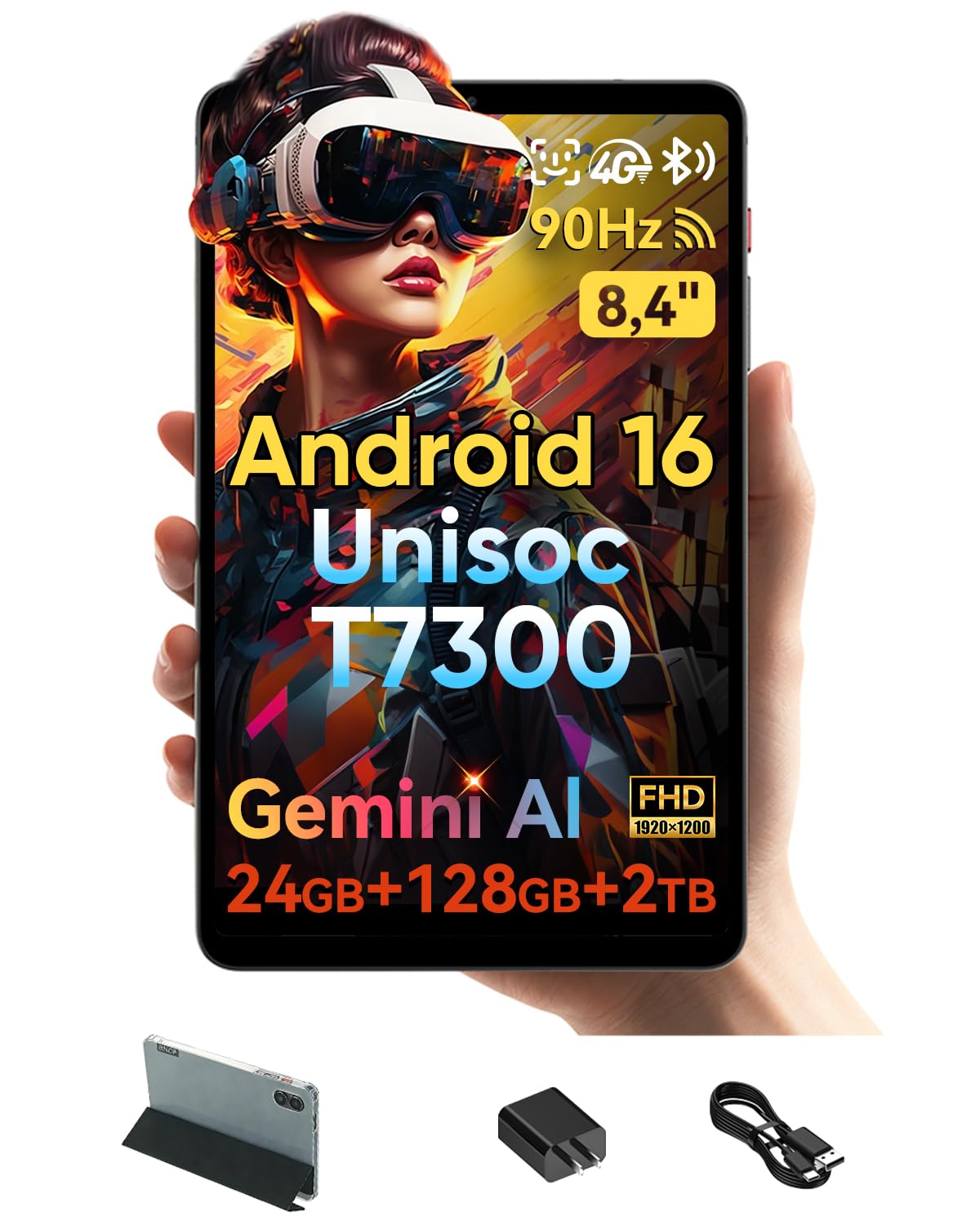
The sharpest screen in this group belongs to the tablet you've probably never heard of. At 8.4 inches and 1,920 x 1,200, the BPad T1 packs more pixels into a smaller panel than anything else here, and the 90Hz refresh keeps it fluid. We read a few long articles on it and stopped noticing the display entirely, which is the nicest thing we can say about a screen.

The rest of the hardware is generous for the size: 128GB of storage with a microSD slot, Android 16 with Gemini built in, Wi-Fi 6, Bluetooth 5.4, GPS, and a 4G LTE option none of the other picks list. At 316 grams it weighs essentially the same as the Lenovo, so the better screen doesn't cost you your wrist. There's a 13MP rear camera and face unlock too, though nobody buys this to take photographs.

Two things to know before ordering. The 24GB RAM headline is 8GB of physical memory plus 16GB of virtual memory, so calibrate your expectations to an 8GB tablet. And the company behind it is small next to Samsung or Lenovo, which means buying it for the hardware in front of you rather than for a long support relationship. The warranty runs a year.

Pros

  • 1,920 x 1,200 panel is the sharpest here
  • 128GB of storage with microSD expansion
  • 4G LTE and Wi-Fi 6 connectivity
  • Android 16 with Gemini built in

Cons

  • Most expensive tablet in this group
  • 24GB RAM figure includes 16GB virtual memory
Our verdict

For reading and streaming this is the best display here, and 128GB of storage means you stop managing space.

Check Latest Price
5

Kitchen Counter Video

Azeyou F8

79 /100
LBD Score Very Good

Key details

Battery
5,000mAh, up to 8 hours video
Display
8.7 in, 800 x 1,340 IPS
Storage
64GB, microSD to 2TB
Warranty
6 months
View on Amazon

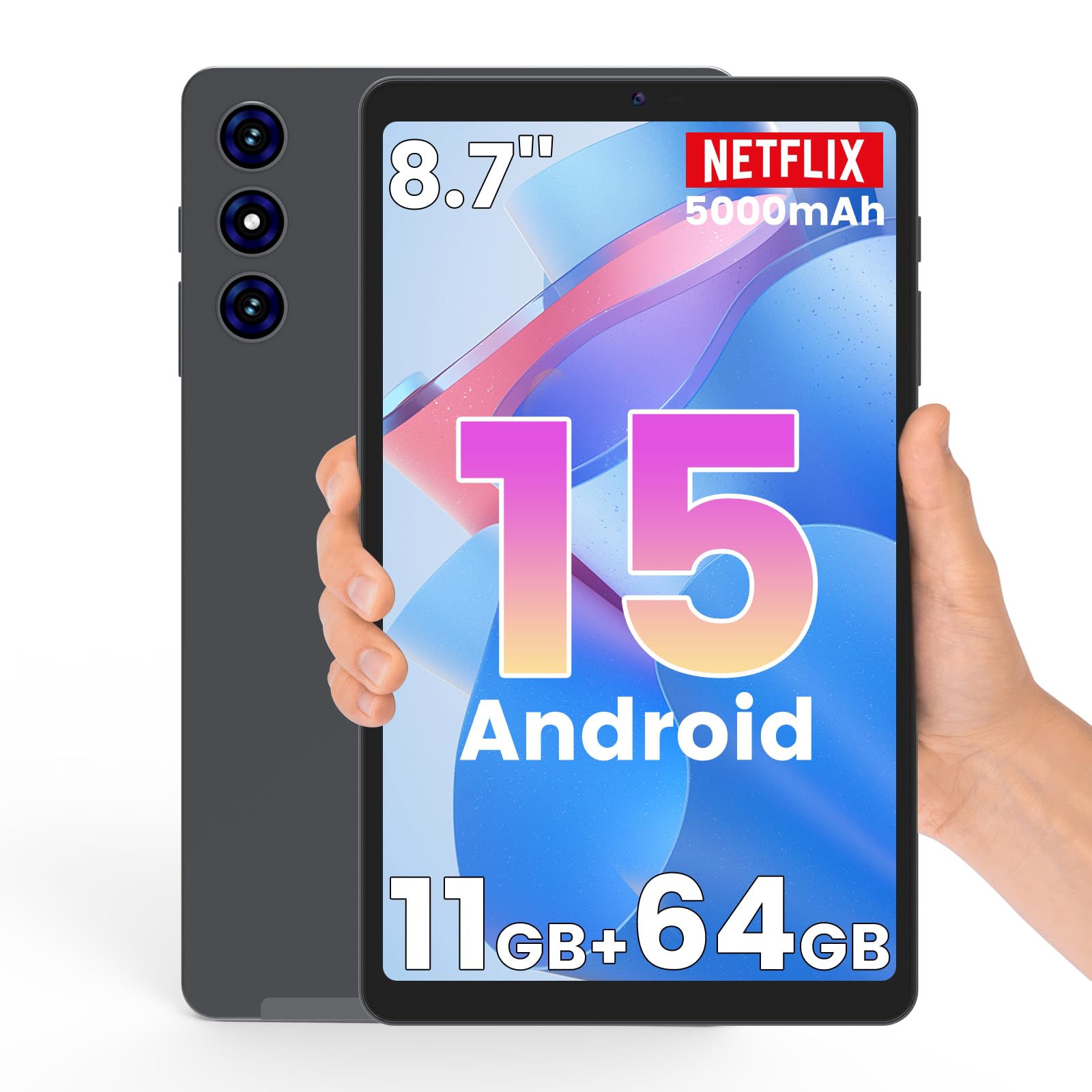
This is the least expensive tablet here, and it's the one to hand to someone who isn't sure they want a tablet at all. The 8.7-inch IPS panel runs 800 x 1,340, the body weighs about 361 grams, and Google Mobile Services are on board — we checked for that first, because a budget tablet without the Play Store is a different product entirely.

What you give up is speed. The Unisoc T310 is a 2.0GHz quad-core, the least powerful chip in this group, and it shows the moment you ask for two things at once; browsing with a video running in a corner is about the ceiling. If your list is a streaming app, a reader, and one browser tab, you'll get where you're going, just not briskly.

Where it earns its place is video. Widevine L1 means Netflix and its peers stream in HD rather than the soft SD that cheap tablets often settle for, dual-band Wi-Fi keeps a 5GHz network usable, and the 5,000mAh battery is rated for up to eight hours of video. As a kitchen counter screen or a first tablet for a kid, that covers most of the job.

Pros

  • Lowest price in this group
  • Google Play supported out of the box
  • Widevine L1 for HD streaming
  • microSD expansion up to 2TB

Cons

  • Six-month warranty is the shortest here
  • Quad-core T310 is the slowest chip here
Our verdict

The one to buy when the tablet is mostly a video screen and the budget is the deciding factor.

Check Latest Price

How We Chose and Tested the Best 8-Inch Tablets

The shortlist started as a spreadsheet of every 8- to 9-inch tablet we could buy in the U.S. at the time, filtered by Android version support, whether Google Play was listed as included, and price. We cut anything running a stale operating system or with a spec sheet that contradicted its own reviews, then purchased 10 units at retail so nothing arrived on loan with a return date attached. Testing ran for six months, and every tablet stayed in rotation the entire time — none of them got a week on a desk and a verdict.

These lived where small tablets actually live: in a bag on the morning commute, propped against a can on the kitchen counter, in a kid's hands in the back seat, and on tray tables during two work trips. Each one ran the same streaming loop from a full charge until it died, and we noted how much battery bled overnight on standby. For screens we read outdoors at midday, looked at each display from an angle to see how quickly the image washed out, and counted how many episodes we could hold one-handed.

Speed and reliability got judged by ordinary irritation: how long a cold app launch took, whether switching between a browser and a video app forced a reload, whether Wi-Fi dropped at the far end of the house, and whether it came back on after a forced restart. Region compatibility was its own pass — we checked which model number we'd received, whether Google Play came preinstalled, and whether banking and streaming apps installed without complaint. Value came down to storage remaining after setup and whether a microSD slot was there to make up the difference.

How to Choose an 8-Inch Tablet

Screen: resolution first, refresh rate second

Most of this class settles on a 1,340 x 800 panel, which is fine for video and only just adequate for long reading — the text is legible rather than crisp. Step up to 1,920 x 1,200 on the BNCF BPad T1 and the difference shows immediately in a book app. Refresh rate is the secondary call: 90Hz on the Galaxy Tab A11 and the BPad T1 makes scrolling feel current, while the Lenovo and the A7 Lite run at 60Hz without offending anyone.

If the tablet will live near a window, brightness beats both. The Lenovo's 480-nit rating is the most useful figure in this group for a sunny kitchen table.

Memory, storage, and the RAM arithmetic

Advertised RAM is not always RAM. The BPad T1's 24GB headline is 8GB of physical memory plus 16GB of virtual memory, and budget listings pull the same trick, so always read the smaller number. On storage, 64GB is a sensible floor; 32GB fills quickly once you download a season of something for a trip.

Battery claims and charging speed

Battery figures arrive in whatever unit flatters the tablet — 12.5 hours of YouTube streaming for the Lenovo, up to eight hours of video for the Azeyou — so read them as a rough ranking rather than a promise about your own week. Charging speed decides how disruptive a top-up is: fast charging on the Galaxy Tab A7 Lite means a lunchtime session is realistic, while a slower trickle turns into an overnight job.

Weight decides how you actually use it

An 11-ounce tablet is one you hold; a 15-ounce tablet is one you prop on a cushion. That gap between the Lenovo at 11.2 ounces and the Galaxy Tab A11 at 15.2 is the real reason reading in bed is easier on the lighter one, and it is the specification we weigh first when two tablets are otherwise close. A folio case adds weight back, so count it if you plan to leave it on.

Warranty and where the tablet was made

Cheap listings are often international versions. The Galaxy Tab A11 here is a Latin American model sold without a domestic warranty, and its setup screen may not list the US, while the A7 Lite is a US version with a year of manufacturer coverage. Model numbers and the warranty line are worth reading before you order, because the difference is invisible in the product photos.

Frequently Asked Questions

Final Verdict

Start with the Lenovo Tab One. At 11.2 ounces it's the lightest tablet here, it arrives with a folio case, and it's rated for 12.5 hours of YouTube streaming — the combination that makes a small tablet worth carrying rather than leaving on a shelf.

If a 90Hz screen and the stronger Samsung chip are worth more to you than a US warranty, the Galaxy Tab A11 delivers both for less money. And if reading is the main event, the BNCF BPad T1's sharper panel and 128GB of storage justify the step up.