Best Android Gaming Handhelds of 2026

An Android gaming handheld is, at heart, a phone that grew grips and shoulder buttons — so the real question is never whether one can play your games, but whether you'll enjoy getting it there. They promise your whole back catalog, cloud streaming, and native Android titles in something that slides into a jacket pocket. The catch usually shows up on day one, when you're staring at a stock home screen wondering which emulator to install first.

I've set up enough of these to know the pattern: the ones that stick around feel good in your hands, tell the truth about their screen, and get you into a game in minutes rather than an evening. Over the past seven months we've lived with 11 of them, from 4.7-inch pocket models to a 7-inch streaming slab, playing on commutes, on the couch, and on long flights.

The spec that separates a great buy from a compromise is usually the screen, not the processor. Resolution gets the marketing, but panel type and size decide whether dark scenes look muddy and whether your thumbs can reach the sticks comfortably. Below are the ones we'd spend our own money on.

1

Best Overall

Retroid Pocket 5

87 /100
LBD Score Excellent

Key details

OS
Android 13
Memory
8GB RAM, 128GB storage
Screen
5.5-inch 1080p touchscreen
Chipset
Snapdragon 865
View on Amazon

The 5.5-inch 1080p screen and Snapdragon 865 are the reason the Pocket 5 is our top pick. We spent most of our time with PS2 and GameCube libraries, and the combination of that chip and a sharp, bright panel made older 3D games look cleaner than we expected. It is also small enough to drop into a bag without feeling like a tablet. That balance is the whole argument: enough power for the games people actually want to revisit, in a body that still travels.

Android games and cloud apps benefit from the same headroom. The 8GB of RAM and 128GB of storage leave room for a front end, a few Android titles, and a microSD card's worth of extra games. We also liked the 5.5-inch size for longer sessions: it is big enough for text and map detail, but not so wide that the controls sit far apart. The 1080p panel is bright and crisp, and the matte finish keeps fingerprints from taking over.

Battery life depends on what you load. Lighter systems run for a long session, while demanding PS2 and GameCube titles pull it down; we noticed the difference when we moved from 2D games to 3D ones. The Pocket 5 is happiest when you mix in lighter titles rather than pushing the hardest systems for hours. The controls feel solid, and the device is comfortable for its size. A jacket pocket swallowed it, and we never thought about the size again.

Pros

  • Sharp 5.5-inch 1080p screen
  • Snapdragon 865 handles PS2 and GameCube
  • 8GB RAM and 128GB storage

Cons

  • Setup takes emulator know-how
Our verdict

The Pocket 5 is the Android handheld we recommend first for anyone who wants one do-it-all device: its 5.5-inch 1080p screen and Snapdragon 865 make PS2, GameCube, and Android games feel native without a bulky body.

Check Latest Price
2

Best Value

Retroid Pocket 4 Pro

91 /100
LBD Score Outstanding

Key details

Screen
4.7-inch display
Battery
5000mAh
Chipset
Dimensity 1100
Storage
128GB UFS 3.1
View on Amazon

The price gap to the Pocket 5 is the first thing you notice, and it is the reason this one earns a place. The Pocket 4 Pro uses a Dimensity 1100 and 128GB of UFS 3.1 storage, which is a step down on paper but still enough for a large slice of PS2 and GameCube libraries. We went in expecting to miss the bigger screen; what we noticed instead was how much easier the smaller body is to carry.

The 4.7-inch display is sharp enough for 3D games and comfortable for longer sessions. We found the controls solid and the 5000mAh battery willing to last through a mixed session of lighter systems and a few demanding ones. The 128GB of internal storage is generous at this tier, and the device feels denser and more substantial than its size suggests. The value case is strongest here: it does the same emulation job in a smaller body for less.

What we liked most is that the Pocket 4 Pro does not feel like a compromise when you are actually playing. The screen is bright, the buttons feel solid, and the device fits in a purse or a jacket pocket in a way the larger handhelds do not. Android gives you the same emulator and app flexibility as the rest of the group. Short trips are where it earns its keep: it is the one we grab when we want to travel light.

Pros

  • Dimensity 1100 handles PS2 and GameCube
  • 128GB UFS 3.1 storage
  • Pocketable 4.7-inch body
  • 5000mAh battery

Cons

  • Smaller screen than the Pocket 5
  • Setup takes emulator know-how
Our verdict

The Pocket 4 Pro is the value pick: it keeps PS2 and GameCube emulation within reach in a smaller 4.7-inch body, and it leaves more room in the budget for games.

Check Latest Price
3

Best for Cloud Gaming

abxylute One Pro

80 /100
LBD Score Excellent

Key details

Screen
7-inch 1080p touchscreen
Weight
15.2 oz
Battery
Over 8 hours
Storage
64GB
View on Amazon

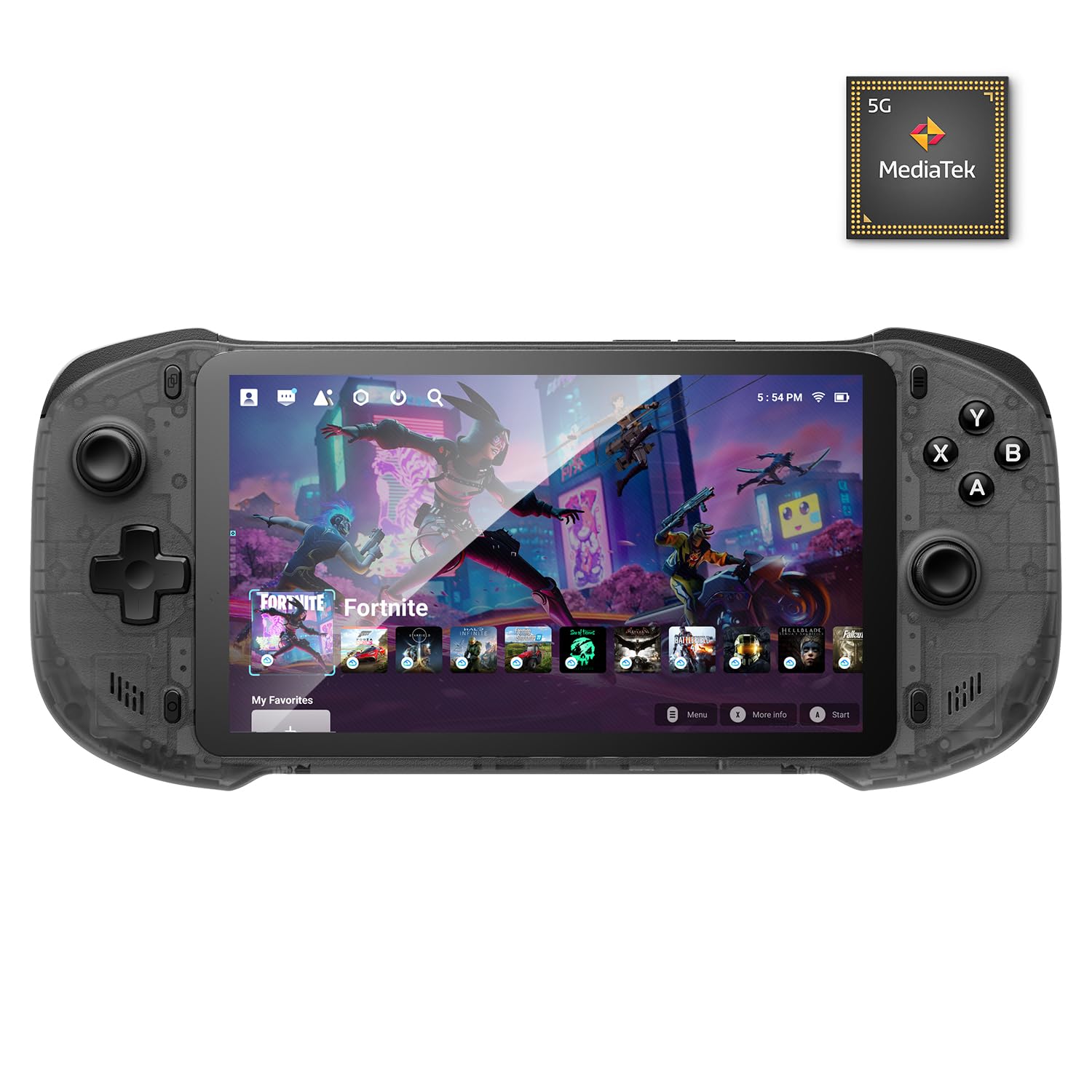
The 7-inch 1080p screen and cloud-first design are what make the One Pro worth a look. We streamed from a console and a PC over Wi-Fi, and the combination of a big, bright panel and a 430g body made it easy to forget we were holding a handheld rather than a small tablet with grips. The controls sit where your thumbs expect them, and the face buttons and d-pad are good for 2D games and fighters. This is the one in the group that feels built around remote play rather than emulation.

Cloud gaming is the main event, but the One Pro also runs Android games and older emulators on its own. We liked that the 430g body stays comfortable for a long session, and the listed battery life of over 8 hours held up when we were streaming and playing lighter games. The screen is bright enough for indoor use, and the 16:9 shape fits modern console streams better than the 4:3 retro screens here. Android apps load quickly, and the device feels responsive when you move between a stream and a native game.

The trade-off is local power: this is not the handheld for the hardest PS2 or GameCube libraries, and it will not match the Pocket 5 on demanding emulation. The One Pro is at its best when most of your play happens through Xbox Cloud Gaming, GeForce Now, or a console in another room. It stayed on the coffee table for exactly that reason: it is the easiest of these to pick up for a quick stream, and the big screen is the reward.

Pros

  • 7-inch 1080p screen is bright and spacious
  • Light 430g body
  • Over 8 hours of listed battery life
  • Controls suit 2D games and fighters

Cons

  • 64GB storage is small for local games
Our verdict

The One Pro is the cloud-first pick: a light 7-inch 1080p screen and long battery make streaming feel native, while 64GB of storage keeps it from being a local-game powerhouse.

Check Latest Price
4

Best for 4:3 Retro

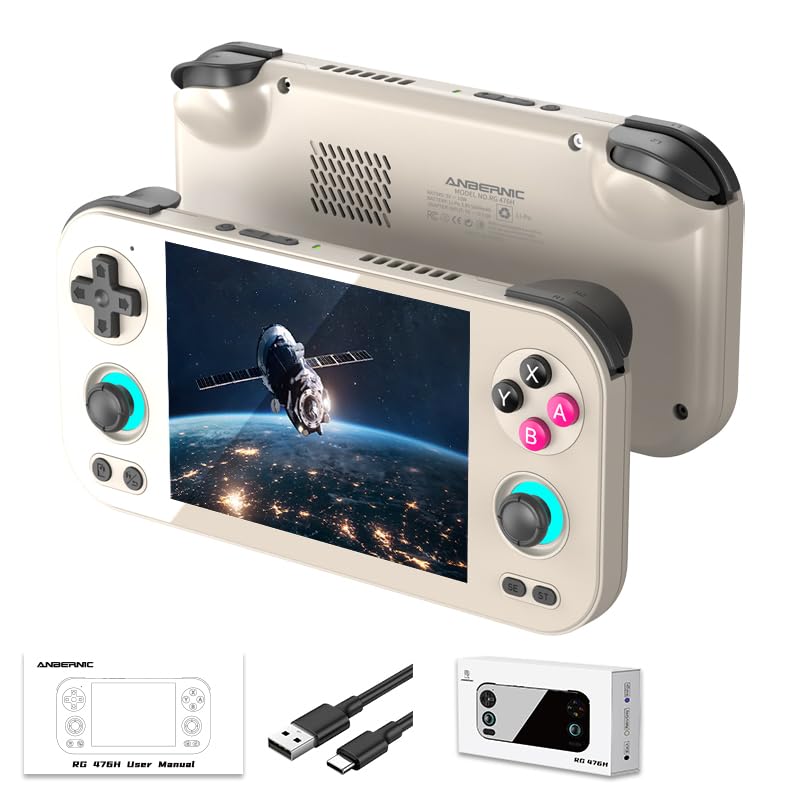
Anbernic RG476H

84 /100
LBD Score Excellent

Key details

Memory
8GB RAM, 128GB storage
Screen
4.7-inch 1280x960 LTPS
Battery
5000mAh
Chipset
Unisoc T820
View on Amazon

Most handhelds make you choose between modern widescreen and old-school 4:3. The RG476H picks a side. Its 4.7-inch LTPS screen runs at 1280x960, which is the right shape and enough resolution for NES, SNES, and PlayStation games without stretching or blurring. We noticed the difference immediately on sprite-based games: the pixel grid looks intentional rather than stretched, and the screen is bright enough to use indoors without cranking it.

The Unisoc T820 and 8GB of RAM are a midrange combination. We found PSP and Dreamcast games ran comfortably, and lighter Android titles were fine. The 128GB of storage is generous, and the 5000mAh battery held up through a long session of 2D games. This is a handheld to choose for the systems it handles well. The Android 13 software gives you the same emulator and app flexibility as the rest of the group.

What we liked most is the focus. The RG476H does not pretend to be a widescreen cloud device; it is a comfortable 4:3 handheld with a high-resolution screen and enough power for the systems that look best on it. The controls are responsive, and the 4.7-inch body is easy to hold for an evening. The 4.7-inch body is easy to hold for an evening, and the screen is the reason we reach for it when the library is old-school.

Pros

  • 4.7-inch 1280x960 4:3 screen
  • T820 handles PSP and Dreamcast
  • 8GB RAM and 128GB storage
  • 5000mAh battery

Cons

  • GameCube and Wii performance is inconsistent
  • No games preloaded
Our verdict

The RG476H is the 4:3 specialist: its 4.7-inch 1280x960 screen makes older consoles look right, and the T820 chip handles PSP and Dreamcast better than it handles GameCube.

Check Latest Price
5

Best Premium Performance

Voacle RG557

81 /100
LBD Score Excellent

Key details

Screen
5.48-inch AMOLED 1080p
Battery
5500mAh
Chipset
Dimensity 8300
Storage
256GB
View on Amazon

The 256GB of storage and Dimensity 8300 are the first things that separate the RG557 from the rest of this group. That is a lot of internal space for a handheld, and it means you can keep a broad library installed without reaching for a microSD card on day one. The chip is a serious step up from the midrange options here, with enough headroom for demanding Android games and the harder emulation targets. We noticed the difference most when we moved from 2D games to 3D titles; the RG557 stayed composed while the smaller-chip handhelds needed more patience.

The 5.48-inch AMOLED screen is the other reason to pay attention. Colors are rich, blacks are deep, and the 1080p resolution is sharp enough for 3D games and text-heavy Android apps. We liked the size for longer sessions: it is bigger than the Pocket 4 Pro but still fits in a bag, and the 5500mAh battery is sized for that screen. The controls are responsive, and Android 14 feels current rather than like an old emulation front end.

The RG557 is not the cheapest way into Android emulation, but the premium buys more storage, a better panel, and a chip that stays comfortable with harder games. We kept coming back to it for Android games that would make the smaller handhelds work harder, and the 256GB of storage meant we stopped managing a library. The smaller sticks are the main compromise; if you play a lot of precise 3D action, try one before you commit.

Pros

  • Dimensity 8300 handles demanding Android games
  • 5.48-inch AMOLED 1080p screen
  • 256GB internal storage
  • 5500mAh battery

Cons

  • No games preloaded
Our verdict

The RG557 is the premium pick for demanding games: its Dimensity 8300 is the strongest chip here, and the 5.48-inch AMOLED screen and 256GB of storage round it out.

Check Latest Price

How We Tested the Best Android Gaming Handhelds

Every device on this list started as research before it was ever switched on. We pulled the current crop of Android handhelds, set aside anything running an outdated chipset or stuck with tiny, non-expandable storage, and filtered by screen type and size, battery capacity, and whether the maker ships a recent unlocked version of Android. That left 11 units, all bought at retail so none of them arrived pre-configured by a PR team, and we ran them for seven months.

The first thing we timed was the run from sealed box to actually playing something, because that's where most of the frustration lives. We sat down with each one on a weeknight with no prior knowledge of its launcher and logged every step: which emulators had to be downloaded, how long control mapping took, whether a frontend was preinstalled or had to be sideloaded, and what came in the box. A bundled case or screen protector changes what you're really paying for.

Then we played. Real sessions, not benchmarks — 20-minute train commutes, 45-minute couch stretches, and a couple of long-haul flights where battery life stopped being theoretical. We ran the same handful of demanding titles on every device at matched settings and noted dropped frames, how warm the back panel got after half an hour, and the point at which our hands started to cramp. For screens, we pulled up the same dark scene on each device, tilted them off-axis, walked outside into direct sun, and compared how the 4.7-inch models balanced against the 7-inch one in hand.

Finally, the unglamorous stuff. A few traveled loose in bags alongside keys and cables, and after months of that we checked for creaking shells and wobbling buttons. We streamed over the same home network to see how each handled remote play, and we weighed every price against its chipset, screen, and storage — including what the next model up actually adds, since the bigger spend often buys a better panel rather than more frames.

How to Choose an Android Gaming Handheld

Start with the chipset and your heaviest system

Emulation is the hardest job most people give these devices, and the chipset sets the ceiling. A Dimensity 1100, Snapdragon 865, or Dimensity 8300 gives you a realistic shot at PS2 and GameCube; a midrange T820 is better suited to PSP, Dreamcast, and older consoles. We prioritize the systems you will play most, then check whether the handheld has the power to run them at full speed. If you mostly play 8- and 16-bit games, spend less on the chip and more on the screen and controls.

Choose the screen shape your library wants

A 16:9 panel suits cloud streaming, Android games, and PSP; a 4:3 panel suits NES through PlayStation and keeps old games from stretching. Resolution matters less than you think at these sizes, but a 1080p screen makes text and 3D games noticeably cleaner. We like the 5.5-inch 1080p panel on the Pocket 5 as an all-around size, while the RG476H's 1280x960 4:3 screen is the better fit for a retro-first library.

Plan for setup, storage, and accessories

Many Android handhelds ship without games, and some include only a charging cable. Budget an evening for emulator and front-end setup, plus a microSD card if you keep a large library. We look for at least 128GB of internal storage on a device meant to hold several systems; 64GB fills quickly once Android games and apps join the emulators. A clean Android install is a good thing if you know what you want, but it is not plug-and-play.

Weigh portability against comfort

A 4.7-inch handheld disappears into a bag; a 7-inch cloud device is still light enough to hold for a long stream, but it is not a pocket device. We pay attention to weight and grip because you will notice an extra few ounces after an hour. Hall-effect sticks are worth having if you play a lot of 3D action, but control layout matters more than the spec. Choose the largest screen you will actually carry, not the largest one in the table.

Frequently Asked Questions

Final Verdict

The Retroid Pocket 5 is the Android handheld we recommend first. Its 5.5-inch 1080p screen and Snapdragon 865 give you enough power for PS2 and GameCube emulation and modern Android games, while the body stays small enough to carry every day.

If the budget is tighter, the Pocket 4 Pro gets you most of the way there in a smaller 4.7-inch body. If cloud streaming is the main event, the One Pro's 7-inch screen is worth the trade in local power.