Best Backup Cameras of 2026

The first time I backed a borrowed pickup into a crowded garage, I did what everyone does: mirrors, a craned neck, and a slow creep on faith that nothing was behind me. A backup camera replaces that faith with a picture, and once you've driven with a good one, mirrors alone feel like driving with your eyes half closed.

Not every system earns that. Wireless kits spare you from fishing cable through a tailgate, but a weak transmitter can drop out right when a kid on a bike rolls behind you, and solar models trade wiring for a charging habit. Over the past eight months, we've run 12 systems through dark driveways, tight lots, rain, and a long afternoon hitching a trailer.

The surprise was how little resolution decided things. Glare control and low-light behavior determine whether you can see anything at 9 p.m. in an unlit garage. Below are the systems that held up, from magnetic mounts you stick on in a minute to wired kits for equipment that never sees a parking lot.

1

Best Overall

LeeKooLuu 7-Inch Wireless Backup Camera

86 /100
LBD Score Excellent

Key details

Connection
Wireless
Resolution
1080p
Screen Size
7 inches
Field Of View
150 degrees
View on Amazon

Seven inches and a 15-minute install are the headline, and that combination is why we recommend this LeeKooLuu as the default for most trucks, SUVs, and travel trailers. The screen is large enough to read at a glance without blocking the windshield, and the wireless camera removes the long cable run that makes a backup camera installation miserable.

Wireless here means the video travels without a cable, not that the camera runs on thin air. You still tap a reversing-light circuit for power, which is a short job on most pickups and a longer one on a sealed van. The monitor plugs into the cigarette lighter and comes with a suction-cup bracket, so the whole setup can move between vehicles.

The 1080p picture and 150-degree lens are the right balance for a reversing camera: wide enough to catch a curb or a trailer jack, not so wide that cars behind you turn into dashes. Night vision is strong for this price, and the adjustable parking lines are useful in tight garages. We also like that the monitor pairs with the camera automatically rather than making you hunt through a menu.

The parking lines are adjustable from the monitor, a small feature that pays off every time you back into a tight space. For a first backup camera, this is the least fussy way to get a large rear view.

Pros

  • Large 7-inch screen is easy to read
  • Wireless camera avoids a long cable run
  • Adjustable parking lines help in tight spaces

Cons

  • Wireless video can stutter around long trailers
Our verdict

For most trucks, SUVs, and travel trailers, we recommend this 7-inch wireless kit: it gives you a big reversing view without running a cable the length of the vehicle.

Check Latest Price
2

Best Budget

LeeKooLuu 4.3-Inch Wired Backup Camera

89 /100
LBD Score Excellent

Key details

Resolution
1080p
Screen Size
4.3 inches
Field Of View
149 degrees
Waterproof Rating
IP69
View on Amazon

This is the least expensive complete kit here, and it is the one we recommend when the budget is the deciding factor. You get a camera, a 4.3-inch monitor, a video-power cable, and the hardware to mount both, so there is no second shopping trip for a screen.

The trade-off is size. A 4.3-inch display is fine in a compact car or a small SUV, where it can sit low on the dash without blocking much, but it is small for a full-size truck. The wired connection brings its own advantage: the picture stays steady, and the 25-minute installation estimate is realistic if you can route the cable through an existing grommet.

The 1080p camera has a 149-degree view and an IP69 waterproof rating, so rain and road spray are not the weak point. The 4-pin connector is secure, and the two-year warranty is longer than the price suggests. For a first backup camera, a second vehicle, or a teenager's car, that is a sensible set of compromises.

Pros

  • Complete kit costs the least here
  • Wired signal stays steady
  • IP69 camera handles rain and spray

Cons

  • Adhesive monitor mount can loosen on hot dashes
Our verdict

If you want a complete backup camera for the least money here, we recommend this compact wired kit, provided a 4.3-inch screen suits your dash.

Check Latest Price
3

Best for Shared Tow Vehicles

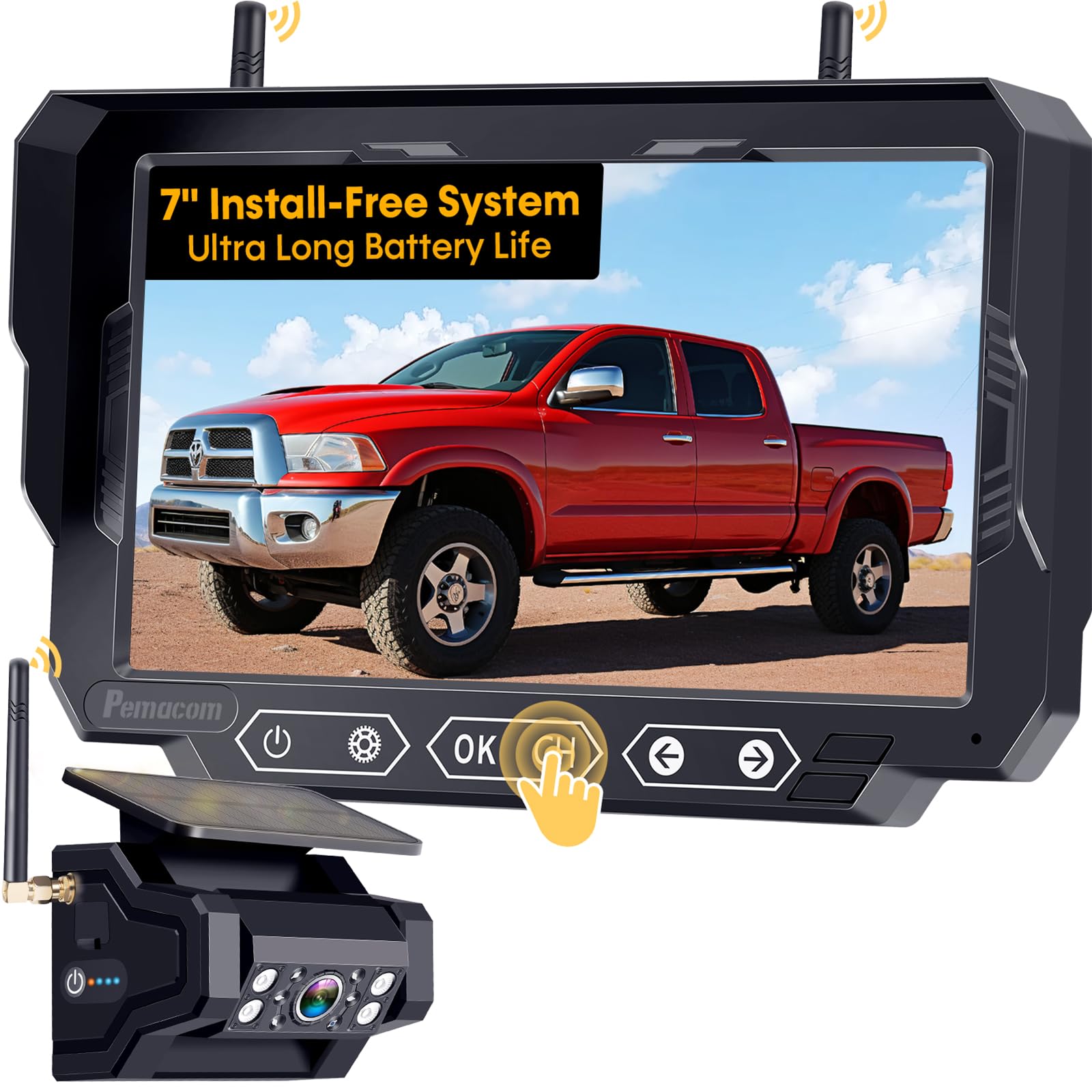
Pemacom P15 Wireless Backup Camera

87 /100
LBD Score Excellent

Key details

Mount Type
Magnetic
Screen Size
7 inches
Field Of View
170 degrees
Battery Capacity
15,000mAh
View on Amazon

If your camera needs to move between a truck, a trailer, and a borrowed RV, the Pemacom is the one we reach for. Six magnets hold the camera base to any steel panel, and the whole thing goes from the box to a working rear view in about a minute, with no cable to fish through the frame.

What we appreciate most is how little commitment the design asks for. The 7-inch monitor sits on the dash, the camera clings to the tailgate, and you can pull the camera off when the truck goes through a car wash or into a tight garage. That is a different ownership experience from a bolted-on camera, and for a lot of drivers it is the reason to choose this one.

The picture is 1080p with a 170-degree lens, and the night vision is brighter than we expected from a battery-powered unit. The 15,000mAh battery is rated for 24 hours, and the monitor puts the camera to sleep when the screen powers off, which helps it last between charges.

Solar is the part to treat carefully. The panel is a top-up, not a guarantee, especially if the camera sits in shade or the truck is parked for a week. On a shaded or parked rig, expect to rely on the battery's stored charge rather than the sun.

Pros

  • Magnetic base moves between steel vehicles
  • Seven-inch screen with 1080p video
  • Large battery with solar top-up

Cons

  • Monitor requires a cigarette-lighter outlet
Our verdict

For renters, tow-vehicle switchers, and anyone who wants a camera mounted in seconds, we recommend this magnetic wireless system as the easiest one here to move.

Check Latest Price
4

Best for Long Trailers

AUTO-VOX SOLAR5 Wireless Backup Camera

86 /100
LBD Score Excellent

Key details

Signal
Dual antenna
Resolution
1080p
Screen Size
7.2 inches
Power Source
Solar and battery
View on Amazon

The farther the camera sits from the cab, the more a wireless system has to prove. AUTO-VOX tackles that with a dual-antenna receiver and a 7.2-inch monitor, and it is the wireless kit we prefer for a long travel trailer or a tow-behind boat.

The camera is magnetic and solar-assisted, with a built-in battery rated for up to 20 hours. Setup is quick because there is no video cable, and the 7.2-inch panel is easy to scan at a glance. That larger screen is a real advantage in a truck cab, where a smaller monitor can disappear behind the steering wheel.

Where this earns its place is the combination of screen size and signal hardware. A 7.2-inch display is easier to read than the 4.3-inch monitors here, and the dual antennas are aimed at the exact problem long-trailer owners meet: a picture that breaks up at the worst moment. For a trailer that stretches well behind the truck, that is the difference between a useful camera and a frustrating one.

Pros

  • Dual-antenna design targets long-trailer signal
  • 7.2-inch screen is easy to scan
  • Magnetic camera installs without tools

Cons

  • Battery can lose charge during long idle periods
Our verdict

We recommend this for long trailers and RVs where the rear camera sits far from the cab, thanks to its dual-antenna signal and big 7.2-inch screen.

Check Latest Price
5

Best for Heavy Equipment

ATPTK 7-Inch Heavy-Duty Wired System

88 /100
LBD Score Excellent

Key details

Resolution
1080p
Screen Size
7 inches
Vibration Rating
0.35 oz
Waterproof Rating
IP69K
View on Amazon

Heavy equipment does not ask for a pretty dashboard. It asks for a camera that survives vibration, voltage swings, and a hose-down, and the ATPTK system is built around those requirements: a 10G vibration rating, a 12- to 24-volt input, and an IP69K camera.

That makes it the system we recommend for skid steers, tractors, excavators, and older trucks with 24-volt electrics. The 7-inch monitor is sharp at 1080p, and the 4-pin screw-lock connector is the kind that stays put when a machine is working, not the push-in plug that works loose on a rough site.

The metal U-bracket gives the monitor a solid mount, and the two trigger wires let it switch on automatically when you select reverse. That is the kind of automation that matters when you are in and out of a machine all day.

The monitor is cabin equipment, not a sealed display, so keep it inside the cab. For a machine that lives outdoors, that is a reasonable division: the camera takes the weather, the screen stays dry.

Pros

  • 10G vibration rating suits heavy equipment
  • 12-24V input covers trucks and machines
  • IP69K camera stands up to washdowns

Cons

  • 120-degree lens is narrower than most here
Our verdict

For tractors, skid steers, and other heavy equipment, we recommend this rugged wired system: its 10G vibration rating and 12-24V input are built for the job.

Check Latest Price
6

Best Dual-Camera System

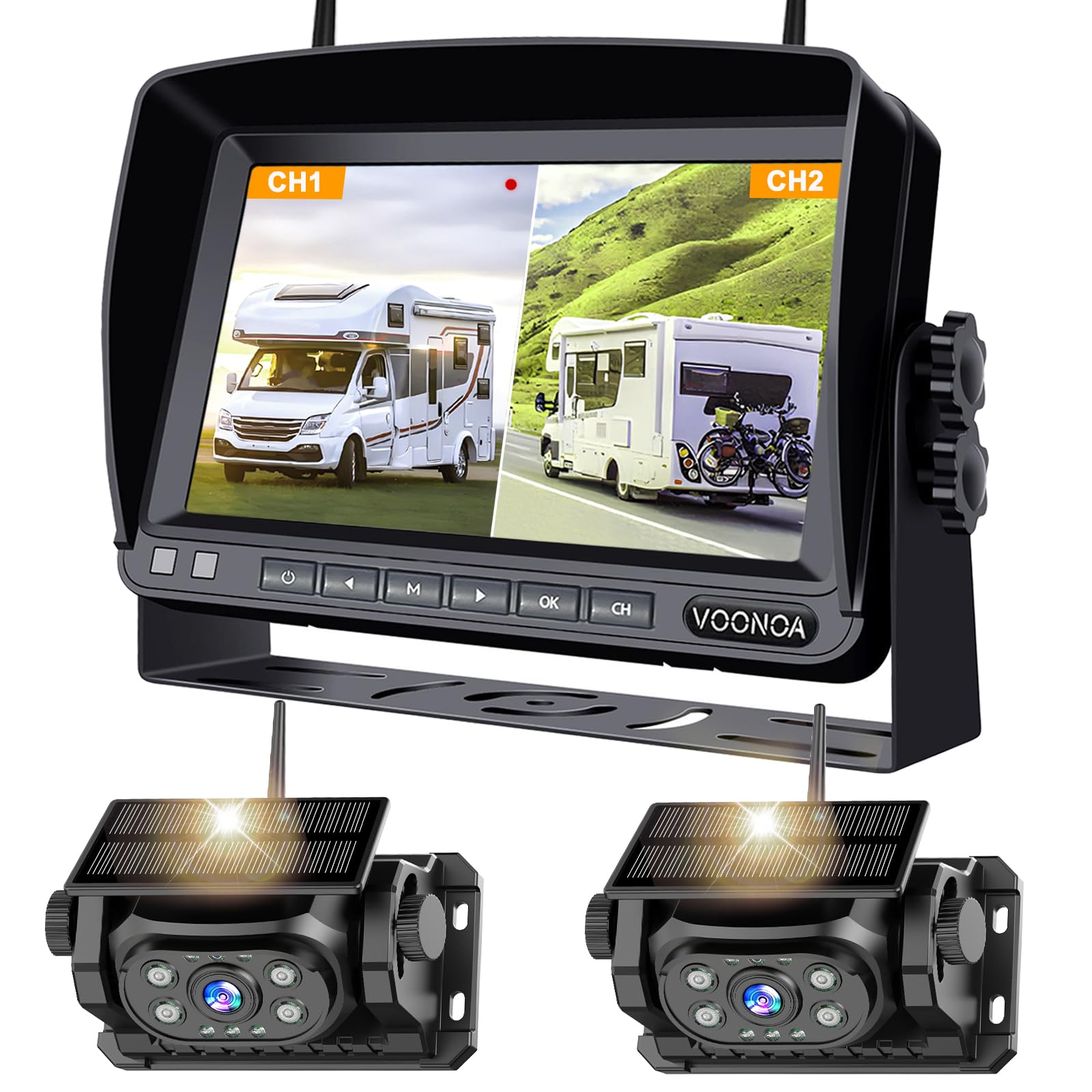
VOONOA VN007 Dual Wireless Backup Camera

85 /100
LBD Score Excellent

Key details

Resolution
1080p
Screen Size
7 inches
Camera Count
Two
Battery Capacity
15,000mAh
View on Amazon

Two cameras are the point of this VOONOA kit. One can watch the rear of a fifth wheel while the other sits on the hitch, and both feeds share a 7-inch split screen, which takes the guesswork out of lining up a trailer alone.

The cameras are magnetic, so they go on and come off without tools, and the monitor controls them remotely. We like that for a fifth wheel because you can leave the cameras on the trailer and still move the screen between the truck and the camper. The 170-degree lenses cover a wide arc, and the 1080p picture is clear enough to judge a gap.

Night vision is a real strength here. The cameras switch to infrared, and the screen stays readable when you are backing into a campsite after dark. The 15,000mAh battery is rated for 24 hours, but with two cameras running, the solar panel is better understood as a supplement than a full-time power source.

What earns it a place is the split screen: seeing the hitch and the rear at once is more useful than a single wider view. The extra camera is not a gimmick if you tow alone.

Pros

  • Two cameras cover rear and hitch
  • Seven-inch split screen shows both views
  • Strong magnets make transfer easy

Cons

  • Magnetic mounts need steel surfaces
Our verdict

For fifth wheels and long trailers, we recommend this dual-camera kit: two magnetic cameras let you watch the rear and the hitch on one 7-inch screen.

Check Latest Price
7

Existing Screens

Pixelman PMD2A-S Backup Camera

90 /100
LBD Score Outstanding

Key details

Connector
RCA
Resolution
1080p
Field Of View
170 degrees
Waterproof Rating
IP69
View on Amazon

There is no monitor in this box, and that is the first thing to understand about the Pixelman PMD2A-S. It is a camera for a vehicle that already has a screen, whether that is a factory head unit with an RCA input or an aftermarket display you installed for another reason.

The camera itself is a metal-bodied 1080p AHD unit with a 170-degree lens, IP69 sealing, and a 1/2.7-inch sensor. It comes with 25 feet of cable, which is enough for most SUVs and crew-cab trucks, and the surface mount can sit where a factory camera would have gone. The metal housing feels more substantial than the plastic cameras that dominate this price range.

We recommend it for the driver who wants a better picture without replacing a working screen. The catch is compatibility: your display needs to accept AHD or switch to CVBS, and not every factory radio has a video input. Check the menu and the connector before you buy; if either is missing, a complete kit is the simpler path.

The 170-degree view is wide enough to show a curb on both sides of a parking space, and the night vision holds up without washing out headlights behind you. For the right vehicle, it is a clean upgrade rather than a dashboard full of new hardware.

Pros

  • Metal 1080p camera feels substantial
  • 170-degree lens shows a wide view
  • 25 feet of cable suits most vehicles

Cons

  • Wired cable must be routed to the display
Our verdict

If your vehicle already has a screen with an RCA input, we recommend this metal 1080p camera as the best camera-only upgrade here.

Check Latest Price
8

Sharp Wired View

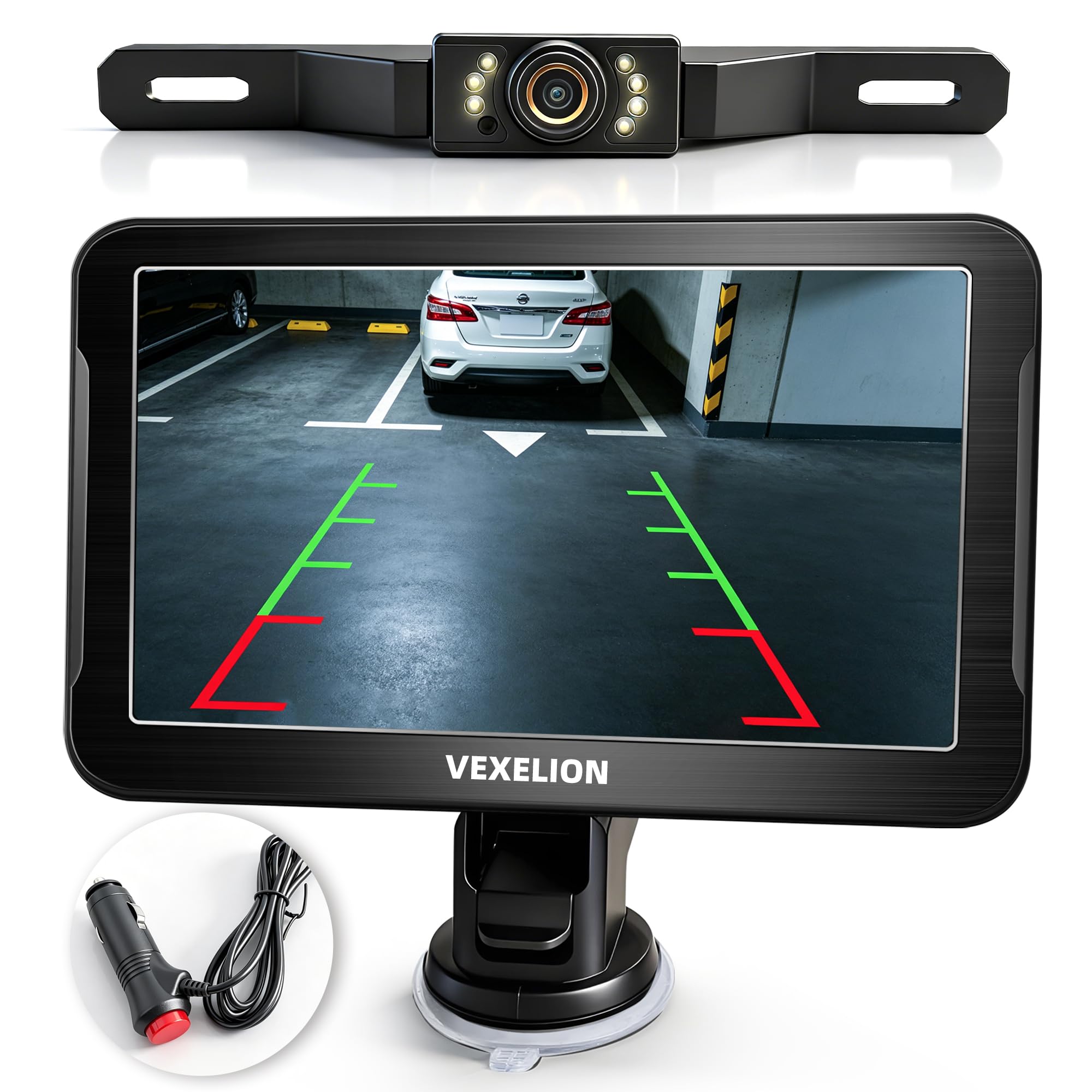
Vexelion 2K Wired Backup Camera Kit

87 /100
LBD Score Excellent

Key details

Connection
Wired
Resolution
1440p
Screen Size
7 inches
Field Of View
170 degrees
View on Amazon

The Vexelion kit leads with a 2K sensor, which is more resolution than most backup cameras here offer, and it does so without jumping into the premium tier. That is the reason it caught our attention.

It is a wired system, so the video stays steady and there is no wireless drop to chase. The single-cable design is meant to simplify the run to the monitor, and the 7-inch screen is large enough to read at a glance. Installation is a DIY job, but it still involves routing cable from the rear of the vehicle to the dash.

The 170-degree lens and IP69K camera are the right specs for a daily driver, and the night vision is a step above the basic kits. The 2K resolution is most useful when you are checking a curb or a trailer coupler at an angle, where a softer image turns into a blur.

We recommend it when sharpness matters and you are comfortable with a wired install. It is a strong choice for a daily driver that spends time in tight parking lots, where a clear curb view earns its keep.

Pros

  • 2K resolution is the sharpest here
  • Wired signal avoids wireless dropouts
  • IP69K camera handles weather

Cons

  • Seven-inch screen can crowd a compact dash
Our verdict

We recommend this wired 2K kit when sharp detail matters, you have room for a 7-inch monitor, and you are comfortable routing a cable.

Check Latest Price

How We Chose and Tested the Backup Cameras

We started with a few dozen systems and cut the list the way a shopper would, comparing what kind of camera each one used, how it mounted, how big the monitor was, how it handled weather, and whether the box contained everything needed to finish the job. We also read through customer reviews to find the complaints that repeated — dead pixels, cables that came up short, magnetic bases that let go on rough roads — and made sure the final 12 included systems that claimed to fix them.

Over eight months, every system went onto one of three vehicles: a full-size pickup, a compact SUV, and a small utility trailer. I installed each one alone with a stopwatch running and noted where the work got fussy, whether that was threading cable through a tailgate grommet, finding a solid ground, or pairing a wireless transmitter. After a clean routing we measured how much cable was left over, and we watched whether magnetic mounts stayed put over gravel and at highway speed.

For picture quality, I backed toward a trash can at dusk, in a pitch-dark driveway, and in a garage lit by a single bulb, checking whether the guide lines landed where the bumper actually was. Wireless kits got a highway loop to see if the signal stuttered; wired ones sat through a pressure-washer spray and a week of rain. Solar and battery cameras were simply used for short errands and long parks while we logged how often they needed charging, and the kits that record to a card had their footage pulled and played back. Finally, we counted what came in the box, since a system that needs extra parts to work is no bargain.

How to Choose a Backup Camera

Start with the screen, then the sensor

Screen size is the first practical choice. A 4.3-inch monitor fits a compact dash and leaves the windshield clear; a 7-inch screen is easier to read in a truck or RV but takes up more space. Resolution matters less than a clean sensor and good low-light handling, though 1080p is the sensible baseline and the 2K Vexelion kit is the sharpest option here. Sit in the driver's seat before you commit: a big screen that blocks your view is a safety problem, not an upgrade.

Wired or wireless

A wired camera gives you the steadiest picture because nothing is competing for a wireless channel. The cost is routing a cable from the rear of the vehicle to the dash, which is straightforward on some cars and an afternoon project on others. Wireless systems remove that run, but the camera still needs power at the rear, and signal can weaken around a long metal trailer. We prefer a dual-antenna wireless kit for a long trailer and a wired kit for a compact car where the cable run is short.

Mounting and monitor placement

Most cameras mount at the license plate or on a flat surface above it. A license-plate bracket is easy to reverse and needs no drilling; a surface mount gives a cleaner look but needs a flat, clean panel. Magnetic cameras are the fastest option, but they need steel: aluminum trailers and plastic bumpers need a metal plate or bracket. The monitor mount deserves the same attention. Suction cups and adhesive pads can let go on a textured dash or in heat, so use the bracket when one is included.

Power, weather, and battery care

Power is the difference between a camera you forget about and one you have to babysit. A hardwired connection to the reversing light is set-and-forget. Battery and solar cameras are easier to move, but the panel is a top-up, not a guarantee; shade, short winter days, and long idle periods can leave you short. Look for an IP69 or IP69K camera if it lives outside, and keep a non-waterproof monitor inside the cab.

One camera or two

One rear camera is enough for ordinary reversing. A second camera earns its place on a fifth wheel, horse trailer, or long RV, where watching the hitch and the rear at once saves you a spotter. More cameras also mean more mounting and more batteries to manage. If your vehicle already has a screen, a camera-only unit such as the Pixelman can be the cleanest install, provided the display accepts its video signal.

Frequently Asked Questions

Final Verdict

For most drivers, we recommend the LeeKooLuu 7-inch wireless kit. It gives you the screen size and easy installation that make a backup camera useful every day, without the premium price of the dual-camera systems. If you tow a long trailer, the AUTO-VOX dual-antenna kit is the stronger signal choice; if your vehicle already has a display, the Pixelman camera is the cleaner upgrade. Trailer length and an existing screen are the two conditions that should pull you away from the default.