Best Birding Binoculars of 2026

The two numbers on every box read like a horsepower rating, which is how most of us misread them. The first is magnification, the second is front lens width, and in a thicket at 7 a.m., an 8x42 that shows you a whole warbler beats a 10x42 that shows you a feather. A wide, steady image wins over raw power — which is why experienced birders keep coming back to 8x42.

My team and I spent eight months carrying 12 pairs to backyard feeders, a coastal marsh, and a muddy trail or two. We chased what a product page can't settle: whether ED glass really kills the purple fringe on a backlit hawk, how the focus wheel feels in cold hands, and whether the edges stay crisp or mush out.

Weight is the spec nobody advertises and everybody feels by hour three, and field of view is what lets you follow a flitting bird instead of rescanning the bush. Value isn't the cheapest pair that works; it's the one you'll still want over your shoulder on day four of a trip. The picks below are the ones we kept reaching for.

1

Best Overall

Vortex Diamondback HD 10x42

96 /100
LBD Score Outstanding

Key details

Weight
1.3 lb
Eye Relief
15 millimeters
Field Of View
330 feet
Magnification
10x
View on Amazon

A full-size 10x42 that weighs 1.3 pounds is the kind of binocular you stop noticing on a long walk. The Diamondback HD brings up feather detail quickly, and its 330-foot field is wide enough to catch a bird before it slips behind a branch. The image is crisp and bright, with the color depth we want when a warbler moves from shadow into sun; the 42mm objective gives it enough light for dawn and dusk.

What earns it the top spot is the balance of reach and portability. We used the 10x view to pull distant movement closer without feeling like we were carrying a brick, and the GlassPak harness kept the binocular tight against the chest when we needed both hands. The unconditional lifetime warranty is the kind of backup that matters if the binoculars ride in a truck, a pack, or a boat, and the included covers are simple enough to use in the field.

The 330-foot field is not the widest here, but the center focus is quick and the view stays sharp across most of the frame. In open country, the extra magnification is worth it; in dense woods, an 8x model is calmer to hold. We reach for this one when we want detail at distance and do not want to fuss.

Pros

  • Sharp, bright 10x view
  • Light 1.3-pound full-size body
  • Unconditional lifetime warranty
  • Useful GlassPak harness included

Cons

  • 15mm eye relief is tight for thick glasses
Our verdict

For most birders, this is the best all-around full-size choice: sharp 10x views, a light body, and a lifetime warranty.

Check Latest Price
2

Best Wide View

Athlon Midas UHD 8x42

95 /100
LBD Score Outstanding

Key details

Weight
1.6 lb
Eye Relief
17.2 millimeters
Field Of View
8.1 degrees
Magnification
8x
View on Amazon

An 8.1-degree field is the reason the Athlon Midas UHD is the pair we pick when a bird will not sit still. That width does real work: you find the bird faster, then follow it through branches without losing it at the edge. The 8x view is steady, and the ED glass keeps color fringing out of the way when a dark bird crosses a bright sky.

The rest of the optical package supports that first impression. Dielectric coatings and fully multi-coated lenses give the image a bright, natural cast, and the center focus moves smoothly enough to track a warbler hopping from twig to twig. We also liked the 17.2mm eye relief; it gave us a full view without pressing our glasses into the eyecups.

At a pond edge, the wide field made it easy to pick a moving shape out of the reeds, then follow it when it flew. The 8x magnification keeps the image steady, and the ED glass does the detail work without calling attention to itself. This is the one we choose when finding the bird is the hard part.

Pros

  • Very wide 8.1-degree field of view
  • ED glass keeps colors clean
  • Bright, color-accurate image

Cons

  • 1.6-pound body is heavy for long hikes
Our verdict

This is the wide-view pick for active birding: the 8.1-degree field finds birds fast, and the ED glass keeps colors clean.

Check Latest Price
3

Best for Glasses Wearers

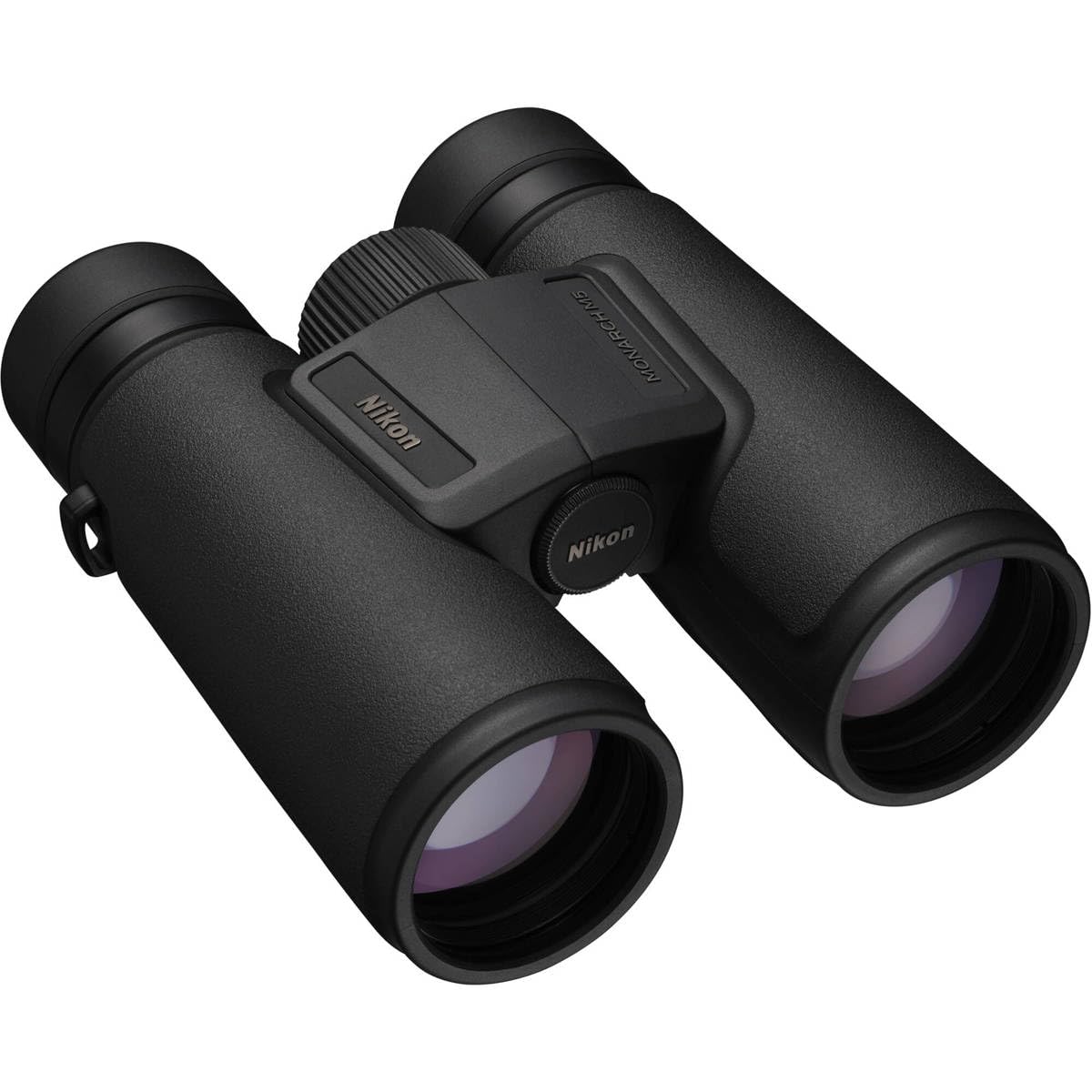
Nikon Monarch M5 8x42

91 /100
LBD Score Outstanding

Key details

Weight
1.4 lb
Eye Relief
19.5 millimeters
Field Of View
335 feet
Magnification
8x
View on Amazon

If you wear glasses, the number to start with is 19.5 millimeters. That is the Monarch M5's eye relief, and it lets you keep your glasses on and still see the full field without jamming the eyecups into your face. The twist-up eyecups click into place, so the setting stays put when you pass the binocular to someone else.

The view is bright and clean, thanks to ED glass and dielectric prism coatings. The image is sharp and the 1.4-pound body is easy to hold steady. We noticed the low-light advantage at dusk, when the 42mm objective and coatings kept color in the shadows instead of letting the view go flat.

For a glasses wearer who wants one binocular for woodland walks and backyard sitting, the Monarch M5 is the one we hand over first. It feels calm and uncomplicated at the eye, and the long eye relief makes it easier to forget you are wearing glasses at all. The focus is smooth, the body is light, and nothing about the view feels fussy.

Pros

  • Long 19.5mm eye relief
  • ED glass and dielectric coatings
  • Light 1.4-pound body

Cons

  • Field of view trails the widest here
  • Premium price for the specification
Our verdict

If you wear glasses and want a calm, bright 8x42, this is the one we hand over first.

Check Latest Price
4

Best Premium 8X42

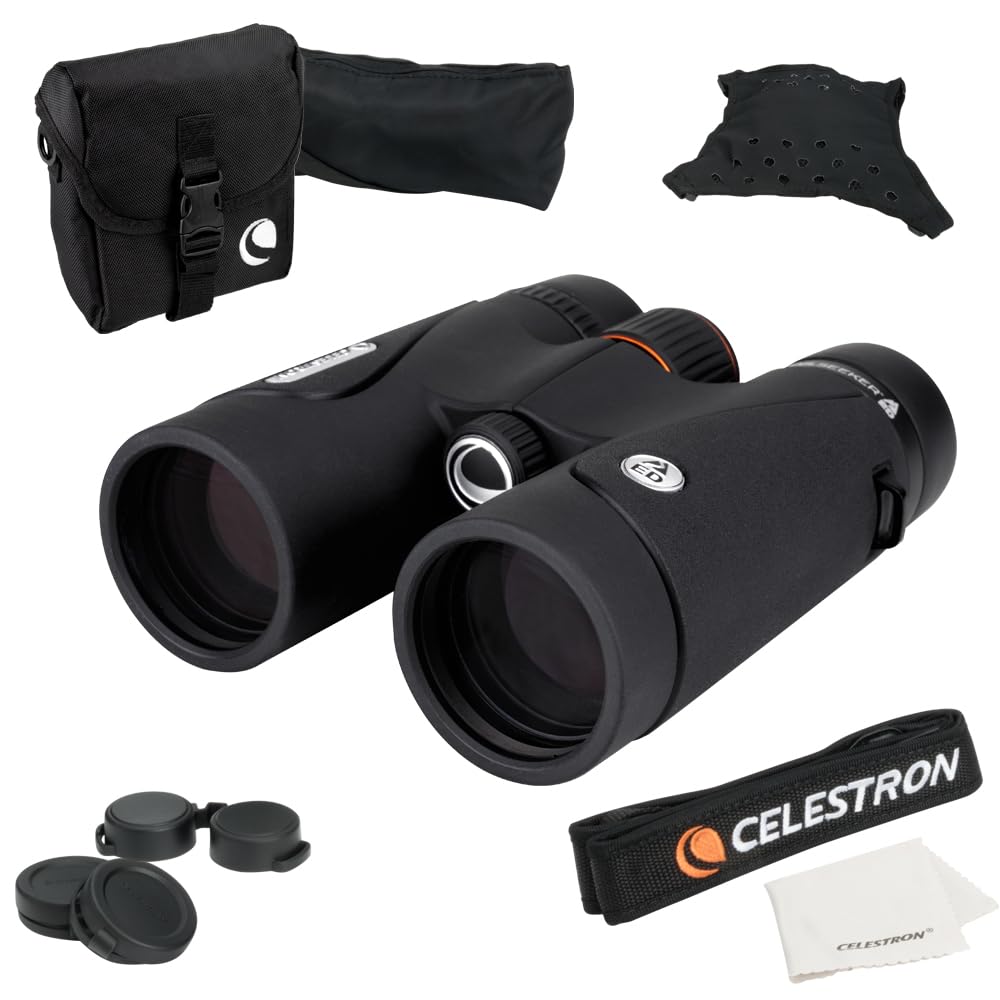
Celestron TrailSeeker ED 8x42

89 /100
LBD Score Excellent

Key details

Weight
1.5 lb
Eye Relief
17.2 millimeters
Field Of View
142 meters
Magnification
8x
View on Amazon

The TrailSeeker ED's 142-meter field of view is the first thing we notice. It is a very wide window for an 8x42, and it makes a treeline feel less like a series of keyholes. The ED glass backs that up with clean color, so a cardinal against a bright sky stays red instead of fringing into purple.

This is the 8x42 we recommend when the view matters most. Phase- and dielectric-coated BaK-4 prisms give it a bright, high-contrast image, and the 1.5-pound body is manageable on a long walk. The focus is smooth and the eyecups are easy to set, which matters when you are handing the binoculars back and forth.

The 1.5-pound body and 17.2mm eye relief make it comfortable for long sessions, and the included harness is a practical touch for field use. We kept reaching for it at a wetland edge, where the wide field and clean color made scanning effortless rather than tiring.

Pros

  • Very wide 142-meter field
  • ED glass controls color fringing
  • Phase- and dielectric-coated prisms

Cons

  • Premium price for an 8x42
Our verdict

A premium 8x42 for birders who want a very wide, bright view and will pay for ED glass.

Check Latest Price
5

Best Value 10X42

Vortex Crossfire HD 10x42

96 /100
LBD Score Outstanding

Key details

Weight
1.4 lb
Eye Relief
15 millimeters
Field Of View
325 feet
Magnification
10x
View on Amazon

The Crossfire HD is the full-size 10x42 we point to when the budget has a ceiling. It gives you the reach and light gathering of a serious birding binocular without the premium trim, and the 1.4-pound body is light enough to carry on a morning walk. The 325-foot field is narrower than the 8x picks, but the center focus is quick and the image is crisp.

HD glass and fully multi-coated lenses do the basics well. We found the view bright enough for dawn and dusk, and the rubber armor gives it a secure grip when the weather turns. The included GlassPak harness is a real bonus at this price, and the unconditional lifetime warranty is the kind of thing that makes a budget purchase feel less risky.

The 10x view is the reason to choose it, and also the thing to check before you buy. It pulls detail out of a distant treeline, but it magnifies hand shake too; if you mostly bird in dense cover, an 8x model is easier to hold steady. We like it for open fields, shorelines, and travel, where the extra reach earns its keep.

Pros

  • Affordable full-size 10x42
  • Light 1.4-pound body
  • Unconditional lifetime warranty

Cons

  • 15mm eye relief is tight for thick glasses
Our verdict

For a budget 10x42, this is the value pick: usable reach, a light body, and Vortex's lifetime warranty.

Check Latest Price
6

Best Lightweight 8X42

Nikon ProStaff P3 8x42

92 /100
LBD Score Outstanding

Key details

Weight
1.3 lb
Eye Relief
20.2 millimeters
Field Of View
377 feet
Magnification
8x
View on Amazon

At 1.3 pounds with 20.2 millimeters of eye relief, the ProStaff P3 is built for the birder who walks all morning and wears glasses. It sits light on the chest and comes up to the eye without a fight. The 377-foot field is wide enough to find a moving bird quickly, and the view is bright for a binocular in this class.

Nikon's multilayer coatings and silver-alloy prism coating give the image a clean, neutral cast. We found the focus smooth and the eyecups easy to twist up, and the 42mm objective gathers enough light for early starts. The 8x magnification keeps the view steady when you are tracking a bird through branches.

The body is fiberglass-reinforced polycarbonate with rubber armor, so it feels solid without adding much weight. The included case and strap are basic but usable, and the binocular is comfortable to hold for long stretches. The focus wheel falls naturally under a finger, which makes quick adjustments easy when a bird moves.

For a new birder who wears glasses and wants a light 8x42, the ProStaff P3 is the one we recommend first. It does not chase the widest field or the most exotic glass, but it gets the comfort and the view right. That makes it an easy binocular to carry and an easy one to learn on.

Pros

  • Light 1.3-pound body
  • 20.2mm eye relief suits glasses
  • Wide 377-foot field

Cons

  • Objective lens caps feel flimsy
Our verdict

A light, glasses-friendly 8x42 that makes a sensible first serious binocular for long walks.

Check Latest Price
7

Best Budget 8X42

Celestron Nature DX 8x42

93 /100
LBD Score Outstanding

Key details

Weight
1.8 lb
Eye Relief
17.5 millimeters
Field Of View
388 feet
Magnification
8x
View on Amazon

A bird at a feeder a few feet away is a different test from a hawk on a distant ridge, and the Nature DX handles both. Its close focus is short enough for backyard birding, while the 388-foot field gives you room to find a bird before it moves. For a first pair, that combination is more useful than a narrow, high-magnification view.

The 8x42 optics use phase-coated BaK-4 prisms and fully multi-coated lenses, and the result is a crisp, color-accurate image for the money. The body feels solid in the hand; the rubber armor and waterproof, nitrogen-purged housing are reassuring when the weather changes. We found the focus easy to adjust, even with one hand, and the eyecups comfortable without glasses.

This is a sensible first binocular for a backyard or local-patch birder. It does not have the wide, expensive glass of the TrailSeeker, but it costs far less and still shows birds clearly. We like it as a leave-by-the-window pair, a travel spare, or a gift for someone who is just starting to notice what is moving in the hedge.

Pros

  • Wide 388-foot field
  • Close focus for backyard birds
  • Phase-coated BaK-4 prisms

Cons

  • Heavier than most at 1.8 pounds
Our verdict

A budget 8x42 that is easy to recommend for backyard birding and a first pair.

Check Latest Price
8

Wet-Weather Use

Bushnell H2O Xtreme 10x42

91 /100
LBD Score Outstanding

Key details

Weight
1.56 lb
Eye Relief
17 millimeters
Field Of View
6.8 degrees
Magnification
10x
View on Amazon

The H2O Xtreme's IPX7 sealing is the reason we reach for it when the forecast is wrong. Its O-ring-sealed housing can survive a dunk in standing water, and the nitrogen purging keeps the lenses clear when the temperature drops. That matters more for birding than a lot of shoppers expect: wet mornings and cold estuaries are hard on optics.

The 10x42 view is crisp and bright, with a 6.8-degree field that is wide enough to find a bird before it moves. The fully multi-coated lenses and BaK-4 prisms give it good low-light performance, and the center focus is quick enough to follow a bird through reeds. The rubber armor makes it comfortable to grip, even with wet hands.

The compact body and included lens covers are practical in a boat or a pack, and the case keeps sand and spray off the glass. We like the rugged feel; it is the sort of binocular you can leave in a truck without worrying about every bump.

We also appreciate the simple controls: the center focus and twist-up eyecups are easy to set with cold hands, and the included covers stay close at hand. It is a tool-first binocular, not a delicate one.

For a kayak, a rainy coast, or a truck-box pair, the H2O Xtreme is the one we trust. It gives up some optical polish to the premium picks, but it keeps working when the weather does not. That trade is the right one for a lot of field use.

Pros

  • IPX7 waterproof sealing
  • Sharp 10x image
  • Rugged rubber armor

Cons

  • Heavier than the lightest 10x42s here
Our verdict

A rugged 10x42 for wet, open settings, with sealing that matters more than optical polish.

Check Latest Price
9

Budget Phone Digiscoping

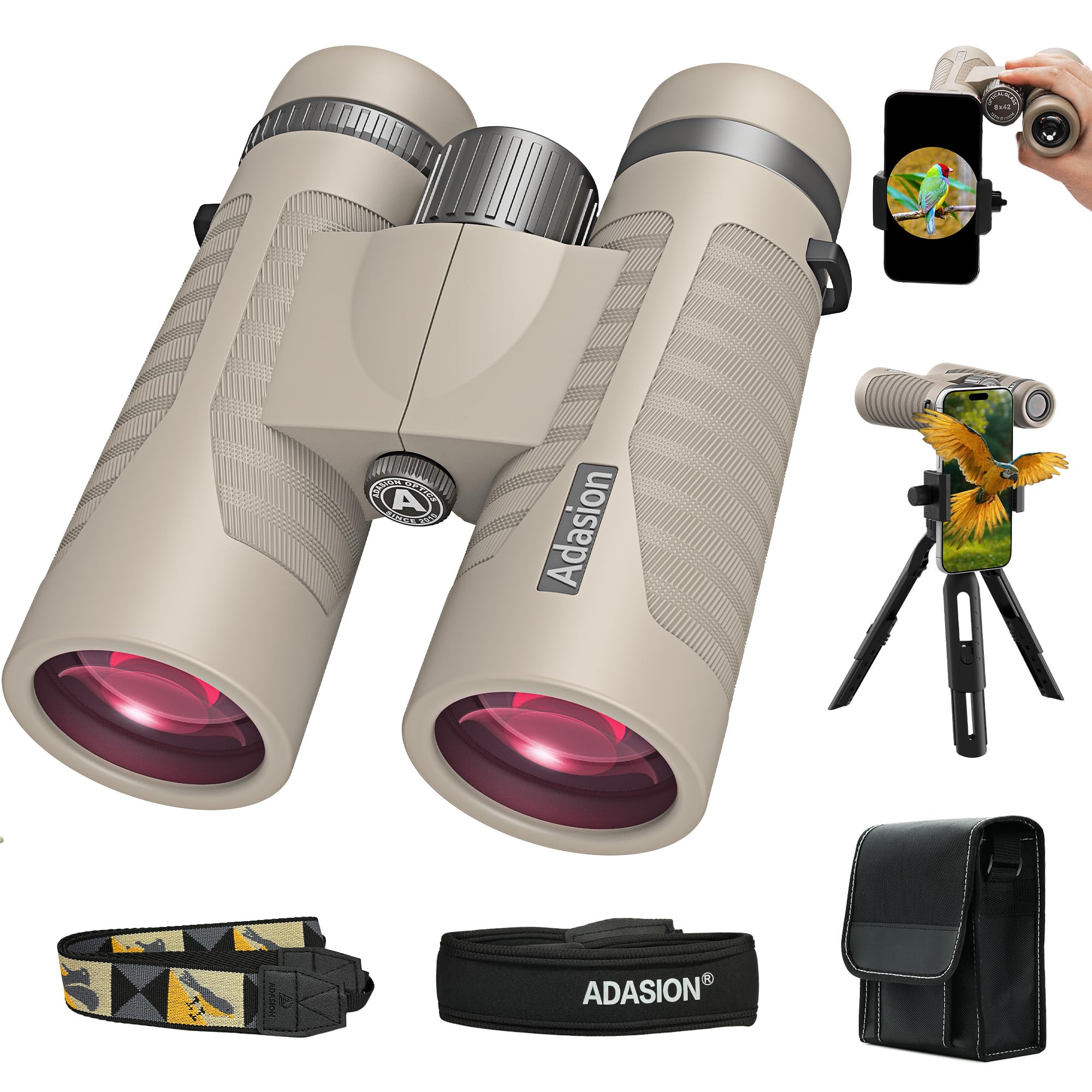
Adasion 8x42

84 /100
LBD Score Excellent

Key details

Weight
16 oz
Field Of View
375 feet
Magnification
8x
Water Resistance
Waterproof
View on Amazon

The Adasion kit includes a phone adapter and a small tripod, which is unusual at this end of the market. That turns a basic 8x42 into a simple digiscoping setup: clamp the phone over an eyepiece, steady it on the tripod, and you can capture a record of the bird instead of just describing it. For a casual birder or a family, that is a useful extra.

The binocular itself is light at 16 ounces, with a 375-foot field and fully multi-coated BaK-4 optics. The view is bright and easy to get behind, and the twist-up eyecups work with or without glasses. It is waterproof, too, so a damp morning will not sideline it.

We found the center focus usable and the 8x magnification steady, though the image does not have the edge-to-edge polish of the ED glass picks. The body is ABS plastic, so it feels more like a budget tool than a lifetime instrument. Those are fair trade-offs for the price, especially with the phone rig included.

For someone who wants to try bird photography without buying a separate adapter, the Adasion is an easy recommendation. It is also a light, inexpensive pair for a kid or a second car. Just go in expecting a starter optic, not the last binocular you will own.

Pros

  • Very light 16-ounce body
  • Wide 375-foot field
  • Phone adapter and tripod included

Cons

  • Two-year warranty is shorter than most here
Our verdict

A budget kit for casual birding and phone digiscoping, with a light body and useful accessories.

Check Latest Price

What Eight Months in the Field Taught Us

We built the shortlist from the binoculars birders actually argue about online, then narrowed by the things that change what you see: sensibly paired magnification and objective size, ED glass, phase- and dielectric-coated prisms, nitrogen purging, rubber armor, and eye relief long enough for someone wearing glasses. Twelve pairs made the cut, and we lived with them for eight months rather than an afternoon.

Each pair spent time by the kitchen window for feeder counts at dawn, on the same wooded loop, and on a coastal marsh at low tide, when the light goes flat and every bird turns into a silhouette. We also handed them to a glasses wearer, took them out in the rain, and drove them from an air-conditioned car into a humid morning to see what fogged.

On every outing we timed how long it took to go from a chickadee at 20 feet to a hawk overhead, which is where a fast, smooth focus wheel shows itself. We counted how many warblers we could re-find in a bush within 30 seconds to separate a genuinely wide field of view from a spec sheet number, checked edge sharpness against a backlit branch, and weighed each pair after an hour of carrying it on a strap versus a harness. Brightness got judged at dusk, when good glass separates itself from the rest. Value came last, and it rarely tracked with price: the pairs that held up were the ones we forgot we were wearing.

How to Choose Birding Binoculars

Start With the Magnification You Can Hold Steady

For most birders, the choice starts with 8x42 versus 10x42, not with the biggest number on the box. An 8x view is easier to hold still, gives a wider window into the trees, and pairs well with glasses-friendly eye relief. A 10x view pulls more detail out of open country, shorelines, and distant treelines, but it magnifies hand shake and usually narrows the field.

Choose 8x if you bird in woodland, follow warblers through branches, or want the calmest view. Choose 10x if you scan open fields, estuaries, or ridgelines and want the extra reach. The Vortex Diamondback HD 10x42 and Athlon Midas UHD 8x42 show the trade-off clearly: more detail at distance versus a wider, steadier picture.

Use Field of View to Find Birds Faster

Field of view is the width of the world you see at 1,000 yards, and it is one of the most practical birding specifications. A wider field makes it easier to locate a moving bird, then follow it without losing it at the edge. That matters more in tight cover than in open country, where a narrower 10x field is less of a penalty.

Compare like with like. A field listed in degrees and one listed in feet at 1,000 yards are different units, so do not read a degree figure as if it were a feet figure. In this set, the Athlon Midas UHD 8x42 and Celestron TrailSeeker ED 8x42 are the wide-view choices; the 10x picks trade some width for magnification.

Look Past the Badge at Glass and Coatings

ED glass is the feature that controls color fringing, the purple or green edge that shows up when a dark bird sits against a bright sky. Phase-corrected and dielectric prism coatings are the other half of the equation: they improve contrast and light transmission, which is what you notice at dawn, dusk, and under heavy cloud.

You do not need the most expensive glass to enjoy birding, but ED glass and good prism coatings are worth paying for if you bird in low light or high-contrast conditions. The Nikon Monarch M5 8x42 and Celestron TrailSeeker ED 8x42 are the clearest examples here; the budget picks still show birds well, just with less polish at the edges.

Match Weight and Eye Relief to the Way You Bird

A full-size binocular can weigh anywhere from about 1.3 to 1.8 pounds in this group. That difference matters by the end of a long walk, especially if you carry the binocular around your neck. A harness spreads the load across your chest and keeps the binocular from swinging when you need both hands.

Eye relief is the distance your eye can sit from the lens and still see the full field. If you wear glasses, check this before you buy: the long-eye-relief models here run from 19.5 to 20.2 millimeters, while the 15-millimeter Vortex models are the ones to try before committing if your glasses sit close to your face. Twist-up eyecups should hold their setting.

Treat Sealing, Warranty, and Carrying Gear as Part of the Price

Birding often happens in wet grass, cold wind, and sudden rain, so waterproof and fogproof construction is not a luxury. Nitrogen or argon purging and O-ring seals keep internal fog from forming when the temperature drops; an IPX7 rating means the binocular can survive a brief dunk. If it lives in a boat, a truck, or a pack, prioritize sealing.

Warranty and included gear change the real cost of ownership. An unconditional lifetime warranty is the strongest backup for rough use, while a limited warranty may still cover defects but not accidents. A padded case and a usable harness save you from buying extras, so check what comes in the box before you decide between two close picks.

Frequently Asked Questions

Final Verdict

For most birders, the Vortex Diamondback HD 10x42 is the pair we recommend first. It pairs a bright, detailed 10x view with a 1.3-pound body, a useful harness, and an unconditional lifetime warranty, which makes it the easiest full-size binocular to live with day after day.

If you bird in tight woodland or wear thick glasses, the Athlon Midas UHD 8x42 and Nikon Monarch M5 8x42 are the better fits. Both trade some reach for a wider, more comfortable view, and that is the right trade when finding the bird is the hard part.