Best Camcorders of 2026

Anyone who has filmed a school concert on a phone knows the sinking feeling: the kid is a speck onstage, the zoom turns to mush, and the audio is somebody else's cough. A camcorder fixes most of that, because a real lens and a sensor built for continuous recording do things a phone can't. The mistake first-timers make is chasing megapixels; zoom type and sensor size decide what you actually see.

My team and I have spent six months with 12 of them, from palm-sized 1080p models to larger 4K bodies, and the gaps show up fast in a dim gym or with a moving kid in frame. Two things surprised me: a screen that flips to face you matters more for vlogging than any spec sheet admits, and the best footage often comes from the plainest-looking camera in the bag.

Battery life is the quiet decider — most run about an hour of continuous recording, so a spare in the box changes a whole day out. The picks below are the ones we'd hand to a friend.

1

Best Overall

Canon VIXIA HF G70

85 /100
LBD Score Excellent

Key details

Sensor
1/2.3-inch CMOS
Battery Life
170 minutes
Optical Zoom
20x
Video Resolution
4K UHD
View on Amazon

Canon's HF G70 sits below the XA60 in the lineup, but it carries the same 20x optical zoom and 4K UHD recording into a lighter, simpler body. The 1/2.3-inch CMOS sensor and DIGIC DV6 processor handle the image, while hybrid stabilization steadies handheld work. That lens is the practical difference: 20x optical reach lets you frame a speaker at the back of a hall or a kid at the far end of a field without turning the picture to mush.

What earns it our top spot is the working-camera kit around that lens. We valued the dual SD slots because they let a long event keep rolling without a card swap, and the 170-minute battery estimate is generous enough for a half-day shoot. HDMI and UVC livestreaming mean it can sit on a tripod and feed a computer for a service or meeting. The 3.5-inch screen is easy to monitor, and the 16-ounce body balances well on a small tripod.

The catch is the sensor size. In dim rooms, the HF G70 needs more light than a larger-sensor camera, so plan on a window, a lamp, or a modest key light rather than expecting clean footage in a dark auditorium. For the event and school-sports work this camera is built for, that is a manageable trade-off; the 16-ounce body also settles nicely on a tripod instead of fighting your hands.

If you mostly shoot short clips for social media, the Sony CX405 is easier to carry. But when you need optical reach, 4K detail, and dual-card insurance in one package, the HF G70 is the one we reach for.

Pros

  • 20x optical zoom with true 4K
  • Dual SD slots protect long shoots
  • UVC livestreaming over USB
  • 170-minute battery

Cons

  • Premium price for casual shooters
Our verdict

We recommend the HF G70 as the best all-around camcorder for anyone who wants true 4K, a long optical zoom, and dual-card backup without a pro body.

Check Latest Price
2

Best Compact

Sony HDR-CX405

89 /100
LBD Score Excellent

Key details

Battery Life
155 minutes
Optical Zoom
30x
Video Resolution
1080p
Image Stabilization
Optical SteadyShot
View on Amazon

The HDR-CX405 is the camcorder that disappears into a jacket pocket, and its 30x optical zoom is the reason to choose it over a phone. Sony pairs that lens with Optical SteadyShot stabilization and a 2.7-inch LCD, then adds a built-in USB cable so you can charge or offload without hunting for a cord.

Video tops out at 1080p, and the 155-minute battery is enough for a day of family events. We liked the simple handling: the zoom rocker falls under a finger, and the camera is light enough to hold one-handed for short stretches. The 30x reach is genuinely useful for school plays and youth sports, where moving your feet is not an option.

This is our pick for compact everyday video. If you need a cleaner image for larger screens, step up to the HF G70. If you want a small camcorder for travel and family clips, the CX405 is the easier carry.

Pros

  • 30x optical zoom in a compact body
  • Optical SteadyShot stabilization
  • 155-minute battery

Cons

  • No external microphone input
Our verdict

We like the CX405 as the compact everyday camcorder for travel and family events, as long as 1080p and onboard audio are enough.

Check Latest Price
3

Best Professional

Canon XA60

79 /100
LBD Score Very Good

Key details

Weight
1.6 lb
Battery Life
4 hours
Optical Zoom
20x
Video Resolution
4K UHD
View on Amazon

The XA60's handle unit and 1.6-pound body tell you this is a working camera, not a family point-and-shoot. We recommend it for professional live production and event work where a controlled grip, dual card slots, and a four-hour battery matter more than pocketability. The 4K UHD sensor, DIGIC DV6 processor, and 20x optical zoom are the same core tools as the HF G70, but the XA60 is built to sit on a tripod and be operated for hours.

The 3.5-inch touchscreen is bright enough for framing, and the handle gives you a place to carry it without grabbing the lens barrel. HDMI output and UVC livestreaming cover everything from a conference room to a house of worship, while the dual slots let one card take over when the other fills. The four-hour battery estimate is the other reason this camera suits long services and multi-camera shoots.

The small 1/2.3-inch sensor still wants decent light, so a dim stage will need some planning. For the professional work this camera is built for, that is the familiar trade-off; the bigger issue is that the XA60 is more camera than a solo traveler or a parent filming a birthday needs. The HF G70 gives you the same lens and 4K recording in a lighter body; the XA60 earns its extra bulk when you need a handle, longer runtime, and a more deliberate operating setup.

Pros

  • Handle unit for controlled handling
  • 20x optical zoom with 4K
  • Dual card slots
  • Four-hour battery

Cons

  • Expensive for casual use
Our verdict

We recommend the XA60 for professional live production and event work where a handle, dual slots, and a four-hour battery justify the extra size.

Check Latest Price
4

Best Budget 4K

ZYDIIE HDV-3051L

84 /100
LBD Score Excellent

Key details

Screen
3.0-inch touchscreen
Digital Zoom
18x
Included Storage
32GB card
Video Resolution
4K
View on Amazon

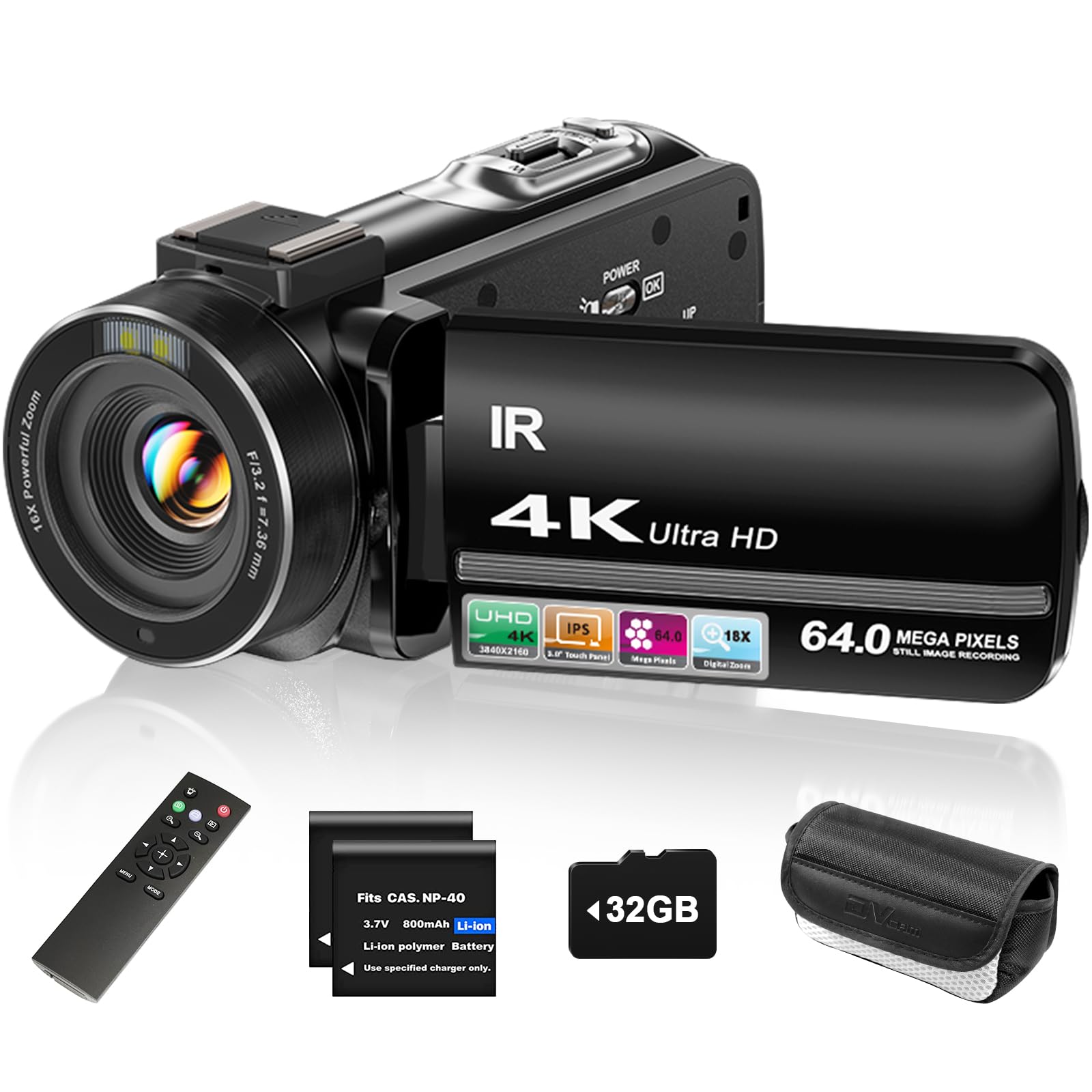
The box is the pitch: a 32GB card, two batteries, a remote, and a 3-inch touchscreen that flips 270 degrees. The ZYDIIE records 4K video and 64MP stills, and its 18x digital zoom and infrared night vision cover the basics for family clips, travel notes, and simple vlogging.

This is our budget 4K pick because it is ready to shoot without a second shopping trip. We appreciated the touchscreen for menu changes and the remote for framing yourself, and the two batteries give you a backup for a long outing. The lens is the catch: the 18x zoom is digital, so detail softens as you push in. Keep it for casual scenes and it makes sense.

If autofocus is a priority, the Suttie V092 is the better budget choice; its 0.5-second autofocus is a real advantage with kids and pets. The ZYDIIE answers back with a touchscreen and remote, which make solo shooting easier. For simple clips and solo shooting, it is the more complete kit.

Pros

  • Complete kit with 32GB card
  • Two batteries and a remote
  • 270-degree touchscreen

Cons

  • Fixed focus limits sharpness
Our verdict

We recommend the ZYDIIE as the budget 4K kit for casual family videos and vlogging, provided you keep subjects within its fixed-focus comfort zone.

Check Latest Price
5

Budget Autofocus

Suttie V092

93 /100
LBD Score Outstanding

Key details

Autofocus
0.5 seconds
Battery Life
65 minutes per battery
Digital Zoom
18x
Video Resolution
4K
View on Amazon

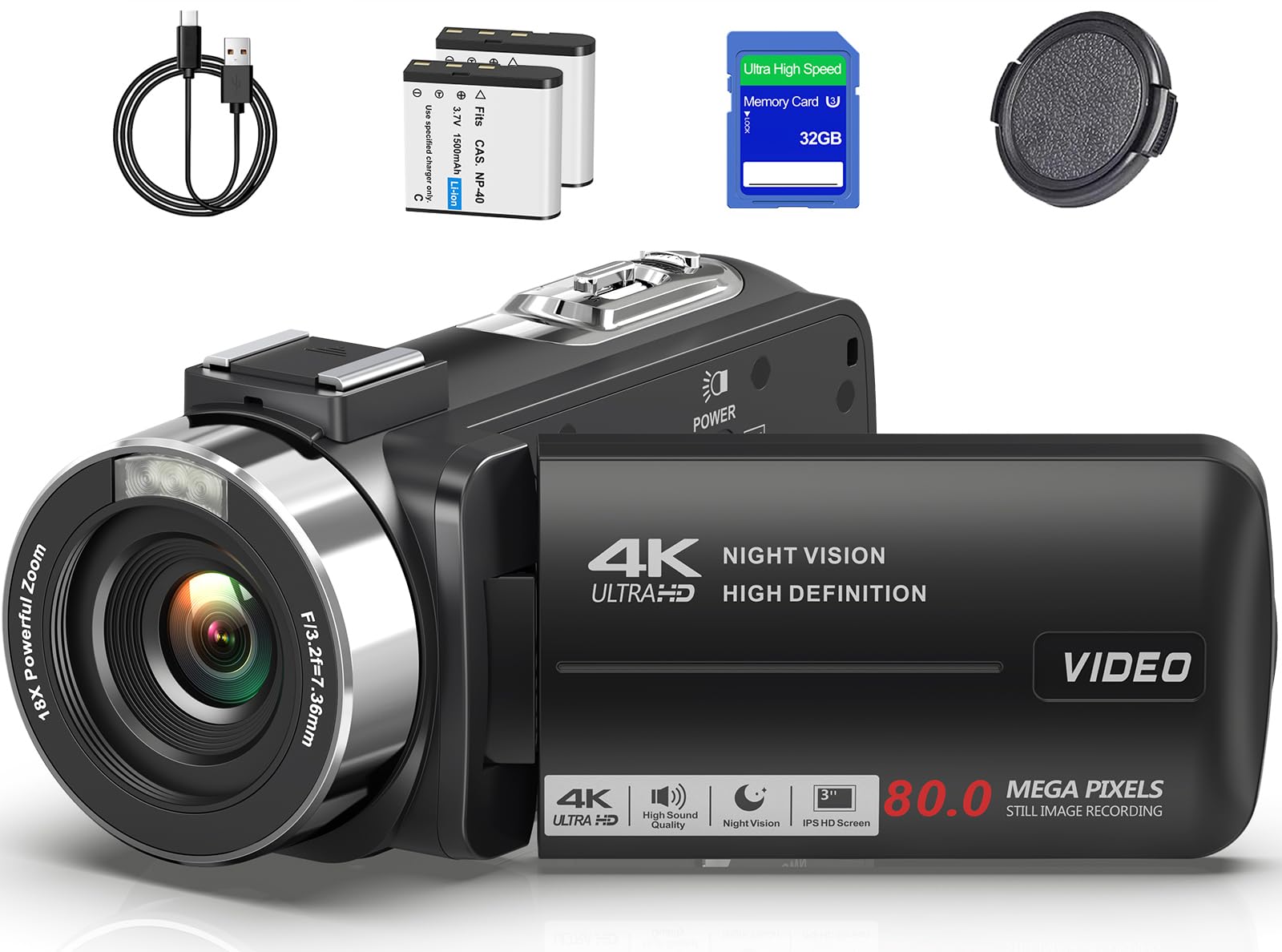
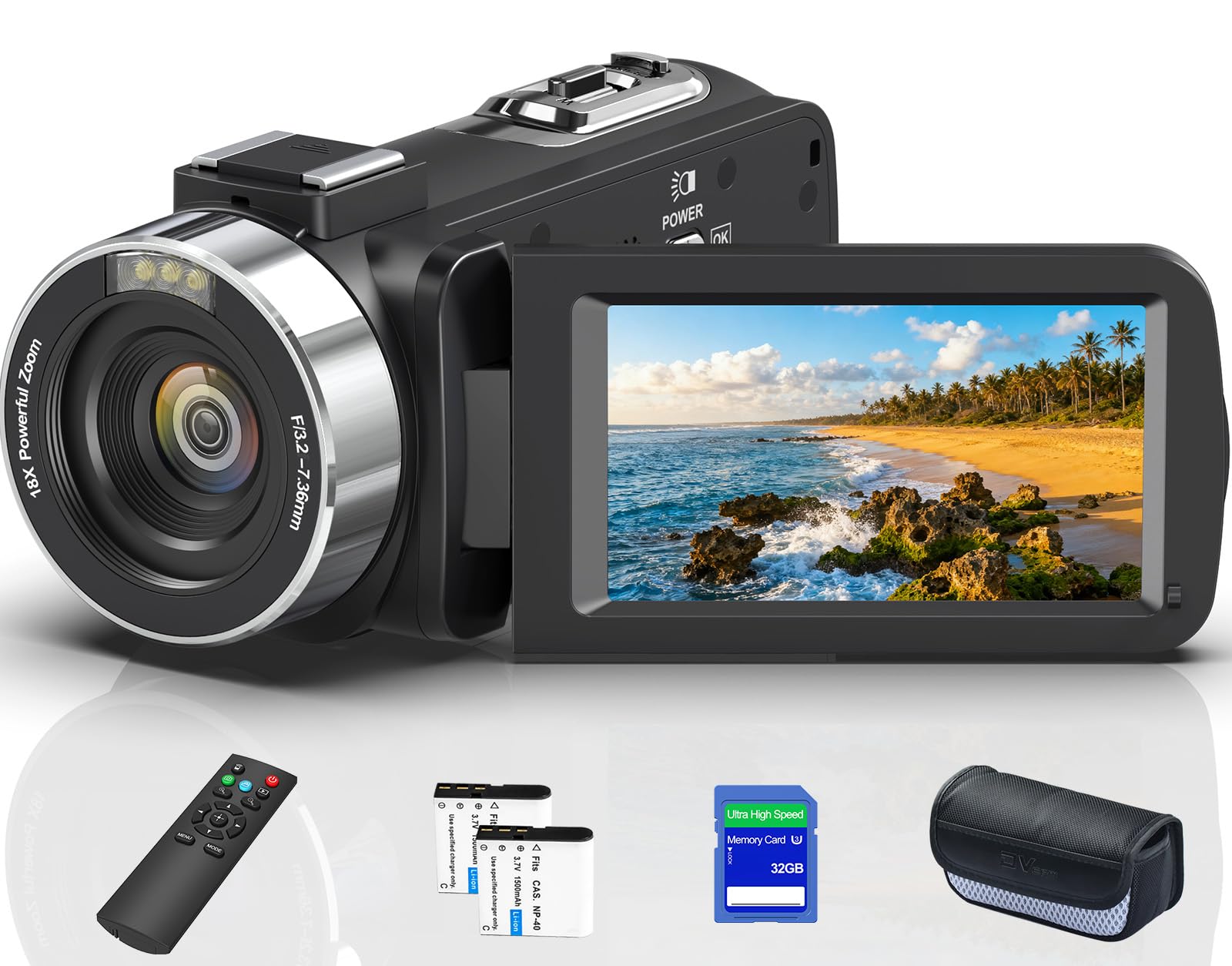
Suttie's 0.5-second autofocus is the number that separates this camcorder from the other budget models here. The V092 records 4K video and 80MP stills, uses an 18x digital zoom, and adds a 3-inch IPS screen, infrared night vision, a 32GB card, and two 1500mAh batteries.

The kit is genuinely complete: card, batteries, lens cap, and a small bag are in the box, so a beginner can start shooting without hunting for accessories. The IPS screen is easier to check outdoors than the basic LCDs on some cheap cams, and the autofocus gives you a better hit rate with moving kids or pets than a fixed-focus model. We appreciated the two batteries, which let you swap instead of waiting for a charge.

The limit is the lens. The 18x zoom is digital, so the image gets softer as you push toward the long end; this is not a camcorder for distant sports or stage performances. Keep your subjects within a reasonable distance and the autofocus is the more useful feature.

The V092 makes the most sense for candid family clips and stills, where autofocus earns its keep. If you need a touchscreen and remote for solo framing, the ZYDIIE is the better fit; if you need true optical zoom, the Sony or Canon is the step up.

Pros

  • 0.5-second autofocus
  • 80MP still photos
  • 32GB card and two batteries

Cons

  • Battery lasts about 65 minutes
Our verdict

We recommend the Suttie V092 when autofocus and stills matter more than optical zoom, and you want a ready-to-shoot budget kit.

Check Latest Price
6

Kids' First Videos

kimire 604S

84 /100
LBD Score Excellent

Key details

Screen
3.0-inch rotating
Battery Life
60 to 90 minutes
Digital Zoom
16x
Video Resolution
1080p at 15fps
View on Amazon

The first thing to know about the kimire 604S is the frame rate: 1080p at 15fps. That is fine for a stationary scene or a quick memory, and choppy for action. The 24MP stills, 16x zoom, and 3-inch screen that rotates 270 degrees are all aimed at easy, playful shooting. It is a first camera, not a serious video tool.

The rotating screen is the feature we appreciated most, because it lets a younger shooter frame themselves without asking for help. Two NP-FV5 batteries are included, with a listed 60 to 90 minutes of recording per charge, and the camera takes SD cards up to 128GB. It is compact and light enough for a backpack, and the vintage-looking footage is part of the appeal for social clips.

The image quality is the caveat. Bright outdoor scenes look better than dim rooms. If smooth motion matters, the Sony CX405 is the better small camcorder; if you want a cheap first camera that a kid can learn on, the kimire is the one we hand over without much worry.

Pros

  • Very low-cost starter camera
  • Rotating screen for selfies
  • Two batteries included

Cons

  • Digital-only 16x zoom
Our verdict

We recommend the kimire as a low-cost first camera for kids and casual memory-keeping, not as a serious video tool for motion.

Check Latest Price
7

High-Resolution Experiments

OLESIT 8K Camcorder

94 /100
LBD Score Outstanding

Key details

Connectivity
Wi-Fi
Digital Zoom
18x
Included Storage
32GB card
Video Resolution
8K at 15fps
View on Amazon

The OLESIT's headline is 8K, and the spec sheet backs it up with an 8K mode at 15fps, plus 6K at 30fps and 64MP stills. Around that sensor you get an 18x zoom, a 3-inch flip screen, Wi-Fi app control, a 2.4G remote, a 32GB card, two batteries, and infrared night vision.

The 8K number is best treated as a static-scene tool. At 15fps, motion will look like a sequence of stills. The Wi-Fi connection and remote are the more practical conveniences: they let you set the camera on a shelf and frame yourself, or pull clips to a phone without a card reader.

The 6K/30fps mode is the more useful compromise, and the included card and batteries make it easy to try. If you need reliable autofocus, optical zoom, or proven long-term behavior, the Canon and Sony picks are the safer spend.

Pros

  • 8K and 6K recording options
  • Wi-Fi app control
  • 32GB card and two batteries

Cons

  • Digital-only 18x zoom
Our verdict

We see the OLESIT as a high-resolution budget experiment for static scenes, not the camcorder we recommend for events or action.

Check Latest Price

How We Picked and Tested the Best Camcorders

We built the shortlist from the specs that change the footage — sensor size, optical versus digital zoom, and whether a camera records 4K or 1080p — then filtered out anything that couldn't hold focus while zoomed. Twelve made the cut, and we spent six months with them, splitting time between a school auditorium, a soccer field, a farmer's market, and a living room with the lamps turned down.

Most of the testing was real filming. I taped a winter concert from the back row, shot a season of weekend games in flat afternoon light, and walked handheld through a crowded market to see which stabilization held up and which produced the jittery footage I associate with cheap camcorders. Indoors, we locked each one on a tripod, recorded the same dim room at full zoom, and watched it back on a big screen to see where detail dissolved and where autofocus hunted. We also shot a backyard after dark in night mode, and plugged each camera into a laptop over USB to see how quickly it worked as a webcam.

Battery life got a stopwatch: continuous recording until each camera shut down, plus a note on whether a second battery came in the box. For compact size, we weighed each body loaded, then carried it in a coat pocket and a small shoulder bag to see whether it actually came along. Functionality was judged by button layout and menus under time pressure — could I start recording in a dark room without hunting for a switch? — and by handing each camera to two people who had never used it. For value and appearance, we noted what shipped in the box and how the bodies held up after months of being knocked around in bags.

How to Choose a Camcorder

Put Optical Zoom Ahead of Resolution

Optical zoom moves the lens; digital zoom crops the sensor and calls it magnification. That difference matters most at the long end, where a school play or a distant goal turns soft. The Canon HF G70 gives you 20x optical, the Sony CX405 gives you 30x optical, and the budget ZYDIIE and Suttie models rely on 18x digital. We prioritize optical reach when the subject is across a room or a field; digital zoom is a convenience, not a substitute. If your subjects are close, spend the difference elsewhere.

Check the Frame Rate for the Mode You Will Use

A 4K badge does not guarantee smooth motion. The kimire tops out at 1080p/15fps, and the OLESIT's 8K mode is also 15fps; both are fine for static scenes and choppy for sports or running kids. Look for 30fps or 60fps in the resolution you actually plan to shoot. We prefer a clean 1080p/60 clip to a stuttering 4K one, especially if you upload to social media or edit on a laptop.

Budget for Batteries, Cards, and a Stable Grip

Battery estimates range widely here: the Sony CX405 lists 155 minutes, the Canon HF G70 lists 170 minutes, and the Canon XA60 lists four hours, while the budget Suttie batteries are rated for about 65 minutes each. We keep a spare battery and a charging cable in the bag. For 4K, use a U3 or V30 card and format it in the camera before the first shoot. A small tripod or monopod is often the cheapest upgrade to perceived image quality.

Decide Whether You Need Pro Connections or Just Clean Clips

HDMI, USB webcam output, and Wi-Fi are not bragging points if you never use them. They matter when the camera feeds a projector, a livestream, or a second monitor. The Canon HF G70 and XA60 support UVC livestreaming over USB; the OLESIT uses a Wi-Fi app for phone control and transfers. We treat HDMI and UVC as workflow features worth paying for only if your job needs them. If you only post edited clips, put the money into the lens, stabilization, and battery instead.

Frequently Asked Questions

Final Verdict

After testing across the range, the Canon VIXIA HF G70 is the one we recommend to most shoppers: it has the optical reach, 4K detail, dual-card safety, and battery life that make a dedicated camcorder worth carrying. If you want something compact for travel and can live with 1080p, the Sony HDR-CX405 is the easier carry. Budget shoppers should start with the ZYDIIE kit, but keep expectations calibrated: its fixed focus and digital zoom are for casual clips, not fast action.