Best Compact Cameras of 2026

A compact camera is a negotiation between three things: how far the lens reaches, how much light the sensor can pull in, and whether the whole thing disappears into a jacket pocket. Most models give you two of the three, and working out which one you can live without is basically the entire buying decision. What you get in return is a camera that's awake the instant you switch it on — no unlocking a phone, no squinting at a screen in bright sun.

We've spent the past six months shooting with a dozen of them, from budget point-and-shoots to premium pocket models, and the differences that matter rarely show up on a spec sheet. Two cameras with the same-size sensor can turn out wildly different JPEGs, and the built-in flash on most of them is a blue-white spotlight rather than real fill. Battery life is the quiet dealbreaker — one that dies at four in the afternoon is a camera you stop carrying, however good the pictures were.

1

Best Overall

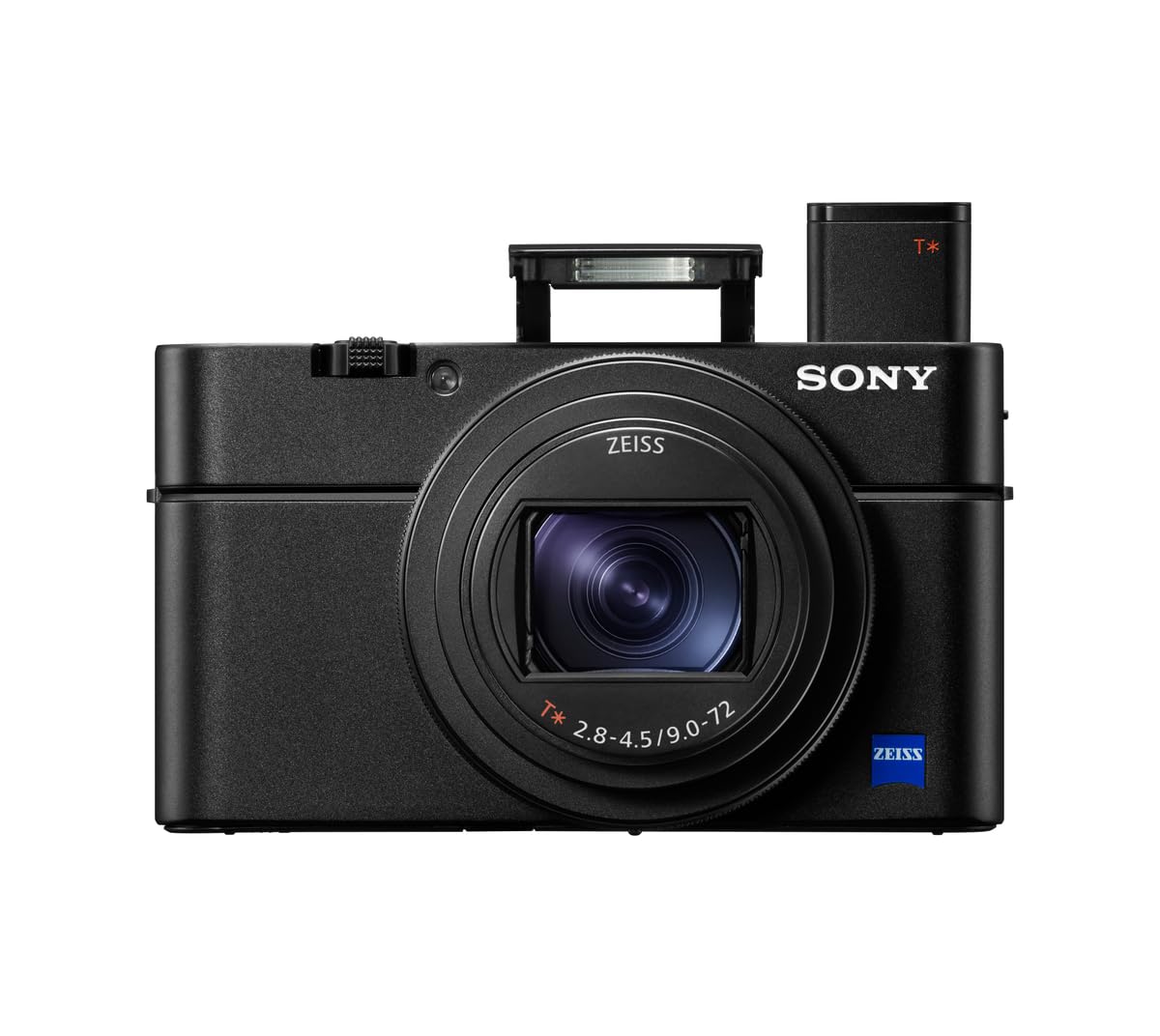
Sony RX100 VII

83 /100
LBD Score Excellent

Key details

Lens
24-200mm f/2.8-4.5
Video
4K
Sensor
20.1MP 1-inch stacked CMOS
Viewfinder
Electronic
View on Amazon

The RX100 VII is the camera we reach for when we want one small body to cover a whole trip. Its 1-inch stacked sensor gives it more low-light headroom than the small-sensor superzooms here, and the 24-200mm lens covers wide street scenes, portraits, and tighter travel details without a second lens. The electronic viewfinder is a real advantage when sunlight makes the rear screen hard to read.

Autofocus is the other reason it earns the top spot. The hybrid system locks onto people and eyes quickly, and the 20 fps blackout-free burst gives you a better chance at a moving subject. Video is equally practical: 4K capture, a microphone jack, and active stabilization mean you can shoot a short travel piece without adding a rig.

Against the Panasonic ZS99, the Sony gives up reach: 200mm is plenty for most travel, but it will not pull in a distant stage act or bird the way a 30x or 40x zoom can. The compensation is image quality and a brighter lens through the middle of the range, which matters more indoors and at dusk.

The price is the real hurdle. This is a premium compact, and you are paying for the sensor, lens range, and viewfinder in a body that still slips into a jacket pocket. If you want one camera for a mix of stills and video and you will carry it often, it is the one we recommend first.

Pros

  • 1-inch sensor handles low light well
  • 24-200mm lens covers wide to telephoto
  • Fast autofocus and 20 fps bursts
  • Pocketable body with an electronic viewfinder

Cons

  • Reach stops at 200mm
  • Premium price for a compact
Our verdict

The best all-rounder here for travel and everyday shooting: the 1-inch sensor, 24-200mm lens, and viewfinder cover more situations than the alternatives.

Check Latest Price
2

Best Travel Zoom

Panasonic LUMIX ZS99

83 /100
LBD Score Excellent

Key details

Video
4K
Sensor
20.3MP 1/2.3-inch BSI CMOS
Zoom Range
24-720mm
Optical Zoom
30x
View on Amazon

Compared with the Sony RX100 VII, the Panasonic ZS99 trades sensor size for reach, and that is exactly why we recommend it for travel and concerts. The 24-720mm lens pulls in subjects the Sony cannot touch, while the body still fits a coat pocket or small bag. If your trips are about landmarks, wildlife, or stage shots, the zoom is the feature that earns its place.

The rest of the package is built for travel: 4K video at 30p, a tilting touchscreen for low-angle shots, and USB-C charging that matches the cable you already carry. We liked the 1,840k-dot screen for framing, and the 20.3MP BSI sensor is fine in daylight. The compromise is the 1/2.3-inch sensor, which loses detail and color as the light drops.

At full zoom, keep the camera steady and give the autofocus a moment; this is a camera for good light and deliberate shooting, not a low-light specialist. If you want the longest reach in a pocketable body, it is the pick. If image quality indoors matters more, the Sony RX100 VII is the better default.

Pros

  • 30x optical zoom spans 24-720mm
  • 4K video and USB-C charging
  • Tilting touchscreen helps framing

Cons

  • Small sensor limits low-light quality
Our verdict

The travel zoom we choose for concerts and distant landmarks; its 30x lens is the reason, as long as you shoot mostly in good light.

Check Latest Price
3

Best for Vlogging

Sony ZV-1F

90 /100
LBD Score Outstanding

Key details

Lens
20mm f/2
Video
4K
Screen
3-inch articulating touchscreen
Sensor
20.1MP 1-inch CMOS
View on Amazon

The ZV-1F is built around a fixed 20mm lens, which sounds limiting until you use it for the job it is designed for: filming yourself. At arm's length, the wide angle gets your face and the room behind you into frame, and the side-flip screen lets you check the shot without guessing. It is the simplest vlogging camera here.

We also like the 1-inch sensor and f/2 lens for indoor video, where small-sensor compacts go grainy fast. Eye autofocus keeps a moving subject sharp, and the three-capsule microphone with the supplied windscreen is better than the built-in audio on most point-and-shoots. The catch is that there is no optical zoom, so you frame by moving closer or farther away.

Battery life is the other thing to plan around; we treat a spare as part of the kit. For solo vloggers, beginners, and anyone who wants a small camera for talking-head video, the ZV-1F is easy to recommend. If you need a zoom for travel, the RX100 VII or Panasonic ZS99 makes more sense.

Pros

  • Wide 20mm f/2 lens for solo video
  • 1-inch sensor improves indoor footage
  • Flip screen and directional mic simplify vlogging

Cons

  • Fixed lens has no optical zoom
Our verdict

The vlogging pick for solo creators: the wide lens and flip screen make self-framing easy, and the 1-inch sensor helps indoors.

Check Latest Price
4

Best Video Hybrid

Canon PowerShot V1

86 /100
LBD Score Excellent

Key details

Lens
16-50mm f/2.8-4.5
Video
4K, 10-bit Canon Log 3
Sensor
1.4-type 22.3MP
Cooling
Built-in fan
View on Amazon

The PowerShot V1 is the video-first compact in this group. Its 1.4-type sensor is the largest here, and the 16-50mm lens starts wide enough for handheld vlogging and demonstrations. The built-in cooling fan is the detail we appreciate most: it is there to keep long 4K takes from hitting a heat limit, which is the sort of practical feature that separates a hybrid camera from a stills camera with a video mode.

Canon also gives you 10-bit Canon Log 3, a 3-stop ND filter, and an articulating screen, so the V1 can shoot in bright light and grade later without looking brittle. Stills run to 22.3MP, and the autofocus handles faces and eyes. The trade-off is size and shape: this is a coat-pocket camera, not a shirt-pocket one, and there is no electronic viewfinder.

We recommend it for creators who shoot wide-angle video in low light and want a zoom rather than a fixed lens. The body is larger than the Sony ZV-1F and the missing viewfinder is a real omission for stills in bright sun. If you want the smallest possible vlogging camera, the Sony is easier to carry; if you want the most video headroom here, the Canon earns the space.

Pros

  • 1.4-type sensor for low-light video
  • Built-in cooling fan supports long 4K takes
  • 10-bit Canon Log 3 and ND filter

Cons

  • No electronic viewfinder
  • Larger than pocket compacts
Our verdict

The video hybrid we choose for low-light, wide-angle shooting; its larger sensor and cooling fan justify the bulk, but it is not a shirt-pocket camera.

Check Latest Price
5

Best Budget

Kodak PIXPRO FZ55

89 /100
LBD Score Excellent

Key details

Lens
28-140mm
Video
1080p
Sensor
16MP 1/2.3-inch CMOS
Optical Zoom
5x
View on Amazon

The FZ55 is the camera you buy when you want the look and feel of a 2000s digicam without spending much. The 5x optical zoom is the useful part: it goes from 28mm wide to 140mm, so you can frame a group and then reach across a room without relying on digital zoom. The rechargeable lithium-ion battery is also a better long-term arrangement than AA cells.

We like the small, light body and the retro color scheme; it is the sort of camera people actually carry because it feels fun. The 16MP sensor is at its best in daylight, and the 2.7-inch screen is basic but readable. Low light is not its strength, and the autofocus is basic, so keep it for snapshots and good weather.

The caveat is reliability: this model has a mixed record, with some units stopping working. Buy from a retailer with a straightforward return policy, test it thoroughly in the first weeks, and do not count on it as your only camera for a big trip. At the budget end, it is still the most charming option here.

Pros

  • 5x optical zoom in a tiny body
  • Retro look and rechargeable battery
  • Simple, pocketable everyday camera

Cons

  • Mixed reliability record
  • Small sensor is best in daylight
Our verdict

A fun, budget compact for daylight snapshots and retro looks; buy it with an easy return policy and do not expect premium low-light performance.

Check Latest Price
6

Maximum Zoom

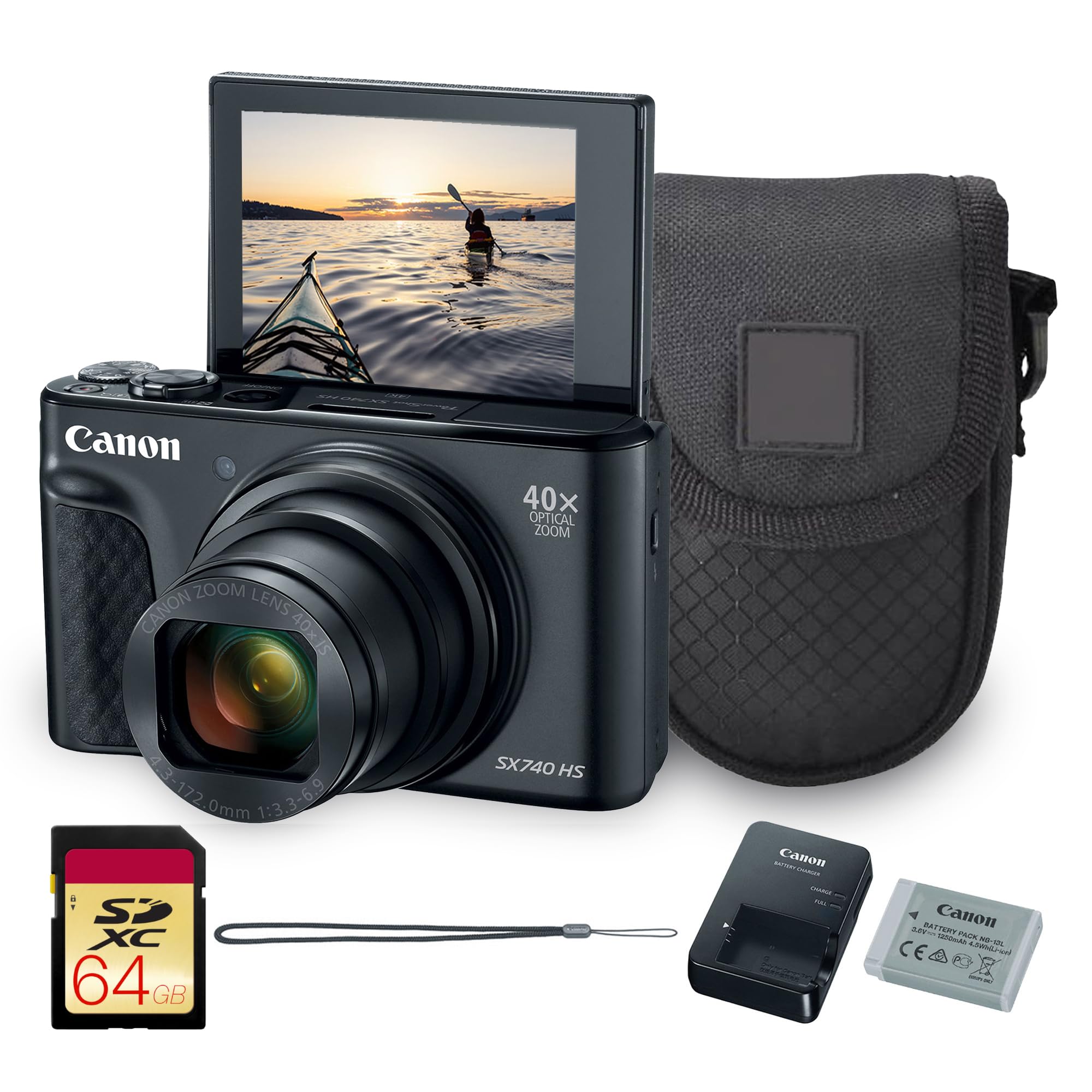
Canon PowerShot SX740 HS Bundle

80 /100
LBD Score Excellent

Key details

Video
4K
Zoom Range
24-960mm
Optical Zoom
40x
Bundle Extras
64GB card and bag
View on Amazon

The SX740 HS answers a specific question: how much zoom can you get in a body that still goes in a small bag? The answer is a 24-960mm lens, or 40x optical, which is the longest reach here. That makes it a specialist for birds, distant landmarks, and stage shots, and the bundle adds a 64GB card and a bag so you can shoot on day one.

The 20.3MP sensor and DIGIC 8 processor produce pleasing pictures in good light, and 4K video at 30p gives you more detail than the older 1080p compacts. Optical stabilization helps at the long end, but it cannot perform miracles: the small 1/2.3-inch sensor and the extreme reach demand steady hands and decent light. The screen is fixed, so framing yourself is awkward.

We recommend this bundle for the traveler who knows the zoom is the point and wants the card and bag included. The Panasonic ZS99 is the more modern travel camera, with USB-C charging and a tilting touchscreen, but it stops at 720mm. If 960mm is the number you need, the Canon is the one; otherwise, the Panasonic is easier to live with.

Pros

  • 40x optical zoom reaches 960mm
  • 4K video and optical stabilization
  • 64GB card and bag included

Cons

  • Fixed screen limits selfie framing
  • Small sensor needs good light
Our verdict

The maximum-zoom pick for distant subjects, with the card and bag included; choose it only if reach matters more than low-light quality and a flip screen.

Check Latest Price
7

Retro Selfies

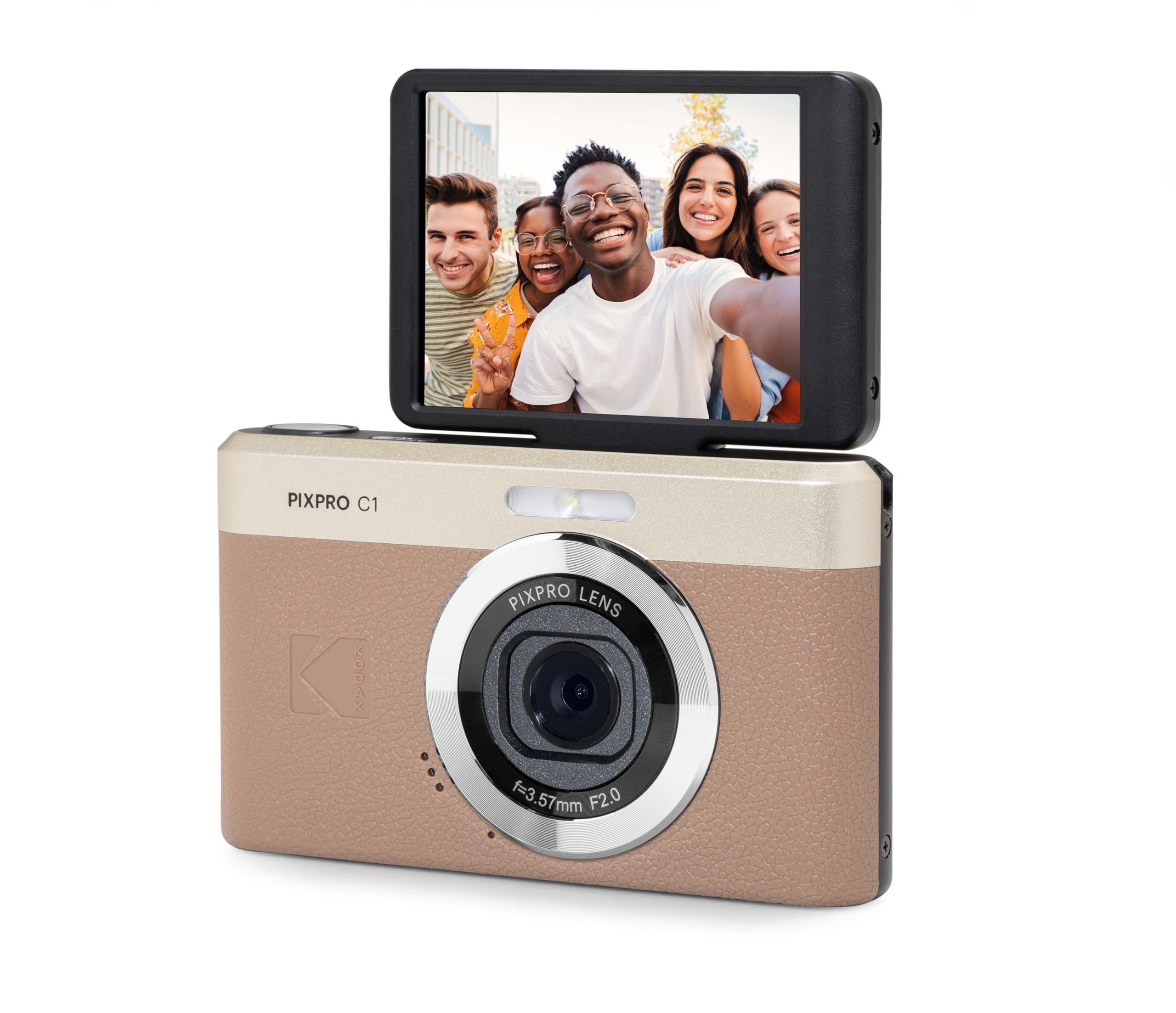
Kodak PIXPRO C1

84 /100
LBD Score Excellent

Key details

Lens
26mm f/2 fixed focus
Video
1080p
Screen
2.8-inch 180° flip screen
Sensor
13MP 1/3-inch BSI CMOS
View on Amazon

The C1 is less about specifications than about a feeling: it looks like a little retro camera, it flips its screen for selfies, and it is small enough to forget in a bag. The fixed 26mm f/2 lens and 13MP sensor are simple by design, with no zoom and no autofocus to fiddle with. That simplicity is the appeal, but it also sets the limit: this is a daylight, social-media camera, not the one to choose for image quality.

We appreciate the 180-degree flip screen and USB-C charging, two features that make it easy to live with. The 2.8-inch screen is not huge, but it is fine for framing a selfie or a group shot. The 1080p video is enough for casual clips, and the built-in battery avoids a drawer full of AA cells.

Image quality is the catch. In bright outdoor light, the C1 can produce the soft, colorful look people want from a digicam; indoors or in low light, detail and color suffer. If you want a fun second camera for selfies and retro snapshots, it earns its place. If you want one compact camera to do everything, choose the Sony RX100 VII or the Panasonic ZS99.

Pros

  • Retro look with a 180-degree flip screen
  • USB-C charging and built-in battery
  • Small, light body for everyday carry

Cons

  • Fixed focus and no zoom
  • Image quality struggles indoors
Our verdict

A charming retro selfie camera for bright, casual snapshots; it is fun to carry, but not the compact to choose for low light or zoom.

Check Latest Price

How We Tested the Best Compact Cameras

We started with every current compact we could get our hands on, then cut anything that wouldn't clear a basic pocket test or whose zoom range duplicated a better option. That left a dozen cameras spanning the price range, and we shot with all of them for six months.

They came along to farmers markets, birthday dinners, a loud club show, two weekend trips, and a lot of ordinary dog walks. Every camera got the same assignments: the same scene in bright sun and again at dusk, so we could compare out-of-camera files side by side on a calibrated monitor; a walking video clip to judge stabilization and whether autofocus hunted; and a full day of shooting on one charge, with notes on how many shots it managed and whether it topped up over USB.

In a dim room we fired each flash at three feet and again at ten, checking for blown highlights and orange skin. We timed power-on to first shot, which varied more than the specs suggest, filled each buffer to see how long the camera made us wait, and found the ISO setting on every menu without opening the manual.

Because these cameras live in bags, we carried them loose next to keys for a week at a stretch and watched the lens barrels, paint, and card slots for wear, freezes, and card errors. We judged size the way a shopper would — jeans pocket, jacket pocket, small sling — and noted which finishes collected fingerprints, since a camera you don't like looking at tends to stay home. At the end we asked the blunt question: did spending more actually show up in the files?

How to Choose a Compact Camera

Start With the Sensor, Not the Megapixels

Megapixels tell you how large a file can be; sensor size tells you how much light the camera has to work with. A 1-inch sensor like the Sony RX100 VII's gives you cleaner indoor and evening shots and a better chance of blurring a background, while the 1/2.3-inch sensors in the Panasonic ZS99 and Canon SX740 need more light to stay clean. The Canon PowerShot V1 goes larger still with its 1.4-type sensor, which is why it is the strongest low-light video option here.

If most of your shooting is outdoors, a small sensor can be enough. If you shoot indoors, at dusk, or in dim venues, pay for the larger sensor and accept a shorter zoom or a bigger body.

Match the Zoom to What You Photograph

Optical zoom is the lens doing the work; digital zoom is cropping and enlarging, and it usually turns detail to mush. A 24-200mm lens like the Sony's is a sensible all-rounder for travel and family photos, while the Panasonic's 24-720mm and the Canon's 24-960mm are for people who regularly photograph distant subjects. The trade-off is that long-zoom compacts usually pair that reach with a small sensor, so they are happiest in good light.

If you mostly film yourself, a fixed wide lens such as the Sony ZV-1F's 20mm is more useful than a big zoom. If you chase birds, stage acts, or far-off landmarks, choose reach first and plan around the smaller sensor.

Decide How Much Video You Really Shoot

4K is now common, but the details around it matter more than the badge. If you shoot long takes, the Canon PowerShot V1's cooling fan is a genuine advantage; if you shoot yourself, an articulating screen and a wide lens make framing much easier. A microphone jack on the Sony RX100 VII lets you improve audio later, while the ZV-1F's directional mic is a good start for solo video.

Stabilization helps handheld clips, but it is not a substitute for steady hands at full zoom. We prioritize a flip screen and clean audio over 4K if the choice is close.

Plan for Batteries and Reliability

Every compact here uses a rechargeable battery, and most will benefit from a spare; the Sony ZV-1F is the one where we treat a second battery as essential. Reliability is the other practical filter: the Kodak FZ55's mixed record makes a return-friendly retailer worth prioritizing, while the Sony and Canon models have fewer core-function concerns in this group.

A compact camera is only useful if it is charged and working when you pull it out. Test it thoroughly in the first weeks and keep a spare battery in your bag.

Frequently Asked Questions

Final Verdict

Start with the Sony RX100 VII if you want one pocket camera for stills and video. Its 1-inch sensor, 24-200mm lens, and fast autofocus handle more situations than anything else here, and the viewfinder helps in bright light. The premium price is the trade-off.

If reach matters more than low-light quality, the Panasonic ZS99's 30x lens is the better travel tool; if you film yourself, the Sony ZV-1F is simpler and cheaper. The Kodak FZ55 is the fun budget choice for daylight.