Best Electric Bikes Under $2,000 of 2026

Two e-bikes can share a battery, a motor rating, and a range claim and still feel nothing alike under you — usually because of the sensor. A cadence sensor just notices the pedals are turning and shoves power at you; a torque sensor reads how hard you're pushing. At this end of the market you're mostly getting the first, so a test ride beats a spec sheet. What a good one buys you is simple: the hill home stops being a decision.

I've ridden these to work, to the grocery store, and up the one hill near my house I'd otherwise avoid. Over six months my team and I lived with eight of them — building each out of the box, running batteries flat on purpose, logging every rattle. Assembly ranged from twenty minutes to an entire afternoon, and real range drifted from the box numbers by wildly different margins. The feature that changes daily life most is a removable battery: you carry the pack upstairs instead of hauling sixty pounds to an outlet.

The bikes below are the ones that held up — sorted by who they suit, not by who shouts loudest.

1

Best Overall

Heybike Cityscape 2.0

88 /100
LBD Score Excellent

Key details

Motor
500W, 1,200W peak
Weight
61.7 lb
Battery
468Wh, UL-certified, IPX6
Wheel Size
26 in
View on Amazon

A rear rack comes in the box, which sounds minor until you have bought one separately, bolted it on, and discovered the fender no longer fits. Heybike ships the Cityscape 2.0 with the rack, a color display, and 26-inch puncture-resistant tires, so it is an errand bike on day one rather than a project.

That completeness is why it is our top pick. The 468Wh battery is UL-certified and rated IPX6 for water, the motor peaks at 1,200W, and the 7-speed drivetrain covers the stretches where you are pedaling unaided. It also has the longest track record of anything in this group, and what comes through is consistency rather than a highlight: easy assembly, an upright position that works in traffic, a smooth roll on pavement.

At 61.7 pounds it is not a bike you carry up three flights or lift onto a roof rack alone. In a garage or a ground-floor hallway that number stops mattering, and what you get in exchange is a steel frame that feels settled at speed instead of twitchy.

The battery lifts out for charging, which is the detail that makes apartment life workable — no extension cord down a stairwell, no hauling the whole bike inside to top it up. Between that and the rack, this is the bike for replacing short car trips rather than adding a toy to the garage.

Pros

  • Rack, color display, and tool kit included
  • UL-certified, IPX6-rated 468Wh battery
  • Upright, stable ride on pavement
  • Longest track record of the bikes here

Cons

  • Front suspension only, so rough pavement reaches the saddle
  • Rider limit of 264 lb is the lowest stated here
Our verdict

Our pick is the Cityscape 2.0: the most complete commuter here, with a rack, puncture-resistant tires, and a certified battery, and nothing about it feels like a shortcut.
Check Latest Price
2

Best Lightweight Commuter

Gotrax Dolphin

84 /100
LBD Score Excellent

Key details

Motor
350W, 500W peak
Weight
22.2 kg (49 lb)
Battery
280.8Wh removable
Max Rider Weight
264 lb
View on Amazon

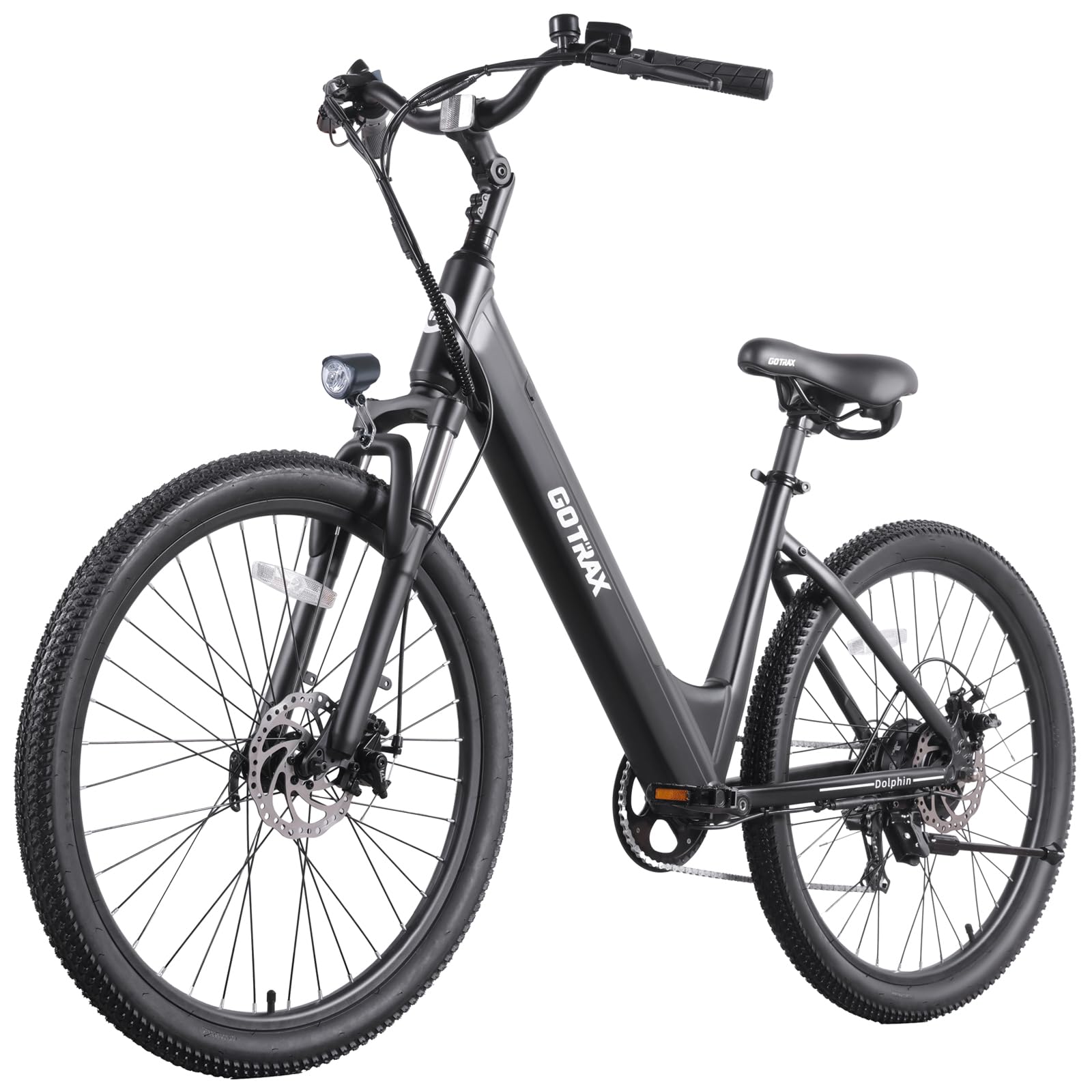
At 22.2 kilograms — about 49 pounds — the Dolphin is the lightest full-size bike in this group, and that single number reshapes the deal. A bike you can carry up a flight of stairs gets ridden; one that lives in the garage because you cannot lift it does not.

What you give up is motor. The 350W drive peaks at 500W, the smallest here, and the 280.8Wh battery is rated for 30 miles at the lowest assist level. This bike expects you to pedal, and with a Shimano 7-speed and five assist levels that is a fair ask — it rides like a bicycle with a helpful tailwind rather than a moped.

Gotrax also gives a clearer fit picture than most of these listings: riders from 5 feet 2 inches up, a 264-pound limit, an upright bar position, front suspension, and dual disc brakes. A full year of warranty backs it, which is longer than at least one bike here manages.

Twenty-six-inch wheels and that low weight make it the most bicycle-like thing in this group with the assist switched off, which counts for something on the day the charge runs out two miles from home.

Pros

  • Lightest full-size bike here at about 49 lb
  • Rides like a bicycle when the assist is off
  • Fits riders from 5 feet 2 inches
  • Full year of warranty coverage

Cons

  • Battery is the weak link; some packs stop accepting a charge
Our verdict

We recommend the Dolphin for anyone who has to carry their bike — at roughly 49 pounds it is the easiest full-size ride here to live with upstairs, and it pedals honestly with the motor off.

Check Latest Price
3

Best Value All-Rounder

5TH WHEEL Mate EB17

84 /100
LBD Score Excellent

Key details

Motor
1,000W peak
Weight
50 lb
Battery
468Wh removable
Max Rider Weight
330 lb
View on Amazon

Fifty pounds of aluminum carrying a 330-pound rider is the combination the Mate EB17 sells on, and it is the reason to look past its unremarkable looks. Aluminum rather than steel is where the weight comes off, and the 1,000W peak motor pushes it to a claimed 23 mph.

The rest of the package is more thought through than you might expect: a color LCD, a lockable front fork, an adjustable stem, and a 468Wh removable battery rated for 25 miles on throttle and up to 45 in pedal assist. Assembly is the short version — bars, pedals, front wheel, done.

This is the one we hand the rider the Cityscape does not fit: taller, heavier, or facing a hill on the way home. It is the value pick in the sense that matters, which is capacity and motor rather than accessories.

Three assist levels is the compromise. Five, as on the Gotrax, lets you trim effort more finely; here it is off, some, or a lot. On flat commuting that is plenty. Point it at a long climb and the gaps between settings show up fast.

Pros

  • Aluminum frame at 50 lb with a 330 lb limit
  • 1,000W peak motor for hills
  • Color display, lockable fork, adjustable stem
  • Up to 45 miles in pedal assist

Cons

  • Only three assist levels to choose from
  • Riders over six feet may want a handlebar riser
Our verdict

The Mate EB17 is the sensible buy for a heavier or taller rider: aluminum, a 330-pound limit, and a 1,000W peak motor, without the bulk that steel frames bring.

Check Latest Price
4

Best Fat-Tire Ride

FLIWIN FX20

87 /100
LBD Score Excellent

Key details

Motor
2,000W peak
Tires
20 x 4.0 in
Weight
115 lb
Battery
48V 20Ah removable
View on Amazon

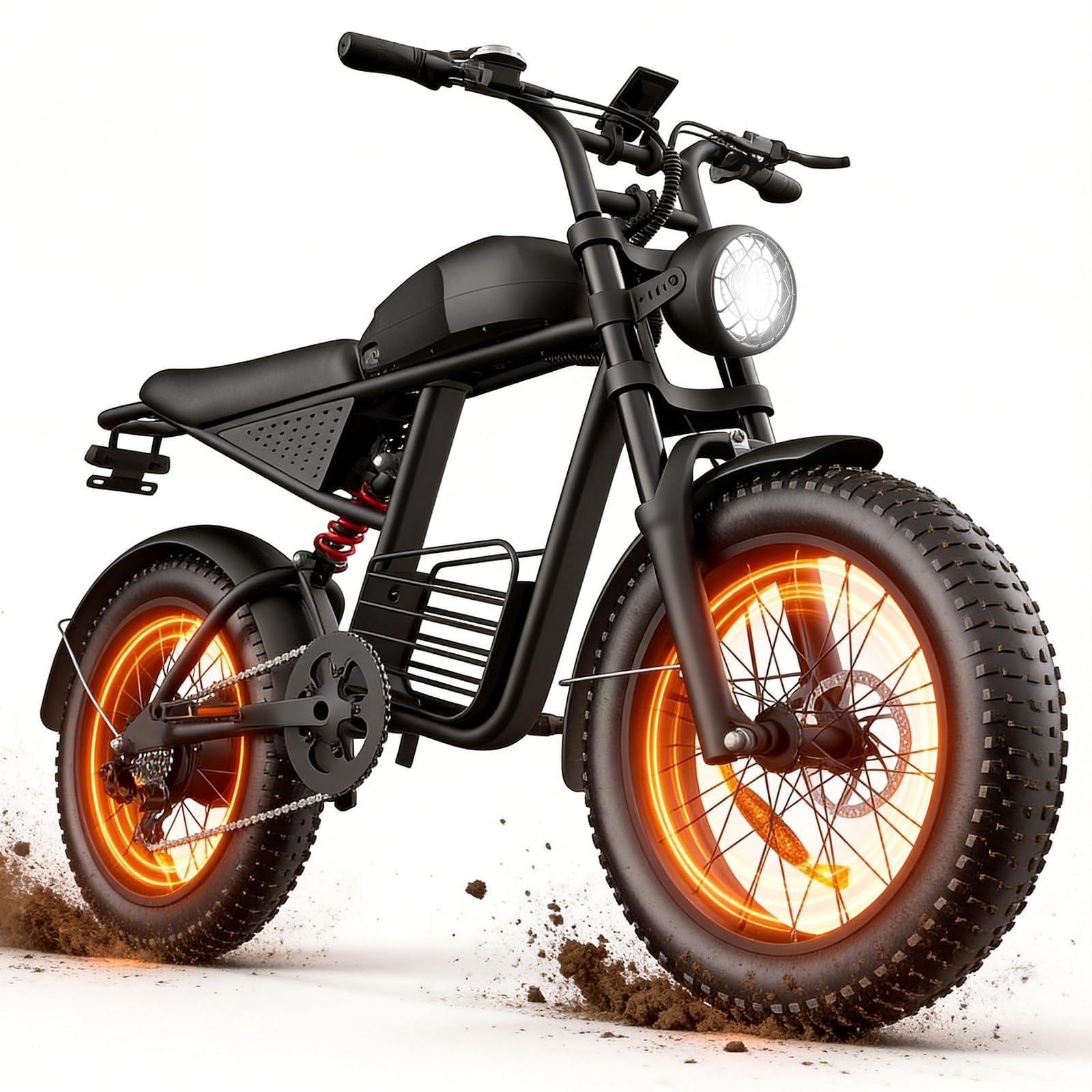
Three separate UL certifications — 2849 for the bike, 2271 for the battery, 2238 for the charger — is the most complete safety paperwork in this group, and on a machine with a 48V 20Ah pack that is not a footnote.

That pack is the biggest here by a wide margin, and it is why the FX20 is the one for long rides and cargo. The 2,000W peak motor, 20-by-4-inch fat tires, and suspension at both ends add up to something closer to a small dirt bike than a bicycle, and the styling leans into it.

What the weight buys is a steel frame that feels planted, suspension that shrugs off gravel, and a battery you can pull out and charge indoors. A basket, headlight, and fenders come in the box, so the accessories bill is close to zero. We were also surprised by the seat — it is more comfortable than this style of bike usually manages.

It draws attention, too. The dirt-bike stance and the fat tires get comments at the rack, which is either a feature or a good reason to pick something plainer, depending on you.

Pros

  • Biggest battery in this group at 48V 20Ah
  • Dual suspension and 20-inch fat tires
  • UL 2849, 2271, and 2238 certified
  • Basket, headlight, and fenders included

Cons

  • 115 lb needs ground-level storage
  • 40 to 80 mile range assumes the lowest assist
Our verdict

We recommend the FX20 for gravel and long distances: it has the biggest battery in this group and full suspension to go with it.

Check Latest Price
5

Heavy Riders

TST R004

84 /100
LBD Score Excellent

Key details

Motor
750W, 1,500W peak
Tires
20 x 4.0 in
Battery
48V 15Ah (720Wh)
Max Rider Weight
450 lb
View on Amazon

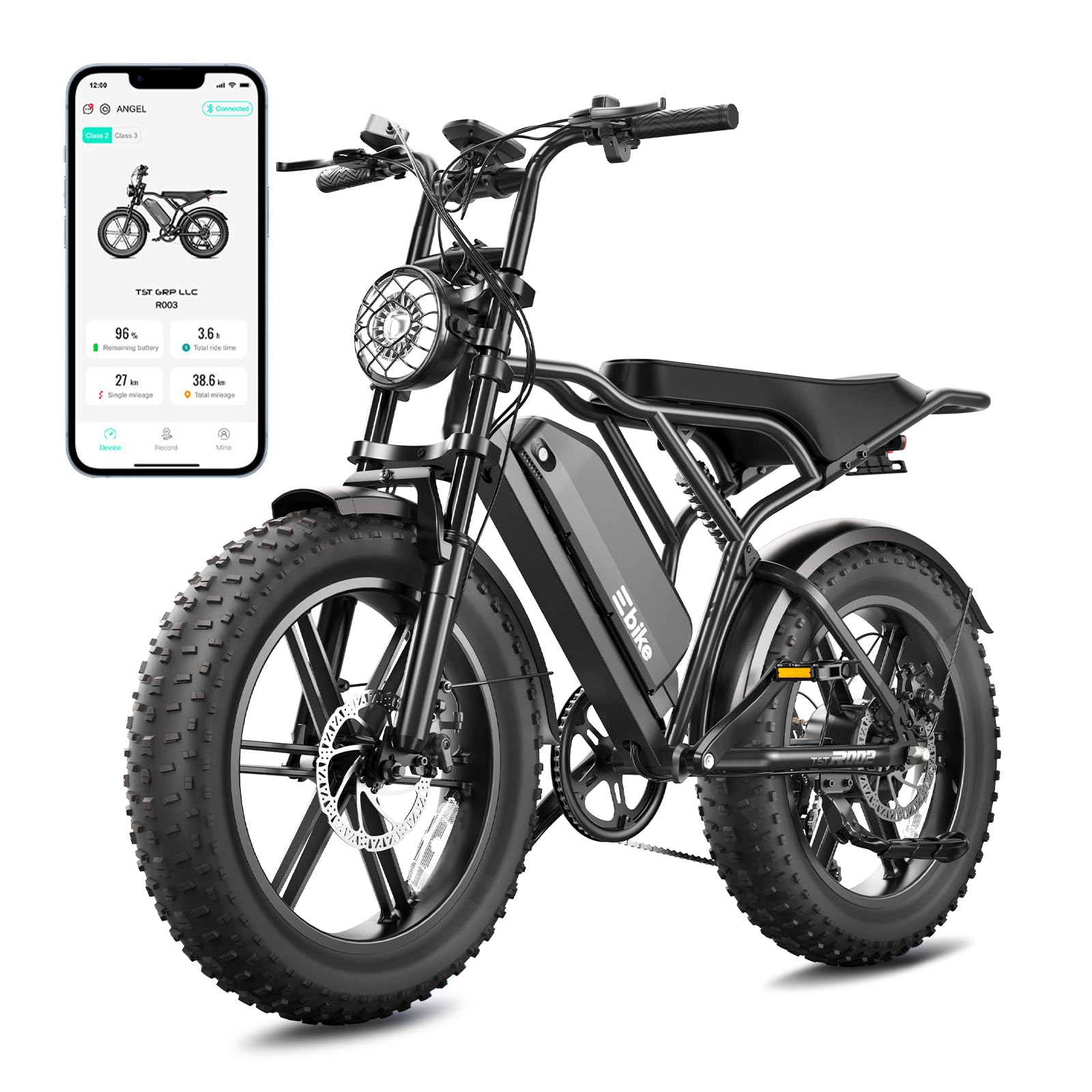
Where the FLIWIN's 115 pounds confines it to a garage, the R004's headline is 450 pounds — the highest stated rider limit here, and 120 clear of the 5TH WHEEL.

The rest of the bike is built around that: an iron frame, dual suspension, 20-by-4-inch fat tires, a 750W motor peaking at 1,500W, and a 48V 15Ah pack rated for 60 miles in pedal assist. A front light and an LCD come standard, and a full charge runs six to seven hours.

For a heavy rider, capacity is the specification that decides whether the frame, wheels, and brakes survive daily use, and nothing else in this group is rated as high. That is a narrow reason to buy a bike, and a completely sufficient one.

It feels like what it is: steel, planted at speed, and not something you flick through traffic. Riders who want a bike that disappears under them should look at the Qlife; riders who want one that holds its line fully loaded will get on with this.

Pros

  • 450 lb rider limit, the highest stated here
  • Dual suspension over fat tires
  • 1,500W peak motor
  • 60 miles of pedal-assist range

Cons

  • 180-day warranty is the shortest here
  • Range drops sharply on throttle alone
Our verdict

If rider weight is the deciding number, the R004 wins it: 450 pounds, dual suspension, and a 1,500W peak motor to move it.

Check Latest Price
6

Keyless City Riding

DTTZH F6

85 /100
LBD Score Excellent

Key details

Motor
2,000W peak
Tires
20 x 4.0 in
Unlock
NFC card or 4-digit code
Battery
48V 15.6Ah removable
View on Amazon

There is no key. An NFC card or a four-digit code wakes the F6 up, and after a week we stopped thinking about it — then locked a keyed bike in the rain and noticed how much fumbling that involves with gloves on.

That convenience sits on a genuinely plush city ride. Twenty-inch fat tires on one-piece wheels, a hydraulic front fork, and rear suspension mean curb cuts and gravel mostly disappear, and the 2,000W peak motor pulls hard from a stop. A 3A charger tops up the 15.6Ah pack.

Assembly is one of the quicker jobs here — bars, pedals, front wheel, with instructions that hold up — and the 7-speed gearing plus three ride modes cover a flat commute and a gravel path without much thought.

What we keep coming back to is how little the bike asks of you: no key to lose, a battery that comes out for charging, and a ride soft enough that you stop scanning the road for cracks.

Pros

  • NFC card or code instead of a key
  • Hydraulic fork plus rear suspension
  • 2,000W peak motor with strong pull
  • 3A charger for quicker top-ups

Cons

  • Top speed settles near 20 mph in practice
  • Battery is the least predictable part of the package
Our verdict

We recommend the F6 for city riders who want a soft ride and keyless convenience: the fat tires and dual suspension do more for comfort than any other pick here.

Check Latest Price
7

Budget Pedaling

Qlife Racer

85 /100
LBD Score Excellent

Key details

Gears
21-speed
Motor
1,000W peak
Weight
48.1 lb
Battery
48V 7.8Ah (375Wh)
View on Amazon

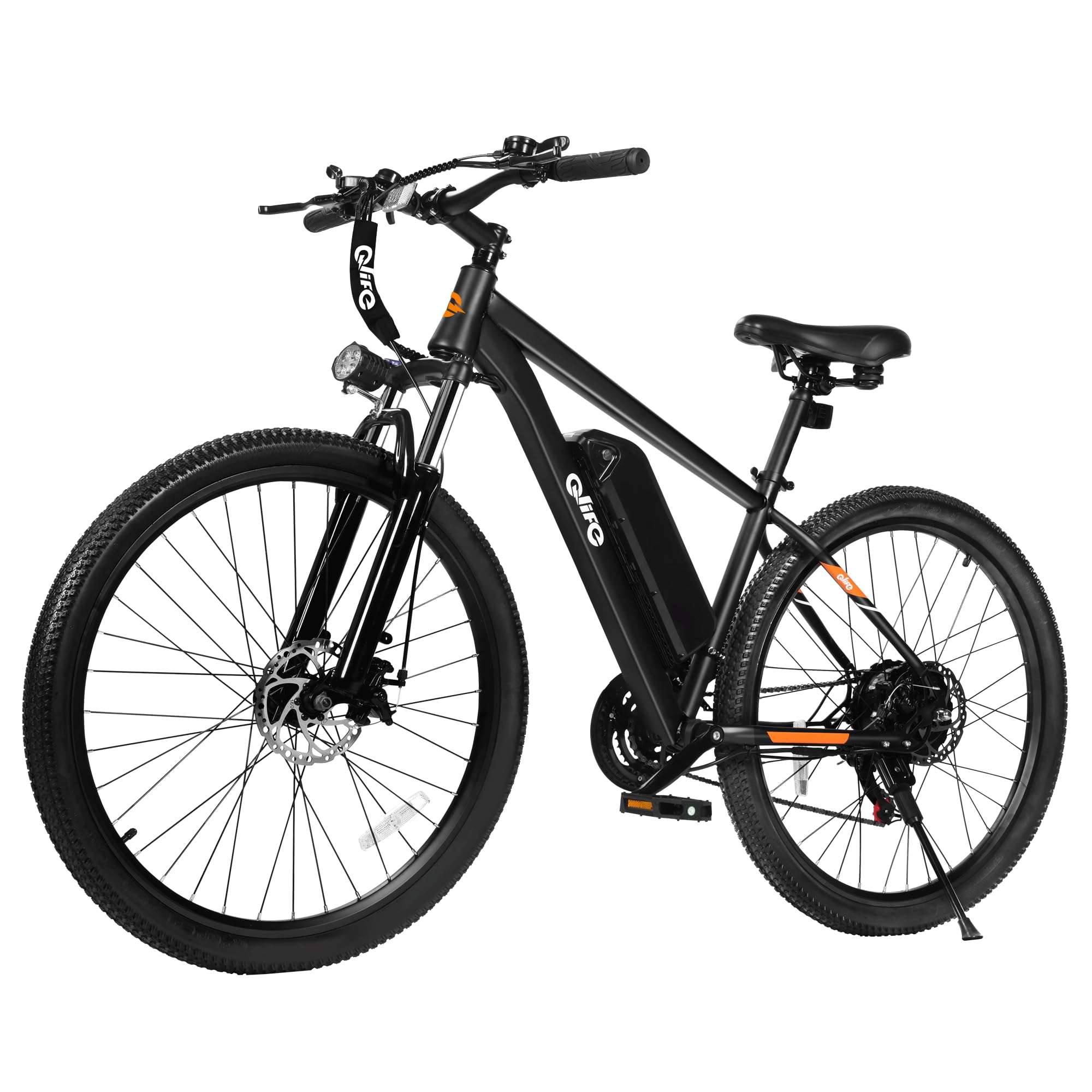
Twenty-one gears on a budget e-bike is usually decoration, a spec-sheet number nobody uses. On the Racer it is the whole idea: with the motor off and the gearing doing the work, this pedals like a real bicycle, which is more than the fat-tire bikes here can claim.

At 48.1 pounds it is the lightest of the 26-inch bikes in this group, and 26-by-2.1-inch tires roll over cracks rather than hunting for them. A 1,000W peak motor and a 375Wh battery give you four modes, an LCD, front suspension, and a 40-mile pedal-assist claim, with twelve months of warranty behind it.

It is a step-over mountain frame with a fairly forward stance, so it rewards riders who actually want to pedal. If you are after a laid-back cruiser, the Cityscape is the better shape. Front suspension takes the edge off rough asphalt, and no more.

What surprised us is how often we reached for it. A bike this light, geared low enough to climb with the motor off, gets used for the trips that would otherwise be walks — which is the point of an inexpensive e-bike.

Pros

  • Lightest 26-inch bike in this group
  • 21-speed gearing works without the motor
  • Rides like a bicycle, not a moped
  • Front suspension and LCD display

Cons

  • 375Wh is the smallest battery here
  • Brakes may need adjusting before the first ride
Our verdict

For a light, bicycle-feeling commuter on a tight budget, the Racer is the one we point to — as long as your trips stay short and you are happy to pedal.

Check Latest Price

How We Chose and Tested These E-Bikes

We started with roughly 30 models at this price point and cut anything without UL 2849 certification, without a removable battery, or from a seller with no U.S. service presence. That left eight bikes, which we bought at retail rather than accepting review units, and rode for six months.

Assembly came first: I built each bike alone using only the tools in the box, timed it, and noted which steps really wanted a second pair of hands — front wheels, mostly, and getting the handlebars square. Then they went into ordinary use: commutes, grocery runs with a loaded pannier, a mile-long hill ridden in every assist level, and weekend rail-trail rides with the assist off to see how they pedaled as plain bicycles.

For battery life, we charged each pack to full and rode a fixed loop in the highest assist until the motor cut out, then repeated it in the lowest, and set both numbers against the claim on the box. We ignored the peak-watt figure on the motor and instead climbed the same hill in the same gear on every bike, because peak watts describe a controller's short burst more than they describe how a bike actually climbs.

Ride quality we judged on the same half-mile of patched asphalt; durability, on six months of it — brake pads after wet weather, bolts that rattled loose, a display that fogged. For value, we looked at what came in the box and what a replacement battery costs, since that's the part most likely to end a bike's life early.

How to Choose an Electric Bike under $2,000

Read Battery Capacity Before Range

Range on the box is measured at the lowest assist level, on flat ground, with a light rider, so treat it as a best case. What you can compare honestly is watt-hours: multiply volts by amp-hours. The packs here run from 280.8Wh on the Gotrax to 960Wh on the FLIWIN, and that spread is the difference between a bike that helps on a five-mile commute and one that carries you twenty.

If your round trip tops fifteen miles, start at 450Wh and go up. Below that, a smaller pack saves weight and money, and you will still have assist for the hills.

Weight Decides Where the Bike Lives

Around 50 pounds you can walk up a step or heave into a hatchback with effort. Past 60 it becomes a two-hand job, and past 100 it is not going upstairs. The Gotrax and the Qlife sit between 48 and 49 pounds, the Cityscape is 61.7, and the FLIWIN is 115.

If you live in a walk-up, weight outranks motor size every time: you will ride a 350W bike you can carry far more often than a 2,000W bike you cannot.

Match Wheel Size and Suspension to Your Roads

Twenty-six-inch wheels roll over broken pavement and hold speed. Twenty-inch fat tires with suspension at both ends soak up gravel and curb cuts, but the rotating mass slows the steering and adds pounds. Mostly asphalt with the odd pothole calls for a 26-inch bike with a front fork; rail trail, gravel, and winter streets are where the dual-suspension fat bikes earn their weight.

The trap is assuming fat tires make a bike faster or steadier at speed. They make rough ground feel smoother, which is a different thing.

Check Fit and the Rider Weight Limit

Two numbers get buried in the listing and both decide whether you enjoy the bike. Minimum rider height tells you if you will be on tiptoe at a stoplight — Gotrax publishes 5 feet 2 inches, and most of the others publish nothing at all. Maximum rider weight runs from 264 pounds on the Cityscape to 450 on the TST.

Weigh yourself in the gear you commute in, and do not assume the limit accounts for what you strap to a rack.

Insist on Certification, Then Look at Brakes and Lights

UL 2849 covers the complete electrical system, with UL 2271 for the battery and UL 2238 for the charger. The FLIWIN states all three and Heybike certifies its pack, which is the difference between a battery tested to a published standard and one that simply is not mentioned.

After that, disc brakes at both ends matter more than the display, and a headlight bright enough for an unlit road matters more than a horn.

Frequently Asked Questions

Final Verdict

We start with the Heybike Cityscape 2.0. The rack, the puncture-resistant tires, and the UL-certified removable battery make it the most complete commuter in this group, and it has the longest record behind it of anything here.

The exception is weight and rider capacity. If the bike has to go up stairs, the 5TH WHEEL Mate is roughly a dozen pounds lighter and rated for 330 pounds, and for anyone the Cityscape's 264-pound limit will not carry, that single number settles the choice before the rest of the spec sheet gets a hearing.