Best Electric Scooters of 2026

Every electric scooter looks quick and cheerful on a product page; the doubt shows up at the bottom of a hill with a quarter battery left. Advertised range assumes a light rider on flat ground, so it shrinks fast once you add a climb, cold air, or a backpack. What you want is a scooter that still gets you home, folds small enough to haul upstairs, and stops hard when a car door swings open.

My team and I have spent six months riding 12 of them to work, to the store, and around the neighborhood on weekends. Two things shape the ride more than motor numbers: the tires and the stem latch. Solid tires never leave you with a flat, but they telegraph every crack in the pavement, and a stem that starts clicking by week eight rattles everything above it.

The picks below suit both kinds of rider: the one hauling a scooter up three flights and the one who wants a stable deck for weekend errands. Sturdiness and ride quality ranked above top speed, and value ran through the whole list.

1

Best Overall

Segway Ninebot MAX G2

81 /100
LBD Score Excellent

Key details

Tires
10-inch self-healing tubeless
Weight
53.5 lb
Top Speed
22 mph
Claimed Range
43 miles
View on Amazon

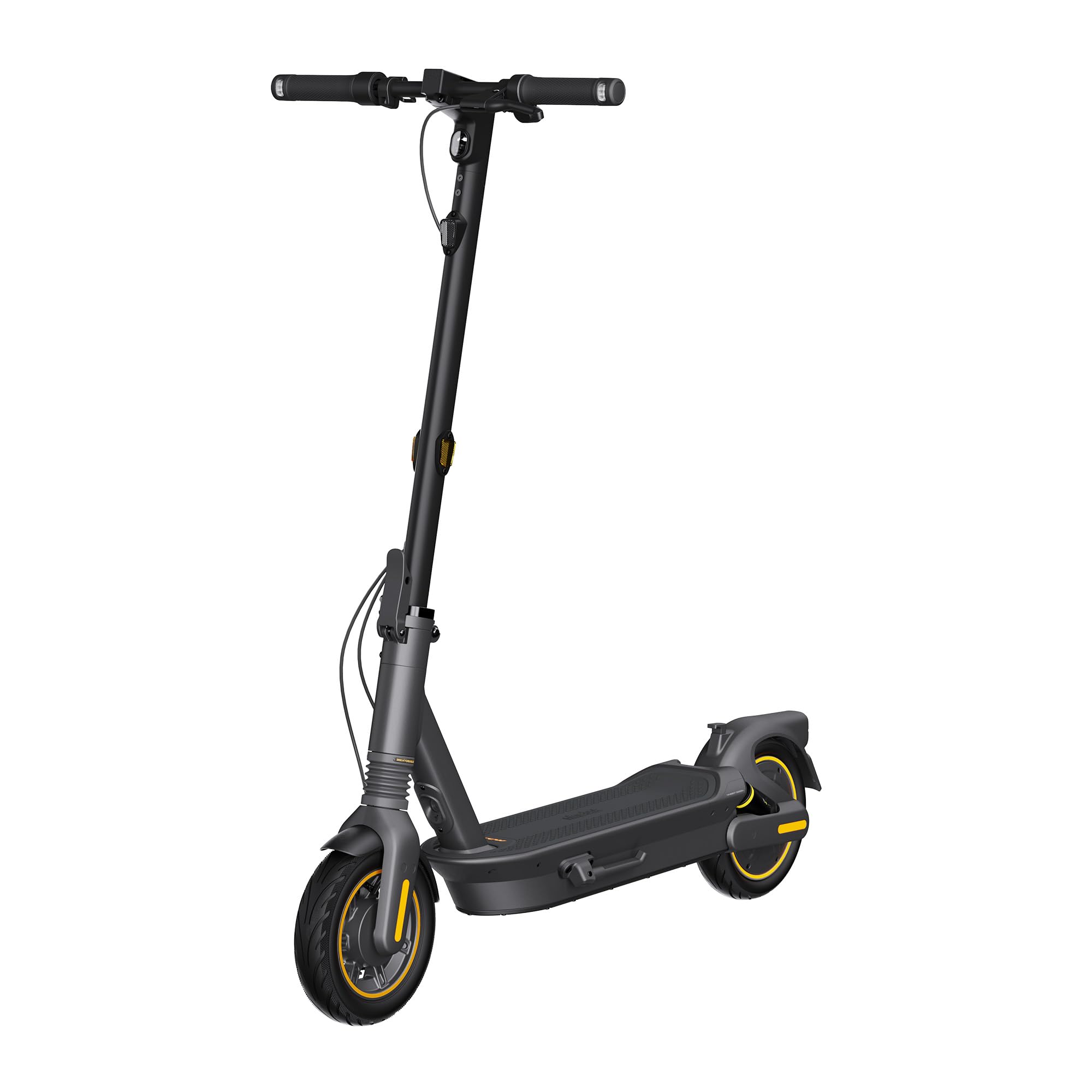
Of the two Segways here, the MAX G2 is the one that makes sense for most riders. It pairs a claimed 43-mile range and a 22 mph top speed with dual suspension and 10-inch self-healing tubeless tires that are built for glass-strewn bike lanes rather than perfect pavement. We also like the UL 2272 and UL 2271 certification; on a lithium scooter, that is the safety detail we check before anything else.

The ride is what sold us. A front hydraulic fork and rear spring suspension take the sting out of cracked asphalt, and the traction control is a real help on wet paint and metal plates. The dual braking system—front drum and rear electronic—is easy to modulate in traffic. At 53.5 pounds it is a two-hand lift, but the payoff is a stable, planted feel at speed that the lighter budget scooters here cannot match.

The 43-mile figure is an Eco-mode claim, so a fast commute will land well short of it. We still think the MAX G2 is the best default for a daily rider who wants one scooter for errands, bike paths, and the occasional hill, especially with a two-year limited warranty behind it. It is the one we reach for when we want the commute to feel less like a chore.

Pros

  • 43-mile Eco-mode range
  • Dual suspension and traction control
  • Self-healing 10-inch tubeless tires
  • UL 2272 and UL 2271 certified

Cons

  • Six-hour recharge is slow
Our verdict

We recommend the MAX G2 as the best all-rounder here: it has the range, suspension, and tire package for daily commuting, and it is easier to live with than the faster, heavier ZT3 Pro.
Check Latest Price
2

Best for Speed and Off-Road

Segway ZT3 Pro

88 /100
LBD Score Excellent

Key details

Tires
11-inch tubeless off-road
Weight
65.5 lb
Top Speed
24.9 mph
Claimed Range
43.5 miles
View on Amazon

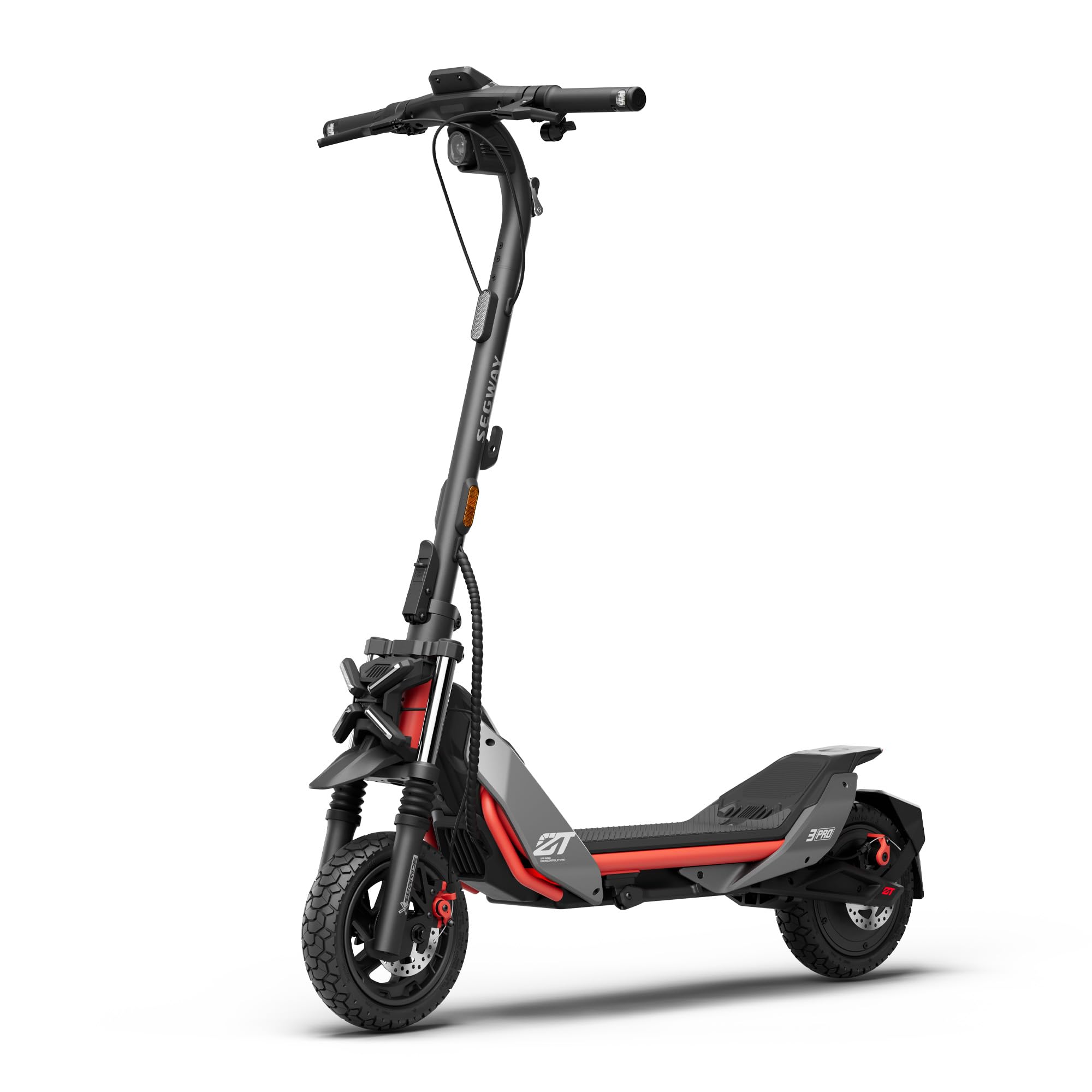
The ZT3 Pro is the scooter we take when the route is the fun part. Its 1600W peak motor and 24.9 mph top speed make it the quickest here, and the 11-inch tubeless off-road tires plus dual suspension give it a planted, almost small-motorcycle feel on broken pavement and packed dirt. This is a big, stable machine, and it feels it.

The control package is reassuring at speed: traction control, dual disc brakes, and a 3-inch display that is easy to read with gloves on. The 43.5-mile range is an Eco-mode claim, but even at a brisk commute pace the battery is big enough for a week of short trips between charges. It also carries up to 265 pounds and recharges in about four hours.

For a rider who wants one scooter for fast commutes and weekend trail detours, the ZT3 Pro earns its premium. For a subway-and-stairs commute, the MAX G2 is the better fit; the ZT3 Pro is the choice when performance and rough-road confidence matter more than portability. It is not a beginner's scooter: the power arrives quickly, and the 24.9 mph top speed deserves respect.

Pros

  • 24.9 mph top speed
  • Dual suspension and 11-inch off-road tires
  • Traction control and dual disc brakes
  • 43.5-mile Eco-mode range

Cons

  • 65.5 pounds is a two-person lift
Our verdict

We recommend the ZT3 Pro for riders who want 25 mph performance and off-road composure without giving up a comfortable commute ride.

Check Latest Price
3

Best Budget Commuter

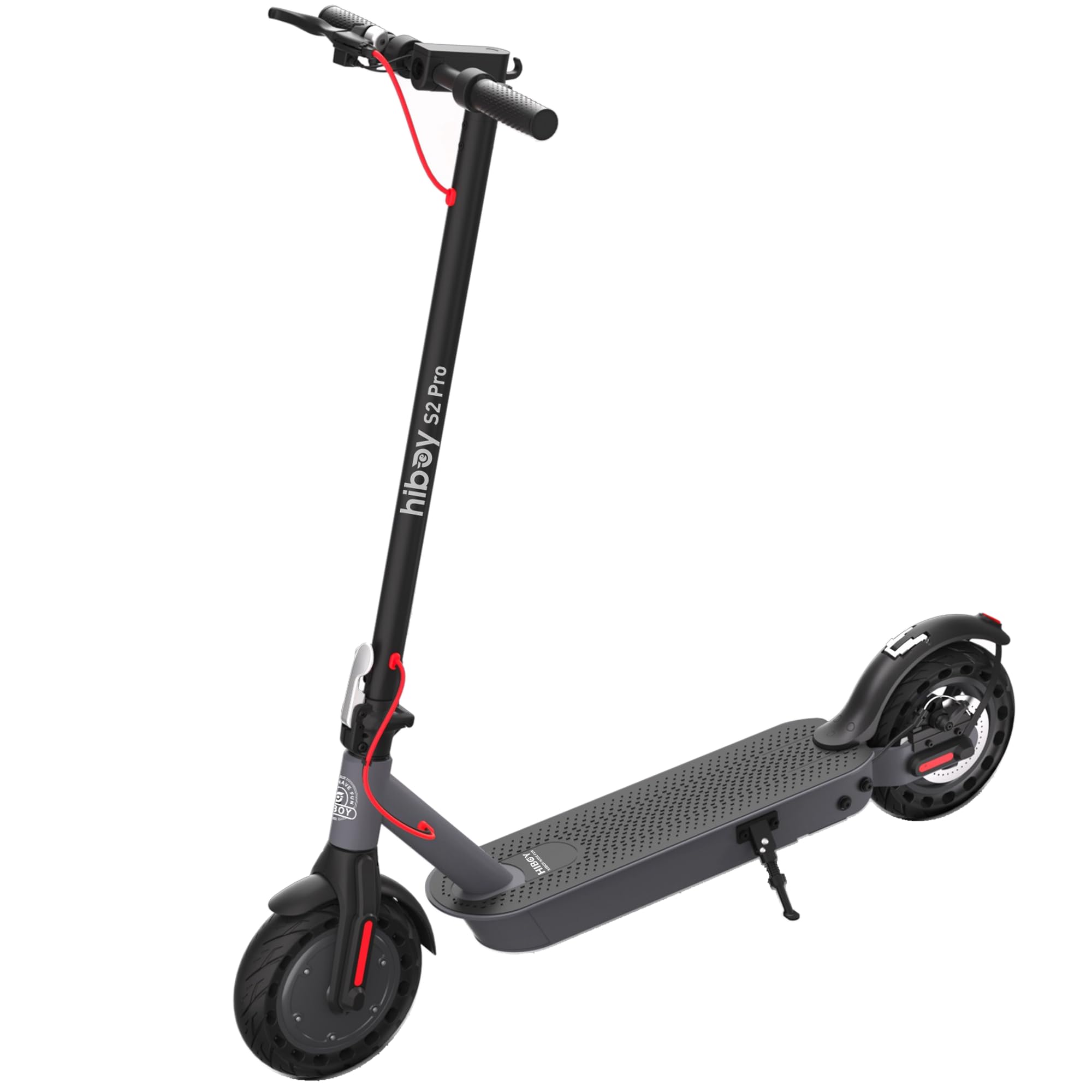
Hiboy S2 Pro

88 /100
LBD Score Excellent

Key details

Tires
10-inch solid
Weight
35.9 lb
Top Speed
19 mph
Claimed Range
25.6 miles
View on Amazon

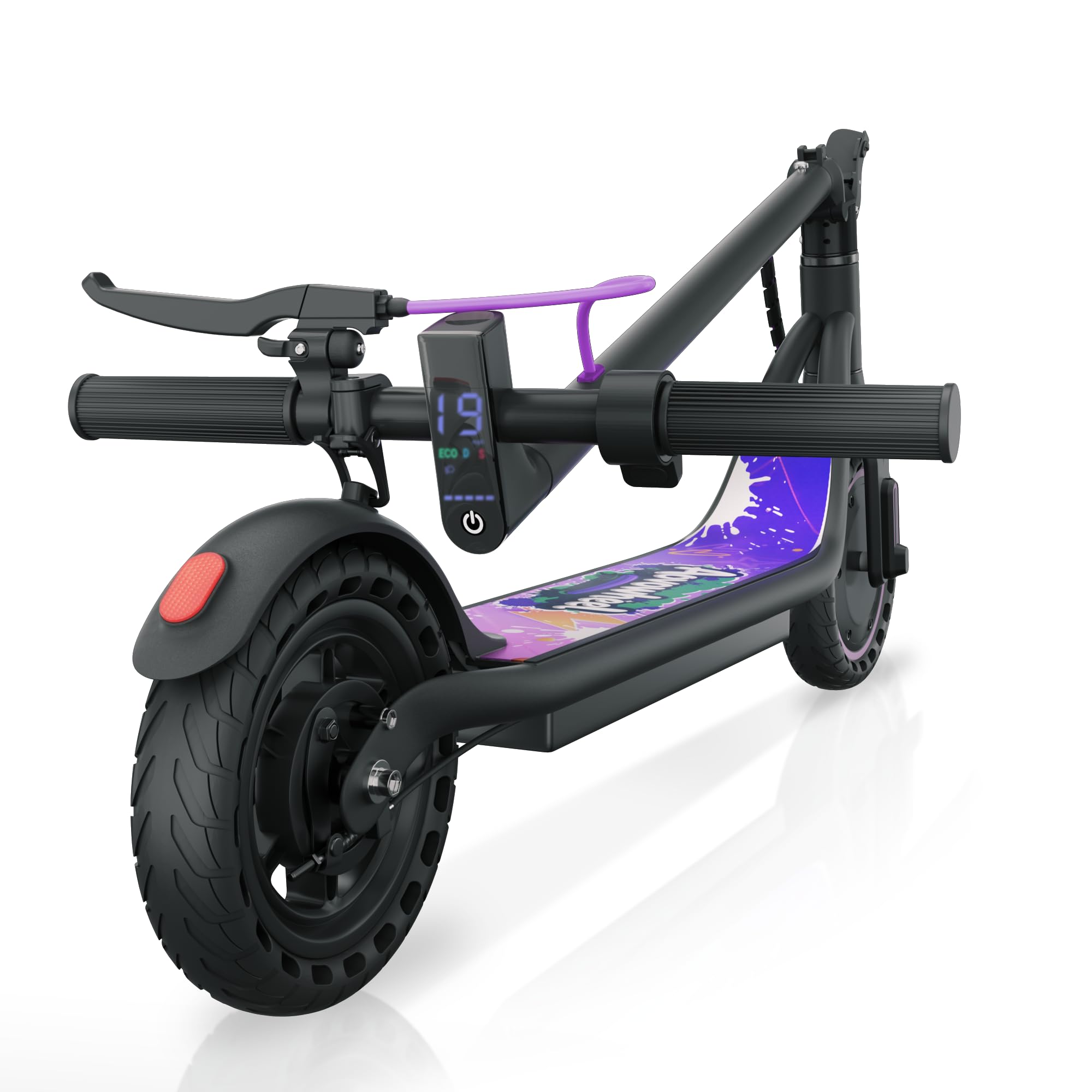
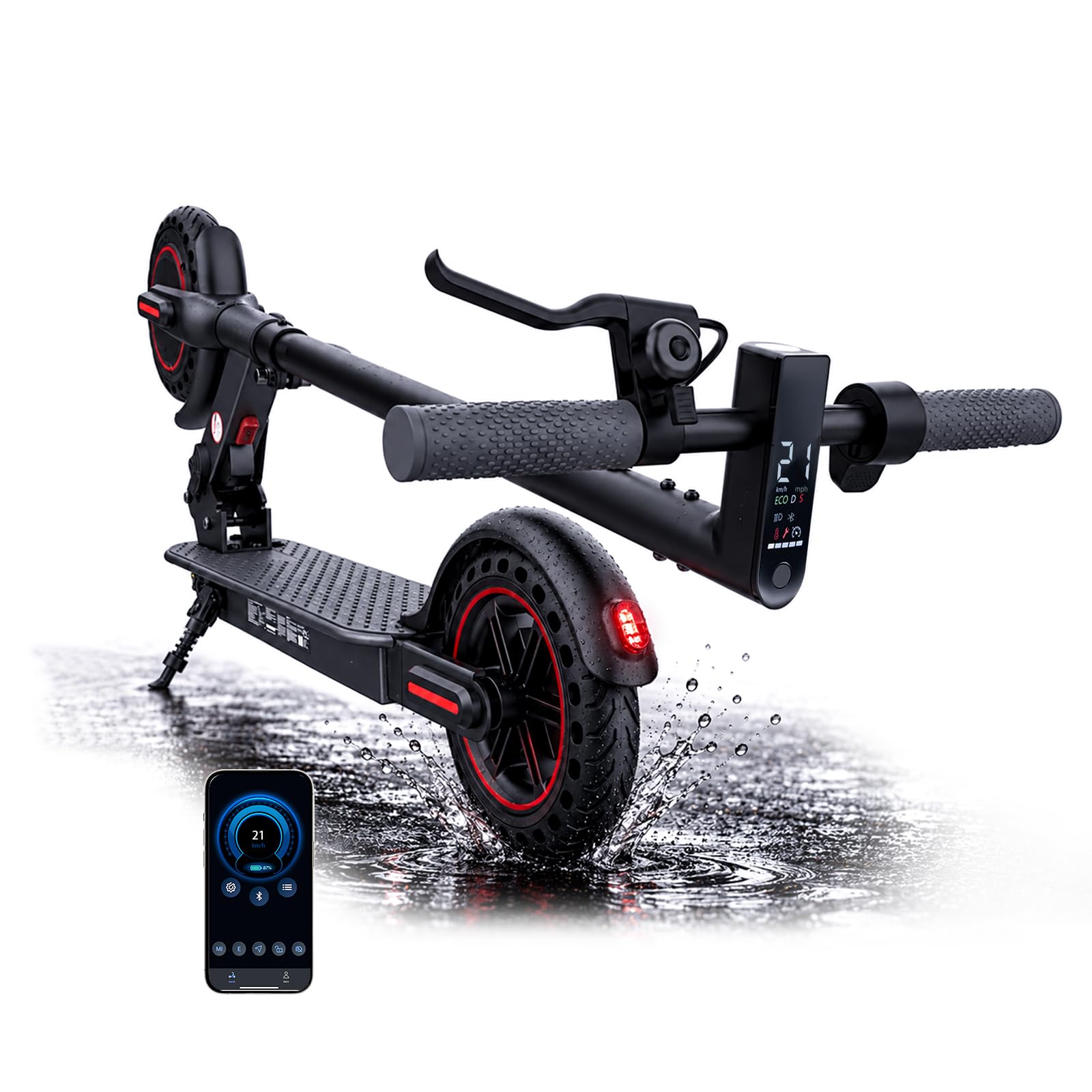
The Hiboy S2 Pro is the budget commuter we keep recommending because it gets the basics right. It has a claimed 25.6-mile range, a 19 mph top speed, and 10-inch solid tires that will not leave you stranded with a flat. The 35.9-pound weight is manageable for a short carry, and the rear dual shock absorbers take the edge off curbs and patched pavement.

Simplicity is the appeal here: a 500W motor, a double braking system with a disc brake, and an app that lets you adjust settings without hunting through menus. The solid tires are a practical choice for city riders who do not want to patch a tube at dusk. The deck feels stable at the 19 mph ceiling, and the folding stem makes it easy to stash in a trunk or closet.

The S2 Pro is not the scooter for a rider who needs 25 mph or trail capability. It is the one for a daily commute on a budget, with enough range for errands and a straightforward build that is easy to live with. We also appreciate the one-year warranty, which is not a given at this end of the market. If your route is mostly smooth bike lane, it is the value pick here.

Pros

  • 25.6-mile claimed range
  • 10-inch solid tires never go flat
  • Rear suspension and disc brake
  • One-year warranty

Cons

  • Solid tires transmit road buzz
Our verdict

We recommend the S2 Pro as the budget commuter to beat here: it has the range, braking, and no-flat tires for daily errands without a premium price.

Check Latest Price
4

Lightweight Suspension

MAXSHOT V1

83 /100
LBD Score Excellent

Key details

Weight
31 lb
Top Speed
19 mph
Suspension
Dual suspension
Claimed Range
21 miles
View on Amazon

A 31-pound scooter with dual suspension is a rare combination, and that is the MAXSHOT V1's calling card. It claims 21 miles of range and a 19 mph top speed, and the 8.5-inch solid tires mean no flats. The dual suspension is the part that matters: it takes the chatter out of brick paths and rough bike lanes that shake a rigid budget scooter.

We were pleased to see MAXSHOT keep the weight low without shrinking the deck or the 265-pound weight limit. The 350W motor is not a hill climber, but it gets up to speed smoothly and holds it on flat commutes. The LED display and cruise control are easy to use, and the folding stem makes it a reasonable trunk or closet stow.

The V1 is a smooth-surface commuter, not a trail scooter. We treat curb drops as obstacles rather than jumps, and the 8.5-inch solid tires are happiest on clean pavement. The four-hour charge time is reasonable for a battery this size, and the 21-mile claim is best treated as an eco-mode figure. If your route includes rough shortcuts, the MAX G2 or ZT3 Pro is the safer step up; if it is flat bike lane and you want suspension without the weight, the V1 is a strong value.

Pros

  • 31 pounds with dual suspension
  • 21-mile claimed range
  • 265-pound capacity
  • Folds for trunk storage

Cons

  • ⚠️ Frame welds can crack after hard curb hits
Our verdict

We recommend the V1 for riders who want dual suspension and a low carry weight for smooth-pavement commutes at a budget price.

Check Latest Price
5

Short City Hops

Aovowheel Y06

82 /100
LBD Score Excellent

Key details

Tires
8.5-inch solid
Weight
22 lb
Top Speed
19 mph
Claimed Range
23 miles
View on Amazon

At 22 pounds, the Aovowheel Y06 is the scooter you can actually carry into class or onto a bus. It folds quickly, has a 265-pound weight limit, and claims 23 miles of range with a 19 mph top speed. That is a remarkable package for the money, and the dual suspension helps it feel less like a shopping-cart ride than the price suggests.

For short, practical trips—a mile or two to school, a train station, or a neighborhood errand—this is the scooter we reach for. The 8.5-inch solid tires shrug off glass and potholes, and the app lets you set speed limits and check battery status. The dual brakes are a welcome sight at this end of the market, too. The 350W motor is modest, but it is enough for flat campus paths and protected bike lanes.

The catch is that the Y06 is a short-trip scooter, not a long-distance commuter. The small solid tires make rough pavement a chore, and steep hills will slow you down. For a short city hop, though, it is hard to beat on weight and price. It is the one we grab when the destination is close and the stairs are not.

Pros

  • 22 pounds and easy to fold
  • 23-mile claimed range
  • Dual suspension and dual brakes
  • 265-pound capacity

Cons

  • Range claim is optimistic at speed
Our verdict

We recommend the Y06 for short city hops and campus commutes where light weight matters more than top speed or plush ride quality.

Check Latest Price
6

Budget Speed

wawscote W3C

81 /100
LBD Score Excellent

Key details

Tires
8.5-inch solid
Weight
31.5 lb
Top Speed
20 mph
Claimed Range
21 miles
View on Amazon

The W3C is the budget scooter for someone who wants a little more speed than the usual 15 mph class. It claims a 20 mph top speed from a 500W motor, 21 miles of range, and a 264-pound weight limit. At 31.5 pounds, it is light enough to wrestle into a trunk but not so light that it feels nervous at speed.

The combination of a 500W motor and a 21-mile claimed range is what makes the W3C stand out at this price. We also noted the dual braking system—electronic front plus rear drum—which gives it a more secure feel than the single-brake scooters that undercut it. The 8.5-inch honeycomb solid tires are maintenance-free, and the app and cruise control are useful extras, not the reason to buy.

The W3C is a smooth-road scooter, and the 20 mph claim is best treated as a flat-road number. If your commute is clean asphalt and you want a bit more punch for the money, the W3C is a sensible pick; if comfort matters, the MAXSHOT V1 or MAX G2 is worth the step up. It is not the scooter for a rider who needs suspension or a plush deck.

Pros

  • 500W motor and 20 mph top speed
  • 21-mile claimed range
  • Dual braking system
  • 31.5 pounds and foldable

Cons

  • Battery range can fall short
Our verdict

We recommend the W3C for budget-minded riders on smooth pavement who want 20 mph acceleration and a light, simple fold.

Check Latest Price

How We Tested the Best Electric Scooters

We started with more than 40 scooters on paper and cut the field to 12. Listings that skipped safety certification, advertised a top speed but no range, or came from brands with no replacement parts or service channel in the U.S. didn't survive the first pass. Every scooter we kept had a folding stem, a published weight, and a company we could actually reach if a battery died in month four. Then we rode each one for six months.

The scooters went where scooters actually go: a four-mile commute with a long climb in the middle, a patched-asphalt bike lane, a brick-paved stretch near my house, and wet pavement the morning after rain. We carried each one up a flight of stairs, folded it into a car trunk, and rolled it onto a bus at rush hour. Two riders of different weights ran the same loops so we could feel how much work the suspension was doing.

At each step we wrote down what happened rather than what the spec sheet promised. We timed 0-to-15-mph runs, repeated the hill climb twice per scooter, and charged from empty with a timer running. On the same fixed six-mile loop we watched how fast the battery bar dropped and whether the real range matched the claim. A luggage scale settled the weight argument, and 25 fold-unfold cycles showed which latches loosened first. From top speed we braked hard on dry and damp pavement and paced off the stopping distance, then checked every stem for play and every deck for flex as the weeks added up. Batteries fade, brakes soften, and stems develop a click — those are the signals we trust, and we'll keep riding these to see which ones hold.

How to Choose an Electric Scooter

Start With the Route, Not the Range Claim

Manufacturers quote range in Eco mode, with a light rider, warm weather, and flat ground. A 43-mile claim can shrink to a fraction of that at 22 mph with hills and a heavier rider, so treat the number as a ceiling rather than a promise. Measure your round trip and leave margin for detours, cold mornings, and battery aging. If your commute is five miles each way, look for a claim well beyond ten miles rather than one that just covers the distance on paper.

Match Motor Power to Your Hills and Weight

A 250W to 350W motor is enough for flat bike paths and short campus hops, especially if you are well under the weight limit. Heavier riders, steep grades, and faster traffic call for a 500W motor or more; the Segway ZT3 Pro's 1600W peak motor is the extreme end of this group. Check the weight capacity as carefully as the wattage. A scooter rated for 265 pounds has more margin for a rider, a backpack, and groceries than one rated for 220 pounds.

Tires, Suspension, and Brakes Shape the Ride

Solid tires resist flats but transmit road buzz; pneumatic and self-healing tubeless tires ride smoother but need more attention. Suspension matters more as wheel size shrinks, which is why a 31-pound scooter with dual suspension can feel calmer than a rigid 22-pound one. Dual brakes are non-negotiable in our view: a front electronic brake and a rear drum or disc give you a backup and better modulation. If you ride in wet weather, prioritize traction control and tires with real tread.

Weigh the Carry, Not Just the Ride

The commute after the commute is the one that decides whether a scooter stays in your life. A 22-pound model is a one-hand carry onto a bus; a 65.5-pound model is a ground-floor machine. Folded dimensions matter for trunks and closets, but weight matters for stairs, elevators, and subway platforms. Before you buy, take the stated weight and imagine lifting it after a long day. If that image is unpleasant, choose lighter or plan a storage spot at street level.

Check Certification, Warranty, and Battery Care

Look for UL 2272 and UL 2271 certification on the electrical system and battery; the Segway models here carry both, and it is a meaningful safety baseline. A longer warranty on the frame, motor, and battery assembly is worth more than a longer list of app features. Charge with the supplied charger, avoid leaving a fully drained battery for weeks, and stop using a pack that swells, smells, or will not charge. Those habits matter more than any single spec.

Frequently Asked Questions

Final Verdict

The Segway Ninebot MAX G2 is the scooter we recommend to most riders because it balances range, comfort, and a stable ride better than anything else here. If your commute includes fast roads or rough paths and you have a ground-floor place to store it, the ZT3 Pro is the performance upgrade. If you want to keep the budget tight, the Hiboy S2 Pro covers the daily commute with no-flat tires and a simpler spec sheet. Start with the MAX G2 unless one of those specific needs pulls you elsewhere.