Best Expandable Home Battery Backup Systems of 2026

The number on the box — watt-hours — tells you less than you'd think. What decides whether a home battery actually carries your house through an outage is whether it can accept another battery module later, and whether its inverter absorbs the surge when a furnace blower or well pump kicks on. Expandable systems do both: start with one unit, add capacity as your budget allows, and skip hauling a generator out into the rain.

My team spent eight months with six of them, from single-unit setups to stacks with two extra batteries, charging from wall outlets and from panels leaned against the fence, and timing how quickly each took over when the grid dropped. Chemistry matters more than marketing here: lithium iron phosphate cells tolerate sitting at full charge for months, which is exactly what a backup does before it has to deliver.

You'll also want to know whether a unit gives you 240-volt output for heavy loads, and how loud the fans get at 2 a.m. We weighed all of it, and the picks below are the ones I'd plug my own refrigerator into.

1

Best Overall

EcoFlow DELTA Pro

90 /100
LBD Score Outstanding

Key details

Weight
99 lb
AC Output
3600W, 4500W with X-Boost
Base Capacity
3600Wh
Expansion Ceiling
25kWh
View on Amazon

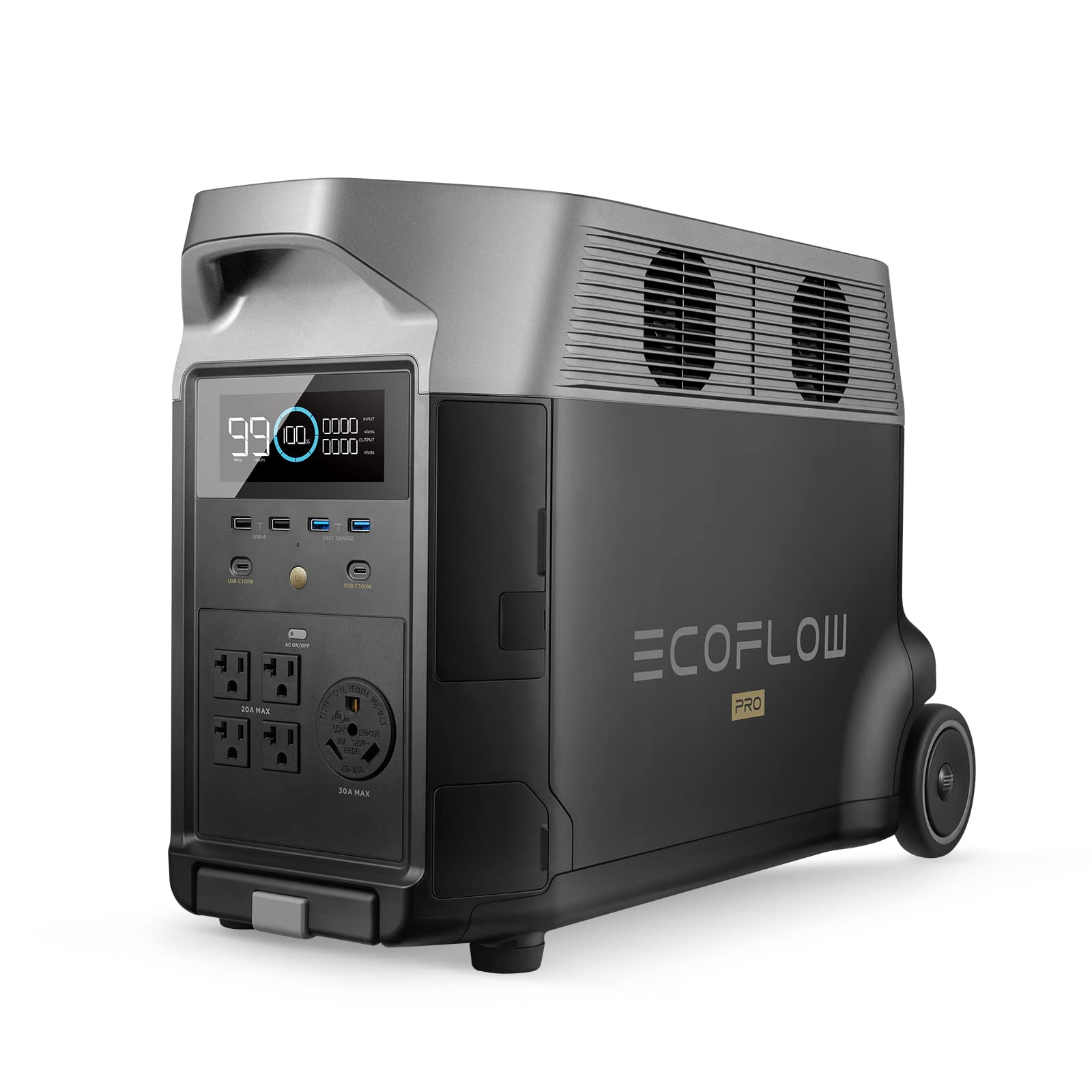
Of everything here, this is the system we leave plugged in and forget about until the lights go out. The DELTA Pro gets judged on the number at the end of its expansion path, 25kWh, reached by adding EcoFlow batteries one at a time, and that is the highest ceiling in this group short of the Explorer 5000 Plus. It matters because a backup you buy this year should still be the backup you own in five.

On its own it carries 3,600Wh and pushes 3,600W of AC, with X-Boost lifting output to 4,500W for motor loads like a well pump or a microwave that pulls hard at startup. The detail we kept coming back to is the outlet count: 15 of them, spread across AC, USB-C, USB-A and DC. That is what lets it work in a kitchen during an outage without a transfer switch or an electrician, with the fridge on one side and the router and a lamp on the other.

Recharging is the part that changes how an outage feels. It refills in 2.7 hours from a standard wall circuit, or 1.8 hours on a 240V circuit, so an afternoon-long outage does not leave you rationing the next one. The app is more useful than we expected, since you can watch the draw from another room instead of walking out to squint at a screen.

Weight is the honest trade. At 99 pounds it lives where you put it, so choose the spot near the door it leaves through, or put it on a cart. Two people make the lift easy; one person makes it an event.

Pros

  • 15 outlets cover a roomful of essentials
  • Expands to 25kWh without replacing the unit
  • Full wall recharge in under three hours
  • X-Boost pushes output to 4,500W

Cons

  • Telescoping handle is the weak point when moving it
  • Expansion batteries are sold separately
Our verdict

We recommend the DELTA Pro for most homes: it holds enough to run the essentials, expands to 25kWh, and recharges before the next storm arrives.
Check Latest Price
2

Best for Generator Owners

Anker SOLIX F3000

85 /100
LBD Score Excellent

Key details

Weight
91.5 lb
AC Output
3,600W
Base Capacity
3,072Wh
Expansion Ceiling
24kWh
View on Amazon

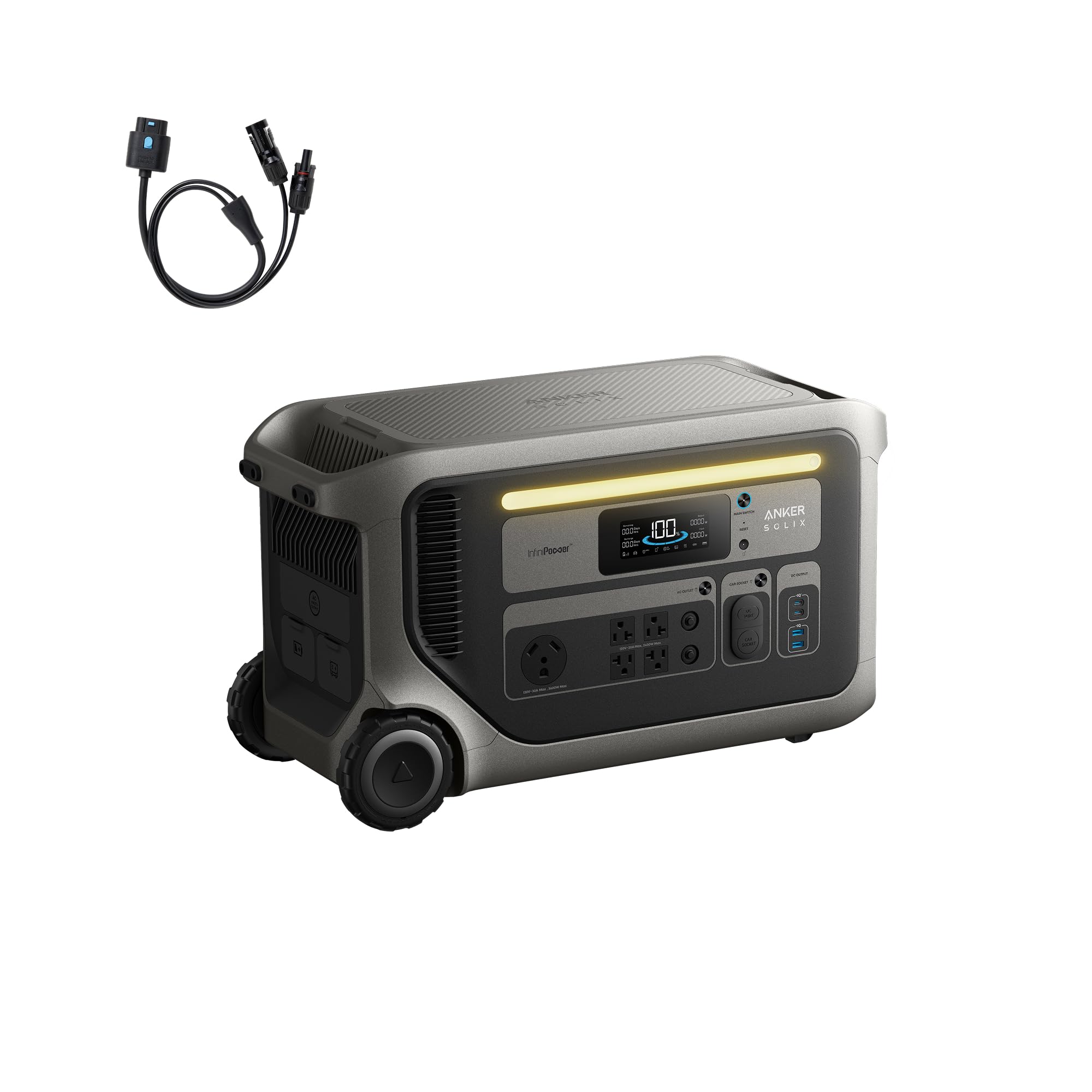
If a generator is already part of your outage plan, start here. The F3000 accepts 3,600W of pass-through charging from a 120V generator while it keeps running your appliances at full output, so you are not choosing between refilling the battery and running the fridge. That one behavior changes what a small generator is worth to you.

On its own it holds 3,072Wh and delivers 3,600W, with expansion batteries taking it to 24kWh. Solar input tops out at 2,400W through separate high-voltage and low-voltage ports, and we appreciate that for a practical reason: you plug a big array into one and a portable panel into the other without hunting for adapters. Anker also rates 125 hours of AC idle standby, and that low draw is what lets a unit sit in UPS mode in a corner for months.

Here is the catch we keep flagging. As a single unit it is 120V only. It handles a subpanel or a room full of cords well, but 240V means pairing a second F3000, another purchase and another 91.5 pounds to place. If a well pump or a big air conditioner is on your must-run list, the BLUETTI Apex 300 gets you there in one box.

The case feels like a piece of equipment rather than a gadget, and setup is simple enough that the app pairing was the only thing we had to look up. Where it earns its place is a garage or utility room with a generator hookup, or an RV with a 30-amp connection, and a household that wants one box doing both jobs.

Pros

  • Runs your loads while a generator recharges it
  • Expands to 24kWh with add-on batteries
  • 2,400W solar input on separate voltage ports
  • 125 hours of AC idle standby

Cons

  • 240V requires pairing a second unit
Our verdict

Buy the F3000 if a generator is already in your plan, since it runs your loads while the generator refills it and stacks to 24kWh.

Check Latest Price
3

Best for Long Outages

Jackery Explorer 5000 Plus

81 /100
LBD Score Excellent

Key details

Weight
134.5 lb
AC Output
7,200W, 14,400W surge
Base Capacity
5,040Wh
Expansion Ceiling
60kWh
View on Amazon

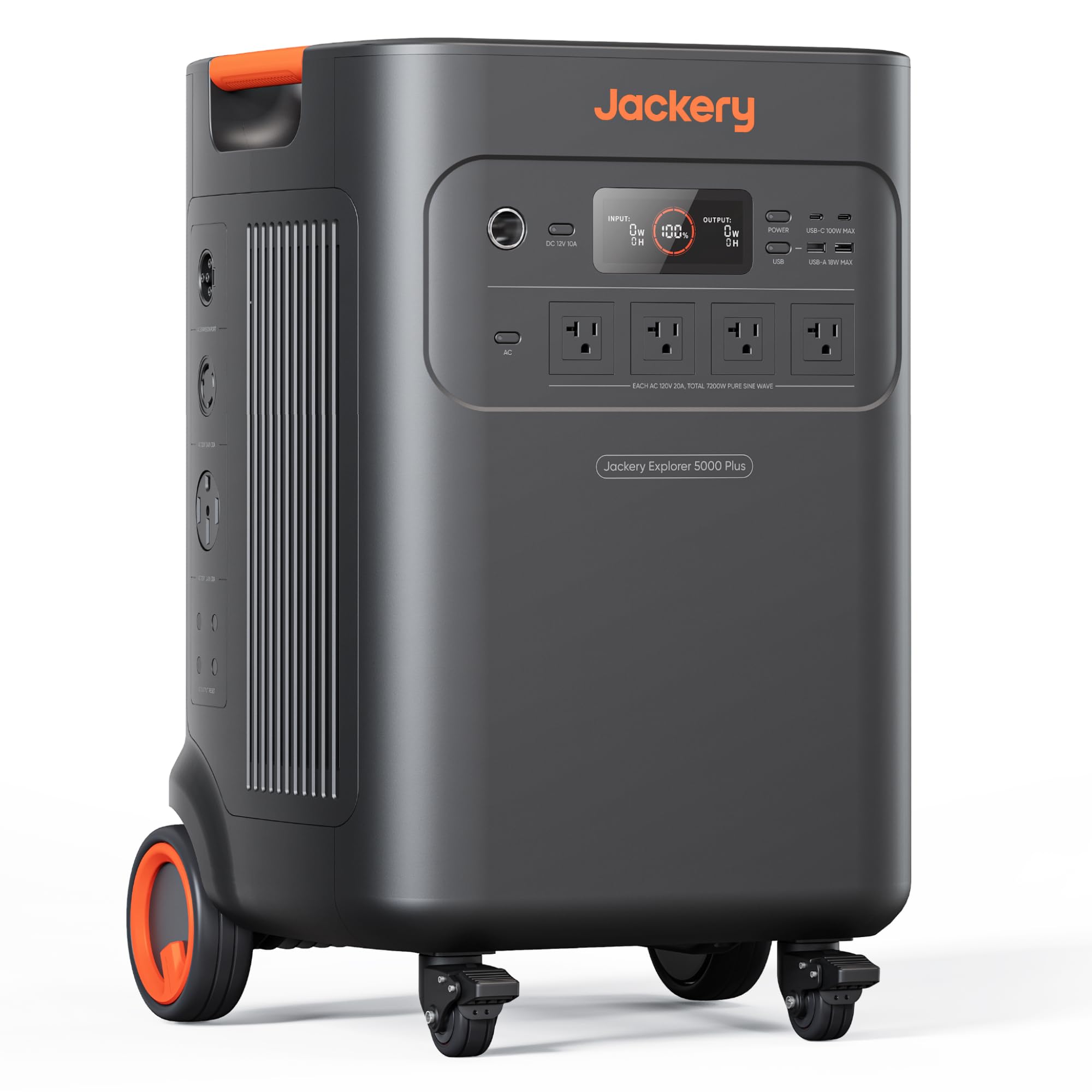
This is not a system you take camping. At 134.5 pounds with a 5,040Wh battery inside, the Explorer 5000 Plus is an installation that happens to be shaped like a portable power station. Once you accept that, the rest of it makes sense.

What it buys is headroom. 7,200W continuous and 14,400W surge, with both 120V and 240V output from one unit, is enough to keep a 5-ton air conditioner running through a summer outage. Expansion climbs to 60kWh, the highest ceiling in this group by a wide margin, and 4,000W of solar input refills the battery in about two hours. For a household that has decided a multi-day outage is the scenario worth planning for, nothing else here covers it as completely.

The wiring is the part to understand before you order. Jackery's 60A Smart Transfer Switch powers 12 circuits at 120V or six at 240V, and it is a separate piece with its own installation. So the station is the battery of a small home system rather than the whole system, and this is the kind of purchase that starts with an electrician's quote before it starts with a shopping cart.

We also like the longevity math: LiFePO4 cells rated for roughly 11 years of daily cycling means the box you install is not the one you replace in three years. It runs quietly enough that a garage placement under a bedroom will not keep anyone awake either.

Pros

  • 7,200W continuous, 14,400W surge
  • 120V and 240V output from one unit
  • Expands to 60kWh, the highest ceiling here
  • About two hours of solar recharge at 4,000W

Cons

  • Circuits need the separate 60A Smart Transfer Switch
Our verdict

Our pick for a household planning around multi-day outages: 7,200W and 240V from one unit, with a 60kWh ceiling and an electrician in the plan.

Check Latest Price
4

Best Lightweight 240V

BLUETTI Apex 300

83 /100
LBD Score Excellent

Key details

Weight
66.1 lb
AC Output
3,840W, 7,680W surge
Base Capacity
2,764.8Wh
UPS Switchover
0ms
View on Amazon

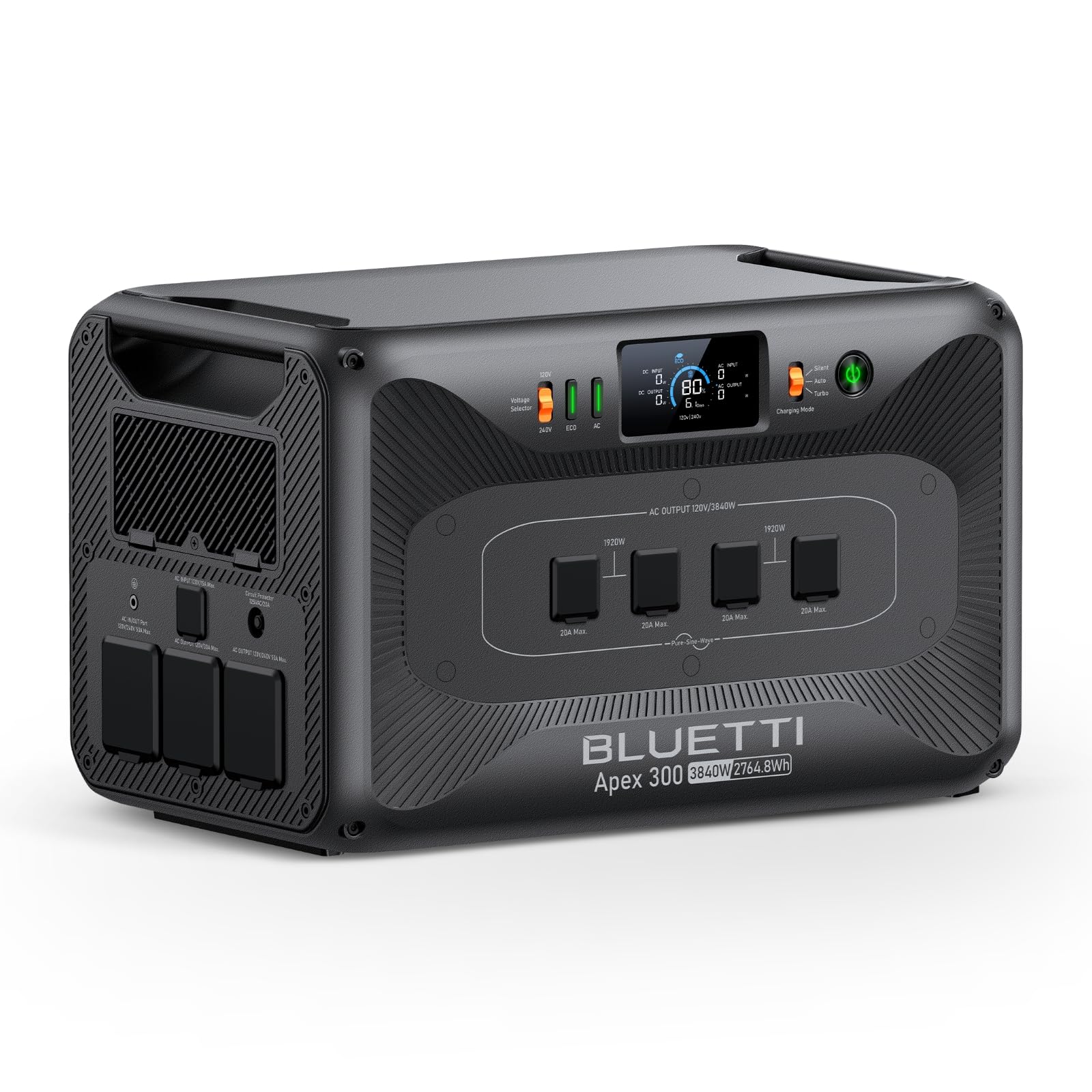
Native 240V in a 66.1-pound box is the trick, and it is why this is the one we point people toward when the must-run list includes something a 120V station cannot touch. Most systems this size make you buy a second unit to get split-phase power. The Apex 300 switches between 120V and 240V on the unit itself or through the app.

The base battery is 2,764.8Wh, and B300K or B500K expansion batteries grow it without replacing the head unit. The 0ms UPS switchover is the spec we cared about most, because a desktop, a router, or a NAS never notice the grid drop. BLUETTI rates it at 22dB, which is quiet enough that a hallway or a home office is a reasonable home for it.

Two things we noticed. The output rating is high for the size, 3,840W continuous and 7,680W surge, but the battery behind it is the smallest base capacity in this group, so high draw and long runtime pull against each other and a space heater on high is not what this unit is for. And 12V DC loads need the Hub D1 add-on, an extra piece if you are wiring it into a van or a travel trailer.

It is also the least expensive route to 240V-capable output here, which for a lot of buyers settles the question before the rest of the comparison starts.

Pros

  • Native 240V without buying a second unit
  • 66.1 lb, the lightest high-output unit here
  • 0ms UPS switchover for electronics
  • 22dB operation at low load

Cons

  • Smallest base battery among the high-output picks
  • 12V loads need the Hub D1 add-on
Our verdict

The Apex 300 is the lightest route to native 240V here, and the one we point RV owners and well-pump households toward.

Check Latest Price
5

Apartment Backup

Jackery HomePower 3000

85 /100
LBD Score Excellent

Key details

Weight
59.5 lb
AC Output
3,600W, 7,200W surge
Base Capacity
3,072Wh
UPS Switchover
20ms or less
View on Amazon

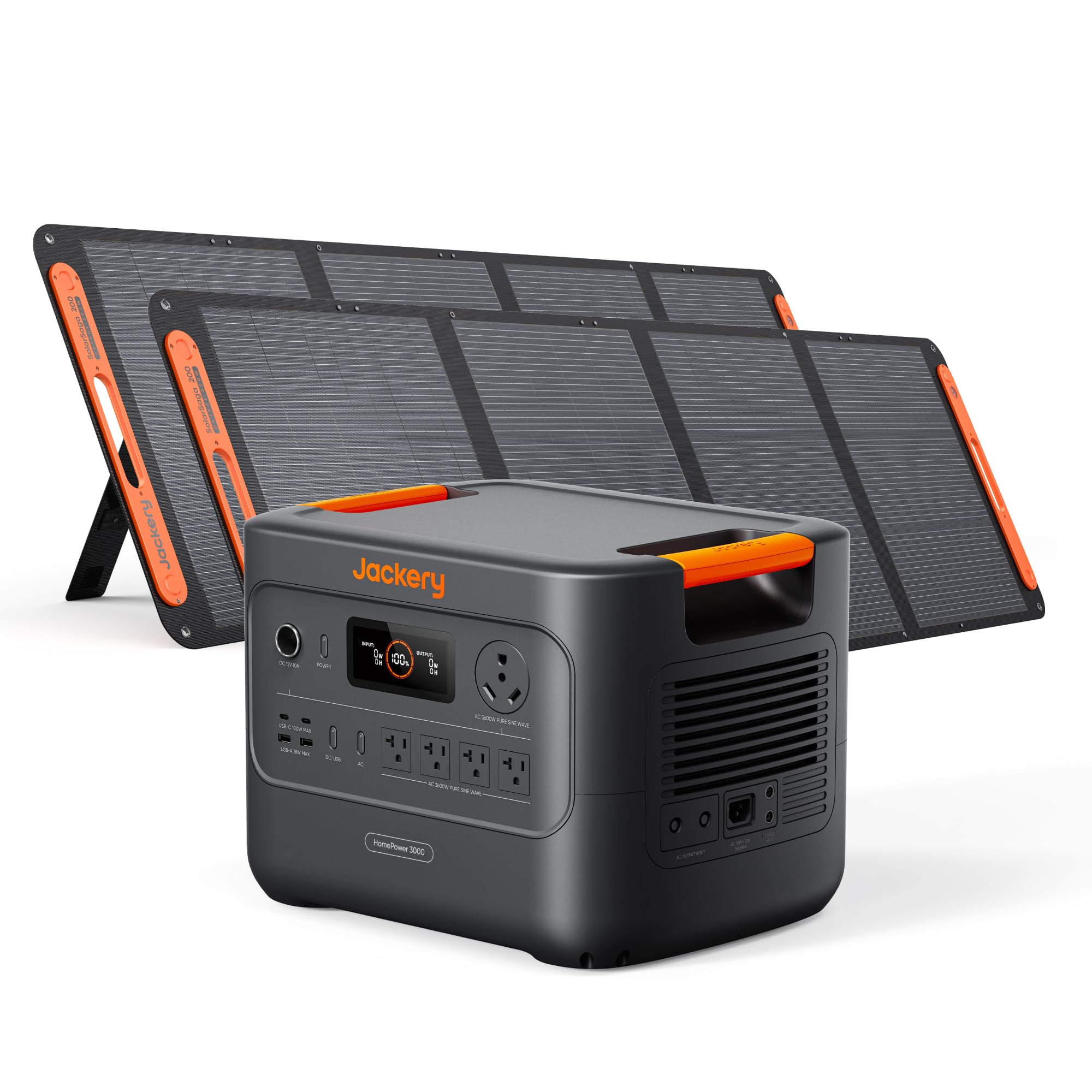
Carrying three kilowatt-hours up a flight of stairs is normally a two-person job. At 59.5 pounds the HomePower 3000 is the one we move alone, and that single fact decides who it is for: apartments, condos, and anyone who needs the backup to follow the need rather than sit in one spot.

It is also the only unit here that arrives with solar in the box, two 200W folding panels and the cables to run them. The 3,072Wh battery delivers 3,600W continuous and 7,200W surge, and the UPS switches in 20ms or less with UL certification behind it, which is the detail that matters when a desktop or a piece of medical equipment is on the other end. We treated it as a UPS first and a camping battery second, and it behaved like a UPS.

The bundle is a closed loop: one box, two panels, nothing else to buy. That suits a household that wants backup solved in an afternoon. If you like the idea of stacking capacity over the years, the DELTA Pro and the Apex 300 leave more room to do it, which is a different purchase with a different plan behind it.

Charging runs 1.7 hours on hybrid AC and solar input, or 2.2 hours on AC alone, quick for a battery this size. And because the panels fold, the whole kit disappears into a closet between outages.

Pros

  • 59.5 lb, the lightest full-size unit here
  • Two 200W solar panels included
  • UL-certified UPS switches in 20ms or less
  • 3,600W continuous, 7,200W surge

Cons

  • Charging stalls in near-freezing temperatures
Our verdict

For apartment and condo backup, this is the one we hand people: 59.5 pounds, panels included, and a UL-certified UPS that switches in 20ms.

Check Latest Price
6

First-Time Buyers

AFERIY P280

83 /100
LBD Score Excellent

Key details

Weight
88 lb
AC Output
2,800W
Bundled Capacity
4,096Wh
Expansion Ceiling
10.24kWh
View on Amazon

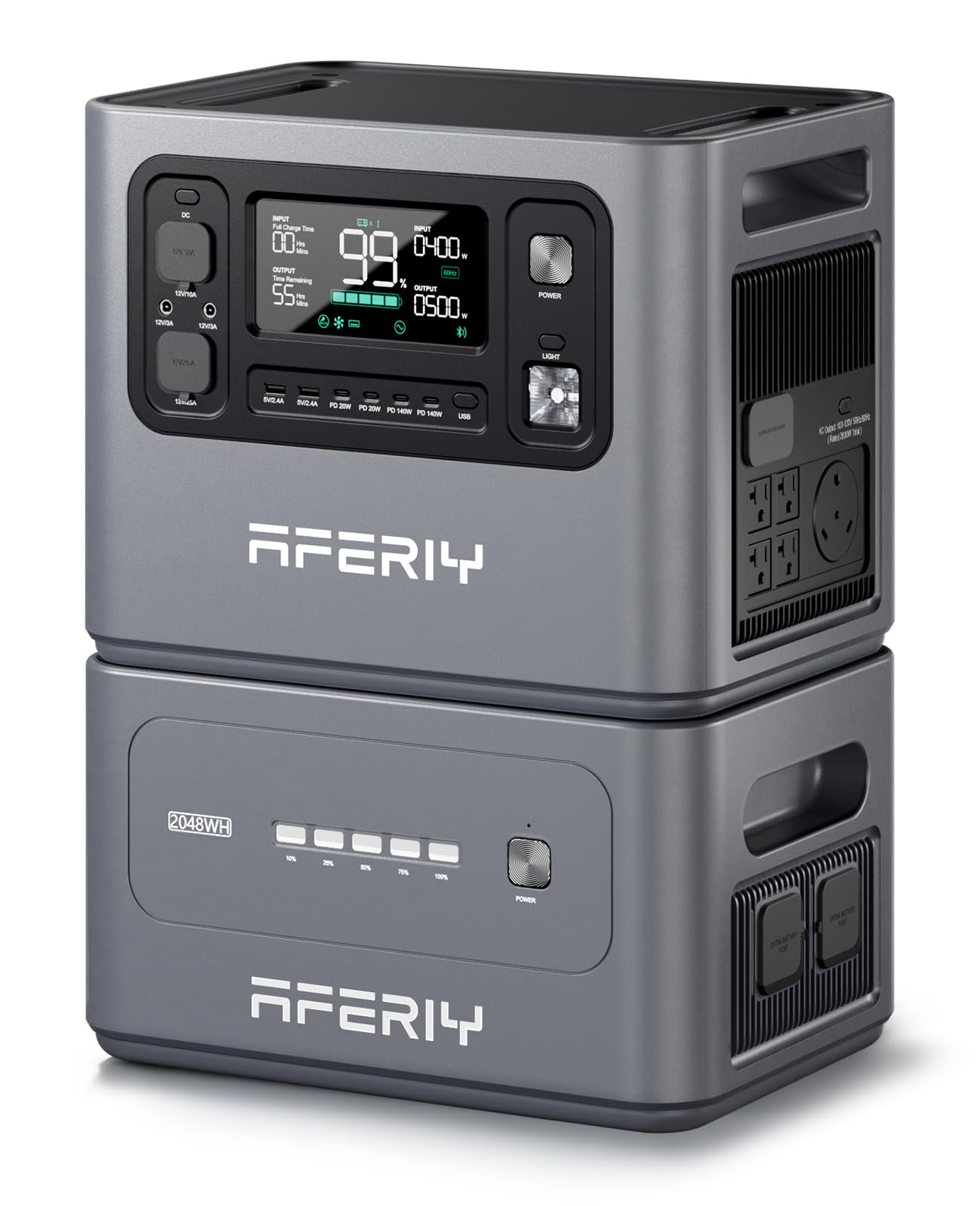
This one arrives as two pieces: the 2,048Wh P280 station and a matching expansion battery that brings the system to 4,096Wh out of the box. That packaging is why it is the budget entry in this group, since you get four kilowatt-hours without paying for a bigger head unit.

Charging is quicker than the money suggests. 1,800W of AC input takes it from empty to 80% in about 38 minutes, and dual PV inputs let you run two solar arrays without an external MPPT controller, normally the kind of thing that costs extra. Cells are rated for 4,000-plus cycles, and the warranty is one of the longer ones here.

Where it sits for us is a fridge, a furnace blower, lights, routers, phones, the load most households actually care about, and it handles that without complaint. It is the right first system for someone who wants real backup without committing to a permanent installation, and the 10.24kWh ceiling means the second and third batteries are a later decision rather than a today one.

The station is roughly 13 by 11 inches, so it tucks onto a closet shelf beside its expansion battery, and the two-piece design lets you move the system in two trips instead of one.

Pros

  • 4,096Wh out of the box with the bundled battery
  • 0% to 80% in about 38 minutes on AC
  • Dual PV inputs without extra MPPT hardware
  • Expands to 10.24kWh

Cons

  • 2,800W AC output rules out 240V appliances
  • Cold can keep it from starting until it warms
Our verdict

We send budget-minded buyers here: 4,096Wh out of the box, 38 minutes to 80%, and room to grow to 10.24kWh.

Check Latest Price

How We Tested Expandable Home Battery Backup Systems

We started with a list of more than 40 expandable systems sold in the U.S. and cut it down with three unglamorous questions: does the base unit use a lithium iron phosphate pack, can the inverter hold at least 3,000 watts continuously, and are the add-on batteries actually in stock with a published cost per kilowatt-hour? Anything that failed those, or that needed more floor space than a corner of a garage, came off. Six systems made it through, and each spent eight months with us.

Every unit took a turn as the only power in the house during a planned outage: main breaker off on a Saturday morning, then the refrigerator, freezer, router, and either the furnace blower or a window air conditioner depending on the season. We started a sump pump and a circular saw to see how the inverter handled a motor's surge, noting whether lights flickered or a clock reset, and ran a 240-volt load wherever a unit offered that outlet. We also added a second battery module mid-afternoon to see whether the system needed a restart, and rolled each one across a garage threshold and up a step to judge the wheels and handles.

Charging got its own timings — from a standard wall outlet and from two panels leaned against the fence — and we watched how much the rate sagged as the pack filled past 80 percent, since that last stretch is where fast-charge claims go soft. One unit spent a winter in an unheated garage. Noise we judged the low-tech way, standing in the hallway at 11 p.m. with a fan spinning. Value came down to total cost per usable kilowatt-hour once one expansion module was included.

How to Choose an Expandable Home Battery Backup

Start With the Circuits You Refuse to Lose

Write the list: fridge, furnace blower, router, a few lamps, a CPAP. Those are 120V loads and every unit here handles them. Then look for the 240V items, a well pump, central air, an electric dryer, because that is where the field splits. A single 120V station cannot feed them; you need native 240V output like the Apex 300 and the Explorer 5000 Plus offer, or two units paired.

Everything else follows from that list. If nothing on it needs 240V, you are buying capacity, recharge speed, and weight, and the smaller units stop looking like compromises.

Base Capacity Versus the Ceiling

Two numbers matter and they answer different questions. Base capacity is what you own on day one and what carries the first night, running from 2.8kWh to 5kWh across these picks. The expansion ceiling is what you can grow into: 10.24kWh on the AFERIY, 25kWh on the DELTA Pro, 60kWh on the Explorer 5000 Plus.

The trap is buying for the ceiling. Most households never stack past one extra battery, so choose a base capacity that covers a real outage and treat expansion as insurance against a longer one.

How It Connects to the House

Any unit here can run an extension cord to a fridge. Far fewer can feed a breaker panel, and none does it alone: that takes a listed transfer switch installed by an electrician. Jackery's 60A Smart Transfer Switch covers 12 circuits at 120V or six at 240V, and it is a separate purchase with its own install.

Cords are fine for a weekend outage and a handful of appliances. If you want wall switches to work during an outage, plan the electrician as part of the budget from the start.

Recharge Speed and Where the Power Comes From

An outage is a race between what you draw and what you put back. Wall charging here runs from about 1.7 to 2.7 hours, while solar input ranges from a pair of 200W panels to 4,000W. The bigger the solar ceiling, the more sense a fixed array makes.

The trap is planning around solar in a storm. Panels under cloud and at a poor angle deliver a fraction of their rating, so treat solar as a long-outage extender and the wall or a generator as the reliable refill. Generator pass-through, which the Anker F3000 supports at 3,600W, lets you run loads while the generator fills the battery.

Weight Decides Where It Lives

These run from 59.5 to 134.5 pounds, and that spread settles placement more than any other specification. A 60-pound unit goes on a closet shelf and comes out when needed; a 134-pound unit gets a permanent slab and a story about how it got there.

Pick the spot before you order: near the door it leaves through, on a shelf you can reach without a ladder, with the outlets accessible without dragging it out. A cart helps more than a handle does.

Frequently Asked Questions

Final Verdict

Most households should buy the EcoFlow DELTA Pro. It holds enough to carry a fridge, a router, and a few lights through the first night, it refills in under three hours so the next outage does not catch you empty, and 25kWh of expansion means the system grows with your budget instead of being replaced.

The exception is specific and worth honoring. If you already own a generator, the Anker SOLIX F3000 puts it to better use than anything else here. If a well pump or a big air conditioner has to keep running and you want the whole system light enough to move, the BLUETTI Apex 300 gets you native 240V in a single 66-pound box.