Best Solar Generators for Home Backup of 2026

The first time a storm knocked our power out for two days, I learned that a flashlight and a charged phone don’t keep the fridge cold or the router blinking. A solar generator is the fix: a battery you can charge from the wall or from panels, then use to run the fridge, a fan, lights, a CPAP, and the internet. The catch is that the category runs from camping batteries with a panel tossed in to real home-backup systems, and the difference shows up during an outage, not on the box.

I’ve spent eight months with seven units, timing wall and solar charging, running fridges and routers down to empty, and carrying each one up and down stairs to judge weight and durability. Battery chemistry, battery life, power delivery, build quality, and value all got the same scrutiny, along with clean backup switchover and whether a system could expand later. The picks below are the ones that made outage days feel less like camping and more like home.

1

Best Overall

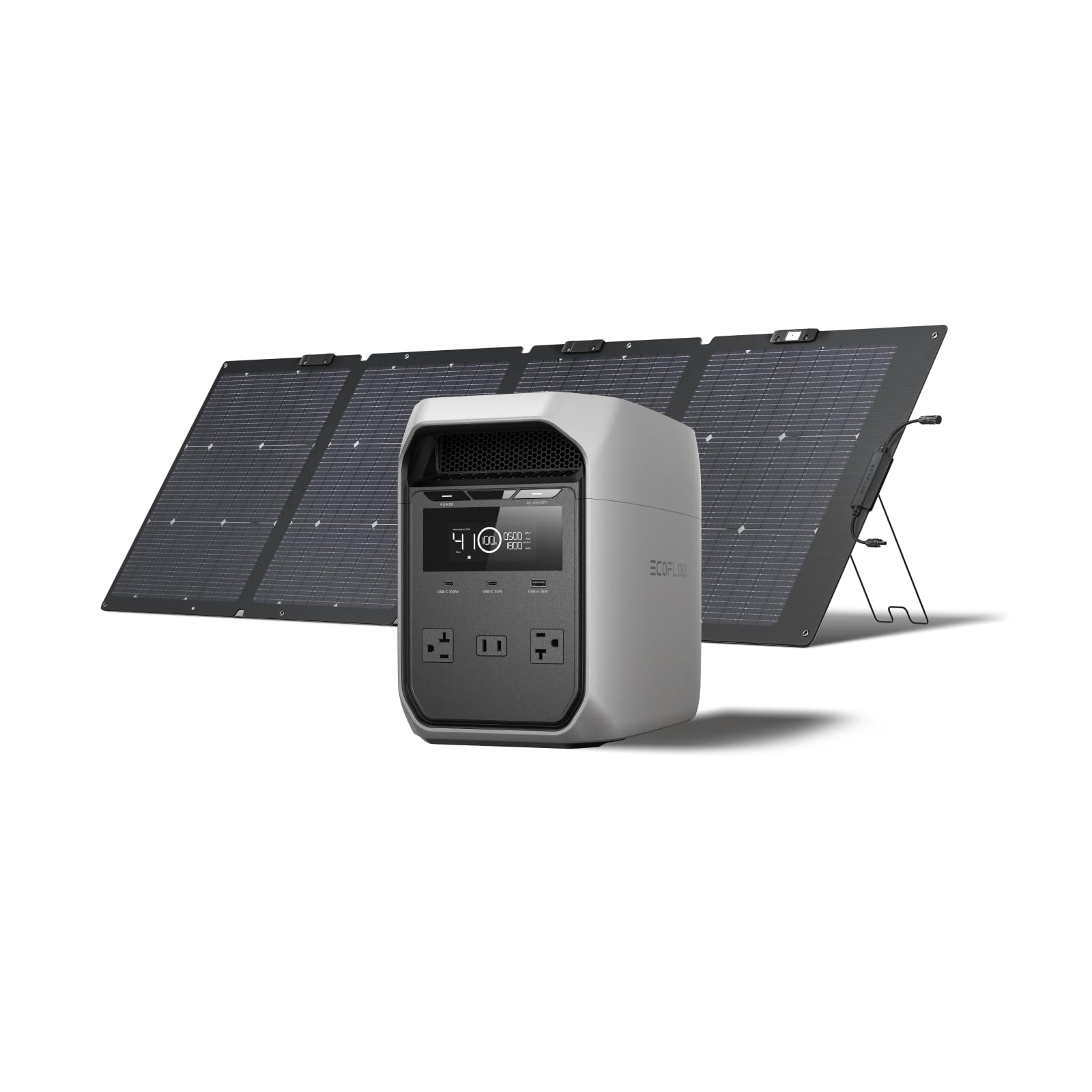
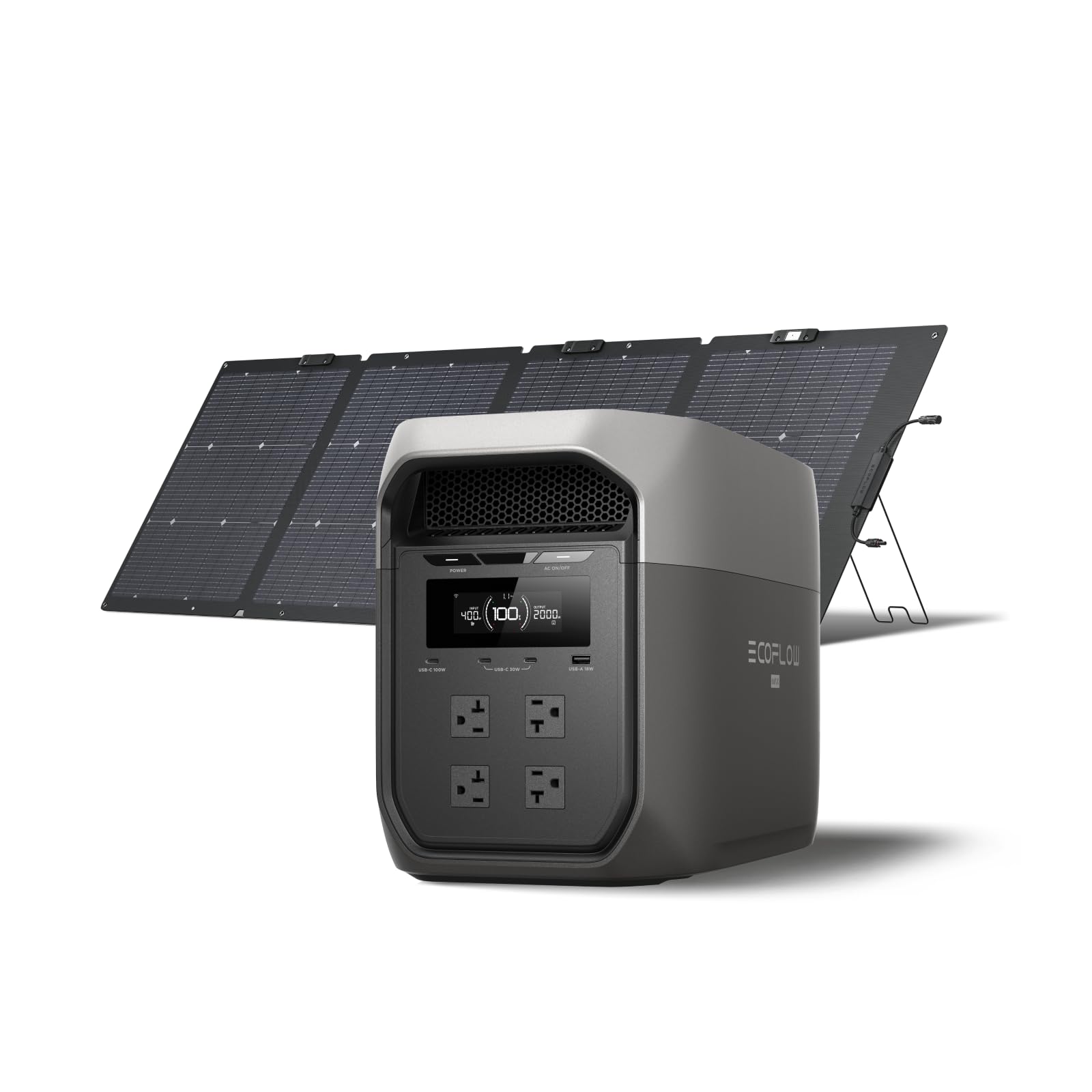
EcoFlow Delta 3 Max

88 /100
LBD Score Excellent

Key details

Capacity
2,048Wh
AC Output
2,400W (3,400W X-Boost)
Switchover
10ms
Included Solar
220W bifacial
View on Amazon

Two kilowatt-hours and 2,400W of output is where a power station stops being camping gear and starts being household equipment. That's a fridge, the router, a run of lamps and a laptop through a full day of an outage, with enough surge in reserve to start the compressor, run the microwave or boil a kettle while the grid is out.

It's also the balance we kept coming back to. The Delta 3 Max does the same 2kWh job as the Jackery Explorer 2000 v2 with a bigger panel in the box and a lower price, and it adds headroom the 1kWh units can't match — which is why it's the system we recommend first. X-Boost pushes output to 3,400W for appliances that ask for more than the inverter's rating, and the 10ms transfer keeps a desktop or a NAS running through the switch.

The 220W bifacial panel is a detail worth having: it collects light on both faces, so on grass, gravel or snow it picks up reflected light the front alone would miss. Add app monitoring, three AC outlets and a five-year warranty, and the package is more complete than the money suggests.

Two limits. There's a single solar input, so a bigger array has to come in through one lead, and 2,048Wh is still a circuits-not-house number — you'll be choosing what runs, not running the dryer and the furnace together. If the plan is to keep a whole house alive for a week, the HomePower 3600 Plus is the tool; for the day or two most households have to get through, this one covers it.

Pros

  • 2,048Wh covers a full day of essentials
  • 3,400W X-Boost handles high-draw appliances
  • 10ms transfer keeps electronics running
  • Bifacial 220W panel in the box

Cons

  • Single solar input limits panel expansion
Our verdict

Our overall pick: 2,048Wh and 2,400W with a 220W panel, a 10ms switchover and a five-year warranty, for less than the other 2kWh system here.
Check Latest Price
2

Best Whole-Home Backup

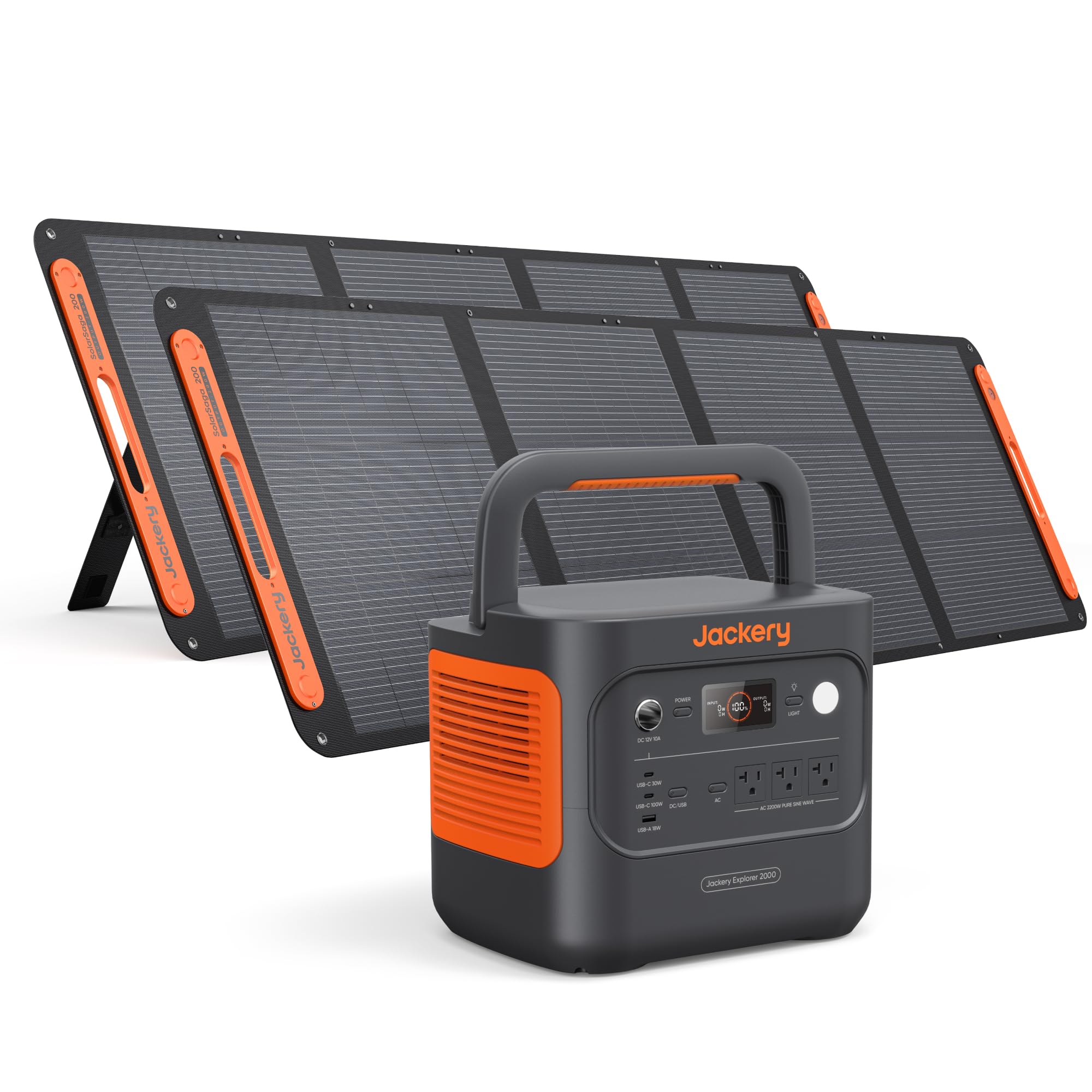
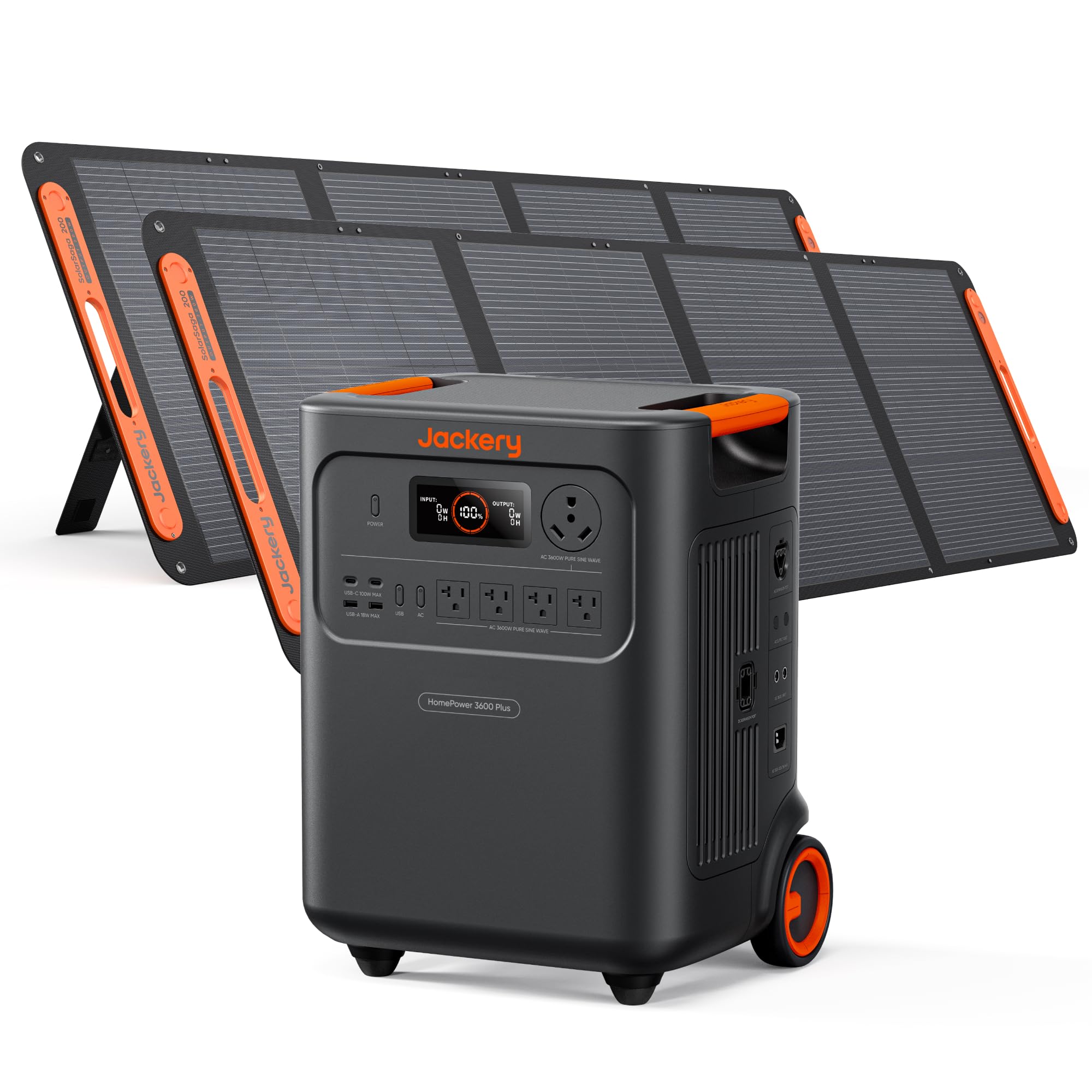
Jackery HomePower 3600 Plus

86 /100
LBD Score Excellent

Key details

Capacity
3,584Wh
AC Output
3,600W (7,200W parallel)
Expandable To
21kWh
Included Solar
2 x 200W
View on Amazon

A transfer switch is what turns a battery into house wiring, and this is the only system here built to sit on one: paired with a manual transfer switch it backfeeds chosen circuits instead of trailing extension cords through the kitchen. Buy a second unit and the pair runs in parallel for 240V and 7,200W, which is what a well pump or a dryer needs.

On its own it's the biggest system here: 3,584Wh and 3,600W continuous, LFP cells in a ceramic-membrane construction rated to 302°F, and expansion to 21kWh with add-on batteries. That's a fridge, a furnace fan, the router and a run of lights well past the first evening of an outage.

This is the system we point to when the brief is the whole house rather than a hallway. The case for the money rests on three things: a real transfer-switch path, 240V once a second unit joins it, and the ability to grow to 21kWh instead of being replaced. At 77.2 lb it's no lightweight, but the suitcase handle and the wheels make the weight a spec rather than a chore.

One thing to plan for: 400W of bundled solar on a 3,584Wh battery is an all-day refill in good sun. The two-hour 0-100% figure comes from hybrid AC plus DC charging, not from the panels, so a multi-day outage needs a wall circuit, a generator, or more panel than the box includes.

Pros

  • 3,584Wh with expansion to 21kWh
  • 3,600W continuous, 7,200W in parallel
  • Transfer-switch pairing for wired backup
  • Rolls on wheels despite 77.2 lb

Cons

  • Transfer switch sold separately
Our verdict

The whole-home answer: 3,584Wh, 3,600W, transfer-switch pairing and expansion to 21kWh, for a house with a well pump or a panel it can be wired into.

Check Latest Price
3

Best Value

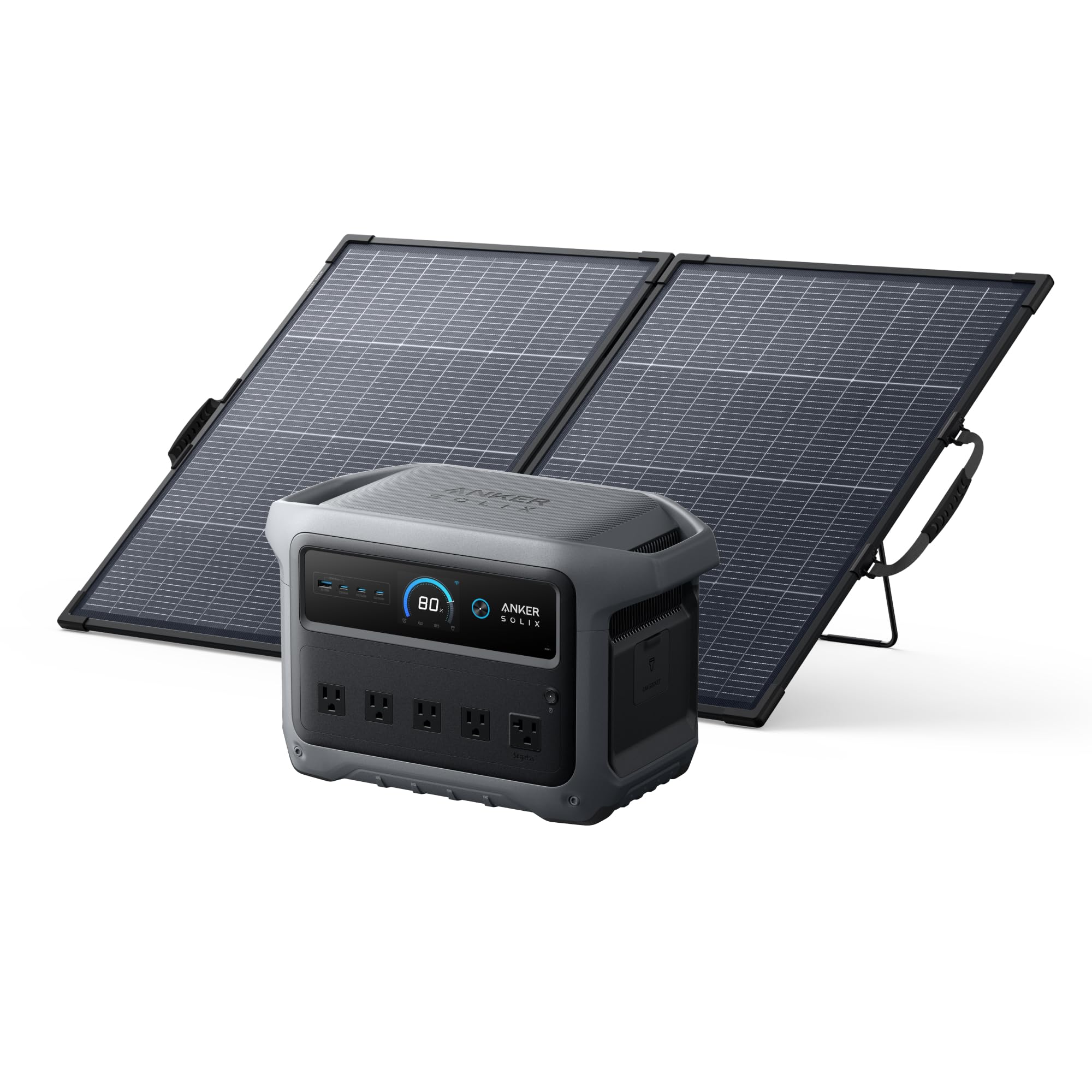
Anker SOLIX C1000 Gen 2

93 /100
LBD Score Outstanding

Key details

Capacity
1,024Wh
AC Output
2,000W (3,000W peak)
Battery Rating
4,000 cycles to 80%
Included Solar
200W
View on Amazon

Four thousand cycles to 80% is the number to weigh before any of the others. That's Anker's rating for the C1000 Gen 2's LFP battery, and it's what separates a backup you'll still trust in ten years from one you quietly stop reaching for.

Set that against the price and you have our value pick. 2,000W continuous with a 3,000W peak starts a fridge, runs a microwave or spins a miter saw; 1,024Wh carries phones, lights, the router and a fridge through most of a day; and a five-year warranty matches the longest here. It also has the strongest record of any 1kWh system on this page.

Nine ports mean the small stuff doesn't need a power strip, and the case is 14% smaller and 11% lighter than comparable 1kWh models — the difference between a shelf and a corner of the floor. The screen is bright and the controls are simple enough that you won't be reading a manual in the dark.

The one number that needs reading twice is the 1.8-hour solar recharge: it assumes 600W of panels, and the 200W panel in the box is a third of that. Treat solar as a slow top-up and a wall outlet as the fast fix, and this is a station that will earn its shelf space for a decade.

Pros

  • 4,000-cycle LFP battery rating
  • 2,000W continuous, 3,000W peak
  • Nine ports for devices
  • Five-year warranty

Cons

  • A day of essentials, not a multi-day outage
Our verdict

Our value pick: 2,000W and 1,024Wh with a battery rated to 4,000 cycles, nine ports and a five-year warranty.

Check Latest Price
4

Best Lightweight 2kWh

Jackery Explorer 2000 v2

91 /100
LBD Score Outstanding

Key details

Capacity
2,042Wh
AC Output
2,200W
Switchover
20ms
Included Solar
2 x 200W
View on Amazon

The fridge motor stumbles, catches, and the router never even blinks. That 20ms switchover is the first thing we check on a unit that will stay plugged in all year, and it's why this is our pick for anyone who has to carry their backup rather than park it.

2,042Wh and 2,200W is the sensible middle: a fridge, lights, the router and phones for a full day, plus a microwave without tripping. Jackery lists it 41% lighter and 34% smaller than conventional 2kWh LFP stations, the five-year warranty matches the best here, and three AC outlets plus 100W USB-C cover everything else on the desk.

The trade for that lighter build is the missing cart, so it wants a spot at waist height rather than a basement shelf, and refilling 2,042Wh from 400W of panel is a long sunny day — keep a wall circuit in the plan. Neither is a dealbreaker; both are the reason this one stays in the hallway instead of the garage.

Pros

  • 20ms switchover for plugged-in electronics
  • 41% lighter than conventional 2kWh units
  • Five-year warranty
  • Three AC outlets plus 100W USB-C

Cons

  • No 240V output or well-pump headroom
  • No cart or wheels in the box
Our verdict

The 2kWh system to buy if it has to be carried: 2,042Wh, 2,200W, a 20ms switchover and a five-year warranty.

Check Latest Price
5

Best Budget

EcoFlow Delta 3 Classic

89 /100
LBD Score Excellent

Key details

Capacity
1,024Wh
AC Output
1,800W (3,600W surge)
Switchover
10ms
Included Solar
220W
View on Amazon

The smallest system we're happy to recommend is also the best-proportioned one. 220W of panel on 1,024Wh of battery is the most generous solar-to-storage ratio among the small systems here, and it comes with a 10ms transfer and a five-year warranty.

1,800W continuous and 3,600W of surge start a fridge compressor without complaint, X-Boost stretches the output for appliances that ask for more, and 1,024Wh runs the router, lights, phones and a fridge for most of a day. Add 0-80% in 45 minutes on a wall circuit and it's a system you top up between outages rather than plan your week around.

Solar is the slow side: the 5.8-hour recharge assumes that 220W panel in good sun, so a full refill is a project rather than a pit stop. And if a unit is going to fail, it fails early — run it hard in the first week while the return window is open. Past that, it's the least fussy way into a complete system.

Pros

  • 220W panel is the largest on a 1kWh system here
  • 10ms transfer time
  • 0-80% in 45 minutes on AC
  • Five-year warranty

Cons

  • 5.8-hour solar refill in good sun
Our verdict

The value pick at 1kWh: 1,024Wh, 1,800W with 3,600W of surge, the biggest bundled panel of the small systems here, and a five-year warranty.

Check Latest Price
6

Expandable Starter Kit

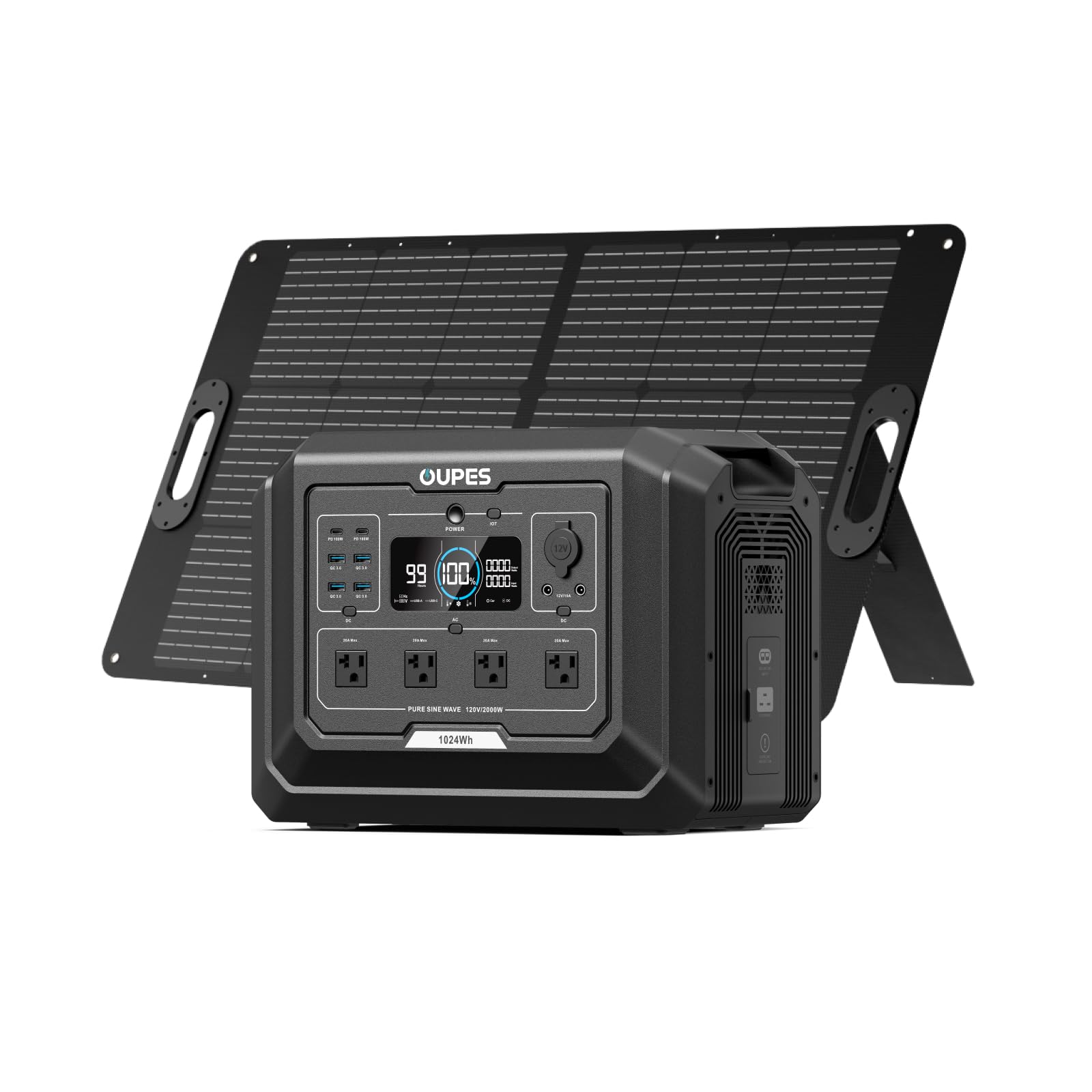
OUPES Mega 1

89 /100
LBD Score Excellent

Key details

Capacity
1,024Wh
AC Output
2,000W (4,500W surge)
Expandable To
5,120Wh
Included Solar
100W
View on Amazon

Thirty-six minutes from empty to 80% changes how you use a power station. Plugged into a wall outlet the Mega 1 refills over a lunch break, which means an outage that outlasts the battery doesn't have to outlast your patience.

1,024Wh and 2,000W continuous with a 4,500W surge start most household loads, 13 ports mean you won't need a strip, and 27.8 lb is light enough to move between rooms without a plan. Two add-on batteries take it to 5,120Wh, so the capacity can grow without the unit being replaced.

The bundled panel is the weak link. 100W on a 1,024Wh battery is a top-up, not a refill, and the 1.3-hour solar figure assumes up to 800W of input — eight times what's in the box. Solar-ready is the honest description; solar-first it isn't.

For an apartment, a first setup, or anyone whose main charger is a wall outlet with a panel for weekends, that's a sensible trade: fast, expandable and light, with capacity you can add later instead of buying twice. Just don't count on the sun alone to keep it full.

Pros

  • 0-80% in 36 minutes on AC
  • Expands to 5,120Wh with add-on batteries
  • 27.8 lb with 13 ports
  • 4,500W surge

Cons

  • 100W bundled panel is a top-up only
Our verdict

Fast and expandable: 1,024Wh, 2,000W and 0-80% in 36 minutes on AC, with room to grow to 5,120Wh.

Check Latest Price
7

Grab-And-Go Power

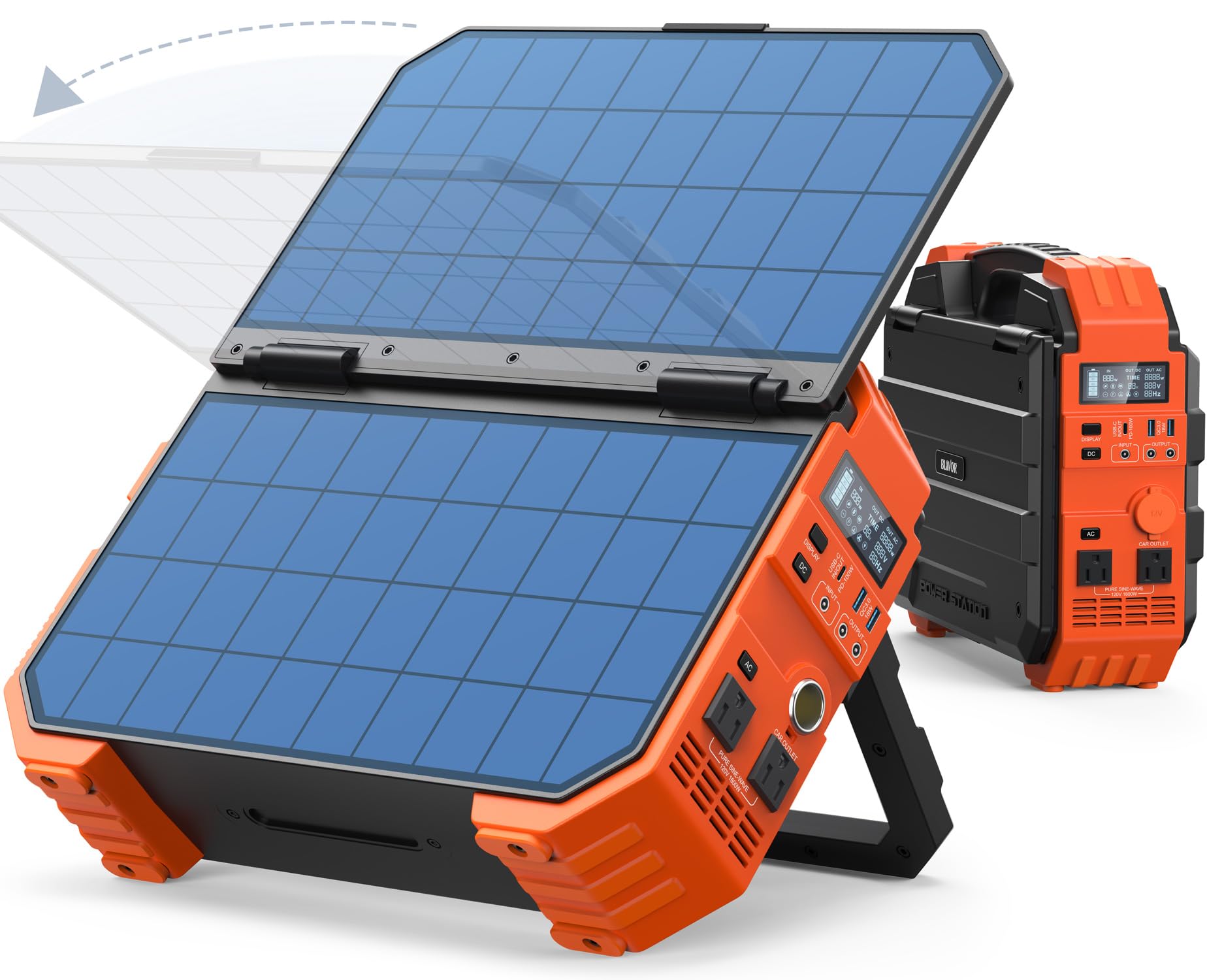
BLAVOR 1600W

84 /100
LBD Score Excellent

Key details

Capacity
1,024Wh
AC Output
1,600W (3,200W peak)
Battery Rating
3,500+ cycles
Built-in Solar
40W
View on Amazon

The panel folds out of the case itself: no second bag to carry, nothing left behind in the garage. For a car, a boat or a closet shelf, that's a genuinely tidy piece of design, and it's the only system here that solves the problem of losing the panel.

The rest is a solid 1,024Wh station: 1,600W with a 3,200W peak, LiFePO4 rated for more than 3,500 cycles, 100W USB-C, and four ways to recharge — wall, car, built-in panel or an external panel you add yourself.

Forty watts is a trickle, though. On a 1,024Wh battery it takes days of good sun to refill from empty, so we treat this as a power station with a solar top-up built in rather than a system you can live off the sun with. Keep it on a wall outlet, let the panel hold the charge between trips, and add a folding panel if you want real off-grid capability.

Pros

  • Built-in 40W panel, nothing extra to carry
  • 1,600W with a 3,200W peak
  • LiFePO4 rated for 3,500+ cycles
  • Four recharge routes

Cons

  • 40W panel takes days to refill from empty
Our verdict

For grab-and-go backup with no separate panel to lose: 1,024Wh, 1,600W and a folding 40W panel built into the case.

Check Latest Price

How We Tested Solar Generators for Real Outages

We started by pulling together models sold as home-backup systems rather than pure camping batteries, then narrowed by capacity, continuous and surge output, whether a solar panel was included, expandability, and physical size. That left seven units, which we used for eight months. Testing happened at home, not on a bench: I ran a fridge, modem, router, lamps, a fan, and a CPAP off each one during planned outage drills, and we set the panels outside on sunny afternoons, partly cloudy days, and in shade to see how solar charging really behaved.

We timed every recharge from a standard wall outlet and from the included panels, noting when the fans kicked on and how hot the units got. To judge power, we started a fridge compressor, ran a microwave in short bursts, and watched whether anything tripped or reset; we also pulled the plug on a router in UPS mode to see if the connection stayed up. Battery chemistry and battery life got tracked across repeated run-down and recharge cycles over the eight months, with notes on how much usable capacity remained after the display claimed a low percentage.

Because these get moved—garage to kitchen, house to campsite, closet to outage—we carried each one up and down stairs, loaded them into a car, and checked handles, ports, screens, and cases for wear. We weighed the tradeoff between capacity and portability, compared what each system could run against what it cost, and tested expansion where the unit allowed it. The models that rose to the top were the ones that stayed useful after the novelty wore off.

How to Choose a Solar Generator for Home Backup

Start With Watt-Hours, Not Watts

Capacity decides how long you sit through an outage; output decides what you can switch on while you wait. A typical fridge draws roughly 1 to 1.5kWh a day, so 1,024Wh carries a fridge and a few small loads for most of a day, 2kWh gets a fridge, router, lights and phones through a full one, and the 3.5kWh class starts to look like a multi-day plan.

Write down the three things you refuse to lose and add up their daily draw before you shop. Buying two kilowatt-hours more than you will ever discharge is money parked in a closet.

Match Output to What Has to Start

Running watts matter less than the spike. A fridge compressor pulls several times its rated draw for a second or two on startup, which is why surge figures — 3,600W on the Delta 3 Classic, 4,500W on the OUPES Mega 1 — sit beside the continuous number. Anything with a motor needs that headroom: a well pump, a furnace fan, a sump pump.

Only the HomePower 3600 Plus reaches 240V, and only with a second unit in parallel, so a house with a 240V well pump should plan around that. For electronics, lamps and a fridge, 1,800 to 2,000W continuous is plenty.

Treat the Bundled Panel as a Starter Kit

Do the division before you believe a recharge time. 200W of panel on a 1,024Wh battery needs about five hours of full sun to refill from empty, and 400W on 3,584Wh needs most of a bright day — which is why quoted solar times usually describe a unit's maximum input rather than the panel in the box.

Use the bundled panel to hold a charge between outages and to stretch a sunny week. If solar is the main plan, buy a unit that accepts 600W or more, and expect to add panels.

Decide Where It Lives Before It Arrives

Under about 40 lb a unit gets carried; over 60 lb it wants wheels or a permanent home. The HomePower 3600 Plus is 77.2 lb and rolls like a suitcase; the OUPES Mega 1 is 27.8 lb and lifts with one hand. A basement stair is a different proposition from a hallway closet, so choose the spot before you order.

If the unit will stay plugged in behind a desk or a router, switchover time is the spec that matters. At 10 to 20ms, a desktop, a modem or a NAS rides through the outage instead of rebooting — the difference between backup you set and forget and backup you have to go and plug in.

Check the Battery Rating and the Warranty

LFP batteries dominate this set for good reason: 3,500 to 4,000 cycles to 80% is a decade of intermittent use rather than a few seasons. Warranty length splits the field, with five years on the Jackery, EcoFlow and Anker units here.

Expansion is the other upgrade path. The HomePower 3600 Plus takes add-on batteries to 21kWh and the OUPES Mega 1 to 5,120Wh, which lets you buy the capacity you need now and add later instead of replacing the whole system.

Frequently Asked Questions

Final Verdict

The EcoFlow Delta 3 Max is the system we recommend for a typical house: two kilowatt-hours, 2,400W, a 220W bifacial panel and a 10ms switchover, for less money than the other 2kWh unit here.

If your backup has to reach a well pump or a transfer switch, the Jackery HomePower 3600 Plus is the one that can. If a day of essentials is the realistic brief and the unit has to fit on a shelf, the Anker SOLIX C1000 Gen 2 does the job in the smallest package.