Best Overall
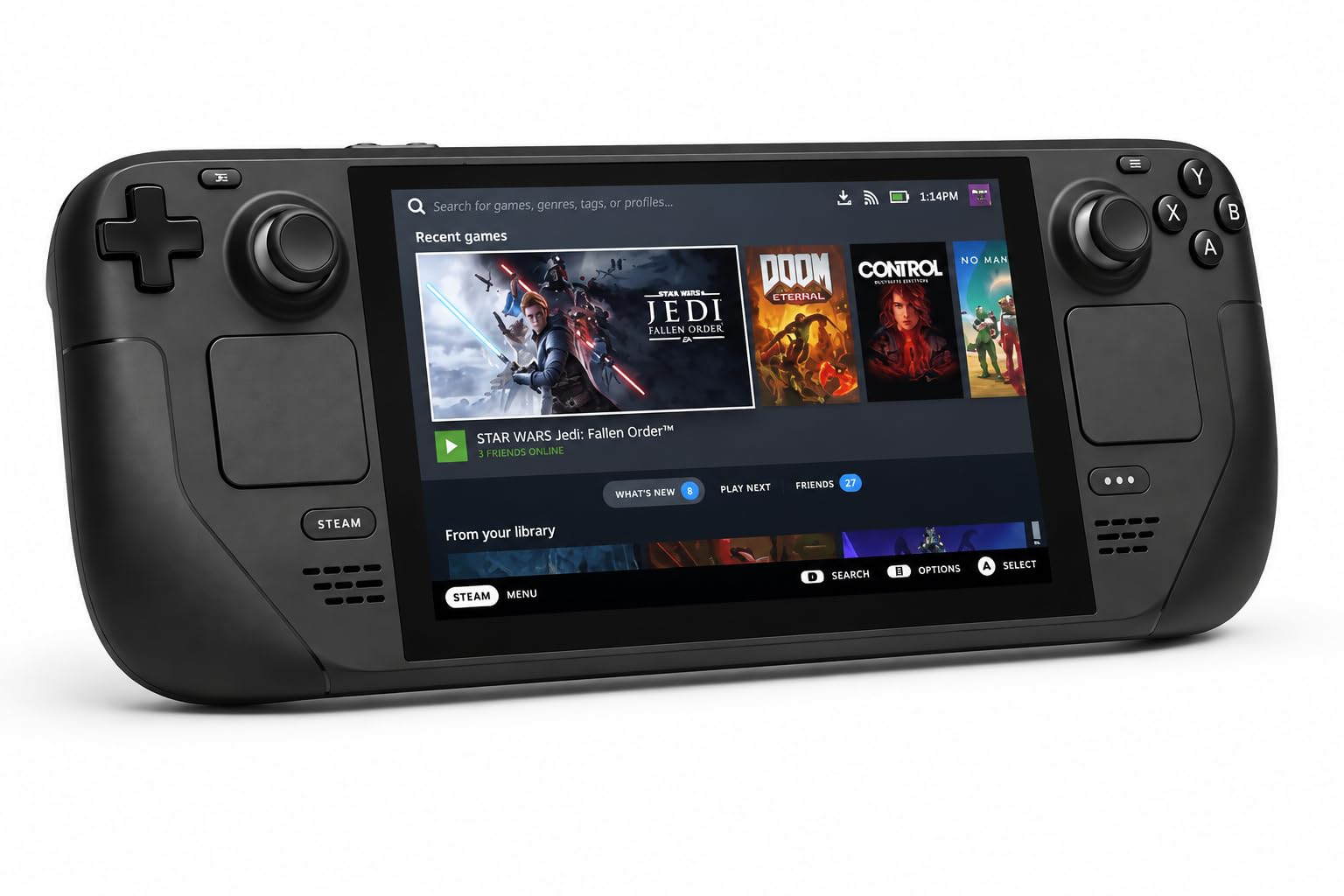
Steam Deck OLED
Key details
- Battery
- 50Whr, 3-12 hours of play
- Display
- 7.4-inch 1280 x 800 HDR OLED, 90Hz
- Storage
- 1TB NVMe SSD
- Expansion
- microSD
The 7.4-inch OLED is where this one earns its keep. Blacks drop away completely, HDR highlights have real punch, and the 90Hz refresh is smooth enough that we stopped thinking about frame rates and just played. The 1TB model adds etched anti-glare glass, a detail we expected to shrug at and didn't: next to a bright window, the reflections that wash out a glossy panel barely register. Then there's the habit the Deck builds. Tap the power button mid-game, set it down, pick it up later, and you're exactly where you left off.
That resume behaviour is the line between a handheld PC and a small laptop with controllers bolted on. SteamOS boots into big-screen tiles with compatibility badges attached, and it treats battery as something worth protecting. Older titles and indies run for hours; a current AAA game at full tilt is a different afternoon, so read the listed 3-to-12-hour range with the low end in mind. Even so, it's the one we hand to people who don't want to think about settings before they play.
The compromises are real. At 1280 x 800 this is the lowest-resolution screen of the four, which is part of why the battery holds up, and games outside Steam — plus a fair number of anti-cheat-protected multiplayer titles — need workarounds or a different machine. If your library is overwhelmingly Steam and your sessions are short, none of that will bother you, and the case with the removable liner gives the charger somewhere to live.
Pros
- Sleep and resume that behave like a console
- HDR OLED with anti-glare etched glass on the 1TB
- Listed 3 to 12 hours from a 50Whr battery
- 1TB of internal storage plus microSD
Cons
- Steam first: games outside Steam need extra setup
The handheld we recommend first: SteamOS keeps it simple, the HDR OLED is a pleasure, and a 50Whr battery means a session doesn't end at the first power dip.