Best Heat Press Machines of 2026

A heat press should make custom shirts and totes feel effortless—until you wash a tee once and watch a corner of vinyl curl up. The difference between a machine that works and one that fights you comes down to even heat, trustworthy pressure, and a platen size that matches your projects. I've spent the past eight months pressing on a dozen machines, from compact 9-inch models to 15-inch swing-away presses, and the gap between the best and the rest is wider than the price tags suggest.

You don't need a commercial setup, but you do need to know what separates a press that holds temperature from one that spikes and dips. We looked at auto-press models with adjustable pressure, 5-in-1 combo machines with mug and hat attachments, and simple clamshell presses, noting heat-up speed, handle quality after repeated cycles, and counter footprint. Size matters more than most shoppers expect: a 15-inch platen handles full-front designs, while a 9- or 10-inch press is easier to store but limits you to smaller graphics. The picks below balance those trade-offs.

1

Best Overall

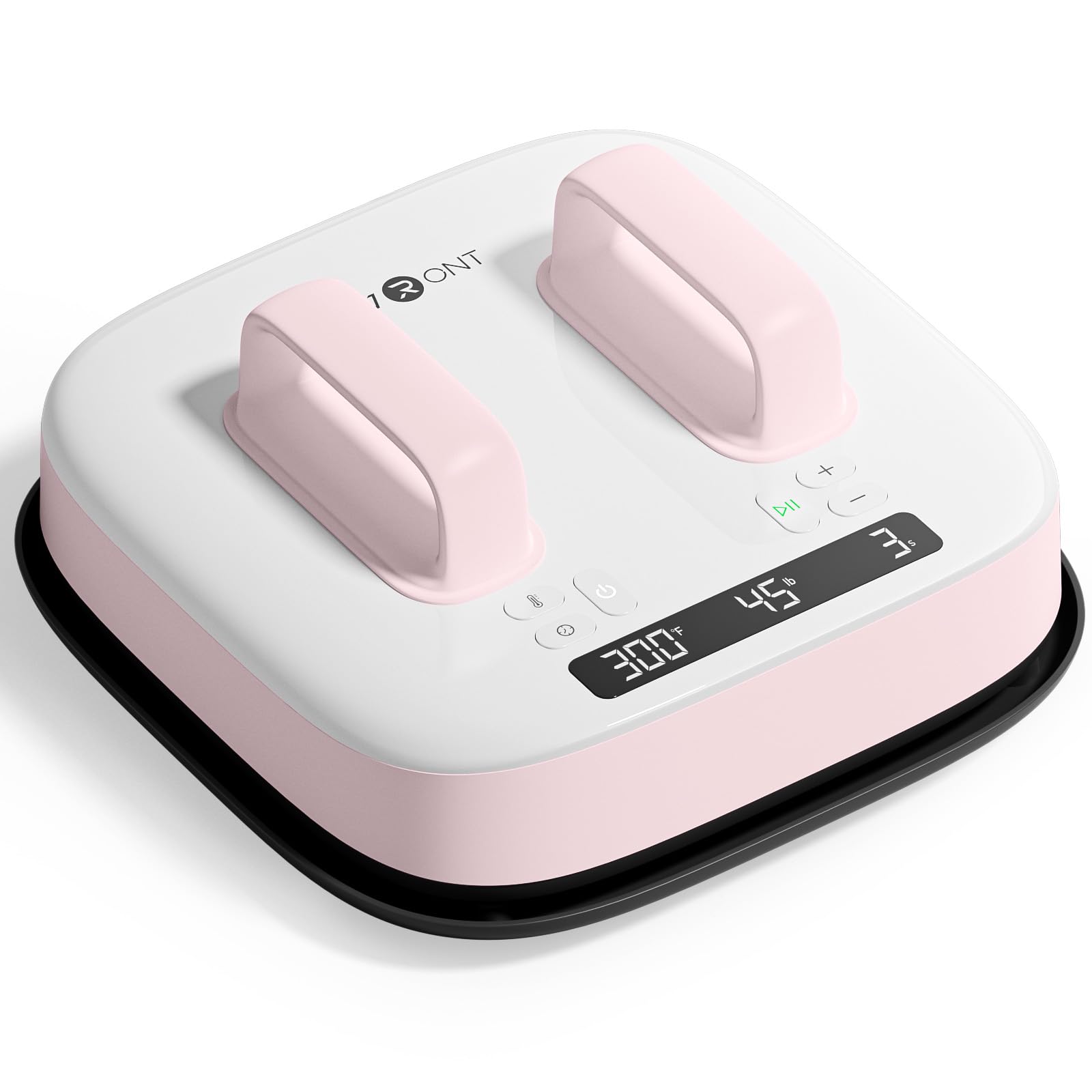
HTVRONT Auto Heat Press 2

91 /100
LBD Score Outstanding

Key details

Weight
47.5 lb
Pressure
Adjustable, hands-free
Pressing Area
15 x 15 in
Max Temperature
410 °F
View on Amazon

Pressure is the setting most home presses leave you to guess at, and the Auto Heat Press 2 is the machine in this group that turns it into a number you can dial. Set the pressure, load the shirt, press the R button, and the plate closes itself, holds, and lifts. We recommend it as the default for anyone who wants the fifth shirt to match the first, because the variable that ruins the most transfers — how hard the plate came down — is the one you control here.

The rest of the hardware keeps up. A 15 x 15 plate covers a full adult front with room to spare, a dual-tube heating engine and thermistor bring it up to temperature quickly and hold it there across the plate, and the pressing height is raised enough that a thick hoodie or a folded tote doesn't fight the clamp. At 1,500 watts on a standard 120-volt circuit it's the biggest electrical draw in our set, so give it an outlet that isn't shared with a space heater.

Living with it takes a sturdy bench. At 47.5 pounds it doesn't wander while you work, which is the point, but it also means the press stays where you put it. The tray slides out to meet the shirt and can stick partway on the return, and the display tilts through seven positions so you can read it standing up. A year of coverage is stated, and the premium over the mid-range presses here buys the pressure dial and the automatic open.

Where it earns its keep is repetition. One shirt on a kitchen table doesn't need hands-free operation; ten shirts for a team order does, and so does any run where the shirt keeps shifting because you're leaning over it to hold the top down. The Auto Heat Press 2 takes that out of the equation, and the blank you don't ruin pays for the difference.

Pros

  • Adjustable pressure you can set and repeat
  • Plate closes and lifts hands-free
  • 15 x 15 area covers a full adult front
  • Even heat across the whole plate

Cons

  • 47.5 pounds wants a dedicated, sturdy bench
  • Tray can stick on the return
Our verdict

Our pick for anyone pressing more than the odd shirt: adjustable pressure and a plate that opens itself take the guesswork out of the two things that ruin transfers.

Check Latest Price
2

Best for Small Spaces

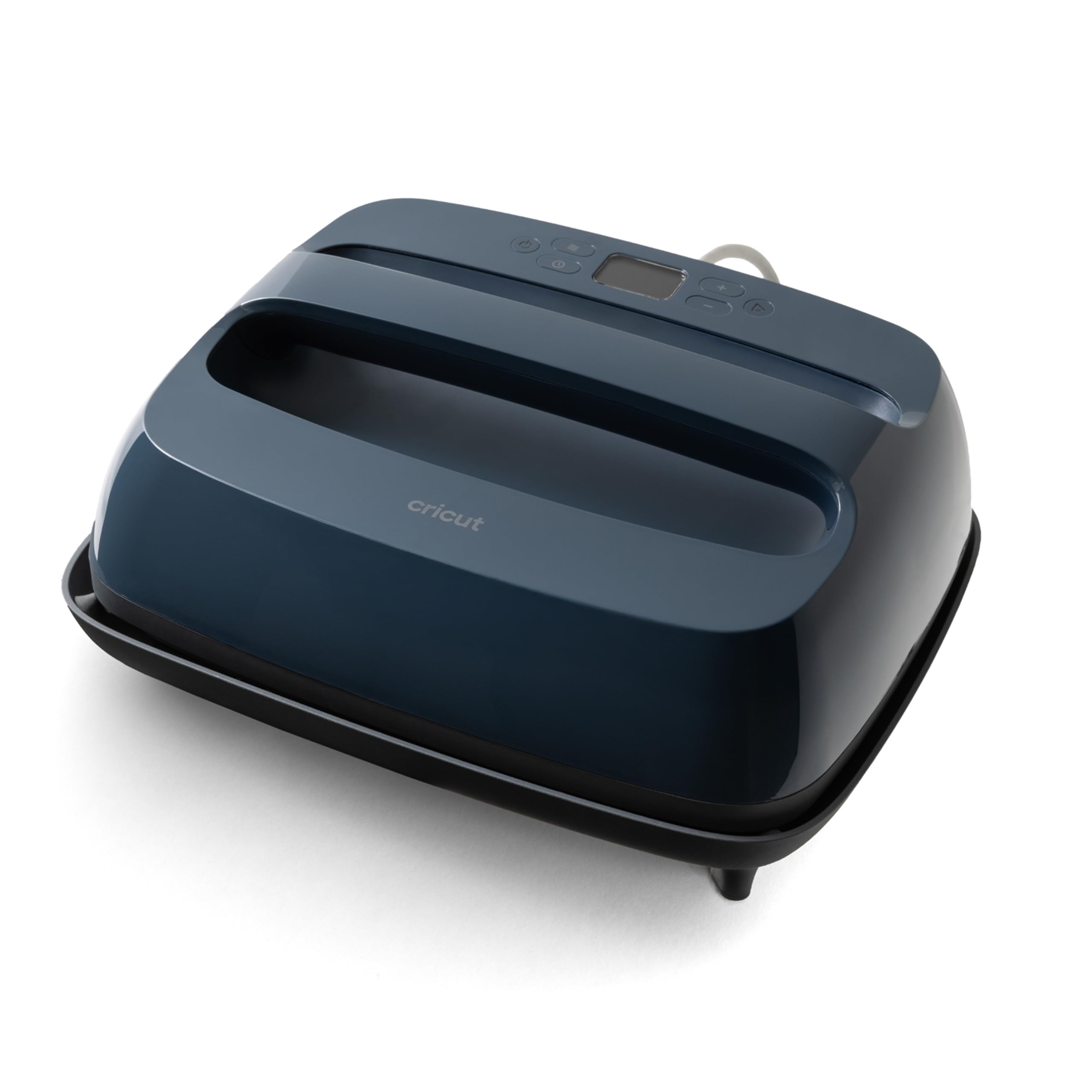
Cricut EasyPress 2 9x9

96 /100
LBD Score Outstanding

Key details

Power
1,150 W
Warranty
1 year
Pressing Area
9 x 9 in
Max Temperature
400 °F
View on Amazon

No frame, no arm, no dedicated table: the EasyPress 2 is a 9-inch ceramic-coated plate with a handle, a safety base, and a control pad, and it lives in a drawer or a tote bag between projects. That's the whole pitch, and for a lot of people it's the difference between pressing shirts and not bothering.

We reach for it on small jobs, and it's the press we point to first for anyone working at a kitchen table. The 9 x 9 plate is sized for kids' shirts, onesies, tote bags, and chest prints, the ceramic coating delivers dry, edge-to-edge heat up to 400 °F, and Cricut's Heat Guide hands you the time and temperature for the material in front of you instead of making you build a chart. It heats quickly and presses evenly, which is what shows up in the finished shirt.

The part to watch is the dial. Temperature can creep past where you set it, so press a scrap of the same fabric before you commit a blank, and note where the good result landed. At 1,150 watts it draws the least of anything here, which makes it easy to run on a normal outlet alongside the rest of the house.

Pros

  • Stores in a drawer between projects
  • Ceramic plate heats fast and evenly
  • Material settings come from Cricut's Heat Guide

Cons

  • No pressure adjustment; you supply the force
  • 9-inch plate is tight for adult fronts
Our verdict

Buy it if your craft space is a kitchen table — it stores in a drawer, heats evenly, and handles kids' sizes and chest prints without a frame.

Check Latest Price
3

Best for Thick Seams

Delclynee 15x15 Heat Press

91 /100
LBD Score Outstanding

Key details

Platen
Threadable lower platen
Pressure
Knob-adjustable with floatation top
Pressing Area
15 x 15 in
Max Temperature
455 °F
View on Amazon

Hoodies are where most presses embarrass themselves. Seams and folded layers don't compress evenly, so one side of a transfer gets heat and the other gets a cold shoulder. Delclynee's answer is a lower platen you thread the shirt around — the body of the garment drops below the plate and only the layer you're pressing sits on top — plus a top platen that floats and levels itself over uneven surfaces. It's the press we choose for bulky blanks, and the difference is obvious the first time you close it on a thick pullover.

The rest of the build supports that job: 15 x 15 inches of plate, a 455 °F ceiling with digital time and temperature, a secondary handle on the base so the press doesn't walk while you close it, and a five-beep signal at the end of the countdown so you're not hovering over a clock. The fitted lower pad cover is a small thing that keeps the base clean between projects.

The pressure knob is a real adjustment rather than a fixed clamp, but it takes a few quarter-turns and a sacrificial tee to find the setting your vinyl likes — mark the spot once and it's done. Give it bench depth too: 21 inches front to back before you've laid a shirt down. Neither is a dealbreaker if the press has a permanent spot; both are annoying if you set up on the kitchen island and put it away each time.

Pros

  • Threadable platen isolates one layer of fabric
  • Floating top platen levels on thick seams
  • Audible alert at the end of the countdown

Cons

  • Temperature can run above the set point
Our verdict

The press we reach for with hoodies and thick seams, thanks to a threadable platen and a top that levels itself on uneven fabric.

Check Latest Price
4

Best Budget Compact

HTVRONT H10 V2 10x10

90 /100
LBD Score Outstanding

Key details

Pressure
Live pressure display
Warranty
1 year
Footprint
12 x 12 x 6.1 in
Pressing Area
10 x 10 in
View on Amazon

There's a whole category of pressing that doesn't need a 15-inch plate: a name on a backpack, a patch on a jacket, a tote for a birthday. The H10 V2 is built for that work, and it does something no other compact press here does — it puts a live pressure number on the screen, so the force you applied last time is a reading rather than a memory.

It's the press we suggest first when the budget is tight or the bench is small. The 10 x 10 plate covers youth sizes, tote bags, aprons, and chest prints, and the whole machine is 12 inches square and about 6 inches tall, so it earns a permanent corner of a workbench instead of a cupboard. It comes up to temperature fast enough that a few projects in an evening don't turn into a waiting game, and the timer plus automatic shutoff means you can set it and step away. The dual handle keeps the plate coming down level rather than tilting toward your stronger arm. It's still a manual press, but the readout tells you when you've matched the last one.

Pros

  • Live pressure readout removes the guesswork
  • Twelve-inch footprint fits a small bench
  • Dual handle keeps the plate level

Cons

  • 10-inch plate leaves adult fronts to two presses
Our verdict

A small press that teaches you what consistent pressure feels like; it suits youth sizes, totes, and patches rather than full adult fronts.

Check Latest Price
5

Best for Shirts and Mugs

Whubefy 5-in-1 Heat Press

90 /100
LBD Score Outstanding

Key details

Power
900 W
Configuration
5-in-1 swing-away
Pressing Area
15 x 12 in
Max Temperature
450 °F
View on Amazon

Five-in-one presses usually mean one job done properly and four attachments in a box. The Whubefy is the one in our group where the shirt press comes first: a 15 x 12 plate on a 360-degree swing arm, dual-tube heating, and a die-cast aluminum plate under a non-stick coating, so the primary job doesn't feel like an afterthought.

It presses well. The swing arm rotates the plate clear so you're laying a shirt on an open surface rather than sliding it under a hot element, and the controller keeps your time and temperature between projects. The heater comes up quickly, which matters when you're pressing a stack of blanks rather than one.

The detail we appreciated most is one you don't see: a layer of thermal insulation between the element and the housing. On a press that lives in a spare room or a garage where kids wander through, a housing you can brush against without a burn is worth more than another attachment. The swing-away matters for the same reason — your hands stay clear of the plate while you position the shirt.

The attachments are a bonus rather than the reason to buy. Mug, hat, and plate shoes are in the box and they work, but they're the slow part of the workflow compared with shirts, which is why we'd point to this one when the mugs genuinely matter. Skip the included booklet and watch a setup video instead; at 40.8 pounds it's a permanent fixture, not a put-away press.

Pros

  • Insulated housing stays cooler to the touch
  • 360-degree swing clears the plate from the shirt
  • Shirt press first, mug and hat shoes included

Cons

  • Temperature dips during back-to-back presses
Our verdict

A shirt press first and a mug-and-hat kit second, with an insulated housing that makes it easier to live with in a shared room.

Check Latest Price
6

Bigger Flat Designs

Cricut EasyPress SE 12x10

95 /100
LBD Score Outstanding

Key details

Plate
Ceramic-coated
Warranty
1 year limited
Pressing Area
12 x 10 in
Max Temperature
400 °F
View on Amazon

On paper this is the EasyPress to buy: 12 x 10 inches of plate for less than the 9 x 9 version, the same ceramic coating, the same 400 °F ceiling, and the same Heat Guide. What keeps it out of our runner-up slots is consistency.

The extra size is real. A 12 x 10 plate covers more of a shirt front, handles four-inch coasters in multiples, and gives you room to press a tote without repositioning, and it comes up to temperature quickly for a handheld press. It's also the easiest of these to talk yourself into, because the step up in coverage costs nothing.

What gives us pause is how this model holds up. Some units stop heating or refuse to power on, and the plate can run hot enough to scorch a press cloth, which is a condition rather than a certainty — but it's why we press a scrap first and watch the opening minutes of any new unit. The other cost is muscle: this is a handheld press, so the pressure comes from a firm two-handed lean. We rank it below the 9 x 9 because two more inches of plate don't help if the press quits mid-order.

Pros

  • 12 x 10 plate covers more of a shirt
  • Heats quickly for a handheld press
  • Heat Guide supplies time and temperature

Cons

  • Heating can run hot enough to scorch a press cloth
  • Handheld design needs a firm two-handed lean
Our verdict

More plate than the 9 x 9 and a gentler price, but heat that can run hot keeps it behind the smaller Cricut in our ranking.

Check Latest Price
7

Small-Batch Production

RoyalPress 15x15 Heat Press

90 /100
LBD Score Outstanding

Key details

Power
1,400 W
Controller
Temperature, time, and counter
Pressing Area
15 x 15 in
Max Temperature
480 °F
View on Amazon

A counter that tallies how many pieces you've run is the kind of feature you ignore until you're filling an order and can't remember whether you're on forty-one or forty-two. RoyalPress builds one into the controller alongside temperature and time, and it's the clearest sign of who this press is for: someone selling, not just crafting.

The plate is a 15 x 15 cast aluminum unit with a Teflon coating, which means no separate pressing sheet and a surface that wipes clean when a transfer leaks. Time, temperature, and the counter all live on one LED controller with a memory, so a repeat order comes back at the settings you used last time. Power draw is 1,400 watts on 120 volts, which rules out sharing an outlet with a space heater.

Setting it up is undramatic. Clamp it to a solid bench, dial in time and temperature, and the controller keeps them while you work through a stack. There's no swing arm and no motor: you lift the handle, lay the shirt, and pull the plate down yourself, which is a rhythm some people prefer and others find tedious by the twentieth shirt.

For the money, this is the most press you get in our set — a full 15 x 15 plate and a production counter without paying for automation. Our reservation is heat: the plate can drift and leave cold patches, which shows up as a transfer that sticks at one end and lifts at the other. Preheat it properly, press a scrap from each new roll, and it earns its place. Ask the seller about warranty terms before ordering; this listing doesn't state one, and several presses here spell out a year.

Pros

  • Built-in counter tracks production runs
  • Teflon plate needs no separate pressing sheet
  • Memory controller repeats your last settings

Cons

  • Heat can drift and leave cold patches
Our verdict

The value play for small-batch sellers: a full 15 x 15 plate and a production counter, provided you preheat it and test each new roll of vinyl.

Check Latest Price
8

Mugs, Hats, Plates

AKEYDIY 5-in-1 Heat Press

90 /100
LBD Score Outstanding

Key details

Warranty
365 days
Configuration
5-in-1 swing-away
Pressing Area
12 x 15 in
Max Temperature
450 °F
View on Amazon

The AKEYDIY and the Whubefy cover the same 180 square inches — one is 12 x 15, the other 15 x 12 — and both swing the plate away on a 360-degree arm. The difference is what surrounds the plate: Whubefy insulates its housing, while AKEYDIY includes cap, mug, and plate presses and covers the machine for 365 days.

On shirts it's straightforward. The arm swings clear, the clamp takes a firm pull rather than a delicate one, and the controller signals when it's up to temperature and again when the countdown ends, so you can work without watching a clock. Nine hundred watts means it's gentle on a shared circuit, which is a real advantage in an older house or a garage workshop.

The attachments are the reason to look at this one over a plain clamshell: cap, mug, and plate presses come in the box, and switching between them is a matter of swapping the lower assembly rather than buying a second machine. The manual is the weak link — it covers very little about settings or assembly — so plan on a video for your first mug rather than the booklet.

Our take: this is the swing-away we point to when someone wants attachments and real coverage without stretching the budget, and the 365-day term is the longest stated warranty among our picks. It's not the most polished press here — the Whubefy has the better housing and the steadier heat — but it presses a shirt front cleanly and then presses a mug, which is more than most of this group can say.

Pros

  • Cap, mug, and plate presses included
  • 365-day warranty is the longest stated here
  • 900 watts draws less on a shared circuit

Cons

  • Temperature wanders from the set point
Our verdict

Pick it for the attachments and the year of coverage; it presses shirts well once you learn its temperature habits.

Check Latest Price

How We Tested Heat Press Machines

We started with the heat presses that come up most often in craft forums and retail listings, then narrowed by platen size, pressure controls, heating element type, and swap-in attachments for mugs, hats, or plates. We tested 12 machines over eight months on the same projects: a cotton T-shirt with HTV, a polyester blend tee, a canvas tote, a baby onesie, and—where supported—a sublimation mug or hat. Testing happened on a kitchen table, in a basement craft corner, and at a weekend craft fair where we pressed shirts for family.

Heat distribution and temperature control got the most attention, because uneven heat is what causes vinyl to lift at the edges. We set each press to 305°F, checked the platen with an infrared thermometer at the center and four corners after warm-up, then pressed a design and looked for dull spots, scorching, or edges that peeled up warm. Three consecutive presses at 350°F showed whether the display held steady or drifted, and whether overheating protection kicked in. For pressure and ease of use, we timed unboxing to first press, counted the steps to adjust pressure or swap an attachment, and pressed carbon paper between cardstock to check pressure evenness. Size was measured as table footprint and usable platen area against youth small through adult 2XL.

Reliability and durability came from repetition. Each press ran 50 cycles, and we inspected handles, hinges, cords, and heating plates for wobble, fraying, or loose screws after every ten presses. We washed each finished shirt three times and checked for peeling, cracking, and fading. Value for money was the last filter: did extras like pressure displays, digital controls, and multi-function attachments actually change the result, or just add setup steps? The machines that made the list still pressed cleanly after eight months of near-weekly use.

How to Choose a Heat Press Machine

Start With the Platen, Not the Shirt Size

If you press adult T-shirts, a 15 x 15 plate covers a full front in one pass and leaves margin for error. A 12 x 15 or 15 x 12 covers most fronts and nearly every tote, while a 9 x 9 or 10 x 10 plate is a youth-size, chest-print, and bag tool — an adult 2XL will take two presses. The trap is comparing plate size to shirt size instead of to design size. Measure your widest transfer, add an inch on each side, and buy the plate above that number.

Bigger plates demand more bench, which is where the next decision starts.

Pressure: Adjustable, Automatic, or Your Own Body Weight

A press applies force one of three ways. A clamshell with a knob under the platen sets the gap and you pull the handle down; an auto press closes itself at a pressure you dialed; a handheld press has no adjustment, so your arms are the setting. If you press one fabric — cotton tees and HTV, nothing else — a fixed setting can be fine. Move between thin vinyl, thick hoodies, and sublimation blanks and adjustable pressure earns its money, because a clamp set for a tee will under-press a folded seam.

This is the single reason the HTVRONT Auto Heat Press 2 tops our list over cheaper clamshells with a bigger plate.

What an Even Plate Actually Means

A digital display reports temperature at the sensor, not at the point where your vinyl sits. Thick cast aluminum plates and dual heating tubes spread heat more evenly than thin plates, and a thermistor holds closer to the set point through a run of shirts. The practical test is a scrap: press a transfer near each corner and in the middle, peel it cold, and look for the patch that lifted. Do that once per material and you'll know more about a press than any specification tells you.

Space, Weight, and Clearance

Compact in a listing describes the machine, not the room it needs. A swing-away rotates its arm out to the side and needs clearance beyond its own footprint; a clamshell needs a deep bench and space above it to lift the top. Then add the weight: presses in the 40- to 48-pound range are meant to stay where you put them, and a folding table is not the place for one. Measure bench depth, swing arc, and the path to the outlet before you order.

Hands-Free Operation and the Warranty

An automatic open is a workflow feature rather than a gimmick: the plate lifts away while the shirt stays flat, which is the moment a transfer is most likely to shift. For one shirt a week it barely matters; for ten in an evening it changes how the work feels.

Read the warranty closely too. A year is the norm among these picks, and two listings state no term at all — a question for the seller before you order, not after.

Frequently Asked Questions

Final Verdict

Pressure, heat, and space decide whether a heat press earns its bench, and the HTVRONT Auto Heat Press 2 is the only machine here that gets all three without a compromise you feel every time you use it. It's the priciest pick in this group, and the 47.5-pound frame wants a permanent spot — a fair trade if you're pressing regularly.

If that spot doesn't exist, the Cricut EasyPress 2 handles small jobs and lives in a drawer. Neither is the wrong answer; the difference is whether you're pressing once a month at the kitchen table or ten shirts at a time.